Showing posts with label sportsmanship. Show all posts

Wednesday, December 21, 2016

Gridiron Heroes : Leveling the Playing Field

This post originally appeared at the Fort Worth Weekly's website. To view it there : https://www.fwweekly.com/2016/12/20/leveling-the-playing-field/


Saturday in Arlington, AT&T Stadium hosted a big high school football event – a tripleheader of state championship games in Texas’s largest classifications. For DeSoto High School supporters, the trip from south of Dallas to Tarrant County would prove especially rewarding. Not only did their varsity squad win the school’s first state title that afternoon, a former player on the Eagles’ JV squad scored an important victory of his own.

A 2009 practice collision cost Corey Borner the use of his legs. When his devastating injury happened, a charity called Gridiron Heroes reached out to Borner. Eddie Canales and his son Chris helped the then-teenager and his family adjust to his new situation, as they steadfastly do for any high school football player who suffers a paralyzing injury playing the game they love.

On Saturday, the Canales clan, including mom and wife Pita, got to award Borner one of the most important items a family in his situation needs : an accessible van. They did so thanks to a fundraising drive orchestrated by the Texas Association of Sports Officials. Game officials and sponsors from across the state raised funds to buy a discounted van from Alamo Mobility. Borner’s previous vehicle had worn out and the new one will provide him and his family needed mobility and independence.

The Schertz-based Canales family has a special frame of reference when it comes to helping former players in Borner’s situation, since Chris has occupied a wheelchair since his own in-game mishap in 2001. They now use their own hard-won knowledge about facing such situations to ease other families’ struggles.

A big part of their message involves keeping a positive attitude and Borner provides an example to point to. In fact, the former DeSoto Eagle helps the charity out by showing off his optimistic disposition in making outreach appearances on Gridiron Heroes’ behalf when the Canales men find themselves spread too thin. You can get a feel for Borner’s outlook and his thoughts on Gridiron Heroes in the accompanying video interview.


I’ve written about Gridiron Heroes before, and I probably will again. If you work in the sports business, as I do, or if you love sports, it’s not hard to muster deep appreciation for the work the Canales family does. You can learn more about the Gridiron Heroes mission in my previous interview with Eddie Canales or at their website at gridironheroes.org.


Rush Olson has spent two decades directing creative efforts for sports teams and broadcasters. He currently creates ad campaigns, television programs, and related creative projects for sports entities through Rush Olson Creative & Sports and FourNine Productions.

RushOlson.com

Linkedin.com/company/rush-olson-creative-&-sports

Facebook.com/RushOlsonCreativeandSports

Wednesday, October 12, 2016

Sportsmanship and Politics Should Mix

This post originally appeared at the Fort Worth Weekly's website. To view it there : http://www.fwweekly.com/2016/10/12/sports-rush-candidates-could-learn-from-baseball/


Sunday night, a pair of competitions between contentious rivals took place simultaneously.
In St. Louis, Donald Trump debated Hillary Clinton. In Toronto, the Texas Rangers played baseball against the hometown Blue Jays. Both events came with a history of Vitriol punching Decorum in the face (literally, in some cases).

Sunday’s session elevated an already ugly campaign to new levels of contentiousness. Both candidates displayed an impressive mastery of each other’s scandals, with virtually no personal attack left unuttered.

The baseball contest’s background had included preening bat flips and HBPs and a Rougned Odor right cross to the jaw of Jose Bautista. Sunday night, all the principals in the drama took the field with a lot at stake, but all we saw in the potentially emotionally-charged atmosphere was a baseball game.
Baseball bested politics in the head-to-head matchup. They did not do so in the television ratings – over 100,000 more area households watched the debate across its multiple networks than watched the Rangers’ Division Series game on TBS. The sporting event did win the sportsmanship category – easily.

We think of sportsmanship as applicable to athletic contests, but its essence represents something larger. It embodies notions of civility and the honoring of agreements.

Playing a game against an opponent necessarily involves each trying to establish an unequal footing between the two combatants. By participating in the contest, however, both sides implicitly or explicitly agree to certain parameters. If you win by cheating, even if you win so much you get tired of it, you really haven’t won at all because your victory came at something other than what you’d agreed to. A game is defined by its rules.

Most sports’ rulebooks include provisions for treating foes with respect, and implied codes of conduct often go beyond what’s written down. Beyond even those strictures, many (most?) of us likely prefer to compete with someone who remains gracious in victory or defeat.

One rule of the debate was that the speakers were supposed to answer certain questions. They ignored it from the first query, veering to their prepared talking points with all possible haste. Both debaters disdained time limits on answers and prohibitions on interruptions, even when reminded of them by moderators.

The word “rule” also applies to what these persons hope to do if successful in their campaigns. Thanks in large part to bilateral efforts by the major parties to establish an imperial presidency, the chief executive has enormous power to affect people’s lives. Will the elected official follow the rules governing his or her office or will he or she cheat? Will he or she treat others with respect? Will he or she display the qualities of sportsmanship?

The Rangers are good at baseball. The Blue Jays are good at baseball. Consecutive postseason appearances by both leave little doubt of that. Would either Clinton or Trump be good at presidenting? It’s not much of a stretch to suggest the debate performances still leave a lot of questions about fitness to rule.

When a politician or athlete sets aside the qualities of sportsmanship, he or she often seeks to justify the action as advancing some greater good. A ballplayer who deceives an umpire does so to help his team win. A government official may embrace policies of official discrimination, Watergate break-ins, or eugenics based on the same theory : the end justifies the means.

Both candidates cited the 16th president in their exchanges on Sunday. Some evidence exists that Abraham Lincoln enjoyed the then relatively new sport of baseball. Both candidates and ballplayers might do well to remember one of his remarks about the ideal outlook for a competitor.

“I am not bound to win. I am bound to be true.”


Rush Olson has spent two decades directing creative efforts for sports teams and broadcasters. He currently creates ad campaigns, television programs, and related creative projects for sports entities through Rush Olson Creative & Sports and FourNine Productions.


RushOlson.com
Linkedin.com/company/rush-olson-creative-&-sports
Facebook.com/RushOlsonCreativeandSports

Wednesday, August 10, 2016

Of Tex and Texas

This post originally appeared at the Fort Worth Weekly's website. To view it there : http://www.fwweekly.com/2016/08/10/sports-rush-of-tex-and-texas/


The Yankees announced last week that the last reason a Rangers fan might reasonably have to cheer for them to win a ballgame will go away at the end of the season.

Or at least that’s the way it is for me. I supposed, technically, a Texan might need to pull for the Yankees to defeat a wild card rival this September. And if that uncomfortable circumstance does occur, I’ll hope the Bombers do win and all the runs score due to Mark Teixeira’s first career four-home run game.


Tex declared last week he would end a 14-year Major League career at season’s end. He has been gone from the Rangers since the mid-2007 trade that many fans likely consider his most lasting legacy with the club. Indeed, the deal Atlanta made for the talented infielder placed contributors Elvis Andrus, Matt Harrison, and Neftali Feliz on two Texas World Series teams.  Feliz’s 2010 ALCS strikeout of another newly retired Ranger-turned-Yankee, Alex Rodriguez, arguably ranks as the best moment in franchise history. An injury-hampered Teixeira went hitless in four games that series. But his contributions to Texas go beyond the indirect ones he made to the franchise’s only World Series berths. He did a lot more.

Doug Melvin drafted the Georgia Tech junior with 2001’s fifth overall pick. Teixeira got to the big leagues by 2003. In 2004, he combined with Michael Young, Hank Blalock, and Alfonso Soriano in a formidable young infield. That club gave Texas fans plenty of thrills as they unexpectedly stayed in the race all year before falling just short of the postseason. We remember Michael Young having switched positions to accommodate Soriano’s arrival, but do you recall Teixeira moving to first base the previous year because of Blalock’s presence at third? Teixeira would go on to earn five Gold Gloves at his new position. Tex led the team in OPS in ’04 (a robust .929) and became only the second Ranger (at the time) to hit for the cycle.

In 2005, he led the league in total bases and drove in two runs in his first All-Star Game. He also took home both the Gold Glove and Silver Slugger Awards. The batsman continued to put up big numbers for the Rangers until, in July of 2007, the club traded the then-Scott Boras client. He probably left a couple years shy of consideration for the Rangers Hall of Fame, but you saw him play a lot of superb baseball at The Ballpark in Arlington / Ameriquest Field in Arlington / Rangers Ballpark in Arlington (he lasted through three different stadium names).


He had a legacy beyond the field, as well. In a duet with pitcher Rosman Garcia, Tex sang the first rookie song at the inaugural Park Place Dealerships Triple Play game show night. His singing set the tone (in a nearly-on-pitch sort of way) for all those who followed. When Rafael Palmeiro departed after 2003, he embraced the event as its player spokesperson and helped build it into what has become a substantial fundraiser for the worthwhile programs of the Texas Rangers Baseball Foundation. He did a lot with the team’s foundation, and he and his wife Leigh started their own, as well.

Teixeira was intelligent and had a head for business, but he also had a sense of humor and didn’t mind cutting up on camera. One year, he even came up with the idea for a TV spot and didn’t mind putting on fake tattoos to execute it. Making the commercials was my job and I certainly enjoyed working with him on set.

When you’re fan of a team, you develop an affection for its players, and you often retain it even after they stop wearing the home colors. When you’re employed by a club, and work with players, as was the case for me during Tex’s Ranger years, it magnifies the experience. So when a guy you like goes to another club, it’s hard to stop hoping he does well – even if his eventual destination is the team you’ve been conditioned to find most distasteful. That’s happened to me a lot, with guys like Mike Napoli, Carl Everett, Ian Kinsler, David Murphy, and, for sure, Mark Teixeira. There’s a lot to like about him, and hopefully his life’s next chapter produces as many good things as his Rangers years did.


Rush Olson has spent two decades directing creative efforts for sports teams and broadcasters. He currently creates ad campaigns, television programs, and related creative projects for sports entities through Rush Olson Creative & Sports and FourNine Productions.


RushOlson.com

Linkedin.com/company/rush-olson-creative-&-sports

Facebook.com/RushOlsonCreativeandSports


Thursday, August 4, 2016

Insight on Officiating from Mike Pereira of Fox Sports

This post originally appeared at the Fort Worth Weekly's website. To view it there : http://www.fwweekly.com/2016/08/03/sports-rush-good-calls-talking-with-mike-pereira-of-fox-sports/

One of the best calls Mike Pereira ever made : starting a charitable initiative that both helps veterans and meets a need within the officiating profession.


Fox Sports NFL announcers bring in Pereira when there’s a question about a penalty. He delivered the keynote address at the recent OfficiateTexas Day in San Antonio where he talked to a gathering of Texas officials from many sports about the state of the striped shirt business. Pereira announced his new non-profit  and told stories both personal and entertaining. This video includes an interview with him and excerpts from his speech. You’ll also find out which celebrity the public seems to think he resembles.


Disclosure : The event was spearheaded by the Texas Association of Sports Officials and the University Interscholastic League. I was paid by TASO to create videos for the event, though not this piece.


Rush Olson has spent two decades directing creative efforts for sports teams and broadcasters. He currently creates ad campaigns, television programs, and related creative projects for sports entities through Rush Olson Creative & Sports and FourNine Productions.


RushOlson.com

Linkedin.com/company/rush-olson-creative-&-sports

Facebook.com/RushOlsonCreativeandSports

Wednesday, July 27, 2016

Keeping the Olympics From Flaming Out

This post originally appeared at the Fort Worth Weekly's website. To view it there : http://www.fwweekly.com/2016/07/26/sports-rush-keeping-the-olympics-from-flaming-out/

This year, the buzz about Olympic athletes has revolved in large part around those not going to Brazil.  Some fear the Zika virus. Others will likely find themselves excluded as part of a blanket ban of Russian athletes in certain sports.
Such controversies are not unusual.


The Olympics has always had problems assembling all of the world’s best athletes every four years :


* Combat : World War I cancelled the 1916 event in its entirety. World War II stopped another four competitions.
* Boycotts : From Ireland in 1908 through the Communist countries in 1984 and 1988, numerous Games have been marred by governments preventing their resident athletes from participating.
* Apartheid : From 1964 to 1992, the International Olympic Committee barred South African athletes as a response to the country’s racial classification system.
* Women : Female athletes could not compete until 1920.
* Shamateurism : Authorities’ aversion to patrons compensating the sportsmen and women who entertained them kept us from seeing the likes of Pelé, Bobby Orr, or Wilt Chamberlain with medals around their necks, and Jim Thorpe from keeping his golds.


Pierre de Coubertin, the man who spearheaded the revival of the Olympic Games in the late 19th century, believed “The Olympic Games are for the world and all nations must be admitted to them.” It has not always been the case, and much of it has to do with the event’s nation-state system of organization.

We won’t see Paris Saint-Germain boycott Champions League fixtures in England next year because Brexit bothered its management. The NBA just moved its All-Star Game due to actions by North Carolina’s government, but we can feel assured the Charlotte Hornets will play a full home schedule next year with no withdrawals by visiting teams. Other than maybe a geographically contained disaster, like this Zika outbreak, we can’t imagine a scenario in which a club team would choose not to play in championship contests for which it had qualified. Even in the rare case of bankruptcy, a league would step in to make sure an elite team played. Such was the case with the 2010 Texas Rangers.

Club competitions can’t skip out on games because long-term success depends on their brands being perceived as consistently able to deliver a reliable world-class athletic product. When baseball games get rained out, MLB reschedules them.

The Olympics, too, has a need to maintain its brand integrity. The nature of its event and the strength of its brand mean the IOC can persevere through the absences of even some of its most iconic teams or athletes.  There are enough countries on the planet that missing a few boycotters or WADA stooges doesn’t matter. We love to root for the red, white and blue no matter whether they’re taking on the reds, the azzurri, or the bleu, blanc, et rouge. Patriotism has power.

The Olympics has to be careful, though, because while its brand remains perhaps the most powerful in sports, its success ultimately depends upon the health of its teams the same way a league of club franchises does. However, Olympic sides don’t respond to the same incentives as do regular pro teams.

Since its beginnings, Olympic competition has been organized with athletes competing for squads identified with their citizenships. While that wouldn’t have to mean dealing with the governments of participants (the Olympics could have established an independent system for certifying its competitions), from a practical standpoint it has meant heavy involvement with ministries of sport and Ted Stevens Olympic and Amateur Sports Acts.

The priorities of those who run governments (and the teams that represent them) won’t always line up with what’s best for the Olympic organization. A Robert Kraft might vehemently question the merits of a specific disciplinary procedure, but he would likely agree that ensuring a sports product free of cheating benefits his brand significantly and, is, in fact, vital to its success.

Other kinds of patriots – those who run governments – often don’t gain the same benefit from a level playing field. In their minds, some combination of national glory and personal power accumulation may matter a great deal more than notions of sportsmanship. Using a flag-wrapped end to justify unfair means is common when politicians want to assure constituents they will all win so much they get tired of it.

In our current situation, it seems Russian political authorities decided hearing the State Anthem of the Russian Federation played frequently at medal ceremonies served their needs more than playing by certain rules to which they had agreed. Such widespread sovereign swindling in athletics has precedent (see 1970s East Germany). Whatever one thinks of the World Anti-Doping Agency’s own priorities, one has to concede that the Russian authorities believed an all-out effort to secure athletic success for Russia would play better with the native populace than allegiance to standards of fair play that enhance the Olympic brand. For Russian leaders, it’s a no-lose. If their less-than-clean athletes win a lot of medals, as they did in Sochi, and get away with it, the reflected glory helps the political class. If they get caught, they can just blame it on Western vendettas and still maintain their popularity.

The Olympic movement is heavily in bed with national governments, of course. The organization requires governmental guarantees of funds before it awards an Olympiad. It can get burned on the front end of the process by corruption (see Salt Lake City, Rio, and Sochi) and on the back end by bad press about negative economic impact (see Athens, Sarajevo, Montreal, and others). They already have a problem with a lack of applicants to host their events and it could easily get worse.
Does it matter? It will if it hits the bottom line. Russia is a huge territory. Sponsors can’t be pleased to see those millions of eyeballs paying attention to something other than their ads. If only authoritarian states apply to host games in the future, as happened when Kazakhstan and China emerged as the only finalists for the 2022 Winter Games, the commercial partners won’t like the public criticism associated with helping legitimize those regimes.

The Olympic movement has the power do great good in many ways, including spreading the gospel of fitness, inspiring achievement, encouraging understanding between individuals from different regions, and entertaining billions. Fans love to root for their country’s athletes. Is there a sustainable path forward?

The issue of nations jockeying (or even worse, not jockeying) to lose billions on new Olympic venues might be solved by establishing single locations to host all games owned by the International Olympic Committee. Greece seems the least controversial from a sentimental standpoint and their central government’s current fiscal predicament would eliminate the temptation to seek subsidies. Perhaps the IOC’s home country of Switzerland would make sense for a Winter Games host. Any such choice would be fraught with issues of Eurocentrism, television ratings across time zones, and general naysaying, but finding a way to avoid repeating the controversies of Sochi and Rio should take priority.

It is beyond the IOC’s power to change the nature of politics. Extricating itself from entanglements with sports ministries is also beyond its current ability. While it should certainly take a strong look at whether the burdens WADA imposes encourage the kind of approach the Russian Federation adopted, the Olympians will never have the power to compel government actors to follow rules the latter dislike.

What it can do is set a good example. In ancient times, warring nations were expected to allow athletes to pass through their territories on the way to the games at Olympus. The modern games have provided numerous examples of how good-natured interactions between people from different parts of the world facilitate understanding, from Luz Long advising Jesse Owens to the Grateful Dead sponsoring the Lithuanian men’s basketball team.

Many believe maximizing peaceful commerce between citizens of diverse nations to be a less effective deterrent to belligerence than the initiation of force by governments. The best thing the Olympics can do is to disentangle itself from as much of its dependence on nation states as possible and use its commercial muscle and spirit of sportsmanship to prove such people wrong.


Rush Olson has spent two decades directing creative efforts for sports teams and broadcasters. He currently creates ad campaigns, television programs, and related creative projects for sports entities through Rush Olson Creative & Sports and FourNine Productions.


RushOlson.com

Linkedin.com/company/rush-olson-creative-&-sports

Facebook.com/RushOlsonCreativeandSports

Friday, July 15, 2016

Tackling More Safely

This post originally appeared at the Fort Worth Weekly's website. To view it there : http://www.fwweekly.com/2016/07/13/sports-rush-tackling-more-safely/

 Last week, we posted the first part of an interview with Eddie Canales of Gridiron Heroes (watch it here : https://youtu.be/nxInDMrb5kM). His charity helps athletes who have suffered paralyzing injuries playing high school football. They also work to prevent injuries through teaching safer tackling techniques. In this interview, Eddie explains their approach.


This video is an edited version. You can see the full interview, which includes Eddie Canales’ take on hawk-style tackling, here : https://youtu.be/5yMm-8u2tzA

For more information on Gridiron Heroes, visit gridironheroes.org.


Rush Olson has spent two decades directing creative efforts for sports teams and broadcasters. He currently creates ad campaigns, television programs, and related creative projects for sports entities through Rush Olson Creative & Sports and FourNine Productions.


RushOlson.com

Linkedin.com/company/rush-olson-creative-&-sports

Facebook.com/RushOlsonCreativeandSports

Thursday, July 7, 2016

Gridiron Heroes

This post originally appeared at the Fort Worth Weekly's website. To view it there : http://www.fwweekly.com/2016/07/06/sports-rush-football-related-spinal-injury/


If your son suffered a disabling spinal injury playing football, what would you do? You would truly value the help of someone who knew what you’d face in the months and years to come. Eddie Canales would be the man to whom you would need to talk, and luckily for you, he and his son, Chris, provide exactly the sort of help such families need. Their charitable organization is called Gridiron Heroes and their journey is a remarkable one.


Eddie tells us the story in this video interview, shot at the Canales’ home in Schertz, Texas. We edited this video to about three minutes. You can view the full 7+ minute version here : https://youtu.be/ntPsirut5-c.

Next week, part two of the interview will discuss injury prevention through implementation of safer tackling techniques.

For more information on Gridiron Heroes, visit gridironheroes.org.


Rush Olson has spent two decades directing creative efforts for sports teams and broadcasters. He currently creates ad campaigns, television programs, and related creative projects for sports entities through Rush Olson Creative & Sports and FourNine Productions.


RushOlson.com

Linkedin.com/company/rush-olson-creative-&-sports

Facebook.com/RushOlsonCreativeandSports

Wednesday, April 13, 2016

NASCAR is Semi-Serious Business

This article originally appeared in the Blotch section of the Fort Worth Weekly's website. To read it on that site : http://www.fwweekly.com/2016/04/12/sports-rush-nascar-is-semi-serious-business/


R1
Sports are supposed to be fun, but since the aim is to win, a competitor also has to take certain aspects of them seriously to realize his or her goals. One has to find the right balance between intensity and remembering it’s just a game.

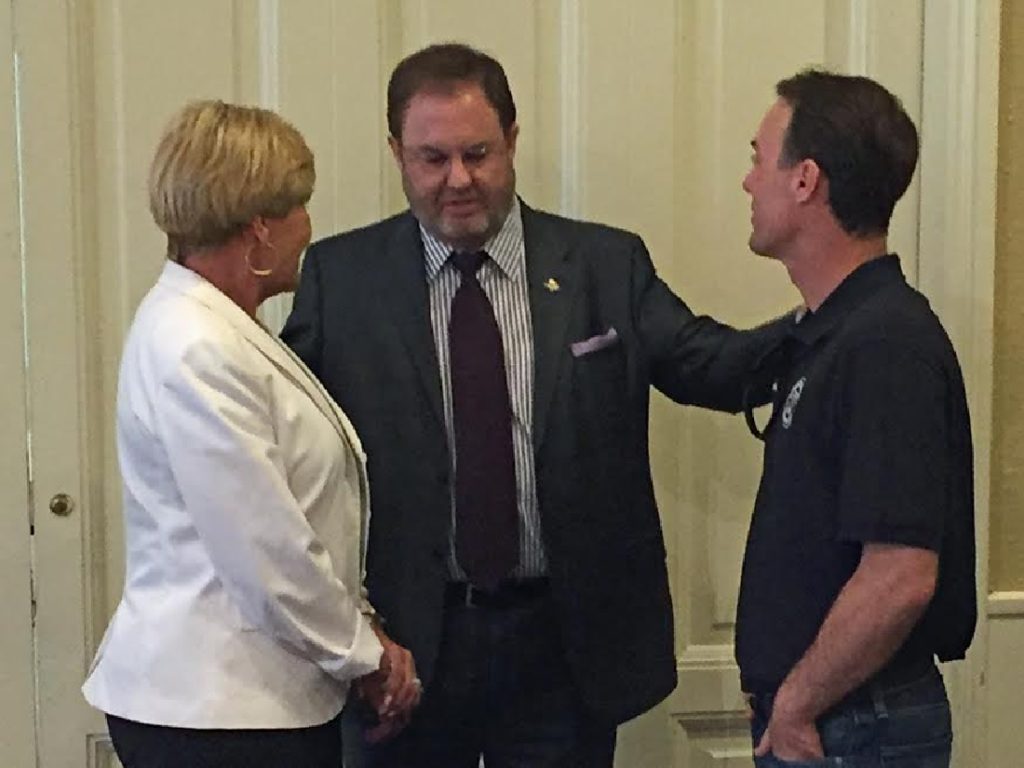
I thought about such aspects of sport while observing NASCAR personalities this week. Driver Kevin Harvick and Texas Motor Speedway President Eddie Gossage both attended the Fort Worth CVB’s Sports Huddle luncheon at the Fort Worth Club. NBC-5’s Newy Scruggs moderated a discussion with the duo, but the sportscaster largely got to save his voice for his on-air work. Harvick and Gossage had no problem carrying the discussion, and the most entertaining parts came from their back-and-forth banter.

Much of the jabber revolved around Harvick’s failure to win a top-tier race at Texas Motor Speedway. He has twice finished as high as second in the track’s Sprint Cup event and has won five Xfinity Series races and a Camping World Truck Series contest.

The exchange went like this :

Scruggs:  Eddie, if he likes you, he has some little way of messing with you a little bit. I think all of us who have been around him know that. Kevin, I know Eddie likes to hit you with the fact that, hey, Victory Lane is open for you for the Sprint Cup series. It’s been open for you for the truck . . .
Harvick: At some point (after winning a TMS Sprint Cup race), I’m going to park my car outside on pit road and I’m just going to go home. It’s so normal for me to not be there at this particular point, I figure what the hell, might as well just not even visit it. If we take the checkered flag, do we get disqualified if we don’t show up to Victory Lane? I’m going straight upstairs to champagne toast.
Gossage: You want the cowboy hat and the six shooters, don’t you? Then get your little heinie in there.

Gossage went on to explain how he revisits his running joke at least twice yearly, incorporating his track’s traditional winner’s reward of revolver fire and a Charlie 1 Horse lid.

Gossage: I always cross paths with him (Harvick) somewhere on race day and I always say to him, “Hey, you know we’ve got a Victory Lane after this one, too, and I’ve got a hat and six shooters that’ll fit you if you want it. Just come in and get hot when it’s over.”
Harvick: I don’t think he’s ever going to invite me to any more events if we ever win because he won’t have anything left to . . .
Gossage : I’ll have no material.
Harvick: He’s going to be out of material. Either that or my motor home’s going to be up on jack stands when I get there, with no wheels on it.
Gossage : Don’t tick him off. He’ll hit me, I’ve seen that stuff before, too. Let’s talk about Richmond. You and Ricky Rudd . . .
Harvick: Which time?

Both men have occasionally created controversy for themselves by reacting passionately to perceived slights. They referenced an incident from 2003 with the now-retired Ricky Rudd, but it has not been uncommon for Harvick to get crossways with his competition.

Gossage’s own flow of ideas seems to run without a restrictor plate. Scruggs’ opening remarks included a jab at Gossage’s penchant for writing letters to media members to chide them for insufficient coverage of his facility and his sport. Gossage acknowledged the correspondence, defended it, and even referenced it later on, along with other entanglements to which he’d contributed.

Both men admitted they sometimes let their emotions get the better of them, but they also didn’t mind poking fun at themselves for it. It struck me that in a general sense, that’s what we desire from our sports figures. We want them to be intense in competition, trying to win as hard as possible, but also maintaining a sense of fun and lacking pretension. Come to think of it, we like those qualities in a co-worker, too. You want someone who truly cares about his or her job but is also pleasant to share an office with.
As someone who made his living creating TV spots that often required sports figures (who were also co-workers) to perform in a goofy manner, I really learned to appreciate people who didn’t take themselves too seriously. When a Derek Holland was happy to make fun of his own mustache (in two languages) or a Mike Modano didn’t mind pretending he couldn’t get a date, it made my job a lot easier. And our marketing team would never have done those spots if we didn’t think self-deprecating humor helped fans feel more comfortable with those players. We all generally prefer to associate with people who don’t seem full of themselves.

I don’t truly know at all if either Kevin Harvick or Eddie Gossage are good guys or bad guys or in between. I have interacted with Harvick once by asking a question in a gaggle of media. I have now met Gossage once, and that was Thursday. He was friendly, thanked me for a question I asked during the media Q&A, and made a fairly standard radio host joke based on my first name. Because I hope to not take myself too seriously, I laughed at the Limbaugh quip and added some lame rejoinder.

General unpretentiousness doesn’t excuse specific incidents, so if Harvick or Gossage have been in the wrong in the past or end up there in the future, we must still hold them accountable. They improve such situations, however, with contrition and by making fun of their own shortcomings.
Harvick came up short this past weekend, finishing tenth in the Duck Commander 500. We can only hope he continues to keep his perspective about the result when someone brings it up, because TMS hosts another Sprint Cup race this fall and we can be fairly sure someone will. After all, it’s some of Eddie Gossage’s best material.


Rush Olson has spent two decades directing creative efforts for sports teams and broadcasters. He currently creates ad campaigns, television programs, and related creative projects for sports entities through his company, Rush Olson Creative & Sports.


RushOlson.com

Linkedin.com/company/rush-olson-creative-&-sports

Facebook.com/RushOlsonCreativeandSports


Wednesday, January 27, 2016

The Ref Is An Idiot

This post originally appeared on the Blotch page at the Fort Worth Weekly. To read it on that site : http://www.fwweekly.com/2016/01/27/run-a-mile-in-my-stripes/


R1
Early in the first half of the basketball game I watched Tuesday, I determined a referee had missed a foul call. I am not much for yelling at officials, but this time I had to really, truly resist the urge.

The official who had blown the call was me.

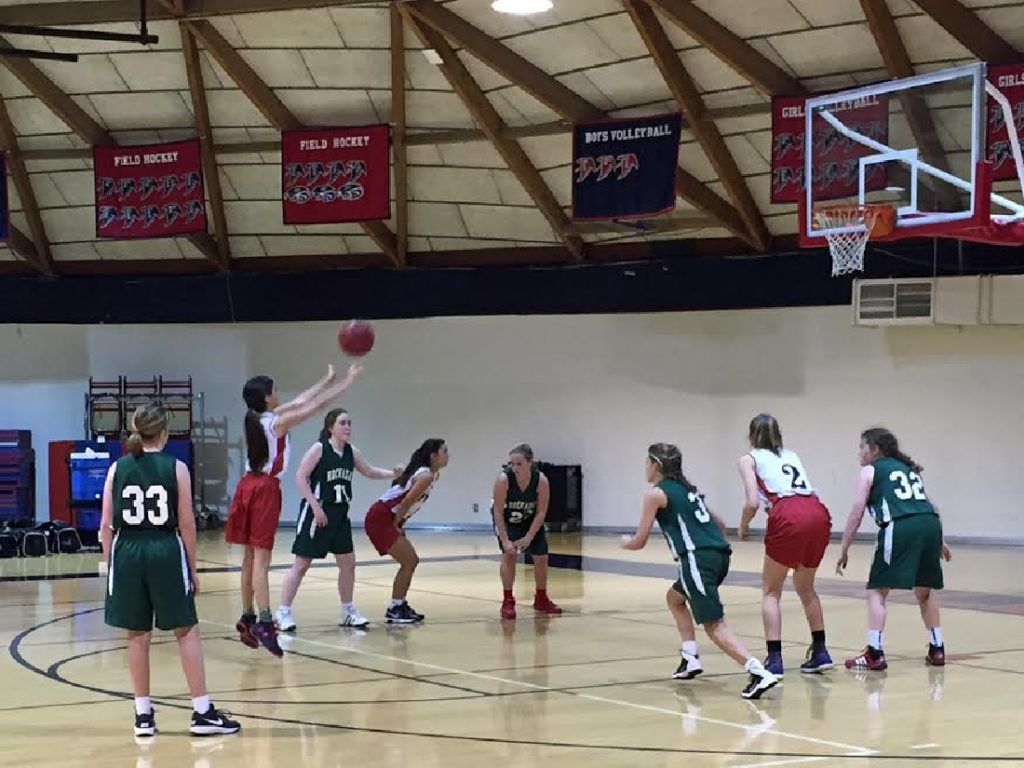
I had not expected to ref last week. My trip to the gym was for the purpose of cheering on my niece in her eighth-grade interscholastic game. However, when we arrived, we noticed the previous game had only one official working it. The faster A-team game in which my niece would play as the visiting squad really required two officials, but it turned out the other man scheduled had gotten stuck at his day job and wouldn’t make it. The small gym was devoid of qualified officiating candidates. So we settled for “kinda qualified.”

Part of my sister’s job at the school my nieces attend includes scheduling officials, so she knows how important it is for kids to have a well-called game. Missi suggested me anyway. As I was giving my 8-year-old niece a hard time about having taken the seat for which I claimed to have purchased a ticket, my sister asked if I would consider reffing. I replied affirmatively, so she spoke to her contacts at the host school and they agreed.

Luckily, I had not worn a three-piece suit to the game, in large part because I don’t think I own one. I do own a referee’s striped shirt, a relic from a long-ago commercial, but don’t generally carry it with me. So I took to the court wearing jeans, walking shoes, an I Am Douglass t-shirt, and Missi’s spare whistle.

I would be working with my new best friend, Johnny. He explained that the officials have to be each other’s best friends, because the coaches and spectators would not necessarily have your welfare in mind. Throughout the game, he would act like my buddy, too, helping me get to the right position and always staying positive about what we were doing.

I appreciated Johnny’s accommodating outlook, because I definitely missed some calls. I hadn’t refereed regularly since college intramurals and it showed. Remembering the details proved tricky. I had to remind myself to count ten seconds, five seconds, and three seconds without moving my lips. In fact, the first time I blew my sister’s whistle nearly came because her daughter had stayed in the lane too long. Thank you, Mia, for getting out of the lane with a second to spare, thereby preventing me from having to explain myself to your grandparents.

At one point in the first quarter, the home coach loudly suggested I should have called traveling. He was probably right. One of the tricky parts with officiating less experienced players is to decide how closely to call the game. Do you call every little thing, even if it kills the flow of the game? Or do you let a few things go?

I remember thinking at one point during the game, “Wait a minute, that’s a double dribble. I’m supposed to call that.” My father later told me he didn’t think she did double dribble, but acknowledged I was a lot closer to the play (which doesn’t mean I didn’t screw it up, though I will note that my brother-in-law agreed with the call).

The most important stuff to whistle, I felt, was anything that could result in danger to a participant. I called a foul with 1.8 seconds to go in the game because I felt like one player shoved the other one in a spot where she could have sent her opponent careening into the stands. While that call wasn’t going to affect the outcome of the game in question, one hopes the offending player learns not to do it in the future.

I missed at least one dangerous play in part because I didn’t look in the right spot. On a drive to the basket, my eyes immediately went to the rim to watch the ball fall through and I missed a push in the back that should have been a foul. I realized that had probably happened when I saw the shooter lurch toward the wall, but by then it was too late to call it. Next time, I would have let Johnny see if the ball went in while I paid attention to the act of shooting.

I got heckled. My family assures me none of the abuse came from them. They did tell me a grandfather was pretty annoyed with my lack of a call on a rebound. I heard him, too, and just for his information, there was contact on both sides and there was no way I was calling a double foul with two minutes left in a 20-point game.

It was a fortunate circumstance that the Falcons (my niece’s team) defeated the Owls by a comfortable margin. I dreaded the idea that a close game could hinge on a call I might make for or against a family member and her friends. At one point early on, I recall thinking that Mia had done a nice job getting around a screen before reminding myself that today she was just number 11.
The final totals : 0 technical fouls called, one Falcon fouled out, and minimal lingering soreness across my aging physique. I’ll take it.

Screaming abuse at game officials has never been my style, and, indeed, I find it deplorable behavior for the most part. In case you didn’t know, those folks have a tough job. If you don’t believe me, try it sometime when your niece’s game is a ref short.


Rush Olson has spent two decades directing creative efforts for sports teams and broadcasters. He currently creates ad campaigns, television programs, and related creative projects for sports entities through his company, Rush Olson Creative & Sports.


RushOlson.com

Linkedin.com/company/rush-olson-creative-&-sports

Facebook.com/RushOlsonCreativeandSports

Wednesday, November 25, 2015

An Incredible Comeback

This post originally appeared on the Blotch page at the Fort Worth Weekly. To read it on that site : http://www.fwweekly.com/2015/11/25/a-west-texas-comeback/


R1
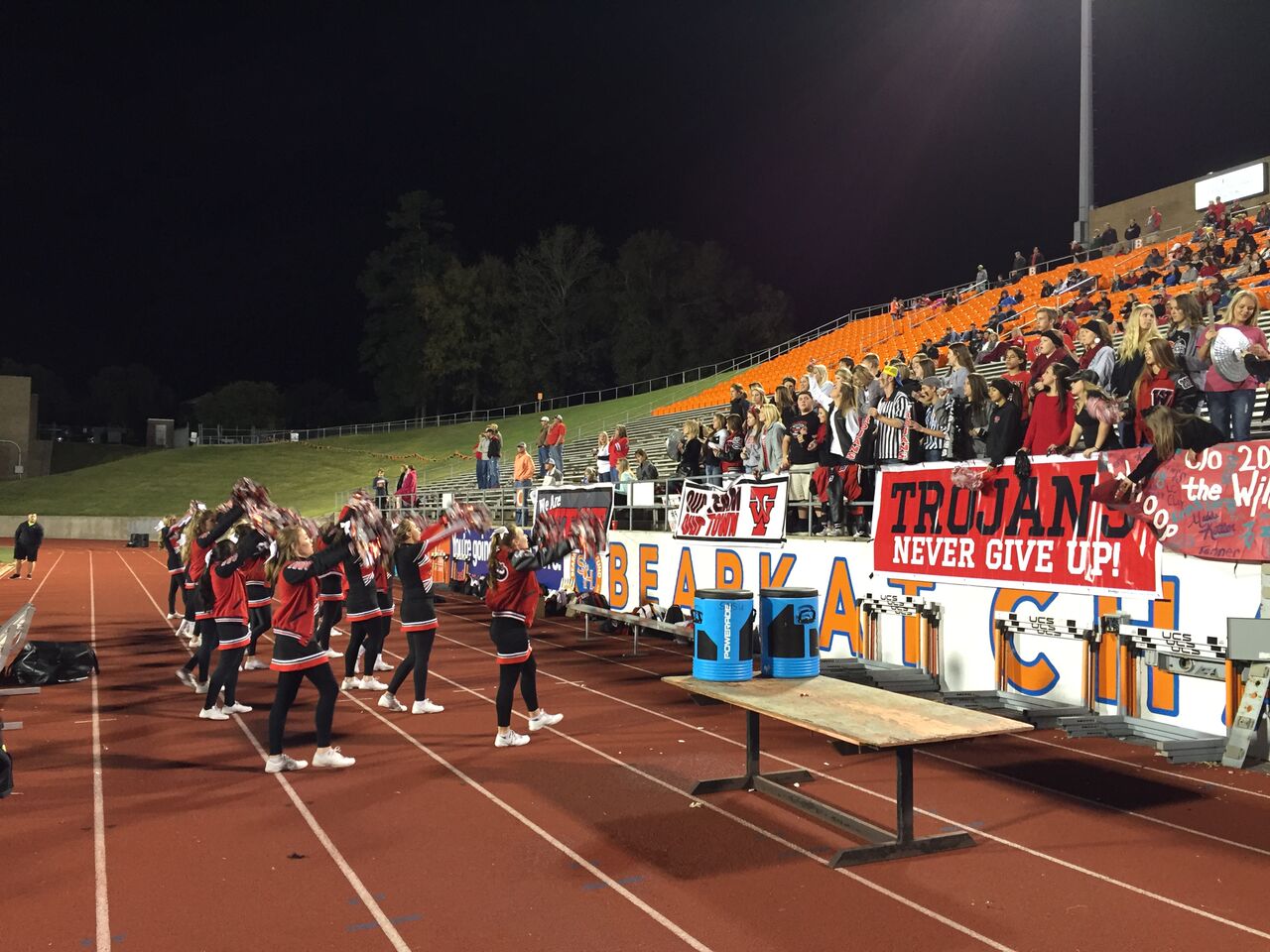
A small-town Texas quarterback has two minutes to drive his team 58 yards for a touchdown. If he doesn’t do it, the playoff loss will end the season and his high school football career. For many kids, it would represent the most stressful situation of their lives. Friday night in Huntsville, however, a schoolboy QB and his teammates knew they had faced challenges far greater than those posed by onrushing defensive linemen. 

Two and a half years earlier, senior signal-caller Mason Tobola had seen his town put through stress that dwarfs that of even the most high-pressure football game. He witnessed a fertilizer plant explosion that killed fifteen people, injured scores of others, and damaged surrounding buildings beyond repair. That night, students had to help the injured, and in the intervening years, they’ve watched their hometown of West, Texas rebuild damaged structures and psyches. The experience has left those who made it through with valuable perspective.

“I think it opened up everyone’s eyes on the team. It made everybody realize how hard they had to work to accomplish the simplest tasks in life,” Tobola said.


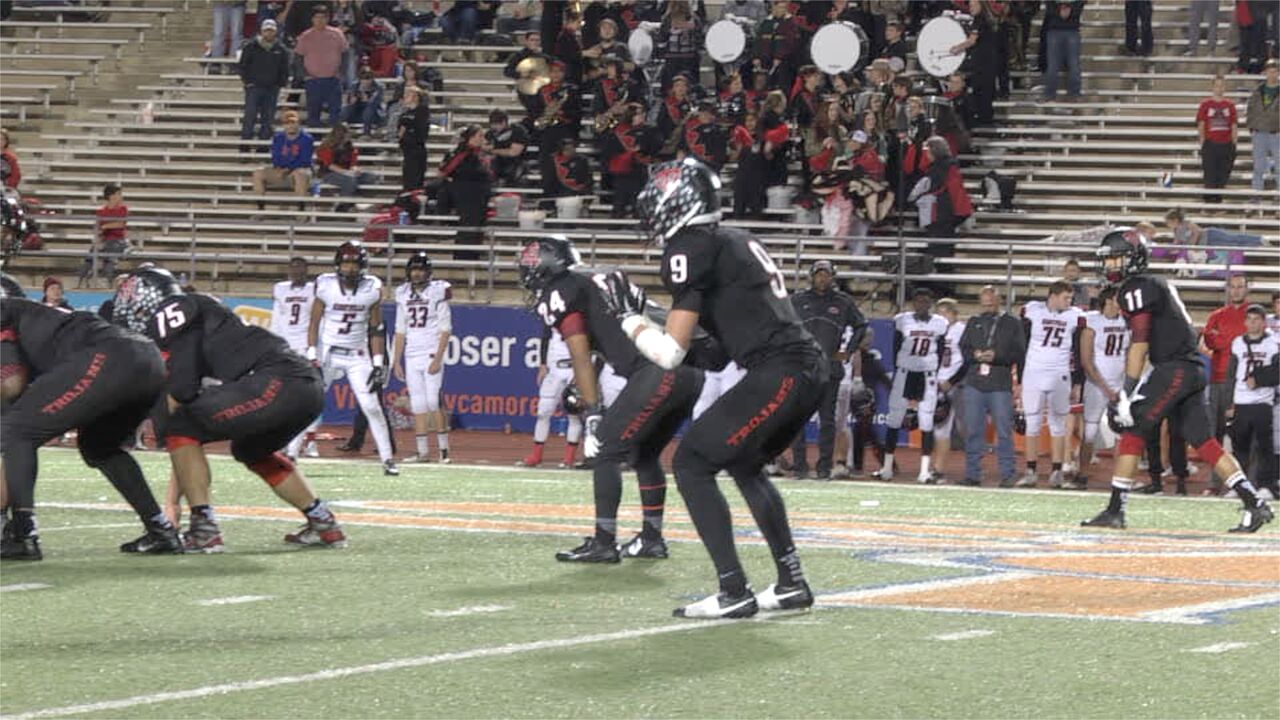
Some three minutes of clock time before the West Trojans found themselves needing a touchdown to extend their season, the players had had a lot of work to do. They had just gone down by two scores. Their opponents, the Kirbyville Wildcats, had shown resolve of their own in overcoming a nine-point halftime deficit to post 20 unanswered points and forge a 32-21 lead with just over five minutes to go in the 4th quarter.

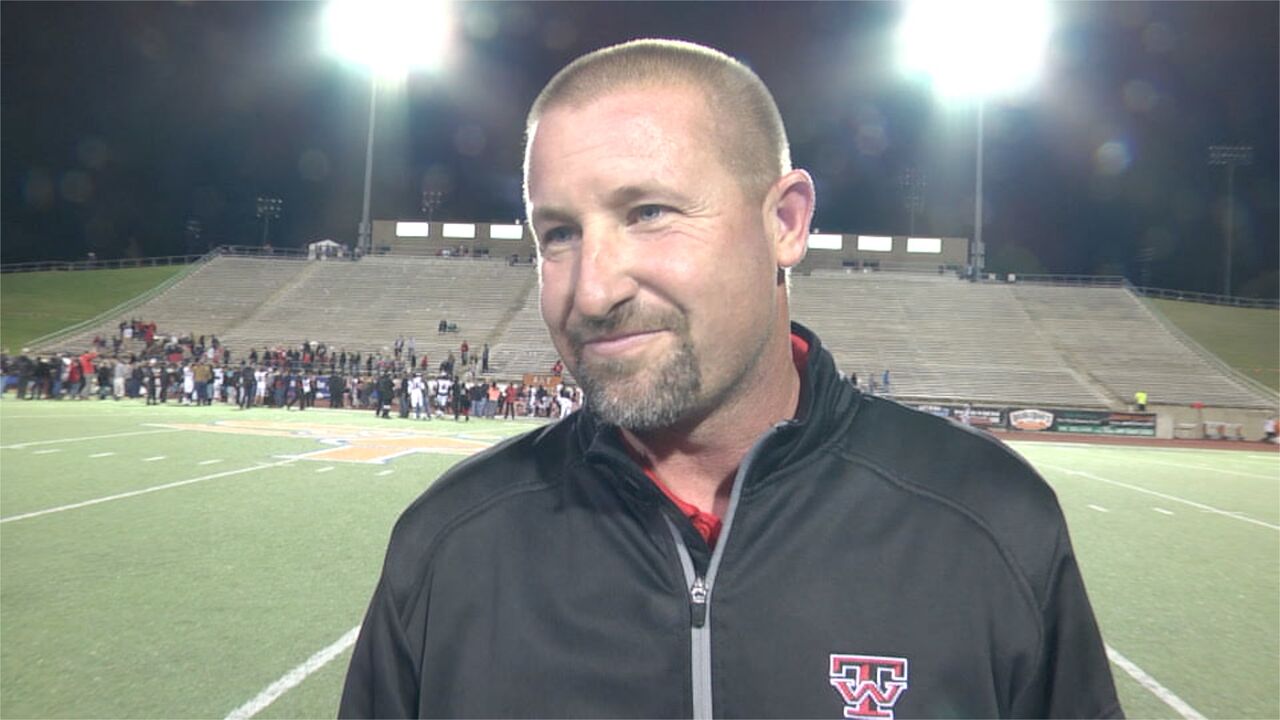
A coach could have found it a challenge to stay positive when his tired players missed tackles and lost control of their biggest game of the year. As his players trudged off the field following Kirbyville’s PAT, however, West Head Coach David Woodard remained relentlessly upbeat.

West Head Coach David Woodard


Coach Woodard also serves as the district’s athletic director and has kids of his own attending schools in the West ISD system. Since the April, 2013 tragedy, he has had to constantly find ways to keep himself and his charges looking forward, even as he dealt with the added challenge of rebuilding his own destroyed house.

“Kids feed off of you and they know how you feel and what you’re doing and what you’re thinking,” Woodard said. “You can’t let those negative thoughts get in your head.” He was talking about the football game, but he could have easily been referring to his responsibilities as an administrator, husband, and father.

The district has actually found a good bit of success recently on its fields and floors, many of which sustained damage in the explosion. West High School has fielded several playoff teams, including this fall’s girls volleyball squad, and the baseball team won the 3A state title this past spring. The football team, however, had not won a playoff game since 2007.

West has historically been known for strong baseball and softball teams, but football on Friday nights still matters a lot in a small Texas town. That medical personnel had to use the football stadium for triage in the explosion’s aftermath only heightened the sport’s symbolic importance. When the team won only one game in the fall of 2013, it created yet another obstacle to overcome. The way the team handled it set an example for more than just their peers.

“We all learn a lot from kids,” said Woodard. “What they’ve accomplished in these couple of years since the blast and going 1-9, it showed us adults that if you decide you want to do something and you want to work hard to get it done, then it can get done.”

A handful of today’s seniors played as sophomores on that one-win 2013 team, with underclassmen having watched it as JV, freshman, or eighth-grade players. Tobola, who started under center that year as a tenth-grader, explained that he and his teammates had turned things around “through experience and hard work, through 7-on-7, and lifting weights, just getting down and dirty and making it happen.”

The 2014 season saw the team go 7-3. They missed the playoffs after a final weekend loss to Comanche. The near-miss gave them added resolve headed into 2015.

“Everybody thought it was about time to step up and time to make playoffs and go into the postseason,” said Tobola.

They did it, too, losing only one regular season game en route to the program’s first 10-win season since 1992. In the opening round of the playoffs, Tobola kicked a PAT to defeat Troy by a point in overtime.


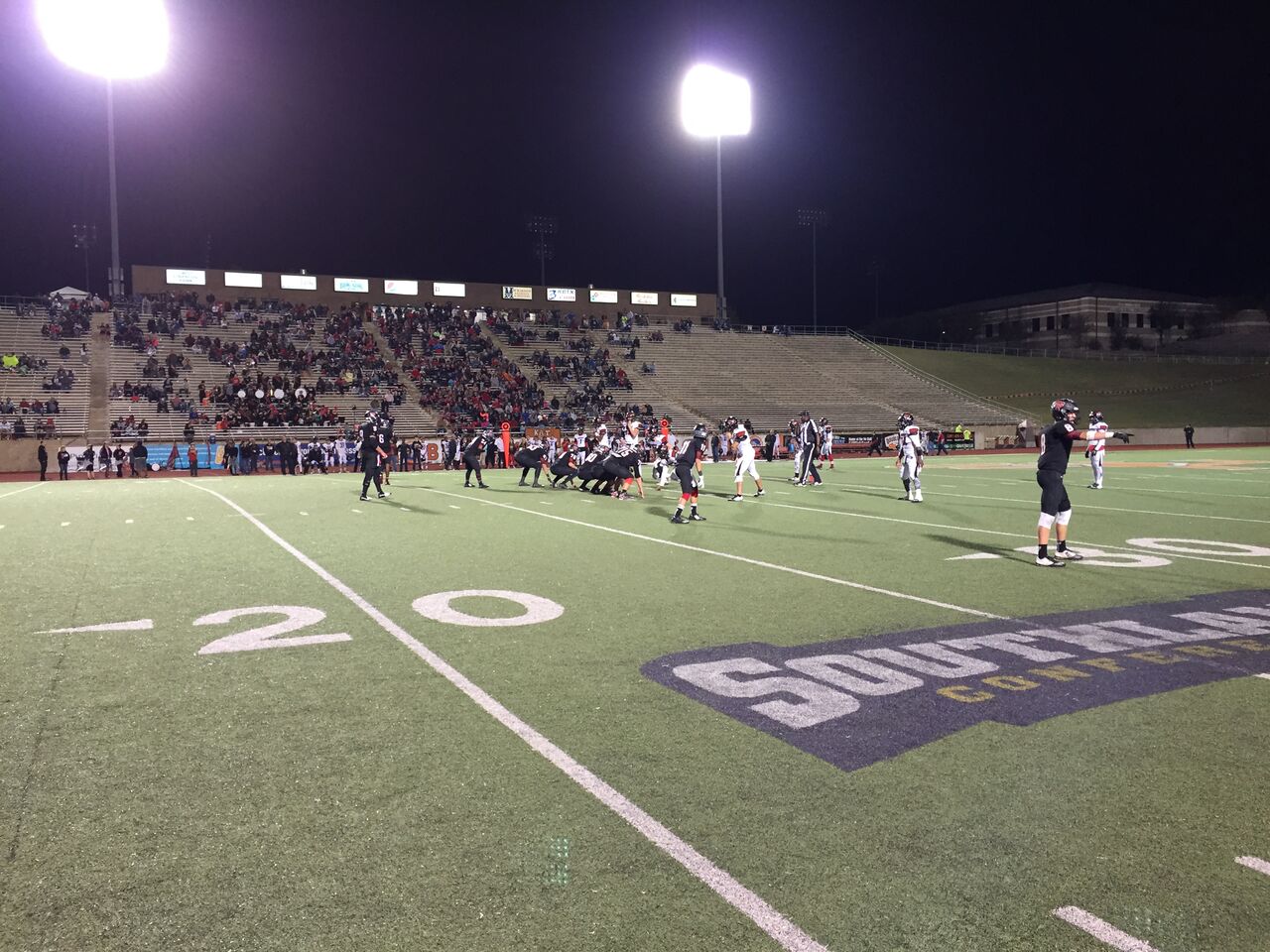
Playing on a neutral field at Sam Houston State’s Bowers Stadium in the area round, the Trojans found themselves down 12-0 early. It could have been worse save for a Kirbyville encroachment infraction that nullified a first-quarter pick six. Both teams, in fact, seemed a touch ragged in a penalty-filled first half. West overcame any jitters, however, to score three second-quarter touchdowns and take a 21-12 halftime lead.

Kirbyville, who had gone 10-1 on the season themselves, looked like the stronger team for most of the game’s final two quarters. When the Wildcats scored their third second-half TD with 5:38 left in the fourth quarter, the raucously supportive West fans quieted. Perhaps they thought about the season, that even it were to end there in Huntsville, they would fondly remember it as a marvelous experience for the school, the town, and the players.

But the season didn’t end there. The Trojans quickly drove 69 yards, with Tobola running the last four to cut the deficit to 32-27. The defense produced a three-and-out, and that’s when the Trojans found themselves with the ball and one chance to extend their season. Tobola threw to Bailey Horn in the left flat and Horn somehow eluded a horde of Wildcats to turn the short pass into a long touchdown. Kirbyville still had time for their own rally, and three quick first downs moved the ball into West territory. However, senior Trevon Harold, who had played on the 2013 varsity as a sophomore, tipped a second-down pass and junior Dawson Sulak intercepted it. The Trojans’ amazing season would continue. They will play Teague in Midlothian on Friday.

Tobola, who plays offense and defense, and kicks and punts, had fought through a fourth-quarter injury. His teammates overcame fatigue, nerves, pain, and everything else with which an athlete must deal to win a pressure-filled contest.

In the minutes following the game, as the players slapped hands with the students, parents, and neighbors who had driven more than two hours each way to support them, Coach Woodard explained what made the difference for his team. “To be able to battle back twice tonight, early in the first half and then the last five minutes, it just shows so much of what we’ve always been talking about – a kind of a never-give-up, that resiliency attitude. (I’m) so proud of them.”


Kirbyville could take pride in their players as well. The Wildcats deserved to win the game. They played their hearts out, showing skill and sportsmanship. They, too, had faced tragedy, as their coach had buried his brother earlier in the week. On the field after the game, one boy cursed his missed chances. Another wept. The loss will pain them for a long time, even as they proceed on through high school and into life, One hopes that the Wildcats will react to strife the way the West students have, and let the lessons of a setback set them up to succeed.

David Woodard understands the long-term importance of the lessons his athletes learned the hard way.

“They’re just a great group of kids that have their head on straight and that are successful in football and athletics right now. In three or four or five, ten years, you’re going to hear about them being really successful in life as well.”


Rush Olson has spent two decades directing creative efforts for sports teams and broadcasters. He currently creates ad campaigns and related creative projects for sports entities through his company, Rush Olson Creative & Sports.

RushOlson.com

Linkedin.com/company/rush-olson-creative-&-sports

Facebook.com/RushOlsonCreativeandSports

Sunday, February 1, 2015

It’s Just Deflating

In some shocking news from Melbourne this morning, authorities disclosed that Andy Murray was under investigation for tampering with the tennis balls used in his Australian Open semi-final. Seeking to negate Thomas Berdych’s power, Murray apparently surreptitiously replaced the regular lively Wilson-supplied balls with dead practice balls. (1)

The report comes on the heels of a similar scandal in another major sport. In an effort to slow down the high-scoring Golden State Warriors, Spurs coach Gregg Popovich supposedly snuck in partially deflated basketballs for the teams’ most recent meeting in San Antonio. As Popovich rested some of his tricenarian stars, the coach reportedly felt balls capable of bouncing only to the Warriors’ kneecaps would help his D-Leaguers compete. The ploy did not succeed to the degree Popovich may have hoped, as Golden State prevailed 23-21 in overtime. (2)

After the Detroit Red Wings' use of a germanium-powered syringe to hollow out pucks, the Yankees de-cored baseball incident, and the North Korean badminton team's lighter-than-air shuttlecock fiasco, the sports world has now lost complete trust in the integrity of its spheroids, cylinders, and those rocks with the handle on top.

So why did I just make up all of the preceding malarkey? Because it occurred to me just how difficult it is to futz with the balls in any professional sport besides American Football. In pretty much every other pro sport, some neutral official selects and monitors the game balls to a greater degree than football. Baseball umpires even rub them with mud. Home field may confer many advantages, but the ball won’t be one of them.

In pro football, however, the team selects the balls, breaks them in during the week, and supplies them for their team’s offense to use during the game. Theoretically, this practice should improve offensive performance, since players should perform better using a ball with which they have a comfort level. The officials do check the balls, but the New England Patriots have allegedly found a way to circumvent the inspection.(3)

So how to deal with the problem (if, in fact, the Patriots are guilty, which is not certain(4))? Several solutions present themselves :

·      Make the Pats forfeit their next game if they are guilty. Unfortunately, a bunch of people planned parties around said game and Katy Perry probably moved tour dates to be there, so you may have to do something else.
·      You could punish the offending team and its personnel by taking away a first-round draft pick and fining them $750,000. That’s a pretty stiff penalty that would almost certainly serve as a deterrent to cheating, as it did the last time the NFL imposed it, on the 2007 New Engl . . . oh, never mind.
·      Another deterrent : let the opposition choose the footballs the Patriots use next season. At least a chocolate football would taste good.(5)
·      Use only Nerf footballs.
·      Have the league supply all the balls and the quarterbacks and receivers will tough it out. The only drawback : paying for an extra bag of checked luggage when the officials fly the balls to the game. Non-profits like the NFL can find it tough to pull extra petty cash for such an unbudgeted item.
·      Get rid of the rule altogether. Play with the ball however you want it. If a team thinks it can gain a competitive advantage by pounding it flat as a frisbee, do it. If your receivers can’t catch anyway, freeze it solid and avoid interceptions.

Of course, other sports do have plenty of cheaters. It’s just tough for them to do it through the ball itself (with Baseball Hall-of-Famer Gaylord Perry a notable exception). The best solution to all of those problems comes through sportsmanship. Teach children cheating is wrong and they won’t grow up to believe it’s okay to win through violating the rules.

The latter solution faces exceedingly long odds against succeeding, and that proposition is what’s truly deflating.


Rush Olson has spent two decades directing creative efforts for sports teams and broadcasters. He currently creates ad campaigns and related creative projects for sports entities through his company, Rush Olson Creative & Sports.

RushOlson.com
Linkedin.com/company/rush-olson-creative-&-sports
Facebook.com/RushOlsonCreativeandSports


Footnotes

(1) Made-up story – no footnote

(2) IBID.

(3) Jeff Pini, “A Lot of Hot Air? Here Are The Facts About Deflategate,” boston.com. http://www.boston.com/sports/football/patriots/2015/01/31/lot-hot-air-here-are-the-facts-about-deflategate/Ae6bx4CTvqk5rj3kgSvDCK/story.html  (Accessed February 1, 2015)

(4) Ian Rapoport “More details on the investigation of Patriots' deflated footballs,” NFL.com. http://www.nfl.com/news/story/0ap3000000466783/article/more-details-on-the-investigation-of-patriots-deflated-footballs (accessed February 1, 2015)

 (5) “Chocolate Football,” Phillips Chocolates.

http://www.phillipschocolate.com/prodinfo.asp?number=CHFB (Accessed February 1, 2015)