Showing posts with label soccer. Show all posts

Saturday, April 7, 2018

The Fort Worth Vaqueros and Their Jersey Sponsor

This post originally appeared in the Blotch section of the Fort Worth Weekly's website. To consume it there : https://www.fwweekly.com/2018/04/06/sports-rush-a-new-look-for-the-vaqueros/

The Fort Worth Vaqueros will adopt a new look this year. They actually do so every year, as the team uses a lottery system to determine which of its sponsors will adorn the front of its jersey for the entirety of the season.
This spring, Miss Fort Worth randomly chose one of our favorite local businesses to receive the coveted front-of-shirt spot. As in, really one of our favorites. A lot.
Watch this video interview with Vaqueros general manager Tobias Lopez to hear about who got the slot and what those who wear the jersey (both players and fans) have to look forward to this year.
The Vaqueros open their regular season May 5 in Houston, with a home opener at Farrington Field May 12 against Tyler FC. Season tickets are on sale now at fortworthvaqueros.com.
Rush Olson has spent more than two decades directing creative efforts for sports teams and broadcasters. He currently creates ad campaigns, television programs, and related creative projects for sports entities through Rush Olson Creative & Sports, Mint Farm Films, and FourNine Productions.
Creekside_300x250_2018.04.04
The Vaqueros open their regular season May 5 in Houston, with a home opener at Farrington Field May 12 against Tyler FC. Season tickets are on sale now at fortworthvaqueros.com.

Tuesday, May 23, 2017

Deep Colors

This post originally appeared at the Fort Worth Weekly's website. To view it there : https://www.fwweekly.com/2017/05/23/sports-rush-deep-colors/


Sometimes, color matters in sports. Uniforms help us tell the competitors apart. We express allegiance to our teams by wearing silver and blue or victory green. Ballparks contrast a dark batter’s eye backdrop against a white baseball.

In art, color becomes even more essential. A muted palette may suggest one set of emotions, while bright colors imply something whole different. Use of color can define an artist.

Sometimes the worlds of sport and art colorfully intersect, as I noticed on a recent visit to the Dallas Museum of Art. Along an upstairs wall hangs a painting by Ángel Zárraga called La futbolista. The museum brought it in as part of the exhibition México 1900–1950: Diego Rivera, Frida Kahlo, José Clemente Orozco, and the Avant-Garde, an installation of nearly 200 works executed in multiple media by early-20th century Mexican artists.

Zárraga’s painting depicts a female soccer player posed in uniform, seemingly ready for a match to begin. Dr. Anna Katherine Brodbeck, The Nancy and Tim Hanley Assistant Curator of Contemporary Art at the DMA, said via email that “Zárraga, like many other artists in the exhibition, was interested in portraying strong, modern women, engaged in tasks beyond what would have been expected of them in the traditional society of pre-revolutionary Mexico. A woman football player exemplifies this modernity.”

The 1910-1920 Mexican Revolution, which deposed a long-time dictator and hoped to shape a more forward-looking and equitable society, provides context for the artists’ expressions. As their countrymen and women looked to elevate their nation’s status, the painters, sculptors, and filmmakers tried to do their part. Brodbeck describes them as “some of the most sought-after artists in the US and Europe,” with Rivera, for instance, receiving just the second one-person exhibition at New York City’s Museum of Modern Art. The art world saw value in the images these men and women created. It didn’t matter that they came from a Central American country many might have previously considered culturally backwards.

In sport as in art, performance should, and often does, trump all else. A Jackie Robinson can show that African-Americans belong in Major League Baseball; A Doug Williams can prove a black quarterback can win a Super Bowl; A Dominican, David Ortiz, can pretty much own a New England city known for bursts of racial intolerance.

It’s tougher to smear a minority group as inferior when members of that group reveal themselves as world-class practitioners of something. The idea that governments should limit business or personal contacts with people solely because of national origin seems less viable when we can envision those persons being the next Diego or Mariano Rivera.

Brodbeck noted, “The exhibition highlights historical moments of close cross-cultural exchange between the US and Mexico—times when pan-Americanism was politically attractive– and is proof that there is strength in our unity and our similarities vastly outweigh our differences.”

The DMA’s México 1900–1950 presents an opportunity for visitors to experience, and more importantly, appreciate a culture sometimes portrayed as second-class. Art devotees know it to be otherwise – this show debuted in Paris, France, not exactly an artistic backwater.

Will it succeed in bringing people together? Kimberly Daniell of the DMA’s public relations staff supplied me with some of the glowing comments visitors have made about the exhibition, including phrases like “The show is spectacular” and “It was fabulous!” As I examined some of the commenters, I spotted surnames like Gomez, Olmos, and Gutierrez. But I also saw monikers like Feingold, Tran, and Sprague writing things like “Love Frida!“ While I don’t know the specific backgrounds of any of those involved, that feels like cross-cultural exchange to me. Based on the attendance figures Brodbeck supplied, more than 50,000 people have participated in such exchange so far, and the exhibition will run through July 16.

Colors often matter in sport and art. But sometimes they don’t. The color of the hand that wields the paintbrush or shoots the basketball carries no importance. It’s what ends up on the canvas or in the hoop that is what we care the most about. That distinction is actually pretty black and white.


Rush Olson has spent two decades directing creative efforts for sports teams and broadcasters. He currently creates ad campaigns, television programs, and related creative projects for sports entities through Rush Olson Creative & Sports and FourNine Productions.
 
RushOlson.com
Linkedin.com/company/rush-olson-creative-&-sports
Facebook.com/RushOlsonCreativeandSports

Thursday, March 2, 2017

Leicester and Longhorns and Aggies, Oh My

This post originally appeared at the Fort Worth Weekly's website. To view it there : https://www.fwweekly.com/2017/03/01/sports-rush-leicester-and-longhorns-and-aggies-oh-my/

A lot of Longhorns and Aggies probably looked at Leicester City F.C. this week and said, “oh yeah, we’ve been there.”

OK, in actuality, they probably didn’t. In their defense, the Leicester folks likely didn’t spend much time considering the Texas A&M and University of Texas athletic experiences in their calculations, either.

Here’s what happened. Last week, English soccer club Leicester City fired its manager, Claudio Ranieri. The team has not played well this season in the Premier League and currently sits just two points clear of relegation. A bottom-three place in the standings means they would drop a level next year and have to earn their way back to the major leagues.

Relegation can devastate a club, and It’s not terribly unusual for a team performing poorly in any sport to jettison its manager during the season. In the Prem, bottom-half performers Hull City, Swansea City, and Crystal Palace had already done so. But here’s the thing : none of those clubs won the league last year. Leicester City did, taking home a top-fight crown for the first time in its history.
Of course, they had finished second once before – in 1929. For most of their existence, the Foxes would have been happy to just to take up a standings place in the best competition, and they haven’t done so consistently. As recently as 2009, they played a season two rungs below the top level. So it was generally acknowledged that what they did last year was amazing. And unprecedented. And a Red-Sea-parting-grade miracle.

The veteran Italian manager took that team to those heights and was generally given a decent amount of credit for playing a significant role in the process. This season he’s faced criticism for his offseason moves and his coaching. None of us really know what has gone on behind-the-scenes at Leicester, but one wonders if it had truly reached a point where Ranieri was not good enough to coach the team any more, less than a year after leading them to the best moment in team history.

The situation reminded me of the big state schools in Texas. I specifically thought of three coaches : R.C. Slocum, Rick Barnes, and Mack Brown. All had virtually unprecedented success and all effectively lost their jobs due in part to outsized expectations.

Slocum, a College Football Hall of Fame inductee, coached the Aggies from 1989 to 2002. He never had a losing season and won in double digits five times. The program had a total of six 10-plus-win seasons in the 86 years prior to Slocum’s arrival and has had one since his departure.

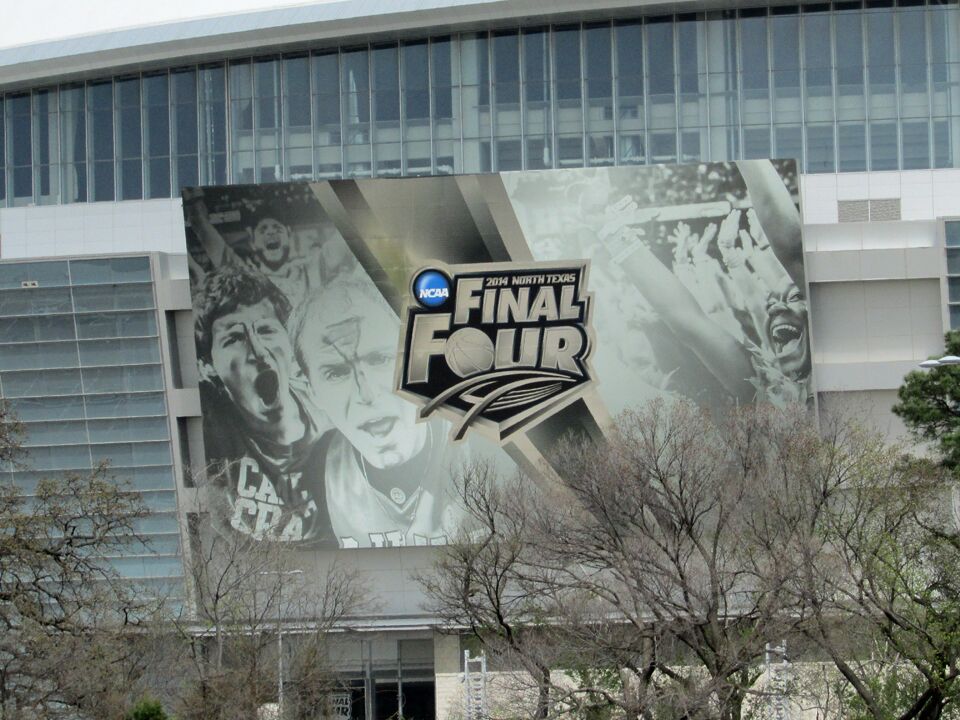
Barnes coached seventeen seasons of men’s basketball at the University of Texas before being fired two years ago. The Longhorns made the NCAA Tournament in all but one of those. He took them to their first Final Four since the 1940s. Other than his immediate predecessor, Tom Penders, no Texas coach, not even the legendary Abe Lemons, had gotten the school to more than one NCAA Tourney (though the criteria were admittedly more stringent before the field expanded). He owns the top winning percentage of any UT coach since the 1930s.

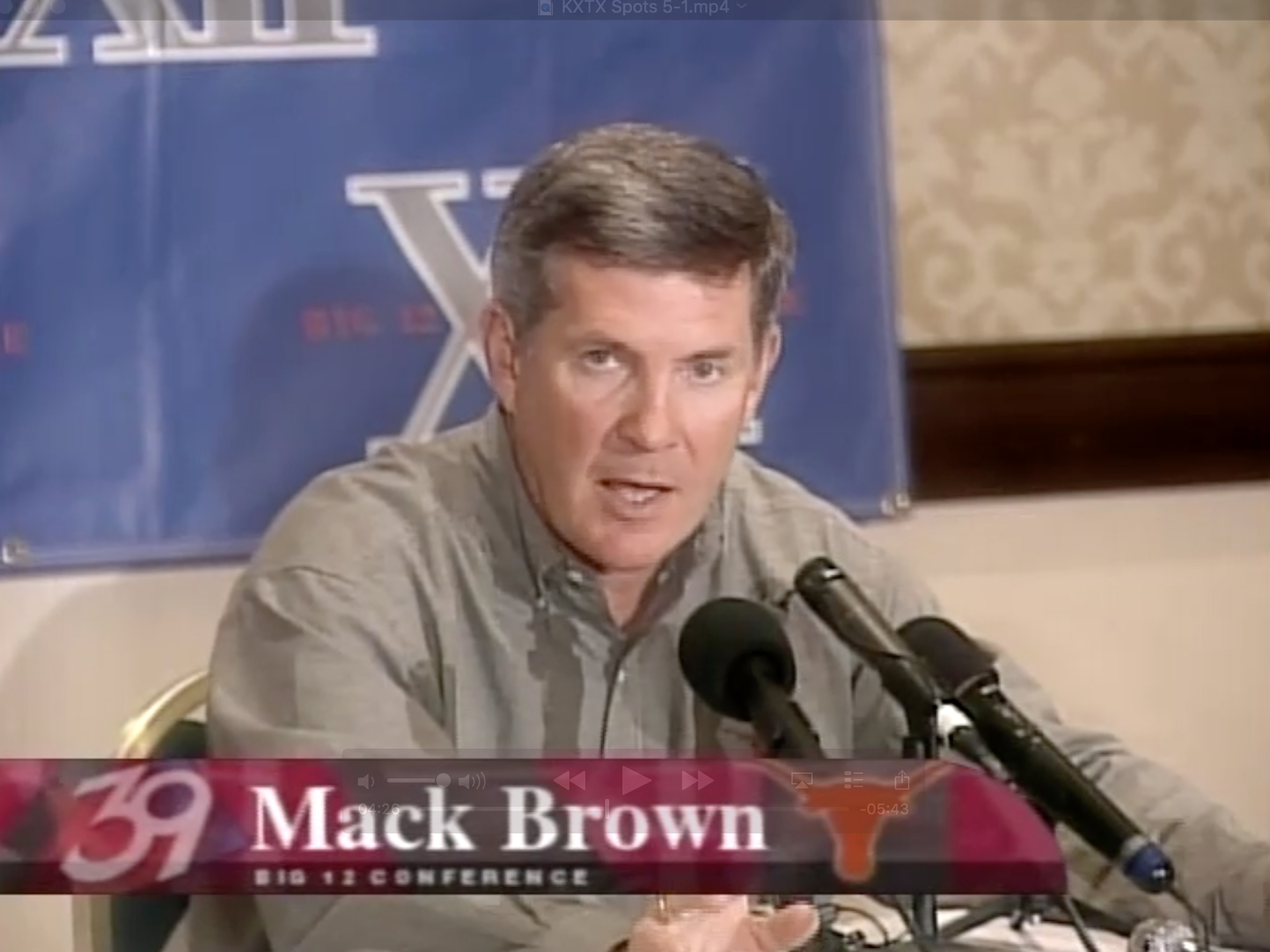
Mack BrownAs Texas’ football coach from 1998-2013, Brown put up nine years of 10 or more wins against a single losing season. He won a national title and got his team to a second championship game (they kept that one close against Alabama despite losing starting quarterback and future NFL-er Colt McCoy to an injury in the first quarter). Brown measured up against the legacy of Darrell Royal better than any of the legend’s other successors had. The program has not had a winning record since Brown moved into a special assistant role.

So why might these three have been good for Leicester to know about prior to making their decision to terminate Ranieri? Because sometimes you have to appreciate what you have. A&M football before Slocum was not a consistent winner. They won three conference titles between 1942 and 1984. While Penders started to put Texas basketball on the map, Barnes established it there, something no coach had done before. And though Texas had a strong football tradition before Brown, he took it to a level seen only once before in the program’s history, and in a different sort of era.

Past performance is certainly no guarantee of future results. Any of these coaches might well have failed to maintain the program at the level to which he had gotten it. Sometimes, however, one has to understand how hard it is to win all the time against high-level competition – and it is really hard. Maybe those in charge saw some sort of slippage in approach or work ethic from Ranieri, Slocum, Brown, and Barnes. Maybe declines in those programs would have accelerated with them in charge. But it has always seemed to me that when someone has had success, especially where none was to be found before, one should take a long hard look at the possibility of taking a step back when making a change. Scores of schools will never win a national championship, and sometimes if you try too hard to take that next step, you end up taking two leaps in the other direction instead.

Will it happen in Leicester? Will time prove their decision a correct one? What are the expectations? If they expect hardware every year, history might indicate they will have miscalculated. Of course, they do still have hopes of a trophy this season. A 1-0 win March 14 against Sevilla would propel the Foxes into the final eight of the Champions League, the most prestigious competition in club soccer. That’s where Ranieri had gotten them this year. It wasn’t good enough.


Rush Olson has spent two decades directing creative efforts for sports teams and broadcasters. He currently creates ad campaigns, television programs, and related creative projects for sports entities through Rush Olson Creative & Sports and FourNine Productions.

RushOlson.com
Linkedin.com/company/rush-olson-creative-&-sports
Facebook.com/RushOlsonCreativeandSports

Wednesday, July 27, 2016

Keeping the Olympics From Flaming Out

This post originally appeared at the Fort Worth Weekly's website. To view it there : http://www.fwweekly.com/2016/07/26/sports-rush-keeping-the-olympics-from-flaming-out/

This year, the buzz about Olympic athletes has revolved in large part around those not going to Brazil.  Some fear the Zika virus. Others will likely find themselves excluded as part of a blanket ban of Russian athletes in certain sports.
Such controversies are not unusual.


The Olympics has always had problems assembling all of the world’s best athletes every four years :


* Combat : World War I cancelled the 1916 event in its entirety. World War II stopped another four competitions.
* Boycotts : From Ireland in 1908 through the Communist countries in 1984 and 1988, numerous Games have been marred by governments preventing their resident athletes from participating.
* Apartheid : From 1964 to 1992, the International Olympic Committee barred South African athletes as a response to the country’s racial classification system.
* Women : Female athletes could not compete until 1920.
* Shamateurism : Authorities’ aversion to patrons compensating the sportsmen and women who entertained them kept us from seeing the likes of Pelé, Bobby Orr, or Wilt Chamberlain with medals around their necks, and Jim Thorpe from keeping his golds.


Pierre de Coubertin, the man who spearheaded the revival of the Olympic Games in the late 19th century, believed “The Olympic Games are for the world and all nations must be admitted to them.” It has not always been the case, and much of it has to do with the event’s nation-state system of organization.

We won’t see Paris Saint-Germain boycott Champions League fixtures in England next year because Brexit bothered its management. The NBA just moved its All-Star Game due to actions by North Carolina’s government, but we can feel assured the Charlotte Hornets will play a full home schedule next year with no withdrawals by visiting teams. Other than maybe a geographically contained disaster, like this Zika outbreak, we can’t imagine a scenario in which a club team would choose not to play in championship contests for which it had qualified. Even in the rare case of bankruptcy, a league would step in to make sure an elite team played. Such was the case with the 2010 Texas Rangers.

Club competitions can’t skip out on games because long-term success depends on their brands being perceived as consistently able to deliver a reliable world-class athletic product. When baseball games get rained out, MLB reschedules them.

The Olympics, too, has a need to maintain its brand integrity. The nature of its event and the strength of its brand mean the IOC can persevere through the absences of even some of its most iconic teams or athletes.  There are enough countries on the planet that missing a few boycotters or WADA stooges doesn’t matter. We love to root for the red, white and blue no matter whether they’re taking on the reds, the azzurri, or the bleu, blanc, et rouge. Patriotism has power.

The Olympics has to be careful, though, because while its brand remains perhaps the most powerful in sports, its success ultimately depends upon the health of its teams the same way a league of club franchises does. However, Olympic sides don’t respond to the same incentives as do regular pro teams.

Since its beginnings, Olympic competition has been organized with athletes competing for squads identified with their citizenships. While that wouldn’t have to mean dealing with the governments of participants (the Olympics could have established an independent system for certifying its competitions), from a practical standpoint it has meant heavy involvement with ministries of sport and Ted Stevens Olympic and Amateur Sports Acts.

The priorities of those who run governments (and the teams that represent them) won’t always line up with what’s best for the Olympic organization. A Robert Kraft might vehemently question the merits of a specific disciplinary procedure, but he would likely agree that ensuring a sports product free of cheating benefits his brand significantly and, is, in fact, vital to its success.

Other kinds of patriots – those who run governments – often don’t gain the same benefit from a level playing field. In their minds, some combination of national glory and personal power accumulation may matter a great deal more than notions of sportsmanship. Using a flag-wrapped end to justify unfair means is common when politicians want to assure constituents they will all win so much they get tired of it.

In our current situation, it seems Russian political authorities decided hearing the State Anthem of the Russian Federation played frequently at medal ceremonies served their needs more than playing by certain rules to which they had agreed. Such widespread sovereign swindling in athletics has precedent (see 1970s East Germany). Whatever one thinks of the World Anti-Doping Agency’s own priorities, one has to concede that the Russian authorities believed an all-out effort to secure athletic success for Russia would play better with the native populace than allegiance to standards of fair play that enhance the Olympic brand. For Russian leaders, it’s a no-lose. If their less-than-clean athletes win a lot of medals, as they did in Sochi, and get away with it, the reflected glory helps the political class. If they get caught, they can just blame it on Western vendettas and still maintain their popularity.

The Olympic movement is heavily in bed with national governments, of course. The organization requires governmental guarantees of funds before it awards an Olympiad. It can get burned on the front end of the process by corruption (see Salt Lake City, Rio, and Sochi) and on the back end by bad press about negative economic impact (see Athens, Sarajevo, Montreal, and others). They already have a problem with a lack of applicants to host their events and it could easily get worse.
Does it matter? It will if it hits the bottom line. Russia is a huge territory. Sponsors can’t be pleased to see those millions of eyeballs paying attention to something other than their ads. If only authoritarian states apply to host games in the future, as happened when Kazakhstan and China emerged as the only finalists for the 2022 Winter Games, the commercial partners won’t like the public criticism associated with helping legitimize those regimes.

The Olympic movement has the power do great good in many ways, including spreading the gospel of fitness, inspiring achievement, encouraging understanding between individuals from different regions, and entertaining billions. Fans love to root for their country’s athletes. Is there a sustainable path forward?

The issue of nations jockeying (or even worse, not jockeying) to lose billions on new Olympic venues might be solved by establishing single locations to host all games owned by the International Olympic Committee. Greece seems the least controversial from a sentimental standpoint and their central government’s current fiscal predicament would eliminate the temptation to seek subsidies. Perhaps the IOC’s home country of Switzerland would make sense for a Winter Games host. Any such choice would be fraught with issues of Eurocentrism, television ratings across time zones, and general naysaying, but finding a way to avoid repeating the controversies of Sochi and Rio should take priority.

It is beyond the IOC’s power to change the nature of politics. Extricating itself from entanglements with sports ministries is also beyond its current ability. While it should certainly take a strong look at whether the burdens WADA imposes encourage the kind of approach the Russian Federation adopted, the Olympians will never have the power to compel government actors to follow rules the latter dislike.

What it can do is set a good example. In ancient times, warring nations were expected to allow athletes to pass through their territories on the way to the games at Olympus. The modern games have provided numerous examples of how good-natured interactions between people from different parts of the world facilitate understanding, from Luz Long advising Jesse Owens to the Grateful Dead sponsoring the Lithuanian men’s basketball team.

Many believe maximizing peaceful commerce between citizens of diverse nations to be a less effective deterrent to belligerence than the initiation of force by governments. The best thing the Olympics can do is to disentangle itself from as much of its dependence on nation states as possible and use its commercial muscle and spirit of sportsmanship to prove such people wrong.


Rush Olson has spent two decades directing creative efforts for sports teams and broadcasters. He currently creates ad campaigns, television programs, and related creative projects for sports entities through Rush Olson Creative & Sports and FourNine Productions.


RushOlson.com

Linkedin.com/company/rush-olson-creative-&-sports

Facebook.com/RushOlsonCreativeandSports

Tuesday, May 24, 2016

A History-Making Rivalry

This article originally appeared in the Blotch section of the Fort Worth Weekly's website. To read it on that site : http://www.fwweekly.com/2016/05/24/sports-rush-a-history-making-rivalry/


IT'S A GAME! (Photos by Hannah Reinmiller)(Photos by Hannah Reinmiller)
 
You might have read how, back in the day, cowboys drove wild critters along the Texas Trail from Cowtown to Shreveport.

By “back in the day,” we mean mid-April.

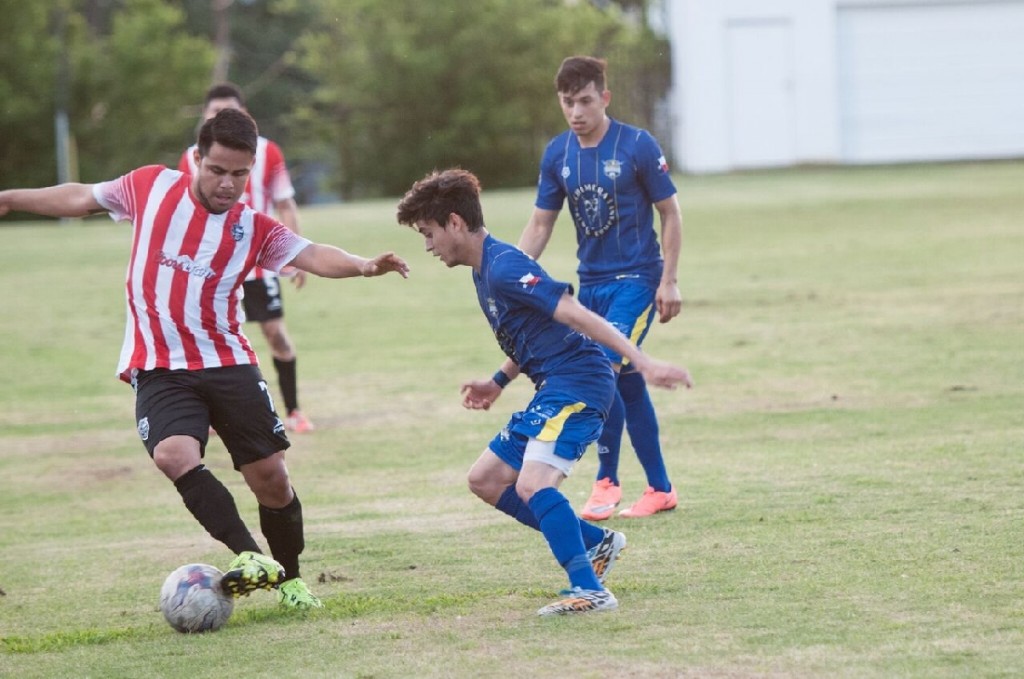
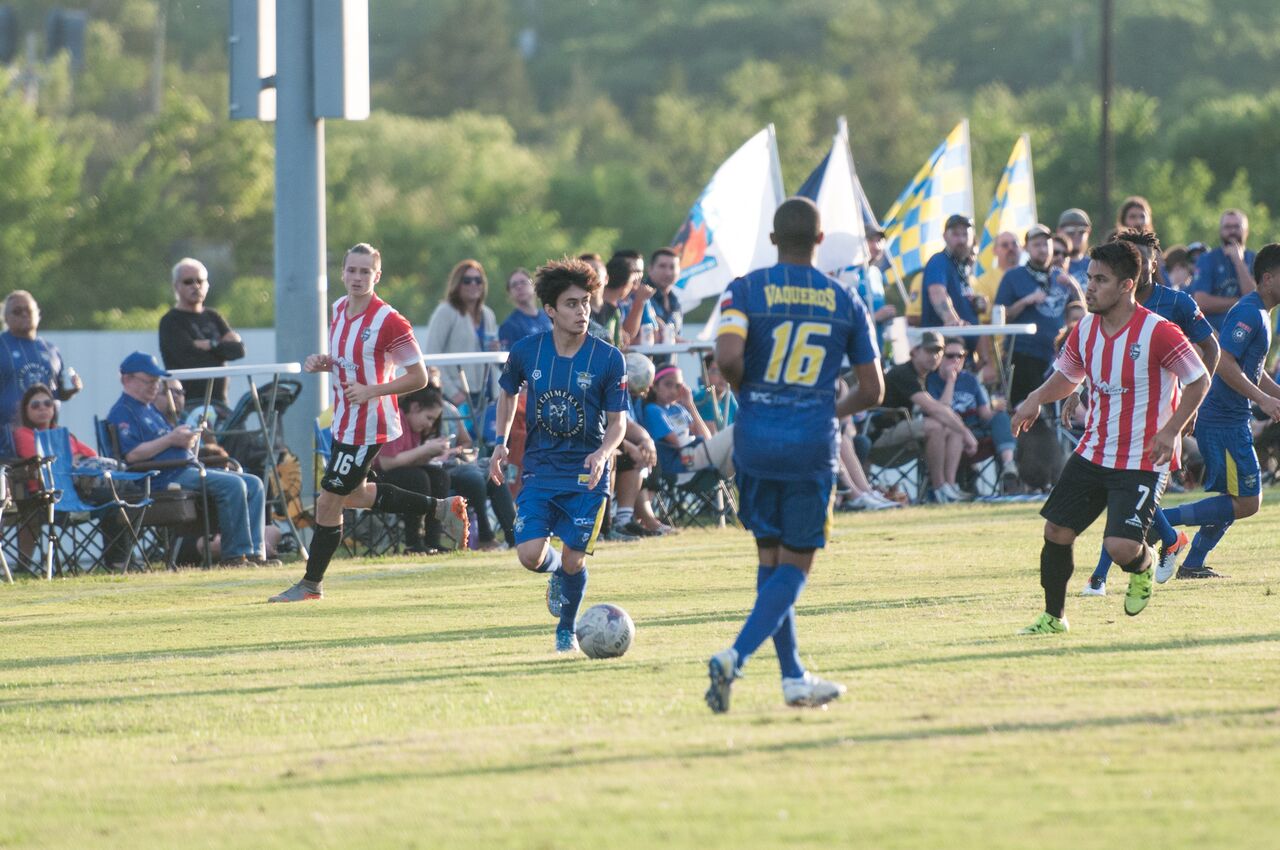
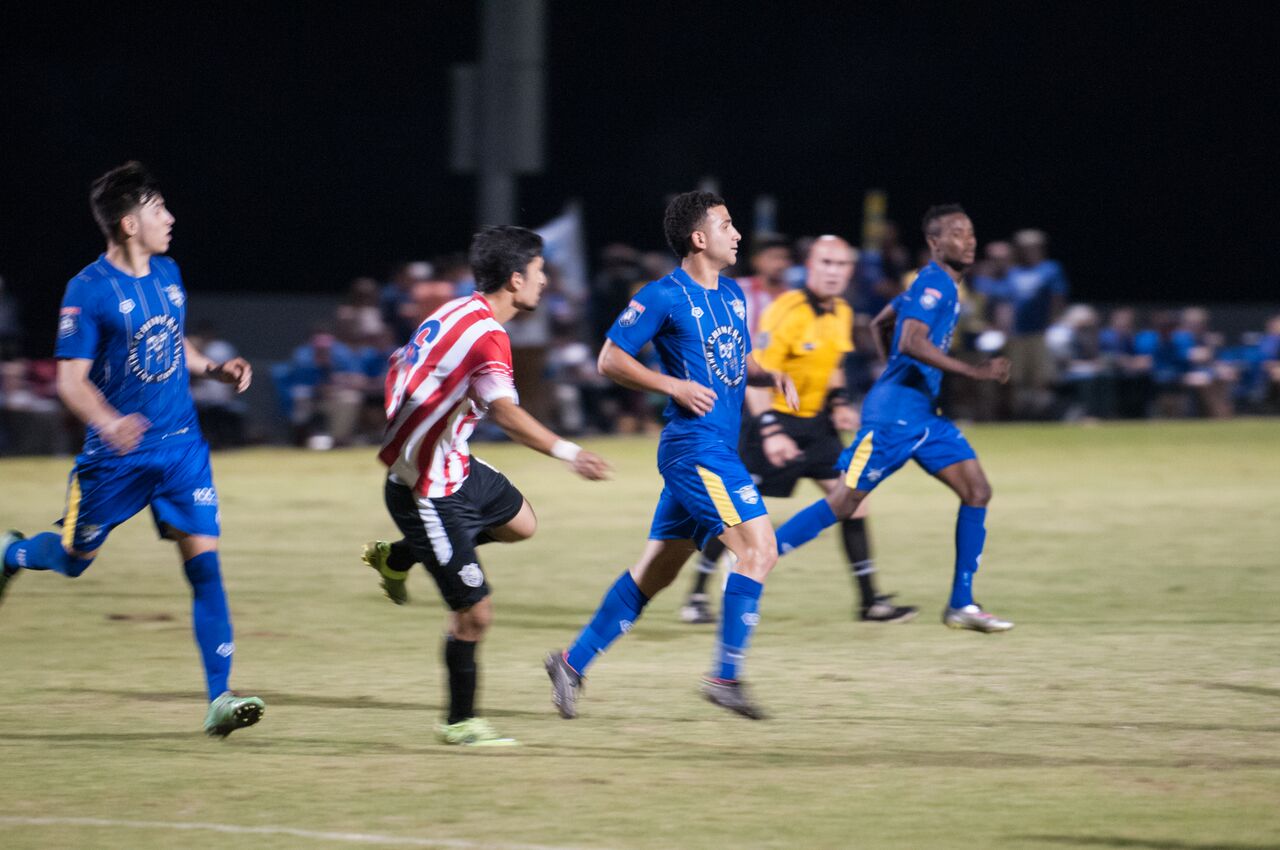
On April 16, a local outfit known as the Fort Worth Vaqueros (Spanish for “cowboy”), accompanied by a group of their most animated fans, took a trip to Northwest Louisiana to play soccer against Shreveport Rafters FC. The teams hope the match represented the start of a historic rivalry. They’ve even given it a name rooted in the cities’ shared past: The Texas Trail Series.

The idea behind the title came from Rafters co-owner Will Broyles.
“I am a huge history buff,” he explained. “When you’re promoting a soccer series like this or anything else, if you can root it in the history of the two cities, it makes it more impactful and meaningful.”


The Texas Trail ran between the two cities, with cattle driven from Fort Worth to Shreveport for distribution down the Mississippi River.

“The Texas Trail goes back to early 1800s,” Broyles said.

It followed paths long established by the Caddo Indians. Shreveport is in Caddo Parish, and Broyles pointed out that the name “Texas” comes from the tribe’s word for “friend”: “tejas.” The development of a friendly rivalry along the old trail is the ideal result for these National Premier Soccer League franchises.

“Both teams, they want to go out and win regardless if it’s a cup game or a league game,” noted Vaqueros coach Mark Snell. “It will turn into a rivalry because we want to have the trophy.”
The winning team will retain a set of mounted cattle horns. Shreveport got a leg up on acquiring the talisman with a win in the first game of the two-leg series. It was an unusual contest.

“We planned to play one goalkeeper each half. The agreement was that we would play by NPSL rules, with which there’s no re-entry, meaning once you’re subbed off, you’re subbed off. We pretty much dominated the game, had a lot of chances. Their goalkeeper played very well,” Snell explained.
“The second half, we subbed our goalkeeper in. We only bring two goalkeepers, of course. Within ten minutes, there was a bad back pass to the goalkeeper and he had to come out and take down with a strong tackle the opponent and it was a last man call, meaning it was an automatic red card. So that was a PK (penalty kick) and they scored on that. And we had to put a field player in goal as well as play a man down.”

The Vaqueros kept it close, but Shreveport won the game 2-0. It was effectively a preseason game, and the first in the expansion-Rafters’ history. It’s possible that this kind of unusual match could indeed fuel a rivalry, with fans likely to remember its unique circumstances. It turns out a lot of Vaqueros fans were there to see it. The team’s supporters group took a bus to the Port City for the game (and maybe the casinos a bit, too). Snell appreciated their support on the road.

“We are beyond fortunate with this group. They call themselves the Panther City Hellfire,” said Snell. “These guys are just die-hard soccer fans.”

Broyles took notice of the visiting crew.

“The fans of Fort Worth were impressive,” he said.

Broyles also indicated that the Hellfire did more than just cheer for their team.


“They set the tone for that game, they set the tone for our fans for the season,” he noted. “Because everything was new, nobody in our crowd knew how the stands looked. When the Fort Worth contingent marched in with drums and flags, it gave us something to aspire toward. Our guys rallied. They got together the next game and we had drums. Now we actually have a trombone in our supporters group. We’ve got the flags.”

Fort Worth, then, may have helped fuel this budding rivalry by showing the Rafters’ own passionate fan club, now known as the Riverjacks, the right path to follow. Broyles expected many of his squad’s fans to travel the Texas Trail (whose route I-20 mirrors) tonight, when the series concludes with a game at the Vaqueros’ Martin Field. Perhaps they’ll be able to say they saw something historic.


Rush Olson has spent two decades directing creative efforts for sports teams and broadcasters. He currently creates ad campaigns, television programs, and related creative projects for sports entities through Rush Olson Creative & Sports and FourNine Productions.


RushOlson.com

Linkedin.com/company/rush-olson-creative-&-sports

Facebook.com/RushOlsonCreativeandSports


Tuesday, March 8, 2016

Should Major League Baseball Expand Internationally?

Should Major League Baseball expand internationally?

The subject came up recently in a broadcast on the Phil Naessens Show radio program. You can listen to how Phil and I discussed the issue here : http://www.philnaessensshow.com/atlanta-hawks/how-to-make-fantasy-hockey-more-popular/

How U.S. sports leagues and teams market themselves abroad has been an interest of mine since I worked for one. How can U.S. sports entities generate more business outside the country? Phil and I discussed how expansion has drawbacks in terms of time zones and domestic broadcast contracts. Single exhibition games have limited reach.

I have always felt that freeing up teams to do more of their own marketing outside the country the way association football teams do might represent a lot of the solution. 30 creative teams thinking of ways to push baseball brands, instead of one MLB International office, could power growth.

I wrote about it more extensively here : http://rusholson.blogspot.com/2014/02/teams-need-to-get-out-more.html

I am always happy to discuss big picture sports business solutions - connect with me on LinkedIn or through my website at rusholson.com.


Rush Olson has spent two decades directing creative efforts for sports teams and broadcasters. He currently creates ad campaigns, television programs, and related creative projects for sports entities through his company, Rush Olson Creative & Sports.


RushOlson.com

Linkedin.com/company/rush-olson-creative-&-sports

Facebook.com/RushOlsonCreativeandSports

Wednesday, March 2, 2016

Sports' Spring Break

This post originally appeared on the Arts page at the Fort Worth Weekly. To read it on that site : http://www.fwweekly.com/2016/03/02/sports-rush-five-reasons-march-is-mad/

 
R1
The name “March” sounds like a military PT regimen. The sports phrase most associated with the month implies a certain mad-as-a-March-hare kind of crazy. And most April Fool’s Day pranks are planned during its 31 days. Any way you look at it, March is a funny sports month. Here are five reasons why.


Football-free
It’s typically the only month of the year with no American-style football. The Arena League doesn’t start until April. NFL and CFL training camps remain a ways away. The long-defunct USFL and XFL tried it, and organizations like Major League Football might give it a try again, but it has generally remained unfootballed. We do get to watch professional Association Football, as the Major League Soccer season starts this week and European leagues continue.

The Biggest International Events Avoid It
It’s not quite cold enough for Winter Olympics, but not quite warm enough for the summer games. In fact, no Olympic Games, FIFA World Cup, or Rugby (Union) World Cup has ever been held in March. The World Curling Championships have traditionally taken place during the third month, though, so there’s that. MLB has also staged the World Baseball Classic every three or four years in March, but it hasn’t really risen to the level of the other big global events. When held in the southern hemisphere, the iCC Cricket World Cup probably comes the closest to putting the month on the global stage.

No Playoffs
No major U.S. league holds playoffs in March. The period joins July, August, and September as the postseason-less season, what with the World Series stretching into November now and the MLS Cup pushed to December. We don’t have any All-Star Games this time of year, either. Pro hockey and basketball certainly have compelling games as teams jockey for playoff position, but you also have some squads playing out the string after February’s trade deadlines.

Spring Training
No other sport gets so much traction out of its ramp-up period. Major League Baseball plays a whole schedule of preseason games, charges normal prices for them, and nobody minds. The national pastime has it sweet that respect. The home fans don’t complain that meaningless games were included in season ticket packages, the franchises make additional money when those fans travel for a snowbirding experience, and they also get to sell tickets and t-shirts to the natives of whatever Cactus or Grapefruit League municipality built them a charming ballpark.

Plus, because no regular season games are played in March, baseball teams will sometimes celebrate the month’s most noteworthy holiday later in the year. A number of teams do “Halfway to St. Patrick’s Day” promotions for September 17th games. You’ve really got a month figured out when you can make money off it 20-something weeks after it ends.

March Madness
Well, yeah, Month 3 does get wild sometimes. Certainly, the United States’ most heated March sporting event comes from the college ranks. The month inspires substantial passion among college basketball fans and those of you who chose the right upsets in your office bracket pool.


March ostensibly comes in like a Lion (Bobby Layne vintage) and goes out like a, well, Lion (Dan Orlovsky vintage). In reality, it’s pretty laid-back throughout, reflecting more anticipation than finality. Even March Madness now concludes in April.

For the most part, March seems to be the spring break month for students and sports fans. It’s a chance to chill out and maybe read a good sports blog post or two before baseball home openers and Stanley Cup Playoffs and Champions League Finals demand your most urgent attention and some face-painting, chest-bumping intensity. See you on the beach.


Rush Olson has spent two decades directing creative efforts for sports teams and broadcasters. He currently creates ad campaigns, television programs, and related creative projects for sports entities through his company, Rush Olson Creative & Sports.


RushOlson.com

Linkedin.com/company/rush-olson-creative-&-sports

Facebook.com/RushOlsonCreativeandSports


Friday, July 10, 2015

The Liverpool Way: Texas Style

The goalkeeper dived to his right. His outstretched hand made just enough contact with the ball to deflect it over the crossbar. As he landed, the red “Liver bird” logo on his left shoulder hit the ground with the rest of his torso. He stood, yelled at his defense, and got set to defend the ensuing corner kick.
While a home game for Liverpool, it did not take place at historic Anfield in Liverpool, England.
It was in North Fort Worth.
Specifically at the Eagle Mountain-Saginaw school district’s Rough Rider Stadium.
And it wasn’t technically the Reds in action – no one was expecting to see Steven Gerrard, the Liverpool legend who recently became a member of the Los Angeles Galaxy. It was the Liverpool Warriors, who don’t compete in the Premier or Europa leagues but in the National Premier Soccer League, a semi-pro league that represents the third tier of U.S. soccer.


The Warriors, however, are still affiliated with the U.K.-based franchise. In 2009, North Texas businessman Peter Brody worked out an agreement with the Merseyside club to not only use the name of Liverpool FC America but also establish in-kind support for an academy.
“Our contract allows us to have the United States market,” said Tim Trevino, who oversees business relations and marketing for LFCA, whose office is in The Colony. Their players wear their trademark red shirts on fields from Rockwall to Burleson, and they also just reached an agreement to conduct activities at Rolling Hills Park in Fort Worth.
“One of the parents who has a child that plays in our club works for the Fort Worth Parks Department and he was seeing the growth of Liverpool. He was seeing a lot of things that he liked and actually set up a meeting with their Parks Department,” Brody explained. “They’re going to allow us to train teams out there, to run tournaments, and to help promote the Liverpool Way, the Liverpool brand out of Rolling Hills. We pay them a fee for usage of the field.”
Any clubs or players, Trevino said, “in the United States that [have] interest in being part of Liverpool [have] to come through us.”
Unlike the dozens of other soccer clubs and academies in North Texas, some also with major club affiliations, the LFCA folks believe their superior curriculum differentiates them from the rest. Technical Director Armando Pelaez also feels LFCA is more integrated with its parent club than its North Texas competitors are with theirs 
“We are part of Liverpool directly,” he said. “As you can see, we are called ‘Liverpool.’ It’s not ‘Solar’ or ‘Texas,’ and then they have the little logo that says, ‘Manchester City’ or ‘Chelsea.’ We are Liverpool.”
Brody explains further. “A lot of clubs will create kind of what we call a ‘patch on the sleeve’ relationship, where you’ll maybe do a camp or you’ll pay some money to one of the big England Premier League clubs.” He indicated that those sorts of relationships don’t typically go much further, and he feels the Liverpool relationship runs much deeper. 
The last time a North Texan got involved with Liverpool soccer ownership, it turned out poorly for everyone involved (except for maybe some lawyers).
In February 2007, Tom Hicks bought half of Liverpool FC in England, splitting the purchase with partner George Gillett. At the time, Hicks owned the Texas Rangers and Dallas Stars and Gillett the Montreal Canadiens. The Americans generated goodwill early on by authorizing sizable spending in the transfer market, roughly equivalent to the free-agency period of the big four American sports. But the good feelings soon dissipated as the debt-burdened ownership fought among themselves, alienated supporters, and failed to break ground on a promised new stadium. Hicks and Gillett unwillingly sold the club to Boston Red Sox owner John Henry in 2010, and the legal fallout lasted until 2013. By then, the Rangers and Stars had gone through bankruptcy and Hicks no longer held his once-significant sports empire.
The LFCA operation’s aspirations differ from the ones Hicks failed to realize. Brody made his mark in the soccer business by setting up Blue Sky Sports Centers in 1999. He now has locations in Keller, Euless, Allen, and The Colony.
 Through the Liverpool partnership, he hopes to create a nationwide system of clubs in the United States that all bear the Liverpool brand name.
 Dan White, Liverpool FC’s head of soccer schools, said he has reason to expect solid results from this Texas collaboration.
“The most important thing [about LFCA] was the quality of the overall program, ensuring that the very best environment is in place for the players to thrive,” White said via e-mail. “It was also important that they share the same values as LFC and are continually looking to improve the way they operate.”
Brody began the Liverpool affiliation while looking for a superior training program for two of his children who played soccer.
“I started looking around to potentially create something that was very kid-focused and kid-friendly and was also going to be focused on the development, and yet I wanted a strong enough brand that would help us really drive forward in a very crowded market. And so I started reaching out to Premier League clubs, because the brand is probably one of the best in the world. And one of the clubs that was at least willing to hear what I had to say was Liverpool.”
Brody began the relationship by working with supporters groups.
“After two to three years of trying to build the club and build the relationship with Liverpool, they came back and said, ‘We really like what you guys are doing, we like how you are doing it, let’s go ahead and make this an official relationship,’ ” Brody recalled.
 The affiliation comes through Liverpool’s International Academy program, which works with local clubs in a dozen countries.
 “In our international academies and soccer schools around the world, we provide opportunities for young players to play The Liverpool Way,” White said. “The way we do this is via an authentic training program which offers an all-around education for the young participants, helping to improve both their abilities on the pitch and their life skills off it.”
 For Liverpool, the academies provide a way to stretch their global reach. The brand loyalty they build through grassroots marketing can translate into merchandise sales and eyeballs for sponsors. From a soccer perspective, it allows them to develop players who could one day contribute to their team on the pitch.
 “These programs are about taking the club to the fans no matter how far they live away from Anfield,” White said. “It’s also about playing our part in the development of the game on a local level through both coach and player education.”
With exclusive rights to run Reds-affiliated clubs in the United States, LFCA already has operations in South Carolina and Florida in addition to five regions in Texas. And further expansion is on the way. Trevino said they’re currently talking to approximately 30 local clubs interested in signing up with Liverpool to “have a competitive edge in their particular market.” 
LFC and LFCA vet prospective clubs based on factors like size of staff, facilities, and number of “A” licensed coaches, the top coaching level established by the United States Soccer Federation, which runs all organized soccer in America.
Liverpool-affiliated clubs are given access to proprietary “Boot Room” insights and are expected to teach the game the way the parent club dictates. The “Boot Room” draws its name from a former Anfield space of the same name where boots (soccer shoes to Americans) were stored and coaches planned strategy.
The Liverpool Way dates back to 1892, when the club formed amid a dispute with the existing Everton FC club. (The two teams are still intracity derby rivals.) It adopted its city’s “Liver bird” symbol as its own in 1901, the same year the team won its first league title. The first team had on-and-off success until the 1960s and 1970s, when the great manager Bill Shankly established a system that won multiple cups and league titles. Overall, Liverpool has won more European titles than any other English team and more league championships than all but Manchester United. Though recent years have seen the club garner less silverware, it has avoided relegation to lower leagues (which can happen in European sport) and regularly challenges for berths in prestigious continental competitions. Its past successes could certainly add credibility to its sales pitch to prospective club players.
The large and devoted fan base embraces tradition. “You’ll Never Walk Alone,” from the 1945 Rodgers and Hammerstein musical Carousel, was not only a hit in 1963 for Liverpool’s second most famous musical export, Gerry & The Pacemakers. The song also quickly became the team’s anthem. Fans sing it before every home game and often at other junctures as well. And The Kop, named for a historic Anfield terrace, has become a term used to mean the seating section, the club’s most devoted supporters, or even the club itself. “Team spirit, hard work, determination, and the ability to overcome any obstacles in life” are, according to the team’s promotional materials, the Reds’ core values, values that White wants taught wherever the Liverpool brand appears.
“Our international academy and soccer school programs are about delivering an authentic LFC experience, so what we’re actually striving for on a daily basis is consistency,” he said. “Whether we are working with a young player in Sweden, India, Egypt, Japan, or the U.S.A., the core coaching is always the same.”
Like most U.S. youth athletic clubs, Liverpool FC America runs boys and girls teams across a range of ages. The youth squads bear the names of Liverpool FC legends like Shankly, Keegan, and Dalglish. Liverpool insists on adherence to club tradition, such as social media silence on the anniversary of the infamous Hillsborough disaster, when 96 Liverpool fans lost their lives. To ensure students understand the full picture, the parent club takes a hands-on approach with its affiliates’ coaches.
“We provide ongoing technical support,” White said. “We send LFC coaches to work in situ, and we welcome coaches from the U.S.A. over to Liverpool for an intensive coach education program each year.”
 LFCA coaches go to England annually.
 “We sit down, and we see all the sessions about what is going on from the youth system to the top team,” Pelaez said.
 Two LFCA academy players have already been to England for training. While it’s still a long shot that any LFCA player will end up on the Reds, he still knows that he will now be on the Premier League team’s radar.
 “We just had two coaches from the U.K. that were here running camps and programs for us that attended Warriors games and were able to look at some of the boys,” Brody said. “So if they do want to consider possibly trying to pursue soccer at even a higher level than that, it’s a great bridge for them to be able to do that.”
Pelaez has also used connections from his days as a professional player to set up a trip to the continent to showcase his American players.
 “Twenty-two players will be traveling to Europe, training over there, getting some friendly games, and being seen by the teams abroad,” he said. “If they’re good enough, probably some of them will get an offer to stay.”
 He hopes interest in his players from overseas teams will also eventually translate into opportunities to represent their country in international competitions. The United States Soccer Federation runs national sides that range in age from under 14 to under 23. Pelaez specifically cited the under-18 and under-20 teams as the ones his players might work into if they gain playing time abroad.
An athletic club system, the primary developmental model in Europe, has different tiers of teams. They typically range from the youngest kids’ squads all the way up to a first team made up of professionals playing in one of the country’s top leagues. The Warriors are at the top of LFCA’s pyramid.
 “It allows our kids a chance to play at a highly competitive level,” Brody said.
Eventually, the LFCA coaches and administrators want their No. 1 team to consist entirely of players who have come up through the LFCA system. Even now, though, a number of young up-and-comers appear in the regular lineup, some as young as 17. From a developmental perspective, having the Warriors helps LFCA determine how well they have coached and evaluated at the lower levels.
The Warriors team “is the highest level [in the American club’s structure], and it is always interesting to see how the final product works after you develop it,” Peleaz said. “You want to see if the job you did during all these years is the one that will be effective at the highest level, so you will know the truth by getting these players that you’ve been developing into the Warriors.”
 The coach hopes the Warriors can offer up-and-coming academy players the chance to play against quality competition, as well as mix in LFCA graduates who have played at the college or pro levels.
The team attracted the likes of Edvaldo Pedro, a central midfielder originally from the African country of Angola who speaks very good English. “I had played in [U.S. Soccer’s] Olympic development program for about five or six years, and I played freshman year at Lipscomb University in Tennessee,” he said.
He got on with Liverpool in America when the team started four years ago when he was only 16 years old, earning a roster spot among some 200 players who tried out in Plano. “The regular playing time helps me compete. I just want to keep developing and eventually play professionally.” 
The 2015 Warriors haven’t won a lot in the NPSL. Sitting in last place in the South Central Conference, 21 points behind first place Corinthians FC of San Antonio and 20 behind second-place FC Wichita, the team is still adjusting to the high level of play, Coach Peleaz said. After a loss Saturday to a Vaqueros side reduced to 10 men after their goalkeeper’s red card, Peleaz said he was less interested in scoreboards than developing his charges. Rather than keep his starters in throughout the game, he substituted frequently (the NPSL allows seven substitutions per game).
 “I made [all] seven subs because to me, the NPSL is still a development league,” he said.
 Coach Pelaez does believe that wins may come more frequently in the future.
 “If I was able to keep this group of young gentlemen for two or three years, it’s a fact that this group would become a champion within three years,” he said.
 The Warriors ended up in Rough Rider Stadium thanks to a connection from an LFCA coach who also works for the Eagle Mountain-Saginaw school district. Trevino said the Warriors would likely remain at the facility next season, but they won’t play in Fort Worth forever. For one thing, the stadium sits within the Fort Worth Vaqueros’ territory. More importantly, an LFCA facility under construction in Carrollton will include a 1,000-seat stadium to supplement indoor and outdoor training fields.
Brody said he chose Carrollton after the city’s parks director approached him based on the Blue Sky Sports partnerships he had created with Allen, The Colony, and Keller. He decided it made sense to make the project Liverpool-branded and will house the LFCA offices there. The city will also add a retail component to the development.
“It’s a public-private partnership where the city actually leases us the dirt, and then we build the facility and operate it as a part of the Parks Department,” Brody said. “We still do have to pay some taxes on it.”
Training philosophies may help the club differentiate itself among customers who want to pay $2,500-$3,000 plus expenses yearly to advance their children’s soccer prospects. The Liverpool name may bring huge advantages when it comes to the academy side of its business. An international brand, however, faces different challenges in attracting paying spectators to fill a new stadium. A team like the Vaqueros has its home city in its name and a roster made up entirely of Fort Worth players. It offers a local pride appeal not easily available to a franchised product. To create a fan following, Pelaez believes LFCA’s approach on the training side will have to translate into on-field results.
Fans will come, he said, “if we do a good job developing all these kids, and they go to the Warriors, and we start getting the results we are looking for,” he said. “We have to show the market, especially here in the Metroplex, that we have the right way to develop players, and then the way we are going to show that is by the results of how these players are developing according to how many we get to the top universities or the professional level.”
With a stable location and some marketing, it seems logical that the Warriors might attract the portion of LFC’s massive global fan base that lives in this area. (Fort Worth and Dallas supporters clubs do exist.) If people do turn out to cheer on the team next season, they’ll see players wearing the official kit. The side had previously worn red Liverpooly garb manufactured by Warrior (hence the team nickname) but not the apparel actually worn by the first team in England.
“Liverpool did not allow anybody to wear the replica jersey officially,” Trevino said. “With the new five-year contract that we’ve just signed this past fall, they have allowed us to wear the replica jersey now. So it’s the first time in the club’s history that they’ve allowed a club outside of England to actually wear the replica.”
And the Warriors won’t be the only LFCA team dressed in the authentic shirts.
“We are the first group in the world that will wear the replica jerseys in our youth levels,” Pelaez said. “All the kids will be wearing the red replica just like the first team in England. That’s not happening anywhere else in the world.”
LFCA’s and LFC’s relationship continues to evolve. The parent club experienced a major change earlier this year when an iconic player left for the United States. White said the exposure for such a high-profile product of the Liverpool system could potentially benefit the U.S.-based club.
“Steven [Gerrard] is a fantastic role model for the young players on our programs around the world,” White said. “Having progressed through the club’s youth development system to go on and make such a significant contribution for club and country serves as a real inspiration for those just starting out in the game.”
Steven Gerrard (photo courtesy LA Galaxy)
When Gerrard takes the field against FC Dallas on Saturday, Aug. 15, at Toyota Stadium in Frisco, some lucky youngster associated with his old club’s U.S. affiliate will hold the legend’s hand and accompany him onto the field. Can Liverpool FC create a lasting presence in the area and the country? They have linked hands with LFCA to find out.

  
This article originally appeared in the Fort Worth Weekly. Read it at their site here : http://www.fwweekly.com/2015/07/08/the-liverpool-way-texas-style/


Rush Olson has spent two decades directing creative efforts for sports teams and broadcasters. He currently creates ad campaigns and related creative projects for sports entities through his company, Rush Olson Creative & Sports.

RushOlson.com
Linkedin.com/company/rush-olson-creative-&-sports
Facebook.com/RushOlsonCreativeandSports