Showing posts with label Fort Worth. Show all posts

Sunday, August 30, 2020

Agility Matters in TV and Football

 The agility of high-level American football players has always amazed me. 300-pound men change direction instantaneously as they pursue their missions of either protecting or demolishing a ballcarrier.


We saw a lot of agility among the guys in pads as we produced a television program about the College Gridiron Showcase this year. The event, in fact, revolves around former college football players trying to show pro scouts how nimble, strong, ferocious, and/or intelligent they are. They’re high-level performers – young men who excelled as amateurs hoping to show they’re truly elite. So our crew got to see some good football.

We also discovered we needed to be agile ourselves, and not just because videographer Suzanne Wilemon isn’t afraid to push the limits of how close one should get to a pileup involving guys up to a foot-and-a-half taller than her.

We first had to find a way to get the show shot. We didn’t have the financing or distribution in place by the time the event rolled around, and at the time we believed the football calendar to be an immovable object. The CGS had to happen in January in Fort Worth and we had to shoot it. So we called in some favors and pulled a few double shifts. We emerged with a lot of interviews, football footage, and a whole lot of great narratives involving young people trying to realize their dreams.

Our goal had been to create a series in which we would take deep dives into players’ stories using CGS as a common core element. We would conduct additional interviews, go to their hometowns, and generally let the audience engage with their whole life situations.

Then we had to pivot. As we worked on financing and distribution, the production world abruptly came to halt. NFL and CFL calendars normally propelled by pro days and live drafts came to an unprecedented halt.

The pandemic meant we wouldn’t be doing any more interviews or shoots.

So we took a look at what we had. And it turns out we had a lot. One thing we always liked about CGS from a production standpoint was that we could shoot efficiently, with a lot of players in one place. And we had some great stories we could still tell, including:


·     A one-time top recruit confronting the off-field issues that caused him to enroll at four colleges and put his pro football dreams in serious jeopardy.

·     A record-setting running back from a small school, homeless as a kid, who hopes to realize a lifelong dream on the NFL’s big stage.

·     An offensive lineman whose mental health issues forced him to leave the Big Ten school he loved and finish college at a lower-level school in Texas.

·     An offensive lineman who grew up in poverty and became one of the few players to announce he was gay while still competing.

Napoleon Maxwell interviewed by Mint Farm Films

·     A small-school running back who persevered through two torn ACLs.


So we decided to make a show from it. It wouldn’t be a series, but instead a one-hour capsule summary that revolved around the CGS chapter in these player’s lives. Mixed in with the football angles, we worked in how they prepared for life off the field. That part included powerful testimony from rape survivor and activist Brenda Tracy that made these 20-somethings really consider matters of character.

By the end, we thought we had something people would want to watch. Executives at a couple of networks agreed with us, but those deals fell apart when others in the organization didn’t share their vision. That led us to choose to distribute the show via broadcast syndication.

The broadcast syndication process involves placing a program individually on local stations throughout the country who agree to carry it. There are a number of groups who own many such stations and a couple of those, Nexstar and Scripps, agreed to offer it to their local decision-makers.

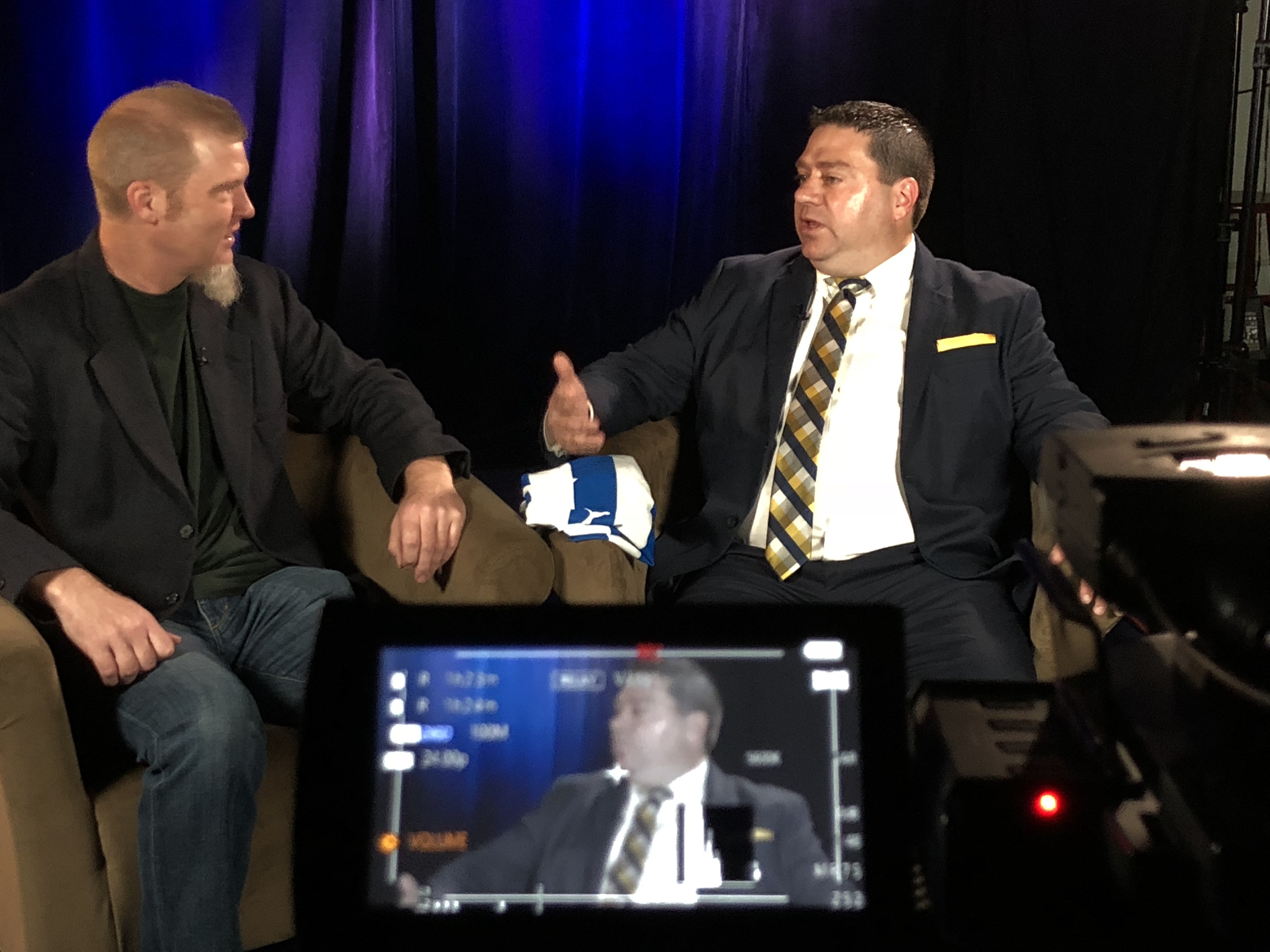
I was on a Zoom call with one of my business partners in late July and I checked my email when I got done. I’m not sure I had ever before received an email from Grand Junction, Colorado, but the one I read that day was from that city’s CBS affiliate. KREX wanted the show. We had our first broadcast outlet. No matter how many emails I get in the future from Grand Junction, that will always be the best one.

A number of other stations followed and we have gradually built up our coverage to a significant portion of the country. I think one of the things our team is most excited about is that the road wasn’t smooth, but we eventually found our way to where we wanted to be. One has to be agile.

---------------------------------------------------------------------------------------------------------------

We also try to provide a package to our partner stations to allow them to be agile. We supply promotional spots of multiple lengths (you don’t know useful that is until you’ve found yourself hunched over a computer terminal trying to fill in the holes on the log of a typical broadcast day), social media content (including versions without voiceover so they can let their own sportscasters voice them for added localization), and materials to facilitate earned media. We want to give them the tools to drive viewers to their stations.

Thanks a bunch to our sponsors – we could not have pulled this off without them:

·     44 Management

·     KT Tape

·     One on One Kicking

·     Reveal Suits

·     Service King Collision

·     Space Center Houston

·     Visit Fort Worth

Monday, November 25, 2019

Sometimes Football Is Life


For most people, even those of us who make a living in the industry, sport matters to a certain degree. But it’s not a matter of life or death.
So when an interviewee told me last year, “If it wasn’t for this football, I would be dead or in jail,” it got my attention, and hard.
Right away, you want to know why. Why did this college-educated young man feel so strongly that his life would have turned gravely for the worse without blocking and tackling?
The thing is, his wasn’t the only interview that day that had that effect on me and my business partner, Tom Fireoved. Tom and I interacted with young men who bucked the odds coming from tough neighborhoods. We also heard from the Ivy League quarterback who felt overlooked because of his lack of gridiron street cred. Those just scratched the surface. In addition to real-life drama, we found plenty of football turmoil, from rows with coaches to multiple school transfers to offensive schemes unsuited for a talented player’s skillset.
What amazed Tom and I was that we heard all these stories in the space of an hour. Upon further consideration, we also realized that the stories weren’t done yet, and that their most crucial chapter to date might be written over the ensuing four days.
The College Gridiron Showcase provides these young football players a chance to write that next chapter. It’s a post-collegiate opportunity for draft-eligible football players to show how they match up with their peers. They go through workouts and off-field activities designed to enable them to prove their readiness to play pro football. Scouts from every NFL team, plus those from the CFL and XFL, traditionally show up for the sixth-year event. 
We want to make a TV show out of it.
It’s got all the elements you need for compelling filmmaking - great backstories, high-profile upside, arresting visuals, and genuine drama that plays out over the course of the event (and the programming). And it makes for efficient filming because all the stories come together in less than a week.
For a broadcaster or streaming service, it offers flexibility. It could be a single show or it could be a series of episodes. We can continue to follow the players or end it after the showcase. We could do as much backstory as budgets permit. 
It’s also a highly saleable property. CGS can roll in event-specific assets to be sold alongside spot inventory. And opportunities for ancillary digital content abound. Plus, it revolves around America’s most popular sport. And there’s even an international angle, as the CGS brings in football hopefuls trying to make the jump from Europe or Asia.
The CGS bears some similarities to the Senior Bowl or the East-West Shrine Bowl in that it intends to allow draft-eligible football players to show their skills. But CGS uses the word “showcase” instead of “game” or “bowl” because they don’t feel that staging an event-ending exhibition contest best serves their players or scouts. And that’s the other part of this story. The guy who run the showcase have their own grassroots entrepreneurial tale. They built their property up from nothing to something in which every NFL team has seen value. They’ve helped multiple players realize pro football dreams. We think - we know - viewers will find these stories engrossing.
Check out the video that accompanies this post to get a taste of what we’re talking about. Networks and companies who want to know more can contact Tom@MintFarmFilms.comor Rush@MintFarmFilms.com

Saturday, April 7, 2018

The Fort Worth Vaqueros and Their Jersey Sponsor

This post originally appeared in the Blotch section of the Fort Worth Weekly's website. To consume it there : https://www.fwweekly.com/2018/04/06/sports-rush-a-new-look-for-the-vaqueros/

The Fort Worth Vaqueros will adopt a new look this year. They actually do so every year, as the team uses a lottery system to determine which of its sponsors will adorn the front of its jersey for the entirety of the season.
This spring, Miss Fort Worth randomly chose one of our favorite local businesses to receive the coveted front-of-shirt spot. As in, really one of our favorites. A lot.
Watch this video interview with Vaqueros general manager Tobias Lopez to hear about who got the slot and what those who wear the jersey (both players and fans) have to look forward to this year.
The Vaqueros open their regular season May 5 in Houston, with a home opener at Farrington Field May 12 against Tyler FC. Season tickets are on sale now at fortworthvaqueros.com.
Rush Olson has spent more than two decades directing creative efforts for sports teams and broadcasters. He currently creates ad campaigns, television programs, and related creative projects for sports entities through Rush Olson Creative & Sports, Mint Farm Films, and FourNine Productions.
Creekside_300x250_2018.04.04
The Vaqueros open their regular season May 5 in Houston, with a home opener at Farrington Field May 12 against Tyler FC. Season tickets are on sale now at fortworthvaqueros.com.

Thursday, February 1, 2018

Beef Meets Baseball

This post originally appeared in the Blotch section of the Fort Worth Weekly's website. To consume it there : https://www.fwweekly.com/2018/01/31/sports-rush-from-ballpark-to-table/


As Globe Life Park in Arlington’s executive chef, Cris Vazquez supervises preparation of the food you eat when you go to a Rangers game. He must have culinary mastery of everything from dollar hot dogs to suite-level fine dining. With baseball in its offseason, he spent the past two Saturdays in Fort Worth at the Stock Show. In the Coors Light Roadhouse, he demonstrated cooking techniques for preparing products bearing the name of a former Rangers team president (and pitcher): Nolan Ryan Beef.
In this video interview, we find out what he was preparing and how, and discover a delicious-sounding mix of ingredients. You can watch the demonstration the interview references on the Nolan Ryan Beef Facebook page at https://www.facebook.com/NolanRyanBeef/videos/1193849494085258/. That page also contains videos of the three other demos he did at the Roadhouse. We find out about how to prepare beefy dinner entrees and he also dishes on Mr. Ryan – turns out he likes to eat beef. And also potatoes.

Rush Olson has spent more than two decades directing creative efforts for sports teams and broadcasters. He currently creates ad campaigns, television programs, and related creative projects for sports entities through Rush Olson Creative & Sports, Mint Farm Films, and FourNine Productions.

RushOlson.com
Linkedin.com/company/rush-olson-creative-&-sports
Facebook.com/RushOlsonCreativeandSports

Thursday, December 7, 2017

The Big Picture at the Amon Carter Museum

This post originally appeared in the Blotch section of the Fort Worth Weekly's website. To consume it there : https://www.fwweekly.com/2017/12/07/sports-rush-showcasing-more-than-sport/

One could characterize Wild Spaces, Open Seasons: Hunting and Fishing in American Art, on display at the Amon Carter Museum through January 7, as an exhibition about sport. The paintings and sculptures on display offer American artists’ depictions of a pair of prominent outdoor sports.
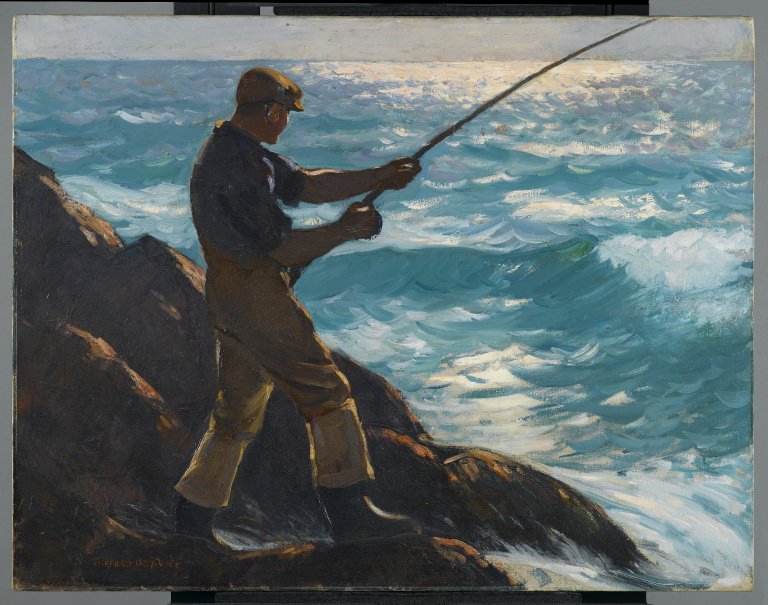
Gifford Reynolds Beal’s The Fisherman
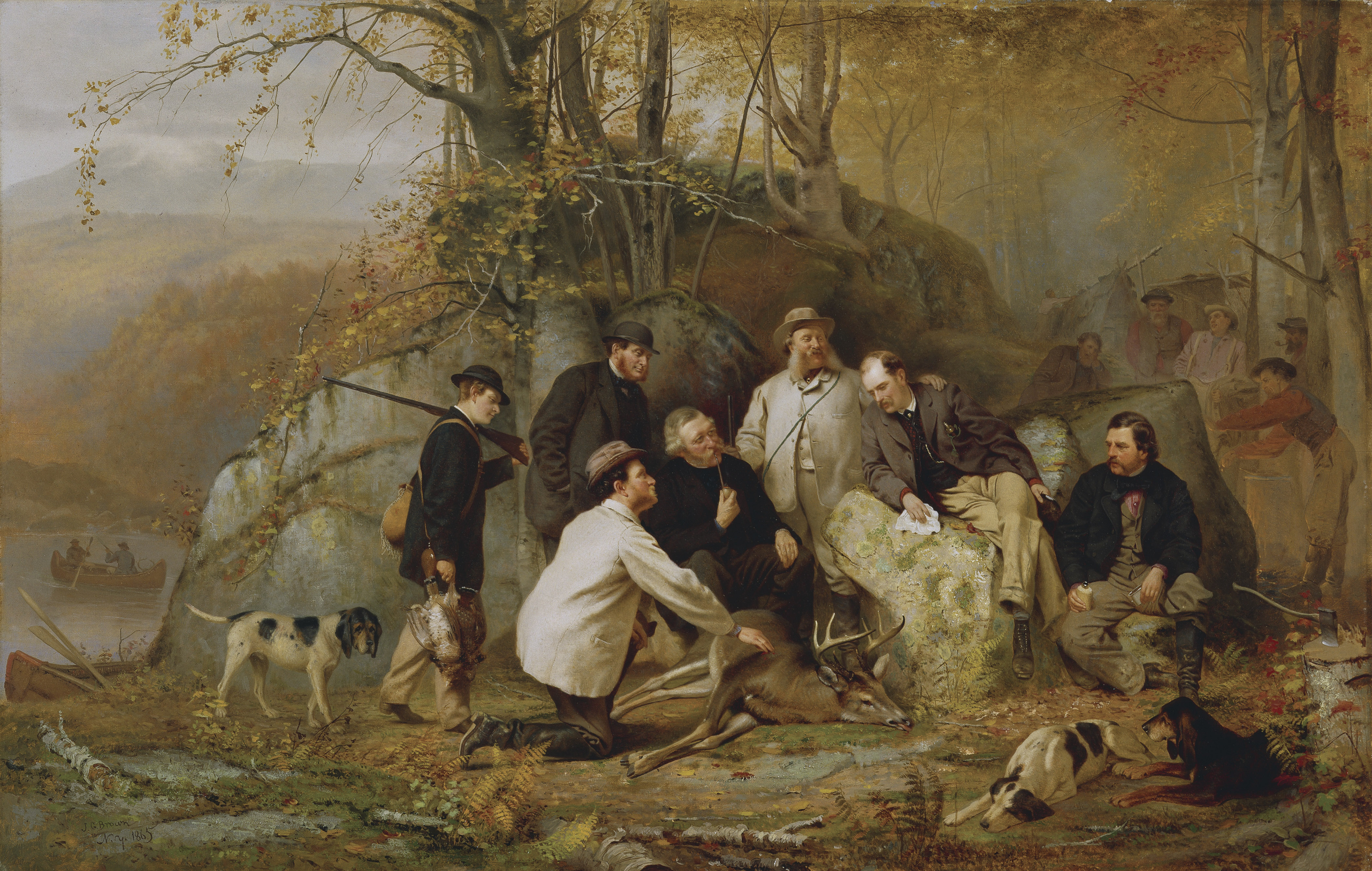
We think of sport as something one does for enjoyment, and many Americans hunt and fish to relax. The U.S. Fish and Wildlife Service estimates the country’s population contains nearly 36 million anglers and some 11.5 million hunters. Some might enjoy solo recreation, as in Gifford Reynolds Beal’s The Fisherman. Others prefer a recreational experience with friends, often accompanied by a round of post-excursion disputation, as seen in John George Brown’s Claiming the Shot: After the Hunt in the Adirondacks.
DTR352683 Claiming the Shot: After the Hunt in the Adirondacks, 1865 (oil on canvas) by Brown, John George (1831-1913); 81.3x127 cm; Detroit Institute of Arts, USA; Founders Society Purchase, R.H. Tannahill Foundation fund; PERMISSION REQUIRED FOR NON EDITORIAL USAGE; American, out of copyright PLEASE NOTE: The Bridgeman Art Library works with the owner of this image to clear permission. If you wish to reproduce this image, please inform us so we can clear permission for you.
DTR352683 Claiming the Shot: After the Hunt in the Adirondacks, 1865 (oil on canvas) by Brown, John George (1831-1913); 81.3×127 cm; Detroit Institute of Arts, USA; Founders Society Purchase, R.H. Tannahill Foundation fund
Much of the exhibition’s art doesn’t depict what we might think of as sporting, though. A competitor engaged in a game involving knife-fighting a bear, as in Arthur Fitzwilliam Tait’s 1856 painting A Tight Fix – Bear Hunting, Early Winter, would have a short career.
 
In place of jolly hunting parties, we see men and women pursuing game for the reasons most humans would have up until the last century: survival. The tribesmen engaged in Charles Russell’s Buffalo Hunt (or those in Alfred Jacob Miller’s painting of the same name) no doubt risk their lives bringing down a great horned beast not for the thrill of the chase, but because hungry family members await their return. John Quincy Adams Ward’s The Indian Hunter bears the look of someone who knows he must brave danger to eat (as does his dog).
Charles M. Russell (1864-1926); The Buffalo Hunt [No. 39]; 1919; Oil on canvas; Amon Carter Museum of American Art, Fort Worth, Texas; 1961.146
In pre-industrial times, hunters and fishers had to win at their contest with nature to eat. Only the upper classes hunted for sport. The well-to-do young man in John Singer Sargent’s Young salmon fisher, Alec McCulloch likely will not go hungry if nothing’s biting. The smiles in The Hunter’s Return by Thomas Cole would have no doubt been panicked frowns had the party returned to the wilderness cabin empty-handed.

During the 19th century, the American experiment had begun to set the stage for hunting and fishing to transition from subsistence occupations to widespread recreational pursuits. Agricultural innovations and the Industrial Revolution made it possible for the masses to move beyond spending long days at labor just to produce a day’s food supply themselves. They could now trade a shorter period of less taxing work for provender generated by a smaller number of more efficient agricultural producers. Fewer and fewer Americans needed to pick up their guns, bows, nets, or poles to feed themselves. When they did so, it was because they enjoyed it.

So if you think of Wild Spaces, Open Seasons: Hunting and Fishing in American Art as an exhibition of sports art (fitting in well with other sporting elements in the Amon Carter’s collection, as documented here and here), that’s fine. While there are still many who work in the commercial fishing industry (and a few who hunt wild game for a living), most of us do have the luxury of viewing hunting and fishing as more pastime than profession.

It’s because we have more time – a lot more time – than our hunter/gatherer ancestors for fun, including sports (and visiting art museums). This exhibition thus shows more than just beautiful works by accomplished artists. It also shows progress.

Wild Spaces, Open Seasons: Hunting and Fishing in American Art is on display at the Amon Carter Museum through January 7. Caught on Paper is a supplemental exhibition inspired by Wild Spaces, Open Seasons. It features 50+ outdoors-themed works on paper from the Amon Carter’s collection. It will remain on the walls through February 11.


Rush Olson has spent two decades directing creative efforts for sports teams and broadcasters. He currently creates ad campaigns, television programs, and related creative projects for sports entities through Rush Olson Creative & Sports, Mint Farm Films, and FourNine Productions.


RushOlson.com

Linkedin.com/company/rush-olson-creative-&-sports

Facebook.com/RushOlsonCreativeandSports

Wednesday, June 21, 2017

Art and Sports at the Amon Carter Museum

This post originally appeared in the Stuff section of the Fort Worth Weekly's website. To consume it there : https://www.fwweekly.com/2017/06/21/the-art-%e2%80%a8of-sport/

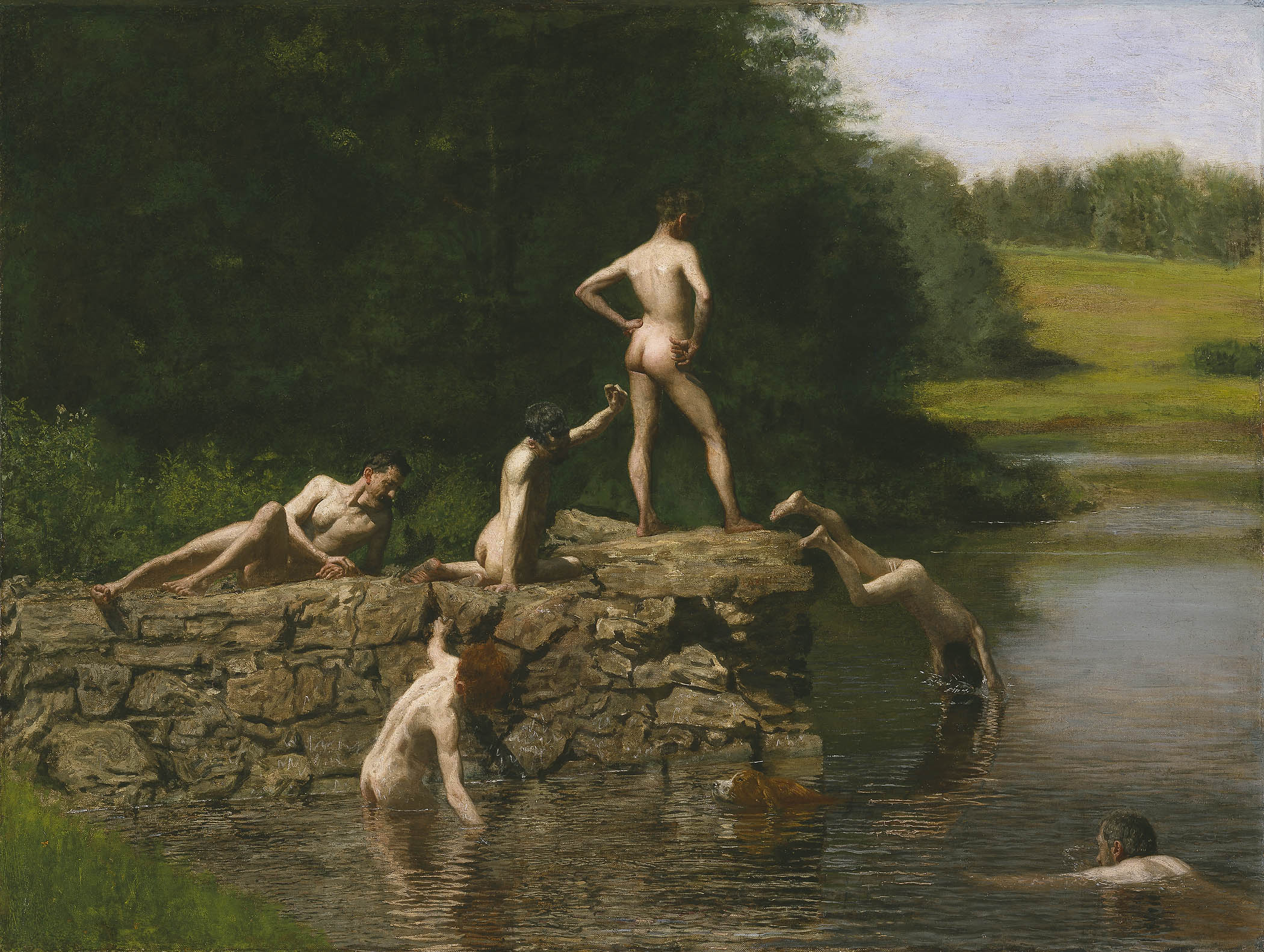
For a world-class art institution, the Amon Carter Museum of American Art sure has a sporting side. A surprising number of works depict subjects sprinting, punching, exercising, competing, and otherwise engaging in sporting pursuits. What many regard as the institution’s best known work revolves around an aquatic sport. In Thomas Eakins’ “Swimming,” a half-dozen unclad males gather at a country lake. The painting created controversy for the artist while he was serving as a professor at the Pennsylvania Academy of the Fine Arts.
Thomas Eakins Swimming, 1885 Photo courtesy of the Amon Carter Museum of American Art.
Thomas Eakins
Swimming, 1885, Amon Carter Museum of American Art
“You can see [Eakins] with his dog and clearly identify that these are his students,” explained Amon Carter associate curator Maggie Adler. “That was a huge no-no.”
Eakins, she continued, “believed that you should teach art to people using live nude models. That was not allowed if you had men and women in the classroom.”

Eakins would later resign his post after his removal of a loincloth from a classroom model generated more Victorian-era handwringing.

Adler possesses unique qualifications when it comes to examining the representation of sport in art. In addition to her masters in art history from Williams College and experience at multiple museums, the Scarsdale, NY, native excelled as a competitive archer. She shot well enough to try out for the 1996 U.S. Olympic team. She finds a certain similarity between the two pursuits. “I feel the same way entering a competition as I do before I go to give a lecture or talk,” she said, “because you get yourself psyched up. It takes a certain amount of adrenaline.”

Most of the Carter’s sports-related objects tend more toward Adler’s style of sport than stick-and-ball games. Archery figures prominently in a painting that recalls the museum’s own heritage as an institution focused on the American West.
George Catlin; "Archery of the Apachees [sic]"; ca. 1855; Oil on paper mounted on paperboard; Amon Carter Museum, Fort Worth, Texas, Gift of Paul Mellon; 1986.40
George Catlin; "Archery of the Apachees [sic]"; ca. 1855; Oil on paper mounted on paperboard; Amon Carter Museum
Around 1855, George Catlin painted a crowd of Apaches watching fellow tribesmen riding fast-moving horses while attempting to shoot arrows at targets on the ground, a piece entitled “Archery of the Apaches.” “That would be really complicated to do,” the expert archer said.

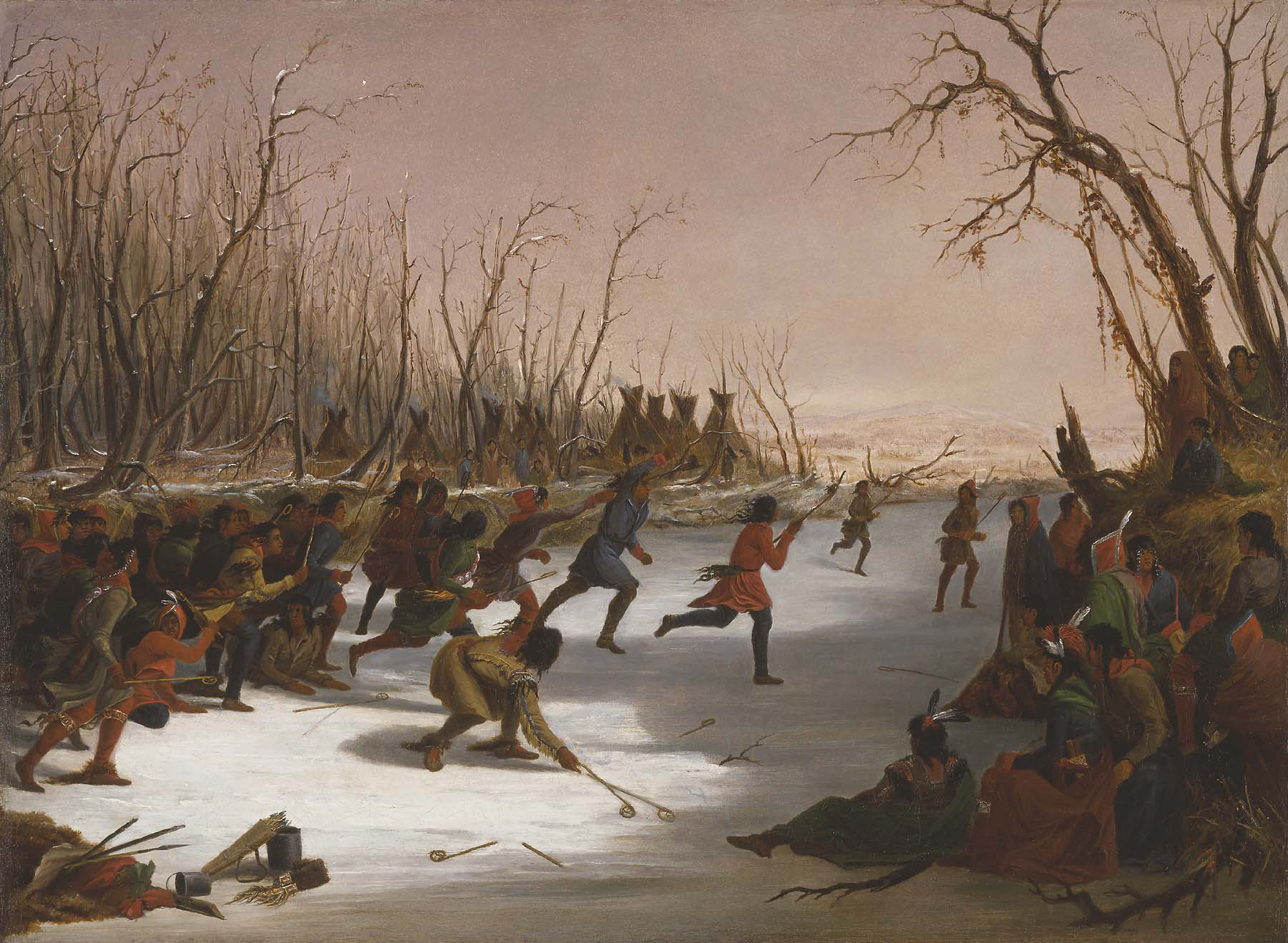
Near the Catlin painting on the museum’s second floor, there’s another example of Native Americans engaged in sport. In Seth Eastman’s 1848 work “Ballplay of the Dakota on the St. Peter’s River in Winter,” Sioux athletes play a version of lacrosse. The contest occurs on a frozen river, and the stakes are high. “We think there was gambling involved, so this is maybe why this buffalo hide and arrows … are in the front,” Adler said. “That’s the wager.”
Seth Eastman; "Ballplay of the Dakota on the St. Peters River in Winter"; 1848; oil on canvas; Amon Carter Museum, Fort Worth Texas, Acquisition in memory of Mitchell A. Wilder, Director, Amon Carter Museum, 1961-1979; 1979.4
Seth Eastman; "Ballplay of the Dakota on the St. Peters River in Winter"; 1848; oil on canvas; Amon Carter Museum
Adler said Eastman’s wife also recorded that this full-contact version of lacrosse often resulted in broken limbs and even deaths.

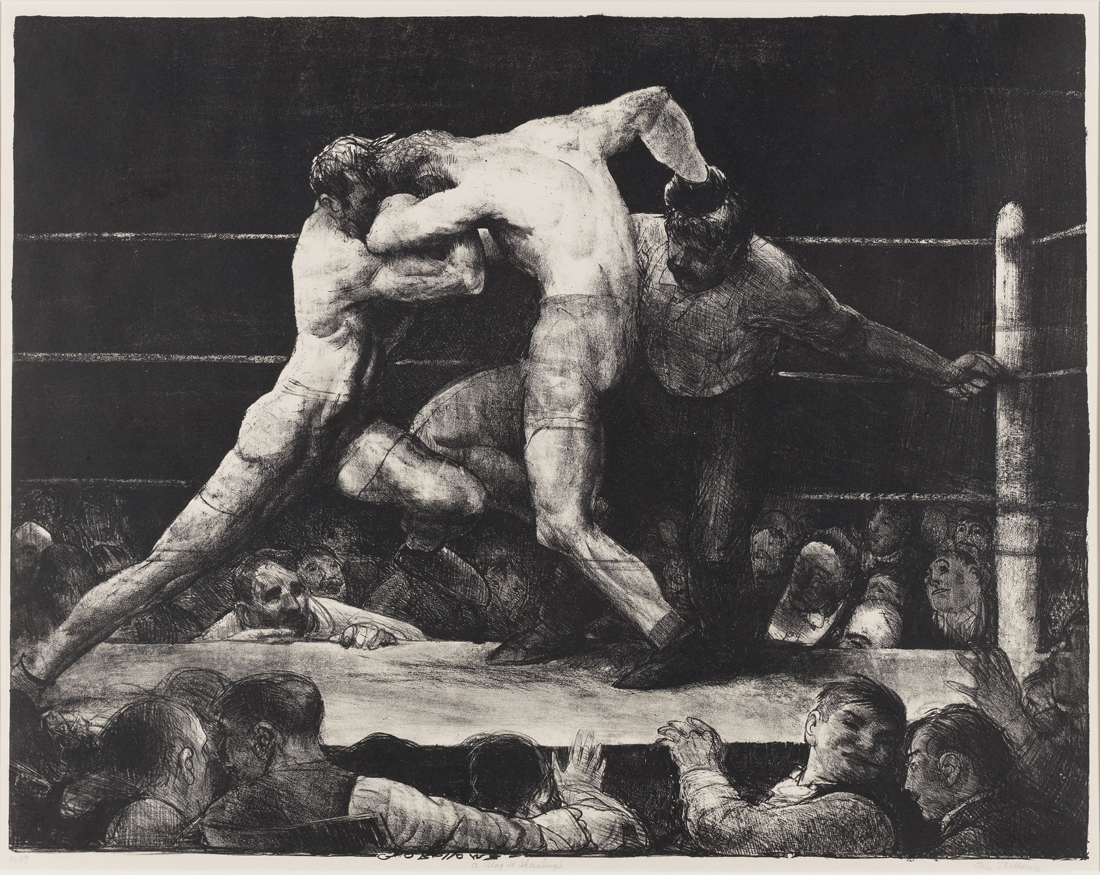
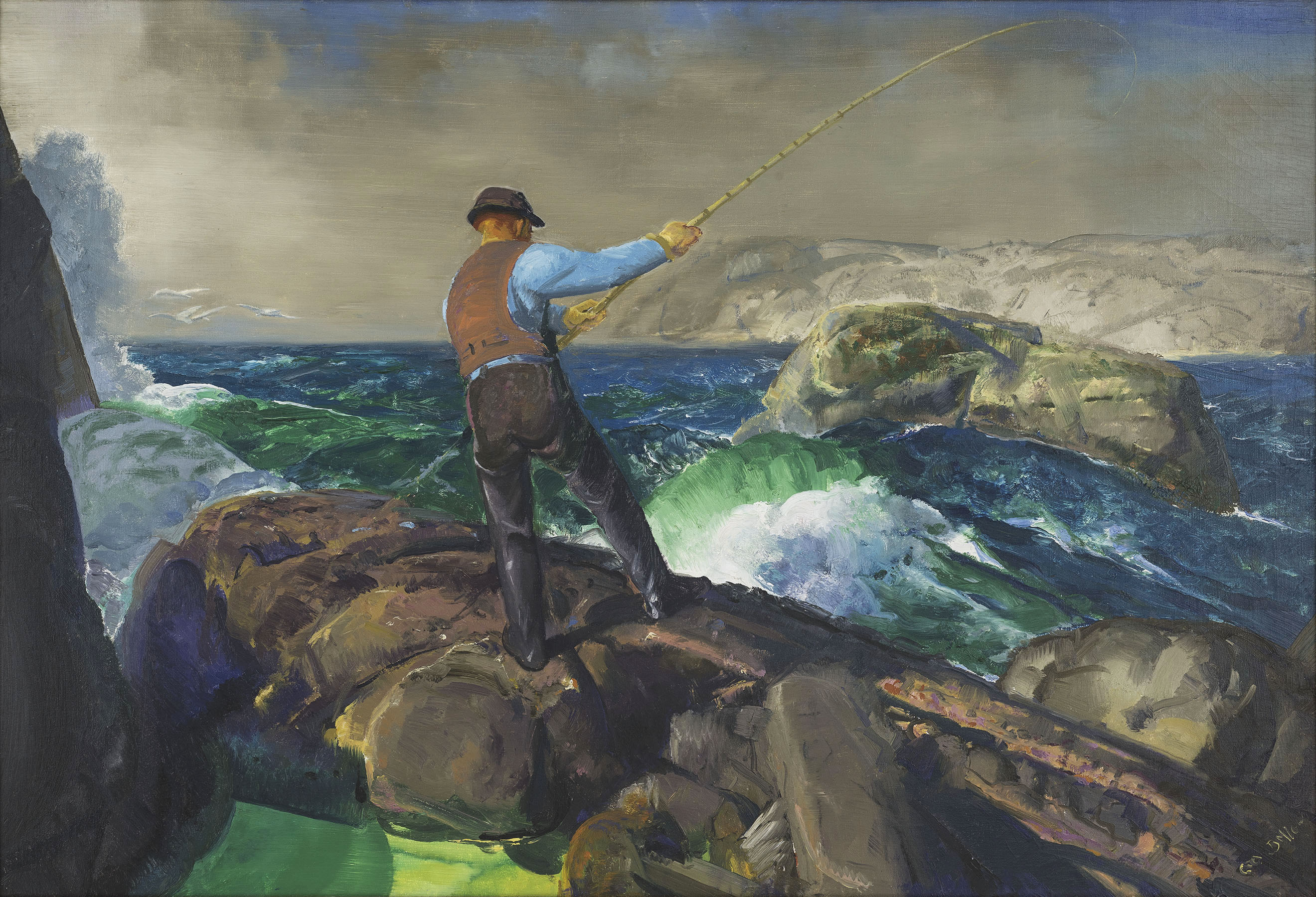
Another athletic pursuit known for its physicality represents perhaps the museum’s most complete archive of any single sport: prints by George Bellows. The museum owns 230 of the former semipro baseball player’s lithographs, including many gritty boxing scenes. A seminal work from 1917, “A Stag at Sharkey’s,” shows two fighters locked in desperate struggle. The museum has the combat scene displayed next to another of Bellows’ creations, the newly acquired 1917 oil painting “The Fisherman.”
George Bellows (1882-1925); A Stag at Sharkey's; 1917; Lithograph; Amon Carter Museum of American Art, Fort Worth, Texas; 1983.23
George Bellows (1882-1925); A Stag at Sharkey's; 1917; Lithograph; Amon Carter Museum of American Art
Outdoor sports like fishing and hunting represent much of the museum’s sporting archive, though several of the works have gone on a road trip. Adler and collaborators from other museums incorporated a number of the works into a traveling exhibition. Wild Spaces, Open Seasons: Hunting and Fishing in American Art is on view currently at the Shelburne Museum in Vermont and will be in Fort Worth in October.
George Bellows (1882-1925); The Fisherman; 1917; Oil on canvas; Amon Carter Museum of American Art, Fort Worth, Texas; 2016.9
George Bellows (1882-1925); The Fisherman; 1917; Oil on canvas; Amon Carter Museum of American Art
Each Bellows boxing lithograph can remain on display only for a few months at a time to avoid light-inflicted damage. Like most museums, the Amon Carter owns more pieces than it can display at any one time, so more of its sporting art may make its way into the walls in the future.

For more on the Amon Carter and the roots of the sport of rodeo, check out this week’s Sports Rush post in the Blotch section at fwweekly.com.


Rush Olson has spent two decades directing creative efforts for sports teams and broadcasters. He currently creates ad campaigns, television programs, and related creative projects for sports entities through Rush Olson Creative & Sports and FourNine Productions.

RushOlson.com
Linkedin.com/company/rush-olson-creative-&-sports
Facebook.com/RushOlsonCreativeandSports

Sunday, April 30, 2017

20 Years Ago - A Championship Team

This post originally appeared at the Fort Worth Weekly's website. To view it there : https://www.fwweekly.com/2017/04/30/sports-rush-fire-and-ice-20-years-on/

One of Fort Worth’s greatest sports moments happened twenty years ago on this day. It came improbably and with gripping athletic drama.

On April 30, 1997, the Fort Worth Fire won the Central Hockey League title.

I call it improbable because nobody would have chosen the Fire as the favorite to win heading into that season. The new CHL (a predecessor of the same name had gone out of business in the 1980s) had started in 1992 and only Fort Worth had finished out of the playoffs every season. In addition, the previous year’s leading scorer, Kyle Reeves, had taken his 68 goals to the East Coast Hockey League.
Luckily, Fort Worth’s second-year head coach, Bill McDonald, knew how to build championship teams. He finagled the addition of some players who had helped him win Colonial Hockey League titles in Thunder Bay, Ontario. He supplemented them with some speedy youngsters, quality grinders, and an emerging young goaltender.

The season included a league-record streak without a regulation loss. Outstanding individual performances included Mark O’Donnell recording hat tricks in consecutive games, Mark Strohack scoring a shootout goal to clinch the franchise’s first playoff spot, and goalie Steve Plouffe earning playoff MVP honors.

The team beat the Tulsa in the first round of the postseason, eliminating the Oilers and nemesis Doug Lawrence. They defeated the Wichita Thunder in the second round, a team with whom they had brawled earlier in the year.
image courtesy CCT
image courtesy CCT
The drama came when they faced the Memphis RiverKings in the finals. A back-and-forth series went the full seven games. Fan favorite Stephane LaRocque scored a tie-breaking third-period goal and the Fire held on for a 3-2 win in the Fort Worth Convention Center.

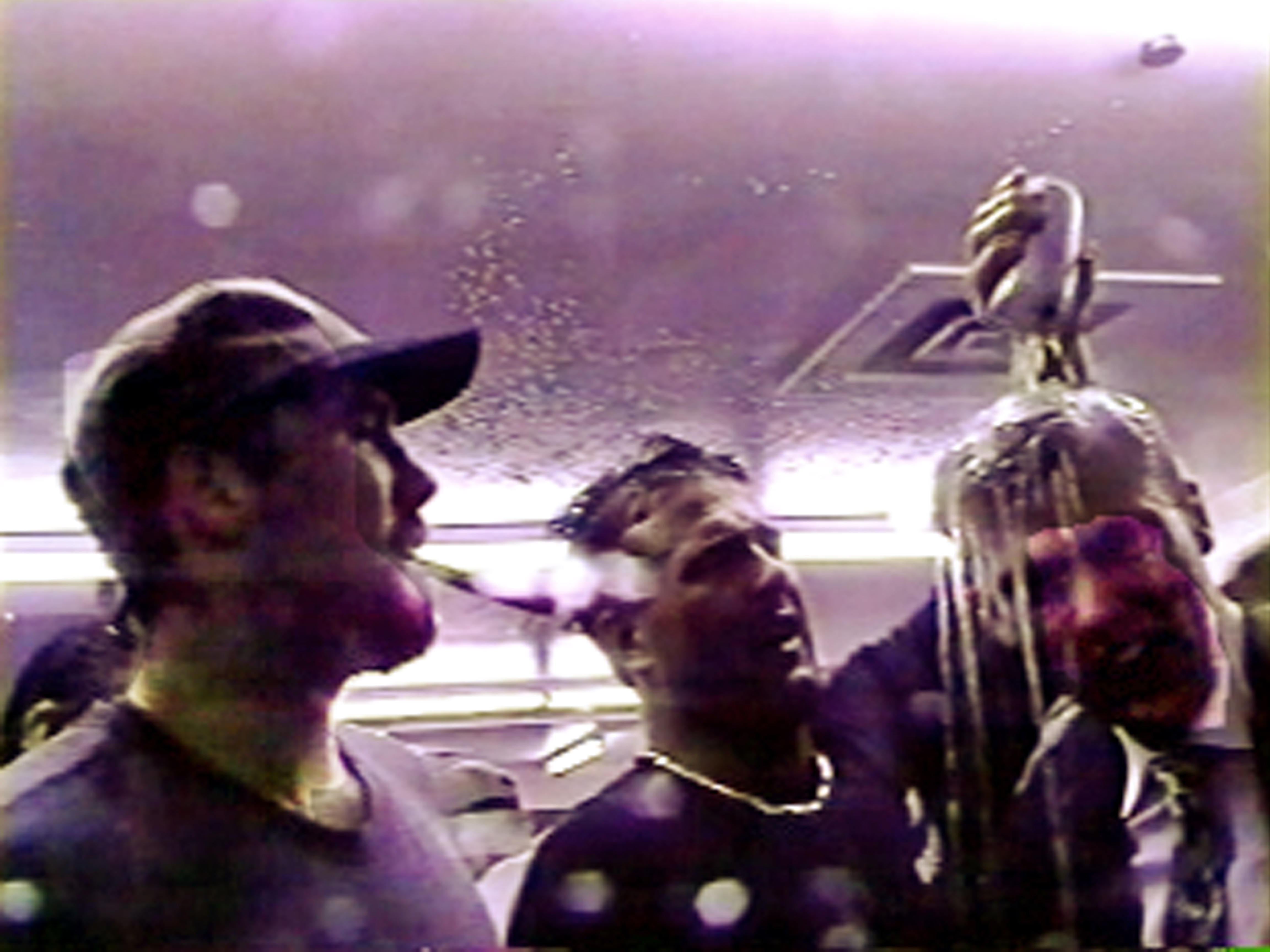
I was lucky enough to get to call the play-by-play that season on the club’s cable television broadcasts, and my cherished championship ring sits well-preserved in a safe deposit box. It was indeed a special season and special team. Incredible memories included Vern Ray convincing much of the team to shave their heads for the playoffs and later shearing PR director Brad Horn’s hair to match in the aftermath of the title; playing a few games in the superb hockey venue that is Will Rogers Coliseum; The Toadies jamming the national anthem before Game 1 of the Finals at the FWCC; and getting beer poured on my head while attempting to conduct postgame interviews from a delirious locker room.
image courtesy CCT
image courtesy CCT
I got to see a lot of great hockey, too, with championship-caliber players like Terry Menard, Todd Howarth, Ryan Black, Mike Sanderson, Dwight Mullins, Brian Caruso, Murray Hogg, and the rest of a tight-knit roster showing strong skills and stronger work ethics. I also got to broadcast alongside a great crew, including boothmates Paula Caballero, Darrin Scheid, and the late Richard Durrett. Bill Orcutt, Mitchell Brooke, Suzanne Wilemon, and many more contributed camera shots and replays to help those at home follow the action. Afterward, we created a documentary program about the season, which one can view here.
Fire LogoWe couldn’t know that within two years the Fire would have folded, and that today we would have no professional hockey teams in Cowtown. While it would have been nice to have retained a team and have built a storied tradition that endures today, such is rarely the case in sports, and especially at the minor league level. Those of us who enjoyed and became emotionally invested in that ’97 Fire team will always have an incredible and, as it turns out, unique, memory of one of our hometown’s most outstanding sports moments.


Rush Olson has spent two decades directing creative efforts for sports teams and broadcasters. He currently creates ad campaigns, television programs, and related creative projects for sports entities through Rush Olson Creative & Sports and FourNine Productions.

RushOlson.com
Linkedin.com/company/rush-olson-creative-&-sports
Facebook.com/RushOlsonCreativeandSports

Wednesday, April 12, 2017

A Texas-Sized Niche

This post originally appeared at the Fort Worth Weekly's website. To view it there : https://www.fwweekly.com/2017/04/11/sports-rush-a-texas-sized-niche/

Fort Worth has a sports niche. It’s a legendary, bighoss-sized one.

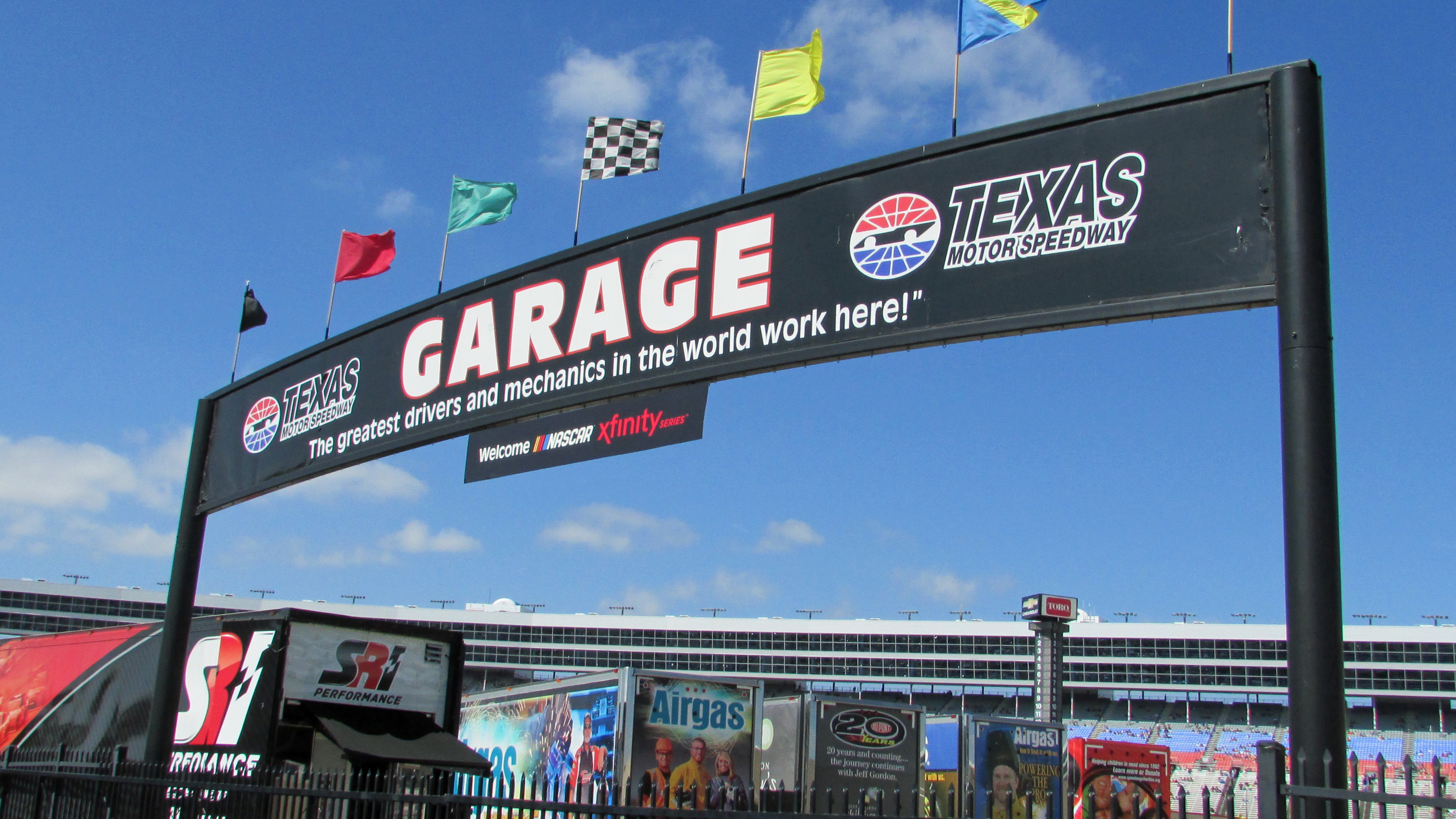
We saw it on display this weekend at Texas Motor Speedway, home to the gargantuan video screen known as Big Hoss TV. TMS hosted automobile races in NASCAR’s two top classifications. The world’s best stock car drivers and crews all assembled in north Fort Worth to compete on a beautiful Texas spring day.

They’ll return in November for another set of races. In between, the Verizon IndyCar Series and the Camping World Truck Series will visit June 9 and 10 (the trucks will also run again in November). For fans, these weekends represent a major event, with the campers and RVs parked across the speedway’s infield and external lots representing a testament to the amount of time and resources they devote to attending. I saw a man wearing a shirt that read Saskatchewan Roughriders (a Canadian football team) on its front. We can’t know if he truly visited from Regina specifically to watch (mostly) American race car drivers, but many attendees no doubt come from outside the area (including UK rocker Ozzie Osbourne and his son Jack, who instructed the drivers to start their engines Sunday).

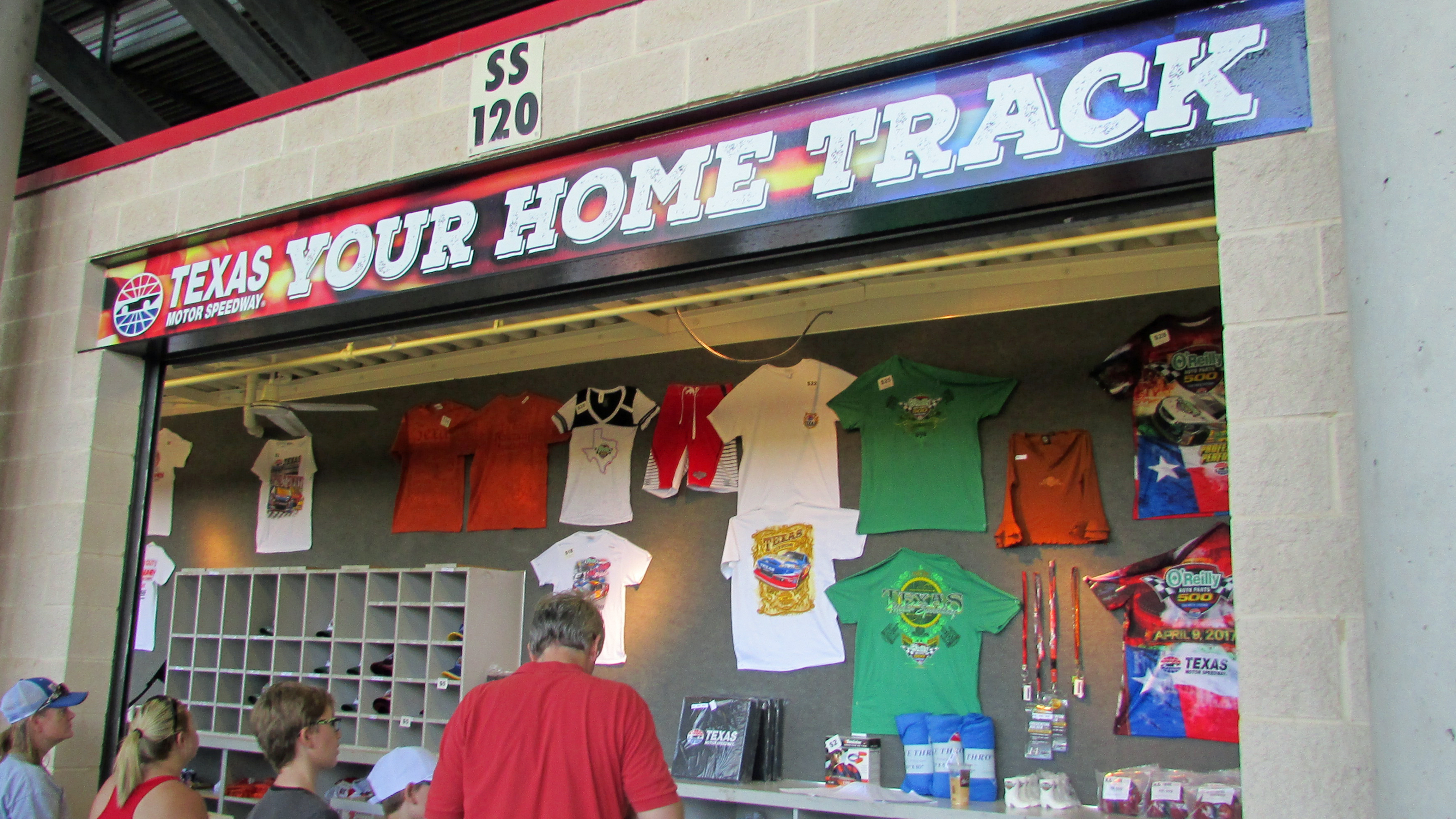
The races also bring in national broadcasters, with Sunday’s contest carried on the Fox Network. Events that feature all the best competitors in a given sport draw audiences from beyond the areas where they happen, kind of like all-star games. For some sports, mostly individual ones, they play on a neutral site every week (notwithstanding TMS’s positioning itself as “Your Home Track”). One can make a case that these sorts of events have become Cowtown’s forte.

Home Track Stand at TMS 

While it doesn’t attract the big four broadcast networks any more, the rodeo held every winter in conjunction with the Fort Worth Stock Show features world-class PRCA cowboys and WPRA cowgirls. For someone in the region who wants to see the top steer wrestlers or barrel racers, the FWSSR offers the best way to do it.

May’s DEAN & DELUCA Invitational annually supplies North Texas (and a nationwide TV audience) the world’s top male golfers. At one time, Colonial Country Club also hosted a top-flight men’s tennis tournament.

Fort Worth has put on a few one-off big events, too, like the NCAA Gymnastics Championship and even tennis’ Davis Cup final in 1992. What it hasn’t staged a lot of lately is professional team sports.

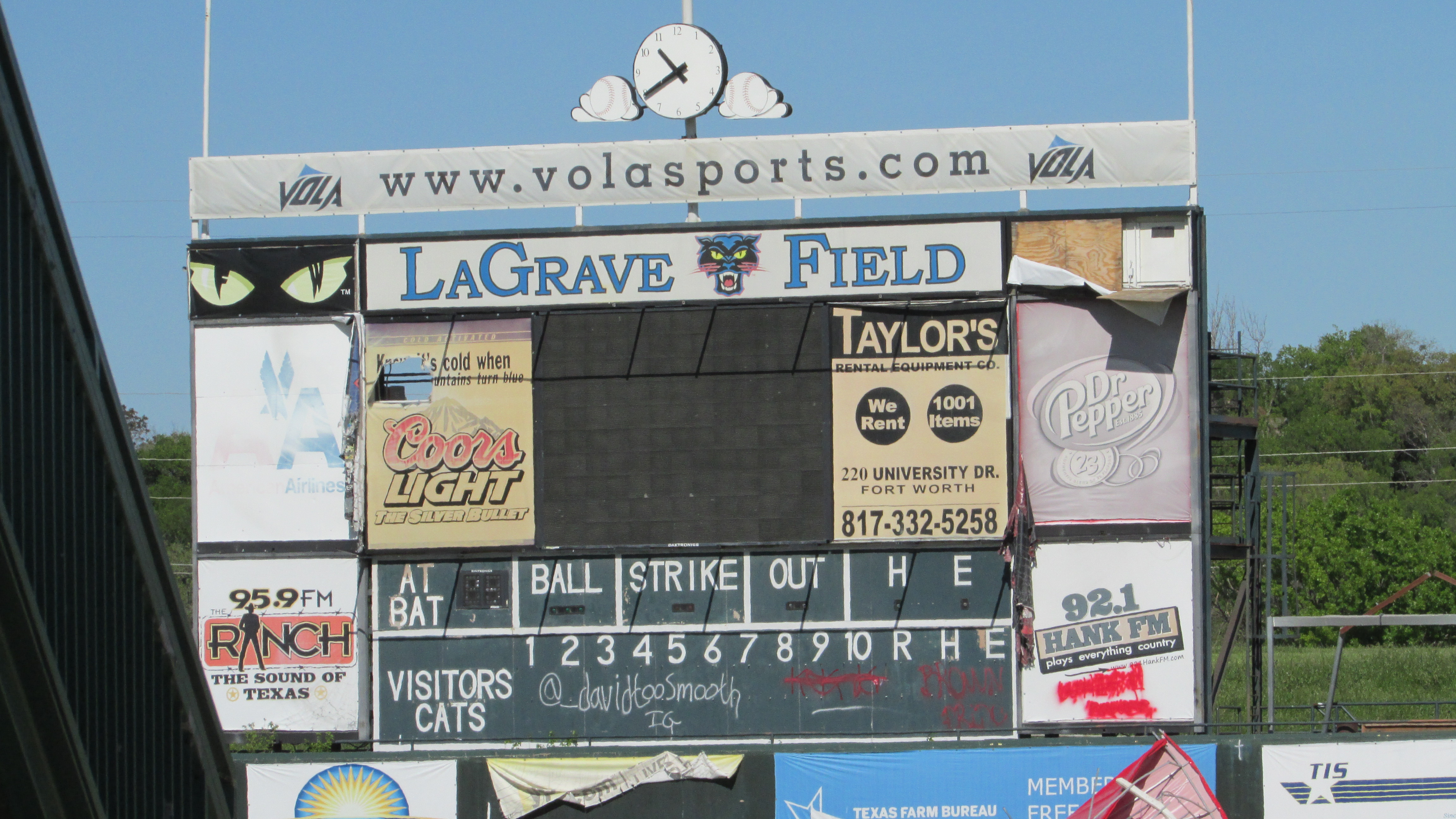
LaGrave Scoreboard 2016 

LaGrave Field has descended into disrepair and it looks like it will be a while before the city sees Fort Worth Cats baseball again. The minor league hockey teams that tried to make the Fort Worth Convention Center home are gone, too. The Arena Football League lasted only the 1994 season before that franchise disappeared. The golf tournament, on the other hand, has survived more than 70 years. Texas Motor Speedway has made it 20+. The rodeo, as they say, is legendary.

Team sports aren’t totally dead in Cowtown. TCU draws sustainable crowds for a few of its programs. The Frogs’ biggest draw, though, is its football program, a sport that plays only half a dozen home games yearly with many of those coming against opponents with regional appeal.

TMS Garage 

Municipalities love to bring in visitors to buy hotel nights and purchase meals and tip local musicians. Only sports teams playing at the highest levels attract visitors and national media outlets to their cities, and even then only in limited quantities. Since existing arena deals, sales tax caps, and perhaps basic economics indicate Fort Worth won’t induce the local big league franchises to relocate from Dallas, Arlington, or Frisco any time soon, Fort Worth will likely have to stick to its sports niche.

That niche is the single big event. Given the quality of the racing Sunday (Jimmie Johnson steered his way to a win that featured drama and strategy all the way to the end) and the tens of thousands of people who watched it, that niche can be both exciting and substantial. Legendary, even.


Rush Olson has spent two decades directing creative efforts for sports teams and broadcasters. He currently creates ad campaigns, television programs, and related creative projects for sports entities through Rush Olson Creative & Sports and FourNine Productions.


RushOlson.com

Linkedin.com/company/rush-olson-creative-&-sports
Facebook.com/RushOlsonCreativeandSports 

Tuesday, March 14, 2017

Fort Worth-Dallas - A Hotbed of Hoops?

This post originally appeared at the Fort Worth Weekly's website. To view it there : https://www.fwweekly.com/2017/03/13/sports-rush-a-hoops-hotbed/

Wow. All of a sudden, basketball is a big deal.

OK, it’s one of the world’s most popular sports, but this area has not necessarily been a college basketball nexus. Until now.

An upset of top-ranked Kansas in the Big 12 tournament, which Texas Christian pulled off Thursday should make one sit up and take notice. Have you checked out Texas-Arlington? How about Southern Methodist? There have been a lot of balls ripping nets this year. If you haven’t been paying attention, the local men’s college basketball teams have been making some noise all season. Historically so, in fact.

TCU lost to eventual champion Iowa State in the Big 12 semis. UTA won the Sun Belt regular season before falling in the tournament semi-finals. SMU won the American Athletic Conference regular season and tournament. Among the area’s Division I teams, only Denton’s University of North Texas had a subpar year, finishing 8-22.

The Frogs, Mustangs, and Mavericks will all take part in the postseason. SMU earned a number six seed in the NCAA Tournament, playing Providence or the University of Southern California on Friday afternoon in Tulsa on truTV. TCU will host Fresno State in the National Invitation Tournament at 8pm Central Wednesday. At that same time, the UTA Mavs have an NIT first-round matchup against Brigham Young in Provo, with the game televised on ESPN2.


Each team has had good seasons in the past, but one can make the case that the area has never before had so much success in the sport all at once. The NCAA and the NIT are the top two postseason tournaments in men’s college basketball, and the North Texas region has participated sporadically. In the 1950s, when UTA was still a two-year institution called Arlington State College, SMU and TCU both had some good teams, but never made it into the postseason at the same time (though there were fewer berths available in those days). The two Southwest Conference schools again posted some winning records in the 1980s, Texas Christian under coach Jim Killingsworth and Southern Methodist under the since-disgraced Dave Bliss. UTA played a game in the 1981 NIT under Bob “Snake” LeGrand. However, 1986 and 1988 were the only previous years in which as many as two local teams made the two big tourneys. In 1986, TCU was defeated by Florida in the second round of the NIT while SMU lost to BYU in the first round of the same competition. In 1988, SMU made the second round of the NCAAs before falling to Duke and UNT also lost to an ACC team, North Carolina, in the first round of the big tournament.

In 2012, UTA dropped a first-round game to Washington in the NIT while TCU made it to the second round of the third-tier College Basketball Invitational (a tournament won, incidentally, by current TCU head coach Jamie Dixon’s University of Pittsburgh team).
Never before, though, have we had three teams qualifying for end-of-season tournaments at once.

In addition to their postseason berths, all three teams have recorded wins over big-time opponents. TCU and UTA went a combined 3-0 against the University of Texas, though admittedly in a down year for the Longhorns. TCU beat Iowa State during the regular season. UTA defeated four NCAA tournament teams. SMU won 30 games, with no losses to teams not in the NCAA or NIT draws. Add to that the fact that Texas Wesleyan made the 32-team NAIA field (they play Cumberland Thursday) and it’s not hard to make the case that there has never been a better men’s college basketball season in North Texas.
So pay attention this week, and hopefully beyond, to the glut of area teams playing in the postseason tournaments. It doesn’t happen very often. Or ever.

On the other hand, the four NCAA teams expect to lose a total of only sixteen players off these rosters. And none of their leading scorers are seniors. So maybe we can expect the same next year. For basketball fans, that probably sounds like a pretty good deal.


Rush Olson has spent two decades directing creative efforts for sports teams and broadcasters. He currently creates ad campaigns, television programs, and related creative projects for sports entities through Rush Olson Creative & Sports and FourNine Productions.

RushOlson.com
Linkedin.com/company/rush-olson-creative-&-sports
Facebook.com/RushOlsonCreativeandSports