Showing posts with label college football. Show all posts

Sunday, August 30, 2020

Agility Matters in TV and Football

 The agility of high-level American football players has always amazed me. 300-pound men change direction instantaneously as they pursue their missions of either protecting or demolishing a ballcarrier.


We saw a lot of agility among the guys in pads as we produced a television program about the College Gridiron Showcase this year. The event, in fact, revolves around former college football players trying to show pro scouts how nimble, strong, ferocious, and/or intelligent they are. They’re high-level performers – young men who excelled as amateurs hoping to show they’re truly elite. So our crew got to see some good football.

We also discovered we needed to be agile ourselves, and not just because videographer Suzanne Wilemon isn’t afraid to push the limits of how close one should get to a pileup involving guys up to a foot-and-a-half taller than her.

We first had to find a way to get the show shot. We didn’t have the financing or distribution in place by the time the event rolled around, and at the time we believed the football calendar to be an immovable object. The CGS had to happen in January in Fort Worth and we had to shoot it. So we called in some favors and pulled a few double shifts. We emerged with a lot of interviews, football footage, and a whole lot of great narratives involving young people trying to realize their dreams.

Our goal had been to create a series in which we would take deep dives into players’ stories using CGS as a common core element. We would conduct additional interviews, go to their hometowns, and generally let the audience engage with their whole life situations.

Then we had to pivot. As we worked on financing and distribution, the production world abruptly came to halt. NFL and CFL calendars normally propelled by pro days and live drafts came to an unprecedented halt.

The pandemic meant we wouldn’t be doing any more interviews or shoots.

So we took a look at what we had. And it turns out we had a lot. One thing we always liked about CGS from a production standpoint was that we could shoot efficiently, with a lot of players in one place. And we had some great stories we could still tell, including:


·     A one-time top recruit confronting the off-field issues that caused him to enroll at four colleges and put his pro football dreams in serious jeopardy.

·     A record-setting running back from a small school, homeless as a kid, who hopes to realize a lifelong dream on the NFL’s big stage.

·     An offensive lineman whose mental health issues forced him to leave the Big Ten school he loved and finish college at a lower-level school in Texas.

·     An offensive lineman who grew up in poverty and became one of the few players to announce he was gay while still competing.

Napoleon Maxwell interviewed by Mint Farm Films

·     A small-school running back who persevered through two torn ACLs.


So we decided to make a show from it. It wouldn’t be a series, but instead a one-hour capsule summary that revolved around the CGS chapter in these player’s lives. Mixed in with the football angles, we worked in how they prepared for life off the field. That part included powerful testimony from rape survivor and activist Brenda Tracy that made these 20-somethings really consider matters of character.

By the end, we thought we had something people would want to watch. Executives at a couple of networks agreed with us, but those deals fell apart when others in the organization didn’t share their vision. That led us to choose to distribute the show via broadcast syndication.

The broadcast syndication process involves placing a program individually on local stations throughout the country who agree to carry it. There are a number of groups who own many such stations and a couple of those, Nexstar and Scripps, agreed to offer it to their local decision-makers.

I was on a Zoom call with one of my business partners in late July and I checked my email when I got done. I’m not sure I had ever before received an email from Grand Junction, Colorado, but the one I read that day was from that city’s CBS affiliate. KREX wanted the show. We had our first broadcast outlet. No matter how many emails I get in the future from Grand Junction, that will always be the best one.

A number of other stations followed and we have gradually built up our coverage to a significant portion of the country. I think one of the things our team is most excited about is that the road wasn’t smooth, but we eventually found our way to where we wanted to be. One has to be agile.

---------------------------------------------------------------------------------------------------------------

We also try to provide a package to our partner stations to allow them to be agile. We supply promotional spots of multiple lengths (you don’t know useful that is until you’ve found yourself hunched over a computer terminal trying to fill in the holes on the log of a typical broadcast day), social media content (including versions without voiceover so they can let their own sportscasters voice them for added localization), and materials to facilitate earned media. We want to give them the tools to drive viewers to their stations.

Thanks a bunch to our sponsors – we could not have pulled this off without them:

·     44 Management

·     KT Tape

·     One on One Kicking

·     Reveal Suits

·     Service King Collision

·     Space Center Houston

·     Visit Fort Worth

Tuesday, January 21, 2020

Football Takes More Courage Than You Realize

This post originally appeared in the Blotch section of the Fort Worth Weekly's website. To consume it there: https://www.fwweekly.com/2020/01/14/sports-rush-a-courageous-tackle/

It takes a certain degree of courage to play the sport of American football. On every play, you know an opponent will likely attempt to ram into you traveling at a high rate of speed. If you’re a receiver going over the middle, or a quarterback looking downfield, or a linebacker unaware of a pulling guard, you might never see it coming. But since the 19th century, enough men have braved the violence that football has become this country’s most popular sport. The game has a rich history, full of dramatic hail marys and clutch third-down tackles.
For Brenda Tracy, it takes courage just to think about football.
Tracy came to Fort Worth last week to speak to a group of football players at the College Gridiron Showcase. Her audience consisted of some 200 former college standouts looking to impress NFL and CFL scouts with their physical and mental skills. In addition to providing on-field opportunities, CGS tries to address off-the-field situations the prospective pros may face. The attendees receive instruction in financial planning, the draft process, and, from Tracy, lessons about a side of their sport’s history they need to know about. A vile, putrid, unacceptable side.
In the late 1990s, a group of men that included major college football players gang-raped Brenda Tracy. She tried to address the horror through legal channels, but the authorities, both at the local district attorney’s office and the large state school whose players perpetrated the crime, prioritized the football team’s success over proper legal processes and the young woman’s unimaginable suffering. She remained anonymous and dealt with the psychological ramifications for her and her two sons as best she could over the ensuing decade and a half.
in 2014, however, she went public with her story, and decided to try to change the landscape for other women who might find themselves in situations similar to the one she had experienced. Her activism helped alter the legal environment regarding such cases. And meanwhile, she also turned her attention to football.
A sport played mostly by men that necessarily glories strength and toughness has historically generated more than its share of cases where its participants carried the “strongest men take what they want” mentality outside the stadium. From the recent Baylor scandal to the multiple NFL controversies, the game has basically been a #MeToo franchisee. Tracy’s nonprofit, Set The Expectation, aims to change the sport’s mentality, and, indeed, use it as a vehicle for a broader update of attitudes men have toward women.
She speaks to football teams (and athletes from other sports) about her experience. She invariably cries when she describes her rape. It’s still hard for her to talk about it. But she fights through it because she knows the platform football possesses, and if she can get more of its participants to embrace a mindset that respects women, it would go a long way to influencing the substantial portion of the public who devote their Saturdays and Sundays to the game.
One of the players with whom I chatted at the CGS talked about needing to “flip the switch,” referring to leaving football’s violence on the field and not bringing it into his off-the-field conduct. Another player (a big-time NFL prospect) talked about using his platform to influence others, and not just publicly. He also referenced being the guy who, when he sees a developing situation at a party, steps up to say something, because, as an influential football player, “you have enough power to stop it.” If Brenda Tracy can get more players and coaches to buy in like they did, she’ll make progress toward reversing the sport’s sorry history of objectifying women.
Another player and I talked about some of the aspects of football that could make it part of the solution. The game does reward good decision-making, concern for teammates, and, yes, courage. It takes courage for a player to step in when a buddy might be about to do something improper. Brenda Tracy puts aside her own fears every day to try to empower them to do so and write a new chapter in the game’s history.

Rush Olson has spent more than two decades directing creative efforts for sports teams and broadcasters. He currently creates ad campaigns, television programs, and related creative projects for sports entities through Rush Olson Creative & Sports, Mint Farm Films, and FourNine Productions.

RushOlson.com
MintFarmFilms.com
Linkedin.com/company/rush-olson-creative-&-sports
Facebook.com/RushOlsonCreativeandSports 

Thursday, August 30, 2018

Toby Keith on Softball and Philanthropy

This post originally appeared in the Blotch section of the Fort Worth Weekly's website. To consume it there: https://www.fwweekly.com/2018/08/28/sports-rush-toby-keith-on-softball-charity-and-unusual-names/
Toby Keith loves sports. As we chatted after the video interview that is the centerpiece of this blog post, a replay of a college football game appeared on his bus’s TV screen. The country music legend  said he couldn’t wait for the season to get underway. Keith buys a suite for University of Oklahoma’s home football games, but said he often spends much of the game on the sidelines, where Sooner players might actually hear his booming voice shouting words of encouragement (with visiting players hearing the opposite).
Keith will also attend the game against the Longhorns at the Cotton Bowl in October, but he’s going to come in a couple of days early, in part out of  passion for the Sooners. Keith has recruited a number of former Oklahoma athletes to play softball against a group of former Longhorns on Thursday, October 4th at Frisco’s Dr Pepper Ballpark.
In addition to football and, for a day at least, softball, Keith loves professional baseball (he’s a lifelong Dodgers fan) and college basketball (he gets good seats for Sooners hoops games). He’s also truly passionate about one of the beneficiaries of the Red River Celebrity Softball Game, presented by Sewell: his Toby Keith Foundation. In the interview, he explains about the nonprofit’s mission to fund a facility serving families of hospitalized children in Oklahoma City. He also offers insight on what to look for at the softball game (don’t expect a pitcher’s duel).
Rush Olson has spent more than two decades directing creative efforts for sports teams and broadcasters. He currently creates ad campaigns, television programs, and related creative projects for sports entities through Rush Olson Creative & Sports, Mint Farm Films, and FourNine Productions.

Thursday, January 4, 2018

Why the Bowl System Has Staying Power

This post originally appeared in the Blotch section of the Fort Worth Weekly's website. To consume it there : https://www.fwweekly.com/2018/01/03/sports-rush-college-bowl-system-is-for-geniuses/

The system that produced the Belk Bowl, the TaxSlayer Bowl, and the Cheribundi Tart Cherry Boca Raton Bowl is genius. It always has been.

College football’s postseason system dates to roughly 1902, when Michigan crushed Stanford in the first “Tournament East–West football game” in Pasadena, California (it was yet not known as the “Rose Bowl Game presented by Northwestern Mutual”). It grew from that single contest to a collection more than forty games that annually add hundreds of millions of dollars to the coffers of participating schools.

Short-term revenue isn’t what makes this system brilliant, though. Where it has truly proven itself is in the long term. The sport has gone from being four years away from Theodore Roosevelt supposedly considering banning it to arguably the most popular sport in the country (duly noting the power of the NFL). It attracts tens of thousands of people into stadia every week during the fall and reliably delivers TV ratings when few properties do anymore.
Here’s how I think the bowl system helped make college football successful: However many bowl games are staged, that many teams end their season with a postseason win. No playoff or tournament system can provide that veneer of a successful season.
Only one team wins the NCAA Basketball Tournament. A few schools get to say they’re “Final Four” or “Elite Eight” teams, but not 40-plus squads like in football. Even the ones who lose got a trip somewhere and still get to call themselves “bowl teams.” Players are happy, and so are fans and staff.
The more people who can end a season happy, the more it builds long-term success. Season tickets get renewed and the programs’ brands get a boost. Because the bar is relatively low (win 6 games, basically), even non-traditional programs can get lucky every few years and provide the alums some sustainably good memories (example: “Remember that year we made it to the R+L Carriers New Orleans Bowl? Me neither – must have been really fun!”).

I’ve always thought European professional leagues had some advantages on their U.S. counterparts in this area. If you’re an English soccer team, for instance, your team can leave you feeling good at the end of the season in several ways:
  • Win the league regular season
  • Win the Champions League
  • Win the Europa League
  • Win the FA Cup
  • Win the League Cup
  • Qualify for next season’s Champions League or Europe League
  • Win promotion from a lower league to a higher league
Because they stage knockout tournaments concurrent with their own regular seasons, it creates more chances for success for more clubs. Those teams enjoy some remarkably resilient supporter loyalty – loyalty that reminds me, frankly, of that of college football fans. Only one team gets to be happy if the mentality is “Super Bowl or Bust.”

Multiple competitions don’t work with the sport of American football because of its physical nature. But bowl games? They work and have for decades. Two things could threaten this success.
The College Football Playoff: For the moment, this has been a huge financial positive for the college football landscape. Short-term, everybody, including smaller schools, gets more TV money. The concern comes if, in the long term, the focus shifts so much to this group of four big schools that it results in less overall enthusiasm for the sport at its lower levels. That affects the audience for the entire slate of bowl games, including . . .

Television: A major part of the reason so many bowl games exist is that ESPN can operate them and use them as programming for its networks. Will they retain their value as the TV marketplace grows more fragmented? There’s a chance they will, because live sports seems to have some immunity to the viewership declines of other forms of programming, but trying to predict the future in this industry is at best a daunting challenge. ESPN has been rapidly redefining its business model, so you can be sure they’ll evaluate bowl games, too.

Whenever the powers that be do chart the future of postseason college football, one would think they’d do well to clue in to everything the likes of the IBM OS/2 Fiesta Bowl, uDrove Humanitarian Bowl, and Bacardi Bowl have done for them.

Rush Olson has spent more than two decades directing creative efforts for sports teams and broadcasters. He currently creates ad campaigns, television programs, and related creative projects for sports entities through Rush Olson Creative & Sports, Mint Farm Films, and FourNine Productions.

RushOlson.com
Linkedin.com/company/rush-olson-creative-&-sports
Facebook.com/RushOlsonCreativeandSports

Thursday, March 2, 2017

Leicester and Longhorns and Aggies, Oh My

This post originally appeared at the Fort Worth Weekly's website. To view it there : https://www.fwweekly.com/2017/03/01/sports-rush-leicester-and-longhorns-and-aggies-oh-my/

A lot of Longhorns and Aggies probably looked at Leicester City F.C. this week and said, “oh yeah, we’ve been there.”

OK, in actuality, they probably didn’t. In their defense, the Leicester folks likely didn’t spend much time considering the Texas A&M and University of Texas athletic experiences in their calculations, either.

Here’s what happened. Last week, English soccer club Leicester City fired its manager, Claudio Ranieri. The team has not played well this season in the Premier League and currently sits just two points clear of relegation. A bottom-three place in the standings means they would drop a level next year and have to earn their way back to the major leagues.

Relegation can devastate a club, and It’s not terribly unusual for a team performing poorly in any sport to jettison its manager during the season. In the Prem, bottom-half performers Hull City, Swansea City, and Crystal Palace had already done so. But here’s the thing : none of those clubs won the league last year. Leicester City did, taking home a top-fight crown for the first time in its history.
Of course, they had finished second once before – in 1929. For most of their existence, the Foxes would have been happy to just to take up a standings place in the best competition, and they haven’t done so consistently. As recently as 2009, they played a season two rungs below the top level. So it was generally acknowledged that what they did last year was amazing. And unprecedented. And a Red-Sea-parting-grade miracle.

The veteran Italian manager took that team to those heights and was generally given a decent amount of credit for playing a significant role in the process. This season he’s faced criticism for his offseason moves and his coaching. None of us really know what has gone on behind-the-scenes at Leicester, but one wonders if it had truly reached a point where Ranieri was not good enough to coach the team any more, less than a year after leading them to the best moment in team history.

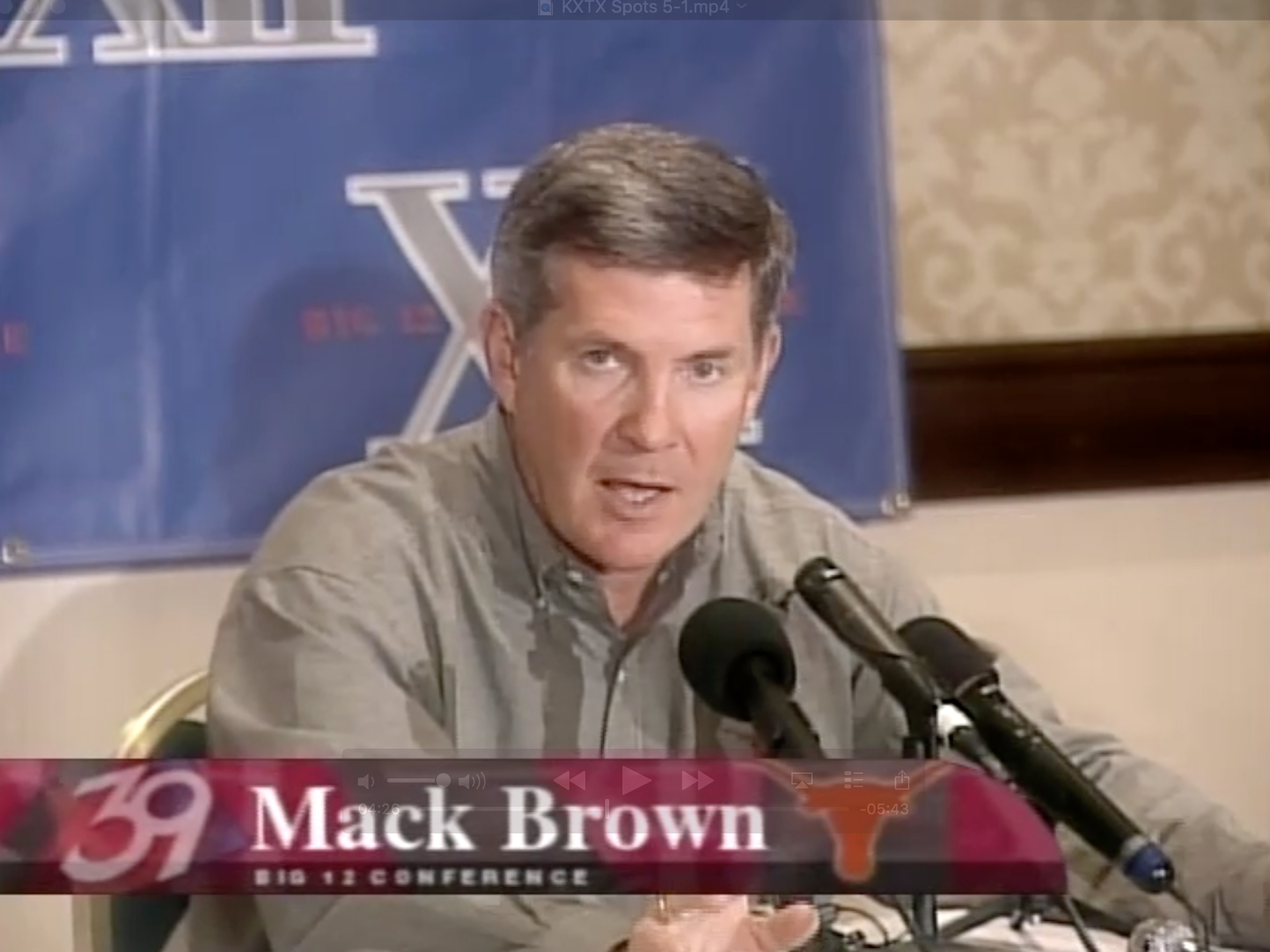
The situation reminded me of the big state schools in Texas. I specifically thought of three coaches : R.C. Slocum, Rick Barnes, and Mack Brown. All had virtually unprecedented success and all effectively lost their jobs due in part to outsized expectations.

Slocum, a College Football Hall of Fame inductee, coached the Aggies from 1989 to 2002. He never had a losing season and won in double digits five times. The program had a total of six 10-plus-win seasons in the 86 years prior to Slocum’s arrival and has had one since his departure.

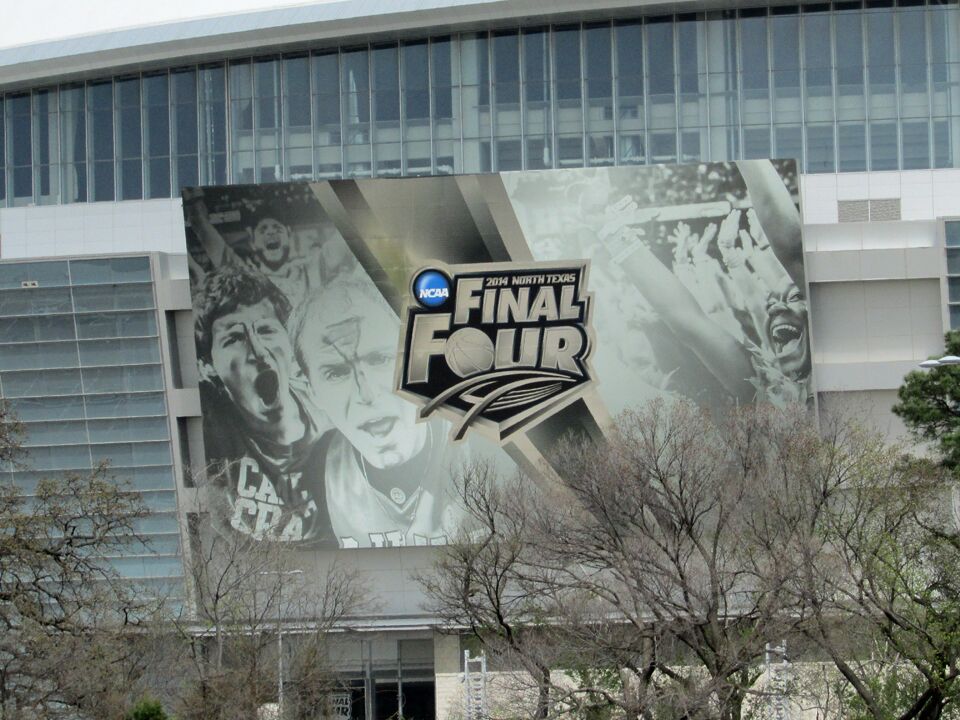
Barnes coached seventeen seasons of men’s basketball at the University of Texas before being fired two years ago. The Longhorns made the NCAA Tournament in all but one of those. He took them to their first Final Four since the 1940s. Other than his immediate predecessor, Tom Penders, no Texas coach, not even the legendary Abe Lemons, had gotten the school to more than one NCAA Tourney (though the criteria were admittedly more stringent before the field expanded). He owns the top winning percentage of any UT coach since the 1930s.

Mack BrownAs Texas’ football coach from 1998-2013, Brown put up nine years of 10 or more wins against a single losing season. He won a national title and got his team to a second championship game (they kept that one close against Alabama despite losing starting quarterback and future NFL-er Colt McCoy to an injury in the first quarter). Brown measured up against the legacy of Darrell Royal better than any of the legend’s other successors had. The program has not had a winning record since Brown moved into a special assistant role.

So why might these three have been good for Leicester to know about prior to making their decision to terminate Ranieri? Because sometimes you have to appreciate what you have. A&M football before Slocum was not a consistent winner. They won three conference titles between 1942 and 1984. While Penders started to put Texas basketball on the map, Barnes established it there, something no coach had done before. And though Texas had a strong football tradition before Brown, he took it to a level seen only once before in the program’s history, and in a different sort of era.

Past performance is certainly no guarantee of future results. Any of these coaches might well have failed to maintain the program at the level to which he had gotten it. Sometimes, however, one has to understand how hard it is to win all the time against high-level competition – and it is really hard. Maybe those in charge saw some sort of slippage in approach or work ethic from Ranieri, Slocum, Brown, and Barnes. Maybe declines in those programs would have accelerated with them in charge. But it has always seemed to me that when someone has had success, especially where none was to be found before, one should take a long hard look at the possibility of taking a step back when making a change. Scores of schools will never win a national championship, and sometimes if you try too hard to take that next step, you end up taking two leaps in the other direction instead.

Will it happen in Leicester? Will time prove their decision a correct one? What are the expectations? If they expect hardware every year, history might indicate they will have miscalculated. Of course, they do still have hopes of a trophy this season. A 1-0 win March 14 against Sevilla would propel the Foxes into the final eight of the Champions League, the most prestigious competition in club soccer. That’s where Ranieri had gotten them this year. It wasn’t good enough.


Rush Olson has spent two decades directing creative efforts for sports teams and broadcasters. He currently creates ad campaigns, television programs, and related creative projects for sports entities through Rush Olson Creative & Sports and FourNine Productions.

RushOlson.com
Linkedin.com/company/rush-olson-creative-&-sports
Facebook.com/RushOlsonCreativeandSports

Tuesday, February 7, 2017

Is It Good TCU Didn't Go Big?

This post originally appeared at the Fort Worth Weekly's website. To view it there : https://www.fwweekly.com/2017/02/07/sports-rush-maybe-its-good-tcu-didnt-go-big/


Fort Worth teems with good people. I was born and raised in Cowtown and can’t imagine a more warm-hearted bunch of folks.

Persons of quality character – like the ones in Funkytown – can often resist the temptation to compromise their morals for the sake of worldly gain. It’s best if they don’t have to, though. A little over 20 years ago, circumstances kept a group of locals from having to make some choices that certain neighbors of ours haven’t handled well.

You’ve perhaps followed recent developments in Baylor football. Over the last year, an apparent pattern of widespread misconduct in the supervision of the football program has led to personnel changes and lawsuits. The most recent allegations, if true, illuminate a culture in which conscience seemed to have had no place in the discussion. They also indicate that such attitudes were held by top school administrators, coaches, boosters, and even local law enforcement personnel. The ethically indifferent approach seems to have facilitated sexual assaults and other offensive crimes.

Make no mistake, we’re talking about serious charges. This is not buying a bus ticket for a player to go see his family for the holidays. This isn’t even letting him drive a free Lexus. This is actual criminal activity.

Some people’s jobs depended on football success. The boosters may have done it for the chance to feel reflected glory from a school they used to attend. They all allegedly decided those rewards outweighed any potential long-term repercussions or personal sense of shame.

The Waco university has experienced scandal before. In 2003, a former Baylor basketball player killed a teammate. A corrupt coach tried to use the murder to help him cover up NCAA violations. In 2012, both the men’s and women’s basketball programs received sanctions from the governing body.

The Baylor Bears compete in the Big 12 conference, one of the country’s top five Division 1 athletic conferences. Since its formation, the league’s schools have won national titles in 17 different sports (including two by Baylor in women’s hoops). Competing for such stakes intensifies the pressure to win. It also boosts the potential reward for boosters’ egos and staffers’ career paths.

So how does all of this concern TCU and nice Fort Worth people? Well, Baylor got into the Big 12 in large part because TCU did not. That happened back in 1996 and at the time caused a great deal of local upset. TCU trudged off to the Western Athletic Conference, then Conference USA and the Mountain West before recently winding up in the conference that had shut them out before.

Over those years, TCU kept a lower profile than its neighbor 90 minutes to the south. That had to be frustrating for Frog fans, but not competing against the UTs, A&Ms, and Techs in high-stakes matchups also kept it out of emotionally-charged rivalries with those huge taxpayer-financed institutions. Horned Frogs didn’t have to hear from Longhorns or Aggies about getting trounced year after year in the marquee sports like Bears supporters did.
I think that was a good thing for TCU. If they had been the lone private school to get into the Big 12, they would have had to endure the heightened expectations of trying to compete as the smallest member of the conference against subsidized rivals – as Baylor did. Less pressure means less incentive to find a way to work around the rules, be they ones of athletic associations or common decency. The Frogs have gradually built up some remarkable football achievements in the Franchione/Patterson era with a sparse record of disciplinary hiccups.

As noted earlier, Fort Worth is full of good people. The Horned Frogs might well have avoided a moral crisis no matter what conference they occupied the last 20-odd years. We do, however, have to keep in mind what happened to bring about the demise of the league they had joined in 1923.

The Southwest Conference collapsed in part because of the prestige its members lost due to widespread NCAA violations. TCU had its own 1980s transgressions, thanks to boosters paying student-athletes behind coach Jim Wacker’s back. But it’s another Christian school that might provide the best cautionary note. Southern Methodist’s delinquent culture didn’t result in criminal charges, but they did implicate the governor of Texas (Bill Clements) and the sanctions they received forced the cancellation of two full football seasons – the death penalty.  Incidentally, the Mustangs’ men’s basketball coach for much of that era was found to have committed multiple violations at the school in his sport in the 1980s. Dave Bliss repeated that modus operandi when he coached Baylor in the early 2000s, culminating with his appalling approach to a homicide.

TCU doesn’t have to repeat past errors, whether their own or someone else’s. Hopefully for the Frogs, those years away from competing with their bigger in-state rivals have helped the university establish a healthy atmosphere for its athletic programs. Now that they are once again facing top-level foes in the Big 12, they will need it.

Rush Olson has spent two decades directing creative efforts for sports teams and broadcasters. He currently creates ad campaigns, television programs, and related creative projects for sports entities through Rush Olson Creative & Sports and FourNine Productions.

RushOlson.com
Linkedin.com/company/rush-olson-creative-&-sports
Facebook.com/RushOlsonCreativeandSports

Wednesday, December 28, 2016

Think Outside the Bowl

This post originally appeared at the Fort Worth Weekly's website. To view it there : https://www.fwweekly.com/2016/12/28/sports-rush-thinking-outside-the-bowl/


Most folks attend a football game to enjoy themselves in the moment, whether by playing or watching. The game can have a purpose beyond the immediate outcome, though.

Watching Army play North Texas in the Zaxby’s Heart of Dallas Bowl certainly proved entertaining, as the Black Knights defeated the Eagles in a back-and-forth overtime contest. Beyond the Cotton Bowl, the organizers hope certain effects linger after that final whistle.

I asked Brant Ringler about those effects in this video interview. How might participation in a bowl game help the programs involved? What do the student-athletes get out of it? Is there a charitable impact? The ZHODB has historically included initiatives related to first responders and, through the Heart of Dallas nonprofit, awards monies to area charities. Ringler works for ESPN and serves as Executive Director for both the Zaxby’s Heart of Dallas Bowl  and the Lockheed Martin Armed Forces Bowl held in Fort Worth.


Rush Olson has spent two decades directing creative efforts for sports teams and broadcasters. He currently creates ad campaigns, television programs, and related creative projects for sports entities through Rush Olson Creative & Sports and FourNine Productions.

RushOlson.com
Linkedin.com/company/rush-olson-creative-&-sports
Facebook.com/RushOlsonCreativeandSports

Thursday, August 4, 2016

Insight on Officiating from Mike Pereira of Fox Sports

This post originally appeared at the Fort Worth Weekly's website. To view it there : http://www.fwweekly.com/2016/08/03/sports-rush-good-calls-talking-with-mike-pereira-of-fox-sports/

One of the best calls Mike Pereira ever made : starting a charitable initiative that both helps veterans and meets a need within the officiating profession.


Fox Sports NFL announcers bring in Pereira when there’s a question about a penalty. He delivered the keynote address at the recent OfficiateTexas Day in San Antonio where he talked to a gathering of Texas officials from many sports about the state of the striped shirt business. Pereira announced his new non-profit  and told stories both personal and entertaining. This video includes an interview with him and excerpts from his speech. You’ll also find out which celebrity the public seems to think he resembles.


Disclosure : The event was spearheaded by the Texas Association of Sports Officials and the University Interscholastic League. I was paid by TASO to create videos for the event, though not this piece.


Rush Olson has spent two decades directing creative efforts for sports teams and broadcasters. He currently creates ad campaigns, television programs, and related creative projects for sports entities through Rush Olson Creative & Sports and FourNine Productions.


RushOlson.com

Linkedin.com/company/rush-olson-creative-&-sports

Facebook.com/RushOlsonCreativeandSports

Wednesday, July 20, 2016

An ex-NFLer Talks Football Without Athletic Scholarships

This post originally appeared at the Fort Worth Weekly's website. To view it there : http://www.fwweekly.com/2016/07/19/sports-rush-an-ex-nfler-talks-football-without-athletic-scholarships/

When we think of college football in Texas, we tend to think of the big FBS institutions, like Texas, Texas A&M, and TCU. A lot more schools field teams than just those we see televised every Saturday, however. One of those places is my alma mater, San Antonio’s Trinity University. They play Division III football, a level that offers no athletic scholarships. So how do they fit into the landscape of a football-crazed state?

I asked Jerheme Urban, Trinity’s head football coach, about what he does to field a team, what their goals, and what he saw as a player going from Trinity to the National Football League. Check it out in this video.


Rush Olson has spent two decades directing creative efforts for sports teams and broadcasters. He currently creates ad campaigns, television programs, and related creative projects for sports entities through Rush Olson Creative & Sports and FourNine Productions.


RushOlson.com

Linkedin.com/company/rush-olson-creative-&-sports

Facebook.com/RushOlsonCreativeandSports


Friday, July 15, 2016

Tackling More Safely

This post originally appeared at the Fort Worth Weekly's website. To view it there : http://www.fwweekly.com/2016/07/13/sports-rush-tackling-more-safely/

 Last week, we posted the first part of an interview with Eddie Canales of Gridiron Heroes (watch it here : https://youtu.be/nxInDMrb5kM). His charity helps athletes who have suffered paralyzing injuries playing high school football. They also work to prevent injuries through teaching safer tackling techniques. In this interview, Eddie explains their approach.


This video is an edited version. You can see the full interview, which includes Eddie Canales’ take on hawk-style tackling, here : https://youtu.be/5yMm-8u2tzA

For more information on Gridiron Heroes, visit gridironheroes.org.


Rush Olson has spent two decades directing creative efforts for sports teams and broadcasters. He currently creates ad campaigns, television programs, and related creative projects for sports entities through Rush Olson Creative & Sports and FourNine Productions.


RushOlson.com

Linkedin.com/company/rush-olson-creative-&-sports

Facebook.com/RushOlsonCreativeandSports

Wednesday, March 2, 2016

Sports' Spring Break

This post originally appeared on the Arts page at the Fort Worth Weekly. To read it on that site : http://www.fwweekly.com/2016/03/02/sports-rush-five-reasons-march-is-mad/

 
R1
The name “March” sounds like a military PT regimen. The sports phrase most associated with the month implies a certain mad-as-a-March-hare kind of crazy. And most April Fool’s Day pranks are planned during its 31 days. Any way you look at it, March is a funny sports month. Here are five reasons why.


Football-free
It’s typically the only month of the year with no American-style football. The Arena League doesn’t start until April. NFL and CFL training camps remain a ways away. The long-defunct USFL and XFL tried it, and organizations like Major League Football might give it a try again, but it has generally remained unfootballed. We do get to watch professional Association Football, as the Major League Soccer season starts this week and European leagues continue.

The Biggest International Events Avoid It
It’s not quite cold enough for Winter Olympics, but not quite warm enough for the summer games. In fact, no Olympic Games, FIFA World Cup, or Rugby (Union) World Cup has ever been held in March. The World Curling Championships have traditionally taken place during the third month, though, so there’s that. MLB has also staged the World Baseball Classic every three or four years in March, but it hasn’t really risen to the level of the other big global events. When held in the southern hemisphere, the iCC Cricket World Cup probably comes the closest to putting the month on the global stage.

No Playoffs
No major U.S. league holds playoffs in March. The period joins July, August, and September as the postseason-less season, what with the World Series stretching into November now and the MLS Cup pushed to December. We don’t have any All-Star Games this time of year, either. Pro hockey and basketball certainly have compelling games as teams jockey for playoff position, but you also have some squads playing out the string after February’s trade deadlines.

Spring Training
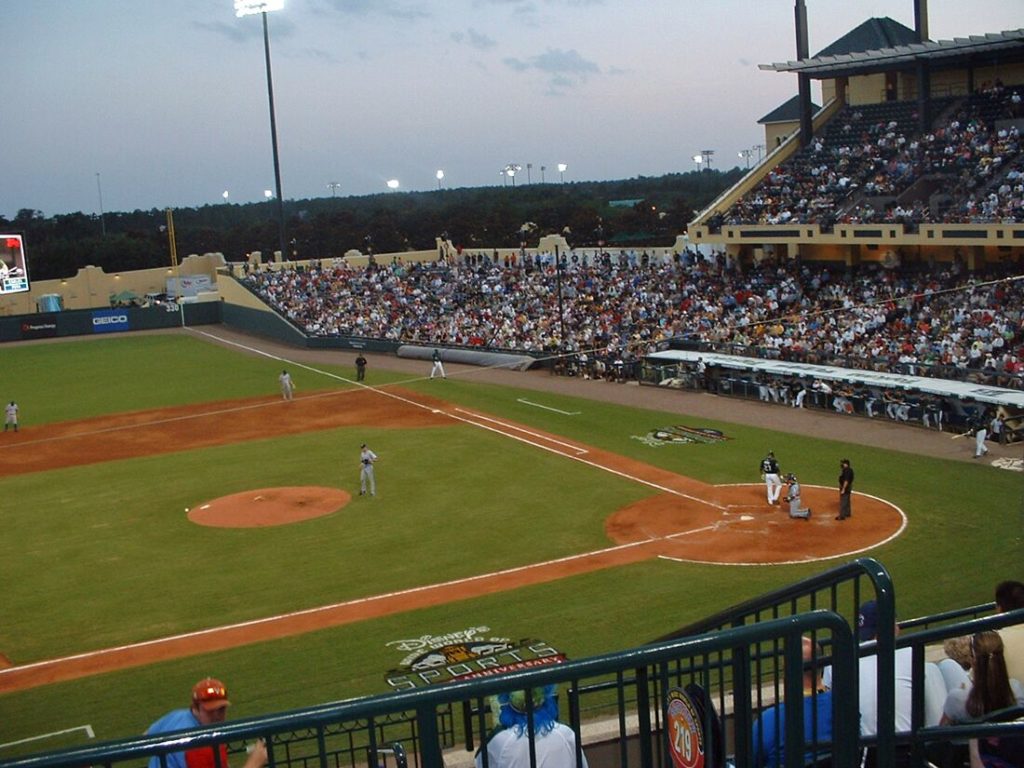
No other sport gets so much traction out of its ramp-up period. Major League Baseball plays a whole schedule of preseason games, charges normal prices for them, and nobody minds. The national pastime has it sweet that respect. The home fans don’t complain that meaningless games were included in season ticket packages, the franchises make additional money when those fans travel for a snowbirding experience, and they also get to sell tickets and t-shirts to the natives of whatever Cactus or Grapefruit League municipality built them a charming ballpark.

Plus, because no regular season games are played in March, baseball teams will sometimes celebrate the month’s most noteworthy holiday later in the year. A number of teams do “Halfway to St. Patrick’s Day” promotions for September 17th games. You’ve really got a month figured out when you can make money off it 20-something weeks after it ends.

March Madness
Well, yeah, Month 3 does get wild sometimes. Certainly, the United States’ most heated March sporting event comes from the college ranks. The month inspires substantial passion among college basketball fans and those of you who chose the right upsets in your office bracket pool.


March ostensibly comes in like a Lion (Bobby Layne vintage) and goes out like a, well, Lion (Dan Orlovsky vintage). In reality, it’s pretty laid-back throughout, reflecting more anticipation than finality. Even March Madness now concludes in April.

For the most part, March seems to be the spring break month for students and sports fans. It’s a chance to chill out and maybe read a good sports blog post or two before baseball home openers and Stanley Cup Playoffs and Champions League Finals demand your most urgent attention and some face-painting, chest-bumping intensity. See you on the beach.


Rush Olson has spent two decades directing creative efforts for sports teams and broadcasters. He currently creates ad campaigns, television programs, and related creative projects for sports entities through his company, Rush Olson Creative & Sports.


RushOlson.com

Linkedin.com/company/rush-olson-creative-&-sports

Facebook.com/RushOlsonCreativeandSports