Showing posts with label sports marketing. Show all posts

Monday, November 25, 2019

Sometimes Football Is Life


For most people, even those of us who make a living in the industry, sport matters to a certain degree. But it’s not a matter of life or death.
So when an interviewee told me last year, “If it wasn’t for this football, I would be dead or in jail,” it got my attention, and hard.
Right away, you want to know why. Why did this college-educated young man feel so strongly that his life would have turned gravely for the worse without blocking and tackling?
The thing is, his wasn’t the only interview that day that had that effect on me and my business partner, Tom Fireoved. Tom and I interacted with young men who bucked the odds coming from tough neighborhoods. We also heard from the Ivy League quarterback who felt overlooked because of his lack of gridiron street cred. Those just scratched the surface. In addition to real-life drama, we found plenty of football turmoil, from rows with coaches to multiple school transfers to offensive schemes unsuited for a talented player’s skillset.
What amazed Tom and I was that we heard all these stories in the space of an hour. Upon further consideration, we also realized that the stories weren’t done yet, and that their most crucial chapter to date might be written over the ensuing four days.
The College Gridiron Showcase provides these young football players a chance to write that next chapter. It’s a post-collegiate opportunity for draft-eligible football players to show how they match up with their peers. They go through workouts and off-field activities designed to enable them to prove their readiness to play pro football. Scouts from every NFL team, plus those from the CFL and XFL, traditionally show up for the sixth-year event. 
We want to make a TV show out of it.
It’s got all the elements you need for compelling filmmaking - great backstories, high-profile upside, arresting visuals, and genuine drama that plays out over the course of the event (and the programming). And it makes for efficient filming because all the stories come together in less than a week.
For a broadcaster or streaming service, it offers flexibility. It could be a single show or it could be a series of episodes. We can continue to follow the players or end it after the showcase. We could do as much backstory as budgets permit. 
It’s also a highly saleable property. CGS can roll in event-specific assets to be sold alongside spot inventory. And opportunities for ancillary digital content abound. Plus, it revolves around America’s most popular sport. And there’s even an international angle, as the CGS brings in football hopefuls trying to make the jump from Europe or Asia.
The CGS bears some similarities to the Senior Bowl or the East-West Shrine Bowl in that it intends to allow draft-eligible football players to show their skills. But CGS uses the word “showcase” instead of “game” or “bowl” because they don’t feel that staging an event-ending exhibition contest best serves their players or scouts. And that’s the other part of this story. The guy who run the showcase have their own grassroots entrepreneurial tale. They built their property up from nothing to something in which every NFL team has seen value. They’ve helped multiple players realize pro football dreams. We think - we know - viewers will find these stories engrossing.
Check out the video that accompanies this post to get a taste of what we’re talking about. Networks and companies who want to know more can contact Tom@MintFarmFilms.comor Rush@MintFarmFilms.com

Friday, July 14, 2017

Why It's My Texas (and Also My Rangers)

This post originally appeared in the Blotch section of the Fort Worth Weekly's website. To consume it there : https://www.fwweekly.com/2017/07/13/sports-rush-putting-the-texas-in-texas-rangers/

Why did Tom Grieve say my name on the TV Friday?

OK, my first name is also a common noun, but he wasn’t referring to a pitcher rushing his delivery or a runner in a rush to beat a throw while going from first to third. He meant me.

Grieve and his broadcast partner, C.J. Nitkowski had noticed the Rangers’ home jerseys have script across the front reading “Texas.” The more common practice in baseball is to have a team’s geographical home printed on the road jerseys, while the home versions boast the name of the team’s mascot. The Rangers, however, use “Texas” on both. The announcers wondered why.

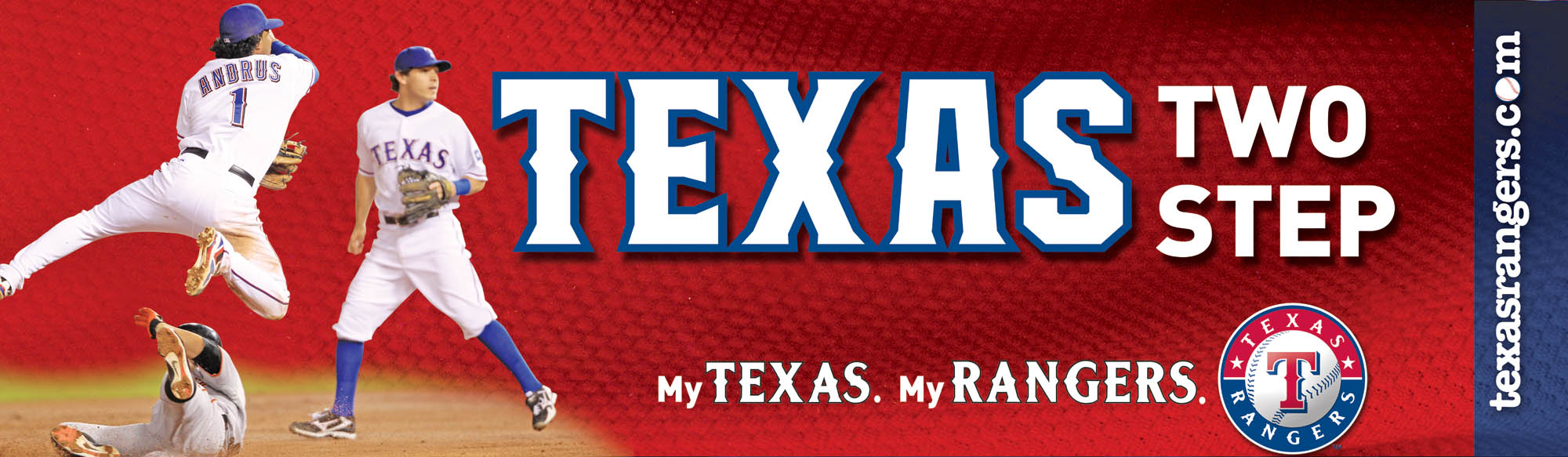
So I sent Grieve a text that read “My memory of why Texas is on the front of the home jersey is that it was part of an effort to brand the club with the qualities of the state a few years ago. We ended up doing a whole ad campaign around My Texas My Rangers. I think the jersey branding was related to that.”

The longtime Rangers analyst then read the message on the air. Later in the game, Rangers Executive Vice President of Communications John Blake confirmed my memory was correct (which caused them to say my name again, pleasing my parents who were watching the telecast in Fort Worth). While it’s always cool having an esteemed personality like Tom Grieve say nice things about you, one of the bonuses of the situation was it got me thinking about the ad campaign and how it came about.

it started intuitively, but was ultimately backed up by data. Nolan Ryan had taken over as team president in February of 2008 and the ownership group in which he participated took over the team in August of 2010. The new head of business-side operations, Chuck Greenberg, wanted to direct fans to identify the Rangers as their team, so we quickly shot and edited some new spots consisting of highlights mixed with fans telling the camera some variant of “these are my Rangers.” Though that advertising effort was an unscientific one, in the offseason, Greenberg directed resources toward something the Rangers had done only sporadically during my years there: audience research.
I found the process truly valuable. As a creative director, one likes to know to whom one is speaking (through the medium of television or radio or the internet). It helps you craft better material, because once you know what you’re trying to accomplish, you can find innovative ways of achieving it. As consultant Corky Hall of Stellus Consulting put it, “Give me the freedom of a tightly defined strategy.”

Hall’s firm had taken existing data and spearheaded new research initiatives so we could find out what our fans thought of us. We also wanted to know what they liked and what we could do to position ourselves to better reflect their preferences. One of the things we discovered (not that it was a surprise) was that people liked Texas symbols and values like loyalty, toughness, and friendliness they felt reflected those of Texas and Texans.

The Rangers had long sported a Texas flag patch on their jersey sleeves and the Lone Star State had found its way into plenty of branding elements over the years. The year before (2009), in fact, was when the club had made the move to have all its jerseys read “Texas.” Identifying with the state made sense instinctively, but now we had data to back it up. Out of those brainstorming sessions came a tag line that combined elements of the previous year’s end of season spots with the new research, one that encouraged people to take pride in their team the same way they did in their state: My Texas, My Rangers.

The next step was to figure out how to embody the concept in actual creative executions that would both encourage ballpark attendance and create the brand perceptions we wanted. The solution we adopted involved portraying what was then known as Rangers Ballpark in Arlington as a place where Texas values were ever-present. For television commercials, what I thought might be funny (and therefore memorable) was if the images symbolic of those values actually existed at the park. Some manifestations included:

Grazing
Longhorns grazed in the outfield, ostensibly to save on mower fuel. This spot starred Mitch Moreland and Head Groundskeeper Dennis Klein and no, those were not real cows in the outfield. We digitally manipulated some stock footage.
photo credit: Brian Gagnon/Texas Rangers
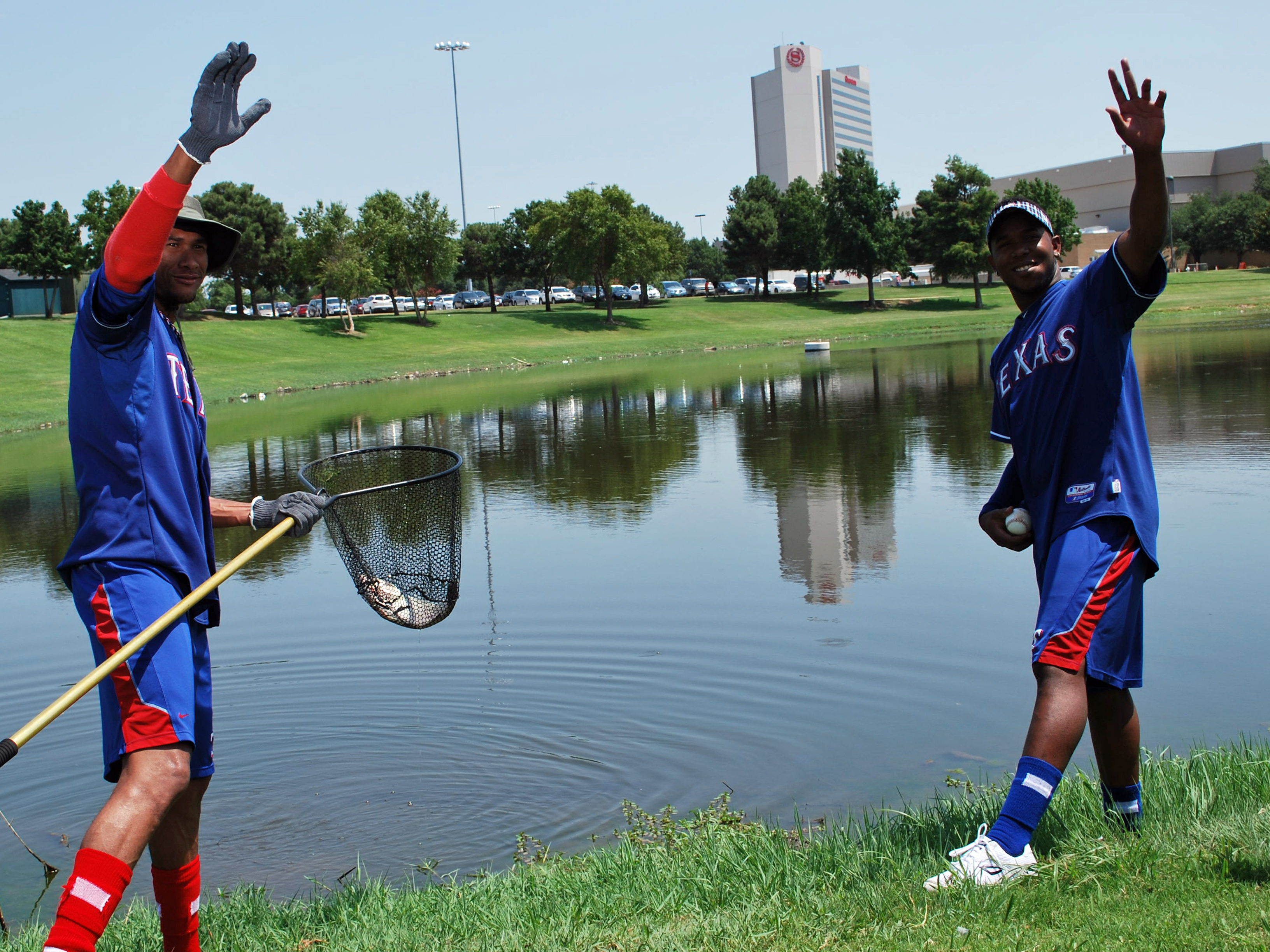
Bass Fishing Texans love their bass fishing, so Alexi Ogando and Neftali Feliz demonstrated an innovative way of doing it, as observed by Pitching Coach Mike Maddox and Bullpen Coach Andy Hawkins. For props, we used old batting practice balls and some whole fish carcasses I bought at an Arlington Asian market. Yes, our marketing budget went to buy dead fish. I did check, by the way, to make sure the fish I purchased could actually be found in Texas lakes. I didn’t want a detail-minded angler hating on our spot because we used the wrong bass.

Pecans
A pecan tree grew in the upper deck, with Nelson Cruz and Thad Bosley in charge of cracking the nuts of the official state tree. I wandered the Central Arlington neighborhood in which I lived at the time picking up sticks and pecan fragments dropped from the local trees. For Bosley and Cruz’s part, shot in spring training in Surprise, Arizona, I had to trek to Tempe to find unshelled pecans.

Horns
Horses are pretty Texan, and the Rangers happen to have one working for them. During the Rangers’ first World Series run, the “claw and antler” craze consumed the local fandom. After this spot starring Rangers Captain began running, the mascot reported kids coming up to him doing the antlers sign.

Lots of Dogs
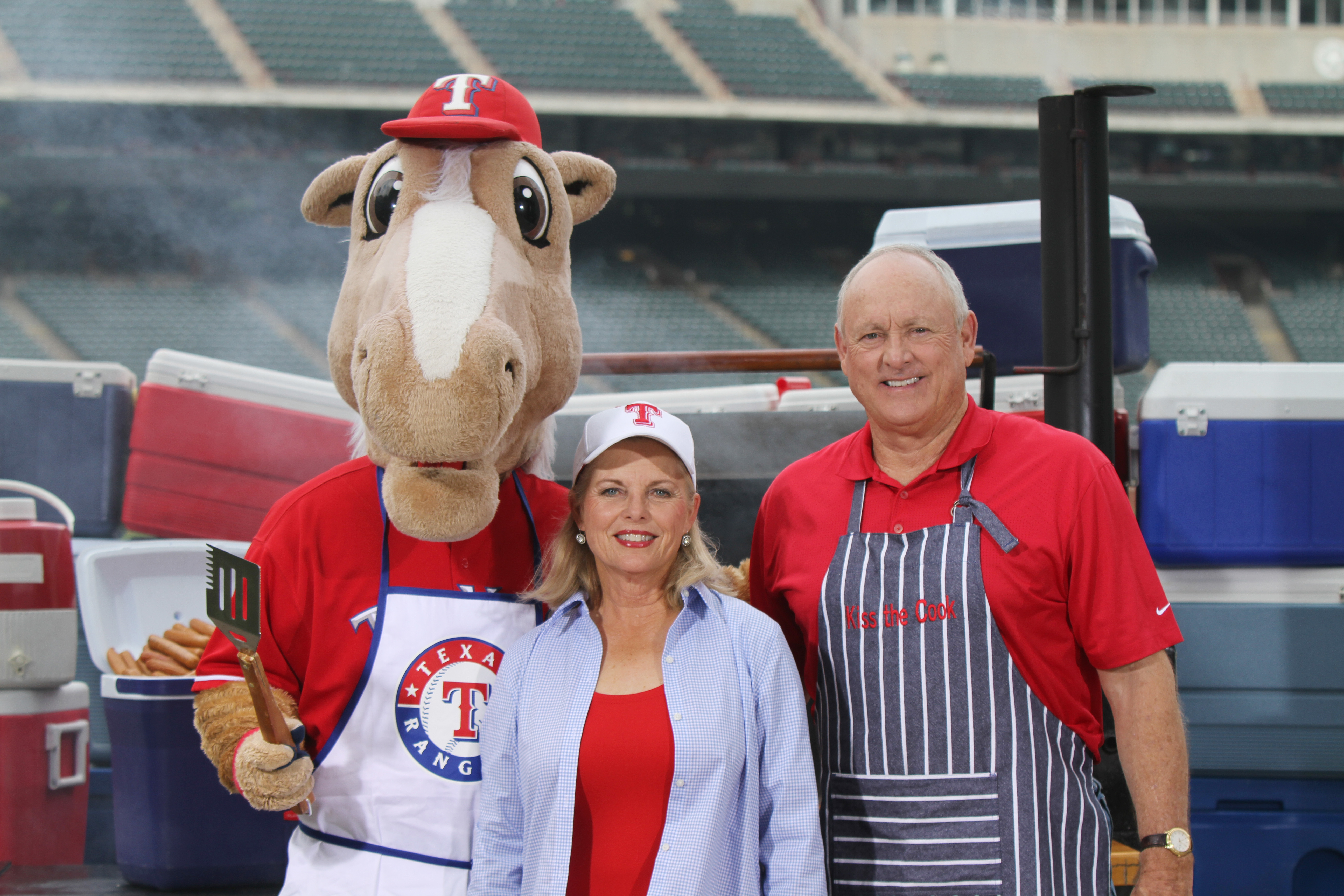
Grilling out with friends and family is a Texas tradition, but apparently some Texans can take it too far. This was one of the most fun shoots I ever did, and not just because Nolan and Ruth Ryan are great people (two of their granddaughters appeared in the commercial, too). Ballpark chef Cris Vazquez hauled out a humungous quantity of hot dogs and an enormous grill that morning and started cooking. We grabbed every cooler in the ballpark to ostensibly be full of hot dogs and the crew brought some ice chests from home, too.

If you don’t watch the Spanish-language version, too, you do yourself a disservice. We knew Nolan would be reluctant to speak a phrase in Spanish, so we recruited his former teammate Jose Guzman to help. The scheme was that Jose was going to say the Spanish line, but we plotted all along to try to get Nolan to say it. So we cut a take where Jose said the line, then I asked Nolan if we could try one more thing. Nolan guardedly agreed, and Jose, with help from team videographer Hugo Carbajal, coached him in what is, as far as I know, the Hall of Famer’s only appearance ever speaking in Spanish on camera.
Rangers Captain, Ruth and Nolan Ryan
photo credit: Alan H. Rose/Texas Rangers
This spot got a lot of discussion on the Ticket radio station, too, thanks to a shot Carbajal added in the edit of a well-inked lady eating a hot dog.
Nolan’s image as the quintessential Texan helped the My Texas, My Rangers campaign a lot. We referenced him in the copy (it was ostensibly his idea to put in the pecan tree and, in another spot I didn’t mention above because it’s unfortunately not available to view online, an oil well along the right field wall).

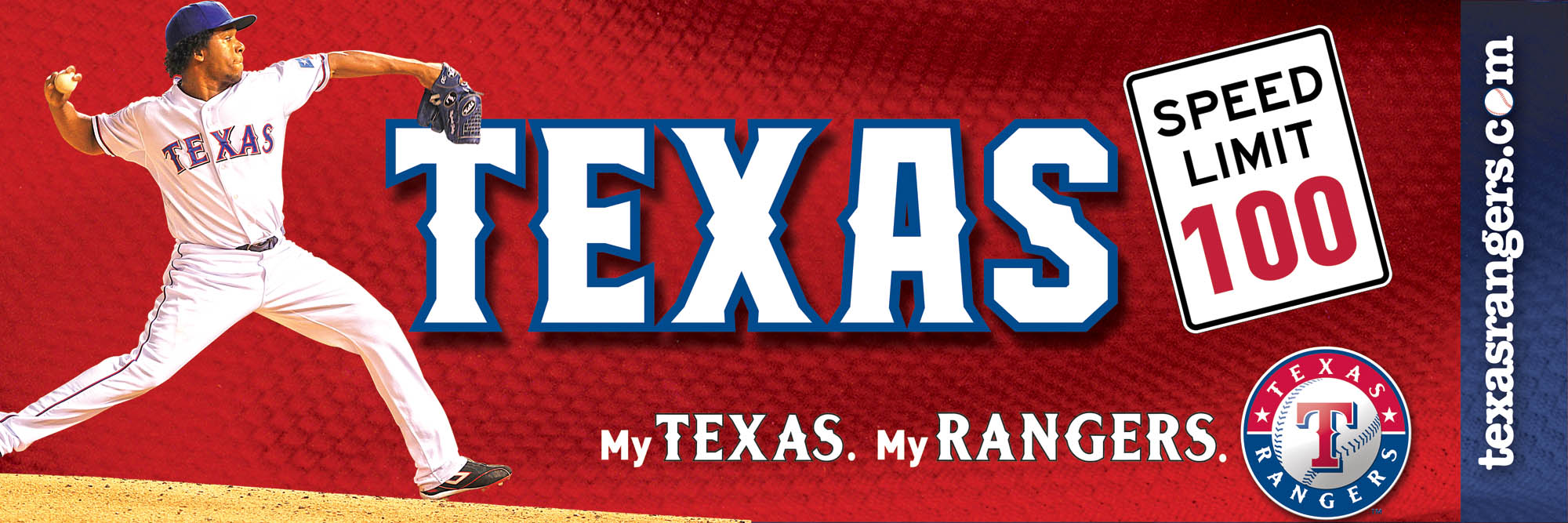
We created other media besides television. Billboards offered baseball variations on state themes, like its country-and-western dancing and miles of open road.
design by: Rainer Uhlir/Texas Rangers
We had radio, too. Can Texans sometimes exaggerate? We decided Texas Tall Tales was a worthwhile theme, so Eric Nadel voiced a series of spots positing Texas ties to certain team-related items. For instance, did you know the word Tejas means “he who hits with the strength of a bear?” Or that the dye in the Rangers’ blue uniforms is made from organic bluebonnets? Or that Nolan Ryan gives the Rangers employee of the year a heifer from his personal herd? Of course, those are all made up, but Eric would go on to emphasize that it was not a Texas Tall Tale that the Rangers did, in fact, embody many of the good qualities of the Lone Star State. You can check out some samples of the radio campaign here.
We also didn’t want to turn off non-Texans, so we did some radio and TV themed as “Welcome to Texas,” that suggested you didn’t have to be from the state of Texas to cheer for the team named “Texas.” And when the pennant race heated up, we did some new spots that hit on Texas pride in retaining the American League title (which that 2011 team did).

When one thinks of the Texas Rangers, one inescapably thinks of the state – heck, it’s the team’s first name. In the latter part of the first decade of the 2000s, the team made that connection a little more explicit. Tom Grieve noticed.


 Rush Olson has spent two decades directing creative efforts for sports teams and broadcasters. He currently creates ad campaigns, television programs, and related creative projects for sports entities through Rush Olson Creative & Sports and FourNine Productions.

RushOlson.com
Linkedin.com/company/rush-olson-creative-&-sports
Facebook.com/RushOlsonCreativeandSports

Monday, January 16, 2017

I Had A Dream

This post originally appeared at the Fort Worth Weekly's website. To view it there : https://www.fwweekly.com/2017/01/16/baseball-realizes-dreams/

Any baseball franchise would want to employ a powerful first baseman with a career OPS (On-base Plus Slugging) over 1.000 who could also play the outfield.

Clubs would also welcome a hard-nosed second baseman who had won a Rookie-of-the-Year Award, an MVP, and a batting title.

Teams would be thrilled to add a smooth center fielder worth nearly 80 career WAR (Wins Above Replacement).

They’d be even more interested if you told them each player was a Hall-of-Famer and had served his country as a soldier in time of actual war.

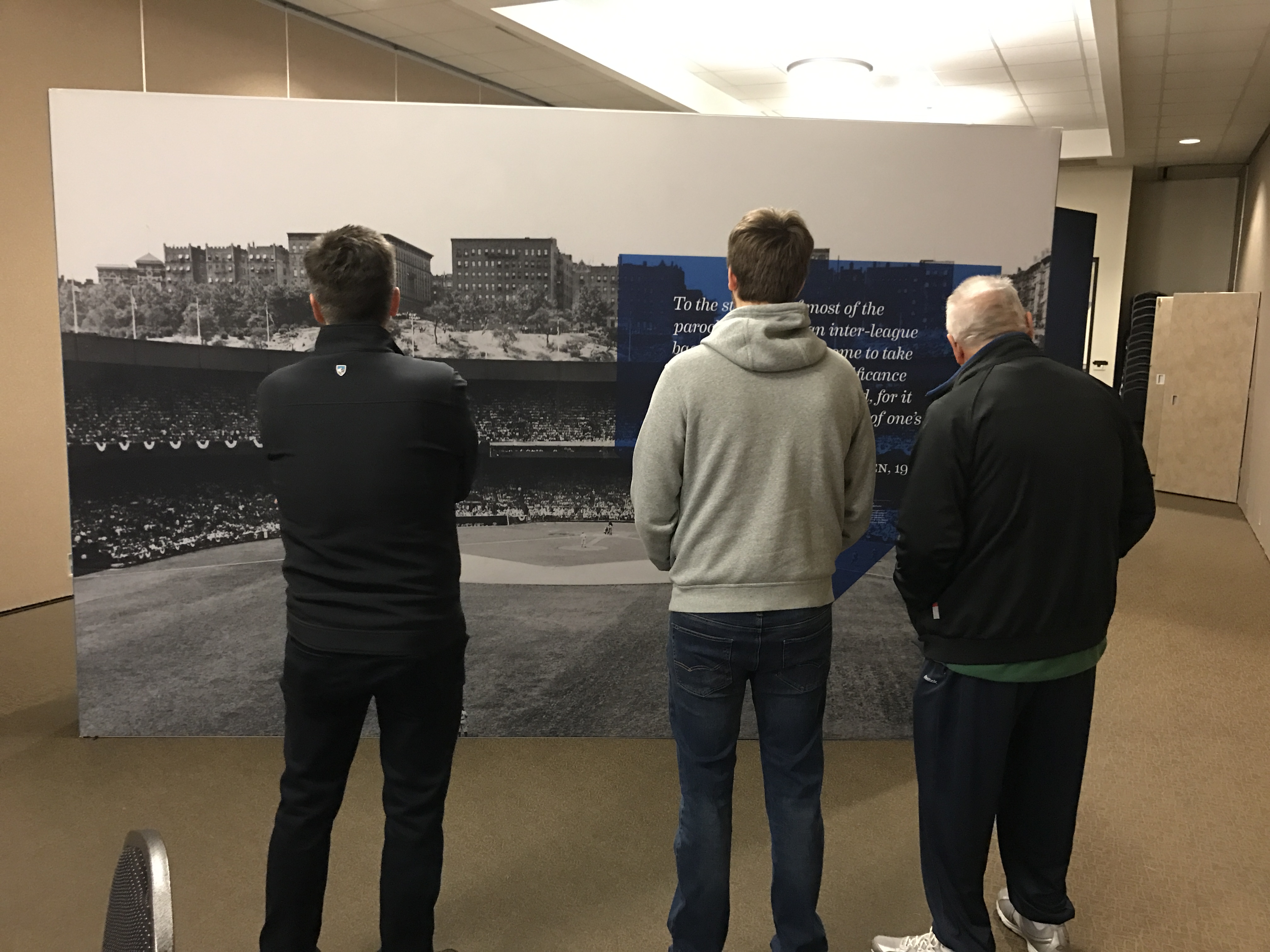
I learned things about each of the above players at a new exhibit called Chasing Dreams: Baseball and Becoming American. The Congregation Ahavath Sholom on South Hulen hosts it through March 5. You can get more scoop on its contents and how it came to be in Fort Worth by reading my article in the Fort Worth Weekly print edition due on stands this coming Wednesday.

Weintraub Family at Chasing Dreams Exhibit 

It seemed especially appropriate to write about the exhibit as we celebrate Martin Luther King, Jr. Day. King chased dreams, and, indeed we remember one of his most famous speeches as the “I Have A Dream Speech.” He delivered it August 28, 1963 in Washington, D.C., and it contains one of my favorite passages ever:

“I have a dream that my four little children will one day live in a nation where they will not be judged by the color of their skin, but by the content of their character.”

King’s address also spoke of the injustices done to African-Americans of the time and of difficulties they faced in a country whose laws denied them a level playing field. The exhibit talks of the discriminatory obstacles Jewish ballplayers faced, and includes mentions of the struggles and triumphs of black, Hispanic, and even female ballplayers.

We learn, for instance, that while early Jewish ballplayers could at least play in the big leagues (unlike African-Americans), many felt compelled to change their names to something that made their ethnicity less apparent. We also learn that baseball played a role in helping to overcome prejudices, both within the game and without.

“Baseball really became the place for cultural change in America, with Jackie Robinson as the place where America really began its integration,” posited event organizer Rick Hollander.

Jackie Robinson at Chasing Dreams: Baseball and Becoming American 

Robinson was the second baseman I described in this column’s opening paragraph. His status as MLB’s first African-American player in the modern era has deservedly cemented his status as a legend, and Robinson’s performance on the baseball diamond would have earned any player Hall of Fame consideration.

Rick Weintraub, a lifelong baseball fan who attended the exhibit the day I was there told us he had once gotten to meet Jackie Robinson. The nearly 80-year old white Jewish man said, “It now just almost brings tears to my eyes because he was such a great man, much less a baseball player.”
As one of the first Jewish ballplayers to keep his traditional surname, the first baseman/outfielder described above also faced racially-tinged abuse. Detroit Tigers fans, however, liked Hank Greenberg’s two MVP seasons and pair of World Series wins.

Both Greenberg and Robinson used their play on the field and their strength off it to power through much of the flimsy excuse for a mindset that is racism. They left baseball observers with little choice other than to judge them by the contents of their characters. I would submit that such developments have value in the wider world. Once one realizes that a member of a maligned group defies negative stereotypes, it makes it more difficult to project suppositions of inferiority onto other individuals.
Open competition, and sports especially, rewards such rational choices. Fans of that era discovered they would rather brag about their teams winning than obsess over whether the players looked like them or attended their church.

Speaking of winning, there’s another important day on the national calendar this week. Another prominent citizen will have a chance to address the public from the capital. Friday is Inauguration Day, and the incoming POTUS has talked a lot about winning things.

One thing the exhibits explains is how first-generation Americans used baseball to successfully bridge cultural gaps.

“Regardless of what all the politicians say in the world today, we are an immigrant society,” said Hollander. “They came here as young as eight, nine years old. They went back and fought in World War II for their new country and the patriotism was real. They understood the opportunities that America had to offer and baseball was one of those opportunities.”

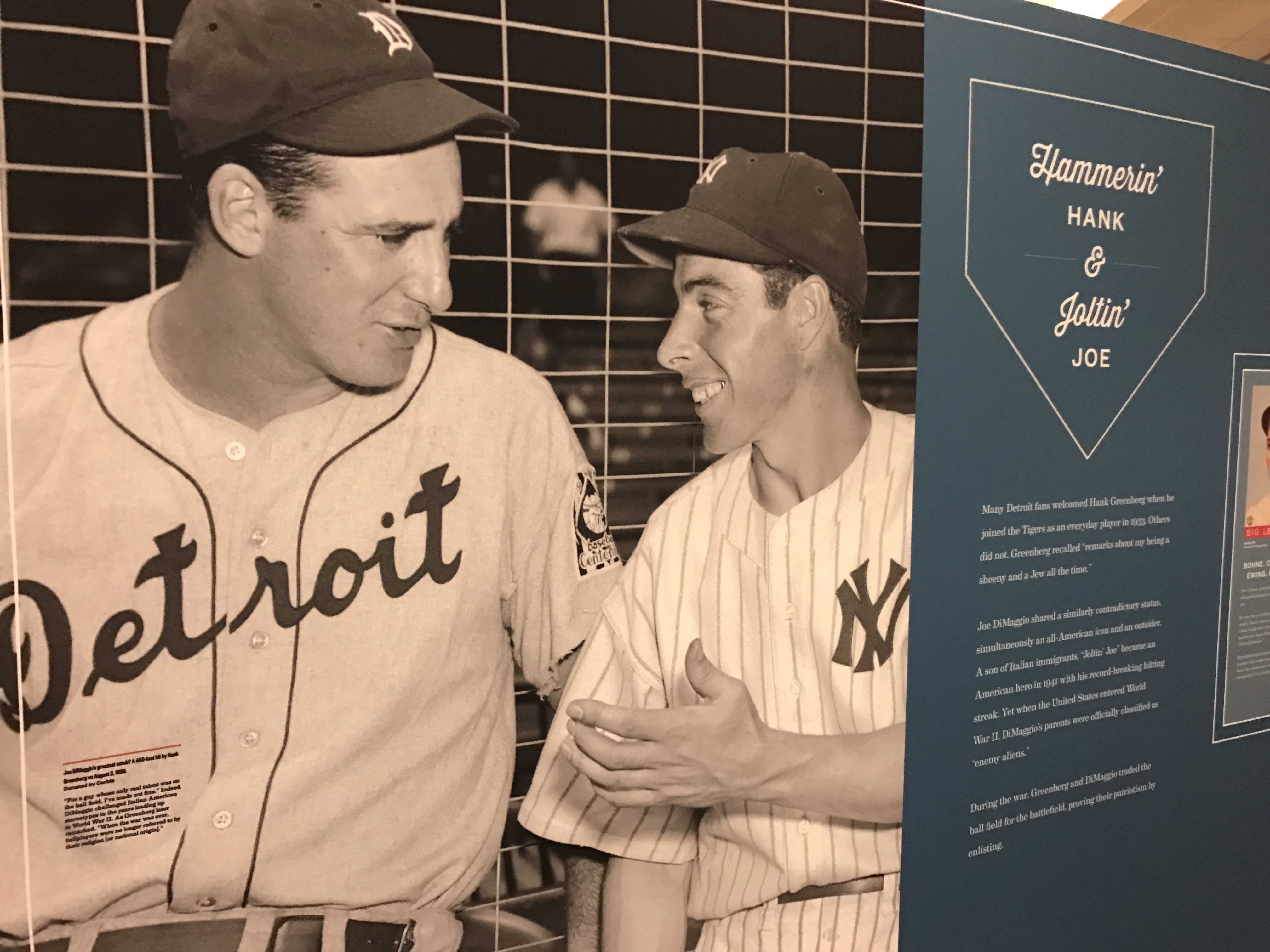
Hank Greenberg and Joe DiMaggio at Chasing Dreams: Baseball and Becoming American 

All three of the men mentioned at the top of the page also served in the armed forces during WWII. One of the exhibition’s panels features a photo of Greenberg with the center fielder I cited. Joe DiMaggio might have been the most revered ballplayer in the world in 1941 and would join the Army from 1943-45. But when war broke out, the authorities wouldn’t allow his Sicilian father to earn a living fishing in San Francisco’s coastal waters because of where Giuseppe DiMaggio was born.

The Franklin D. Roosevelt administration judged a lot of Italians, Japanese, and others of Axis descent by something other than the content of each person’s character. The year after the U.S. government freed the last of the interned Japanese Americans, Jackie Robinson broke baseball’s color barrier. As Hollander pointed out to me, the Major Leagues now feature players from all over, including Central and South America, the Caribbean, Korea, Australia, and, yes, Japan.

Society has made progress, too, since the 1940s. A more open world has resulted in all manner of free exchange of goods, services, music, and food. Indeed, as I walked into the synagogue to view the Chasing Dreams exhibit, a flier on the door caught my eye. This Jewish religious institution was advertising a musical Shabbat featuring the sounds of Latin America.

We’d like it if everyone kept an open mind about such cross-cultural experiences. When you adopt such an attitude, you can look at someone new or different as an individual and judge him or her accordingly.

If one views a person negatively because she shares a country of origin or a religion with billions of peaceful people and a tiny percentage of Bin Ladens, Torequmadas, Castros, or Maos; if one thinks just because a man rises to head a corporation or hedge fund, he therefore has no soul; if one believes that just because someone proved him or herself popular in an election, it automatically makes the official worthy or respect – or derision; In all these cases, one is not rendering judgement based on the content of that person’s character.

Baseball learned long ago how thinking that way prevents you from winning. The teams that employed Robinson, Greenberg, and DiMaggio won a LOT. One hopes that those taking power remember the lessons baseball – and Dr. King’s speech – have taught.

Thursday, December 15, 2016

The Look of 2016 From Our Perspective

This post originally appeared at the Fort Worth Weekly's website. To view it there : https://www.fwweekly.com/2016/12/15/what-2016-looked-like-to-rush/

Every December, I choose a photo from the year gone by to use for my company Christmas card. If I like you and I have your address, you have probably gotten one whether you wanted it or not. Don’t be insulted if you didn’t get one. It doesn’t mean you were naughty, it just indicates my spotty address list isn’t up to date.
In any case, as I went through 2016’s collection, I thought some of them were either good images or had a good story behind them, or both. I could only use one for the card, so I thought I’d share some of the other interesting ones in this post. What did Martina Navratilova say when she realized we were shooting her video in a hotel room? What the heck are those men in shorts doing on the Dell Diamond baseball field? And, wow, showgirls? See it all here.
I took these photos unless otherwise credited, so any mistakes are mostly on me.

USA Rugby in Round Rock – February, 2016
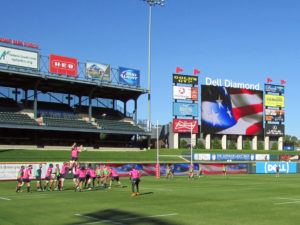
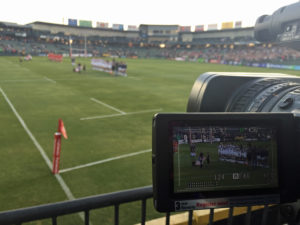
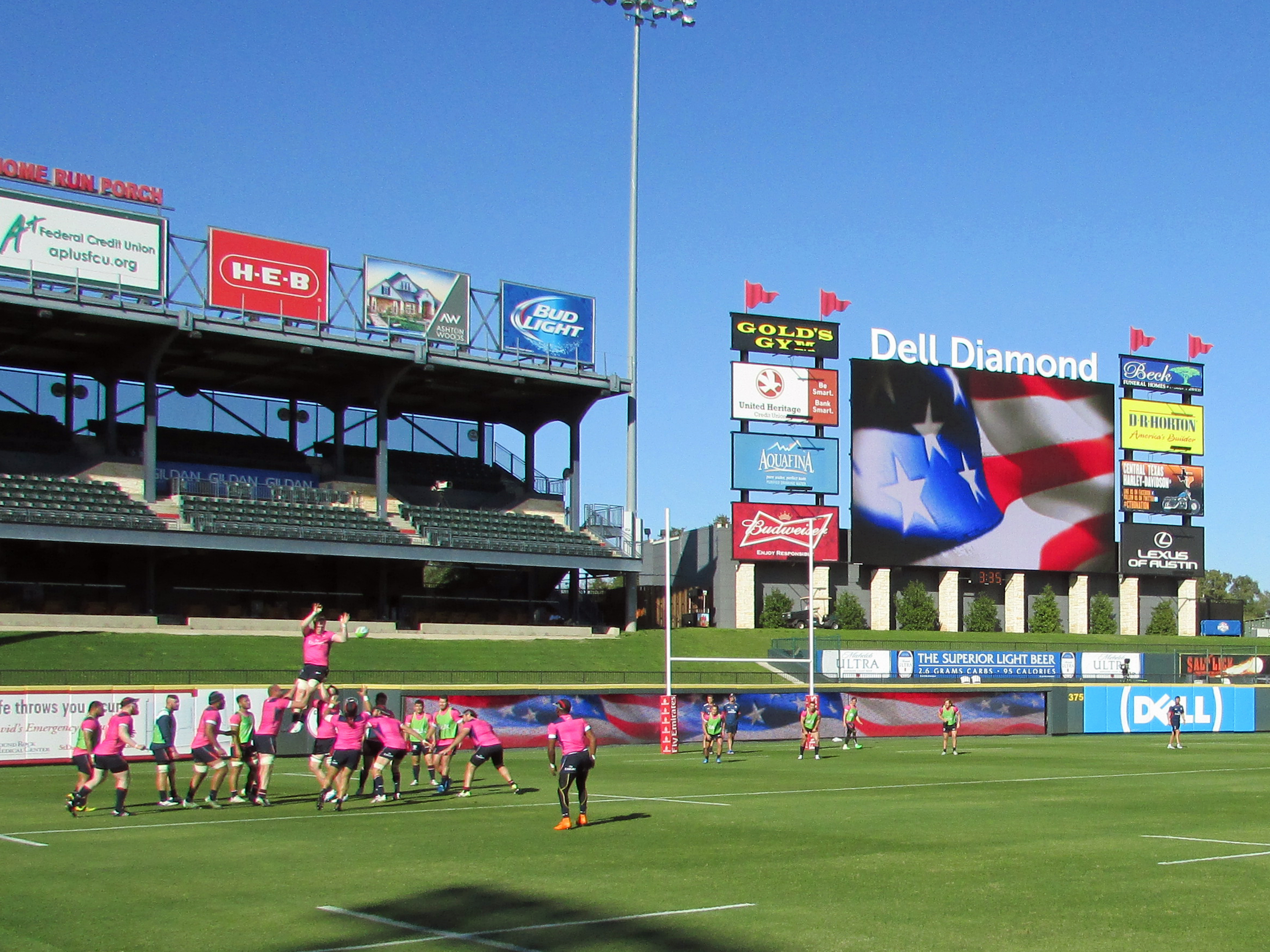
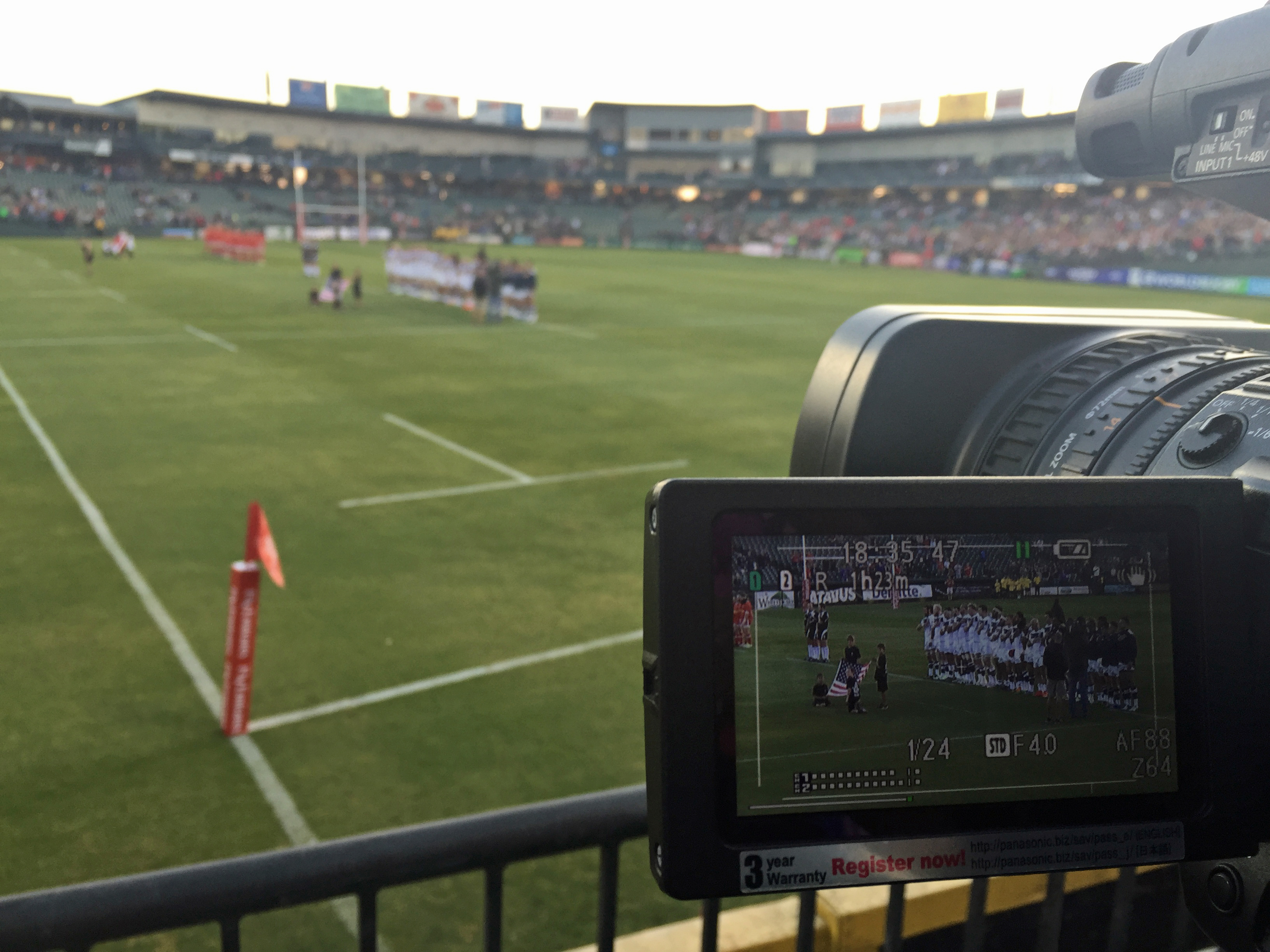
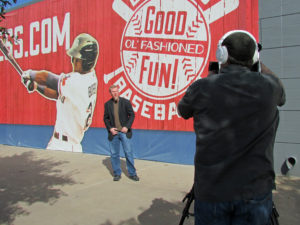
In one of these shots, you see me with a microphone in front of a baseball stadium. But the day’s work had nothing to do with baseball. USA Rugby’s men’s XVs side defeated Canada in an Americas Rugby Championship tournament match. It was fascinating to see the pitch laid out on the ballfield. USA Rugby must have liked it, since they’re returning to the venue in 2017.
rushroundrockstandup_1501
photo by Lori Gunter French
rugbyroundrock_1485rugbyroundrock_3995
Fort Worth Weekly Celebrity Chef Chili Cook-Off – March, 2016
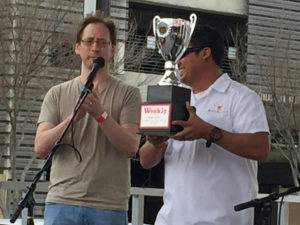
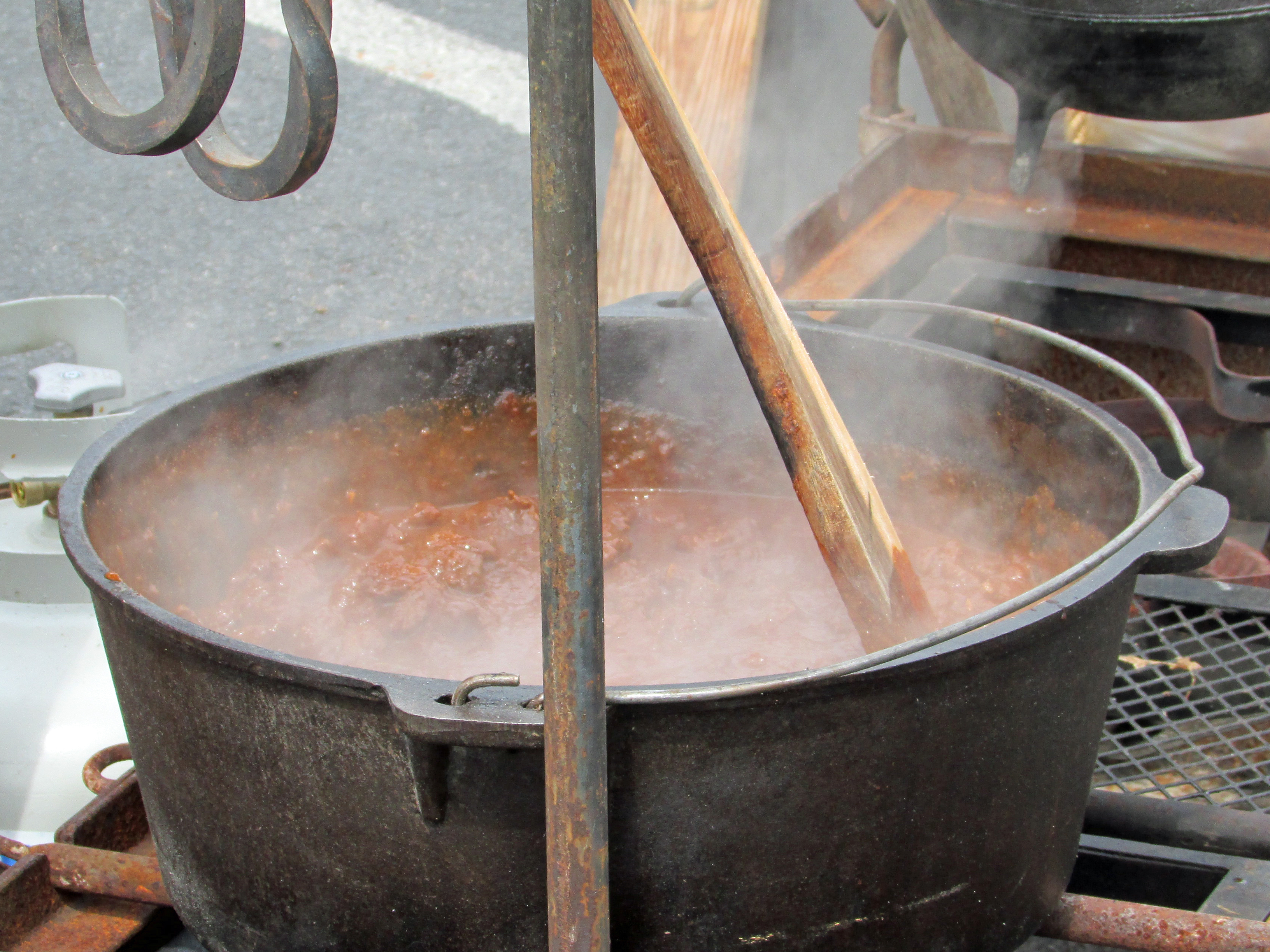
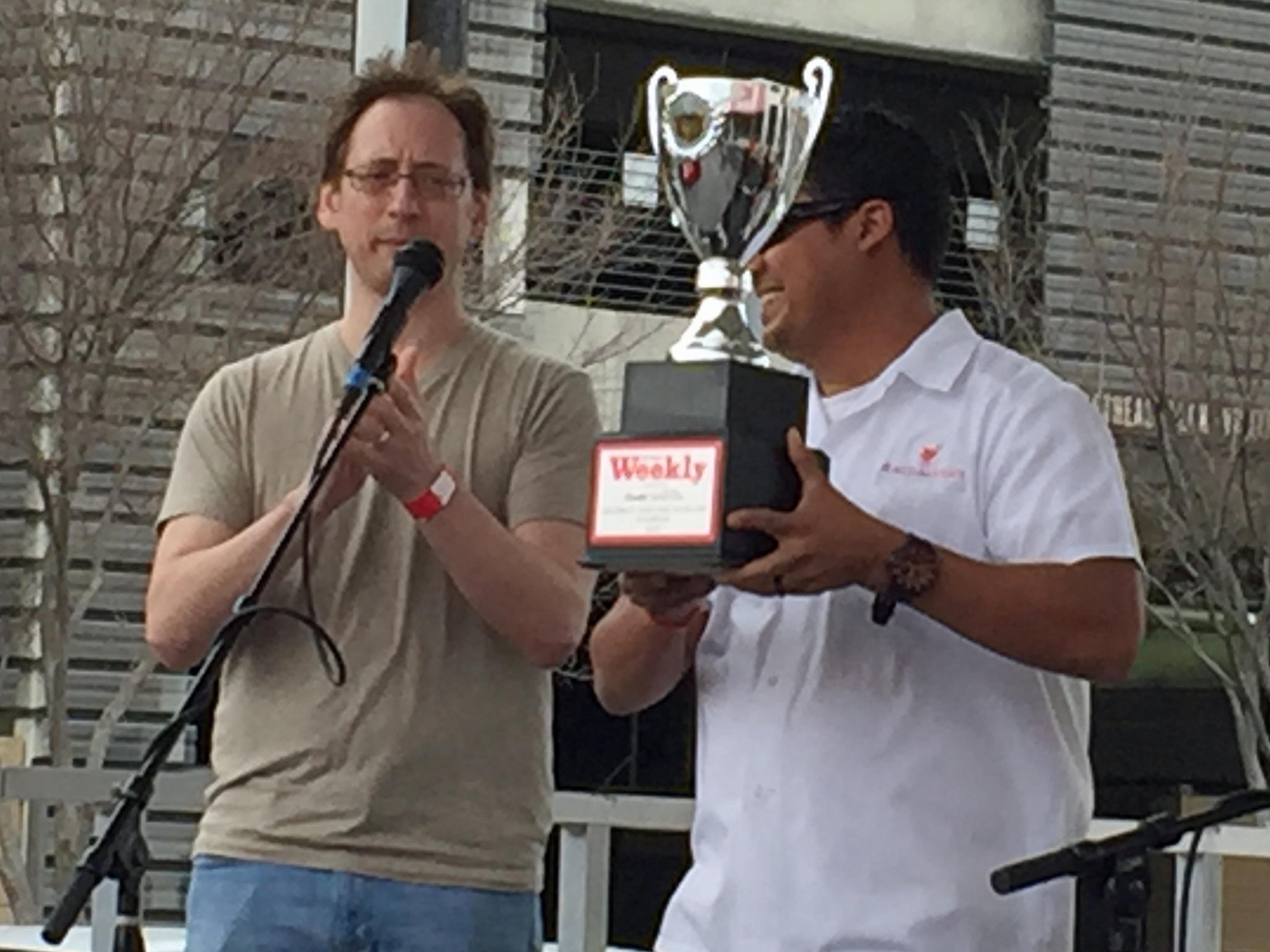
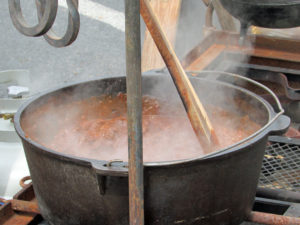
The Weekly held a chili cook-off earlier this year and I just loved this shot of a steaming pot of Fred’s chili. I also included a shot of the awards, not because it’s a great photo but because it includes a shot of Weekly associate editor Eric Griffey applauding and I’m attempting to shamelessly curry favor by including him in this no doubt critically-acclaimed post. Eric edits my stuff.
chilipot_1521chiliaward_4086
Texas Rangers – Spring/Summer 2016
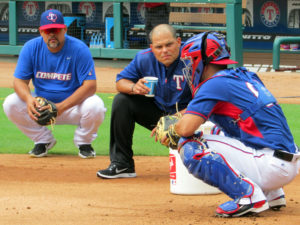
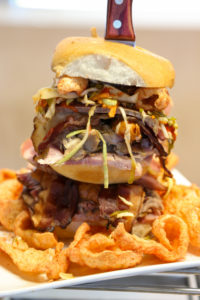
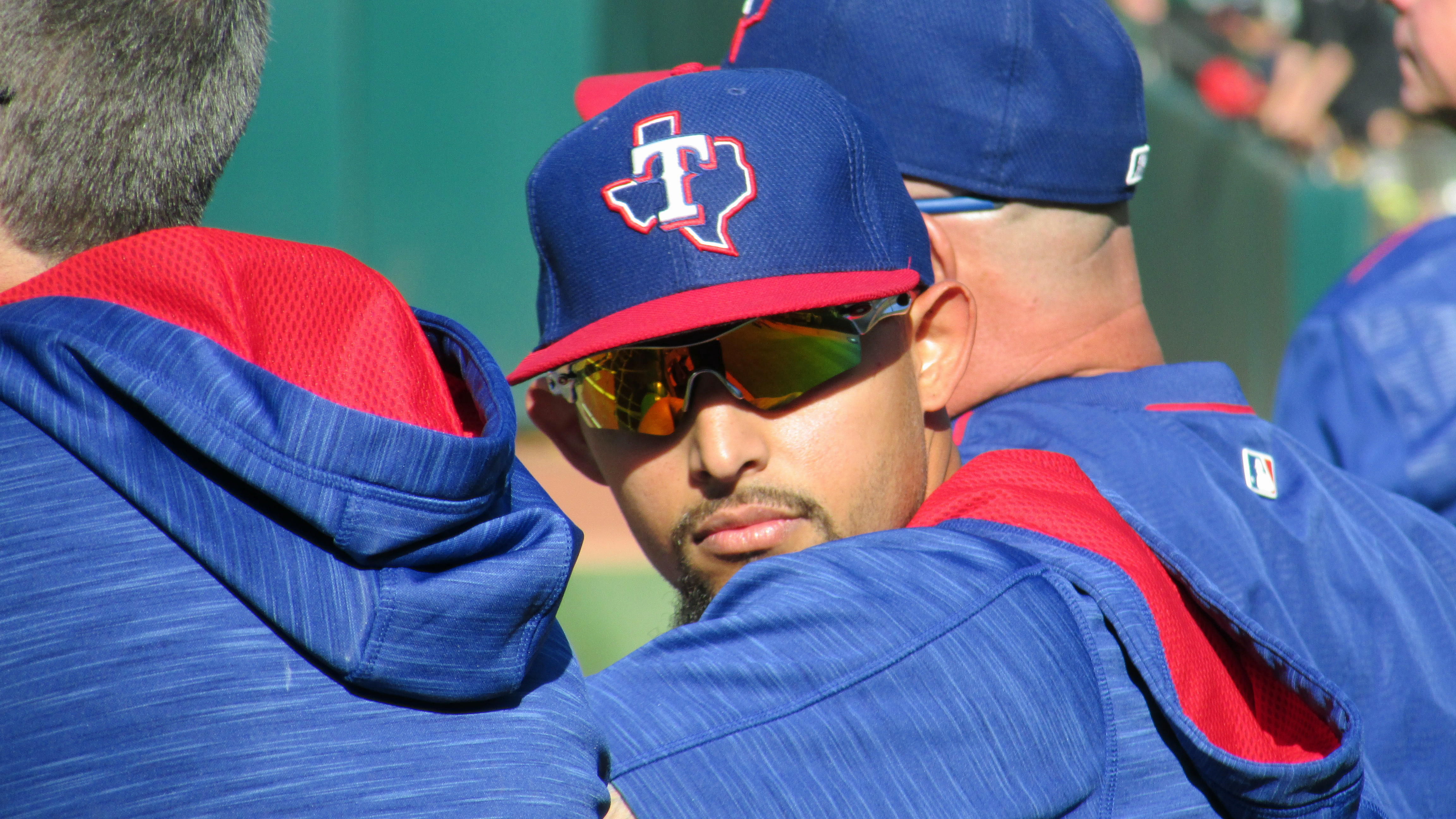
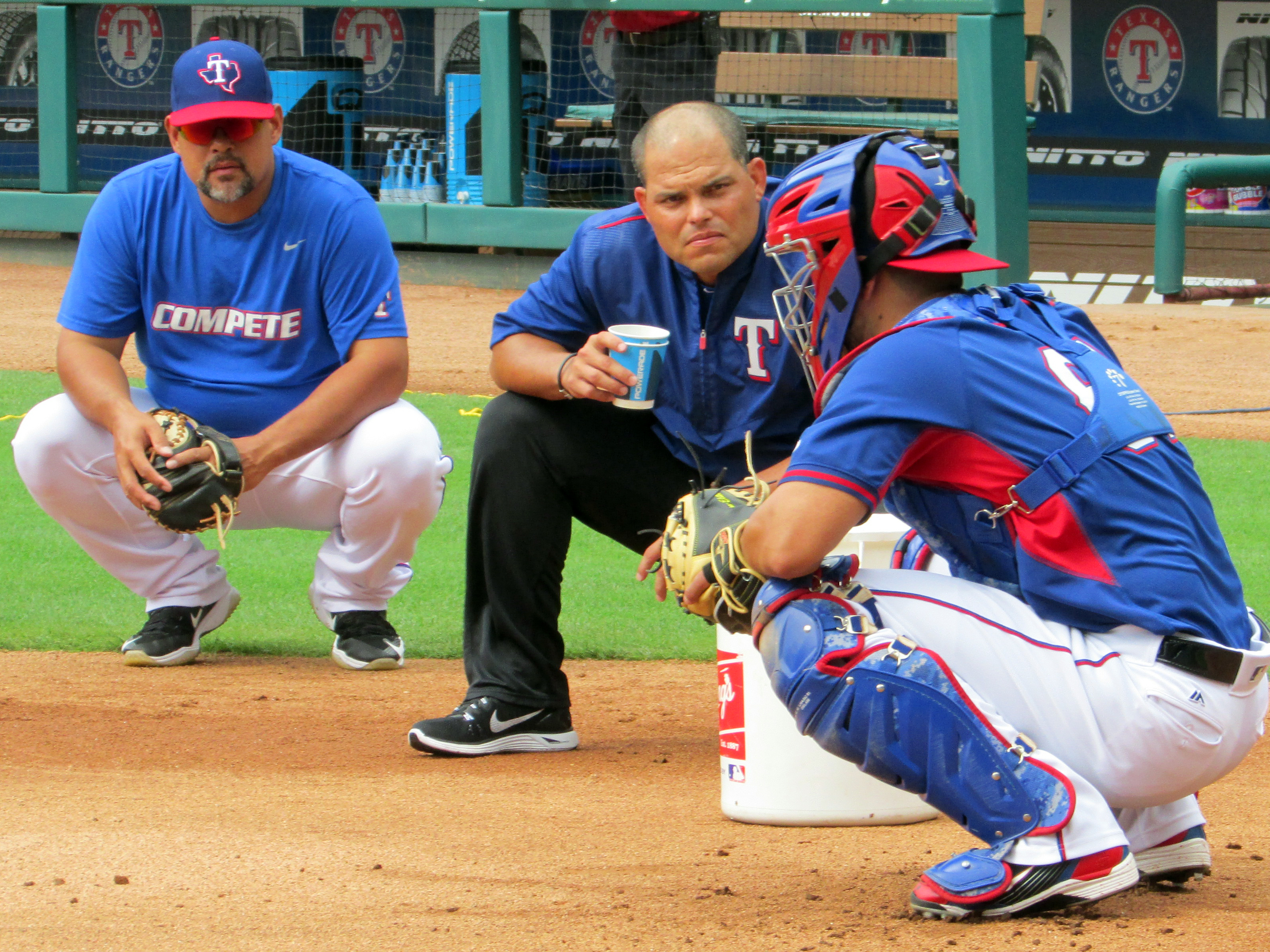
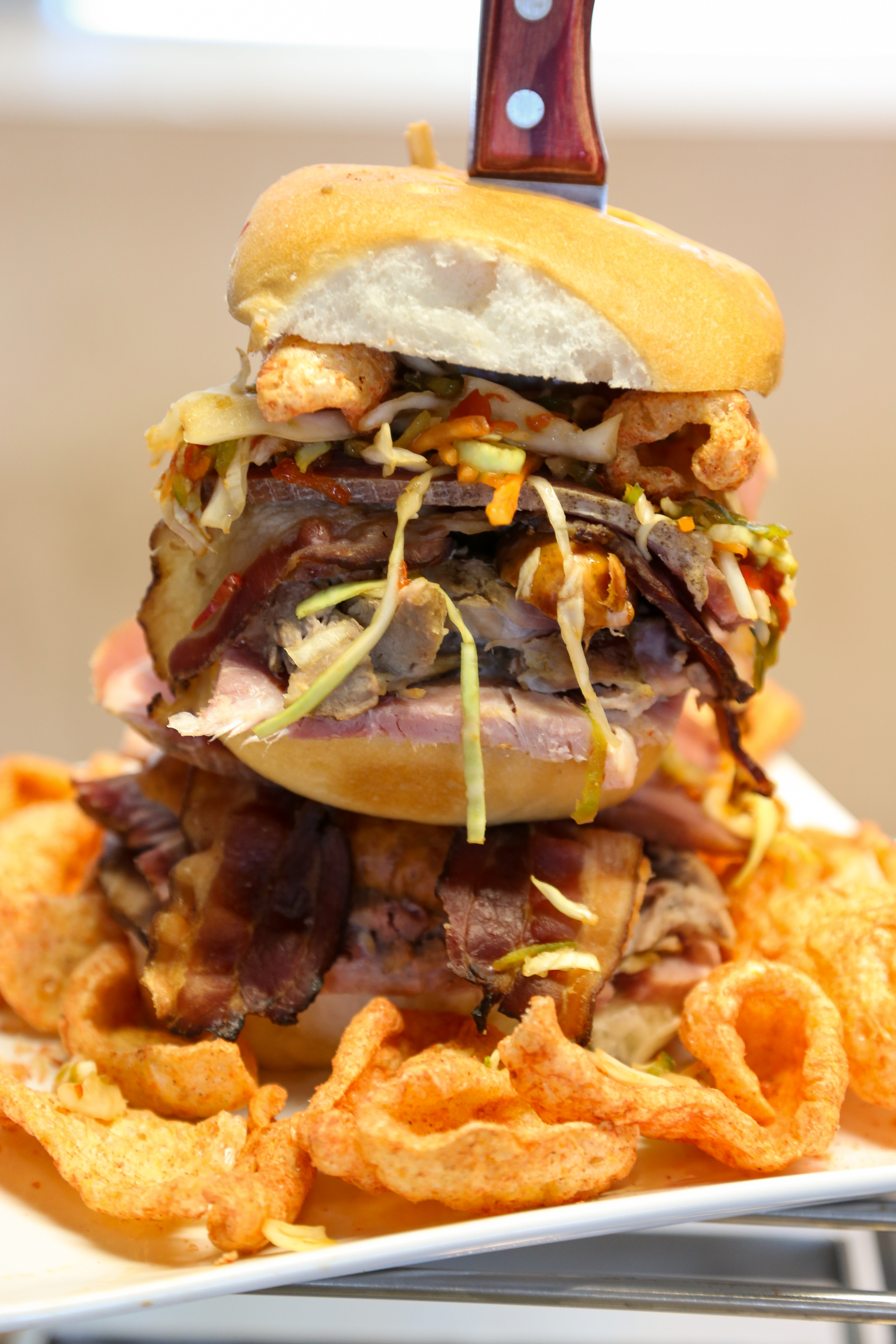
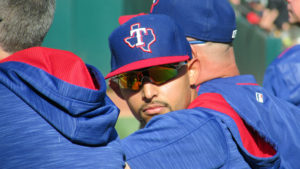
I made it out to a few Rangers events this year, including the unveiling of the new food items you’d consume at the ballpark during the season. Pictured here is the Wicked Pig, a sandwich packed with more pork than an energy subsidies bill. There’s also a shot of Pudge Rodriguez, clearly coaching with the same intensity he displayed while playing. I also added a shot of Rougned Odor by the batting cages in Oakland just because I thought it was a cool shot.
rougned_1950
pudgecoaches_1916
photo by Rush Olson

LaGrave Field – Spring/Summer 2016
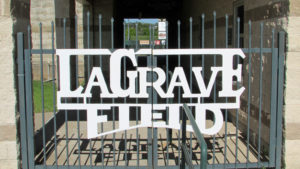
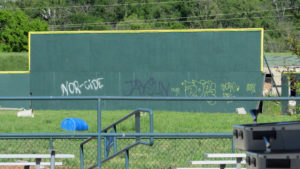
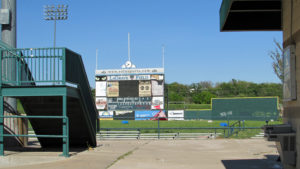
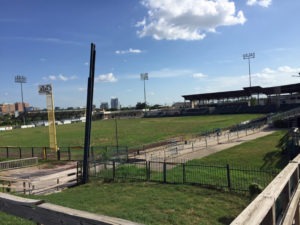
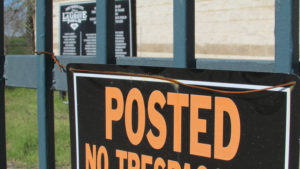
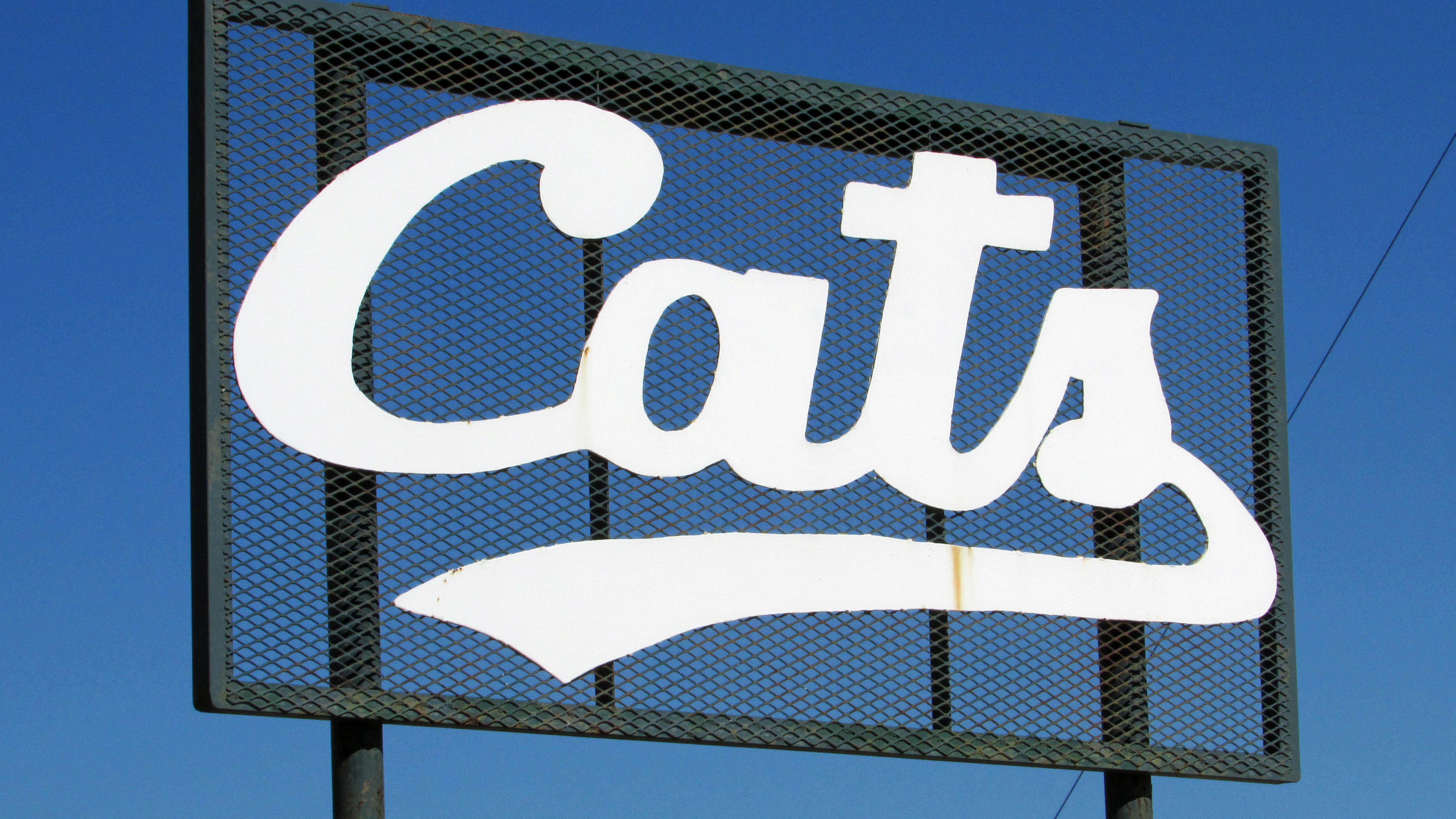
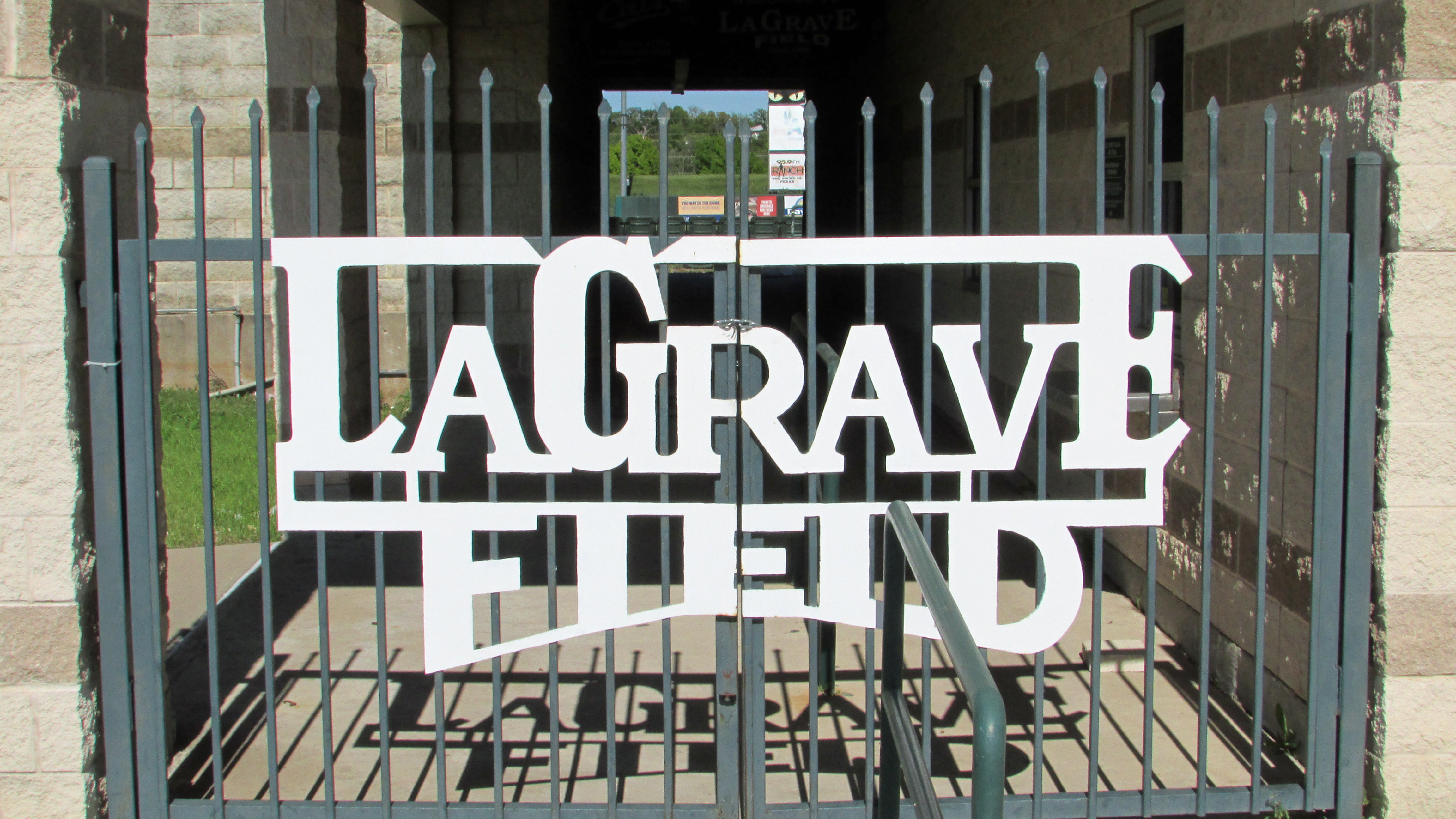
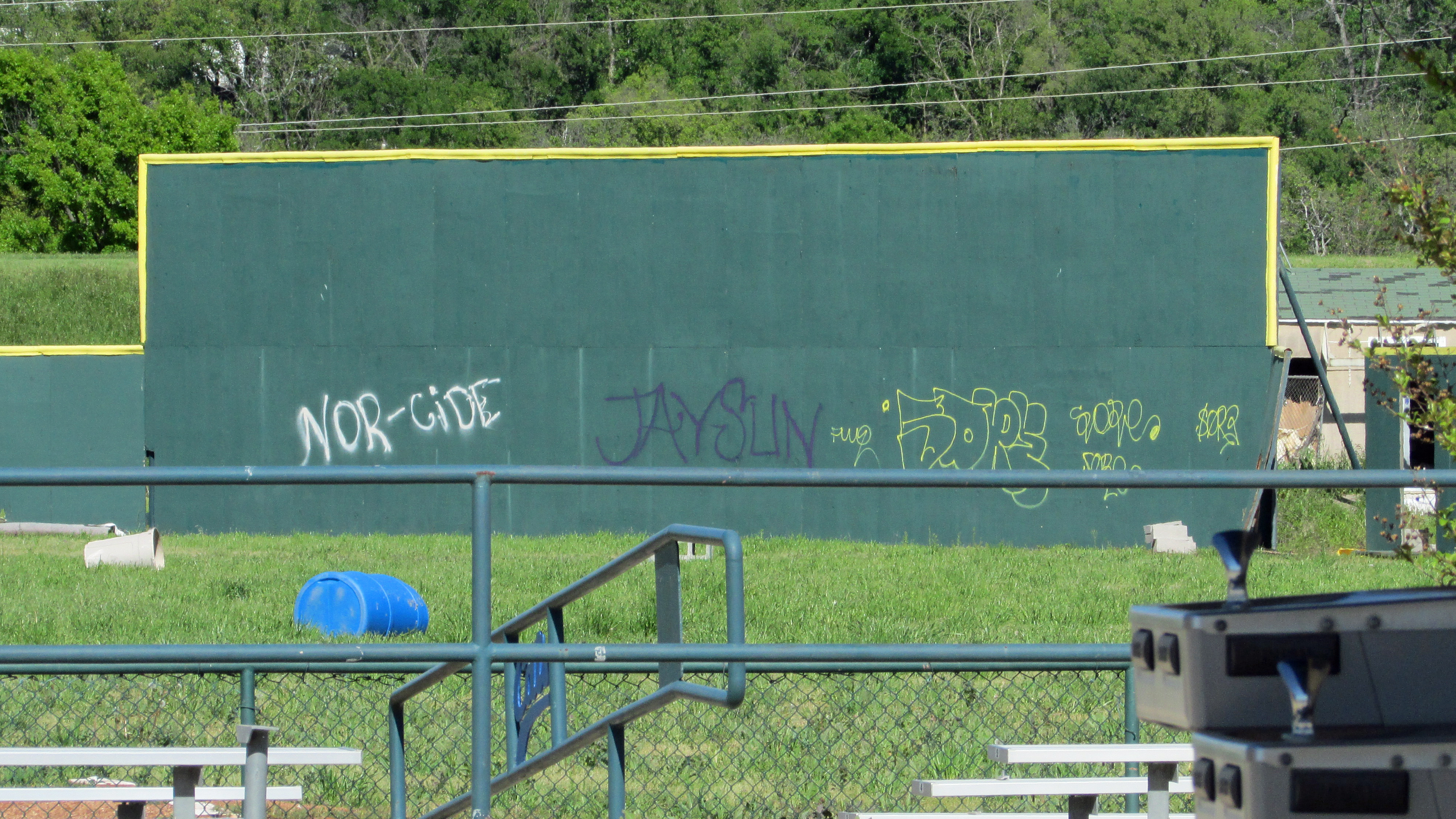
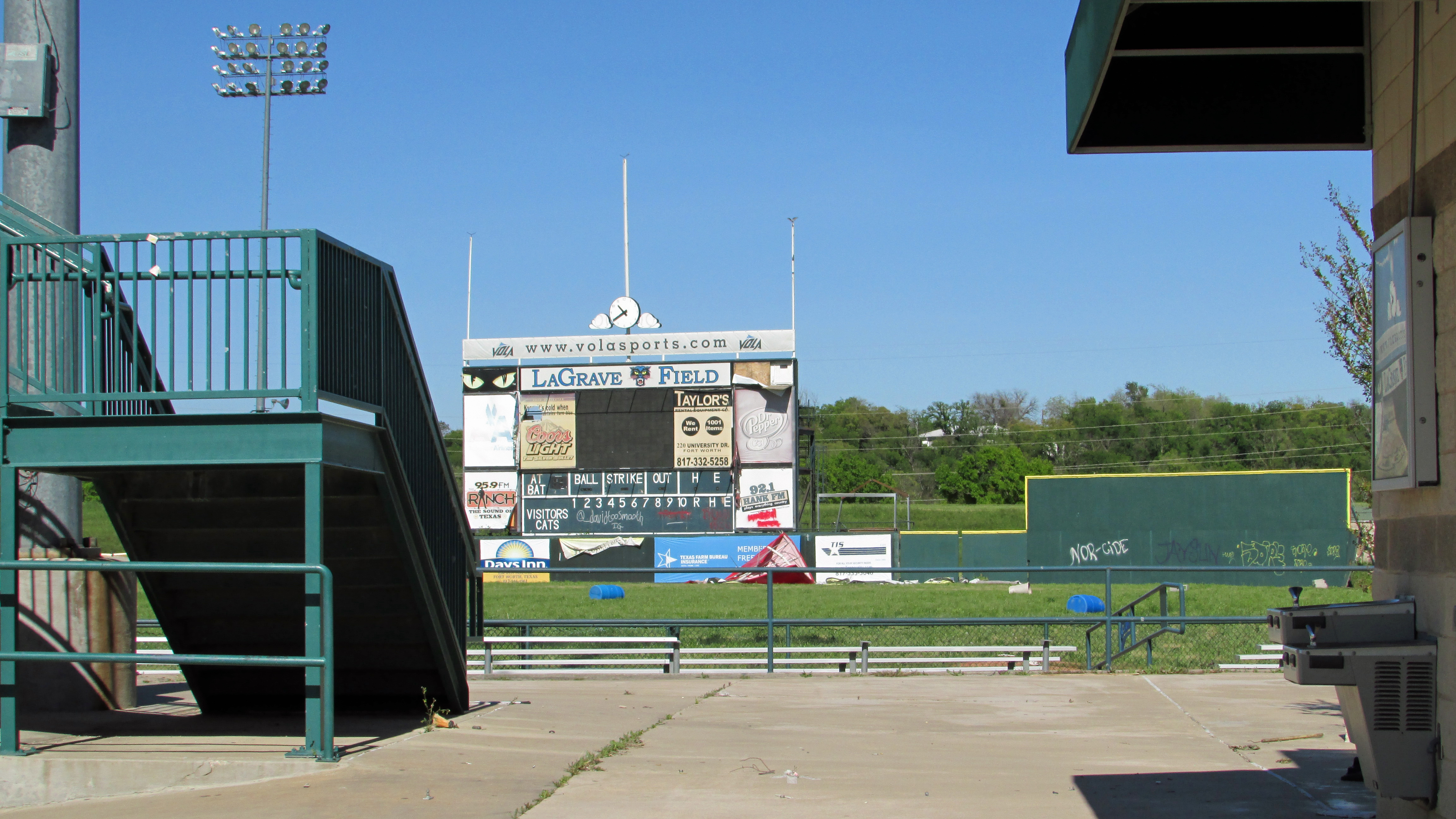
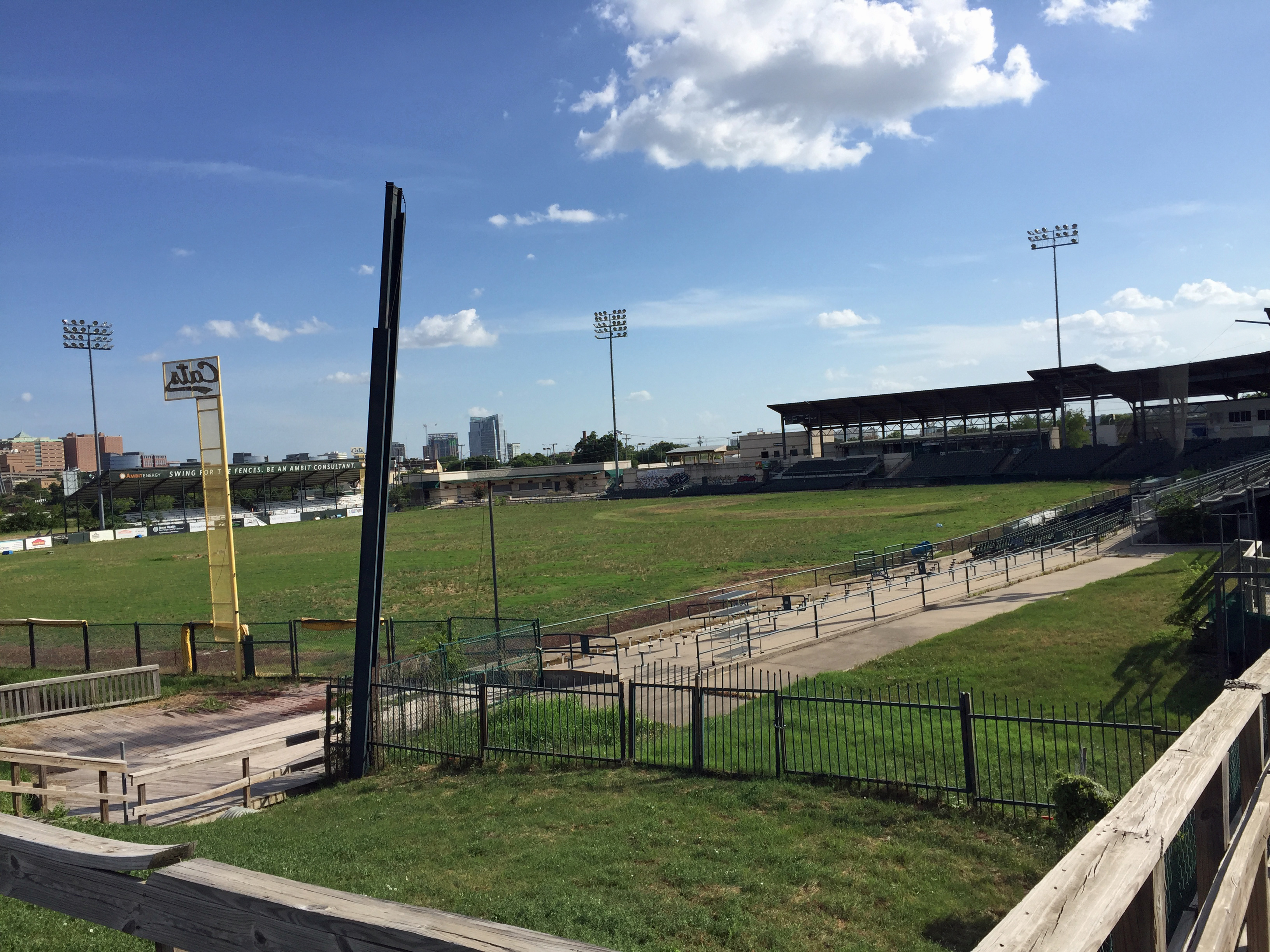
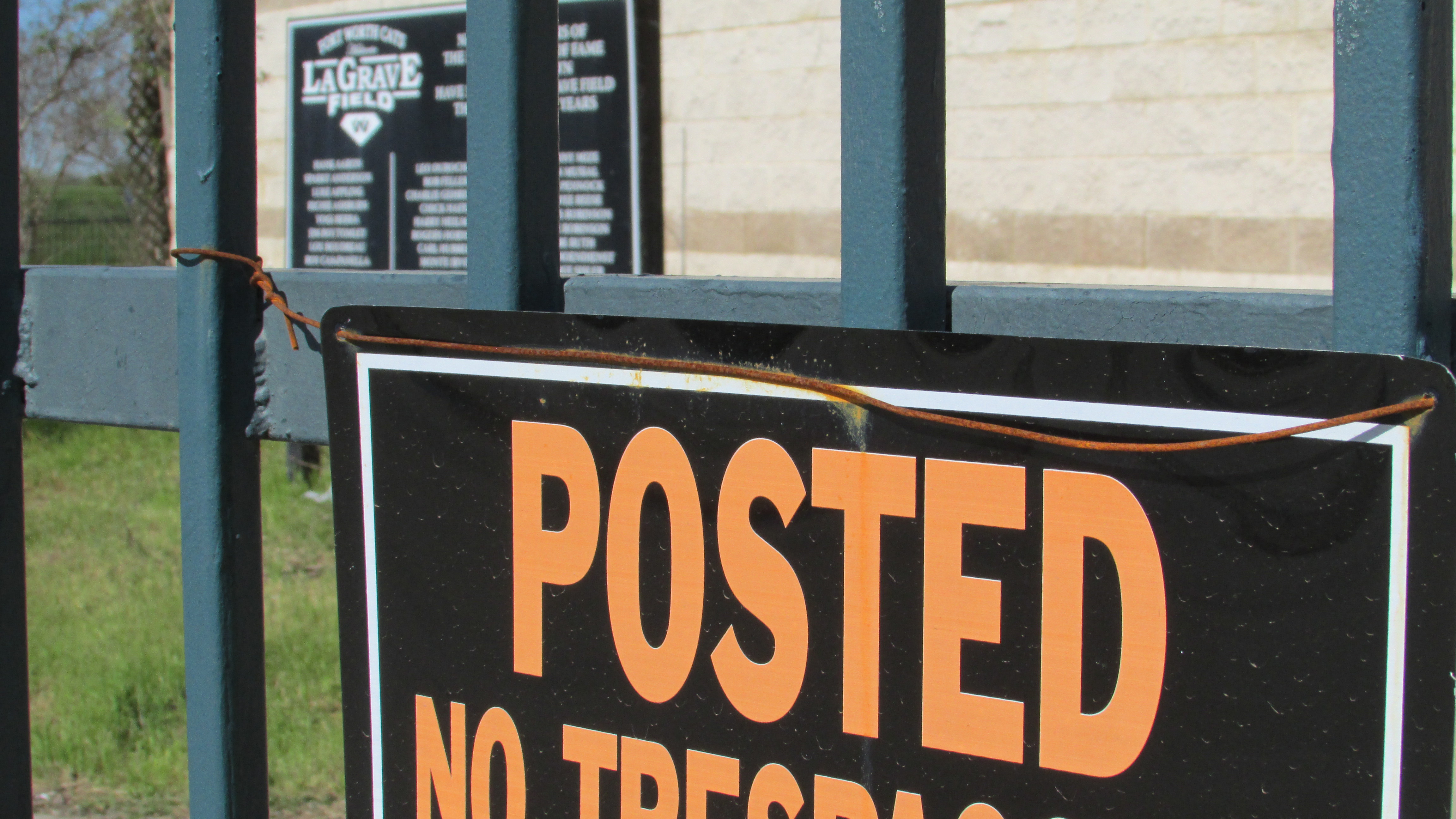
These baseball images are less cool than the Rangers ones. LaGrave Field, historic home of the Fort Worth Cats, sits abandoned. These photographs came from March and June, and unfortunately the little ballpark with the great view of downtown and the prestigious past still has an uncertain future.
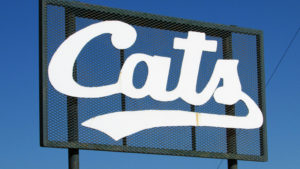
catssign_1570
lagravesign_1560lagravewall_1569
lagrave_1565 lagravefromtrail_4880 lagravegate_1559
Nancy Lieberman Charities Dream Ball - April 2016
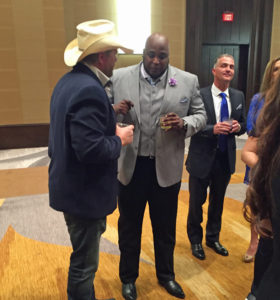
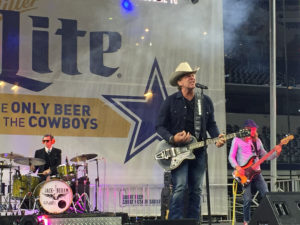
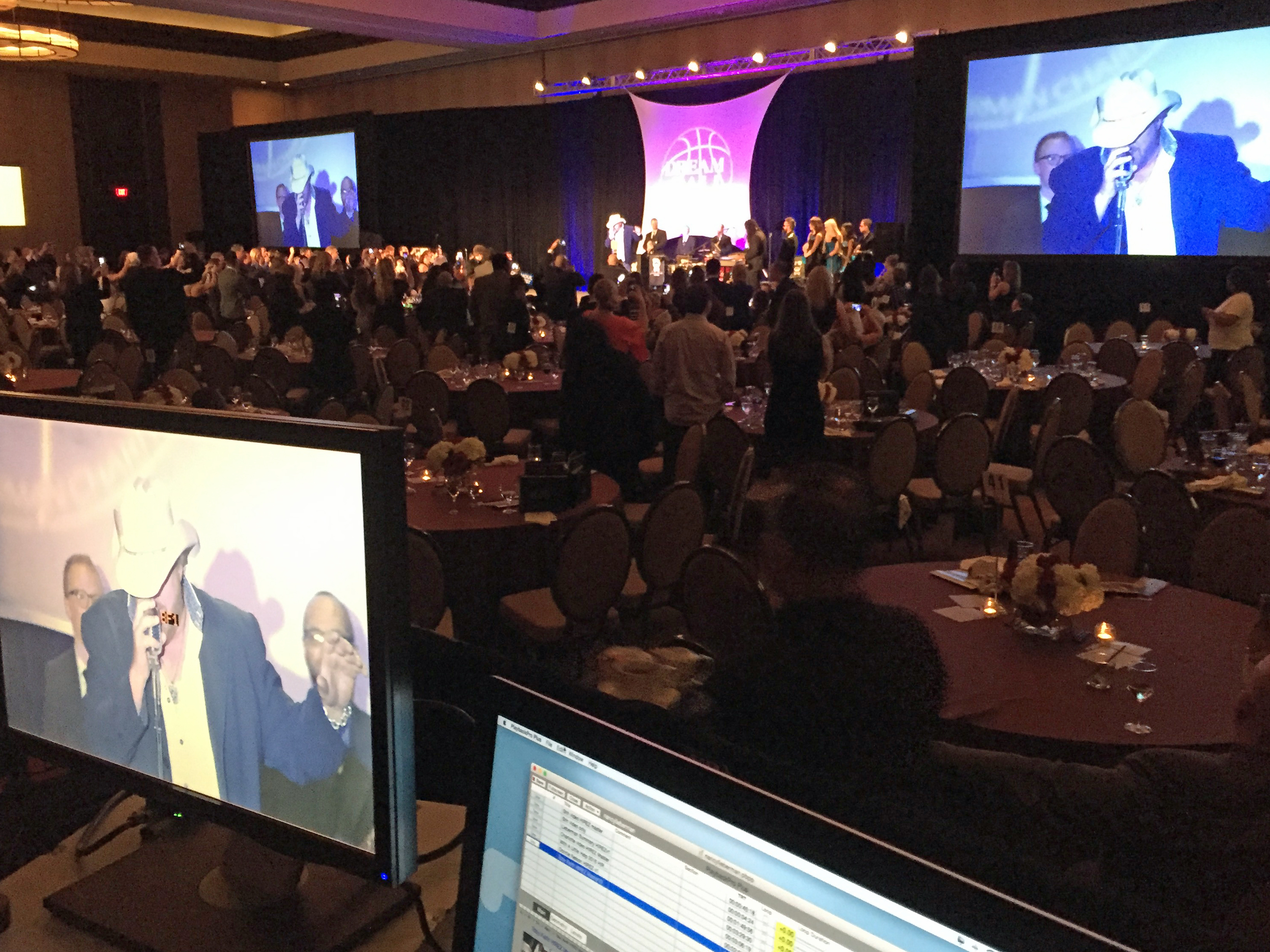
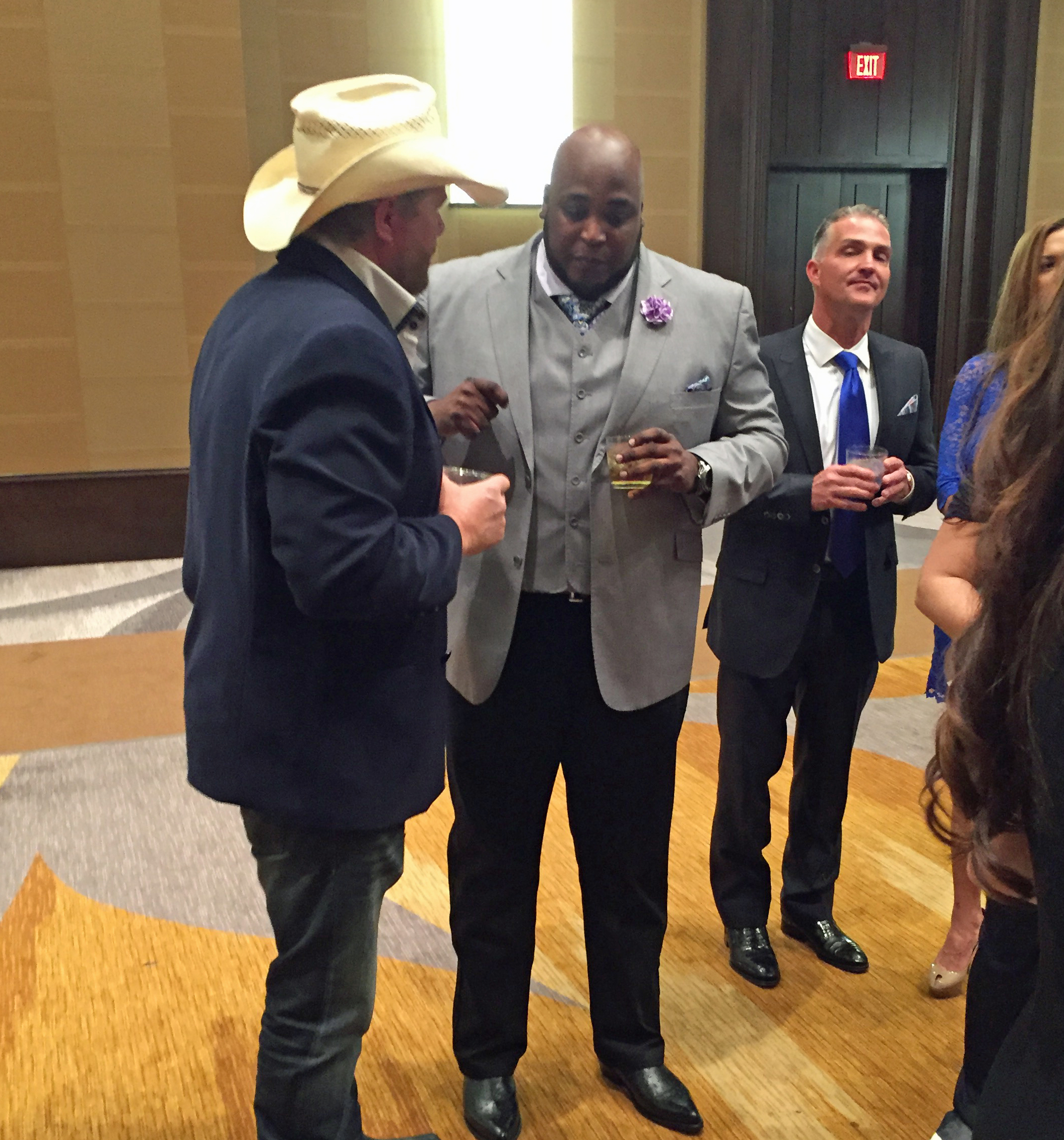
These photos feature Toby Keith, one of a number of celebrities who were honored or appeared at this annual gala. One shows Keith conversing with Big Joe Walker, an on-the-rise Texas country singer. The other shows what many no doubt consider the highlight of the evening – the star jamming with the house band. His impromptu performance featured a powerful rendition of the Bill Withers classic “Ain’t No Sunshine” followed by Keith’s own “Should’ve Been a Cowboy.” I will always remember how graciously he treated the local musicians backing him, praising the Jordan Kahn Orchestra by name and calling on the sax player to take a solo.
The fundraising event, by the way, has moved to February this year, with tickets available at nancyliebermancharities.org.
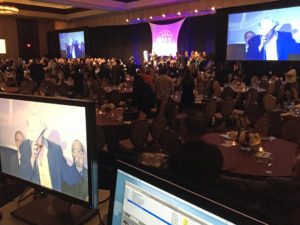
toby_keith_lieberman_4392
keithandjoe_4383
Taste of the NFL – May 2016
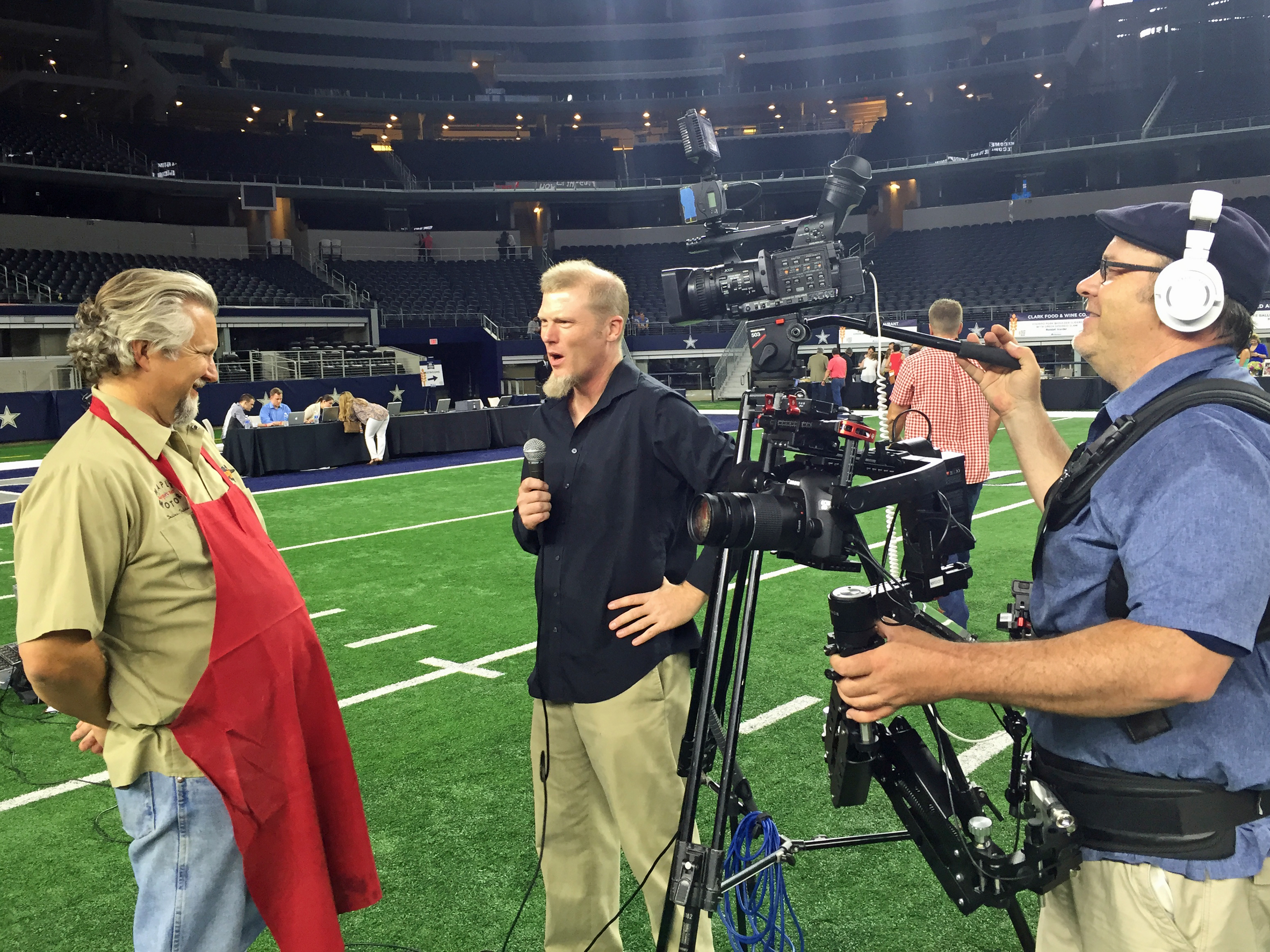
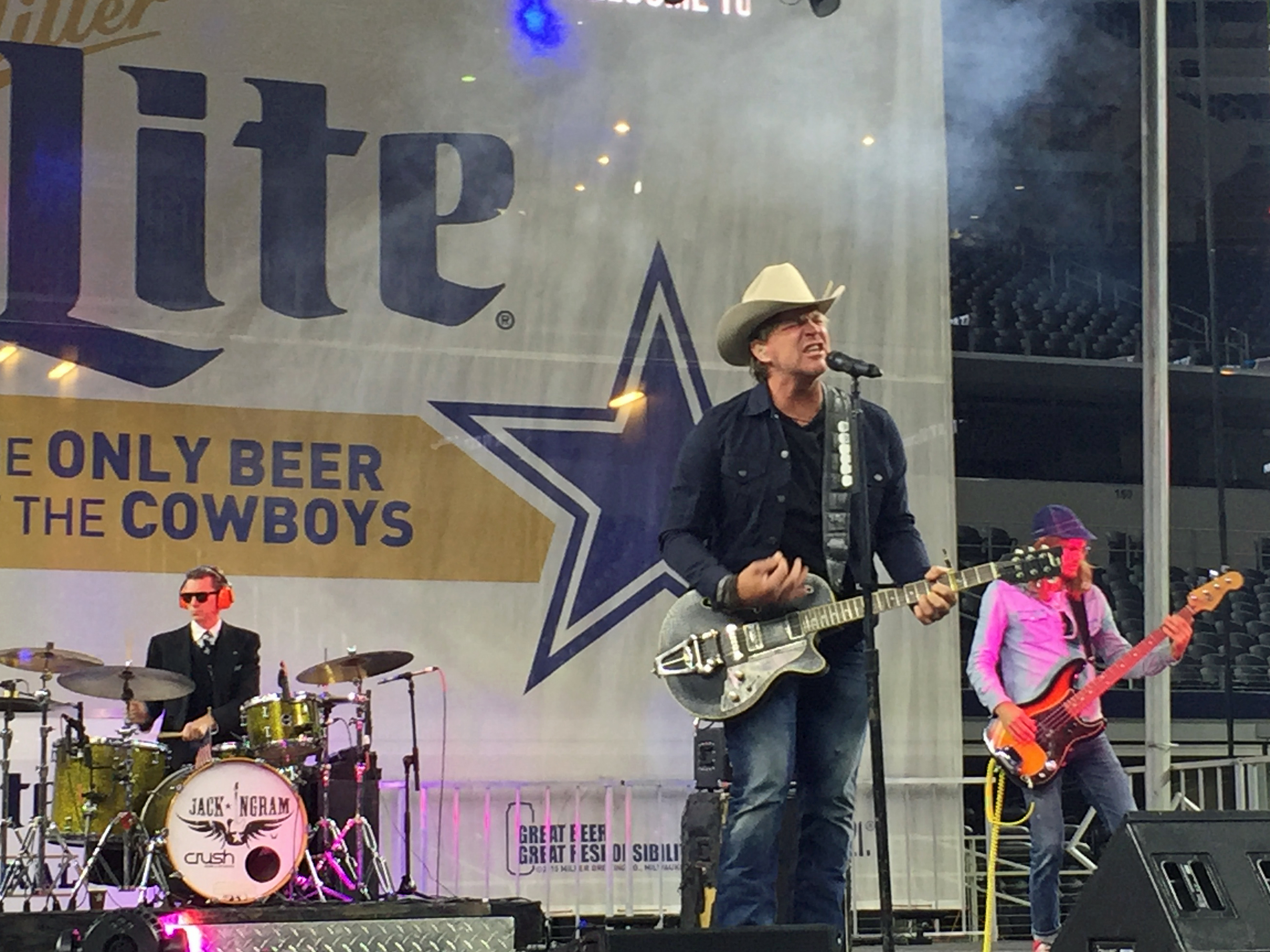
I found a shot of another country musician at a charity event, this time with a photo of Jack Ingram playing at the Taste of the NFL event at the Cowboys’ AT&T Stadium. In addition to the musical entertainment, the event offers attendees a chance to sample tasty morsels from many of the area’s most prominent chefs. The other photo shows me apparently amazed at something Jack Perkins (at the time the owner of The Slow Bone barbecue restaurant in Dallas) said. The other guy in the photo is my frequent collaborator Dave French. Despite the plethora of tech gear that seems to be protruding from his body, French is, in fact, a human and not a video production cyborg.
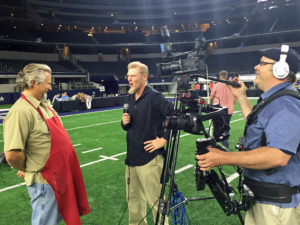
tnfljackrushdave_0211
photo by Lori Gunter French
ingram_0200

Dallas Wings – Summer 2016
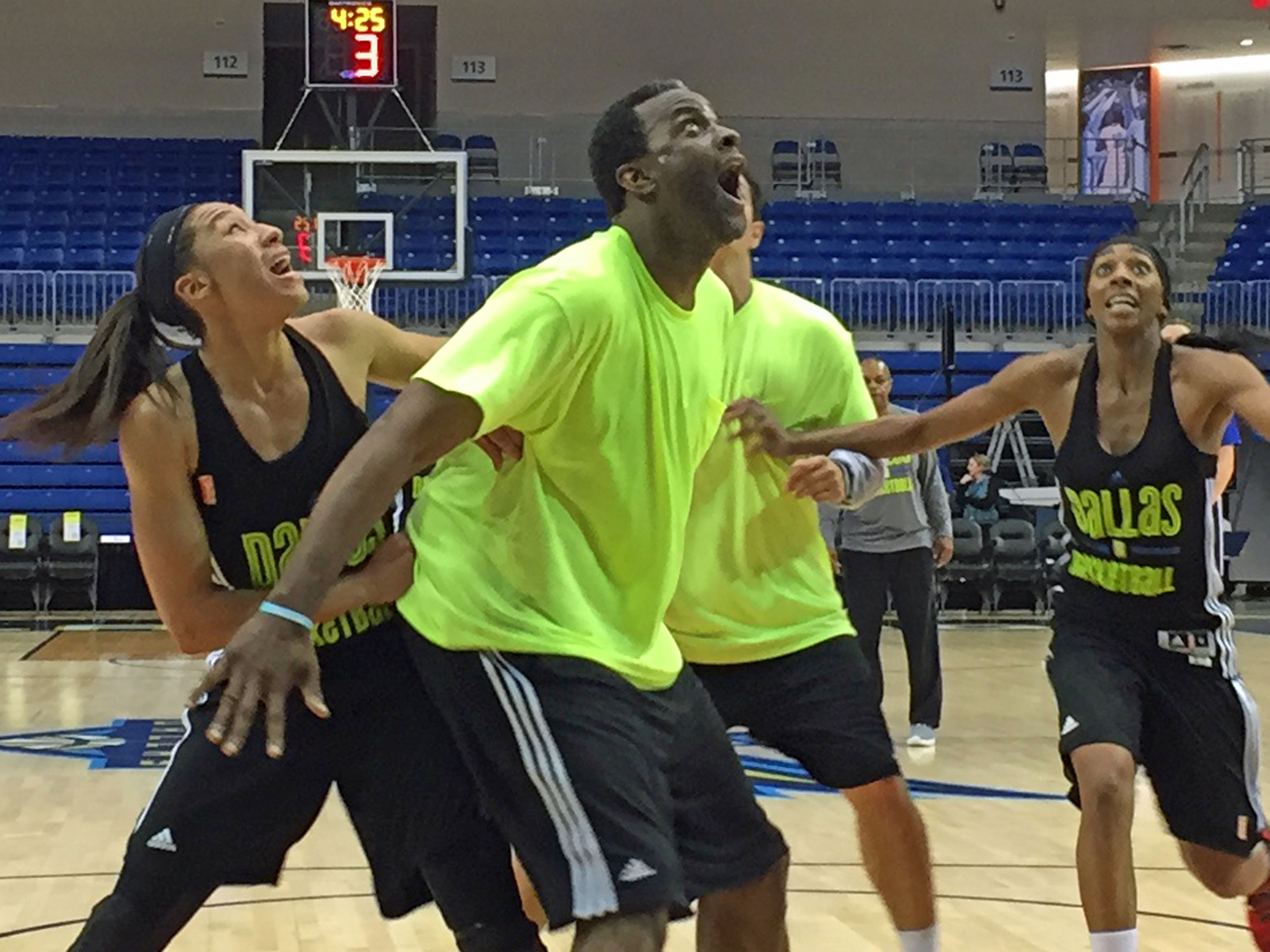
I really enjoyed covering the WNBA’s Dallas Wings during their first season in Arlington. Here’s a photo from practice that shows members of the Wings and their male practice partners desperate to grab a rebound. I liked the intensity evident in this image.
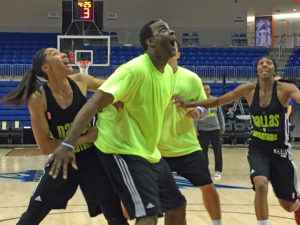
wingsrebound_4411
C3 Cryo Club – May 2016
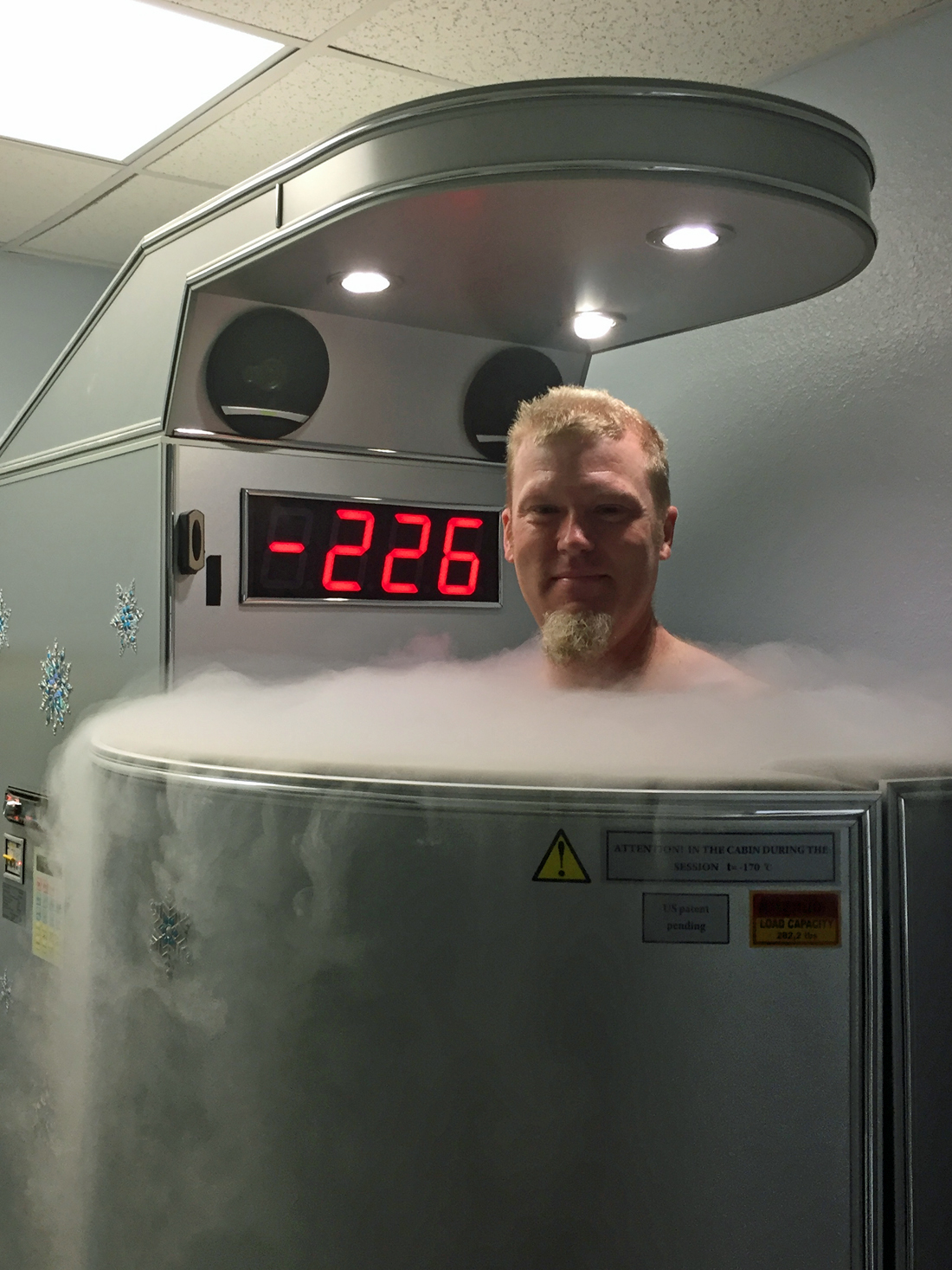
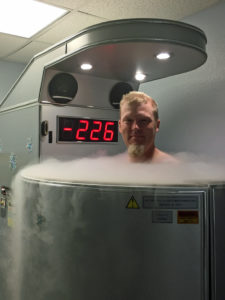
Yep, that’s me shirtless. I’ll do a lot for the Weekly, apparently. Back in May, I tried cryotherapy after an especially vigorous evening of softball and blogged about it.
rush_cryo_2160_1100
photo by William Pruett

Presidential Press – June 2016
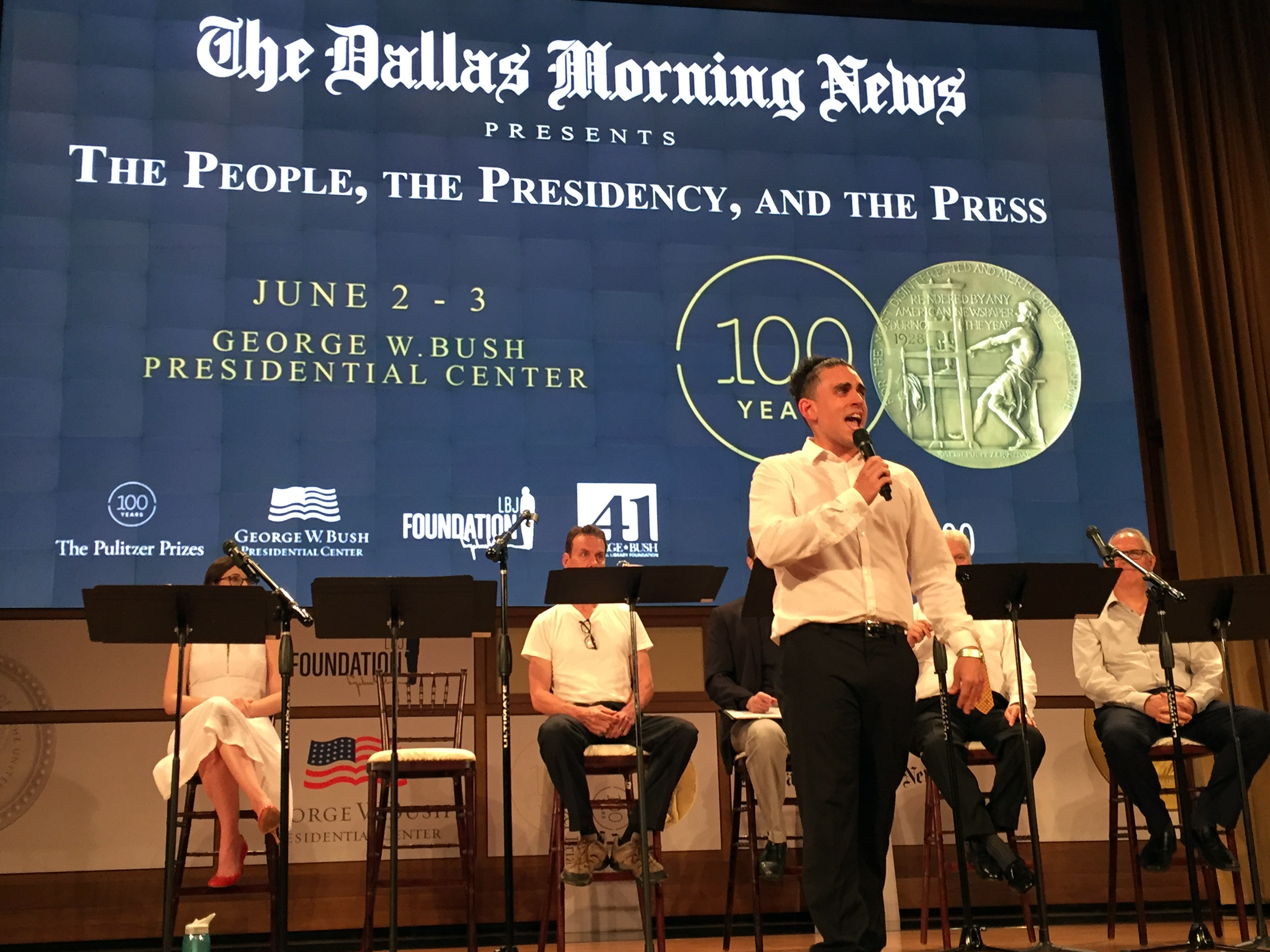
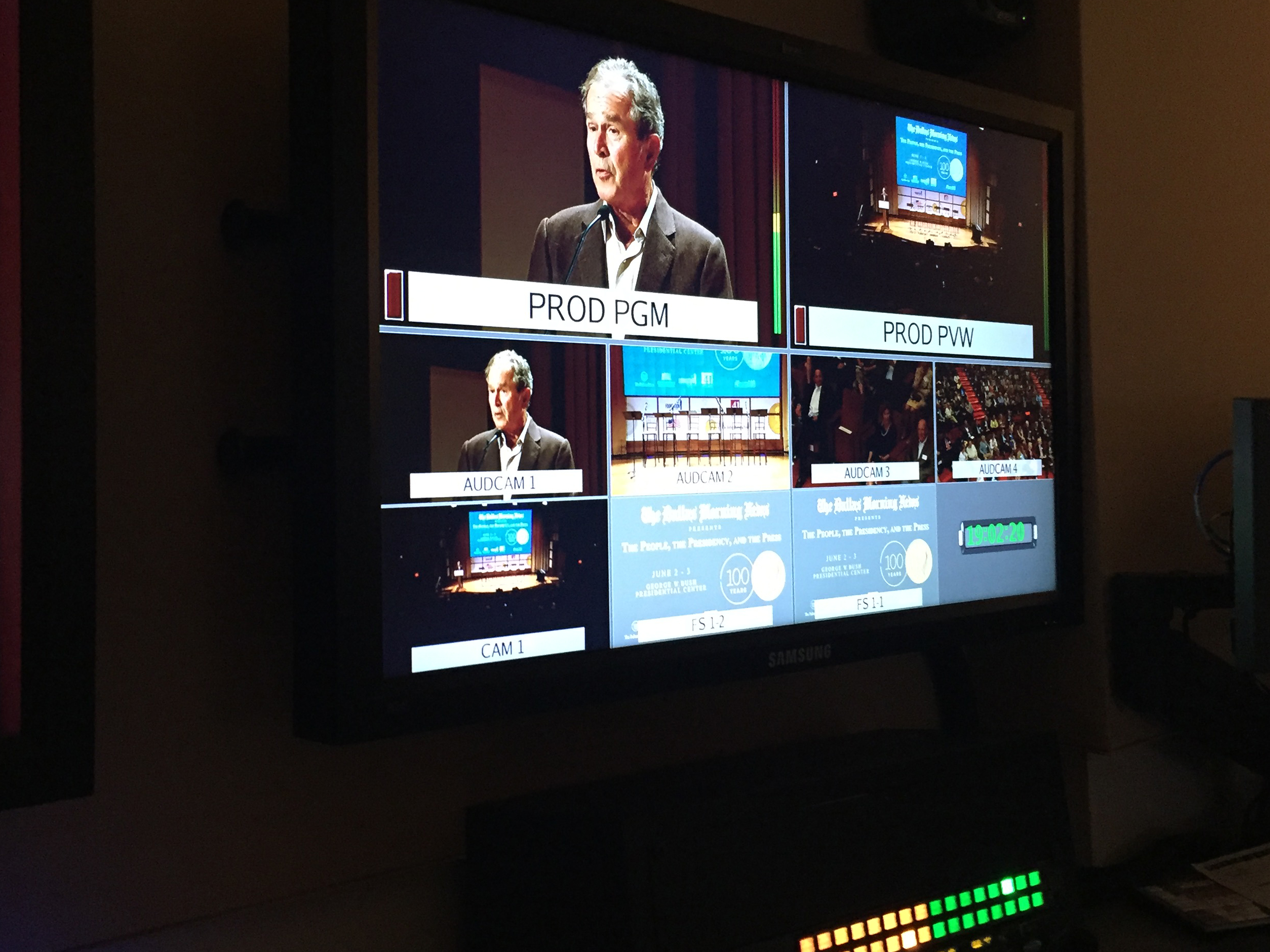
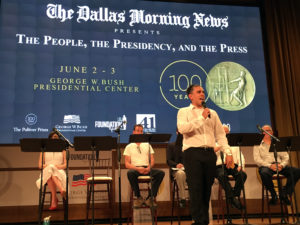
I do some work for the George W. Bush Presidential Center on some of the webcasts of their public programs. One that hit especially close to home this year involved an examination of how the presidency interacts with the media and popular culture. The Bush Center worked with the Pulitzer Prize Board and three other nearby presidential libraries to put it on. A highlight included actors from the Dallas Theater Center presenting excerpts from Pulitzer-winning plays, including the number from Hamilton seen in this photo.
 hamiltonbush_4689
bushctrlroom_4691

Fashion’s First Down – June 2016
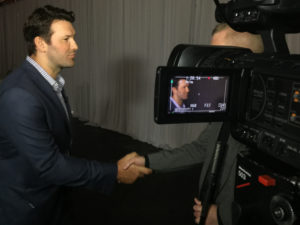
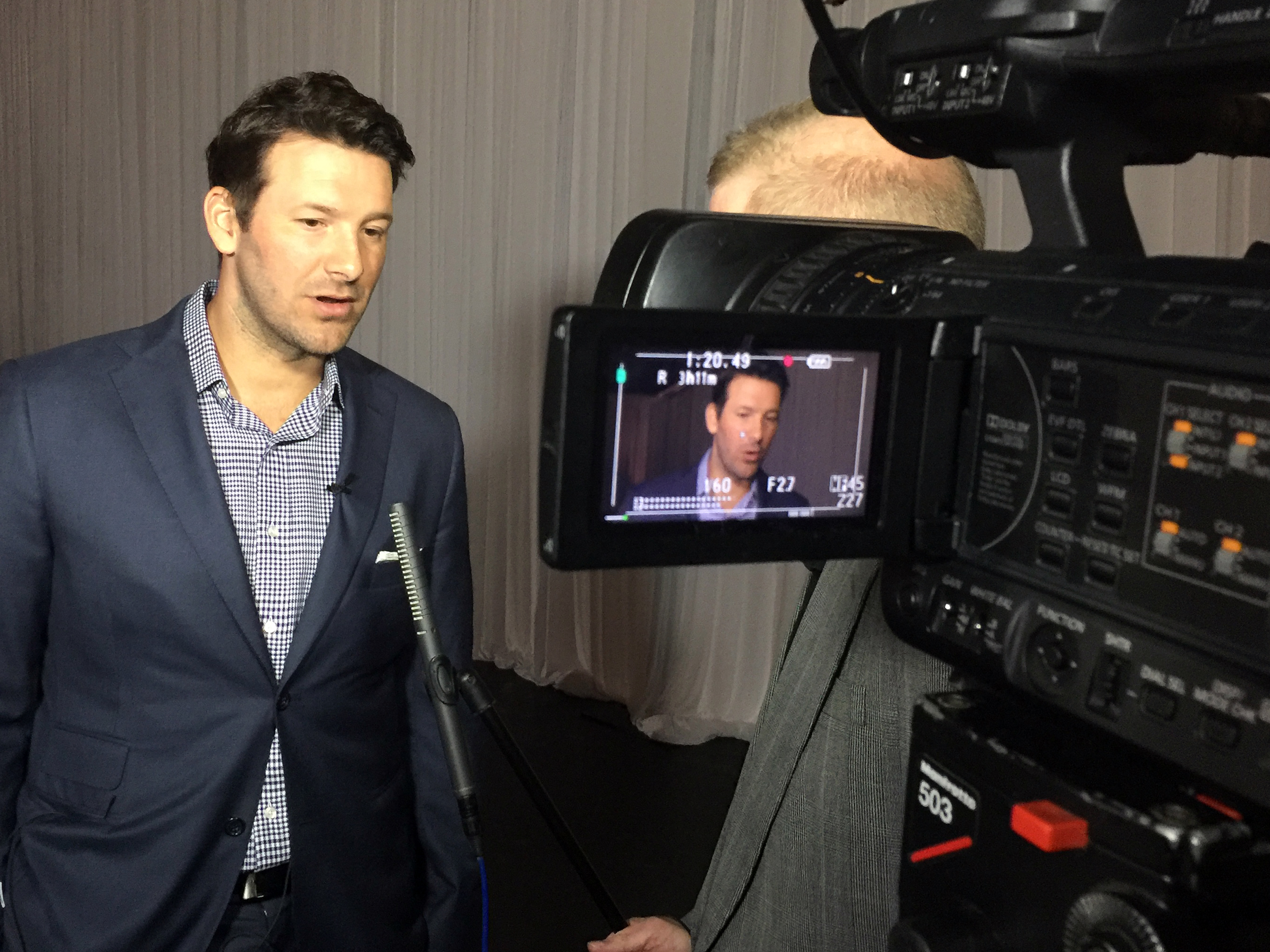
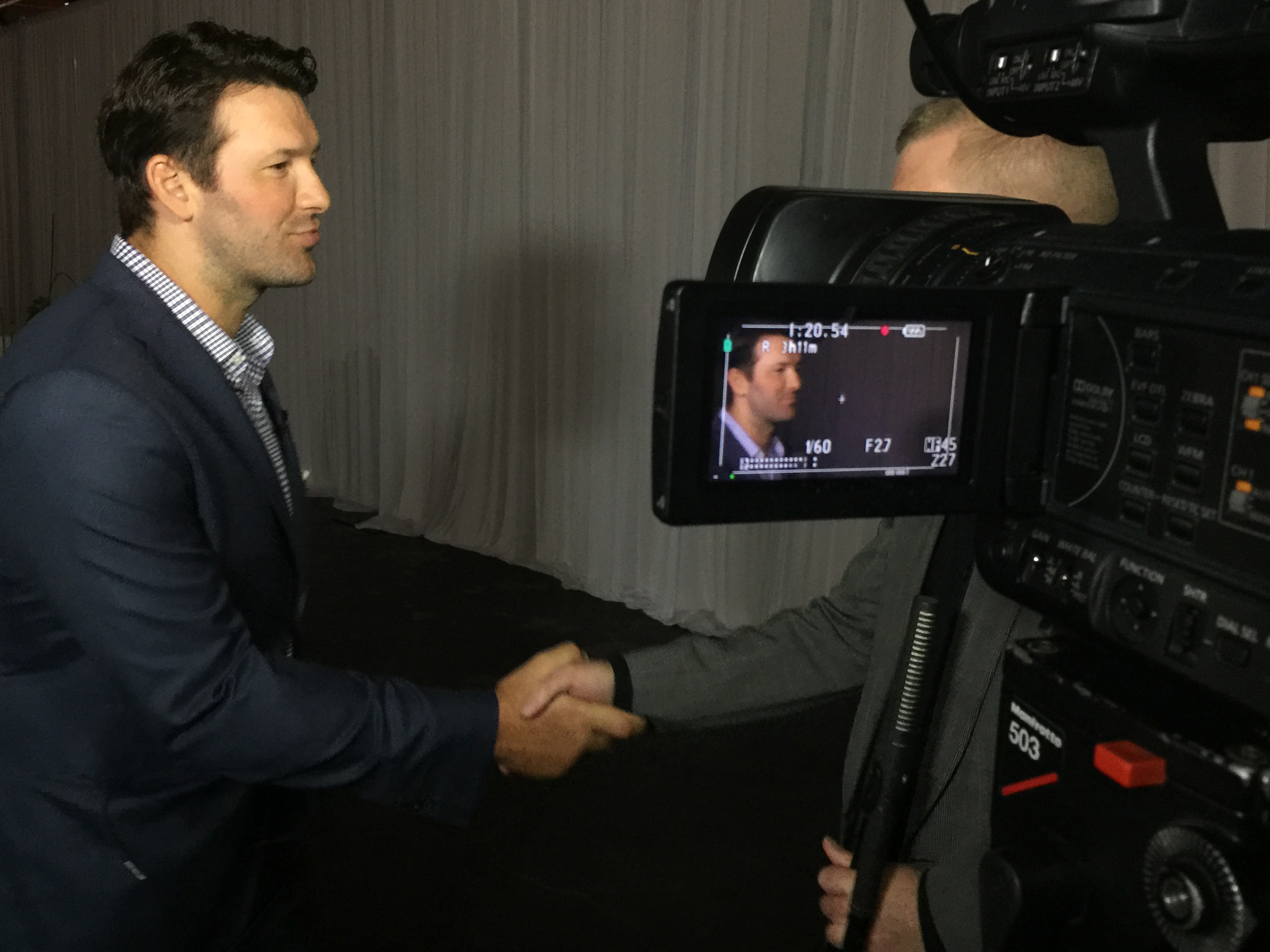
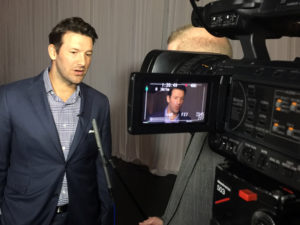
The Cowboys’ wives annual fashion show raises money for female-centric charities. Tony Romo’s wife, Candice, chairs the event, so we interviewed him about it. Afterward, he apparently shook my hand. You can’t see me in the photo, but, you know, who cares? That wasn’t who anybody but my mom wanted to see anyway.
romointerview_0145
photo by Dave French
romohandshake_0146
photo by Dave French

North Texas Food Bank shoot – June 2016
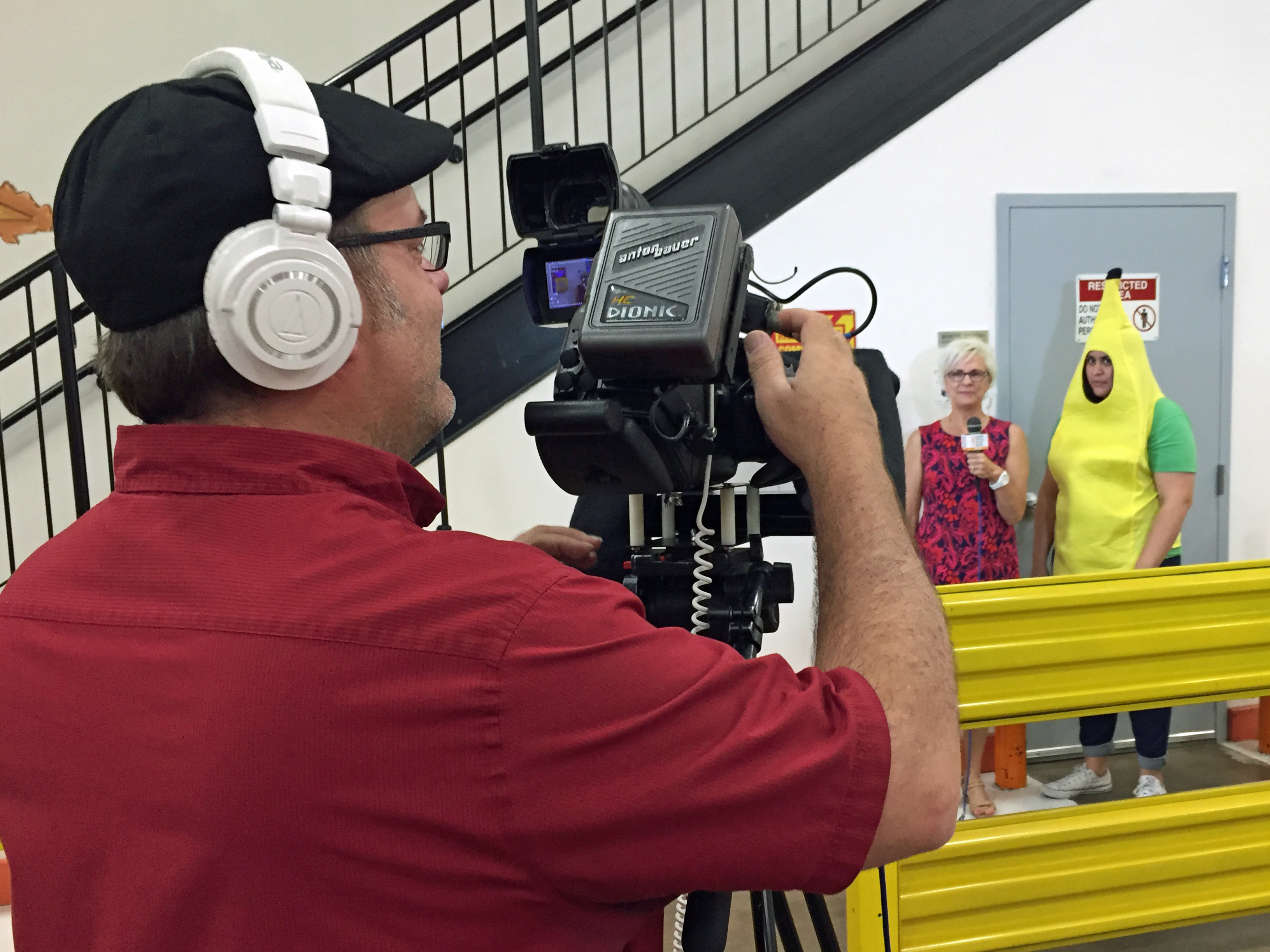
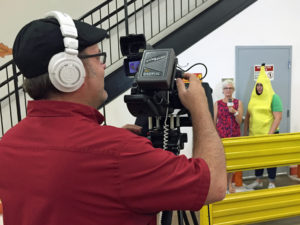
We did a video this year for the North Texas Food Bank to help volunteers learn what to do and not do while at the facility. The video parodied a newscast and we’d like to think it was funny. This photo made the cut for this post because it features our good friend Anna Kurian in a banana suit. She was actually the understudy for the part, but gave a stunning performance when pressed into service. You’ll have to watch the video to see it of course (and go ahead and volunteer at the North Texas Food Bank or its counterpart in Tarrant County, too).
davebananantfb_4720

OfficiateTexas – July 2016
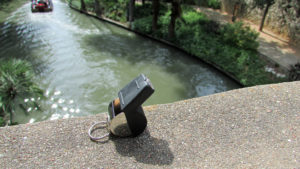
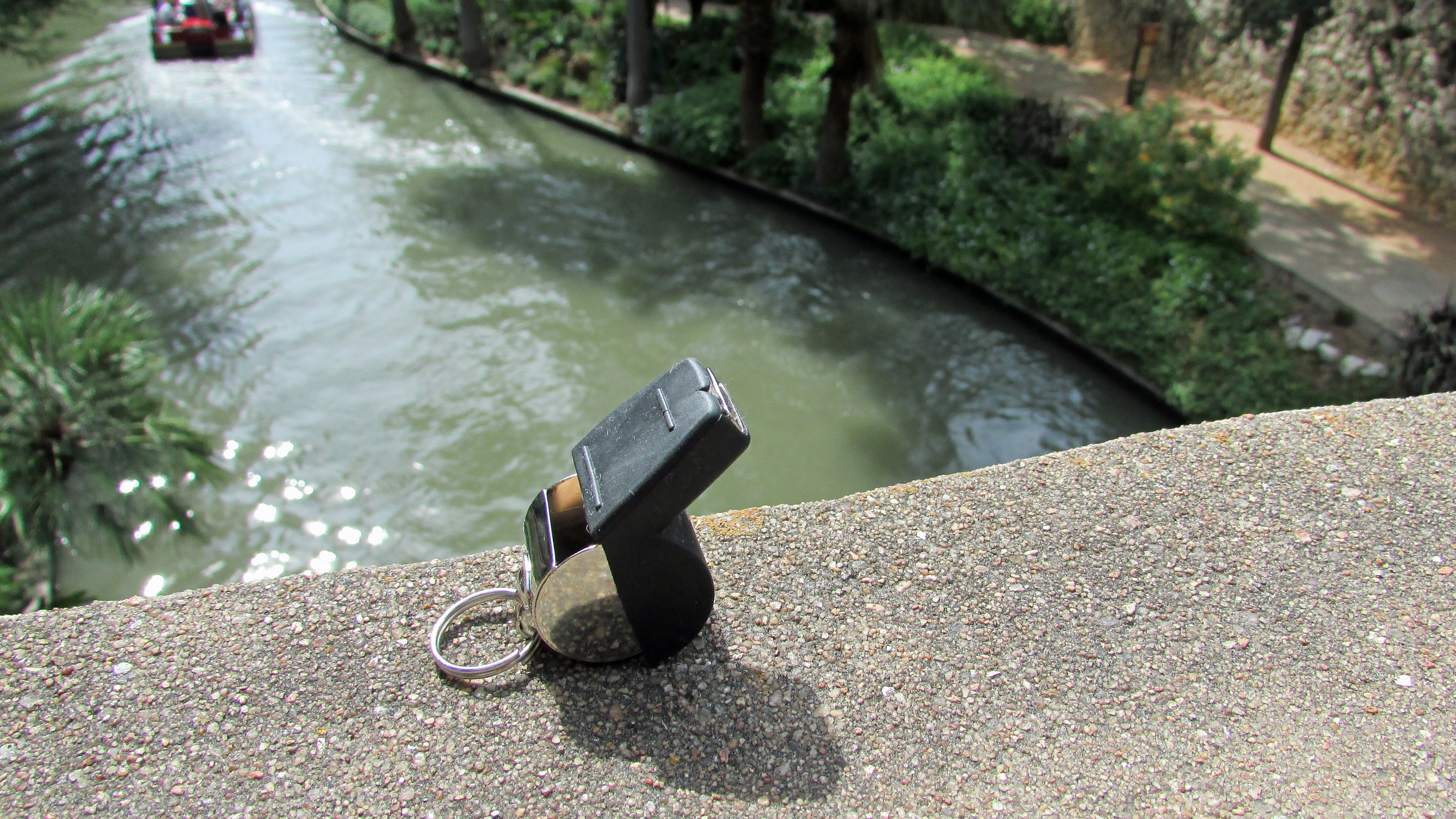
We worked with the Texas Association of Sports Officials and the University Interscholastic League on an event designed to let game officials from around the state learn from prominent figures in their profession. I liked this promo photo we shot from the Riverwalk in San Antonio.
whistleriver_1997

Dallas Stars Media Day – September, 2016
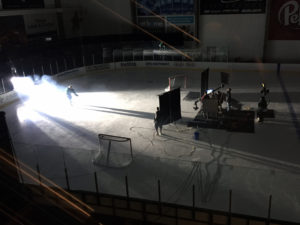
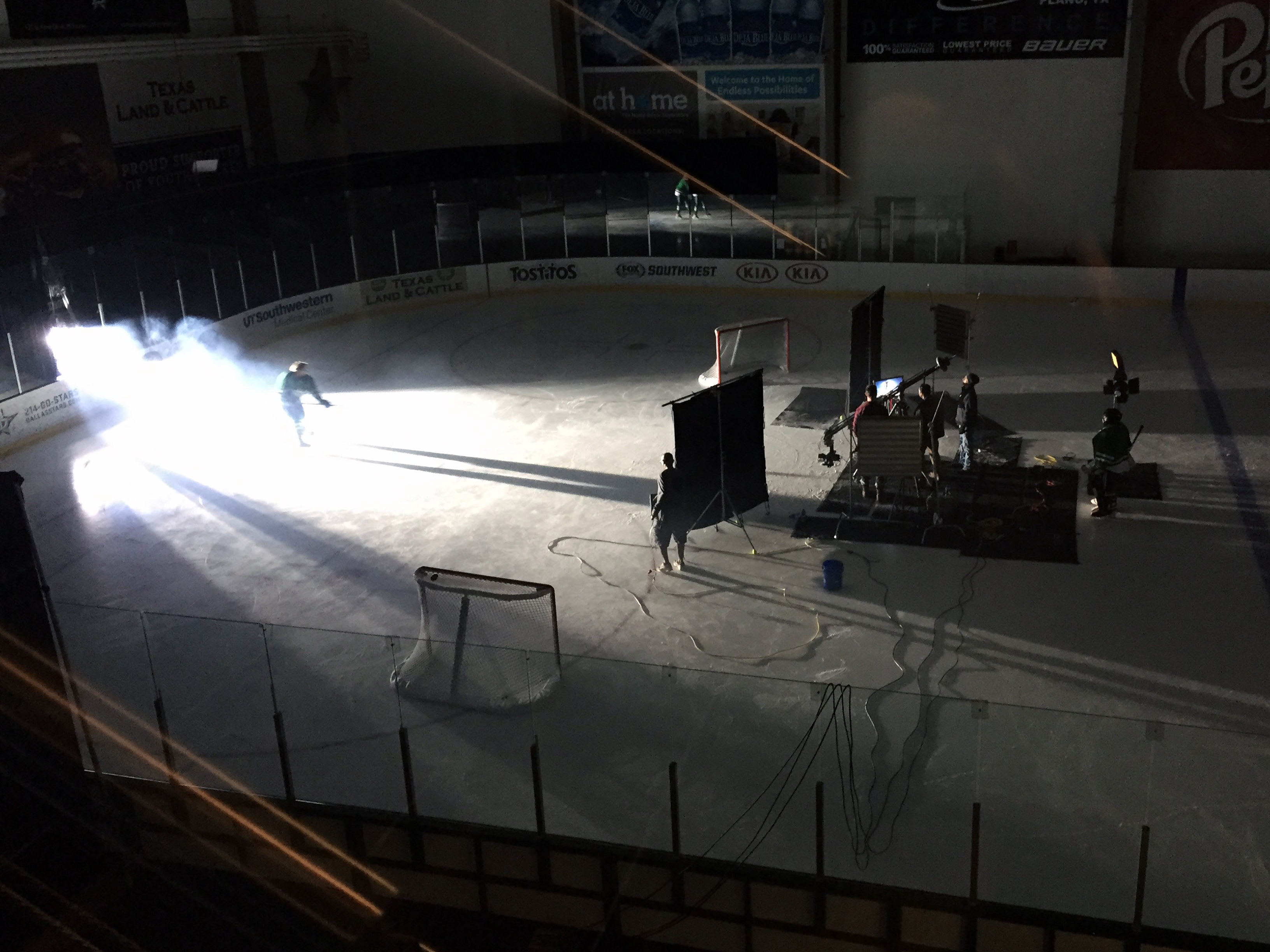
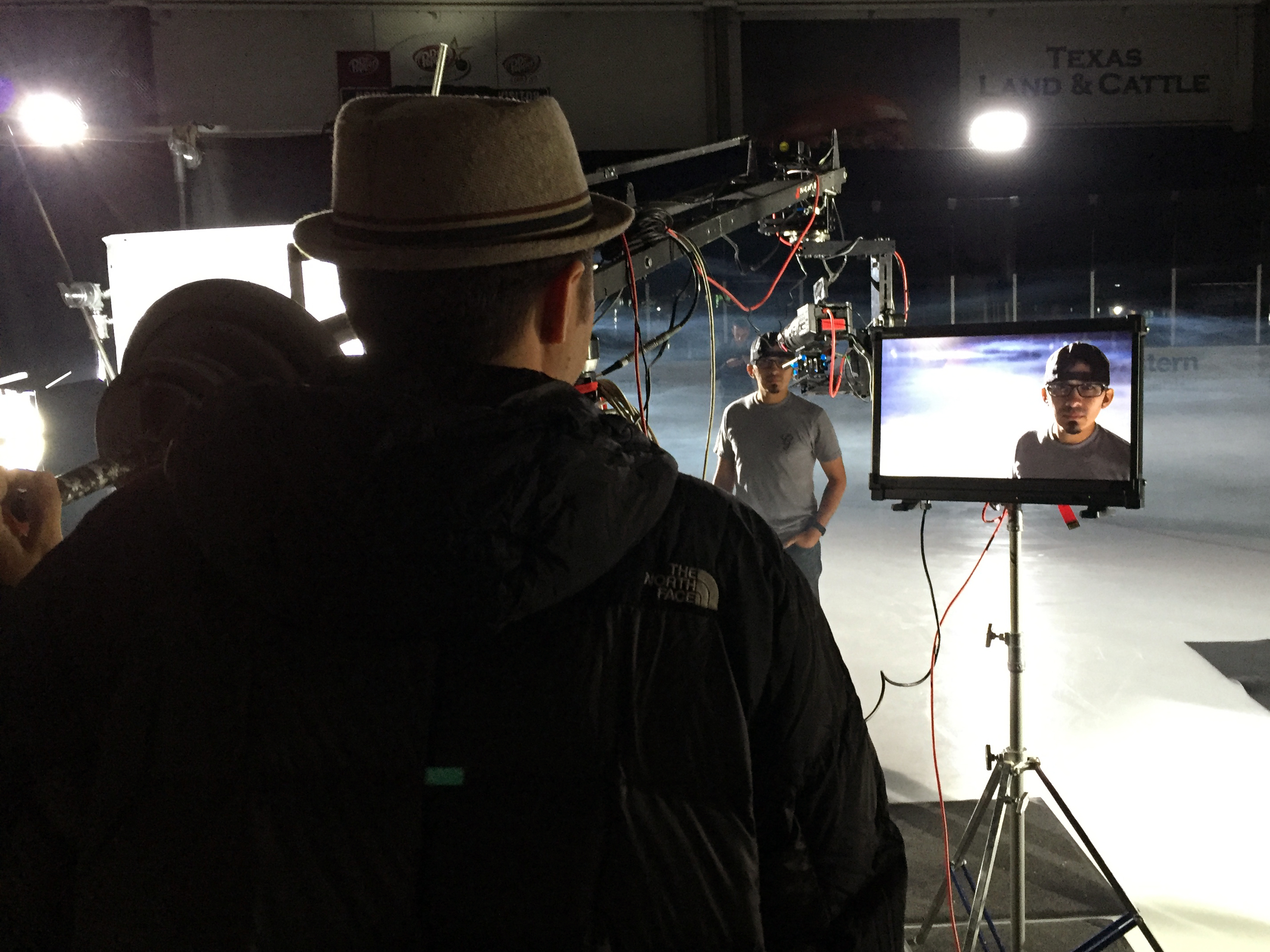
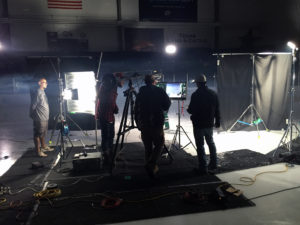
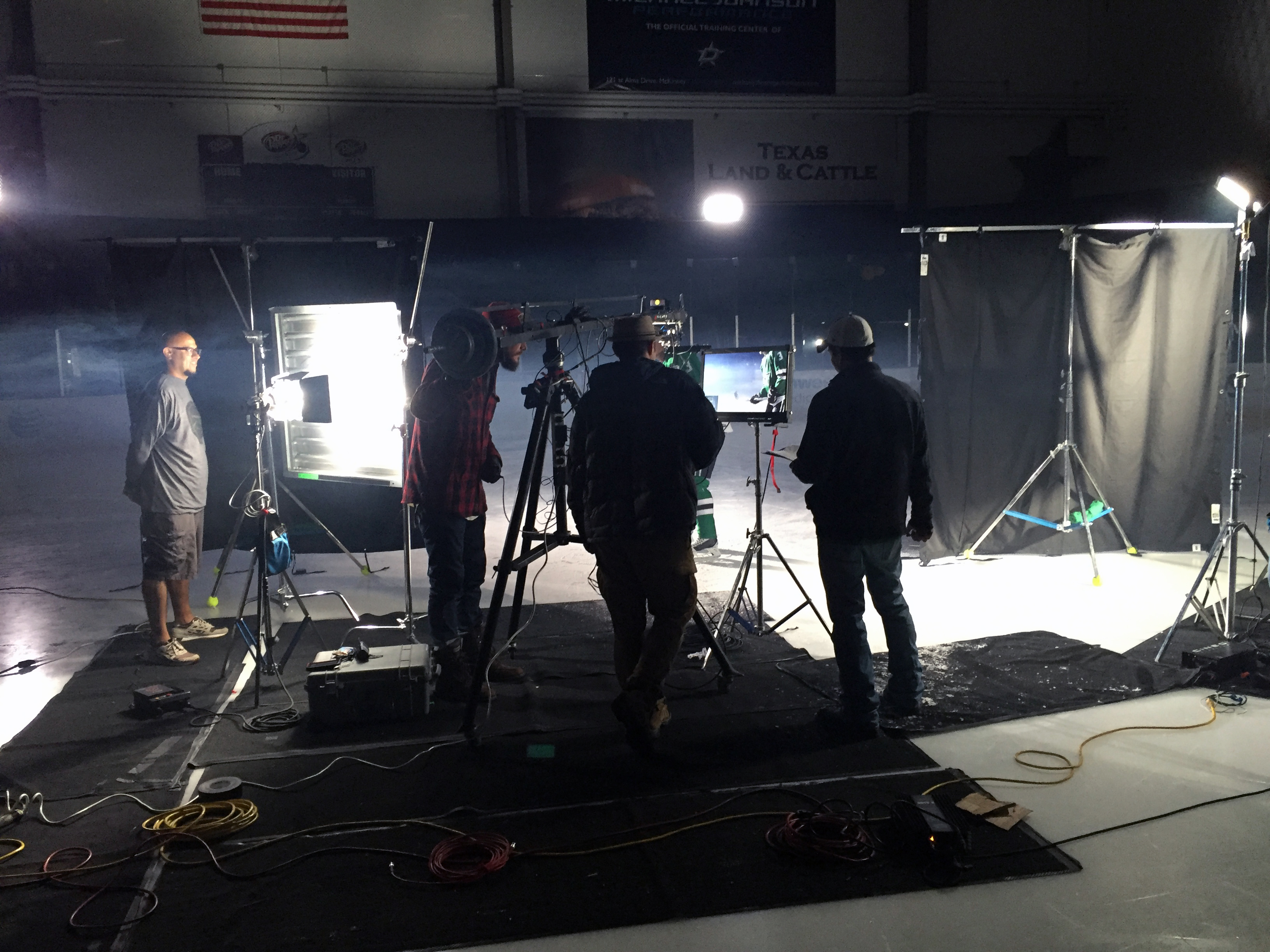
We worked with the Dallas Stars to shoot elements they use on their AAC video boards and TV broadcasts throughout the season. Some of the coolest stuff happened on the ice with a high-speed camera capturing epic slow-motion images. My buddies Mike Traverzo and Renzo Torres tested the shots before the players came out (Traverzo is the artist behind the beautiful video you see on your TV screens).
starshispeed_5570starshispeed_5579starsmikerenzo_5551

Dallas Mavericks Media Day – September, 2016
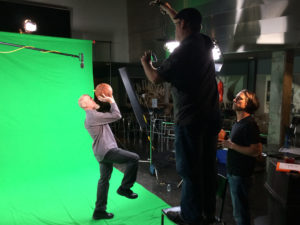
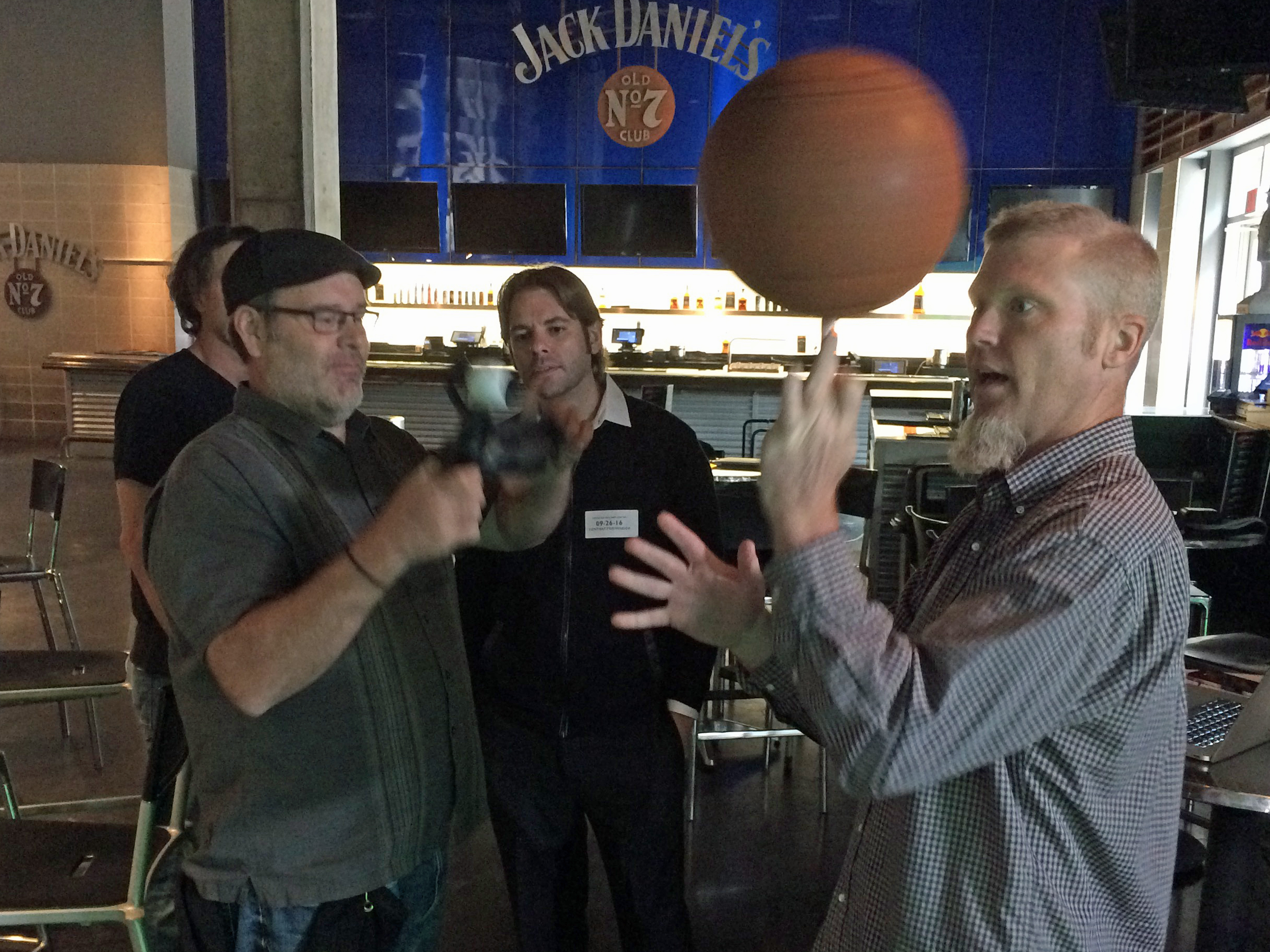
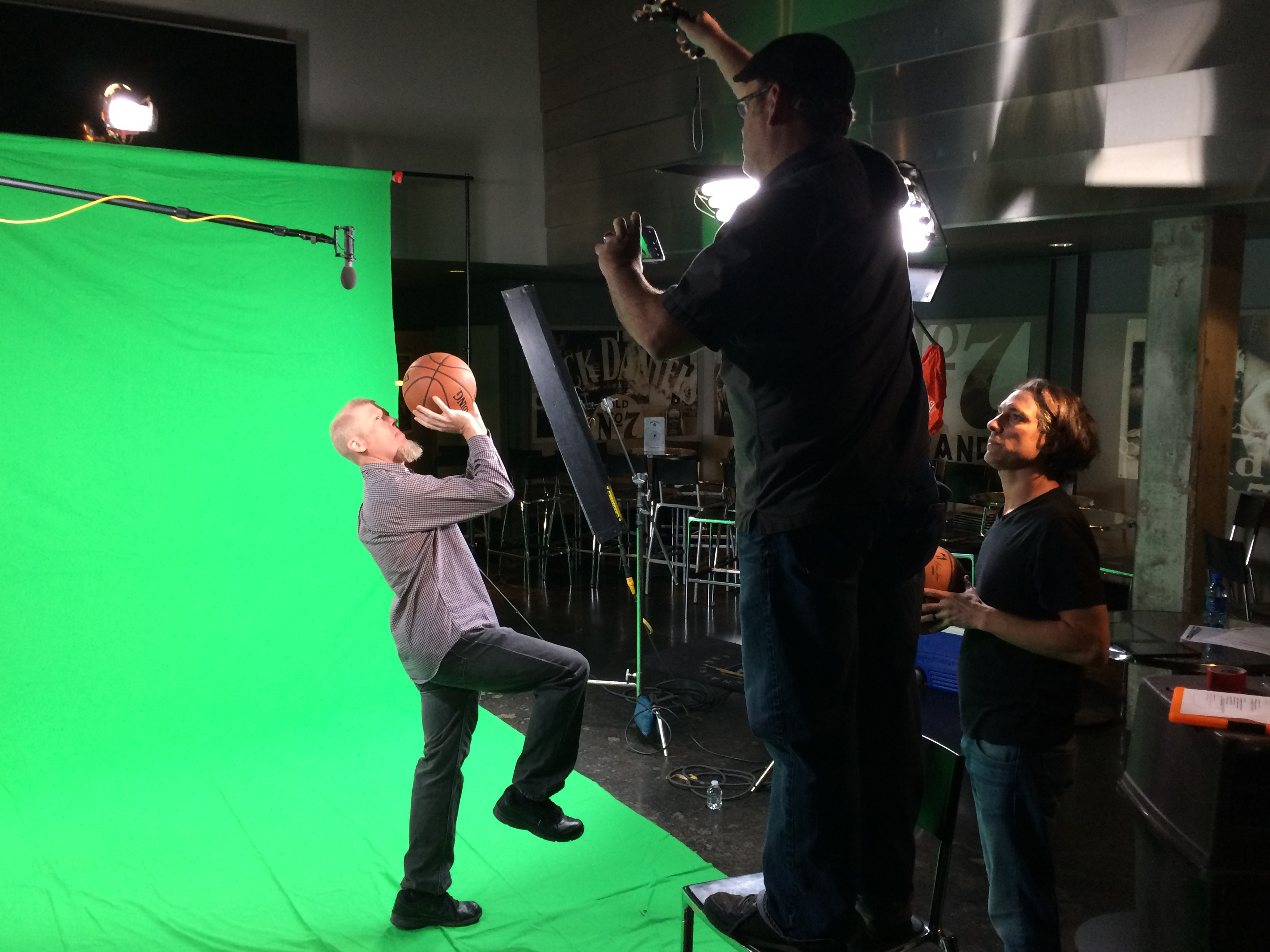
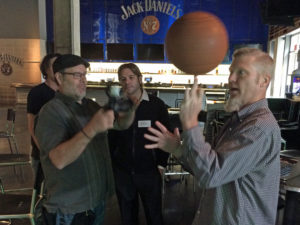
We worked with Fox Sports Southwest on their promos for the season’s Mavs games. We were going to need a shot of Dirk Nowitzki pantomiming his famed fall-away jump shot. We got a short unathletic failed point guard to mimic it so we could set the shot.
rushspin_0578
photo by Hutton Harris
rushfade_0608
photo by Hutton Harris

 ACEP16 – October, 2016
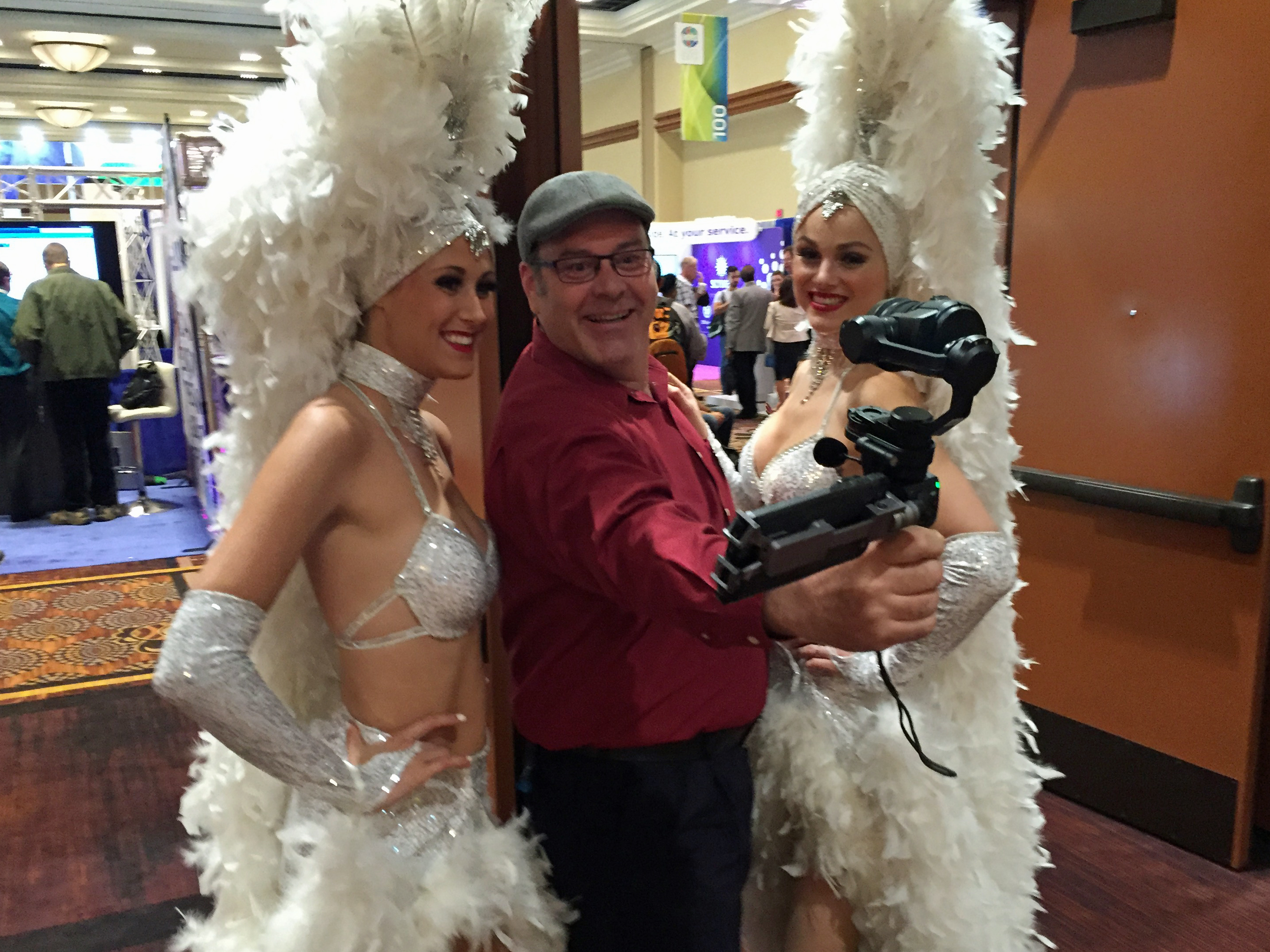
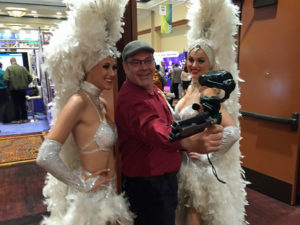
As you might have guessed, not everything I do is sports. We worked with the American College of Emergency Physicians creating videos at their annual conference. They held it in Las Vegas, Nevada. I include this picture of my buddy Dave with showgirls just in case he “forgot” to tell his wife, Lori, about it. Lori’s a friend of mine.
davegirls_5849

Miami Trip – October, 2016
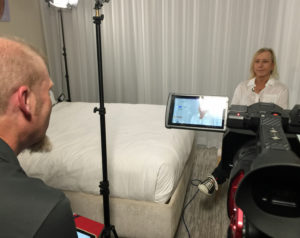
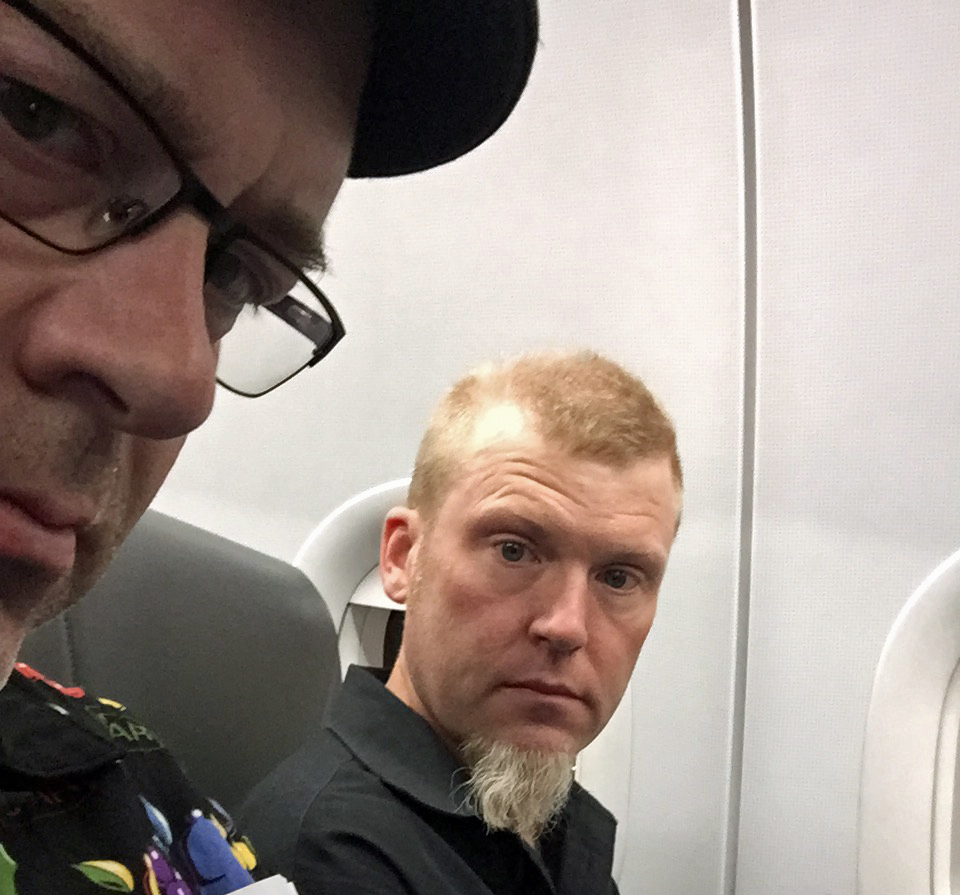
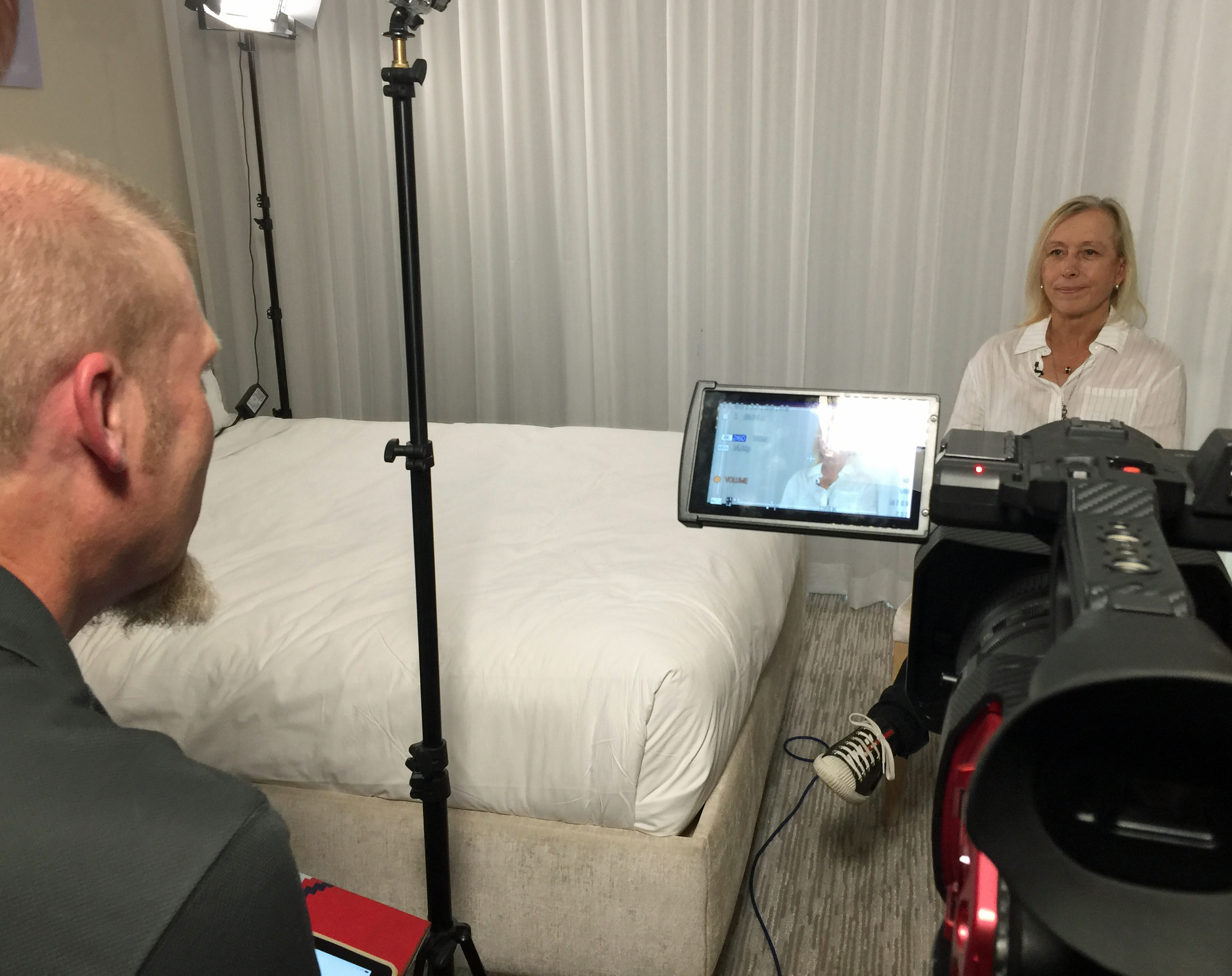
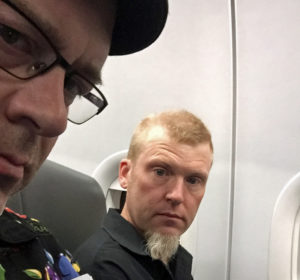
We had to take Frontier’s all-night flight from Vegas to Miami to shoot interviews for another project. We looked very sexy riding in coach. When Martina Navratilova (a former Fort Worth resident) walked in and saw we were shooting in a hotel room next to the bed, she said she hadn’t realized it was “that kind” of video. Um, it wasn’t. I swear.
daverushawake_1325
photo by Dave French
martinainterview_1352
photo by Dave French

Texas Motor Speedway – November, 2016
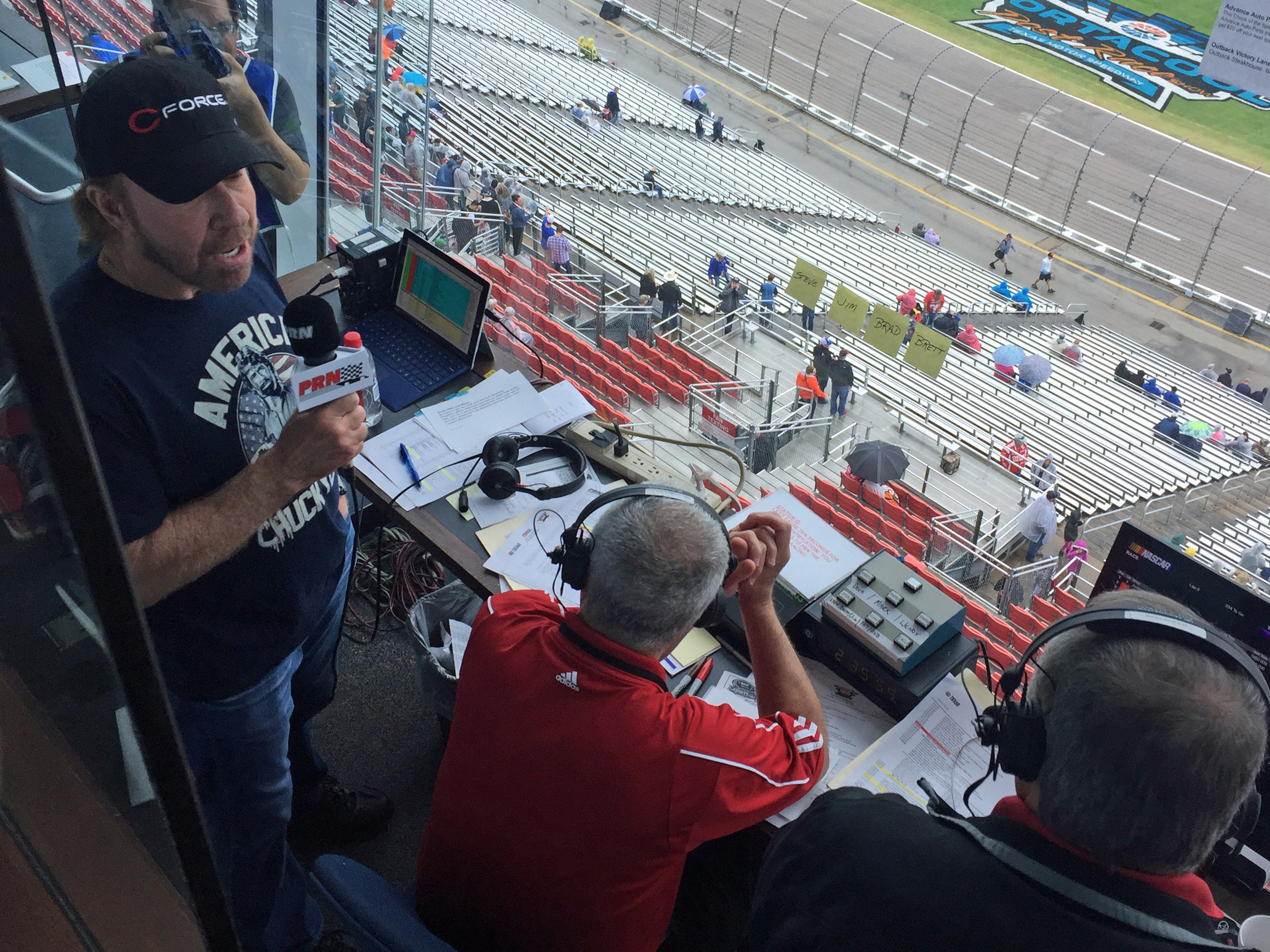
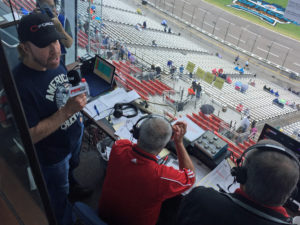
My lone Weekly cover story of the year involved the folks who do the radio broadcasts at the local racetrack. Radio waves move at the speed of light – nearly the velocity of their booth guest’s roundhouse kicks.
chucknorrisbooth_6018

Virginia Trip - November, 2016
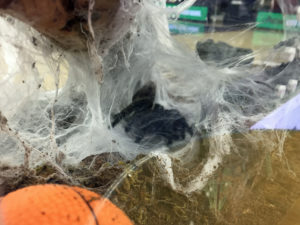
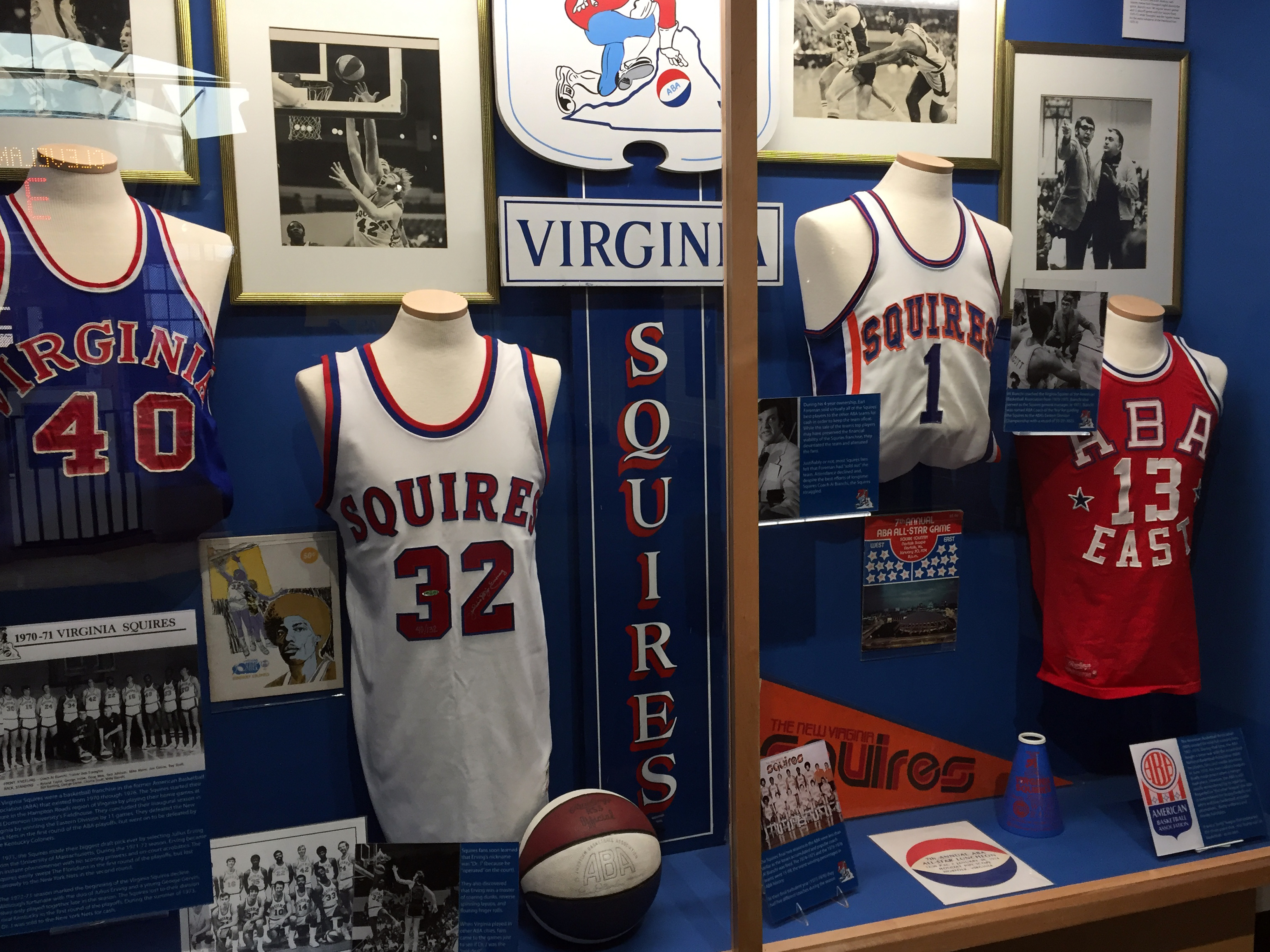
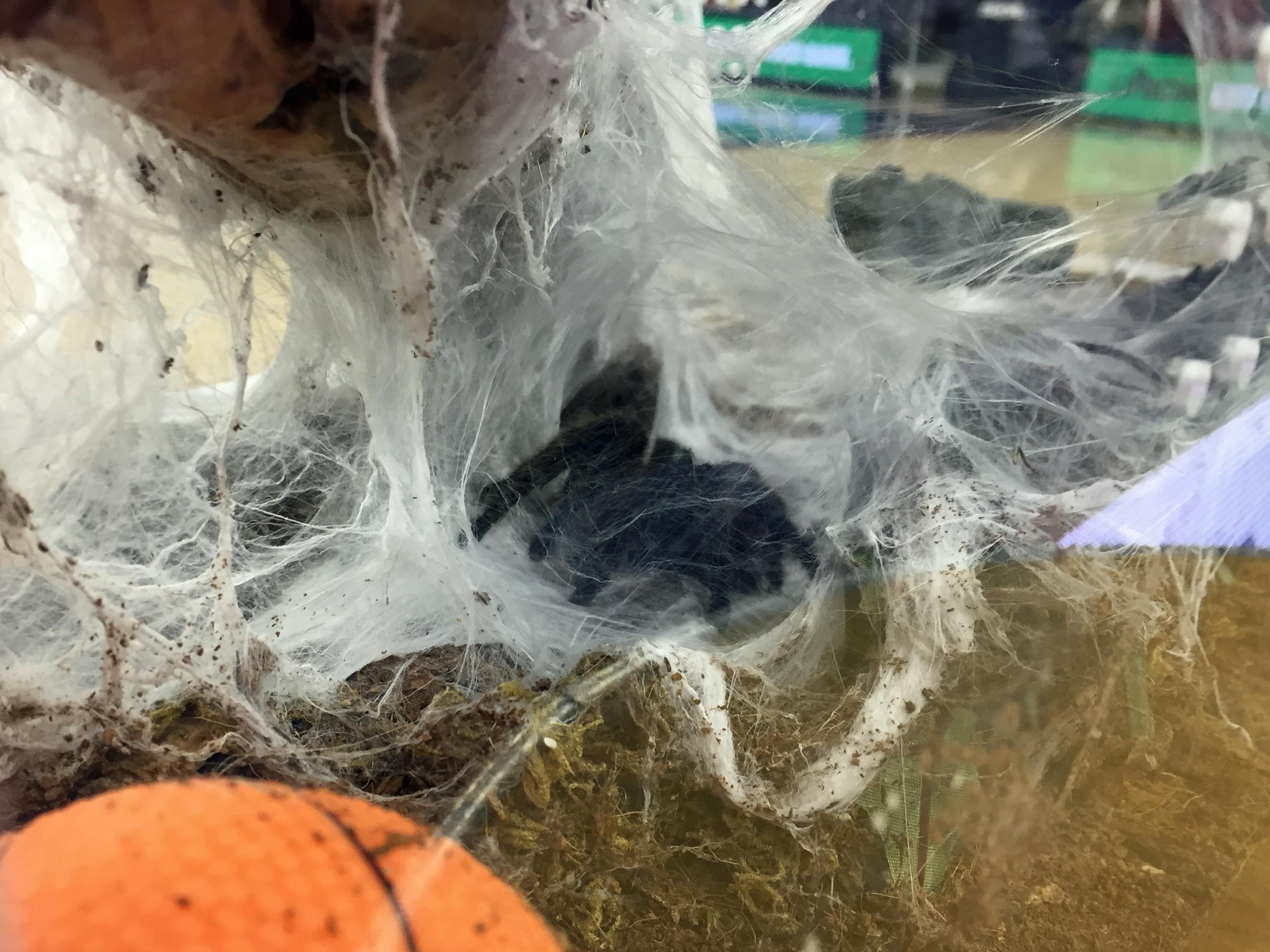
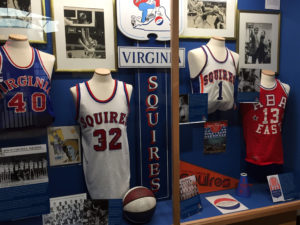
We covered basketball in Virginia. The Virginia Sports Hall of Fame has an exhibit about the ABA’s Virginia Squires. Do you realize that at one time their roster featured both Julius Erving and George Gervin? Also, the Richmond Spiders’ mascot is a real tarantula named Tarrant. They introduce him before every game.
squires_6052

tarantula_6066

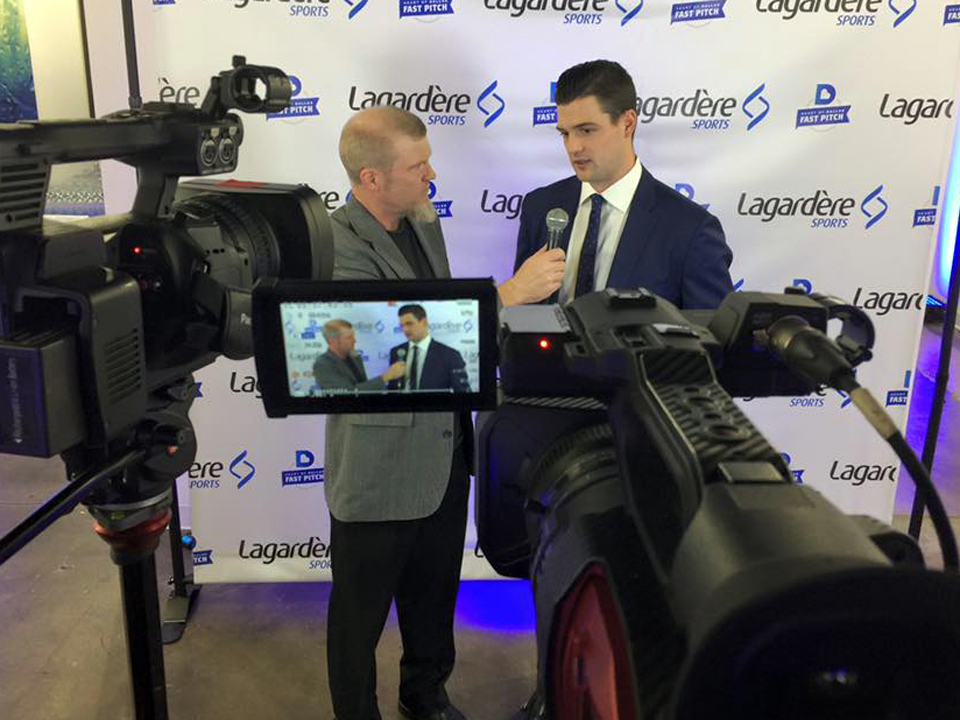
Lagardère Sports presents the Heart of Dallas Fast Pitch Event – November 2016
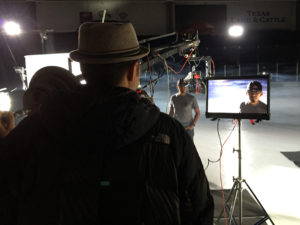
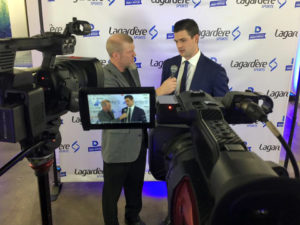
This is a cool charity event in which non-profits compete to win funds to further their missions. Jamie Benn took part and we interviewed him. I include this photo because I like camera shots of other camera shots and because I think a lot of the female readers may find Benn hunky.
rushjamiebenn
photo by Dave French

A Bright Future : West ISD Rises Up – Fall, 2016
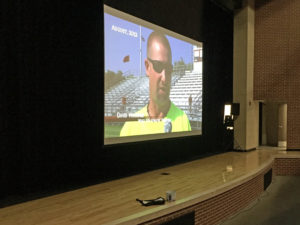
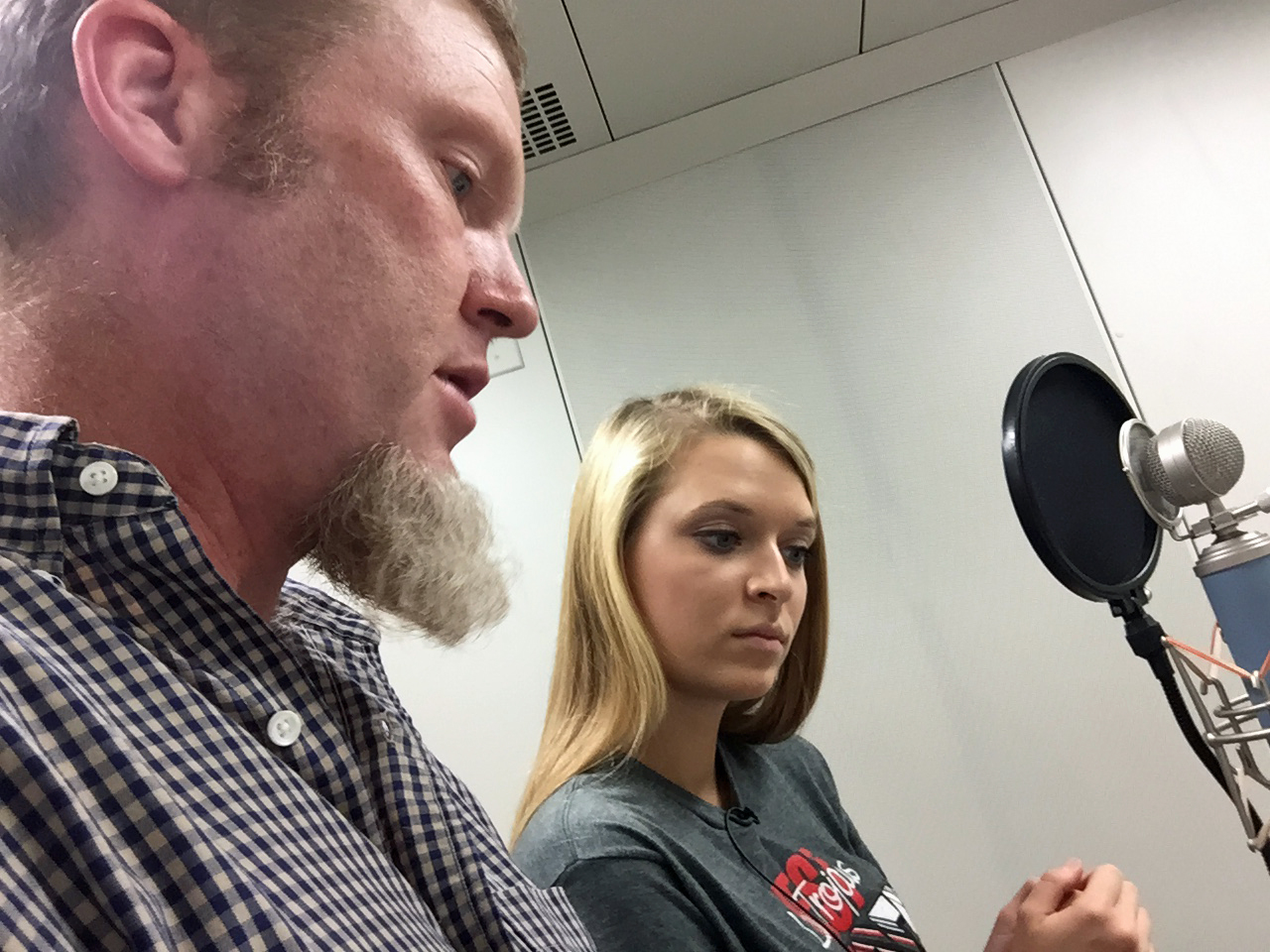
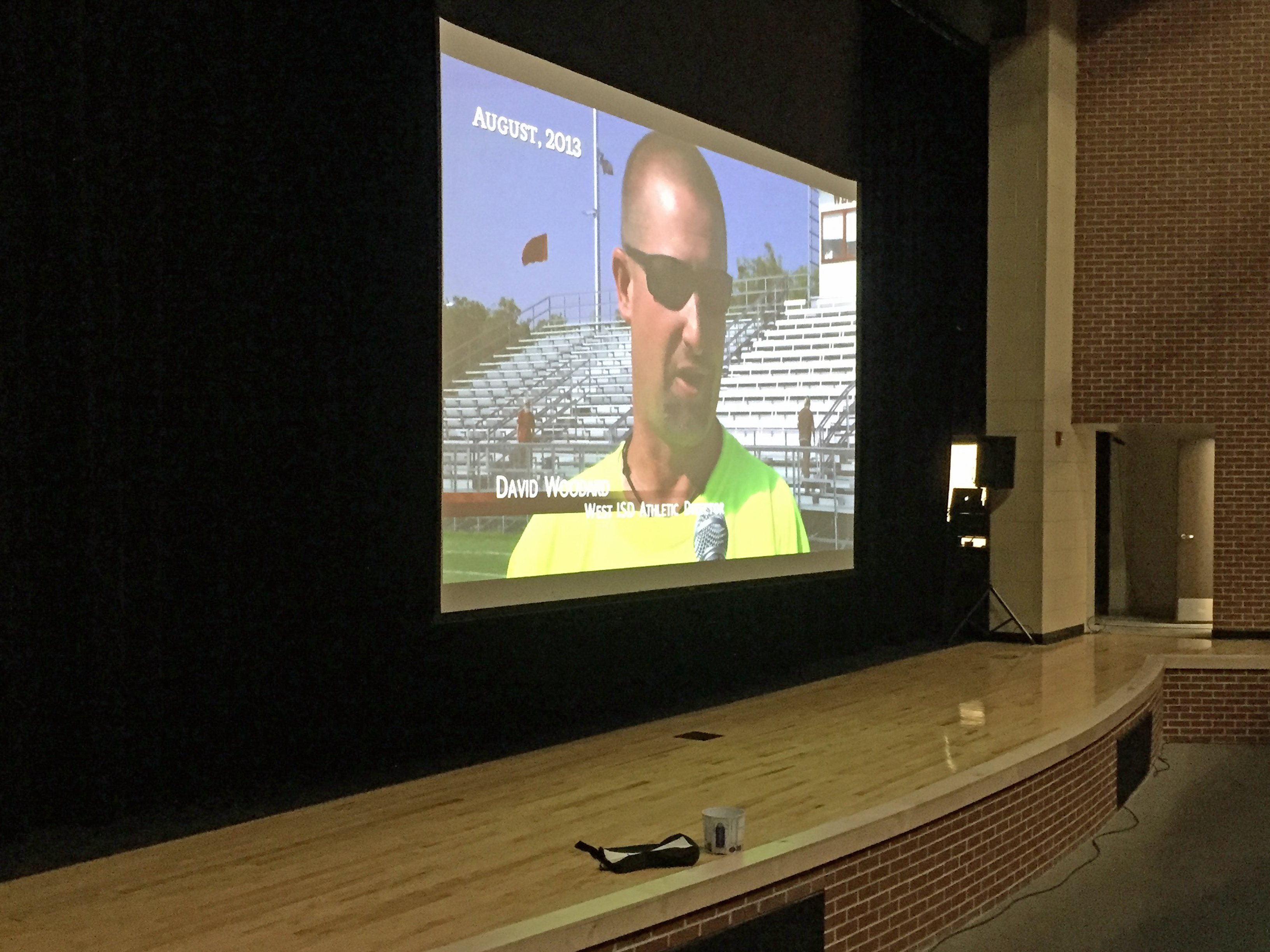
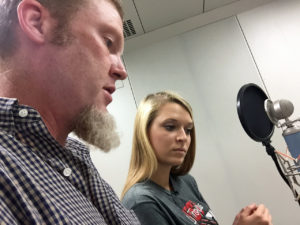
Perhaps the professional highlight of my year came with the release of the documentary on which Dave and I had worked for three years, entitled A Bright Future : West ISD Rises Up. It aired in on KWTX Waco in October and on Fort Worth-based CBS 11 in November. We also showed it in the auditorium in the high school West built to replace the one they had to demolish after a 2013 fertilizer plant explosion. These photos actually both have sports tie-ins. The one in the theater shows David Woodard, the football coach and athletic director who had to rebuild his house following the blast. The young woman doing the recording is Julia Wernet, an outstanding outfielder on West’s state title-winning softball team. She and four of her fellow students narrated the film. A Bright Future : West ISD Rises Up will be available online sometime next year after it’s finished its broadcast run in other markets.
rushjulia_1116
photo by Dave French
woodardonscreen_5668

Conclusion
This post does not include the photo I ultimately chose for the holiday card. To see that one, I guess you’ll have to hope I got your address right.


Rush Olson has spent two decades directing creative efforts for sports teams and broadcasters. He currently creates ad campaigns, television programs, and related creative projects for sports entities through Rush Olson Creative & Sports and FourNine Productions.


RushOlson.com
Linkedin.com/company/rush-olson-creative-&-sports
Facebook.com/RushOlsonCreativeandSports

Thursday, December 8, 2016

The Lessons Sports Teaches

This post originally appeared at the Fort Worth Weekly's website. To view it there : https://www.fwweekly.com/2016/12/07/sports-rush-where-sports-takes-you/


When you scored a touchdown for your peewee football team or converted a penalty in the high school soccer playoffs or legged out an infield single in beer league softball, you helped your sports team win. But how did that sport help you?

My entire family has long held a belief, shared by many in the athletic profession and beyond, that playing sports confers benefits far beyond the enjoyment one receives during the game itself. A recent speech by a sports professional reminded me why.

Regular readers of this blog, such as there are, may have noticed that I sometimes write about sports industry events at which I work, many of them charity-related. When I do, it is usually because Carla Rosenberg brought me in to assist her through her company, Matchpoint.

Ms. Rosenberg is a superstar in the charity event field. I keep working for her because she is one of those rare people who can see the big picture while also remaining mindful of the thousands of details executing a substantial gathering requires. Plus, she’s a genuinely nice person who can apparently put up with me.

She also knows the sports business, which makes sense when you know her background. She and I met when we both worked for the Texas Rangers. Before that, she played collegiate tennis for the University of Illinois after emigrating from South Africa where she was a top-flight junior player. Following the Rangers, she went on to a successful stint running the Dallas Stars Foundation. Now she organizes events and/or operates foundations for the likes of Marty Turco, Nancy Lieberman, Dirk Nowitzki, and others.

Something got Rosenberg to the point where she is this successful, and it was clearly either in spite of sports or because of them. In a recent talk she gave to employees at the North Texas Food Bank, she explained the role sports, and especially tennis, played in her development as an executive.

“The tangibles that come through playing athletics stay with you,” she said. She turned those tangibles into a series of philosophies she finds crucial to success.

She started with “Understanding winning & losing,” with an emphasis on the latter.
“The biggest lesson that I’ve actually learned is not from winning. It’s from losing. I’ve lost tennis matches. I’ve made mistakes at events and I just realized I can’t stay down.”

Her point was that losing happens in life as well as sports, and experiences on the field or court teach one to deal with it.

One thing I enjoy about working with Ms. Rosenberg is that she aims to leave as little to chance as possible. Rosenberg says she prepares for every meeting, conference call, and event because it causes her to feel the same assuredness she did when she played.

“When I used to step out on the court, I felt very confident. I felt like that was my safe haven. I felt very secure and I think it was because of all the practice and all the training and all the repetition that allowed me to feel that way.”

It’s nice to go into an event feeling comfortable, thinking we’ve got everything ready to go. Live events, however, sometimes take detours one could never anticipate. Technical issues, no-show celebrities, last-minute auction additions – one has to know how to deal with the unpredictable.

“Playing tennis in real time, under high-pressure situations, you have to make decisions,” she said.

We hear analysts talk about “going for shots.” One has to be decisive and execute with confidence, relying on the technique one has refined in practice. It works the same way in events, where having a clear idea of what is supposed to happen and why helps you find alternative solutions when reality doesn’t follow the script.

Not that such situations don’t make one uneasy. But one of Rosenberg’s topic headings suggested “You grow the most when you are uncomfortable.”

“I’ll use tennis as the metaphor. When I had an injury, it wasn’t that I failed. I had an injury. It forced me to step back. When I got back out on the court, again, I was rejuvenated. I had a different perspective,” she noted. “Sometimes when you’re uncomfortable, it’s OK. It’s the growing time.”

Sports and business both have their bottom lines. One must grow to the point where one can win some games, sets, and matches. Rosenberg learned that lesson when she vacationed in South Africa during Illinois’ winter break her senior year instead of training. When she returned, her coach dropped her several slots in the team’s ranking, suggesting he would play her in the line 6 singles position. After a lengthy rant to her father, Mr. Rosenberg asked her if she were finished.

“He goes ‘win your matches and you’ll play number one again,’ and I learned that very quickly. Produce results and you don’t have to do the talking.”

Results matter in tennis, sales, and all other walks of life. It turns out style matters, too. I don’t mean fashion sense or decorating acumen, although Rosenberg has a flair for both. An organizer who manages live events must keep her cool when circumstances rejigger themselves without asking. Ms. Rosenberg always does. Her junior tennis coach taught her that lesson one day when she played less than her best and let it show. He told her “when I look over at your court, I shouldn’t know if you’re winning or losing. It’s called poise.”
A lot of times, a good coach makes the difference in how well sports’ lessons take root.
“I was very lucky,” Rosenberg said. “I had an incredible tennis coach. It wasn’t about being a champion tennis player. It was about what kind of person are you going to be.”

The North Texas Food Bank isn’t a sports organization, but they sought out a sports person to speak with them – to coach them. They did it because her athletic background had given her far more than knowledge of odd-man rushes and forehand technique. It had provided tools she could use to succeed in many areas of business and life. Sports does that.

Rush Olson has spent two decades directing creative efforts for sports teams and broadcasters. He currently creates ad campaigns, television programs, and related creative projects for sports entities through Rush Olson Creative & Sports and FourNine Productions.


RushOlson.com
Linkedin.com/company/rush-olson-creative-&-sports
Facebook.com/RushOlsonCreativeandSports
Thursday, November 24, 2016

Jamie Benn Gets Charitable

This post originally appeared at the Fort Worth Weekly's website. To view it there : https://www.fwweekly.com/2016/11/22/sports-rush-jamie-benn-assists/

During the season, professional athletes have lots of demands on their time. So for the captain of one of the local sports teams to attend an event that wasn’t even an official team function in the middle of a homestand indicates that he must have a deep-seated interest in it. Last Wednesday, Stars forward Jamie Benn appeared at the Lagardère Sports presents the Heart of Dallas Fast Pitch Event. He received the group’s Community Excellence Award, and also collected monies set to go to a charity he cares about.

Find out what that cause is and more about the event in my video interview with Jamie Benn.


A little more insight into the character of the guy who wears the C – he wore a suit, you’ll notice. He could have donned anything he wanted and gotten away with it, but he followed the dress code. He was extremely gracious the whole evening, took photos with all the sponsors and committee members, and earnestly answered host Julie Dobbs’ questions on stage. You can look for excerpts from their chat on this coming week’s Stars Insider show on Fox Sports Southwest.

The Fast Pitch event, held this year at LIFE in Deep Ellum, has its roots in the group that puts on the Zaxby’s Heart of Dallas Bowl, held each December in the Cotton Bowl. It awards game-related charitable funds through this annual Shark Tank-style event. Charities tell some amazing stories about the good work they do. More than one tale was moving enough to bring tears from some of the attendees and the judges’ decisions on who should get which sums was not an easy one.
All six charity finalists received awards of at least four figures :
  • Bryan’s House
  • Café Momentum
  • Mercy Street
  • New Friends New Life
  • The First Tee of Greater Dallas
  • The Warren Center


Rush Olson has spent two decades directing creative efforts for sports teams and broadcasters. He currently creates ad campaigns, television programs, and related creative projects for sports entities through Rush Olson Creative & Sports and FourNine Productions.


RushOlson.com
Linkedin.com/company/rush-olson-creative-&-sports
Facebook.com/RushOlsonCreativeandSports
Friday, November 11, 2016

Interview with NBC's Jeff Burton

This post originally appeared at the Fort Worth Weekly's website. To view it there : https://www.fwweekly.com/2016/11/10/sports-rush-jeff-burton-broadcaster/

With the NASCAR circuit visiting Texas Motor Speedway this past weekend, the Fort Worth Weekly took a look at the broadcasters who bring the action to those who can’t make it to the track. We did a story on the Performance Racing Network (PRN), who create the radio broadcasts, which you can read here. We also interviewed former driver Jeff Burton, who now works on NBC’s television coverage as a race analyst. He won the first Cup race of his career at Texas in 1997, among 21 total wins at the highest level of stock car racing. What follows are excerpts from that interview.

The radio guys at PRN actually got Burton his first broadcasting gig. It came in Indianapolis while he was still an active driver, working on the network’s coverage of NASCAR’s second-level racing series.

“We just asked him if he would come and work in the booth for the Xfinity (Series) race,” PRN President Doug Rice said. “I’ve known Jeff for a long time and he was very anxious to come up and do it. He was excellent. I mean, you just knew it. He’s got a good vocabulary, He’s got a good speaking voice. He’s got great knowledge. You knew he was going to be good.”

Those traits helped Burton move from that one-time radio gig into his current NBC position. It may have also seemed a natural move because he grew up finding ways to watch races.

“We made watching the races a big part of our weekend. I can remember dragging a TV out into the backyard with a lot of extension cords plugged into each other so we could play basketball and watch a race. All of the three boys of the Burtons, we all liked racing. We all liked watching it.”

When he drove, Burton decided it was in his best interest to pay attention to the media accounts of his sport.

“My experience has been that drivers always want to watch the replays of the races they won. The talk show thing, there’s been some times when I didn’t want to listen. But there were times I didn’t want to listen and I did, like when Jeff Gordon and I had our incident in Texas many years ago. I got up early that next morning, was going to the gym and I’m, like, ‘Do I want to turn this on?’ And I made myself. And then I made myself sit in the car in front of the gym for, like, 30 minutes listening to it. and because it was – I don’t want to listen to it, but I just felt like I needed to. And then, I listen to it because I enjoyed it. I just enjoy it. I don’t listen to it all the time by any means, but when I was a driver, it helped me to see a different perspective. When you’re in the forest, you can’t see the trees. And I always liked it when fans would call in and even though I would disagree with a fan or I would agree with a fan, either way it made me see things in a different light and I thought that was healthy to understand that the sport is more than just about me.”

As a former driver, Burton uses his connections to help him prepare for a broadcast. He knows how to time his communications with drivers.

“My job is different from a pit road reporter. I’m more of an analyst, so I have a luxury those guys don’t have that when someone needs to cool off, I don’t have to talk to them right then. I can wait until a Tuesday or a Thursday. What I try to do is to catch people when I think it’s good for them or I try to give them enough time to get back to me. So there’s times I text people on Sunday mornings. And that’s what I try to do with the drivers on Sunday mornings is just send them texts, because they’re busy and it’s, in many cases for those guys, easier to just text me back. Because I don’t need a paragraph. I just have a simple question. So I just try to put the driver in a situation where they have time to get back to me, that time to respond to me. They don’t have to do it immediately. When I say they don’t have to, they’re all so good about working with us. The drivers are phenomenal at spending time with us and giving us answers, trying to help us understand what they’re dealing with.”

Knowledge of how drivers approach their craft informs Burton’s commentary as well.

“I have opinions about all sorts of things based on my experience with those things and that goes for drivers as well. And then my opinion is also shaped based on how I see them interact with others and what the situation is. To be honest, my personality is such that I always try to give someone the benefit of the doubt. When I drove and I got wrecked, rarely did I just come out and say ‘Hey, the dude just wrecked me on purpose,’ because typically, I didn’t feel like they did. Whereas, opposed to some other drivers, if you just bump into them, they think you did it on purpose every single time. Not everybody, but that’s just different personalities. So I’m more apt to give someone the benefit of the doubt than I am to say, ‘Hey, you just wrecked him on purpose.’ 

“But I have to call it like I see it. Matt Kenseth and I, for example, were great teammates. When he won his championship, I celebrated with him just like I won the championship because I was truly happy for him. But when he does something like when he wrecked [Joey] Logano last year in Martinsville, I said, ‘You know, NASCAR’s going to have to step in. They can’t allow that.’ But on the same token, I disagreed with the severity of the punishment. But not because it was Matt Kenseth, just because it was different than they had ever done before.”


Burton’s prep work also involves making sure he keeps abreast of the latest big-picture developments in the sport. He also believes it’s important to keep his immediate focus on what’s going on in the current race.

“Calling a race, in my role, is very much about understanding what has been going on in the sport prior to this race. What are they dealing with? What improvements have they made? Where have gone backwards? Where are their struggles? Where are their strengths? What’s going on in this sport? What’s the tire for this weekend? For my role, it’s more about staying current in understanding the sport than it is about stats and about those kind of things. 

“Steve (Letarte, Burton’s booth colleague) and I are analysts. We don’t have to know that Jimmie Johnson – I’m making this up – that Jimmie Johnson going into this week had not won a Martinsville race in the last six races. We don’t specifically have to know that. We just have to know that he won a bunch there, but lately hadn’t had the same success. We’re not stat guys, but we need to understand the flow of each race team, what they’re struggling with, what they’re doing well, what is their situation, and then let the race happen. Because the race is the story, and what happened in Martinsville last week matters for this week, but only because the Gibbs guys had a little conflict during the race. Jimmie Johnson won the race, which means he’s locked in [to a chance to race for the season championship]. Kevin Harvick had problems with speed. Carl Edwards has a huge hole to dig out of. So that’s why last week’s race matters. But what happens this week is what matters the most this week. This week’s the most important race ever in the history of NASCAR.”

Incidentally, Burton did actually remember the stats correctly. Johnson had, in fact, not won a race in Martinsville since April of 2013, exactly six races prior to his triumph there on October 30th.
When he decided to move into the broadcast booth, Burton wanted to make sure his network would share his vision for covering his sport.

“NBC approached me with a plan about how they wanted to be involved in the sport and I liked what they wanted to do. I liked the game plan. I liked how they wanted to bring the race to the fans, how they wanted to be involved in the sport. I can’t say to you that I was getting ready to retire and said I want to be a broadcaster. What happened with me was that a lot of people within the sport for several years had said that maybe I should look into that. Maybe because I wasn’t winning any more, they were looking at something else for me to do [laughs]. People within the sport were saying maybe that I would be good at that and I really hadn’t thought about it. Some people were thinking about it for me, I think, which was flattering.

“So when NBC approached me, my question wasn’t, ‘What is my job?’ My question, my first question, was, ‘Explain to me how you want to do it? What happens when I have to criticize NASCAR? Or what happens when I have to criticize the driver or what happens when we have a difficult situation that I have to say something to make someone mad, or what happens when . . .’ I just had all this list of questions, because if I was going to do it, it was because I wanted to bring the sport to the fans and be able to inform the fans, be educational. Help the fans understand the sport in greater detail. Not that our fans are ignorant, but it’s hard to know more about racing than it is other sports because they don’t teach you in PE how to play racing. You learn as a kid how to dribble the basketball. You learn the rules of basketball. You learn baseball. You learn soccer, all the things, but nobody teaches racing. A lot of people’s kids play sports, so it’s easier to know more about the other sports. It’s harder to know more about NASCAR and I have always felt that the fans wanted to know as much as they possibly could know, but they were disadvantaged. So my question was, ‘Are we going to be able to do a broadcast that’s informative, that’s more centered around information and the race than it is considered entertainment.

“I want racing to be fun, because racing is fun and the race has got to be fun. The race has got to be exciting. The race has got to be all these things. It can’t be me. 

“The show is on the track, it’s not in the booth. And so I just wanted to make sure NBC fit what I thought it should be and it all lined up.”

(Photo by: Gerardo Mora/NBC Sports)

Once a part of NBC’s team, Burton found himself matched with veteran broadcaster Rick Allen and Steve Letarte, the former crew chief for Dale Earnhardt, Jr.

“We all come from different backgrounds, so Steve has taught me a lot about things that I thought already knew about in regards to what his role was and what does being a crew chief, what does that really mean. He’s taught me a lot and I’d like to think I’ve taught him a lot about being a driver. I think the main thing that I think we’ve done a really good job of it, that we truly, we all three committed to each other that we were going to hold each other accountable. We were all lucky to be in this position we have to worked our ass off, because the fans deserve our commitment and the teams deserve our commitment and the sport deserves our commitment. It’s not a part-time job.”

They also added another voice to the booth when Earnhardt, Jr. found himself unable to race after suffering a concussion.

“Steve and Dale know each other really well obviously and they know each other better than I know Dale. I’ve known Junior forever but I hadn’t spent the time with Junior that Steve has. But we’ve done enough socially as well as racing against each other a lot, we have a lot of respect for each other. We spent 10-15 minutes talking, you know, ‘Hey, look, why don’t we do this,’ basically it was, ‘We’re just talking racing.’ Don’t make it complicated. We’re just talking racing. It doesn’t have to be complicated. Let Rick get us in and out of commercials. Let Rick lead us to things. Let Rick do all the things that he’s so damn good at and then it’s just the three of us talking about what we’re watching. ‘The goal is, Dale, like at Talladega, we want you to explain to the fans, why do you do what you do? There’s a reason that you make a move when you make it. Like, let’s put you in whatever car we’re following and say, ok, I would do this or I would do that and why.’ It’s just that simple. Let’s don’t make it complicated. And I think he’s so comfortable with Steve, and he’s been around me enough to know that I’m pretty easy to get along with that he just got in there and was comfortable and just sat in there and rolled along time and had a good time. We have a good time. We laugh and carry on and cut up. We have a good time. We wanted him to come in and have a good time.” 

Another current driver much on Burton’s mind just completed his first race on the NASCAR Craftsman Truck Series a week ago in Martinsville. Burton’s 16-year old son Harrison could someday advance to the levels his father covers, presenting a potential dilemma for his dad.

“I will do my best not to do that. It would be difficult to do that. We’re a ways away from having to worry about it and so I’m not going to worry about it until I have to. We’re a minimum of two years away from that having to happen. We’d have to really think about that. I believe in my heart that you have to be impartial. I can’t be pulling for a guy. I can feel good for somebody.
I can feel bad for somebody. 

“But we had that wonderful, wonderful moment with Dale Jarrett and Ned Jarrett when Dale won the Daytona 500 [when CBS had Ned call the last seconds of a race won by his son in 1993]. But what people don’t know is that Ned Jarrett felt bad about it. He felt like in some way that wasn’t fair to other people. And he was uncomfortable about it. Because that’s Ned. He wanted everybody to understand that he was trying to do his job the best he could and I think that that was a great moment, but it can only be a moment. It can’t be a weekly thing. Ned couldn’t pull for Dale every single week. He could do it that one time because it was the Daytona 500. It was a special moment. They had the camera on him. It was awesome. It was great, but it was because it was a huge event. It was a singular moment. It wasn’t every single week. 

“So if we got to that point, I would really have to take a step back, make sure that I was representing the sport and all the drivers in the way that it needed to be, because I’ll tell you that everybody deserves from the media impartiality. They deserve facts. They deserve honest information. That’s what the fans deserve.”

One thing Burton made clear. When he left driving, it wasn’t to retire.

“We didn’t retire. We took another position. That, in a nutshell, is it. People ask me how retirement’s going. I’m like, ‘Who retired? I changed my position, but I didn’t retire.’ Retired means I’m going fishing Tuesday, Wednesday, Thursday, Friday, Saturday. I haven’t retired.”


Rush Olson has spent two decades directing creative efforts for sports teams and broadcasters. He currently creates ad campaigns, television programs, and related creative projects for sports entities through Rush Olson Creative & Sports and FourNine Productions.


RushOlson.com
Linkedin.com/company/rush-olson-creative-&-sports
Facebook.com/RushOlsonCreativeandSports