Showing posts with label America. Show all posts

Wednesday, July 27, 2016

Keeping the Olympics From Flaming Out

This post originally appeared at the Fort Worth Weekly's website. To view it there : http://www.fwweekly.com/2016/07/26/sports-rush-keeping-the-olympics-from-flaming-out/

This year, the buzz about Olympic athletes has revolved in large part around those not going to Brazil.  Some fear the Zika virus. Others will likely find themselves excluded as part of a blanket ban of Russian athletes in certain sports.
Such controversies are not unusual.


The Olympics has always had problems assembling all of the world’s best athletes every four years :


* Combat : World War I cancelled the 1916 event in its entirety. World War II stopped another four competitions.
* Boycotts : From Ireland in 1908 through the Communist countries in 1984 and 1988, numerous Games have been marred by governments preventing their resident athletes from participating.
* Apartheid : From 1964 to 1992, the International Olympic Committee barred South African athletes as a response to the country’s racial classification system.
* Women : Female athletes could not compete until 1920.
* Shamateurism : Authorities’ aversion to patrons compensating the sportsmen and women who entertained them kept us from seeing the likes of PelĂ©, Bobby Orr, or Wilt Chamberlain with medals around their necks, and Jim Thorpe from keeping his golds.


Pierre de Coubertin, the man who spearheaded the revival of the Olympic Games in the late 19th century, believed “The Olympic Games are for the world and all nations must be admitted to them.” It has not always been the case, and much of it has to do with the event’s nation-state system of organization.

We won’t see Paris Saint-Germain boycott Champions League fixtures in England next year because Brexit bothered its management. The NBA just moved its All-Star Game due to actions by North Carolina’s government, but we can feel assured the Charlotte Hornets will play a full home schedule next year with no withdrawals by visiting teams. Other than maybe a geographically contained disaster, like this Zika outbreak, we can’t imagine a scenario in which a club team would choose not to play in championship contests for which it had qualified. Even in the rare case of bankruptcy, a league would step in to make sure an elite team played. Such was the case with the 2010 Texas Rangers.

Club competitions can’t skip out on games because long-term success depends on their brands being perceived as consistently able to deliver a reliable world-class athletic product. When baseball games get rained out, MLB reschedules them.

The Olympics, too, has a need to maintain its brand integrity. The nature of its event and the strength of its brand mean the IOC can persevere through the absences of even some of its most iconic teams or athletes.  There are enough countries on the planet that missing a few boycotters or WADA stooges doesn’t matter. We love to root for the red, white and blue no matter whether they’re taking on the reds, the azzurri, or the bleu, blanc, et rouge. Patriotism has power.

The Olympics has to be careful, though, because while its brand remains perhaps the most powerful in sports, its success ultimately depends upon the health of its teams the same way a league of club franchises does. However, Olympic sides don’t respond to the same incentives as do regular pro teams.

Since its beginnings, Olympic competition has been organized with athletes competing for squads identified with their citizenships. While that wouldn’t have to mean dealing with the governments of participants (the Olympics could have established an independent system for certifying its competitions), from a practical standpoint it has meant heavy involvement with ministries of sport and Ted Stevens Olympic and Amateur Sports Acts.

The priorities of those who run governments (and the teams that represent them) won’t always line up with what’s best for the Olympic organization. A Robert Kraft might vehemently question the merits of a specific disciplinary procedure, but he would likely agree that ensuring a sports product free of cheating benefits his brand significantly and, is, in fact, vital to its success.

Other kinds of patriots – those who run governments – often don’t gain the same benefit from a level playing field. In their minds, some combination of national glory and personal power accumulation may matter a great deal more than notions of sportsmanship. Using a flag-wrapped end to justify unfair means is common when politicians want to assure constituents they will all win so much they get tired of it.

In our current situation, it seems Russian political authorities decided hearing the State Anthem of the Russian Federation played frequently at medal ceremonies served their needs more than playing by certain rules to which they had agreed. Such widespread sovereign swindling in athletics has precedent (see 1970s East Germany). Whatever one thinks of the World Anti-Doping Agency’s own priorities, one has to concede that the Russian authorities believed an all-out effort to secure athletic success for Russia would play better with the native populace than allegiance to standards of fair play that enhance the Olympic brand. For Russian leaders, it’s a no-lose. If their less-than-clean athletes win a lot of medals, as they did in Sochi, and get away with it, the reflected glory helps the political class. If they get caught, they can just blame it on Western vendettas and still maintain their popularity.

The Olympic movement is heavily in bed with national governments, of course. The organization requires governmental guarantees of funds before it awards an Olympiad. It can get burned on the front end of the process by corruption (see Salt Lake City, Rio, and Sochi) and on the back end by bad press about negative economic impact (see Athens, Sarajevo, Montreal, and others). They already have a problem with a lack of applicants to host their events and it could easily get worse.
Does it matter? It will if it hits the bottom line. Russia is a huge territory. Sponsors can’t be pleased to see those millions of eyeballs paying attention to something other than their ads. If only authoritarian states apply to host games in the future, as happened when Kazakhstan and China emerged as the only finalists for the 2022 Winter Games, the commercial partners won’t like the public criticism associated with helping legitimize those regimes.

The Olympic movement has the power do great good in many ways, including spreading the gospel of fitness, inspiring achievement, encouraging understanding between individuals from different regions, and entertaining billions. Fans love to root for their country’s athletes. Is there a sustainable path forward?

The issue of nations jockeying (or even worse, not jockeying) to lose billions on new Olympic venues might be solved by establishing single locations to host all games owned by the International Olympic Committee. Greece seems the least controversial from a sentimental standpoint and their central government’s current fiscal predicament would eliminate the temptation to seek subsidies. Perhaps the IOC’s home country of Switzerland would make sense for a Winter Games host. Any such choice would be fraught with issues of Eurocentrism, television ratings across time zones, and general naysaying, but finding a way to avoid repeating the controversies of Sochi and Rio should take priority.

It is beyond the IOC’s power to change the nature of politics. Extricating itself from entanglements with sports ministries is also beyond its current ability. While it should certainly take a strong look at whether the burdens WADA imposes encourage the kind of approach the Russian Federation adopted, the Olympians will never have the power to compel government actors to follow rules the latter dislike.

What it can do is set a good example. In ancient times, warring nations were expected to allow athletes to pass through their territories on the way to the games at Olympus. The modern games have provided numerous examples of how good-natured interactions between people from different parts of the world facilitate understanding, from Luz Long advising Jesse Owens to the Grateful Dead sponsoring the Lithuanian men’s basketball team.

Many believe maximizing peaceful commerce between citizens of diverse nations to be a less effective deterrent to belligerence than the initiation of force by governments. The best thing the Olympics can do is to disentangle itself from as much of its dependence on nation states as possible and use its commercial muscle and spirit of sportsmanship to prove such people wrong.


Rush Olson has spent two decades directing creative efforts for sports teams and broadcasters. He currently creates ad campaigns, television programs, and related creative projects for sports entities through Rush Olson Creative & Sports and FourNine Productions.


RushOlson.com

Linkedin.com/company/rush-olson-creative-&-sports

Facebook.com/RushOlsonCreativeandSports

Wednesday, January 13, 2016

Football Is Different

This post originally appeared on the Blotch page at the Fort Worth Weekly. To read it on that site : http://www.fwweekly.com/2016/01/13/football-is-different/


R1
Football is different from other sports.
The ball’s not round, certain players aren’t allowed to touch said ball, and a game can fill 100,000 seat stadiums once a week with fans wearing colors not found in nature.

Should conference alignments reflect its unique character? A basketball game last week served as a reminder of how football’s singularity affects the rest of the collegiate sports world.
In men’s hoops last Monday, the West Virginia University Mountaineers visited their non-historical rival, the Texas Christian Horned Frogs. The ‘Eers traveled roughly a thousand miles to the game, just as their baseball, swimming & diving, women’s basketball, and volleyball teams did or will do this year. A number of TCU’s teams visit Morgantown, too. Why go some 1600 kilometers to play these games? It’s because football is different.
Football always has been the alpha male in the nation’s university environment. There was once a College Football Association to negotiate big schools’ TV contracts in the sport. No such equivalent existed for golf or cross country. Teddy Roosevelt never held a summit to explore making the pole vault safer.

Football has always gotten special treatment, and it’s easy to understand why. The gridiron game is the most popular spectator sport in college athletics. Reputations, egos, and huge dollars depend on it. Those dollars, in fact, drive much of athletic departments’ decision-making. Football’s large roster size and marketing needs, among other things, make it an expensive sport in which to field a team, especially at the FBS level. Choices get made, then with an eye to maximizing the revenue the football program generates.

Certainly any purveyor of sporting contests aims to generate maximal economic returns. Football plays a unique role in college athletics, however, because it is often relied upon to create enough revenue to pay not only for its own costs but also those of sports which do not generate enough funds from sales of tickets, broadcast rights, sponsorships, and “Beat Bama” shirts, plus donor contributions, to pay for themselves. Men’s basketball and, on rare occasions, other sports at certain schools occasionally pay for themselves as well.
There’s not necessarily anything wrong with this arrangement. Fans are certainly entitled to prefer watching one sport over another. If the monies they contribute and facilitate indirectly (like sponsorship and broadcast rights sales) allow students proficient in sports besides the fans’ favored one to realize the benefits intercollegiate athletics provide, that seems a reasonably happy result.

Not all schools break even on their athletic programs, of course. The Washington Post looked the public universities (because government institutions must make the data available) in the Power Five conferences. 28 of the 48 schools they examined lost money on athletics. A USA TODAY study found that more than 200 Division I public institutions didn’t bring in enough income to cover athletic operating costs. In cases where departments don’t fund themselves, student fees tend to make up the difference.

The Post noted that proponents of intercollegiate athletics cite benefits beyond athletic budgets, including publicity that increases applications. Athletic participation certainly also provides benefits to students involved in both the sports themselves and ancillary activities like band, student radio, and valet parking for suiteholders.

It’s an inexact calculation as to whether the costs of intercollegiate athletics outweigh the benefits, and we won’t get into that debate here. But given that even the biggest football schools often don’t pay their own costs, if we could come up with a way for them to run more efficiently, we should take a look at it. That would seem especially important given that many of the institutions in question are public ones, with taxpayers ultimately on the hook for yearly cost overruns plus the infrastructure student-athletes utilize outside the athletic sphere. Given the prevalence of government student aid, that likely holds true for most private institutions as well, since those loans and grants might pay for student athletic fees that subsidize unprofitable athletic departments.

Which brings us back to TCU versus West Virginia (a 95-87 WVU win). They played each other Monday because they’re in the same conference. They’re both Big XII members in large part because of football. When the conference had openings, would either school have gotten in if they didn’t bring national football profiles? No way. Football pedigree clearly factored in the decision more than, say, traditional rivalry or geographic proximity.
So did the conference affiliation make sense from a football perspective? Perhaps so. Did it make sense from a wider perspective? To determine that, let’s look at it through two lenses : student-athlete benefit and overall effect on the state of Texas.

Student-athletes are conceivably supposed to be the most important thing about college athletics. The lessons they learn from playing are a valuable part of their preparation for life. They aim to put in enough time to get the benefits of their sport(s), but not so many hours that their commitment hurts other academic and extracurricular performances.

Football, as previously noted, is different from other sports. You play once a week, usually on Saturdays. Whether you play at WVU or Maine Tech or the Sorbonne, your travel time isn’t too different. Other sports play more frequently and often on school days. The more long road trips students endure, the more classes they miss.

Likewise, a half-dozen lengthy football road trips may not cost that much, and may well be worth the cost if you consider them vital to your gridiron success. Multiple long journeys from baseball, softball, basketball, and the rest of your department’s teams, however, quickly add much larger costs. For the unprofitable schools mentioned earlier, those costs get covered by state resources (like tuition collection, endowment depletion, property tax revenue) that could be directed elsewhere.

A pair of state schools in Texas also field teams that travel to West Virginia annually. They (and their fans) used to be able to travel the much-shorter distances to College Station, Texas for games of similar caliber. However, the public Texas A&M University made a football-related move to the Southeastern Conference and now makes its own trips to Alabama, South Carolina, and Florida.

Do these moves make sense from a student-athlete perspective? Maybe they do from a football standpoint. For the rest of the athletes, however, they miss more class and likely have fewer games their families can attend. The athletic experience they get from playing a Texas school of their caliber is no different from that gained playing one from further away. So we can conclude that football-based conference realignments may well not benefit non-football athletes.

Do the moves benefit the states in which the schools are placed? If long road trips create a lesser academic experience for student-athletes at the schools, that isn’t good. From a fiscal perspective, it seems likely they spend a lot of unnecessary money on non-football travel. The state’s residents may also be hurt economically from scheduling. Let’s face it, a Texas vs. Texas A&M game in any sport is going to be a bigger draw than A&M vs. Vanderbilt or the Longhorns vs. WVU. When the Aggies travel to TCU, Baylor, and Texas Tech, the sales tax dollars generated at local restaurants and hotels stay in-state instead of going to Mississippi or Georgia coffers.

The Aggies may make the case that they bring more TV money to Texas from their move to the SEC than they would have if they had stayed in the Big XII. Indeed, the $31.2 million distribution their conference gave them exceeded the $25.2 million Big XII schools pulled in from theirs. However, each Big XII school retains its rights to so-called third-tier games, and revenue from those might well have come very close to making up the difference. One has to also factor in losses from travel and in-state rivalries to perform a true analysis of the costs and benefits to the state as a whole.

These issues aren’t limited to Texas, either. The Rutgers to Minnesota, Miami (FL) to Boston College, and Arizona to Washington State sojourns leave a lot to be desired, too.

So what’s the solution? If the conference alignments work for football but not for other sports, perhaps the solution is to give football its own special treatment. Set up conferences for that sport that are as national in scope as you want them to be and put the other sports into conferences that make more sense geographically.

Would it work? We already have single-sport conferences in sports without universal participation, like Hockey East or the Midwestern Intercollegiate Volleyball Association, and a number of non-football Division I conferences. BYU’s and Notre Dame’s league arrangements cover most of their sports while leaving football independent. It’s not like colleges have placed any value on stability of conference membership in the last 20 years anyway. Frog fans, remember the WAC and the Mountain West? Or those car trips to Southwest Conference road games?

What would it take to blow up the conference structure? It might need to start with legislation from some budget-minded legislators (if that’s not an oxymoron) in affected states – probably large ones. Or perhaps it could result from a movement started by university presidents eager to make their bottom lines look more robust.

One of the trickiest parts would be the unraveling of current conference television deals, especially those with league-specific networks attached, like the Big Ten Network and the SEC Network. They need the non-football sports to provide enough programming for them to work. It’s possible they could transition to becoming general-interest collegiate sports networks (ESPNU 2, for instance), initially retaining the rights to the individual schools they currently serve through the incumbent system.

Men’s basketball, the second-largest revenue generator among collegiate sports derives most of its take from the March Madness TV deal. It would have to recalibrate the way it splits its money, too, since some of it gets distributed at the whim of conferences. It would take some complicated negotiation, but it could be done.

One hurdle will be stakeholders invested in the current conference system. I sympathize, because they have worked hard to build conference brands over the years. I suggest they embrace the change, because this solution would actually create more conferences. More conferences means more jobs for people like you and me.

In the long run, would a split of football into its own conferences mean more jobs for better-educated student athletes and for Texans who see more monies stay in-state? At the very least, it sounds like a good research project for some bright student-athlete Econ majors – once she gets back from that tennis trip to Morgantown, that is.

Rush Olson has spent two decades directing creative efforts for sports teams and broadcasters. He currently creates ad campaigns, television programs, and related creative projects for sports entities through his company, Rush Olson Creative & Sports.


RushOlson.com

Linkedin.com/company/rush-olson-creative-&-sports

Facebook.com/RushOlsonCreativeandSports
Wednesday, November 18, 2015

Will the U.S. Embrace Cricket? Sachin Tendulkar and Company Try to Make It So

This post originally appeared on the Blotch page at the Fort Worth Weekly's website. To read it on that site : http://www.fwweekly.com/2015/11/17/will-it-be-cricket/


R1

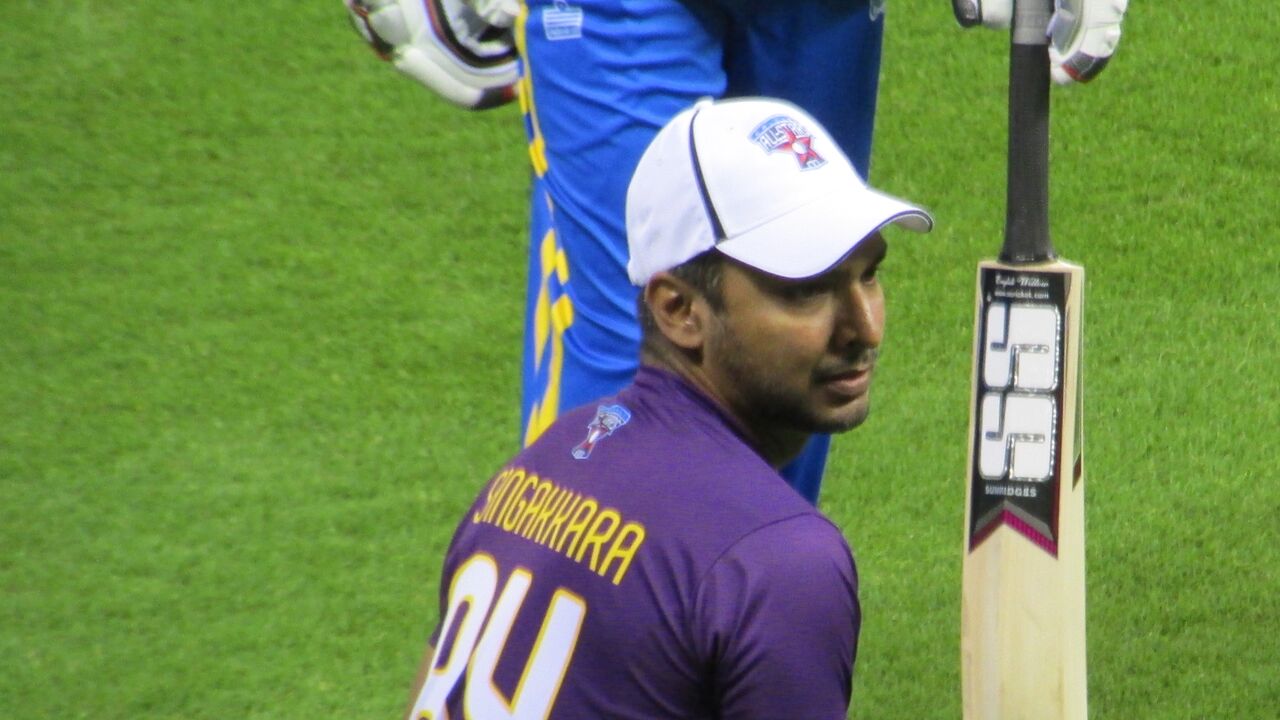
Kumar Sangakkara: “If something is not done right, you don’t say ‘It’s not football’ or ‘It’s not tennis.’ You always say ‘It’s not cricket.’”

The Sri Lankan batsman knows you’ve probably heard that catchphrase about his sport. He visited Texas last week as part of a group of cricketing legends to help you learn why he feels his game does things right.


“It’s given us a lot, and I think everyone here is trying to give back to the game while enjoying themselves and putting up the best spectacle that we can,” he said.


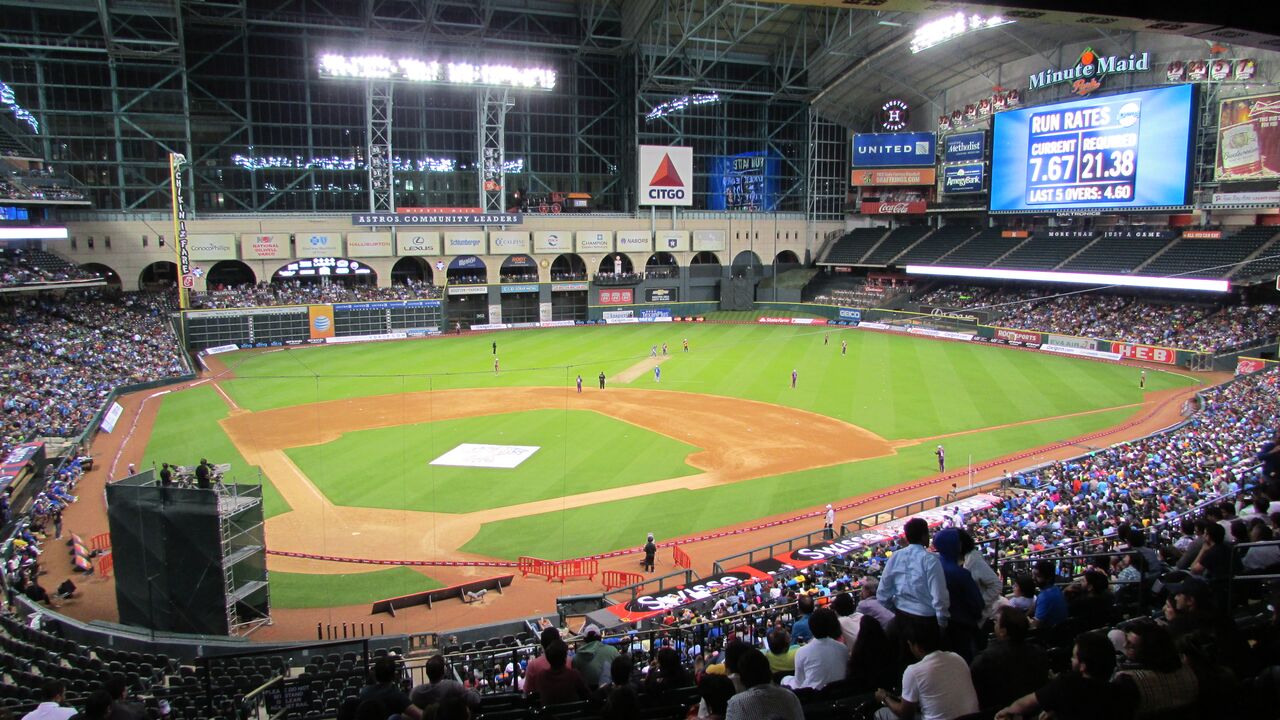
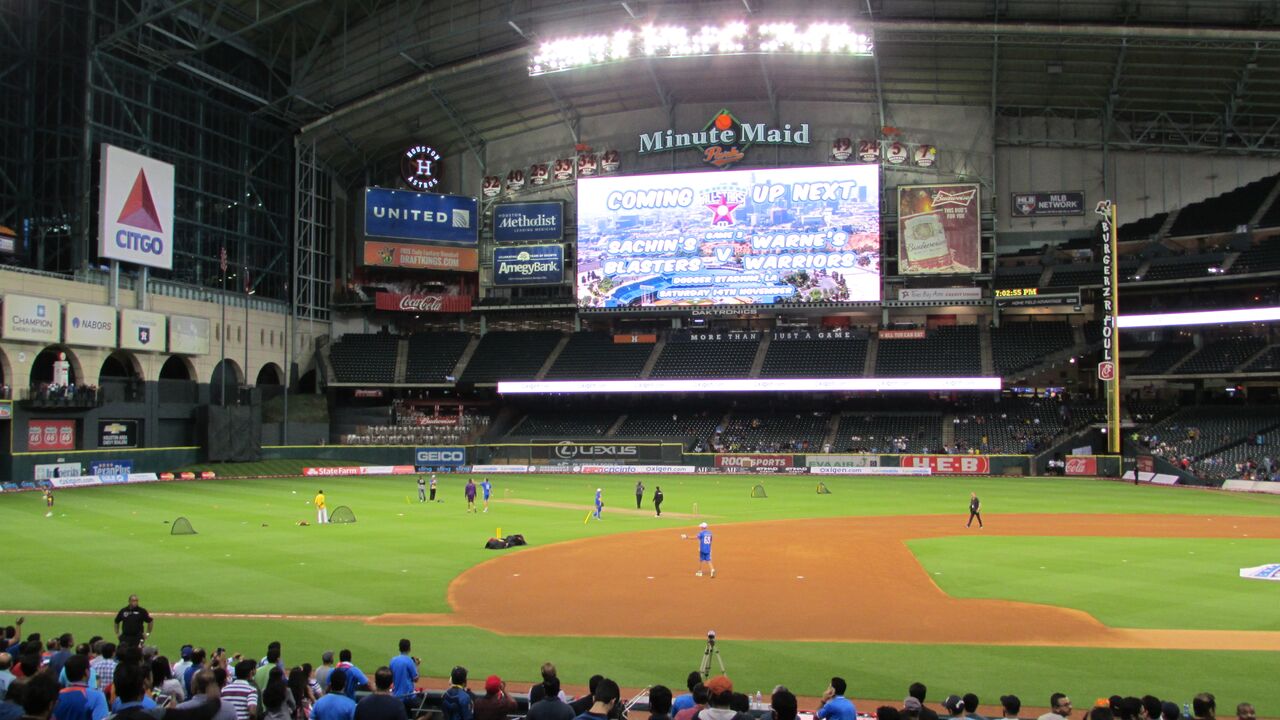
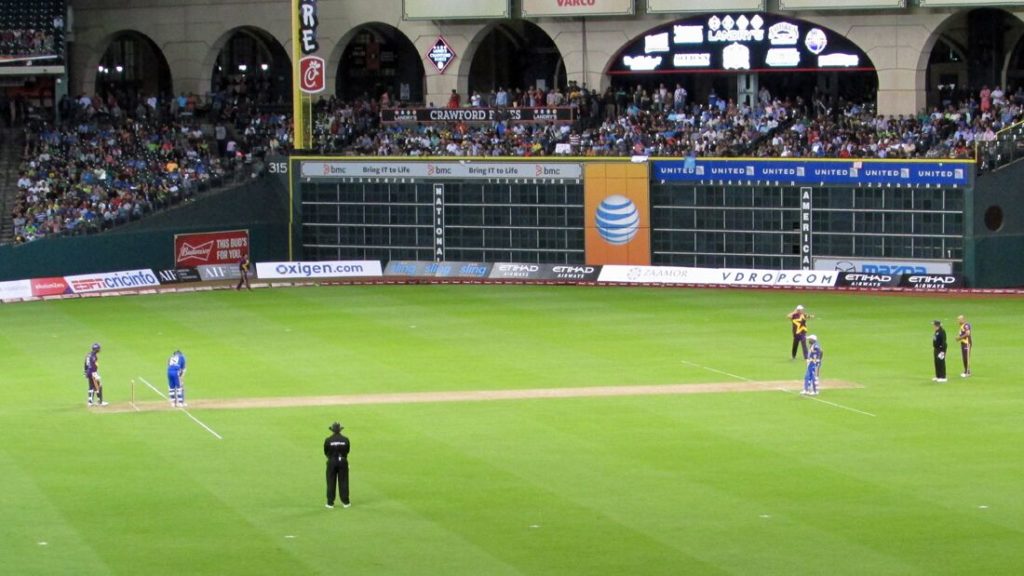
Sangakkara did his part to provide a compelling cricket experience last Wednesday in Houston’s Minute Maid Park, as he produced 70 runs to lead his team to a 262-205 win. The victory came in game 2 of the three-game Cricket All-Stars Series. The matches featured two teams of retired world-class cricketers playing in Major League baseball stadiums. The games did not have television coverage in the U.S., though ESPN3 streamed them online.


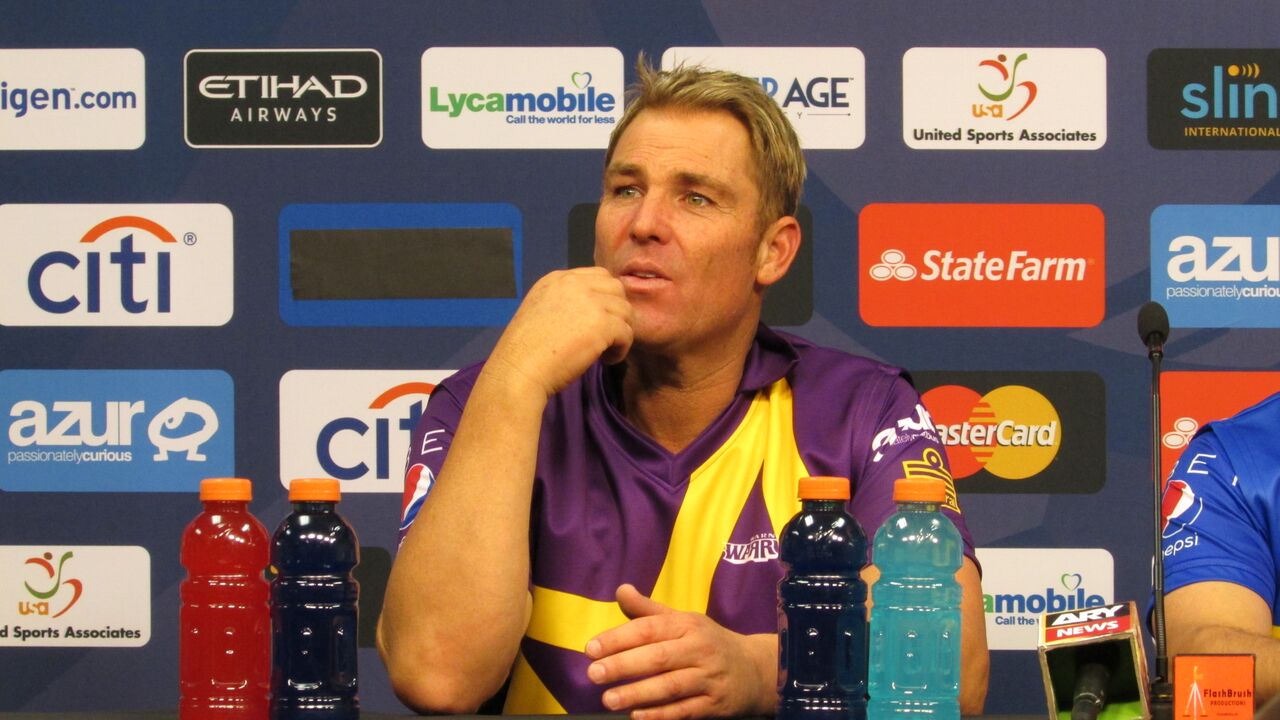
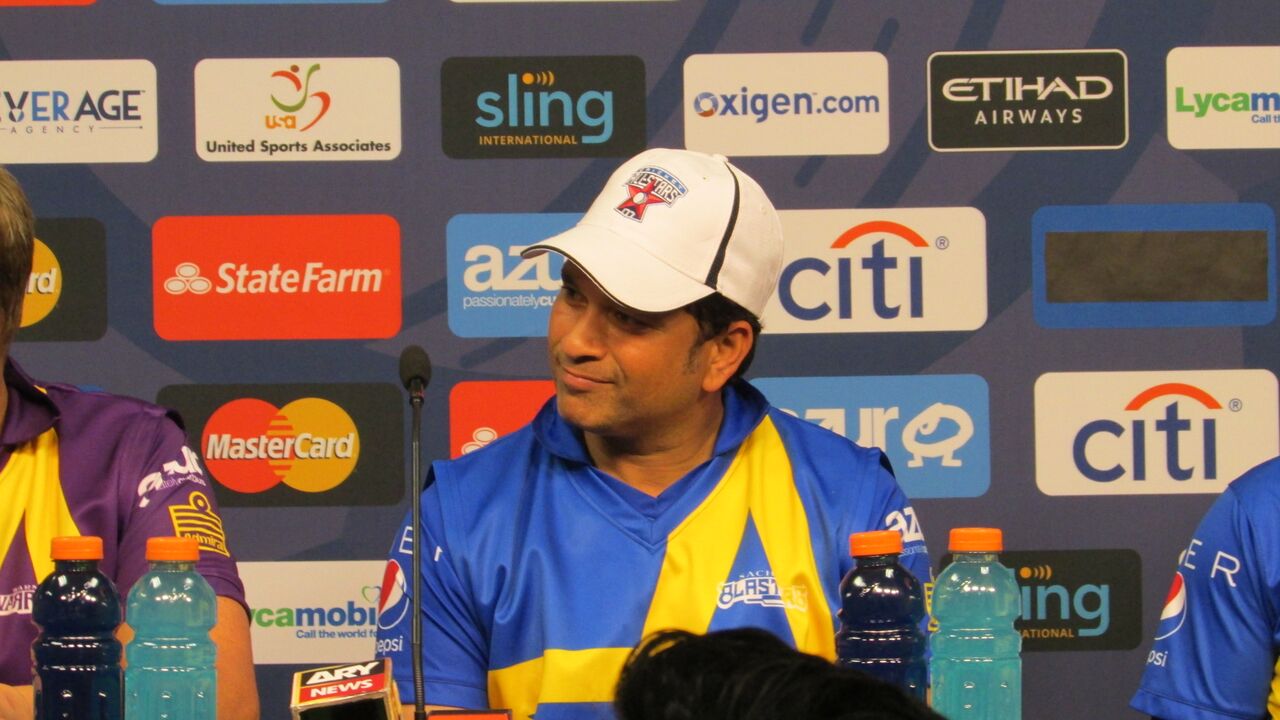
Warne’s Warriors, captained by Australian spin bowler Shane Warne, swept the series against Sachin’s Blasters, helmed by perhaps the most famous cricketer in world history, Sachin Tendulkar.


If you hadn’t heard of Mr. Tendulkar or any of his fellow All-Stars until now, don’t feel badly about it. While cricket enjoys a large following in a number of mostly current or former Commonwealth nations, the United States is not among the former English colonies where the game garners a lot of attention. The Cricket All-Stars tour aims to start elevating cricket’s status in this country.

“It’s all about creating interest,” said South African all-rounder Shaun Pollock. “This is a way of using ourselves as a vehicle to expose the USA to cricket.”

Tendulkar and Warne identified the tour as a potential catalyst for driving the game’s worldwide growth.

“We’re here to globalize cricket,” said Warne. “We’d love everyone to play it.”

Raj Ramakrishnan of Australia-based United Sports Associates helped organize the tour. He sees establishing cricket’s foothold in the United States through the tour as an attainable goal.

“The U.S. is a sport-loving country and definitely it will take a big step in moving forward,” he said.

The games drew announced crowds of more than 20,000 in each of three cities: New York, Houston, and Los Angeles. The bulk of the attendees seemed to consist of fans who already knew the game and wanted to see its stars. The cheering in Minute Maid Park, ostensibly led by some University of Houston cheerleaders, was fairly raucous, even in the normally staid press box.

The most well-known of the competitors drew huge roars when he took the field and batted. Signs bearing his likeness proliferated in the stands, including one that read “Houston, God has landed.” While Sachin Tendulkar knew that many had come to see long-admired familiar faces, he felt that even a small percentage of strangers at the game represented a meaningful total.

“Somebody has to start,” he said. “In these spectators, (if) even there are two percent Americans, then two percent is better than nothing.”

Ramakrishnan believes the tour is vital to the success of U.S. cricket.

“There are already a lot of cricket clubs and a lot of kids that do play cricket in the U.S.,” he noted. “We need games like this that help them to watch some of the big legends of this game.”

The All-Stars hope this tour won’t be the last one, either.

“We’d love to come back every year, all of us,” said Warne.
“We want to come here every year and to play in different cities to spread this game that we all love,” Ramakrishnan said.


In each city they visited, the players looked to engage the future of the U.S. game through grassroots clinics.

“We’ve done a lot of coaching for kids” said Warne. “We’ve done a lot of promotion for the game of cricket in New York, here in Houston, (and) all the kids have been happy. We’ve signed lots of autographs. We’ve had expert coaching from all sorts of players – all-rounders, spinners, batsmen, bowlers. I think we’re doing our part at promoting the game of cricket. “

“The whole idea is to motivate as many youngsters as possible to pick up a cricket bat,” said Tendulkar.

“If we see an American holding a cricket bat along with a baseball bat, that’s what we want to see down the track. We want to have everyone enjoy this game,” said Ramakrishnan.
“Maybe one of these kids or some of these guys that we’ve coached in New York or Houston or maybe in L.A., we might see them in one of the World Cups,” said Warne. “That would be fantastic.”

“Hopefully we can sow a few seeds that we can see come to fruition in years to come,” added Pollock.

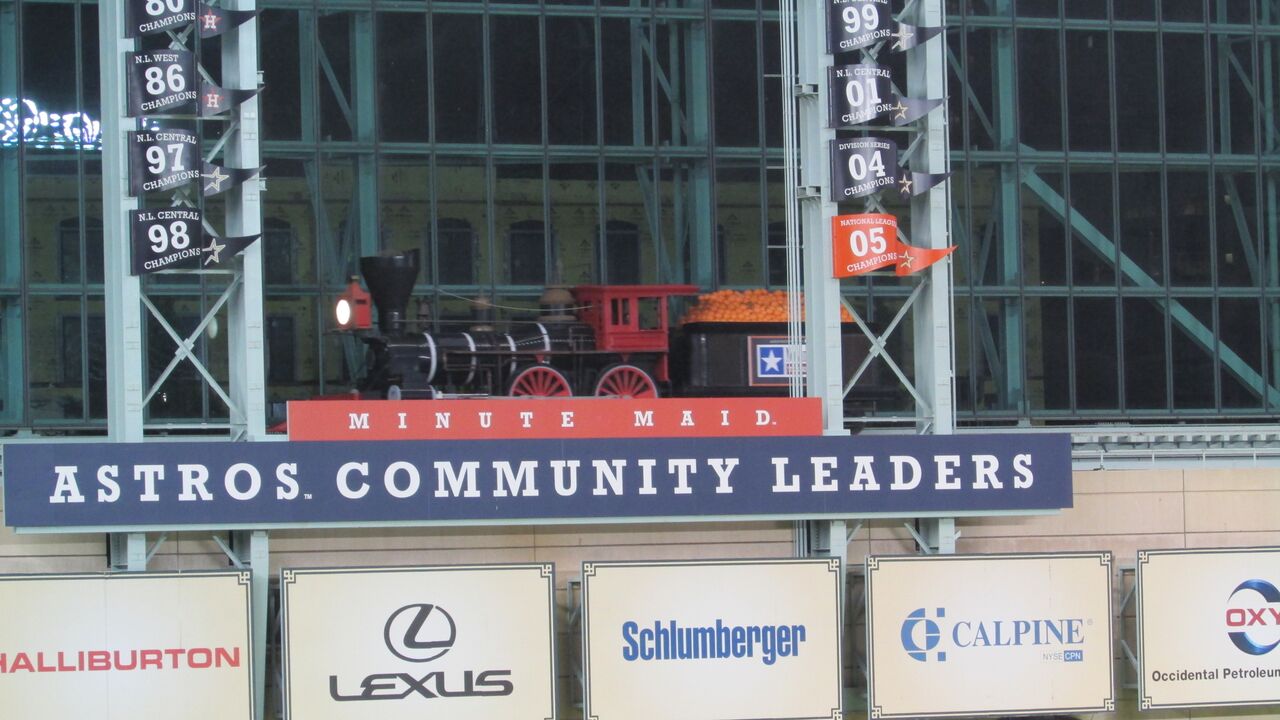
Cricket has some qualities U.S. sports fans might appreciate, most notably offense. In baseball, an announcer might suggest that an overeager hitter on a team trailing by half a dozen runs tried to “hit a six-run homer.” In cricket, batters do hit six-run homers (aka “boundaries”). While it’s not easy to hit one per se, they happen often enough that chicks who dig the longball will have a lot to cheer. In Houston, six-run shots induced the Astros to set off the home run scoreboard graphics and start the stadium’s train in motion the same way they would have had Chris Carter or Evan Gattis gone yard. The ’Stros finished second in the American League with 230 home runs, but one of these teams might eclipse that total in a single long homestand.


Because the rules mandate using the same ball for long periods of the match, you do have to throw it back on a six, even if your team hit it. The scoreboard needed to occasionally show the American audience a graphic reading: “Can we have our ball back?”

You’ll also see athletic fielding plays and amazing ball control from bowlers. A match doesn’t have to take forever, either. The Twenty20 format played on this tour takes threeish hours to play, a far cry from the days-long test matches many Americans may associate with cricket.
The most important reasons these men feel the world should embrace the sport, however, might be ones that extend past the playing field.

“Cricket is a unique sport because it goes just beyond hitting a ball with a bat. It teaches you a lot of good values that stand you in good stead in life,” said Sangakkara. “Cricket has something great to offer for any young kid playing the sport, be it in the U.S. or be it anywhere else in the world. Us playing here is to ensure that kids are inspired to take up this wonderful sport.”

MMA, poker, soccer, e-sports, rugby union, lacrosse, and other pastimes have started to make inroads into the world’s most important commercial market in recent years. There’s no set formula for taking a sport from small-time to big-time in the U.S.

The All-Stars hope their tour concept will be a catalyst toward Americans considering their game to be, well, cricket.

Tendulkar believes that process has begun.

“It will take time for Americans to pick up a cricket bat, and to understand what cricket is all about, but it has started, for sure. That much I can guarantee.”


Rush Olson has spent two decades directing creative efforts for sports teams and broadcasters. He currently creates ad campaigns and related creative projects for sports entities through his company, Rush Olson Creative & Sports.

RushOlson.com

Linkedin.com/company/rush-olson-creative-&-sports

Facebook.com/RushOlsonCreativeandSports
Thursday, September 10, 2015

Fantasy Football Slackers

This post originally appeared on the Blotch page at the Fort Worth Weekly. To read it on their site : http://www.fwweekly.com/2015/09/09/fantasy-football-slackers/


Russel and RushRussel and Rush
At this time of year, I get sort of annoyed with my friend Russell.
That’s not actually fair to him. Russell is a good guy with a lovely family and he’s a fine citizen, with no outstanding warrants to my knowledge. The reason I’m vexed with Russell is quite unreasonable, actually : he’s not a football fan and therefore doesn’t play fantasy football.
Of course, I shouldn’t be bothered by him;  It’s me and my football issues that are the problem. I feel like I’m dead weight in my fantasy league. There, I said it, got it out in the open (exhale). I’m that guy who fails to update his roster for weeks on end. If my quarterback is in a bye week or sustains a season-ending hangnail, my opponent that week pretty much gets a free win. I let the computer autodraft for me. In short, I’m apathetic.
The thing is, I’m very much not apathetic about sports, as the three or four of you (including my father and editor) who read this column regularly may know. My problem is one of self-control.
I could easily get carried away with fantasy sports. I’d love to munch data and micromanage a roster like crazy. Constant monitoring of the latest league-wide minutiae, however, would require oodles of time a business owner doesn’t have. So I don’t even try fantasy sports like baseball and hockey that play lots of games. Football’s once-a-week approach better tolerates indifference.
I forced myself to adopt this approach a few years ago after spending a sizable amount of time researching players and preparing a draft list for a league in which I used to play. I even created a logo (sorry for the trademark infringement –  it was right after the XFL’s bold experiment). We got into the season and I got busy with some work stuff and forgot to update my roster to remove a key player on his bye week. I lost that week, of course, and heard about it from the guy vying with my opponent in the standings. He was right : My inattention was bogus. When that league decided to raise the entry fee to $100 the next year, I decided I needed to either go hard or go home. I went home.
Luckily, a good friend named Trent runs a fantasy league and he offered to let me in despite my likely failings as an owner.
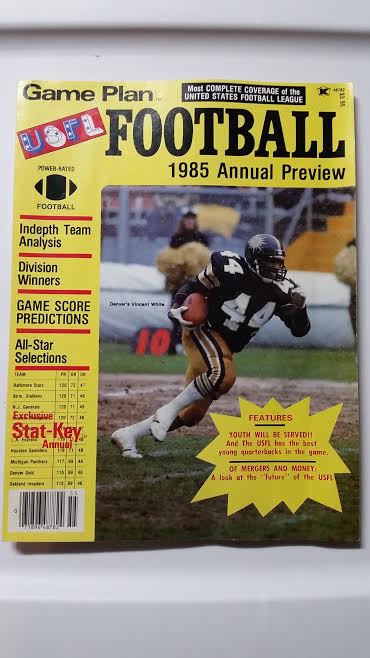
Trent is a fantasy sports guru. He’s won a number of leagues and in high school, he even ran a USFL league (which he won). In those pre-internet days, we couldn’t have spent all our time gathering data on that league even if we had wanted to. We drafted by passing around the same preseason preview magazine and basically picking random names. Trent guessed right on Jim Kelly and John Jenkins’ Run-and-Shoot offense.
Maybe Trent allows me to play in his league because he’s a good guy (he is) or maybe he’s keen to get that occasional free win when I forget that some All-Pro running back or other has been on injured reserve for three weeks. Whatever the reason, Trent has assured my that my detachment would be OK with him and the XFL Rejects were welcomed (maybe too strong a word there) into the circuit known as “Fractional Points Rule.”
In the ensuing years, I actually managed to win the league once, although in the depths of my apathy I had forgotten it until the commish reminded me in the course of researching this article. Autodraft stuck me with Peyton Manning and he went nuts that year. I tend to feel bad when I beat someone, knowing it’s all luck. The one bit of work I have actually put into it the last couple years (other than really trying to occasionally, every once in a while, remember to adjust my roster if someone has a bye week) is to cut any Redskins the computer drafts for me. As a Cowboy fan, I realized it diminished my enjoyment of football on Sundays to cheer for any part of the team with the least sensitive name in pro sports. I dropped Alfred Morris the year after he gained 1600 yards just because of his team affiliation. I didn’t win many games that year, but I also didn’t experience the angst of having to root for him to shred the Pokes’ D twice that season.
You’ve now heard my fantasy football confession and you’re probably thinking : “How does this involve that Russell guy?” Well, see, when Trent first started the league he got Russell to join it. As a math genius, Russell could really make hay with advanced statistical analysis if he wanted to, but he just doesn’t really like football. So after a few years, he dropped out of Fractional Points Rule.
I hated that, because as long as Russell had a team, there was someone in the league more apathetic than me. Now I was on my own, my lethargy exposed to the world. It was tough to swallow.
Thus I’ve decided to make a guy who’s been a loyal comrade since 7th grade the scapegoat for my fake football failings. I realize this situation is really on Trent and me. We had four years of high school to help Russ realize how rewarding obsessing over sports can be and we failed. Kind of like the XFL Rejects will do again this year.


Rush Olson has spent two decades directing creative efforts for sports teams and broadcasters. He currently creates ad campaigns and related creative projects for sports entities through his company, Rush Olson Creative & Sports.

Tuesday, September 1, 2015

Harlequins : Onside with Rugby in the U.S.

We have a special video blog this week, created in conjunction with our partners at the Fort Worth Weekly and Ludisian Legion Entertainment. It's got interesting sports business insights and sound bites from a cool kid we met.


Rush Olson has spent two decades directing creative efforts for sports teams and broadcasters. He currently creates ad campaigns and related creative projects for sports entities through his company, Rush Olson Creative & Sports.

Wednesday, July 15, 2015

A Presidential Lineup

This post originally appeared on the Blotch page at the Fort Worth Weekly. To read it on their site : http://www.fwweekly.com/2015/07/14/a-presidential-lineup/

The old saying about the Washington Senators, as coined by baseball writer Charles Dryden, always went: “First in war, first in peace, last in the American League.” The Sens did tend to find themselves at the caboose end of their annual whistle stop tour of the A.L. They finished in the second division 41 times between 1901 and their move to Minnesota after the 1960 season. And the powerful people of D.C. could do nothing about it.
Rush 1
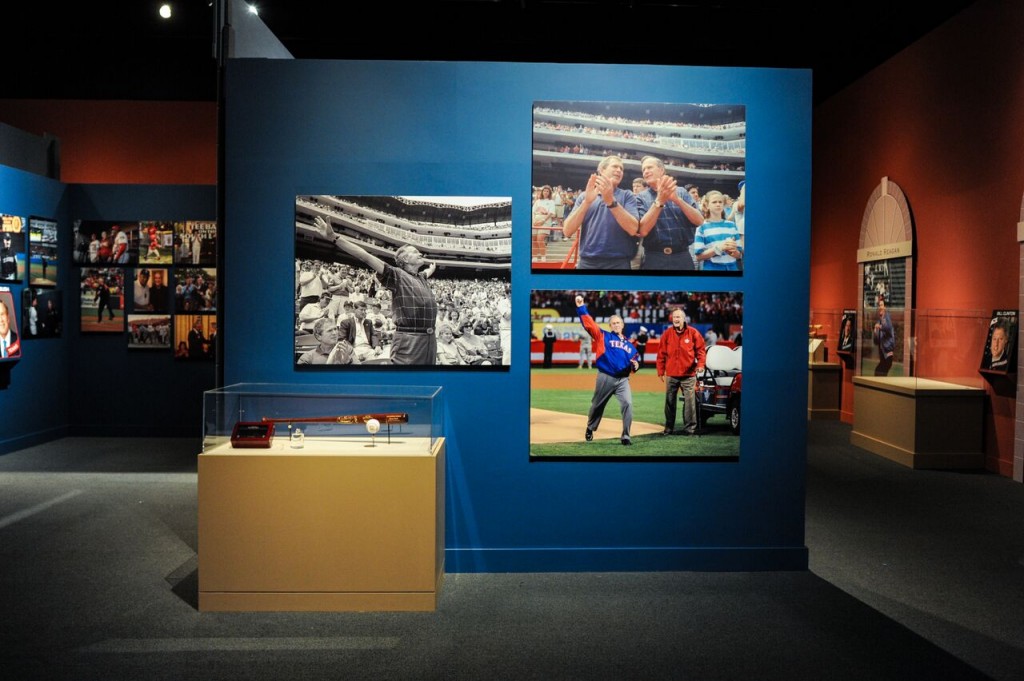
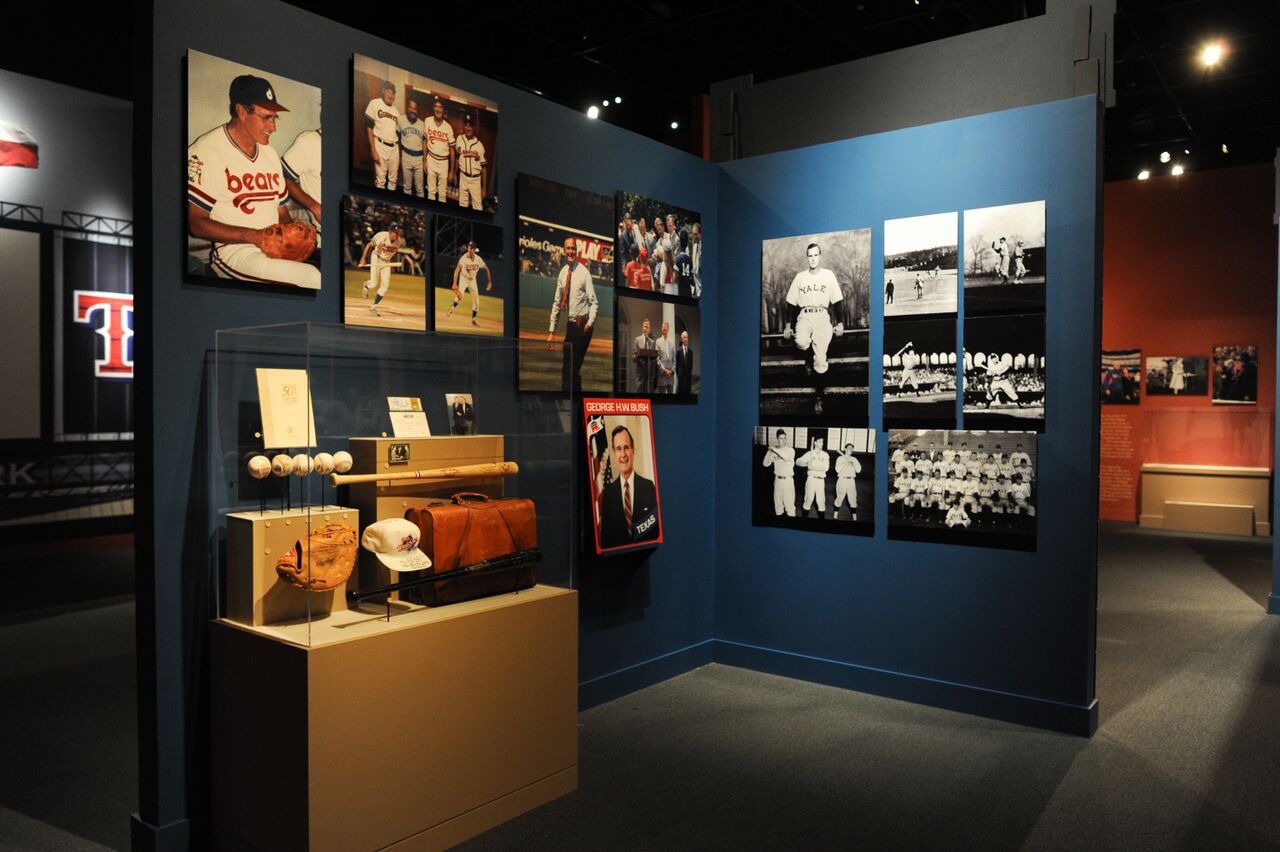
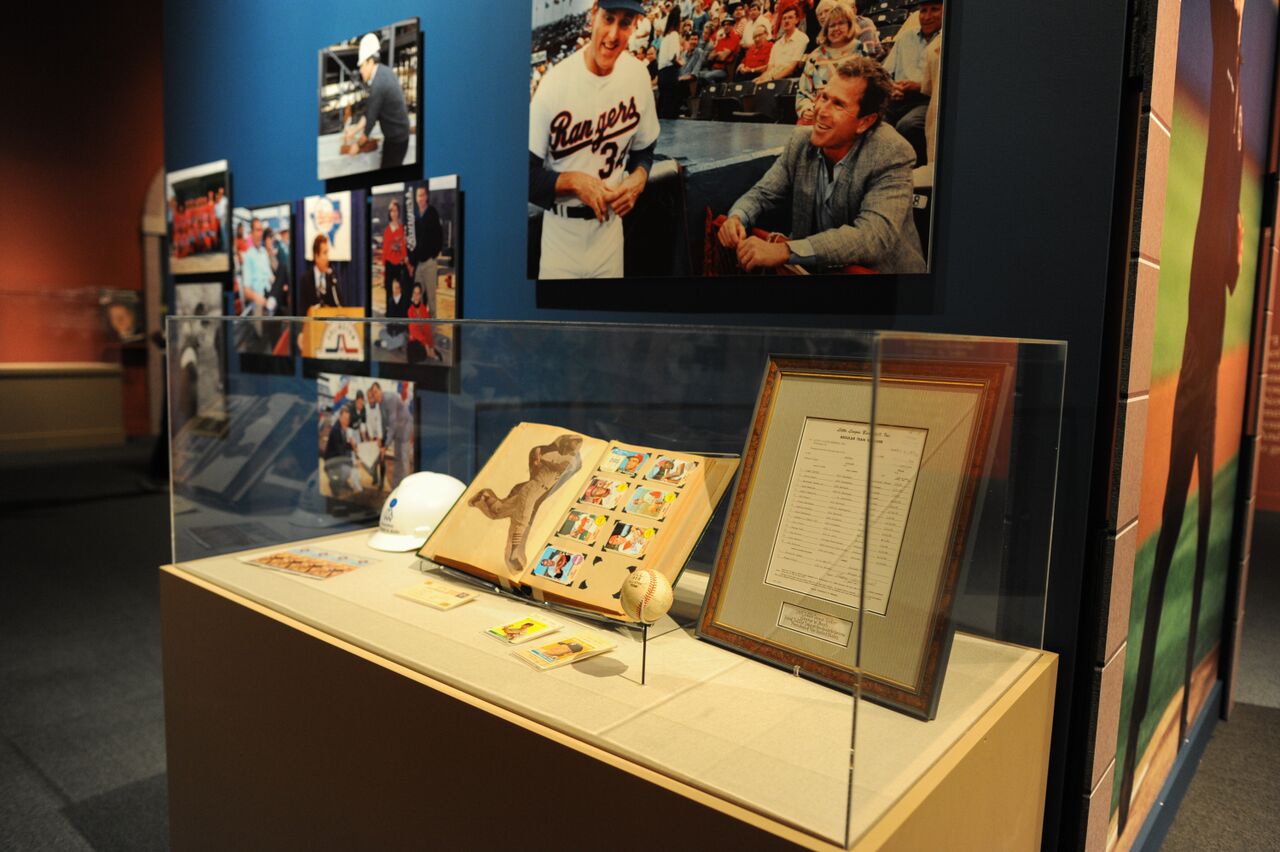
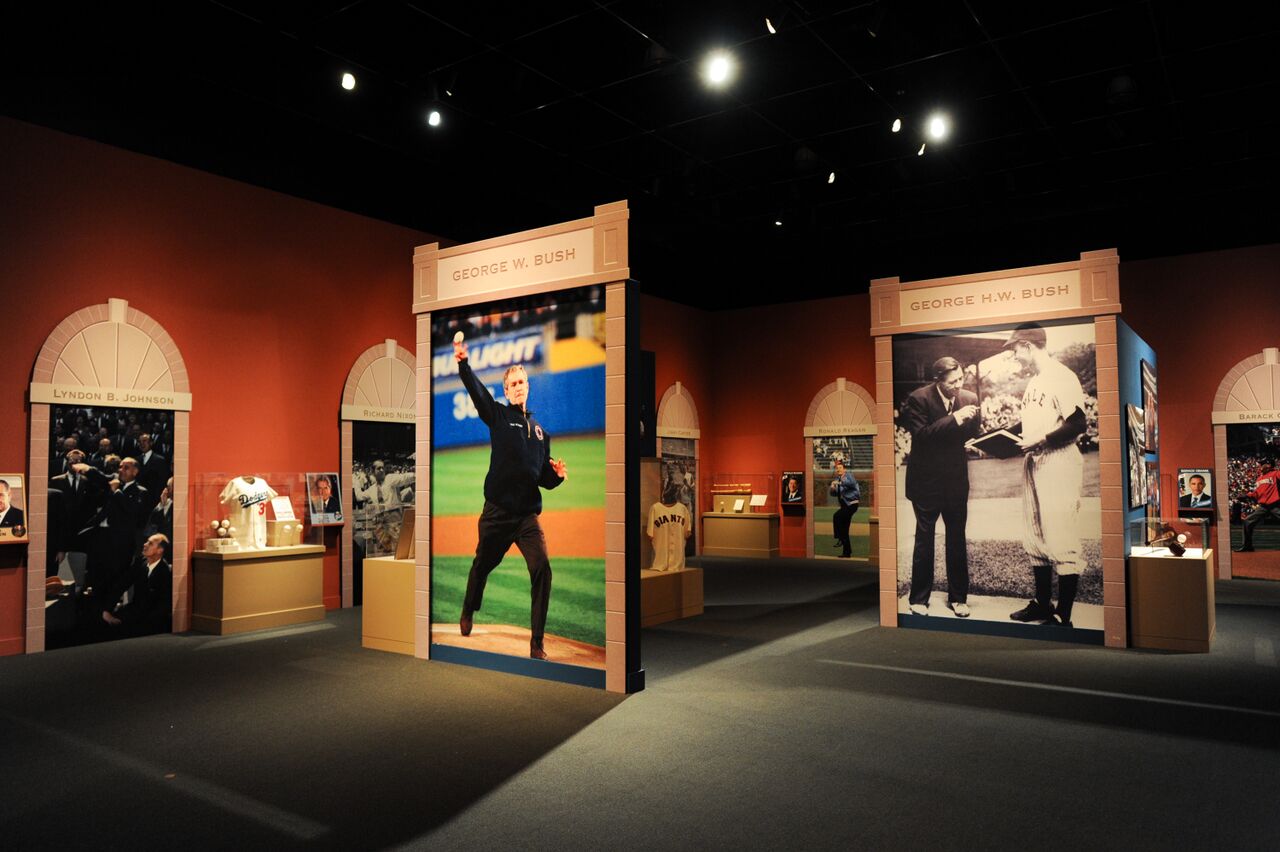
Baseball: America’s Presidents, America’s Pastime, the current special exhibit on display through October 4 at Dallas’ George W. Bush Presidential Library and Museum, covers the sport of baseball and how U.S. presidents interacted with it. So that could beg the question:  What if the most powerful man in the world could do something about what happened on the field? Not by signing a minimum-run bill or conducting NSA-style surveillance on the Astros’ front office (that’s apparently already been done, anyway), but by actually contributing on the diamond.
If you had to pick any president to start a baseball team, whom would you choose?
Most presidents since the beginning of the 20th century have thrown at least one pitch a year. William Howard Taft began the practice of tossing ceremonial first pitches. On April 14, 1910, Taft addressed a women’s suffrage convention, then went to American League Park, where the Senators played their home games at the time. He threw out the ceremonial first pitch of the season to Walter Johnson. The Hall-of-Famer Johnson then threw a one-hitter in a 3-0 Sens Opening Day win against the Philadelphia Athletics.
The tradition continued, and, in fact, Barack Obama threw out a first pitch on the 100th anniversary of Taft’s inaugural presidential delivery.
One pitch, however, does not a Sabermetric analysis make.  Luckily, the exhibit had some information on which presidents actually played baseball, plus their heights, weights, and records of offices held.
With baseball known as the National Pastime, it follows that a lot of the National Heads of State have played the game. After reviewing the information, I speculated on how a GM might assemble an all-Presidential team. As you listen to their games broadcast by former Cubs play-by-play announcer Ronald Reagan, keep in mind that I’ve assigned them positions based on available knowledge of where they actually played or where their abilities would seem to place them.  It’s all subject to change, of course, because when you’re the Commander in Chief, you can really play whatever position you want to.
1B : George H. W. Bush
This is probably the guy with whom you start the team. He played D-1 baseball and captained his Yale squad to the first two College World Series tournaments in 1947 and 1948.  A 1990 Topps baseball card of Bush 41 indicates he hit .251 (with a wood bat) in 175 at-bats those two years, some of which came against future Major Leaguers. He socked two home runs and eight doubles.
According to William Mead and Paul Dickson in their book Baseball: The Presidents’ Game, Bush 41 was probably the best natural ballplayer of all the presidents. John Sayle Watterson, in his book The Games Presidents Play: Sports and the Presidency, ranks George H.W. Bush as the top overall presidential athlete.
2B: Woodrow Wilson
He played college ball as a freshman at Davidson, so he must have had some ability, although Watterson ranks him as one of the least athletic presidents. Wilson loved baseball, attending many games after he left office. Perhaps he would have been a David Eckstein sort of player, who doesn’t look like a good ballplayer but finds a way to get it done. On the other hand, Baseball Almanac cites this contemporary observation about the 28th president: “’Wilson would be a good player if he weren’t so damned lazy.’ – Comment by the Team Captain of Wilson’s Davidson College.”
SS: Herbert Hoover
Hoover loved baseball and played shortstop at Stanford as a freshman. Ted Williams (known for being the Rangers’ first manager, among other things) considered him America’s greatest president.
3B: Warren Harding
He played first base as a boy, but we’re moving him across the diamond because the team’s top player occupies that position. Baseball Almanac reports that Harding played in a charity game in 1920 and injured his finger.
C: William Howard Taft
According to Mead and Dickson, there are accounts that Taft was a young catcher who would have had a contract with the Cincinnati Red Stockings had he not injured his arm. Taft loved the game, though he missed throwing out the first pitch in 1912 due to an understandable preoccupation with the recent Titanic shipwreck. At more than 300 pounds, the 27th president probably isn’t your leadoff hitter, but might be your Prince Fielder in the middle of the order.
LF: John Kennedy
One of the best presidential athletes, Kennedy grew up a Red Sox fan. He concentrated more on other sports, like swimming, but I think he’d be projectable as at least a good defensive outfielder.
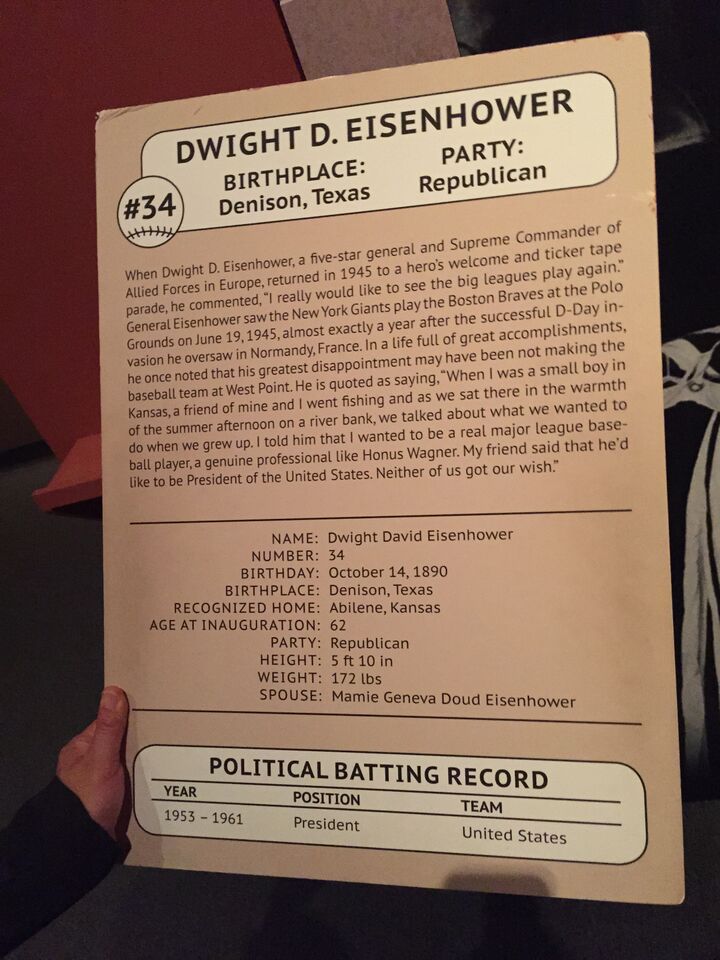
CF: Dwight Eisenhower
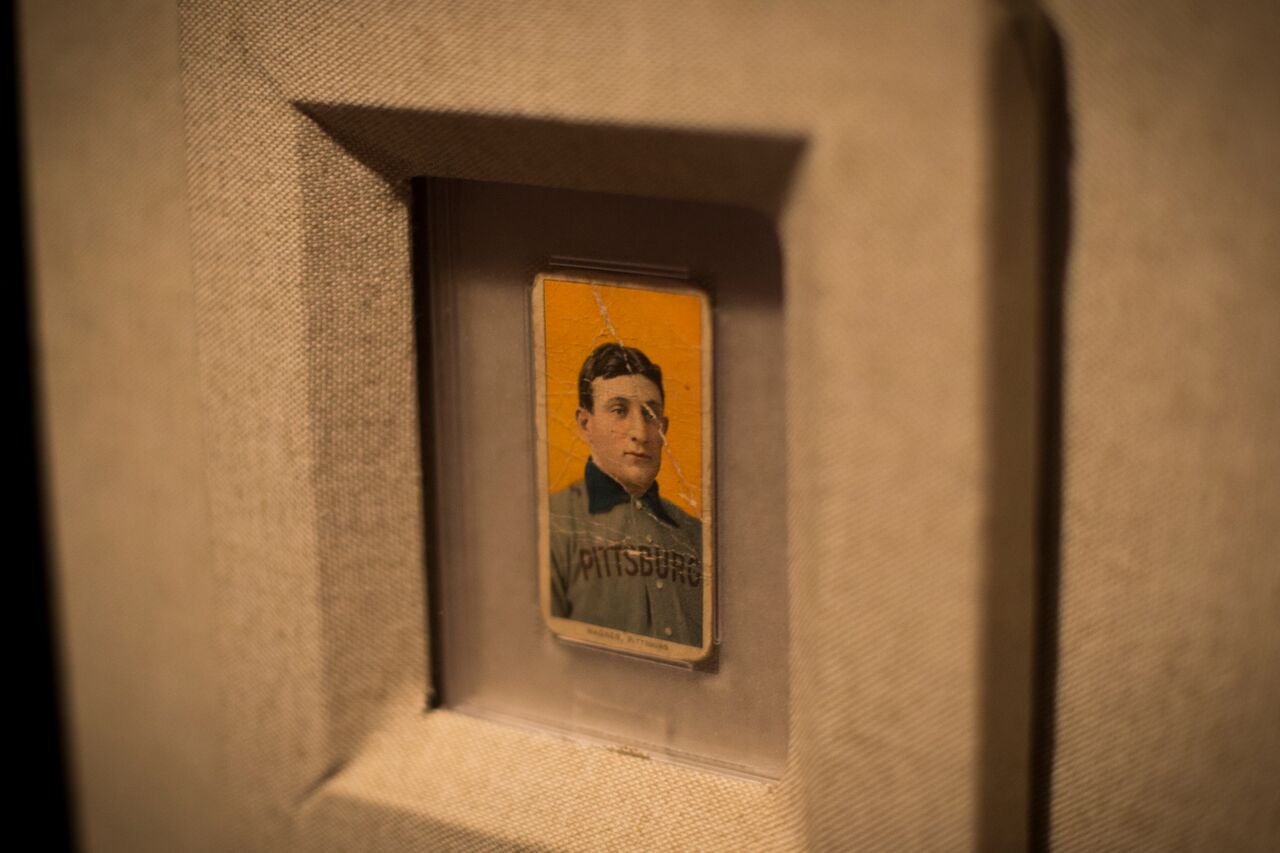
The general loved baseball, but didn’t make the West Point team.  He wanted to be a ballplayer like Honus Wagner growing up, which is relevant here because the museum just added to its exhibit the most valuable and famous baseball card around, a T-206 Honus Wagner.
RF: Gerald Ford
Ford was an excellent athlete, having played football at Michigan. He played baseball growing up as well, and Baseball Almanac reports him as having said “I had a life-long ambition to be a professional baseball player, but nobody would sign me.” He played on the Congressional baseball team before occupying the Oval Office.
LOOGYs (left-handed-one-out-guy): Barack Obama and Bill Clinton
This isn’t a joke based on their politics. They both throw left-handed and a team needs situational southpaws. Clinton listened to Cardinals games growing up and later rooted for his wife’s favored Cubs. Obama likes the White Sox. Based on the video I’ve seen, Clinton looks to be the most game-ready. Obama, a fine basketball player, may have to take the Michael Jordan path and spend some time in the White Sox minor league system as he converts to a different sport.
Pat Venditte’s Position : Harry Truman
Truman could throw with either arm. He didn’t play that much as a kid, but loved the game and attended more games while in office than any other president. His wife Bess was apparently considered the best third baseman in Independence, Missouri as a young person, a fact one learns in the First Ladies section of the exhibit.
By the way, are there a kids in third-world countries wearing “Congratulations, President Dewey” shirts?
Closer: Abraham Lincoln
Lincoln apparently played ballgames on the White House lawn with local kids and had a baseball field built behind the White House. We don’t know his true position, but with his height, I am thinking he could throw some heat on a serious downward plane. If he can learn a breaking pitch, he could be a dominating closer.
RHP: Jimmy Carter
Carter pitched growing up and continued playing softball during his presidency. His mom loved the Dodgers and the exhibit shows a letter Carter wrote to Los Angeles owner Peter O’Malley thanking him for treating his mom well. Carter attended Game 7 of 1979 World Series but never threw out a first pitch as president. That’s kind of Arlington’s fault. Texas persuaded the Senators (an expansion franchise that replaced the one that moved to Minnesota) to vacate the nation’s capital in 1972. Presidents had no Washington team to patronize until the Nationals arrived during the Bush 43 administration.
RHP: George W. Bush
The younger Bush played on the Yale freshman team but didn’t progress to the varsity. Still, even playing at that level puts him ahead of most of us. Where the 43rd president would prove especially valuable to your team-building would be in actually building it. He spent time as Managing General Partner of the Texas Rangers.
“One of the pleasant surprises for all of us, not knowing him when he put the group together to buy the team, turned out to be how much of a student of the game that he really was,” said Tom Grieve, who served as Rangers General Manager under Bush. “It was obvious when you talked to him that he knew the history of the game. He could quote lineups from 30-40 years ago. He loved baseball.“
Bush no doubt absorbed a lot of knowledge about building a ballclub through his interactions with the Rangers baseball operations staff
“He was in a lot of meetings. He asked a lot of questions,” explained Grieve. He never imposed his will or his thoughts on anybody else, but he was very aware of everything that went on in the baseball operation. He wanted to know about it.”
For his Assistant to the General Manager positions, Bush might choose Bill Clinton, who got involved in resolving the 1994 baseball strike or Richard Nixon, a huge baseball aficionado who turned down offers to head the MLB Players Association and to become MLB Commissioner. Also, Warren Harding owned part of the Marion, Ohio town team, which developed future Major Leaguers Wilbur Cooper and Jake Daubert.
Bush 43 had one of the most poignant presidential baseball moments when he threw out the first pitch at Yankee Stadium in October, 2001, shortly after the September 11 attacks. It was Game 3 of the Yankees/Diamondbacks World Series. Yankees (and former Rangers) catcher Todd Greene caught the pitch.
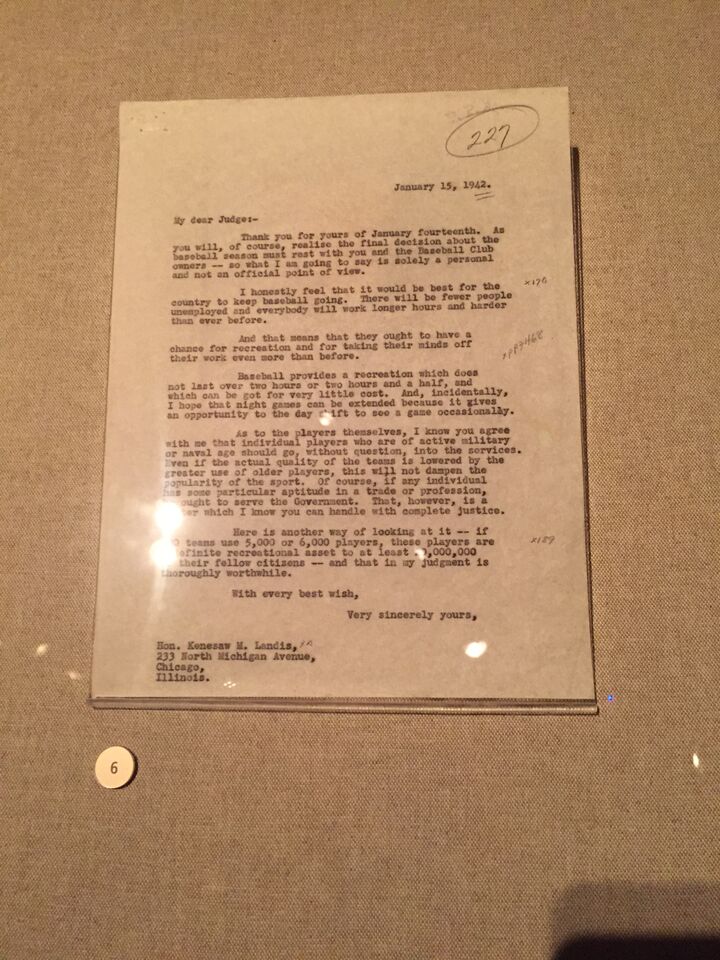
The exhibit talks about all the ways presidents impacted the game beyond just playing it. Perhaps the most historically significant artifact comes courtesy of Franklin D. Roosevelt. In 1942, he wrote the famous “green light letter” to Kennesaw Mountain Landis urging baseball’s commissioner to keep the game going during the war.
Most of the information for this article came, quite naturally, from the backs of baseball cards. In this case, we mean oversized cards in the exhibit you can pull off the wall and flip over to discover facts about baseball and presidents.
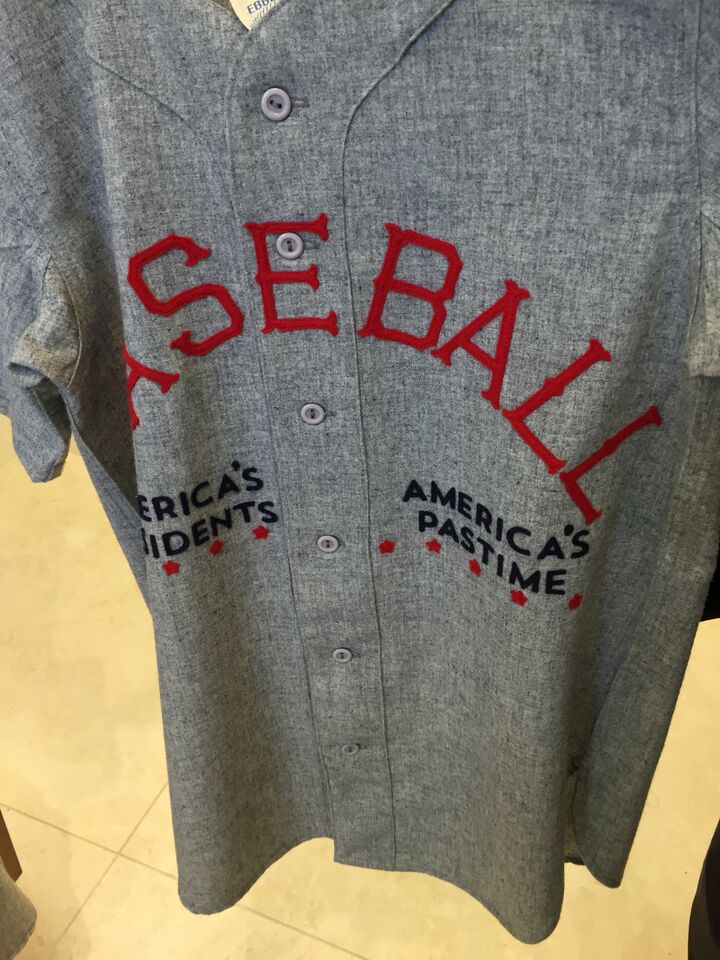
Many of the artifacts in the exhibit came from presidential libraries and the National Baseball Hall of Fame in Cooperstown, New York. You’ll learn a lot, with details ranging from how George Washington played catch at Valley Forge, to why the athletically inclined Teddy Roosevelt disliked the sport, to a display of the jersey movie actor Ronald Reagan wore when portraying a ballplayer named after a president. There’s a video about baseball and presidents, narrated by the Bush Center’s Scott Robertson. Its highlight might be footage of Bush 43 at 2001 World Series where you see how the Secret Service did its thing, including an agent dressing up as umpire. And, of course, there’s a souvenir stand. You can pick up exhibit-branded jerseys, pins, and postcards, plus the inevitable baseball autograph (George W. Bush’s, on a $100 copy of his book about his father).
With a big baseball event on national television tonight, we’re reminded of an election none of these professional politicians would have likely won, even if they had continued to pursue power hitting instead of executive power: selection to the MLB All-Star Game.
Which begs the question of whether the public should actually elect All-Star starters or leave it up to a system of electors equal to the number of total congresspersons. We’ll address that in a future blog post.
Disclosure : The Bush Center sometimes pays me to help produce their webcasts. Also, I once had a dog called “Hoover.” He was named after a president, but not of the United States. I named him for the president of Delta House.


Rush Olson has spent two decades directing creative efforts for sports teams and broadcasters. He currently creates ad campaigns and related creative projects for sports entities through his company, Rush Olson Creative & Sports.

RushOlson.com
Linkedin.com/company/rush-olson-creative-&-sports
Facebook.com/RushOlsonCreativeandSports