Showing posts with label Texas football. Show all posts

Thursday, March 2, 2017

Leicester and Longhorns and Aggies, Oh My

This post originally appeared at the Fort Worth Weekly's website. To view it there : https://www.fwweekly.com/2017/03/01/sports-rush-leicester-and-longhorns-and-aggies-oh-my/

A lot of Longhorns and Aggies probably looked at Leicester City F.C. this week and said, “oh yeah, we’ve been there.”

OK, in actuality, they probably didn’t. In their defense, the Leicester folks likely didn’t spend much time considering the Texas A&M and University of Texas athletic experiences in their calculations, either.

Here’s what happened. Last week, English soccer club Leicester City fired its manager, Claudio Ranieri. The team has not played well this season in the Premier League and currently sits just two points clear of relegation. A bottom-three place in the standings means they would drop a level next year and have to earn their way back to the major leagues.

Relegation can devastate a club, and It’s not terribly unusual for a team performing poorly in any sport to jettison its manager during the season. In the Prem, bottom-half performers Hull City, Swansea City, and Crystal Palace had already done so. But here’s the thing : none of those clubs won the league last year. Leicester City did, taking home a top-fight crown for the first time in its history.
Of course, they had finished second once before – in 1929. For most of their existence, the Foxes would have been happy to just to take up a standings place in the best competition, and they haven’t done so consistently. As recently as 2009, they played a season two rungs below the top level. So it was generally acknowledged that what they did last year was amazing. And unprecedented. And a Red-Sea-parting-grade miracle.

The veteran Italian manager took that team to those heights and was generally given a decent amount of credit for playing a significant role in the process. This season he’s faced criticism for his offseason moves and his coaching. None of us really know what has gone on behind-the-scenes at Leicester, but one wonders if it had truly reached a point where Ranieri was not good enough to coach the team any more, less than a year after leading them to the best moment in team history.

The situation reminded me of the big state schools in Texas. I specifically thought of three coaches : R.C. Slocum, Rick Barnes, and Mack Brown. All had virtually unprecedented success and all effectively lost their jobs due in part to outsized expectations.

Slocum, a College Football Hall of Fame inductee, coached the Aggies from 1989 to 2002. He never had a losing season and won in double digits five times. The program had a total of six 10-plus-win seasons in the 86 years prior to Slocum’s arrival and has had one since his departure.

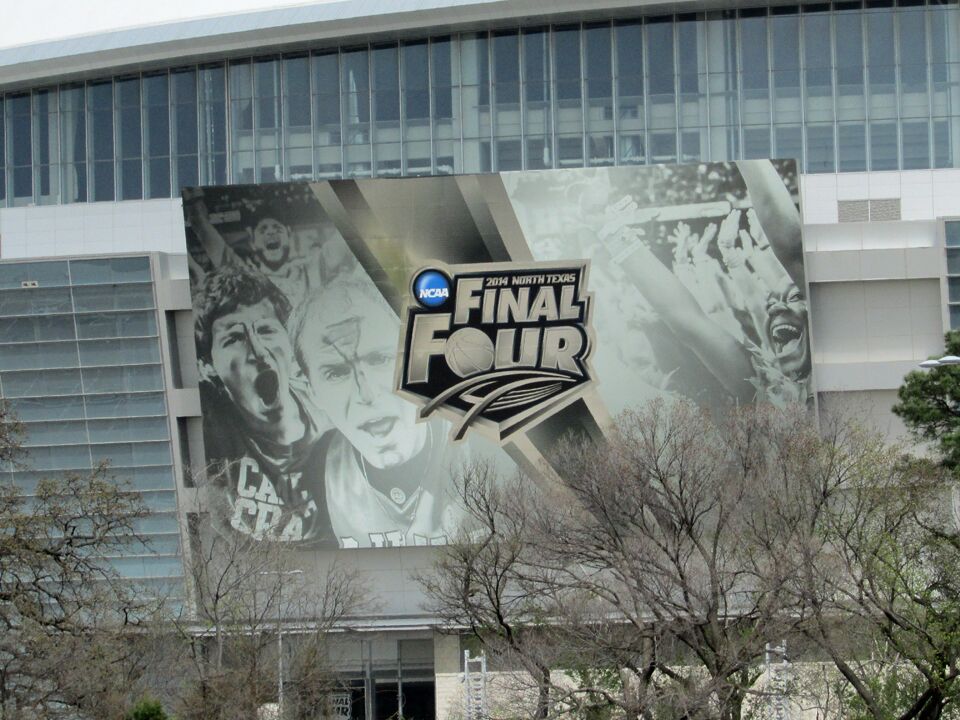
Barnes coached seventeen seasons of men’s basketball at the University of Texas before being fired two years ago. The Longhorns made the NCAA Tournament in all but one of those. He took them to their first Final Four since the 1940s. Other than his immediate predecessor, Tom Penders, no Texas coach, not even the legendary Abe Lemons, had gotten the school to more than one NCAA Tourney (though the criteria were admittedly more stringent before the field expanded). He owns the top winning percentage of any UT coach since the 1930s.
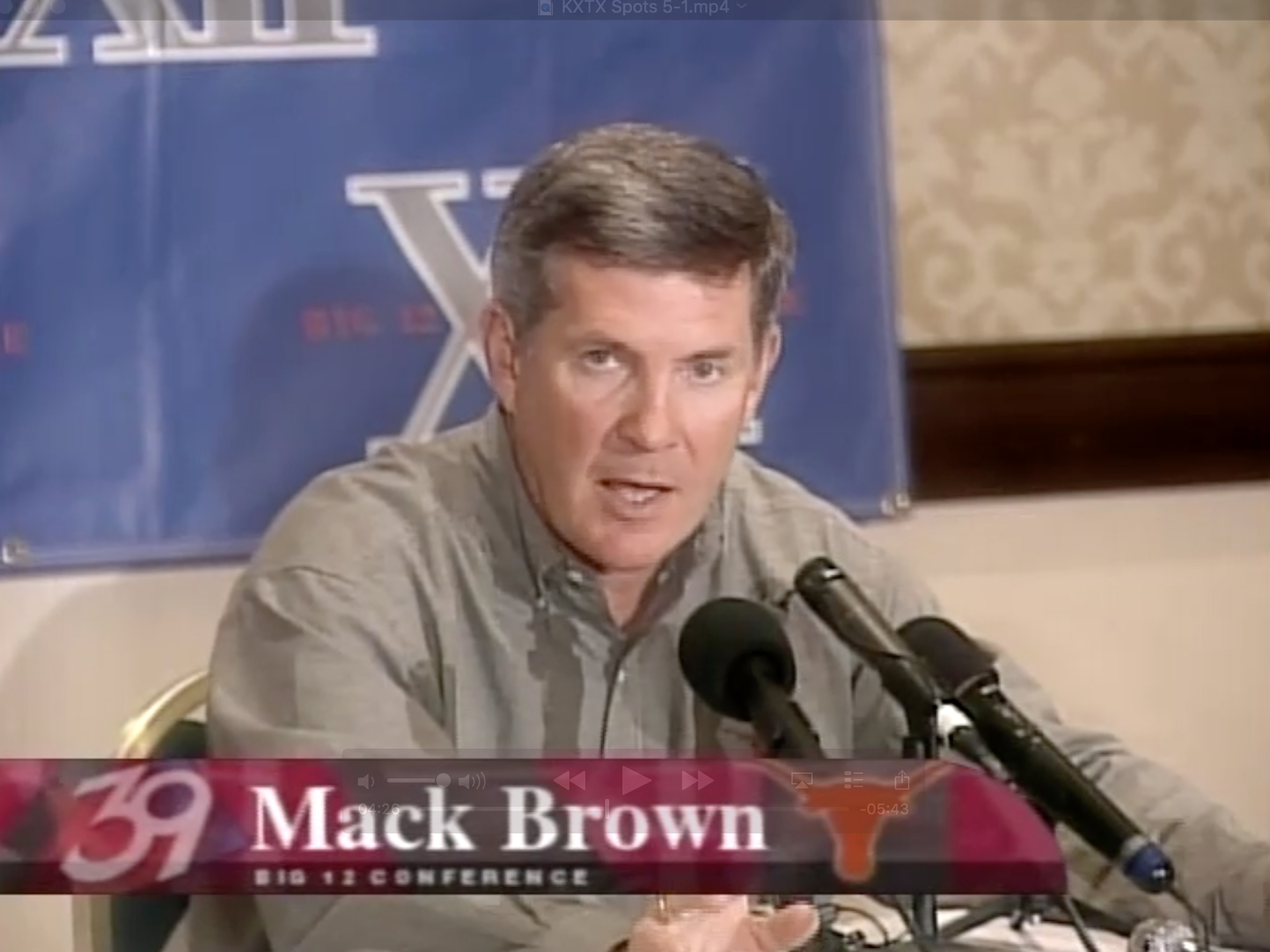
Mack BrownAs Texas’ football coach from 1998-2013, Brown put up nine years of 10 or more wins against a single losing season. He won a national title and got his team to a second championship game (they kept that one close against Alabama despite losing starting quarterback and future NFL-er Colt McCoy to an injury in the first quarter). Brown measured up against the legacy of Darrell Royal better than any of the legend’s other successors had. The program has not had a winning record since Brown moved into a special assistant role.

So why might these three have been good for Leicester to know about prior to making their decision to terminate Ranieri? Because sometimes you have to appreciate what you have. A&M football before Slocum was not a consistent winner. They won three conference titles between 1942 and 1984. While Penders started to put Texas basketball on the map, Barnes established it there, something no coach had done before. And though Texas had a strong football tradition before Brown, he took it to a level seen only once before in the program’s history, and in a different sort of era.

Past performance is certainly no guarantee of future results. Any of these coaches might well have failed to maintain the program at the level to which he had gotten it. Sometimes, however, one has to understand how hard it is to win all the time against high-level competition – and it is really hard. Maybe those in charge saw some sort of slippage in approach or work ethic from Ranieri, Slocum, Brown, and Barnes. Maybe declines in those programs would have accelerated with them in charge. But it has always seemed to me that when someone has had success, especially where none was to be found before, one should take a long hard look at the possibility of taking a step back when making a change. Scores of schools will never win a national championship, and sometimes if you try too hard to take that next step, you end up taking two leaps in the other direction instead.

Will it happen in Leicester? Will time prove their decision a correct one? What are the expectations? If they expect hardware every year, history might indicate they will have miscalculated. Of course, they do still have hopes of a trophy this season. A 1-0 win March 14 against Sevilla would propel the Foxes into the final eight of the Champions League, the most prestigious competition in club soccer. That’s where Ranieri had gotten them this year. It wasn’t good enough.


Rush Olson has spent two decades directing creative efforts for sports teams and broadcasters. He currently creates ad campaigns, television programs, and related creative projects for sports entities through Rush Olson Creative & Sports and FourNine Productions.

RushOlson.com
Linkedin.com/company/rush-olson-creative-&-sports
Facebook.com/RushOlsonCreativeandSports

Tuesday, February 7, 2017

Is It Good TCU Didn't Go Big?

This post originally appeared at the Fort Worth Weekly's website. To view it there : https://www.fwweekly.com/2017/02/07/sports-rush-maybe-its-good-tcu-didnt-go-big/


Fort Worth teems with good people. I was born and raised in Cowtown and can’t imagine a more warm-hearted bunch of folks.

Persons of quality character – like the ones in Funkytown – can often resist the temptation to compromise their morals for the sake of worldly gain. It’s best if they don’t have to, though. A little over 20 years ago, circumstances kept a group of locals from having to make some choices that certain neighbors of ours haven’t handled well.

You’ve perhaps followed recent developments in Baylor football. Over the last year, an apparent pattern of widespread misconduct in the supervision of the football program has led to personnel changes and lawsuits. The most recent allegations, if true, illuminate a culture in which conscience seemed to have had no place in the discussion. They also indicate that such attitudes were held by top school administrators, coaches, boosters, and even local law enforcement personnel. The ethically indifferent approach seems to have facilitated sexual assaults and other offensive crimes.

Make no mistake, we’re talking about serious charges. This is not buying a bus ticket for a player to go see his family for the holidays. This isn’t even letting him drive a free Lexus. This is actual criminal activity.

Some people’s jobs depended on football success. The boosters may have done it for the chance to feel reflected glory from a school they used to attend. They all allegedly decided those rewards outweighed any potential long-term repercussions or personal sense of shame.

The Waco university has experienced scandal before. In 2003, a former Baylor basketball player killed a teammate. A corrupt coach tried to use the murder to help him cover up NCAA violations. In 2012, both the men’s and women’s basketball programs received sanctions from the governing body.

The Baylor Bears compete in the Big 12 conference, one of the country’s top five Division 1 athletic conferences. Since its formation, the league’s schools have won national titles in 17 different sports (including two by Baylor in women’s hoops). Competing for such stakes intensifies the pressure to win. It also boosts the potential reward for boosters’ egos and staffers’ career paths.

So how does all of this concern TCU and nice Fort Worth people? Well, Baylor got into the Big 12 in large part because TCU did not. That happened back in 1996 and at the time caused a great deal of local upset. TCU trudged off to the Western Athletic Conference, then Conference USA and the Mountain West before recently winding up in the conference that had shut them out before.

Over those years, TCU kept a lower profile than its neighbor 90 minutes to the south. That had to be frustrating for Frog fans, but not competing against the UTs, A&Ms, and Techs in high-stakes matchups also kept it out of emotionally-charged rivalries with those huge taxpayer-financed institutions. Horned Frogs didn’t have to hear from Longhorns or Aggies about getting trounced year after year in the marquee sports like Bears supporters did.
I think that was a good thing for TCU. If they had been the lone private school to get into the Big 12, they would have had to endure the heightened expectations of trying to compete as the smallest member of the conference against subsidized rivals – as Baylor did. Less pressure means less incentive to find a way to work around the rules, be they ones of athletic associations or common decency. The Frogs have gradually built up some remarkable football achievements in the Franchione/Patterson era with a sparse record of disciplinary hiccups.

As noted earlier, Fort Worth is full of good people. The Horned Frogs might well have avoided a moral crisis no matter what conference they occupied the last 20-odd years. We do, however, have to keep in mind what happened to bring about the demise of the league they had joined in 1923.

The Southwest Conference collapsed in part because of the prestige its members lost due to widespread NCAA violations. TCU had its own 1980s transgressions, thanks to boosters paying student-athletes behind coach Jim Wacker’s back. But it’s another Christian school that might provide the best cautionary note. Southern Methodist’s delinquent culture didn’t result in criminal charges, but they did implicate the governor of Texas (Bill Clements) and the sanctions they received forced the cancellation of two full football seasons – the death penalty.  Incidentally, the Mustangs’ men’s basketball coach for much of that era was found to have committed multiple violations at the school in his sport in the 1980s. Dave Bliss repeated that modus operandi when he coached Baylor in the early 2000s, culminating with his appalling approach to a homicide.

TCU doesn’t have to repeat past errors, whether their own or someone else’s. Hopefully for the Frogs, those years away from competing with their bigger in-state rivals have helped the university establish a healthy atmosphere for its athletic programs. Now that they are once again facing top-level foes in the Big 12, they will need it.

Rush Olson has spent two decades directing creative efforts for sports teams and broadcasters. He currently creates ad campaigns, television programs, and related creative projects for sports entities through Rush Olson Creative & Sports and FourNine Productions.

RushOlson.com
Linkedin.com/company/rush-olson-creative-&-sports
Facebook.com/RushOlsonCreativeandSports

Sunday, February 5, 2017

51 (or LI) Ways Fort Worth Connects to the Super Bowl

This post originally appeared on the Fort Worth Convention and Visitors Bureau blog. To read on that site : https://www.fortworth.com/blog/post/51-fort-worth-ties-to-the-super-bowl/

Super Bowl LI will be played as close to Fort Worth as any for the foreseeable future (sites have been scheduled through 2021). Houston hosts the 51st championship game on Feb. 5, 5:30PM CST, and while Fort Worth has never hosted the game, the city has made an impact on it.


On the field, players from Cowtown high schools and TCU have contributed. Outside the lines, Fort Worthians have performed anthems, acted in commercials, and helped get the big game on TV.

Here are 51 Fort Worth ties to the Super Bowl
 

I. TCU-ex Larry Brown earned the Super Bowl XXX Most Valuable Player honors for his cornerback play in the Cowboys' win over the Steelers.
II. Former Fort Worth resident Jessica Simpson sang at halftime of Super Bowl XXXVIII.
III. Byron Chamberlain of Eastern Hills High School caught three passes as the Denver Broncos won Super Bowl XXXIII.
IV. Former TCU star Kenneth Davis was on four Buffalo Bills Super Bowl teams.
V. Fort Worth-born author Dan Jenkins wrote the novel "Semi-Tough" about a fictitious Super Bowl matchup between the Giants and Jets.
VI. Polytechnic's Greg Hawthorne earned a ring with the Pittsburgh Steelers for Super Bowl XIV and also had a rushing attempt with the New England Patriots in SBXX. In 2015, he returned to visit his alma mater as part of the NFL’s Super Bowl High School Honor Roll program.
VII. Every year, the Davey O'Brien Foundation awards the Davey O'Brien Award to the player they judge to be nation’s best college quarterback. They hold the ceremony at the Fort Worth Club. Four players who won the award named after the former TCU star have also won Super Bowls: Troy Aikman, Peyton Manning, Jim McMahon and Steve Young.
VIII. Former TCU safety Colin Jones played for the Carolina Panthers in Super Bowl L (50).
IX. Jeris White was born in Fort Worth when his father was stationed here. He played the final game of his NFL career for the Washington Redkins in Super Bowl XVIII.
X. Fort Worth attorney Judy Mallett, Miss Texas 1973 and a graduate of both TCU and Texas Wesleyan Law School, played fiddle in the halftime show of Super Bowl VIII.
XI. Fort Worth Country Day alum Alan Cross appeared in a 2006 Super Bowl spot for Sprint (debuting a new feature for downloading songs to a phone - how cool is that?). Cross remembers asking the producers if he could keep his wardrobe, which is not uncommon, but they refused - apparently they had sprayed all the clothing with fire retardant because the cast had to run around a burning couch in the spot.
XII. Speaking of CDS graduates, Patrick Jeffers won Super Bowl XXXII as a member of the Denver Broncos.

XIII. Marshall Newhouse was the only ex-Horned Frog on either team's roster as he won a ring with Green Bay in Super Bowl XLV, the first played in Tarrant County. Newhouse was on injured reserve and didn't actually get to play in the game, but his cousin, Robert Newhouse, played in three Super Bowls for the Cowboys.
XIV. Trimble Tech's Henry Ford played defensive tackle for the Tennessee Titans in Super Bowl XXXIV.
XV. Fort Worth native Kirk Franklin co-hosted the NFL-sanctioned Super Bowl Gospel Celebration in New Orleans in 2013.
XVI. Former TCU Athletic Director Danny Morrison served as president of the Carolina Panthers during their Super Bowl appearance last year.
XVII. Fort Worth lawyer Bryan Wilson, aka The Texas Law Hawk, parlayed his internet video success into an appearance in a Super Bowl commercial for Taco Bell.
XVIII. Tommy Joe Crutcher played at TCU and at linebacker for the Green Bay Packers in the first two Super Bowls.
XIX. Crutcher was joined on those first two Packers Super Bowl teams by DB Doug Hart. Hart was born in Handley, which was later annexed by Fort Worth, and attended Handley High School.
XX. United Community Centers of Ft. Worth participated in the Verizon Community Mondays promotion leading up to Super Bowl XLV in Arlington.
XXI. Eastern Hills grad Uwe von Schamann kicked two extra points and a 20-yard field goal in a losing effort for the Miami Dolphins in Super Bowl XVII. He added three more field goals and a PAT as Miami lost SBXIX to the 49ers.
XXII. TCU offensive lineman Norm Evans became an original Miami Dolphin in 1966 and played in three Super Bowls with the team in the 1970s.
XXIII. Pat Summerall announced 16 Super Bowls. He also once hosted the show “Sports Stars of Tomorrow,” produced by GameDay Productions, a production company based in Fort Worth.
XXIV. Ex-TCU defensive back Lyle Blackwood played in two '80s Super Bowls as part of the Miami Dolphins' noted "Killer B's" defense (so named because they had several players whose last names began with the letter "B").
XXV. Charley Pride recorded his live album “In Person” in Fort Worth’s iconic Panther Hall in 1968. Pride sang the national anthem at Super Bowl VIII in Houston.
XXVI. Fort Worth native Suzanne Mitchell had to leave her job as Tex Schramm's assistant to direct the Dallas Cowboys Cheerleaders full-time after a Gwenda Swearingen wink to the camera during Super Bowl X helped turn the squad into an international spectacle.

XXVII. Former TCU player Greg Townsend, a four-time All-Pro, won a Super Bowl ring with the Los Angeles Raiders in Super Bowl XVIII.
XXVIII. F-16 jets manufactured in Fort Worth by Lockheed Martin have performed several Super Bowl pregame flyovers
XXIX. During the leadup to Super Bowl XLV, ESPN originated much of its television and radio studio programming from Sundance Square.
XXX. Fort Worth businessman (and former TCU quarterback) Kent Nix was on the Packers' practice squad for Super Bowl I.
XXXI. Trimble Tech alum Raymond Clayborn’s recovered fumble was one of the few highlights for the New England Patriots as they got trounced by the Chicago Bears in Super Bowl XX.
XXXII. According to the Los Angeles Times, Fort Worth entrepreneurs advertised to sell souped-up TV antennas to Angelenos trying to dodge the TV blackout of the first Super Bowl. The cost? Two dollars with a refund if it didn't work.
XXXIII. Fort Worth native and television producer Lance Barrow has worked multiple big games for CBS, including acting as coordinating producer and lead game producer for Super Bowl L (50).
XXXIV. Occasionally, Fort Worth resident Aden Bubeck plays bass for Miranda Lambert, who sang "America the Beautiful" with Blake Shelton at Super Bowl XLVI.
XXXV. The late Mickey McCarty, a former TCU Horned Frog, played three games for the Chiefs during their Super Bowl-winning season of 1969-70.
XXXVI. Fort Worth-area native Kelly Clarkson sang "The Star-Spangled Banner" at Super Bowl XLVI.
XXXVII. TCU alum Guy Morriss, later a successful college coach, played in Super Bowls with two different teams: the Eagles in Super Bowl XV and the Patriots in Super Bowl XX.
XXXVIII. On November 21, 1980, for the only time that year, a TV program drew more U.S. viewers than that January’s Super Bowl XIV's 76 million. The reason? Fort Worth native Larry Hagman. Some 83 million people tuned in to find out who shot his J.R. Ewing character on the show Dallas. 
XXXIX. In 2008-09, Jared Retkofsky of TCU went from hauling furniture for Fort Worth's Bonilla Moving to serving as Pittsburgh's long snapper when they won Super Bowl Super Bowl XLIII.
XL. Bob Schieffer was born in Fort Worth and graduated from TCU. He has hosted the CBS political interview program "Face The Nation" from the site of the Super Bowl on multiple occasions as part of the network's coverage of the event.
XLI. The Coors Light Super Bowl Party for Super Bowl XLV happened at Billy Bob's Texas in Fort Worth with Blake Shelton performing.


XLII. Former TCU All-American Bob Lilly helped the Cowboys to their first two Super Bowl appearances. They lost in Super V, but won the next year in Super Bowl VI.
XLIII. In 2005, the Rolling Stones played the Super Bowl XL halftime show. They have also played in Fort Worth on more than one occasion and released a DVD/CD recorded at Will Rogers Coliseum entitled “Some Girls: Live in Texas '78.”
XLIV. Tony Franklin of Arlington Heights scored four points on a field goal and an extra point for the Eagles in Super Bowl XV.
XLV. Former TCU Cheer Captain Madelyn Wilson was part of the Patriots' cheerleading squad for Super Bowl XLIX in Glendale, Arizona.
XLVI. Sherrill Headrick, of North Side High School and TCU, played linebacker in the first Super Bowl (it wasn't even called the Super Bowl then) for the Kansas City Chiefs.
XLVII. Between them, Fort Worth-based TV stations KXAS and KTVT have aired 24 Super Bowl game broadcasts.
XLVIII. Norm Bulaich played his college football career for TCU and ran for 28 yards on 18 carries as his Baltimore Colts beat the Dallas Cowboys in Super Bowl V.
XLIX. Fort Worth Zoo animals, including meerkats, a coati, a saltwater crocodile, and a black bear, have gone 5-4 on Super Bowl predictions since 2009. The Zoo decorates something edible with team colors and the creatures choose (and consume) one. Las Vegas oddsmakers in that time have gone 2-5-1 with their own straight-up game picks.
50. TCU grad Marcus Cannon has overcome cancer to play in two Super Bowls with the New England Patriots. He will be the only former Horned Frog on the field this weekend as he makes his third appearance in the big game.

LI. The Dallas Cowboys have won five Super Bowls, and have played home games, over their history, in the Fort Worth suburbs of Dallas, Irving and Arlington.

Numerical assignments do not reflect order of importance or correspond to any particular game.


Rush Olson has spent two decades directing creative efforts for sports teams and broadcasters. He currently creates ad campaigns, television programs, and related creative projects for sports entities through his company, Rush Olson Creative & Sports.


RushOlson.com

Linkedin.com/company/rush-olson-creative-&-sports

Facebook.com/RushOlsonCreativeandSports
Wednesday, December 28, 2016

Think Outside the Bowl

This post originally appeared at the Fort Worth Weekly's website. To view it there : https://www.fwweekly.com/2016/12/28/sports-rush-thinking-outside-the-bowl/


Most folks attend a football game to enjoy themselves in the moment, whether by playing or watching. The game can have a purpose beyond the immediate outcome, though.

Watching Army play North Texas in the Zaxby’s Heart of Dallas Bowl certainly proved entertaining, as the Black Knights defeated the Eagles in a back-and-forth overtime contest. Beyond the Cotton Bowl, the organizers hope certain effects linger after that final whistle.

I asked Brant Ringler about those effects in this video interview. How might participation in a bowl game help the programs involved? What do the student-athletes get out of it? Is there a charitable impact? The ZHODB has historically included initiatives related to first responders and, through the Heart of Dallas nonprofit, awards monies to area charities. Ringler works for ESPN and serves as Executive Director for both the Zaxby’s Heart of Dallas Bowl  and the Lockheed Martin Armed Forces Bowl held in Fort Worth.


Rush Olson has spent two decades directing creative efforts for sports teams and broadcasters. He currently creates ad campaigns, television programs, and related creative projects for sports entities through Rush Olson Creative & Sports and FourNine Productions.

RushOlson.com
Linkedin.com/company/rush-olson-creative-&-sports
Facebook.com/RushOlsonCreativeandSports
Wednesday, December 21, 2016

Gridiron Heroes : Leveling the Playing Field

This post originally appeared at the Fort Worth Weekly's website. To view it there : https://www.fwweekly.com/2016/12/20/leveling-the-playing-field/


Saturday in Arlington, AT&T Stadium hosted a big high school football event – a tripleheader of state championship games in Texas’s largest classifications. For DeSoto High School supporters, the trip from south of Dallas to Tarrant County would prove especially rewarding. Not only did their varsity squad win the school’s first state title that afternoon, a former player on the Eagles’ JV squad scored an important victory of his own.

A 2009 practice collision cost Corey Borner the use of his legs. When his devastating injury happened, a charity called Gridiron Heroes reached out to Borner. Eddie Canales and his son Chris helped the then-teenager and his family adjust to his new situation, as they steadfastly do for any high school football player who suffers a paralyzing injury playing the game they love.

On Saturday, the Canales clan, including mom and wife Pita, got to award Borner one of the most important items a family in his situation needs : an accessible van. They did so thanks to a fundraising drive orchestrated by the Texas Association of Sports Officials. Game officials and sponsors from across the state raised funds to buy a discounted van from Alamo Mobility. Borner’s previous vehicle had worn out and the new one will provide him and his family needed mobility and independence.

The Schertz-based Canales family has a special frame of reference when it comes to helping former players in Borner’s situation, since Chris has occupied a wheelchair since his own in-game mishap in 2001. They now use their own hard-won knowledge about facing such situations to ease other families’ struggles.

A big part of their message involves keeping a positive attitude and Borner provides an example to point to. In fact, the former DeSoto Eagle helps the charity out by showing off his optimistic disposition in making outreach appearances on Gridiron Heroes’ behalf when the Canales men find themselves spread too thin. You can get a feel for Borner’s outlook and his thoughts on Gridiron Heroes in the accompanying video interview.


I’ve written about Gridiron Heroes before, and I probably will again. If you work in the sports business, as I do, or if you love sports, it’s not hard to muster deep appreciation for the work the Canales family does. You can learn more about the Gridiron Heroes mission in my previous interview with Eddie Canales or at their website at gridironheroes.org.


Rush Olson has spent two decades directing creative efforts for sports teams and broadcasters. He currently creates ad campaigns, television programs, and related creative projects for sports entities through Rush Olson Creative & Sports and FourNine Productions.

RushOlson.com

Linkedin.com/company/rush-olson-creative-&-sports

Facebook.com/RushOlsonCreativeandSports
Wednesday, July 20, 2016

An ex-NFLer Talks Football Without Athletic Scholarships

This post originally appeared at the Fort Worth Weekly's website. To view it there : http://www.fwweekly.com/2016/07/19/sports-rush-an-ex-nfler-talks-football-without-athletic-scholarships/

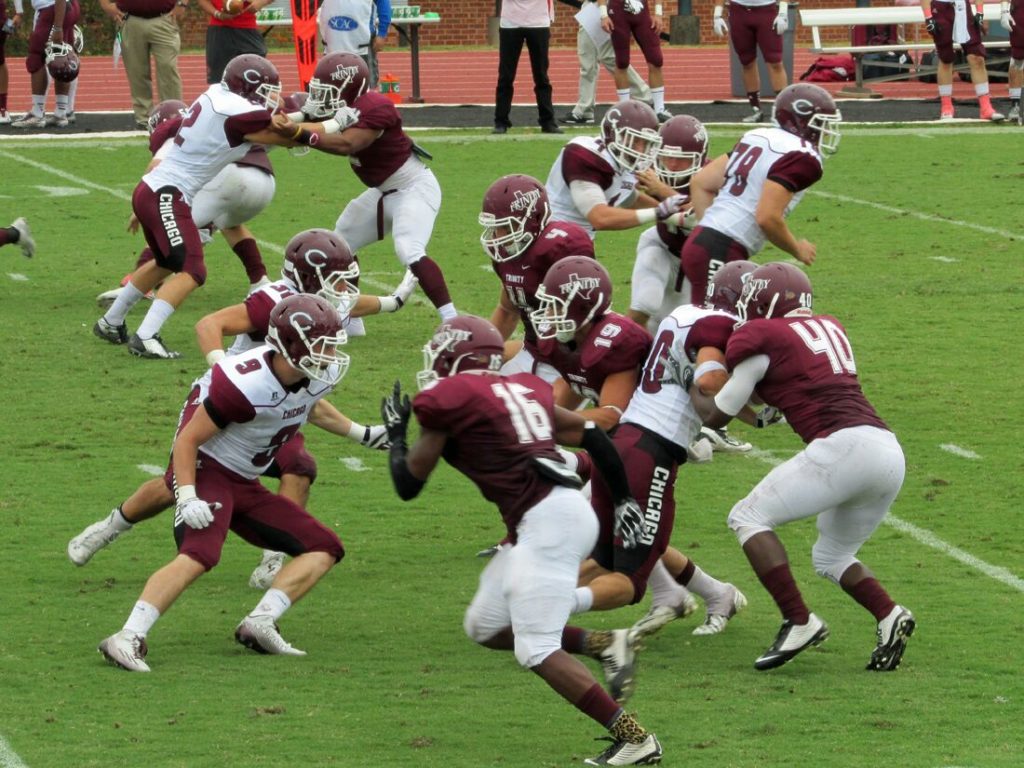
When we think of college football in Texas, we tend to think of the big FBS institutions, like Texas, Texas A&M, and TCU. A lot more schools field teams than just those we see televised every Saturday, however. One of those places is my alma mater, San Antonio’s Trinity University. They play Division III football, a level that offers no athletic scholarships. So how do they fit into the landscape of a football-crazed state?

I asked Jerheme Urban, Trinity’s head football coach, about what he does to field a team, what their goals, and what he saw as a player going from Trinity to the National Football League. Check it out in this video.


Rush Olson has spent two decades directing creative efforts for sports teams and broadcasters. He currently creates ad campaigns, television programs, and related creative projects for sports entities through Rush Olson Creative & Sports and FourNine Productions.


RushOlson.com

Linkedin.com/company/rush-olson-creative-&-sports

Facebook.com/RushOlsonCreativeandSports

Tuesday, May 24, 2016

A History-Making Rivalry

This article originally appeared in the Blotch section of the Fort Worth Weekly's website. To read it on that site : http://www.fwweekly.com/2016/05/24/sports-rush-a-history-making-rivalry/


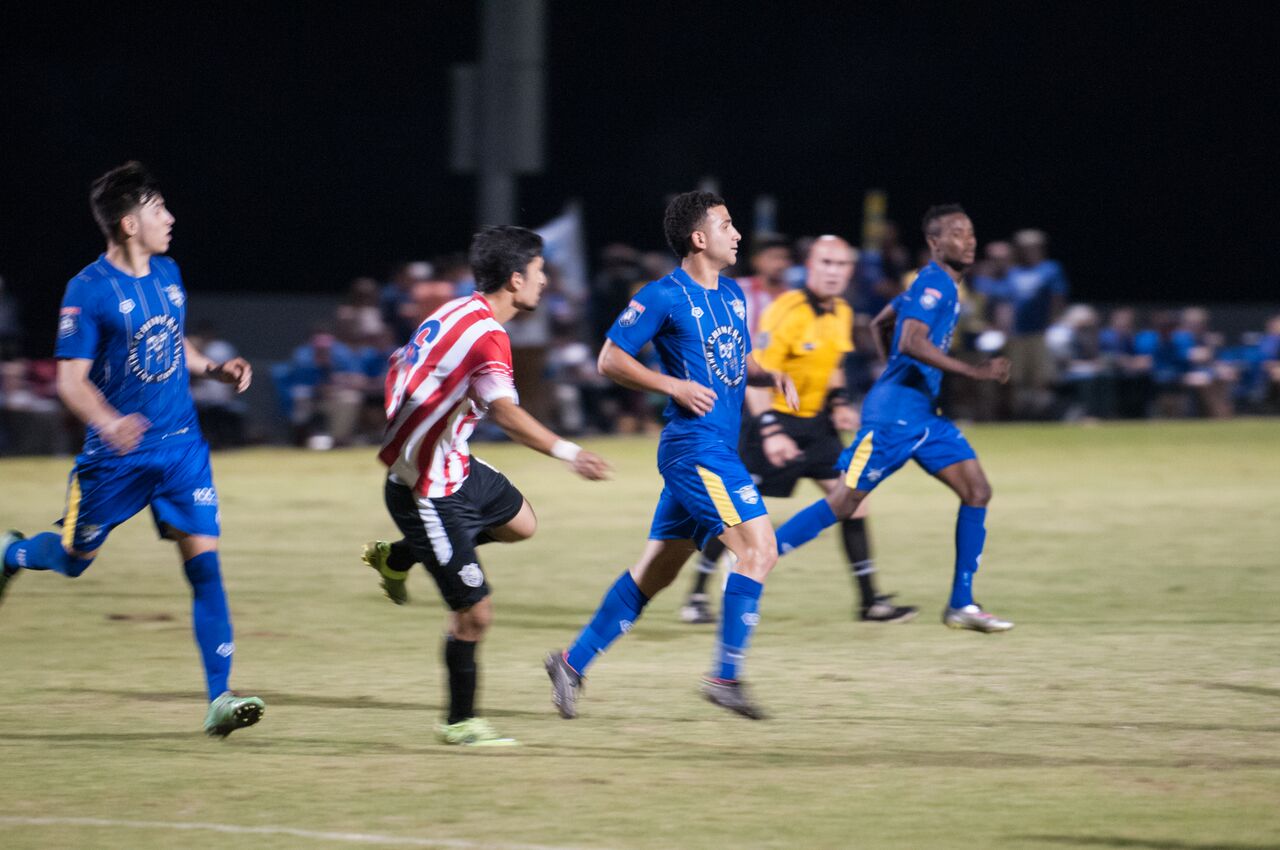
IT'S A GAME! (Photos by Hannah Reinmiller)(Photos by Hannah Reinmiller)
 
You might have read how, back in the day, cowboys drove wild critters along the Texas Trail from Cowtown to Shreveport.

By “back in the day,” we mean mid-April.

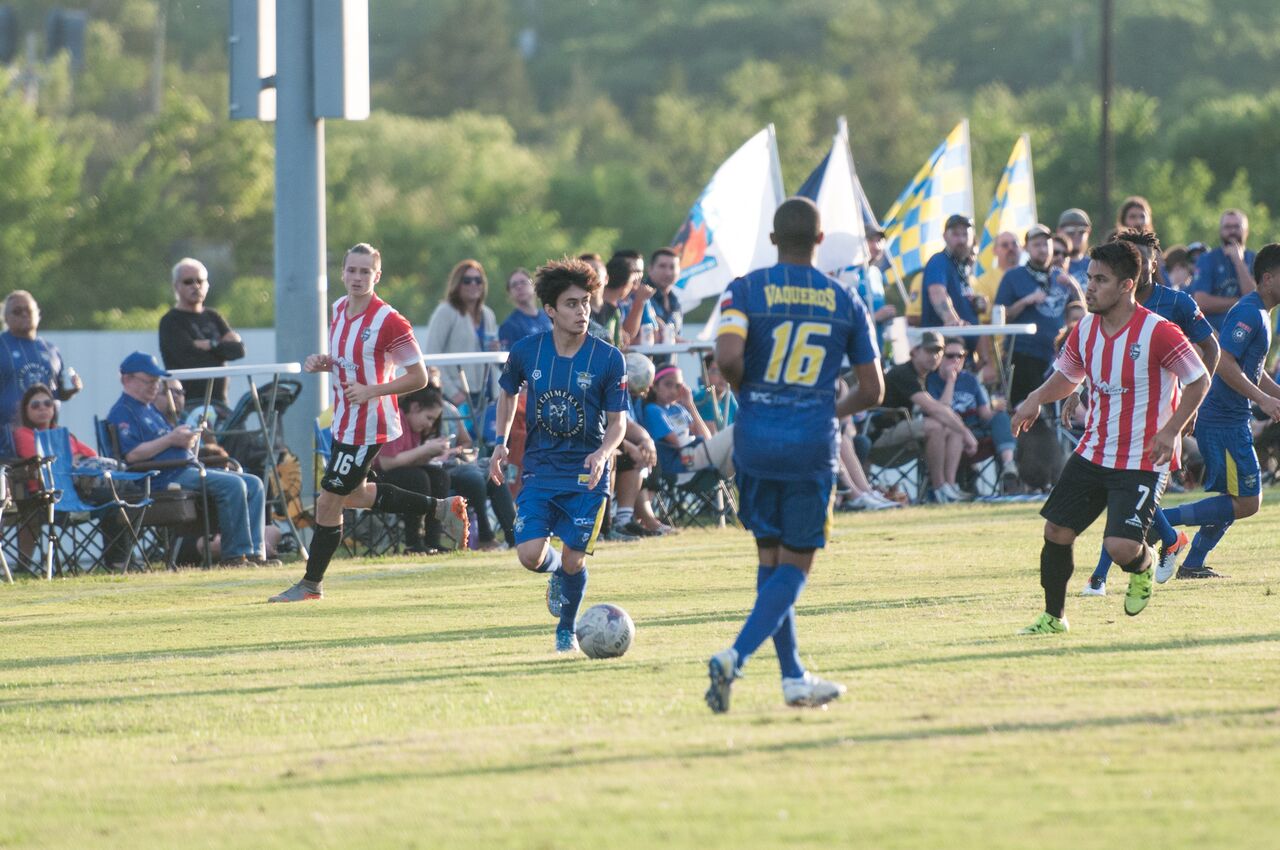
On April 16, a local outfit known as the Fort Worth Vaqueros (Spanish for “cowboy”), accompanied by a group of their most animated fans, took a trip to Northwest Louisiana to play soccer against Shreveport Rafters FC. The teams hope the match represented the start of a historic rivalry. They’ve even given it a name rooted in the cities’ shared past: The Texas Trail Series.

The idea behind the title came from Rafters co-owner Will Broyles.
“I am a huge history buff,” he explained. “When you’re promoting a soccer series like this or anything else, if you can root it in the history of the two cities, it makes it more impactful and meaningful.”


The Texas Trail ran between the two cities, with cattle driven from Fort Worth to Shreveport for distribution down the Mississippi River.

“The Texas Trail goes back to early 1800s,” Broyles said.

It followed paths long established by the Caddo Indians. Shreveport is in Caddo Parish, and Broyles pointed out that the name “Texas” comes from the tribe’s word for “friend”: “tejas.” The development of a friendly rivalry along the old trail is the ideal result for these National Premier Soccer League franchises.

“Both teams, they want to go out and win regardless if it’s a cup game or a league game,” noted Vaqueros coach Mark Snell. “It will turn into a rivalry because we want to have the trophy.”
The winning team will retain a set of mounted cattle horns. Shreveport got a leg up on acquiring the talisman with a win in the first game of the two-leg series. It was an unusual contest.

“We planned to play one goalkeeper each half. The agreement was that we would play by NPSL rules, with which there’s no re-entry, meaning once you’re subbed off, you’re subbed off. We pretty much dominated the game, had a lot of chances. Their goalkeeper played very well,” Snell explained.
“The second half, we subbed our goalkeeper in. We only bring two goalkeepers, of course. Within ten minutes, there was a bad back pass to the goalkeeper and he had to come out and take down with a strong tackle the opponent and it was a last man call, meaning it was an automatic red card. So that was a PK (penalty kick) and they scored on that. And we had to put a field player in goal as well as play a man down.”

The Vaqueros kept it close, but Shreveport won the game 2-0. It was effectively a preseason game, and the first in the expansion-Rafters’ history. It’s possible that this kind of unusual match could indeed fuel a rivalry, with fans likely to remember its unique circumstances. It turns out a lot of Vaqueros fans were there to see it. The team’s supporters group took a bus to the Port City for the game (and maybe the casinos a bit, too). Snell appreciated their support on the road.

“We are beyond fortunate with this group. They call themselves the Panther City Hellfire,” said Snell. “These guys are just die-hard soccer fans.”

Broyles took notice of the visiting crew.

“The fans of Fort Worth were impressive,” he said.

Broyles also indicated that the Hellfire did more than just cheer for their team.


“They set the tone for that game, they set the tone for our fans for the season,” he noted. “Because everything was new, nobody in our crowd knew how the stands looked. When the Fort Worth contingent marched in with drums and flags, it gave us something to aspire toward. Our guys rallied. They got together the next game and we had drums. Now we actually have a trombone in our supporters group. We’ve got the flags.”

Fort Worth, then, may have helped fuel this budding rivalry by showing the Rafters’ own passionate fan club, now known as the Riverjacks, the right path to follow. Broyles expected many of his squad’s fans to travel the Texas Trail (whose route I-20 mirrors) tonight, when the series concludes with a game at the Vaqueros’ Martin Field. Perhaps they’ll be able to say they saw something historic.


Rush Olson has spent two decades directing creative efforts for sports teams and broadcasters. He currently creates ad campaigns, television programs, and related creative projects for sports entities through Rush Olson Creative & Sports and FourNine Productions.


RushOlson.com

Linkedin.com/company/rush-olson-creative-&-sports

Facebook.com/RushOlsonCreativeandSports

Wednesday, March 2, 2016

Sports' Spring Break

This post originally appeared on the Arts page at the Fort Worth Weekly. To read it on that site : http://www.fwweekly.com/2016/03/02/sports-rush-five-reasons-march-is-mad/

 
R1
The name “March” sounds like a military PT regimen. The sports phrase most associated with the month implies a certain mad-as-a-March-hare kind of crazy. And most April Fool’s Day pranks are planned during its 31 days. Any way you look at it, March is a funny sports month. Here are five reasons why.


Football-free
It’s typically the only month of the year with no American-style football. The Arena League doesn’t start until April. NFL and CFL training camps remain a ways away. The long-defunct USFL and XFL tried it, and organizations like Major League Football might give it a try again, but it has generally remained unfootballed. We do get to watch professional Association Football, as the Major League Soccer season starts this week and European leagues continue.

The Biggest International Events Avoid It
It’s not quite cold enough for Winter Olympics, but not quite warm enough for the summer games. In fact, no Olympic Games, FIFA World Cup, or Rugby (Union) World Cup has ever been held in March. The World Curling Championships have traditionally taken place during the third month, though, so there’s that. MLB has also staged the World Baseball Classic every three or four years in March, but it hasn’t really risen to the level of the other big global events. When held in the southern hemisphere, the iCC Cricket World Cup probably comes the closest to putting the month on the global stage.

No Playoffs
No major U.S. league holds playoffs in March. The period joins July, August, and September as the postseason-less season, what with the World Series stretching into November now and the MLS Cup pushed to December. We don’t have any All-Star Games this time of year, either. Pro hockey and basketball certainly have compelling games as teams jockey for playoff position, but you also have some squads playing out the string after February’s trade deadlines.

Spring Training
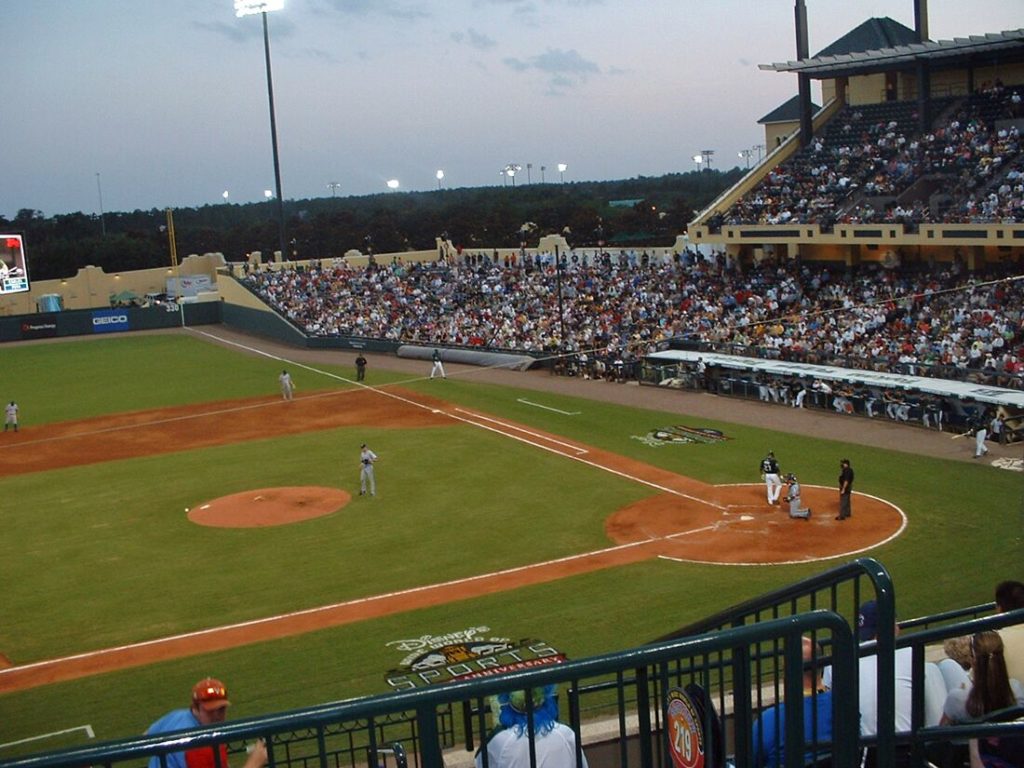
No other sport gets so much traction out of its ramp-up period. Major League Baseball plays a whole schedule of preseason games, charges normal prices for them, and nobody minds. The national pastime has it sweet that respect. The home fans don’t complain that meaningless games were included in season ticket packages, the franchises make additional money when those fans travel for a snowbirding experience, and they also get to sell tickets and t-shirts to the natives of whatever Cactus or Grapefruit League municipality built them a charming ballpark.

Plus, because no regular season games are played in March, baseball teams will sometimes celebrate the month’s most noteworthy holiday later in the year. A number of teams do “Halfway to St. Patrick’s Day” promotions for September 17th games. You’ve really got a month figured out when you can make money off it 20-something weeks after it ends.

March Madness
Well, yeah, Month 3 does get wild sometimes. Certainly, the United States’ most heated March sporting event comes from the college ranks. The month inspires substantial passion among college basketball fans and those of you who chose the right upsets in your office bracket pool.


March ostensibly comes in like a Lion (Bobby Layne vintage) and goes out like a, well, Lion (Dan Orlovsky vintage). In reality, it’s pretty laid-back throughout, reflecting more anticipation than finality. Even March Madness now concludes in April.

For the most part, March seems to be the spring break month for students and sports fans. It’s a chance to chill out and maybe read a good sports blog post or two before baseball home openers and Stanley Cup Playoffs and Champions League Finals demand your most urgent attention and some face-painting, chest-bumping intensity. See you on the beach.


Rush Olson has spent two decades directing creative efforts for sports teams and broadcasters. He currently creates ad campaigns, television programs, and related creative projects for sports entities through his company, Rush Olson Creative & Sports.


RushOlson.com

Linkedin.com/company/rush-olson-creative-&-sports

Facebook.com/RushOlsonCreativeandSports


Tuesday, January 5, 2016

Penalizing Football

This post originally appeared on the Blotch page at the Fort Worth Weekly. To read it on that site : http://www.fwweekly.com/2016/01/05/forbidding-football/


R1
In the sport of American football, violence sometimes begets more violence. I tackle you, you stiff-arm me, your teammate tries to block my buddy, who tries to shove him into both of us, the safety flies in over the top, and we all end up in a heap on the ground. Then we get back up, if we can, and we do it again.

In a recent column in The Guardian newspaper, a writer named Dave Bry suggested we not do it again. In fact, he prefers to go beyond a mere recommendation. He would have us walk off the field and never come back via a legislative ban on the entire sport.

The issue of football’s brutality has found itself much in the news in the past few years. A new Will Smith movie, “Concussion,” has propelled it even more deeply into the pop culture landscape. Bry’s piece, entitled “American football is too dangerous, and it should be abolished,” presents a balanced summary of many of the sport’s injury issues and some arguments for and against getting rid of it. At the end of the article, after determining the NFL won’t give up wearing helmets, he opines, “Which leaves us with one moral option: illegalize it, the whole operation.”
And then the column stops.

Bry didn’t present a vision for what the world would look like when the USA has banned football. It’s possible he just didn’t have the space, and that an upcoming column will detail his football-free future. I decided not to wait, however, because you can only properly evaluate a proposed policy if you consider how it will work once implemented. You don’t want to trade for Herschel Walker and then realize later he doesn’t really fit your offensive scheme.


Firstly, you’d have to think about how you might implement the proscription. Perhaps the Super PAC Mr. Bry founds will facilitate the election of enough anti-gridiron legislators to override the veto of, say, Patriots fan Bernie Sanders, Walker’s former New Jersey Generals boss Donald Trump, or Packers fan Gary Johnson.

Would compromises have to have been made to buy votes? Would existing football interests be able to capture the political process and turn it to their interests? For the sake of argument, let’s assume not. Let’s say the Anti-Touchdown League gets its own Volstead Act, no preceding constitutional amendment required.

So once you’ve gotten the bill passed, what do you do?

Well, there’s a lot of existing football equipment out there already that could be used by miscreants to continue to play the game. One would assume that you’d want to rid the country of those tools. Could you use a mandatory buyback scheme, like they did in 1996 with citizens’ guns in Australia? If so, how would the takings clause of the 5th Amendment require the government to compensate those from whom it took the pigskins, helmets, goalposts, shoulder pads, tackling dummies, and playbooks? You’d need to make sure you raised taxes or borrowed money to fund an appropriations bill for the FEA (Football Enforcement Administration) to pay for both the buyback and the enforcement of the ban. You’d also have to figure out if it were OK to repurpose, say, football cleats for other sports and a helmet as an unconventional flower vase or if that stuff all has to go to the incinerator.

You’d need to make a decision, too, on whether or not to permit entities like the Pro Football Hall of Fame to exist or the Texas Sports Hall of Fame to have football exhibits. You’d think today’s feds would frown on, say, a shrine dedicated to the interstate raw milk sales, imported haggis, or off-the-reservation gambling they prohibit. Do freedom of speech issues exist here? If so, you’d need to plot how you could get around them to keep people from glorying in the achievements of, say, George Preston Marshall.

In his column, Bry identified his most culpable culprits for the evil that is football. He writes, “The onus is on us, the fans (and, more directly, the team owners) who pay the players to hurt themselves for our enjoyment.” The ban on football companies would probably not be too different from scuttling breweries at the start of Prohibition. But if the much more numerous team fanbases bear the brunt of the blame here, restrictions to stop football fandom would seem crucial to the ban’s success. If you decide the Grambling Legends Hall of Fame’s tributes to the likes of Tank Younger and Doug Williams would allow football fans to continue being football fans, do those areas need to be replaced with boxing or CrossFit exhibits and should the memorabilia in question be burned?
While we’re on that subject, you’d need to plan for all the football writers, broadcasters, and bloggers you’d put out of business. Does the takings clause apply to their capital investments? And moving forward, are you allowed to write about football, or would that be giving material aid to the enemy? Might we need to shut down portions of that internet?

Moving on to enforcement, you’ll need to give the FEA sufficient powers to stamp out the vestiges of the sport. You’d need a training budget to ensure the gridiron gendarmes could recognize whether youths in the park were actually playing, say, rugby or whether they needed to spend a few days in juvy. For organized matches, is the referee sufficiently diligent in calling forward passes or is he letting a few too many go uncalled? You’d need to be very precise about what activities are and aren’t permitted in the presence of tackling. Perhaps this effort could double as a jobs program for the on-field officials who lost their jobs in the industry’s purge. You’d also want to add safeguards to ensure the authorities wouldn’t abuse the law, using it as a pretext to harass disfavored groups. After all, nearly 70 percent of NFL players are African-American.

You’d need to determine the criminal penalties to be visited on those die-hards who continued to block, tackle, and cheerlead in defiance of the ban. You’d have to somehow compute the damage caused to society or identifiable victims and make the prison sentences (and potential civil settlements) reflect those calculations. Would effective deterrence require some sort of three-strikes-and-you’re-out law for recidivistic touchdown celebrants (as I unashamedly mix sports metaphors)?
You’d have work to do internationally, too. The NFL has spent a lot of money marketing the game overseas. It’s not the biggest sport in the world, but it has a loyal following some places. You’d want to try pressure other countries into forbidding it as well and to negotiate treaties allowing extradition for Americans caught running fly patterns in, say, Moscow or Beijing. Canada’s likely to be a tough one here, as they have their own long football tradition. Might a wall along our northern border be needed to prevent our footballers from working illegally as Argonauts or Alouettes?
Once Mr. Bry has figured out the answers to all the points raised above, nobody will play American football anywhere in the world, apart, perhaps, from certain rogue lawless states. Somalia might become the world’s leading producer of linebackers.

Of course, you could have some bold commentators continue to address the issue of the football ban, couching it in terms of so-called “legitimate policy discussion.” What if you had someone write, for instance :

“The problem, of course, lies with some basic truths about human behavior. There is a strong demand for football in America. As long as those footballs are illegal, there will be great financial reward to anyone who can provide them.”

or

“The football trade has become as powerful a force in the Mexican economy as any legally sanctioned one. Powerful enough, it seems, to overwhelm any attempts the government might make at cracking down on the collateral effects.”

The phrases above came from a lucid author who puts words together very well. In one of his recent columns, he wrote about his “individualistic positions on . . . drug use (legalize it).” The passages above came from an article that same David Bry penned for BET, but I took some liberties with them. I substituted the word “football” whenever the word “drugs” occurred in the original.
You do have to try to anticipate collateral effects when banning stuff, for sure. Eliminating a violent black market is indeed among them. Would a football ban create a black market? How big would it be? Would the violence associated with such a market beget more violence than that which currently results from football? Would it create any additional unintended consequences? As Mr. Bry begins his campaign to eliminate American football, he will probably want to perform a thorough cost-benefit analysis.

Epilogue :
In another column, Mr. Bry called for a ban on dogs in New York City. My sister and I used to play football with our dog, Fuzzy, when we were kids, though not in NYC. We played tackle. My parents took home movies of it. If the U.S. implements the full Bry agenda, I may be in some trouble.


Rush Olson has spent two decades directing creative efforts for sports teams and broadcasters. He currently creates ad campaigns and related creative projects for sports entities through his company, Rush Olson Creative & Sports.


RushOlson.com

Linkedin.com/company/rush-olson-creative-&-sports

Facebook.com/RushOlsonCreativeandSports