Showing posts with label marketing. Show all posts

Wednesday, July 31, 2019

Sponsorship In A Changing Sports World


The definitions of what constitutes a “sponsorship” and what we mean by a “TV program” have changed meaningfully in the last decade-plus. In the past, if you sponsored a sports entity, your package included signage at a venue, some tickets for your best customers, and an advertisement in some sort of print product, like a game program. More innovative ones might include a clever promotion.

Today, a package might still include those elements. But brands have also realized they can aim for deeper engagement, too. They’re finding ways to be perceived as adding value to the fan experience and, most relevant to what I do, they’re looking to be storytellers. And the television landscape has shifted to accommodate that desire.

Sports is full of great stories. It used to be a partner could get involved peripherally, say by running commercials in a game broadcast or magazine show on a network, perhaps including a “brought to you by” (or even “proudly brought to you by,” if they wanted to really stress how excited they were about the show). Maybe you’d get some product placement. You can still do those things if they make sense, but you can go so far beyond it.

We’re working with a property right now that encompasses a lot of the possibilities for the expanded world of sports sponsorship. The College Gridiron Showcase & Symposiumgives prospective professional football players a chance to show their skills for NFL, CFL, and (most likely) XFL scouts. It also aims to help prepare them for some of the on- and off-field challenges they’ll face in their desired career. As you’ll see in the video trailer we did for the CGS, these young men have some incredible stories when they arrive at the showcase, and then they have five days to go as hard as they can to position themselves to write their next chapters.

Many brands like to be associated with qualities like perseverance and high achievement. They also know American football is the country’s most popular sport. And there are a ton of ways they can get involved, including carrying video content on their own websites/social media, embedding into a network broadcast, or something creative we haven’t even thought of yet. That’s something new in sponsorship – the sponsor getting in on the ground floor to shape the way their content is presented.

CGS has diversity/inclusion angles, and that’s something companies have started to really prioritize – want to put on a women’s football coaching clinic at the CGS? Plus, they can still get a lot of the traditional sponsorship assets, like signage that generates earned media exposure on the field and TV commercials.

It’s an exciting time in the world of sports content. Brands can take advantage of it in so many ways they never used to be able to.


Rush Olson has spent more than two decades directing creative efforts for sports teams and broadcasters. He currently creates ad campaigns, television programs, and related creative projects for sports entities through Rush Olson Creative & Sports, Mint Farm Films, and FourNine Productions.

Friday, July 14, 2017

Why It's My Texas (and Also My Rangers)

This post originally appeared in the Blotch section of the Fort Worth Weekly's website. To consume it there : https://www.fwweekly.com/2017/07/13/sports-rush-putting-the-texas-in-texas-rangers/

Why did Tom Grieve say my name on the TV Friday?

OK, my first name is also a common noun, but he wasn’t referring to a pitcher rushing his delivery or a runner in a rush to beat a throw while going from first to third. He meant me.

Grieve and his broadcast partner, C.J. Nitkowski had noticed the Rangers’ home jerseys have script across the front reading “Texas.” The more common practice in baseball is to have a team’s geographical home printed on the road jerseys, while the home versions boast the name of the team’s mascot. The Rangers, however, use “Texas” on both. The announcers wondered why.

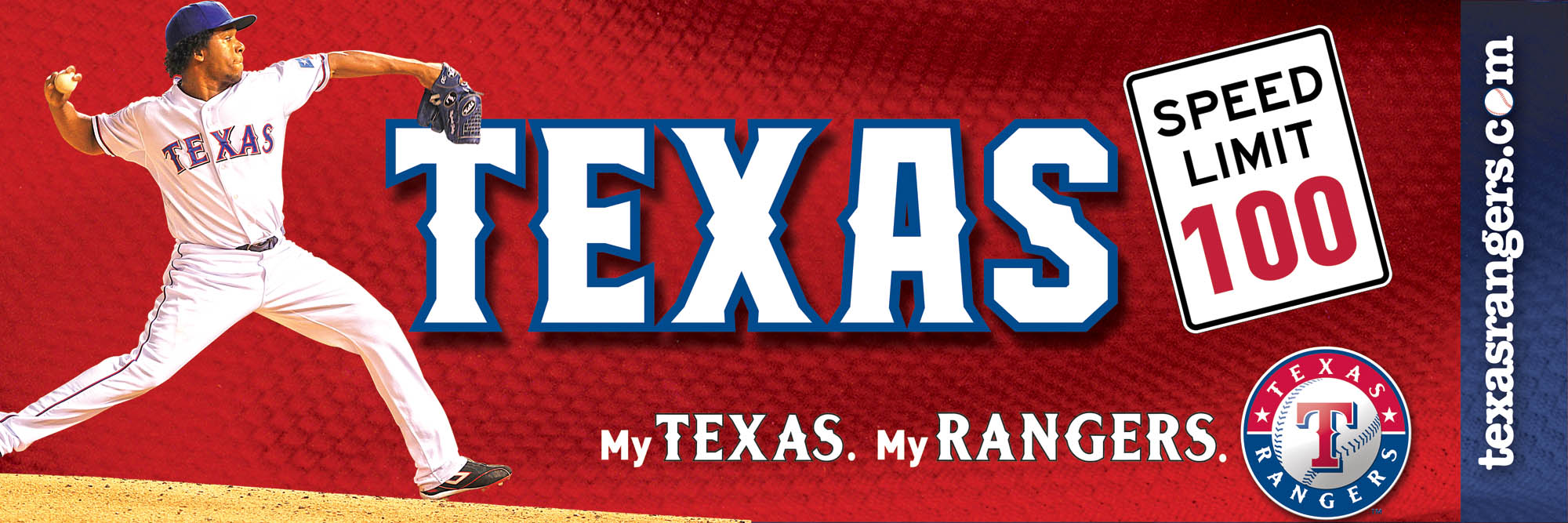
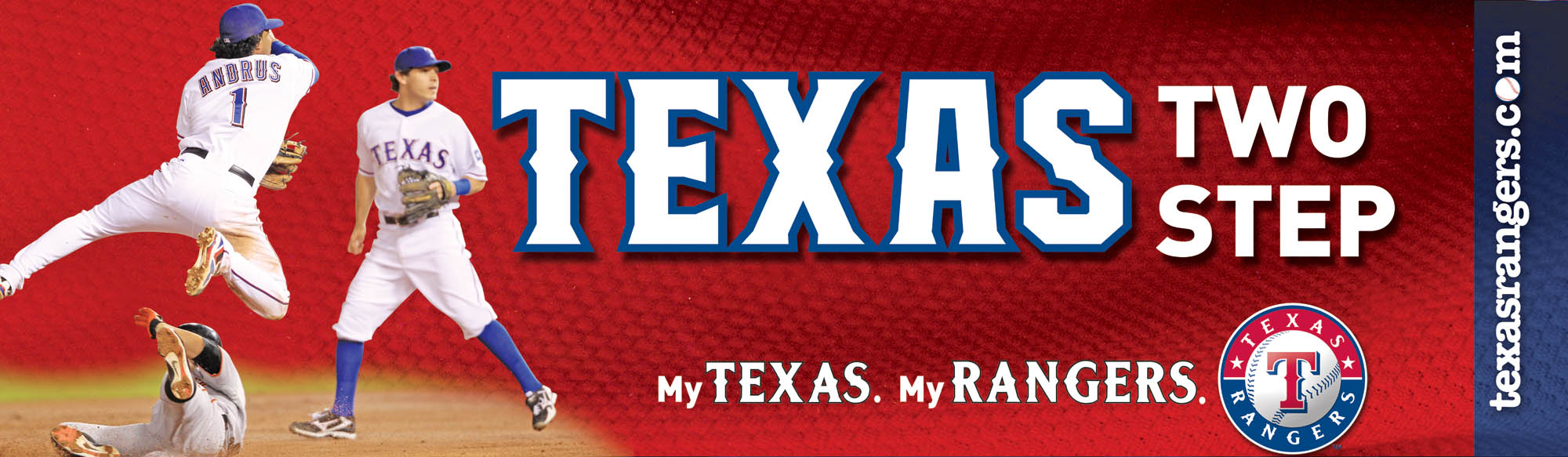
So I sent Grieve a text that read “My memory of why Texas is on the front of the home jersey is that it was part of an effort to brand the club with the qualities of the state a few years ago. We ended up doing a whole ad campaign around My Texas My Rangers. I think the jersey branding was related to that.”

The longtime Rangers analyst then read the message on the air. Later in the game, Rangers Executive Vice President of Communications John Blake confirmed my memory was correct (which caused them to say my name again, pleasing my parents who were watching the telecast in Fort Worth). While it’s always cool having an esteemed personality like Tom Grieve say nice things about you, one of the bonuses of the situation was it got me thinking about the ad campaign and how it came about.

it started intuitively, but was ultimately backed up by data. Nolan Ryan had taken over as team president in February of 2008 and the ownership group in which he participated took over the team in August of 2010. The new head of business-side operations, Chuck Greenberg, wanted to direct fans to identify the Rangers as their team, so we quickly shot and edited some new spots consisting of highlights mixed with fans telling the camera some variant of “these are my Rangers.” Though that advertising effort was an unscientific one, in the offseason, Greenberg directed resources toward something the Rangers had done only sporadically during my years there: audience research.
I found the process truly valuable. As a creative director, one likes to know to whom one is speaking (through the medium of television or radio or the internet). It helps you craft better material, because once you know what you’re trying to accomplish, you can find innovative ways of achieving it. As consultant Corky Hall of Stellus Consulting put it, “Give me the freedom of a tightly defined strategy.”

Hall’s firm had taken existing data and spearheaded new research initiatives so we could find out what our fans thought of us. We also wanted to know what they liked and what we could do to position ourselves to better reflect their preferences. One of the things we discovered (not that it was a surprise) was that people liked Texas symbols and values like loyalty, toughness, and friendliness they felt reflected those of Texas and Texans.

The Rangers had long sported a Texas flag patch on their jersey sleeves and the Lone Star State had found its way into plenty of branding elements over the years. The year before (2009), in fact, was when the club had made the move to have all its jerseys read “Texas.” Identifying with the state made sense instinctively, but now we had data to back it up. Out of those brainstorming sessions came a tag line that combined elements of the previous year’s end of season spots with the new research, one that encouraged people to take pride in their team the same way they did in their state: My Texas, My Rangers.

The next step was to figure out how to embody the concept in actual creative executions that would both encourage ballpark attendance and create the brand perceptions we wanted. The solution we adopted involved portraying what was then known as Rangers Ballpark in Arlington as a place where Texas values were ever-present. For television commercials, what I thought might be funny (and therefore memorable) was if the images symbolic of those values actually existed at the park. Some manifestations included:

Grazing
Longhorns grazed in the outfield, ostensibly to save on mower fuel. This spot starred Mitch Moreland and Head Groundskeeper Dennis Klein and no, those were not real cows in the outfield. We digitally manipulated some stock footage.
photo credit: Brian Gagnon/Texas Rangers
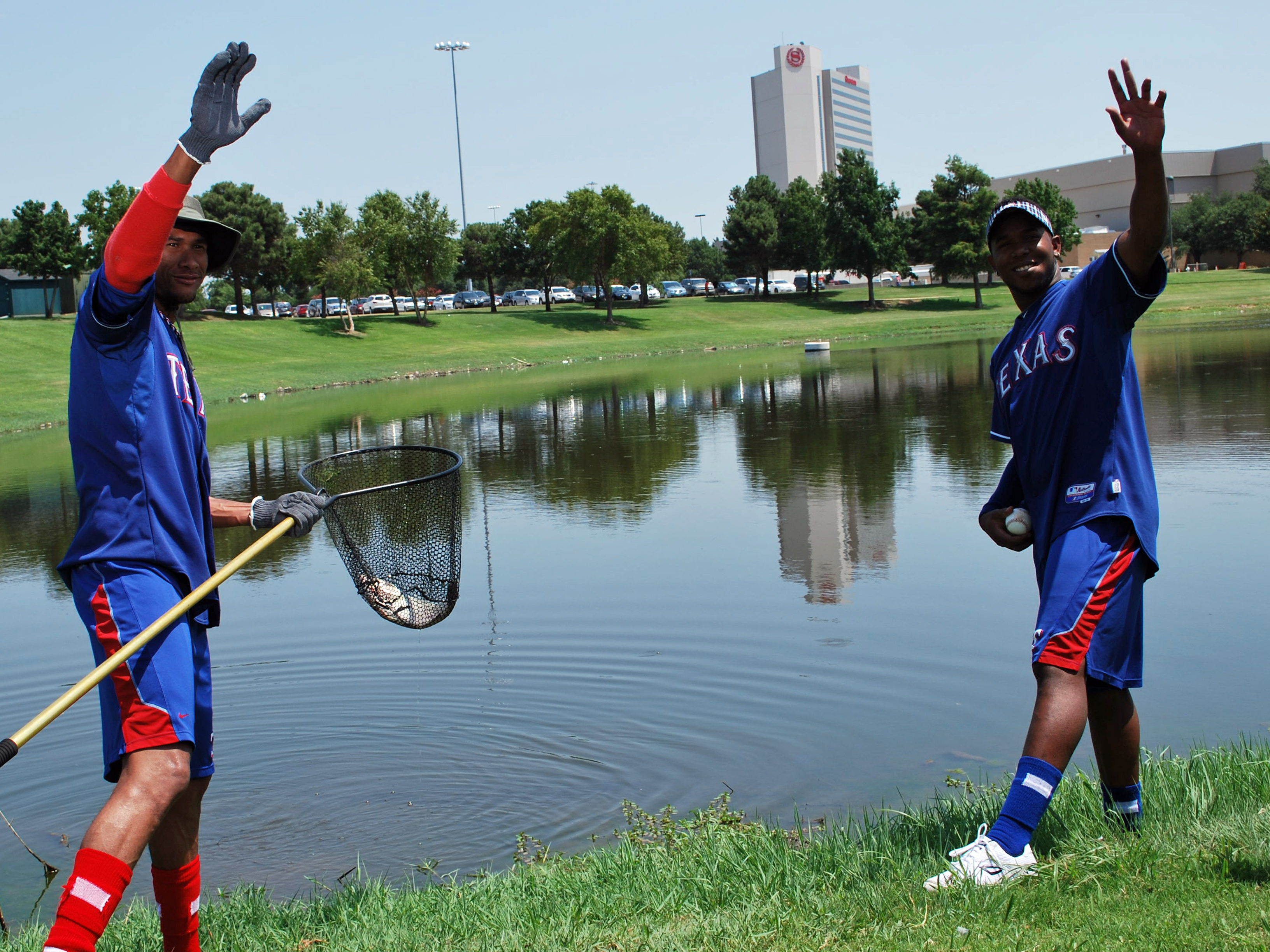
Bass Fishing Texans love their bass fishing, so Alexi Ogando and Neftali Feliz demonstrated an innovative way of doing it, as observed by Pitching Coach Mike Maddox and Bullpen Coach Andy Hawkins. For props, we used old batting practice balls and some whole fish carcasses I bought at an Arlington Asian market. Yes, our marketing budget went to buy dead fish. I did check, by the way, to make sure the fish I purchased could actually be found in Texas lakes. I didn’t want a detail-minded angler hating on our spot because we used the wrong bass.

Pecans
A pecan tree grew in the upper deck, with Nelson Cruz and Thad Bosley in charge of cracking the nuts of the official state tree. I wandered the Central Arlington neighborhood in which I lived at the time picking up sticks and pecan fragments dropped from the local trees. For Bosley and Cruz’s part, shot in spring training in Surprise, Arizona, I had to trek to Tempe to find unshelled pecans.

Horns
Horses are pretty Texan, and the Rangers happen to have one working for them. During the Rangers’ first World Series run, the “claw and antler” craze consumed the local fandom. After this spot starring Rangers Captain began running, the mascot reported kids coming up to him doing the antlers sign.

Lots of Dogs
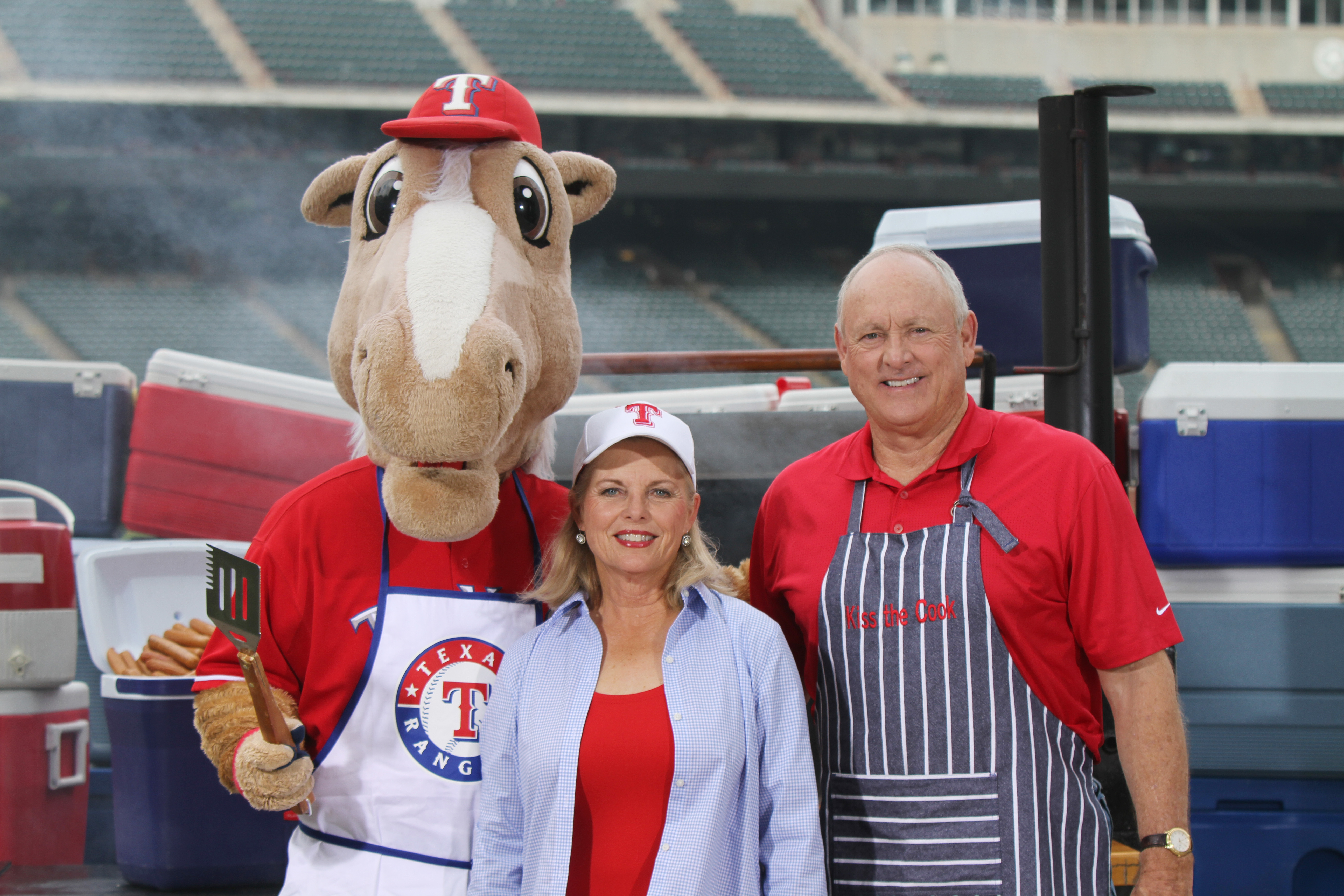
Grilling out with friends and family is a Texas tradition, but apparently some Texans can take it too far. This was one of the most fun shoots I ever did, and not just because Nolan and Ruth Ryan are great people (two of their granddaughters appeared in the commercial, too). Ballpark chef Cris Vazquez hauled out a humungous quantity of hot dogs and an enormous grill that morning and started cooking. We grabbed every cooler in the ballpark to ostensibly be full of hot dogs and the crew brought some ice chests from home, too.

If you don’t watch the Spanish-language version, too, you do yourself a disservice. We knew Nolan would be reluctant to speak a phrase in Spanish, so we recruited his former teammate Jose Guzman to help. The scheme was that Jose was going to say the Spanish line, but we plotted all along to try to get Nolan to say it. So we cut a take where Jose said the line, then I asked Nolan if we could try one more thing. Nolan guardedly agreed, and Jose, with help from team videographer Hugo Carbajal, coached him in what is, as far as I know, the Hall of Famer’s only appearance ever speaking in Spanish on camera.
Rangers Captain, Ruth and Nolan Ryan
photo credit: Alan H. Rose/Texas Rangers
This spot got a lot of discussion on the Ticket radio station, too, thanks to a shot Carbajal added in the edit of a well-inked lady eating a hot dog.
Nolan’s image as the quintessential Texan helped the My Texas, My Rangers campaign a lot. We referenced him in the copy (it was ostensibly his idea to put in the pecan tree and, in another spot I didn’t mention above because it’s unfortunately not available to view online, an oil well along the right field wall).

We created other media besides television. Billboards offered baseball variations on state themes, like its country-and-western dancing and miles of open road.
design by: Rainer Uhlir/Texas Rangers
We had radio, too. Can Texans sometimes exaggerate? We decided Texas Tall Tales was a worthwhile theme, so Eric Nadel voiced a series of spots positing Texas ties to certain team-related items. For instance, did you know the word Tejas means “he who hits with the strength of a bear?” Or that the dye in the Rangers’ blue uniforms is made from organic bluebonnets? Or that Nolan Ryan gives the Rangers employee of the year a heifer from his personal herd? Of course, those are all made up, but Eric would go on to emphasize that it was not a Texas Tall Tale that the Rangers did, in fact, embody many of the good qualities of the Lone Star State. You can check out some samples of the radio campaign here.
We also didn’t want to turn off non-Texans, so we did some radio and TV themed as “Welcome to Texas,” that suggested you didn’t have to be from the state of Texas to cheer for the team named “Texas.” And when the pennant race heated up, we did some new spots that hit on Texas pride in retaining the American League title (which that 2011 team did).

When one thinks of the Texas Rangers, one inescapably thinks of the state – heck, it’s the team’s first name. In the latter part of the first decade of the 2000s, the team made that connection a little more explicit. Tom Grieve noticed.


 Rush Olson has spent two decades directing creative efforts for sports teams and broadcasters. He currently creates ad campaigns, television programs, and related creative projects for sports entities through Rush Olson Creative & Sports and FourNine Productions.

RushOlson.com
Linkedin.com/company/rush-olson-creative-&-sports
Facebook.com/RushOlsonCreativeandSports

Wednesday, November 9, 2016

What Does a Left Turn Sound Like?

This post originally appeared at the Fort Worth Weekly's website. To view it there : https://www.fwweekly.com/2016/11/09/racing-on-the-radio/

“Let’s go trackside and get it all started here in Texas.”

Now that Doug Rice had made the call, it should have been time for racers to start their engines. But instead of beginning Sunday’s AAA Texas 500, a crucial race in the NASCAR season, 40 cars sat on pit road under car covers. A brief rain shower had made the track too wet to race, and the Texas humidity made drying it, even with jet dryers, a challenge.

Texas Motor Speedway hosts two races each year, in April and November, in the highest tier of stock car racing, NASCAR’s Sprint Cup Series. Drivers once competed in automobiles you could buy at a dealership, though today’s high-performance racing vehicles only loosely resemble the Fords, Chevys, or Toyotas a fan might drive to the track. From humble roots in the South, NASCAR has become America’s most popular motor sport, with a season running from February’s iconic Daytona 500 to the season championship in Homestead, Fla., the weekend after next. In that final race, the National Association for Stock Car Auto Racing will declare the fastest of four pre-determined drivers the overall winner for 2016. In a playoff system called the “Chase for the Sprint Cup,” it has culled its highest-ranked drivers down to a final eight, and any of those who win one of the three races immediately preceding the Homestead event, including the one at TMS, would automatically qualify as one of those last four drivers with a chance to win the whole thing. And even for drivers not in the Chase, winning a race is huge.

Thus drivers and their support personnel waited anxiously for the track to dry, as did thousands of fans at TMS. In addition, a crew of 18 headset-wearing NASCAR enthusiasts was preparing to embark on its own marathon of sorts.
*****

They were the men and women of the Performance Racing Network, a company for which Rice has worked since 1988. PRN’s president and lead announcer also told me during the stoppage that he has learned to not let the weather bother him, because it’s all part of the gig.

PRN understands racing’s nuances. The company has been in business since 1981. It’s a property of Speedway Motorsports, Inc., the same group that owns Texas Motor Speedway.

The only other major radio network that covers all NASCAR Sprint Cup racing is Motor Racing Network. The Daytona Beach-based International Speedway Corporation owns MRN, as well as racetracks where NASCAR holds 19 of its 36 Sprint Cup races. They cover all the races held at those tracks, plus those at Dover and Pocono. PRN handles lap-by-lap coverage for the dozen races staged at SMI’s tracks and partners with the IndyCar Radio Network for the Brickyard 400. The Indianapolis Motor Speedway, site of the Verizon IndyCar Series racing circuit’s Indianapolis 500, hosts the Brickyard 400. Individual tracks can choose their radio broadcasters, though NASCAR controls all television rights.

Based in North Carolina at Charlotte Motor Speedway, PRN produces a number of NASCAR-themed radio talk shows as well, though Rice noted, “The main crux of what we do is cover live Sprint Cup and live Xfinity [Series] racing.”

Fans can listen to their productions on a number of outlets, including local affiliate radio stations, satellite radio, online, and at the track over a dedicated frequency on the scanners that fans can rent or buy at the race.

*****

Every time I’ve listened to a stock car race on the radio, I’ve come away amazed.

One announcer talks, then another, and then a third and a fourth. Each picks up where the other left off, somehow keeping up with cars traveling close to 200 miles per hour without interrupting a colleague. Then a wreck happens, and suddenly they’re narrating that chaos, and minutes later they’re talking to the driver whose race has ended. It all sounds so smooth to your ears and mine, but I know, behind the scenes, it can’t be.

Having worked in a lot of TV trucks covering sporting events with multiple cameras, I’ve seen how hectic it can get keeping up with a pair of teams playing with two or three announcers describing the action. So I always wanted to know how a crew could possibly manage a broadcast involving 40 teams on a mile-and-a-half playing surface with a half dozen or more commentators –– and all without the benefit of pictures.

The PRN folks, said NASCAR veteran Jeff Burton, who won 21 top-level races before moving into television, “have a passion for what they do, and they put a lot of work into making sure they bring what’s going on on the racetrack to the fan that’s not able to see it.”

PRN’s people spend their lives, and a lot of weekends, away from home, immersed in racing because, as PRN pit reporter Brad Gillie put it, they “live and breathe the sport.”

In some ways, they have a dream gig, one that millions of fans who religiously follow drivers like Burton no doubt envy. That doesn’t mean it’s an easy job. NASCAR’s complicated nature makes up part of the circuit’s appeal.

“Before the race ever starts,” Rice said Friday, “myself and whoever’s co-anchoring, we decide who’s calling the last lap. That way, there’s no scramble.”

After the green flag waves to begin the race, fans listening on their preferred device hear a succession of voices describing the action. Listeners might wonder how each broadcaster knows when to talk. It turns out they rely on some standard progressions as they follow the field of cars. Rice calls the action on the track’s frontstretch before turn announcer Rob Albright takes over.

“When I stop, Rob automatically knows to pick them up, and about turn one he will take them into turn two, halfway down the backstretch, and when he stops talking, Pat Patterson knows. He picks up the baton and takes it back to turn four, and [co-anchor] Mark [Garrow] and I alternate laps. That way, while one of us is talking, the other one can be looking up something or attending to other details. So that’s like a relay race.”

An automobile race never consists of one smooth sequence. Sometimes the focus must change from the cars circling the track to other areas of interest. Rice takes cues from a colleague in the booth.
“The director is the one that’s telling us when to go downstairs, which pit reporter to talk to.”

Wally Leavitt, who served as Sunday’s director, said, “I will keep track of the pit reporters primarily and who has who. If we got green flag or yellow flag pit stops, I will have to make sure that we get the throw down to them.”
“Let’s go down to Brad Gillie.” –– Doug Rice, cueing his pit reporter
“There’s four of us on pit road, and we basically divide up pit road into quarters,” Gillie explained. “We’re down there telling the story behind the curtain. Because in our sport, we’re unique in that we do get to be in the huddle. We do get to hear the strategy as it’s playing out.”

In painting the picture of whether or not those strategies succeed, the broadcasters don’t have actual pictures to help them.

“All we have is our voice,” Rice said. “It’s not like television. There is no ‘Ready [camera] one, take one.’ It goes off feel.”
“Watching up front now, Kevin Harvick starting to close the distance here to the leader.” – Pat Patterson, tracking the No. 4 car’s progress
In a television truck, a director bears the responsibility for choosing what goes on the air next. While scanning multiple camera monitors does require a great deal of skill, the TV director can use his eyes as well as his ears to select his next source. A radio director or on-air presenter can only listen. Every person on the crew must master the art of mentally processing multiple audio streams simultaneously.
“In my ear, I’m listening to the scanner and listening to their in-car communication,” Gillie said of the device he uses to hear what the drivers and pit crews say to one another during a race. “I’m scanning the drivers in my section of pit road that are relevant.”
“Kyle Busch wanted to come in much, much sooner.” – Brad Gillie, reporting what he had learned about a pit stop
“If I know there might be a developing story, I might lock it on a particular driver or something like that,” Gillie said. “If I have the race leader, I might spend more time listening to that channel.”

*****

Gillie also has to listen to his director and to what’s actually going out over the air, in case one of his on-air colleagues suddenly pitches to him.

Rice has to talk while monitoring three audio feeds, including the official race communication channel.

“In the booth,” he said, “I hear the director. I hear ‘program’ –– what’s going on the air –– and I monitor NASCAR. Their channel is in my ear, and I can hear everything the race director is saying. Mainly what I’m listening for are keys to a caution. He’ll say, ‘Debris, turn two’ and put out the yellow [caution] flag. So you kind of condition yourself to not hear all the other chatter, but I hear that, and I hear penalties.”
“He made two pit stops as the lucky dog car. That’s penalized him and cost him a lap.” Doug Rice, explaining a Kurt Busch mishap
Leavitt, who normally works for the IndyCar Radio Network but filled in with PRN at the races in Charlotte and Fort Worth, listens to all those sources plus the engineers.

“The hardest part is to make sure that you are listening to the person you really need to listen to, because everybody’s talking at once, and you need to make sure that you’re listening to the one source that you want to know the information from.”

Making sure all those sounds get to all those ears means an extensive technical operation under supervision of PRN lead engineer Harrill Hamrick, who mixes the show from a truck near the garages. In Fort Worth on Sunday, no technology could remedy one of a sports broadcaster’s most untenable situations.
 
“Weather always adds a huge unknown X factor to this,” Rice said.
“If weather comes in, it’s going to finish this race and for Carl Edwards, it could be Christmas come early.” –– Mark Garrow, after an exemplary pit stop gave Edwards the lead
 *****

During Sunday’s delay, Rice and his colleagues stayed on the air long enough to explain the situation to the audience and to speak to a special booth guest: Chuck Norris.

 
The former Walker, Texas Ranger star had come to the track to announce the names of the eight Chase drivers. He helped PRN fill time by talking about Chuck Norris facts. He likes them and finds them funny.
“Chuck Norris eats bullets for breakfast. Watch out when he burps.” – Norris, on the “Chuck Norris fact” that his 10-year old son suggested

The speedway displayed a variation on the meme on their Big Hoss video board, a mockup of Norris kicking Michael McDowell’s car into a wreck. When a real mishap occurs on the track, the normally jocular announcers treat it as nothing to laugh about.

“After he made the pit stop, one of the tires that came off the car blew right after they brought it over the wall, back into the pit. It blew right in the face of tire specialist Mason Jennings. His ears are ringing. The doctors came in and looked at it. They have taken him to the infield care center.” –– pit reporter Jim Noble describing an accident involving Paul Menard’s crew

“In the event of an accident,” Rice said, “we never, never, never speculate about a driver being injured. That’s why we have reporters that go to the infield care center, and somebody will be there. If there’s a serious injury, somebody’s going to come out and talk. I mean, I don’t care what the circumstances are. I don’t care what our turn announcers or pit reporters can see. You’re not a medical doc. Don’t speculate on it. Let somebody else do that.”

PRN’s veteran broadcasters know auto racing’s protocols. Still, a reporter like Gillie must often approach a driver during testy times, such as after a mechanical issue has forced his or her ride off the track.
“If the car goes to the garage, and it’s a part of the story of the race – because that’s our job is to tell the story of the race – then we’ll go down there, and it might be, ‘Hey, I’ve got a report from the garage. Here’s what happened to the car. They broke this.’ It might be I’ve got a report, and then five minutes later, I’ve got the driver because they’re out of the car, and we interview them.”

As official race broadcasters, PRN personnel have clearance to speak to drivers even as the race continues around them. Tone and approach become crucial to turning access into information.

“You’ve got to get the answer that you’re looking for, but the way you present the question might make all the difference in the world,” Gillie said. “I don’t think you want to go out there and just say, ‘You know, man, it looks like what you did was pretty stupid.’ ”
“Austin, would you call that a racing incident?” –– pit reporter Steve Richards after Austin Dillon’s car got knocked out of the race
Drivers understand broadcasters must cover the tough parts as well as the victories.

“They get it,” Gillie said. “Most all these drivers are wonderful about doing that.”
Burton believes the unique nature of motorsports helps foster collegiality between the contestants and those who cover them regularly.

“I think what makes our sport really, really special is that contact,” Burton said. “Think about the NFL. They’re with different broadcast people every week. The local [team] has their own radio station, but the network changes, as opposed to NASCAR. You’re with the same people pretty much every week. You’re either with PRN or MRN, or you’re with Fox or NBC [on the TV side]. And so you get to know everybody.

“I always viewed the broadcasters,” he continued, “whether it was radio or TV, when you interacted with them, they were coming to talk to you to get information to relay it to the fans, and I always viewed the broadcasters as a conduit to the fans.”
*****

By engaging with reporters, a driver does more than reach out to his followers. He or she also advances the business side of the sport. A driver who talks to the media will likely do so wearing clothing bearing corporate logos. He or she will almost invariably find a way to verbally namedrop one or more companies who pay for association with the race team.
“We had a good AAA Fusion capable of winning the race.” – driver Joey Logano in a post-race interview with Brad Gillie
Sponsors pay for the costs of running a race team. And like most media ventures, advertisers finance the Performance Racing Network.

“Our sales are done internally,” Rice said. “We have a three-person sales staff.”

He sees the audience that his salespeople take to market as pretty well defined.
“Speaking of the fans, Doug, we constantly say thank you to the NASCAR fans because they are die-hard.” – Mark Garrow, offering love to rain-soaked spectators
“People that are going to take time out of their day to listen to a race broadcast, they’re P1s,” Rice said, referring to the radio industry term for the most loyal listeners to a given outlet. “They know what they want, and it’s not our job to go out and spread the gospel of NASCAR. We’re preaching to the converted.”

In Fort Worth, the congregation can find PRN’s work on 95.9-FM The Ranch, whose bosses signed on this year to carry PRN’s Texas race broadcasts and tap into its listener base.
“A couple of Toyotas battling for the lead here at Texas Motor Speedway!” –– Doug Rice, excited about a tight contest
The Ranch also believes racing will appeal to its existing listeners.

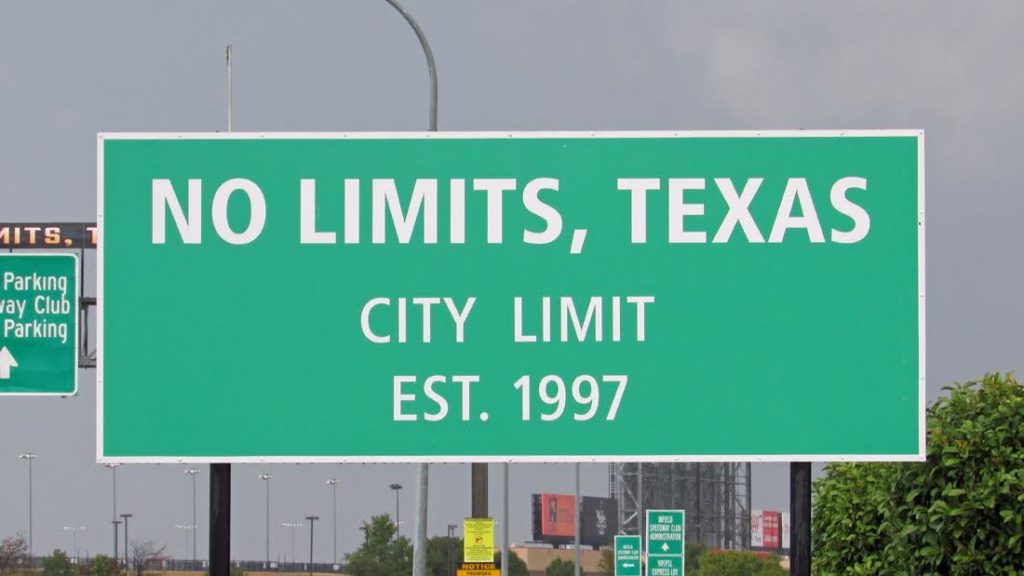
“There’s synergy with our audience,” said Gerry Schlegel, president of LKCM Radio Group, which owns The Ranch. “That is a very Texas-centric audience. We kind of have this wide-open attitude, no-limits kind of attitude, which reflects very well with the spirit of Texas Motor Speedway.”
The station also worked a promotional deal with the racetrack that bills itself as “No Limits, Texas.”

TMS has “put together a great relationship with the Ranch, not just for the broadcast that PRN does but for a lot of the other stuff that Texas [Motor Speedway] does as the official radio station,” said Gillie, who graduated from Euless Trinity High School, lives in Fort Worth, and formerly worked for the speedway.

One might interpret NASCAR followers’ transfer of loyalty from sport to sponsor as naïve, an example of less-than-sophisticated thinkers being influenced by advertising. More likely, it represents a true understanding by those fans of how such relationships work. Brands want to cultivate those fans’ loyalty through their sponsorships. By providing them what they want, fans do their part to ensure the viability of their favorite drivers and their favorite sport.

Such is the NASCAR culture. As sports fans, and racing fans in particular, it perhaps reflects a desire to feel a bond with something beyond the grind of everyday jobs and challenges. We all wear the shirts, caps, and underwear of our favorite sports teams. Sports radio broadcasts, perhaps more than any other mass medium, serve much the same function by allowing us to bring our passions into our spaces, at our desks, on our commutes.
“I had to bring my Thanksgiving pants.” –– Doug Rice, during a booth visit by a Miss Sprint Cup spokeswoman, referencing a dinner Sprint had bought them
*****
With the NASCAR season’s final pair of races at non-SMI tracks, PRN’s AAA Texas 500 broadcast represented its final one of 2016. However, they won’t sit idle until February’s Daytona races restart NASCAR’s calendar.

“We have a big meeting at PRN,” Rice said, “basically outlining the calendar for next year. What are we going to do better? What are our new initiatives going to be?”

As much planning as PRN staffers will do in their short offseason, when the time comes to race again, they will once more find themselves dealing with situations at the track that nobody expected. In fact, when it comes to a NASCAR broadcast, the unpredictable parts take top priority.

“One cardinal rule that we have maybe above all else is live action on the track supersedes everything,” Rice said, “whether it’s a pit report or somebody that’s supposed to be interviewed in the booth. If there’s live action going on on the racetrack, especially a battle for the lead, that trumps everything else and until that’s settled, Brad’s pit report, or this person we’ve got to interview, or this story, or this piece of salesmanship can wait.”
“Trouble in turn four!” –– Pat Patterson, interrupting a sponsored segment to report a wreck
To establish proper priorities, and create the workflows to accomplish them, one has to understand the essence of one’s business. It’s a lesson Rice learned at the first running of the Brickyard 400 in 1994 from a pair of seasoned colleagues at the IndyCar Radio Network.

“They’re probably 20, 30 years older than me. And I’d met them the day before, so they knew who I was. So one of them was sitting there having coffee, and he looks at me he goes, ‘So what is it you do again?’

“And I said, ‘Well, I’m with Performance Racing Network. We broadcast NASCAR races.’

“He goes, ‘That’s not what you do.’

“And I’m like. ‘Yeah, it is.’

“He said, ‘No, that’s not what you do at all. You’re in the transportation business,’ and I said, ‘What are you talking about?’

“He goes, ‘It’s your job when you’re broadcasting that race to transport the guy driving down the interstate, or working in his garage, or out on his bass boat, from where they are to where you are.’ He said, ‘If you can get that battle won in their head, and they are mentally at the racetrack with you, that’s what you do. You’re in the transportation business.’

“I went, ‘OK, you’re right.’ And I think about that every race we do.”

*****

At Sunday’s event, they never got to transport the listener to the finish line for the waving of the checkered flag. Though the race did eventually start after a six-hour delay, a second downpour ended the contest several laps short of the planned 500-mile run. NASCAR officials informed Carl Edwards he had won as the cars sat idling on pit road. We’ll never know which announcer would have called the winner across the finish line.

It’s all part of the unpredictability of sport. This sport, and bringing it to those who love it, is what PRN is all about. They have, in fact, found the right business.

“They make magic,” Schlegel said. “These guys are incredible. The description, it’s very high-energy, super-fast pace. They cut from one person to the next. They’re describing exactly what they see in front of them, sparks flying off the fenders. You can hear the engines and the energy is unlike any other kind of broadcast.

“They really pull you in like you’re at the race. It’s remarkable.”

Rush Olson writes the Fort Worth Weekly’s sports blog and produces sports content and related endeavors through his companies Rush Olson Creative & Sports and FourNine Productions. Read more of his interview with Jeff Burton in this week’s Sports Rush blog post, found in the Blotch section at fwweekly.com.

RushOlson.com
Linkedin.com/company/rush-olson-creative-&-sports
Facebook.com/RushOlsonCreativeandSports



Wednesday, May 18, 2016

Marketing’s Future : Integration (and Maybe Robots)


The photo that accompanies this post comes from a talk I recently enjoyed given by a marketing cyborg named Repcor.


Ok, the speaker was actually a real person named Rebecca Corliss, but she said she likes to go by "Repcor," which to me sounds like a robotic supermarketer Hubspot built to save the future or something. I suppose I don’t know for certain she isn’t a replicant, but for now I’ll take her word that she’s actually a human who goes by the same mononym as her Twitter handle (@repcor).

To get back to the photo, Corliss’ talk was entitled “How to Build a World Class Marketing Team like HubSpot.” She started working (or perhaps was created in a lab) at the Boston-based company some eight years ago, and one of the reasons she loved the opportunity was the company’s fresh outlook on marketing. The slide in the photo summarizes old channels to which they believed marketers gave too much consideration:

  • Advertising
  • Conferences/Events
  • Paid Search/PPC
  • Email List Rentals
  • Cold Calling

And new channels deserving of more attention:

  • Blogging
  • SEO
  • Free Tools
  • Social Media
  • Opt-In Email Lists

Hubspot is still in business, so they must have hit on something here. Certainly the second list houses much of the creative work my company does. The items on the first list haven’t gone away, however. Companies still spend scads of dollars on TV advertising, often justifiably so. Hubspot itself does conferences and events worldwide, we found out from the humanoid addressing us.

What struck me is how much everything in the first list is complemented by the entries in the second column. If you do a conference, you market it with social media, the email lists you’ve cultivated, and everything else in List #2. And if you’re smart, you feed the content from that conference right back into those channels to generate more engagement.

The same goes for advertising. I would never shoot a spot without doing behind-the-scenes content for social media, and all creative these days must appeal to the user who can self-select what he or she watches.

And if you’re going to have your salespeople cold calling, you can make their jobs loads easier by priming the pump through top of the funnel content that inspires an “Oh yeah, I’ve heard of you” when your AE introduces herself.

As a creative, List B affects the choices I make in language and approach, even when I’m working on a project in List A. For others in the marketing world, I’m sure they consider choices like balancing paid search with organic and whether to buy national-network TV spots or invest in original online content (self-serving note – if you buy into one of my TV projects, you get both).

It’s a big integrated world out there. Old-school marketing can cooperate with modern techniques to the betterment of all. Until, that is, we’re all replaced by machines. Which, um, could be closer than we think.


Rush Olson has spent two decades directing creative efforts for sports teams and broadcasters. He currently creates ad campaigns and related creative projects for sports and corporate entities through his company, Rush Olson Creative & Sports. He is also spearheading various film and television projects.

RushOlson.com
Linkedin.com/company/rush-olson-creative-&-sports
Facebook.com/RushOlsonCreativeandSports

Wednesday, March 30, 2016

Fort Worth Gets Into The Game

This post originally appeared on the Blotch page at the Fort Worth Weekly. To read it on that site : http://www.fwweekly.com/2016/03/29/sports-rush-fort-worth-gets-into-the-game/

R1
Last week, the Fort Worth Convention and Visitors Bureau (CVB) announced it had formed a sports marketing department. The focus will be promoting the mayor’s bid to become the first elected municipal official to win a spot on the U.S Olympic track cycling team.

OK, just kidding about the mayor, although Ms. Price does seem to highly value athletic pursuits. In truth, the initiative hopes to attract new sporting events of all kinds to Cowtown with an eye to boosting tourism revenue.

Josh Dill heads the sports marketing initiative. He has actually worked on sports matters for the CVB since 2013, but now will head his own division as Sports Marketing Director.  A study released in January by the Huddle Up Group took a comprehensive look at Fort Worth’s sports landscape and has helped guide some of the strategic directions Dill and the CVB plan to take.

Dill came to North Texas from Lubbock, where he worked in a similar capacity. He listed equestrian events, gymnastics, cheer, and motor sports as current strengths Fort Worth has in the sports world. He, like many of us, grew up loving all sports, however, and wants to bring as many different kinds of sporting events to the city as possible. We sat down with him for a Q&A session about what his department hopes to achieve.

Rush Olson: How is this different from what the CVB was doing before?
Josh Dill: We’ve slowly been devoting more resources to sports. I came in with a mission of this, of creating this department. Fort Worth was a convention town and had worked with sports. We had a few guys here who handled it on a reactive basis, but this is more of a proactive, relationship-building, figuring out what we do well and doing it, and carrying that through to the national level. I don’t want to bid of lacrosse right now because I don’t know that we have a strong lacrosse base here. So the idea is that we grow sports at the local level, build fans around it, and then we can go out and bid on these events. And then also just supporting what we already have, because we have a great sports history and a lot of great sporting activity already going on here.

Rush Olson: What do you want to accomplish?
Josh Dill: The end goal is always to create economic impact for the citizens of Fort Worth. I think the Texas Comptroller’s office has said it and it’s pretty universally true that the best way to grow your economy is by bringing people into it, having them spend money, and then leave. They come in, they’re not a strain on your resources, they’re not a strain on your infrastructure. They come in, they spend their money, and they leave. And that allows us to use that money to do more and more here locally. The end goal is that we start hosting more and more sporting events. I think eventually what I’d like to see is that we are more operational with our events, where we help operate the events and maybe, in the future, even owning our own events, so that we control that event, we put it in a time whenever Fort Worth’s calendar supports it, maybe a down time. And we start an event that’s really important to Fort Worth. We can kind of own and run that event and we don’t have to worry about bidding against other cities to host it.

Rush Olson: What resources do you have at your disposal?
Josh Dill: We’ve been slowly devoting more and more resources here internally. I think we have great resources in that we’ve been building great relationships with TCU and Parks and Community Services. Then kind of educating about what it is that we want to do. And people have embraced it at both those organizations and I think we’re starting to get a lot more support and headway in utilizing their facilities and bringing opportunities that benefit all parties.
Financially, we’re devoting more resources internally to sports. It allows me to hopefully add some additional staff members, but also promote Fort Worth in the right places as a sporting destination.
We’re really close to maybe expanding our staff. The overall goal is we want to be very methodical and do something that is very sustainable. Watching the national trends, sports commissions have popped up all over the country. A lot of them, if they’re not set up correctly, and if they bite off more than they can chew, they fail. A lot of them are independent, but the model that works is a blended sports commission, which is it’s a department of the CVB. We can share resources the CVB already has, but it’s separate marketing, different branding, I guess you would say. That plays better with the national governing bodies of sports.
We’re paying attention to sports more because it’s somewhat recession-proof. People will cut out vacations. They will cut out business trips based on the economy. Not many people will cut Johnny or Susie’s baseball, softball, lacrosse tournament. That’s the last thing they want to cut when times get tough. It’s proven to be a really recession-proof sector of our industry.

Rush Olson: What is the balance between “big-time” events and the grassroots variety?
Josh Dill: The big, flashy events help us gain some notoriety and they put us on the map. They don’t always create the most impact for Fort Worth. I think it’s really important that we support grassroots events because those are kind of the bread and butter of sports tourism. But you get notoriety by hosting some of the bigger events. It’s a balancing act. We try to look at events that we feel fit best for Fort Worth and our future goals. For instance, the NCAA Gymnastics event that we are having next month, and that we hosted last April, was one of the first things that came across whenever I got here. I looked at it as an opportunity to show the NCAA that Fort Worth is serious about sports and that we know how to host major events. It’s also, in turn, led to a few prospects, but also a few events like USA Gymnastics Junior Olympics. That was our way of saying, “We’re serious about gymnastics.” And people have responded by bringing a lot of gymnastics events here in the last three years.

Rush Olson: What is the ceiling for Fort Worth sports?
Josh Dill: A lot of cities get into this going, well, “We want to host the Olympics.” I think there’s a chance we could be a part of a regional potential to host something on that scale, but that’s not what I’m working towards per se. Honestly, a lot of our regional partnerships with the Arlington Convention and Visitors Bureau and with the Dallas Sports Commission and with our friends up in Frisco, we have a good group that gets together and discusses some major regional events, and we all benefit from them.
We’re looking strongly at bidding for more NCAA championships in the next cycle, which is this year. Over the next couple years, we want to host more national championships and we want to play a part in the regional events that we do. With Wrestlemania coming in, we don’t necessarily have an active role in that. That’s more of an Arlington and Dallas thing, and really it’s more Dallas than it is anyone else. Whenever that came up, my first thing was I went and looked at what ancillary events go on around Wrestlemania in which we can play our part. When we met with college football, the national championship committee there, that’s what we said. We saw, “The stadium’s in Arlington. Arlington is your running back. Dallas is doing this, they’re your quarterback. But we can be your left guard because we are very much a player in this and we have a lot of resources and we have the Texas feel that so many people from outside the region want.”

Rush Olson: What line do you walk in competing with, but also working with, the other cities in this area?
Josh Dill: I use the term “coopetition.” There are times when it’s us versus them. Luckily I feel like I have a strong relationship with a lot of the people in the cities that I’m competing against. I’ve always taken the approach that I want what’s best for the event. If the event works better in Arlington, then I want it to be in Arlington, because I know that there’s another event that fits for me. We all understand where we are and what we do well. I’ve sent events to Arlington and I’ve sent events to Dallas and said, “You should really look at Frisco,” but I’ve had the same thing returned, a lot of times more than I’ve sent. It’s not as contentious as one might think. That’s a good thing.

Rush Olson: What is your role in working with venues in Fort Worth?
Josh Dill: A lot of what I do is I go to trade shows and I go and meet and make relationships with national governing bodies or people that own events. I’m more of a broker. I broker deals. If I think something really fits at the speedway, then I take that opportunity to them. I try to make it advantageous for everyone.
We incentivize groups to come here, but I’m really adamant about not doing any kind of incentive that just lines someone’s pocket. We want to make sure that we are offsetting expenses to make sure that it shows that doing business in Fort Worth is good for the event owner and it’s good for the facility to get the benefit of hosting the event, whether it’s notoriety or it’s concession dollars, whatever it could be. We just try to make it as pleasant to do sports business in Fort Worth as possible.

Rush Olson: Do you have thoughts on Fort Worth having additional professional sports teams within the city limits?
Josh Dill: Professional sports is one of the things in our industry conferences we talk about a lot. They can be very helpful and they bring a lot of notoriety. I don’t think that it’s something that someone who’s tasked like we are, with creating economic impact, can really subsidize. I don’t think that it’s a good use of our funds to do that. But I do like the idea of having more professional sports teams here.

Is it something we’re going to actively pursue as part of our strategic plan? Probably not.

I can’t really get involved in subsidizing a professional sports team. I just want to have them there so I can bring them opportunities.


The Fort Worth CVB will host an event it is calling the Fort Worth Sports Huddle on April 7. This first event will honor the Texas Motor Speedway for its 20 years in Fort Worth. top-level NASCAR driver Kevin Harvick will speak. Eventually, they hope do a few such events each year to create dialogue around sports in Fort Worth. One can purchase tables or individual tickets for the April 7 event by contacting the CVB’s Elizabeth Story at ElizabethStory@FortWorth.com.


Rush Olson has spent two decades directing creative efforts for sports teams and broadcasters. He currently creates ad campaigns, television programs, and related creative projects for sports entities through his company, Rush Olson Creative & Sports.


RushOlson.com

Linkedin.com/company/rush-olson-creative-&-sports

Facebook.com/RushOlsonCreativeandSports
Tuesday, March 8, 2016

Should Major League Baseball Expand Internationally?

Should Major League Baseball expand internationally?

The subject came up recently in a broadcast on the Phil Naessens Show radio program. You can listen to how Phil and I discussed the issue here : http://www.philnaessensshow.com/atlanta-hawks/how-to-make-fantasy-hockey-more-popular/

How U.S. sports leagues and teams market themselves abroad has been an interest of mine since I worked for one. How can U.S. sports entities generate more business outside the country? Phil and I discussed how expansion has drawbacks in terms of time zones and domestic broadcast contracts. Single exhibition games have limited reach.

I have always felt that freeing up teams to do more of their own marketing outside the country the way association football teams do might represent a lot of the solution. 30 creative teams thinking of ways to push baseball brands, instead of one MLB International office, could power growth.

I wrote about it more extensively here : http://rusholson.blogspot.com/2014/02/teams-need-to-get-out-more.html

I am always happy to discuss big picture sports business solutions - connect with me on LinkedIn or through my website at rusholson.com.


Rush Olson has spent two decades directing creative efforts for sports teams and broadcasters. He currently creates ad campaigns, television programs, and related creative projects for sports entities through his company, Rush Olson Creative & Sports.


RushOlson.com

Linkedin.com/company/rush-olson-creative-&-sports

Facebook.com/RushOlsonCreativeandSports
Thursday, February 25, 2016

Spring Training Props

This post originally appeared on the Arts page at the Fort Worth Weekly. To read it on that site : http://www.fwweekly.com/2016/02/24/sports-rush-spring-training-finds/


Courtesy Brad Newton/Texas RangersCourtesy Brad Newton/Texas Rangers
 
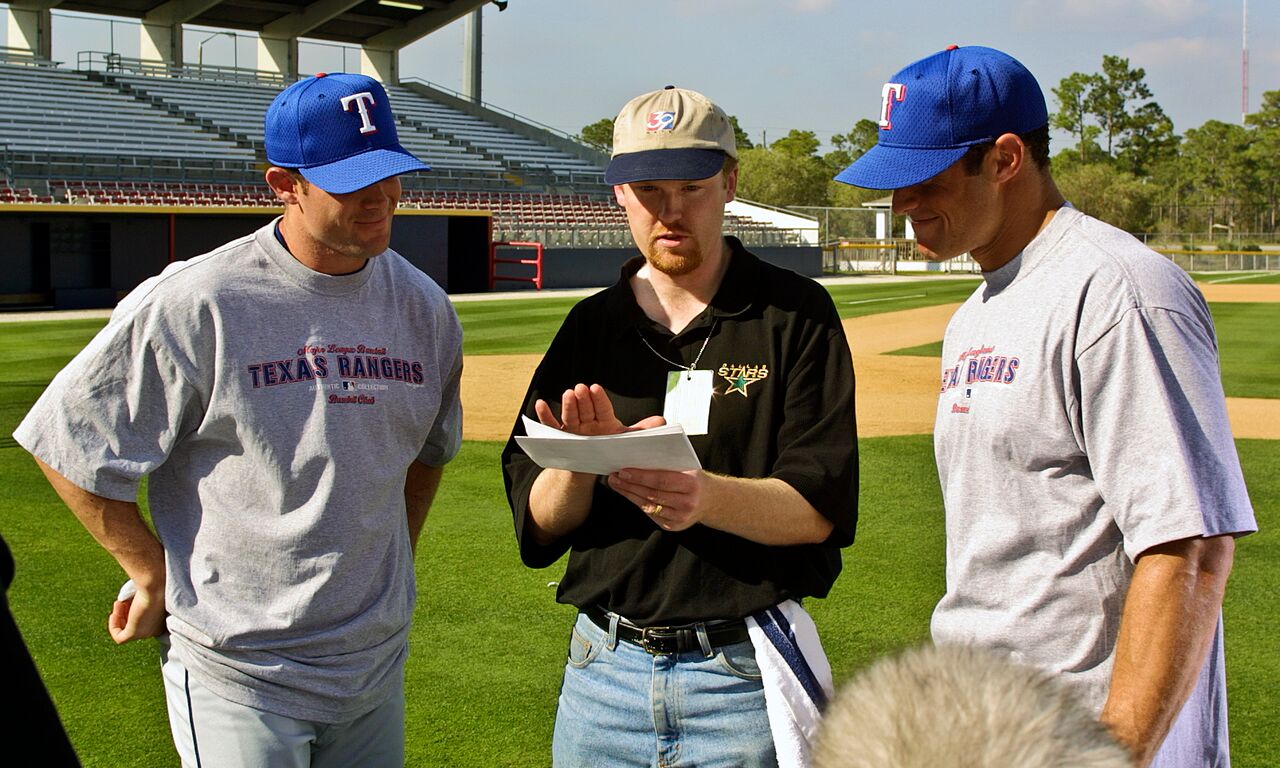
If you visit Surprise, Arizona for Rangers spring training, you probably won’t find yourself needing to source several bags of whole pecans. You likely won’t find yourself at the mall seeking the cheesiest temporary tattoos you can find. And you almost certainly won’t have to haul a drum kit, keyboard, and complete horn section to the visiting clubhouse.  But should one of the above circumstances arise, let me know. I may be able to help you.

From 2001 to 2012, I attended every Rangers spring training, primarily for the purpose of gathering video and audio elements to create commercials and other media productions for the team. The Rangers ran a pretty lean shop, so as the producer/writer/director of the spots, I typically also served as prop master,

When we shot in Arlington, I knew plenty of places to buy, borrow, or shoplift props. The ballpark had a whole store full of them downstairs. A closet in my old room at my parents’ Fort Worth home became known as “the prop closet” after I raided it multiple times in search of old baseball cards and other sports memorabilia needed for commercials.

Digging up unusual items presents more of a challenge in remote locales, and you never know what a given concept will require. The first time I found myself in need of spring training props beyond bats and balls came in 2002 in Port Charlotte, Florida. 


Courtesy Brad Newton/Texas Rangers
 
In the offseason, I had run across a list compiled by the prestigious National Hot Dog and Sausage Council of hot dog-eating dos and don’ts. I built a series of commercials around these official guidelines. It turns out you aren’t supposed to eat hot dogs off fine china, so I was faced with needing to find some dishes we could abuse in a tiny Florida town. I turned to a staple of prop people everywhere, the local Goodwill store. Soon enough, we had a tea set and plates to use in Michael Young’s first career commercial. We ended up not destroying them, and I had no intention of stuffing them into my luggage, so I donated them back to the store. Somewhere, someone is eating off the same second-hand plates a future All-Star did.


I can tell you where the Goodwill is in Surprise, Arizona, too. I found an owl sculpture for a Park Place Dealerships Triple Play spot that former third baseman Hank Blalock found hilarious. Later, we would put it in random people’s offices at the ballpark. It is probably still floating around up on the fourth floor somewhere. Goodwill was no help, however, when it came to finding whole pecans.

The ad campaign in 2011 revolved around Texas symbols like bluebonnets, longhorns, and, in this case, the state tree. The premise of the spot was that Nolan Ryan (team president at the time) had planted a pecan tree in the ballpark. Texans know shelling pecans can be a difficult task, so power-hitter Nelson Cruz had supposedly been recruited to help by mashing them off a tee, assisted by then-hitting coach Thad Bosley. I needed pecans still in their shells, and Arizona is not the pecan haven North Texas is. I finally found some in a co-op grocery down in Tempe and Cruz scattered them around the batting cage.

We had used the same batting cage in 2005 for applying temporary tattoos. For that project, I needed to scour the local mall for a selection of the goofiest looking ones. I didn’t write the commercial this time. The idea came from first baseman Mark Teixeira, and he scripted it with input from Young and Blalock. Blalock had attained some notoriety for his body art, and Teixeira and Young amusingly imitated him with limited success.

I returned to Tempe for some custom wardrobe for a 2012 spot. We couldn’t schedule the shoot until the last minute and needed custom t-shirts done lickety-split. A college town seemed like the place to find what we needed, and Brand X Custom T-shirts delivered them. For this particular spot, I also shipped out the entire stock of prop clothing I kept at the ballpark for use in videos. 


Courtesy Tim George/Texas Rangers

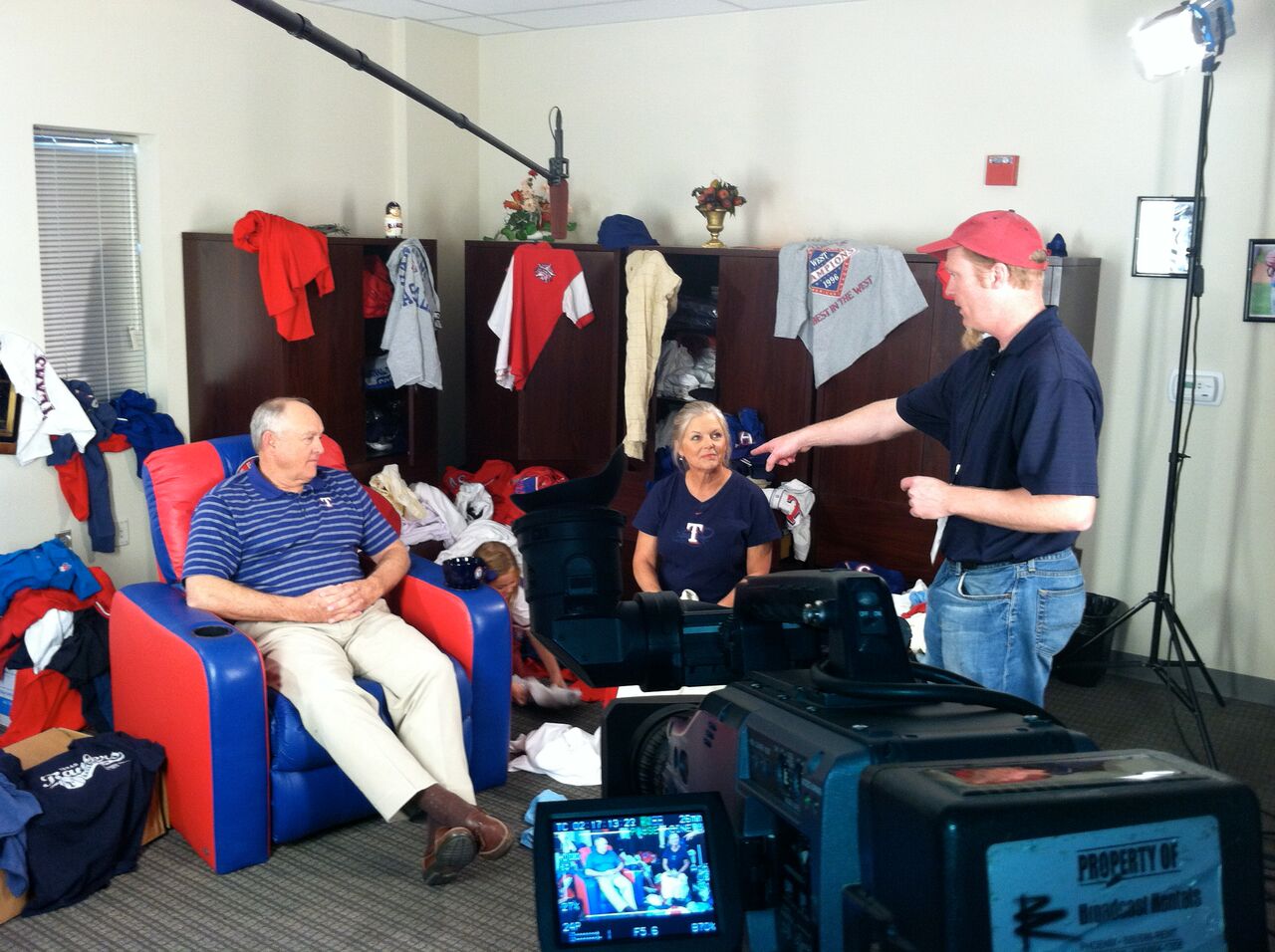
We needed a lot, because the premise of this spot was that for Nolan Ryan t-shirt day, we would actually be giving away Nolan’s own shirts. His wife had ostensibly tired of them cluttering the closets and was getting rid of all his ratty old tees. The crafty Hall of Famer had snuck out an old favorite, however, and worn it to game with his grandkids (the spot did co-star some actual Ryan grandchildren). The piece had five alternating endings, which meant Nolan had to change five times to get all the shirts in. As he trudged upstairs to change for the third or fourth time, he said to me (jokingly, I am pretty sure), “Why’d I agree to do this again?”

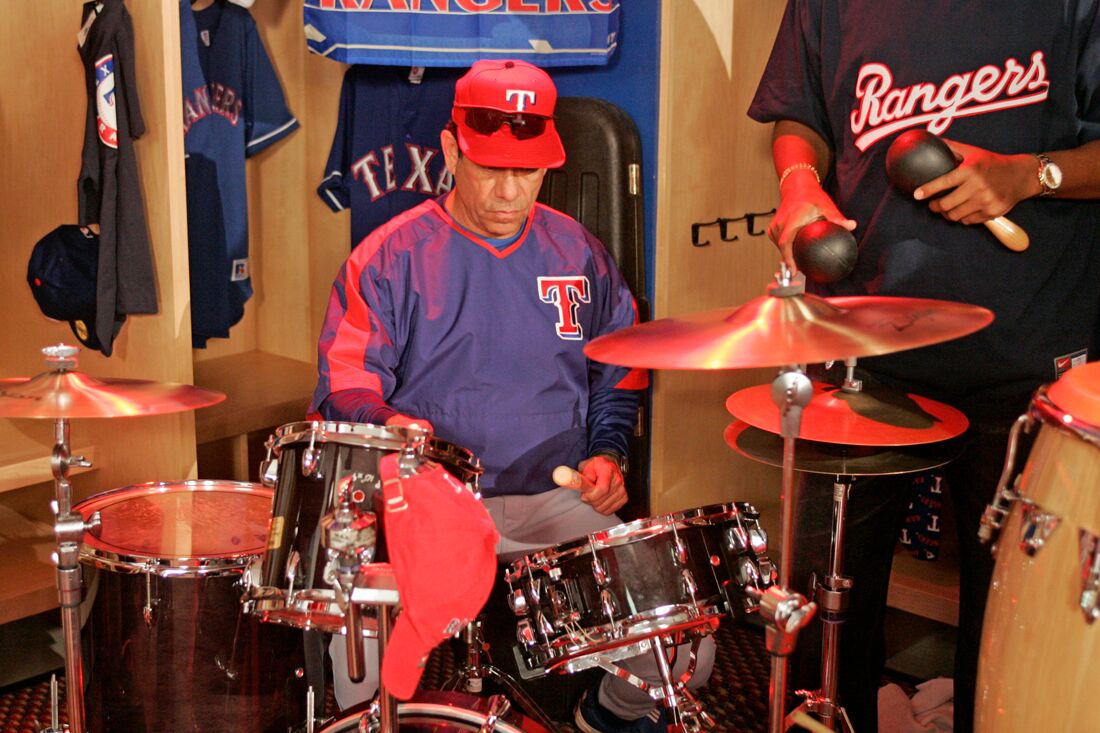
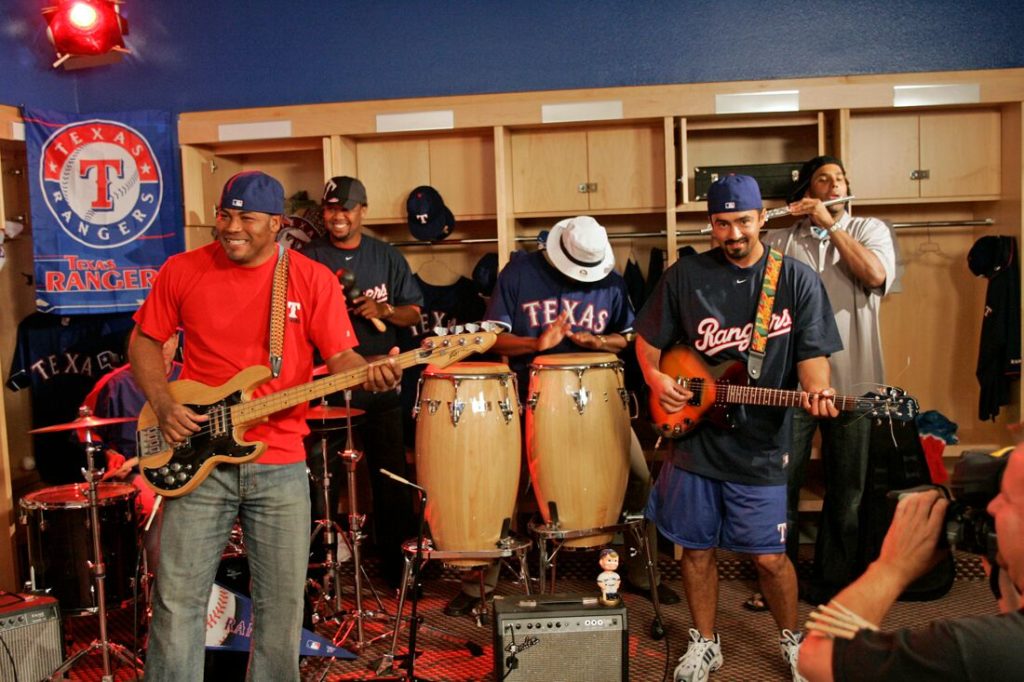
The bulkiest haul I had to track down came for a spot in 2005. In an effort help Spanish-speaking fans identify with the ballclub, a TV spot was to suggest that Rangers baseball moved with a Latin Rhythm. We wanted to shoot it music video-style with all the Latin players. Some friends at local studio Dallas Audio Post helped me track down a backline company in Phoenix to supply a drum kit, keyboards, horns, and everything we needed to supplement my own guitar, bass, and amps (brought on the van from Texas). We mostly just let the players pretend to jam as the spot’s music cut played, while our videographers Eric Koski and Tim George, plus then-team photographer Brad Newton, gathered images. 


Courtesy Brad Newton/Texas Rangers

In putting the script together, I had scoured the dictionary for words that might apply to both music and baseball, and it turned out that we could make wordplay off the words for drumming and hitting, That worked great, since the hitting coach at the time, Rudy Jaramillo, spoke Spanish. He finished off the spot, and we also made an English version out of it, plus a longer music video. The players apparently enjoyed it, because in 2010 Frankie Francisco asked my Rangers colleague Hugo Carbajal and me to recreate the video. He had missed the first shoot rehabbing an injury but thought it would be a good bonding exercise for the players. We got to do it all over again and it was a blast just like the first time, only now in high-definition thanks to advances in technology over the years.

I probably can’t be as helpful navigating Surprise as I could have back in, say, 2009. My favorite wine bar closed and who knows if the fish taco place and the Greek restaurant still exist. But if you need unshelled pecans, a rental trombone, or a t-shirt reading “Chicks Dig the Fastball,” I might be able to assist.


Rush Olson has spent two decades directing creative efforts for sports teams and broadcasters. He currently creates ad campaigns, television programs, and related creative projects for sports entities through his company, Rush Olson Creative & Sports.


RushOlson.com

Linkedin.com/company/rush-olson-creative-&-sports

Facebook.com/RushOlsonCreativeandSports