Showing posts with label television. Show all posts

Friday, July 7, 2023

Is The Superstation Era Back?


One of my duties in my first paying TV job involved processing contest entries for the Goody's Home Run Jackpot. I worked for the KTVT television station at the time and Goody’s Headache Powder sponsored our Texas Rangers game broadcasts. If a Ranger homered during the designated inning of a game we were televising, a lucky entrant received the accumulated jackpot of cash. If Texas went homerless, the pot rolled over to the next telecast with more money added to it. 


With sluggers like Juan González, Rubén Sierra, Julio Franco, and others on the team, the contest made for drama compelling enough to fill many mail buckets with postcards (analog entries only - KTVT’s first website was a few years away). These entries came from all over the country, too. In those days, a few local stations had placed their signals on satellites. Some cable companies across the country, as well as people with backyard dishes, would pick up the signal. Thus did baseball fans from all over watch the games - and entered to win. We didn’t enjoy the universal distribution of WGN (Cubs) or WTBS (Braves), but we were still a superstation.


That word sounds cool - “superstation.” One envisions titans of the industry wielding a giant antenna of power spewing forth content and ads across the land. The reality wasn’t quite as cool.


I asked a sales executive once about how useful it must have been to have all the extra viewers that Fort Worth-Dallas’s other stations didn’t have. He explained that it actually didn’t really help them. The people to whom they sold advertisements needed to buy the DFW market. The media buyers he serviced weren’t interested in those (more difficult to quantify) out-of-town eyeballs. They’d be judged on how well they reached Rangers fans (and other viewers) in North Texas.


Goody’s discontinued that contest a couple of years into my tenure at the station. I thought they were crazy at the time because of the tubs of postcards in my office on which a whole lot of people had written “Goody’s.” That was not enough information on which to judge their decision, of course. Maybe the price we tried to charge them to renew no longer passed even a mail-tub-intensive cost-benefit test. Or maybe they myopically undervalued the quality and quantity of the audience we were delivering. Who knows.


In any case, the superstation era soon ended. Major League Baseball better defined home team territories, wanted to protect national rightsholders, and, eventually, started thinking about streaming out-of-market games for a price. In addition, suppliers of syndicated programming wanted to get paid for the residents of the extra markets who might watch the shows we ran between the sports and the news. 


Ah yes - news.


KTVT started a regular 9pm newscast in 1990. As an independent station, they had not previously been a player in covering news. But local news can be a substantial profit center for a TV station and we wanted to tap into those revenue streams. Another beautiful thing about news for a station is that it controls the rights to the programming, so it doesn’t matter who watches it or where. As technology has created more “wheres,” it’s also given rise to a new version of the superstation era - one with more revenue possibilities. Consider these developments:


• When I started in the industry, your options to watch moving pictures were pretty much TV, at a movie theater, or your home VHS player. We still have those (if you can get your VCR to work, that is) but have added myriad streaming options and devices.


• Video has stolen market share from print in a number of ways. On the local side, as reported by Pew Research, newspaper ad revenue fell more than 60% from 2008 to 2018. With a robust video base from which to work, ad revenue has held relatively strong in local stations (when you include their emerging digital inventory) over the last two decades, according to Pew.


• With quality syndicated programming less lucrative and more difficult to come by, and opportunity presenting itself thanks to newspapers’ decline, stations have expanded their news products. The National Association of Broadcasters studied Nielsen data to conclude: “More than 107,000 hours of local television news content aired in November 2021 across the country, an increase of over 40% from November 2011 and more than 16% from November 2016.”


Did you ever watch WGN’s news program on their superstation? I might have if it came on after a Cubs game. If you were a Chi-town expatriate, you might have been plenty interested. Perhaps there were former Texans who liked it when they could see our Nine O’Clock News after the ballgame via satellite. It turns out that present-day TV station owners think there’s an appetite for such programming. If you’ve got a streaming device (and you all do), it turns out you can watch a large portion of the above-referenced glut of local news, should you find yourself with 107,000 hours of free time this month. Watch newscasts on the stations’ websites, catch clips on social media, or watch aggregated content from local markets on streaming platforms like Roku. A good example of the latter is the CBS News Texas channel on Pluto TV. It includes newscasts from KTVT (which became a CBS affiliate in 1995 - we added a lot more news programming that year and they have even more now).


One reason it makes a lot more sense for a station group to have locally-originated programming available outside its markets has to do with how buyers can now purchase advertising programmatically. We used to sell ads in a particular program that Nielsen guessed had a lot of the types of people the advertiser wanted. Now that targeting is a lot more precise and you can buy the eyeballs of people who, for instance, your research has shown will be willing to use a powder product to treat their next headaches. Buyers can be less beholden to local markets, although they can certainly specify geographic filtering. But a more expansive ad world means more opportunity for sales to a broader base of potential clients.


As regional sports networks decline, local stations have started becoming a player for sports rights again, too. They’ll likely be limited in how they can utilize those telecasts beyond their home markets, but it’ll be interesting to see how some of these deals shake out in terms of streaming rights. The superstation just might be making a comeback. Entry-level TV workers might still have a lot of (digital) contest entries to process.


Rush Olson has spent two-plus decades directing creative efforts for sports teams, broadcasters, and related entities. He currently conceives and executes content projects through his companies, Rush Olson Creative & SportsFourNine Productions and Mint Farm Films. Through MFF, he’s at work on biographical documentaries about Nancy Lieberman, Sidney Moncrief, Pudge Rodríguez, Ed Belfour, and Bob Lilly as well as a show about the The College Gridiron Showcase.

Subscribe to @MintFarmFilms on YouTube to see excerpts from upcoming documentaries.


Wednesday, January 22, 2020

Content Creators And AEs Running The Same Playbook

The Early Days of Football And Ad Sales
For the first four decades or so of American football, play selection had its limits. The introduction of the flying wedge in 1892, wherein a ballcarrier ran behind a massed wall of blockers, was the height of innovation. Then, in 1906, John Heisman finally convinced Walter Camp they needed to add the forward pass to the rules and everything changed.

No alt text provided for this image
Television ad sales and TV show production have behaved much the same way. For about the first four decades of the technology, the brute force proposition of four networks selling the only available video inventory dominated the game. Then, in the 1990s, the rapid growth of cable penetration and online options introduced the video equivalents of multiple sets, spread offenses, and jet sweeps. 
National TV reps used to come to work with a (relatively) simple job to do. They’d look at the last Nielsen book (or maybe a three-book average if they had an especially demanding buyer) and service a group of existing agency customers who wanted to match up their clients’ :30 second spots with the (relatively) simple demographic numbers in those perfect-bound manuals. Sometimes you’d add in a sales promotion or some opening and closing brought-to-you-bys. They competed in a (not relatively) small universe of networks, and while they did have to counter threats from outdoor, print, and radio advertising, TV had the hammer. They had the richest content (pictures PLUS sound!) and nobody could deliver audience numbers like they could.  

No alt text provided for this image
Content creators also had a (relatively)straightforward mandate. They needed to deliver 22-or 44-minute shows that could make the numbers Nielsen recorded large ones. Barring the occasional product placement or an actor on stage at the upfronts, that’s mostly how those who produced programming serviced sales reps.
Digital Spread Offenses 
Today, digital has gone all run-and-shoot on traditional ad models. Audience segmentation has become more fragmented, though that has also come with new, more targeted measurement tools. There are more networks, and they’re delivered on multiple devices. Advertisers even have their own channels, thanks to social media and websites. 
In addition, the consumer’s buyer journey has changed. A :30-second spot that used to drive people to a store where a clerk would complete (or foul up) the sale now pushes people to visit a website and/or a search engine to contemplate (and potentially execute) a purchase decision. 
So ad salespeople now face a world where their :30-second spots on linear television still have some value, but media buyers want to see more. They want more ways to speak to consumers than just one-off ads attached to content. Content creators have to help AEs deliver.
We still need to create compelling 22-minute shows, 2-hour films, or six-episode miniseries, because that’s still sellable. But we need to also think, “What else can we supply to help the network rep when she’s in that meeting with her client?” 
Content Creators As Team Players
Can we create some supplemental digital content to enable a deeper dive for the viewer and an opportunity for the advertiser to retarget the digital consumer that tuned in for the full piece? Can we make content available for an advertiser to use on their own channels? Can we offer directors and principals to participate in B-To-B functions? And what can we do to make sure viewers don’t want to skip what content we’re using to help the advertiser engage prospects? 
Producers can get sophisticated about truly helping network sales departments service their clients. How do clients’ prospects progress down a sales funnel? Much is made in the sales enablement world about having content to target (and retarget) consumers as they make their ways through their buyer journeys. If a network could supply buzz-worthy content (and video related to a network show should be a lot cooler than your standard testimonial vid or infographic), could such innovation cement a larger share of a media buy for your network partner? If so, then it might be worth some thought in planning a production. 

No alt text provided for this image
Football Analogies At Work
An advantage of having viewers who’ve signed up for, say, an SVOD account with you is that you’ll know more about them than the Mad Men boys knew about their mass-appeal audiences. And online services have the ability to serve content based on identifiable patterns - if they’ve got the right content to serve. It’s not too different from a middle linebacker who’s studied his opponent’s offensive tendencies out of certain formations and quickly processes that data to put himself in the right place to stuff the ballcarrier.
This can be fun for content creators. We got into this line of work because we love to tell stories, and here’s an opportunity to make even more of it, in innovative and efficient ways. The rise of subscription services who don’t show ads has helped drive cord-cutting. But ad-supported content isn’t going anywhere, because sellers of goods and services still have to communicate about what they do. Networks, including streaming ones like Tubi, Quibi, and Peacock, want to continue to be the ones to help them do it.
Ad-supported networks have to compete for eyeballs with ad-free services like Netflix. They also have to contend with Amazon Prime and Walmart’s Vudu, who have the ability to facilitate direct sales through their e-commerce platforms. Certainly content creators can make content for Amazon and Walmart, and they should be thinking about how to best drive sales there, too. But when we’re working for networks, we need to use every tool we can to help our partners succeed. That means getting in lockstep with the needs of their sales departments, kind of like quarterbacks do with receivers . . . or safeties do with cornerbacks . . . or holders do with kickers . . . or whatever football analogy works for you. 

Rush Olson has spent more than two decades directing creative efforts for sports teams and broadcasters. He currently creates ad campaigns, television programs, and related creative projects for sports entities through Rush Olson Creative & Sports, Mint Farm Films, and FourNine Productions.

Thursday, January 4, 2018

Why the Bowl System Has Staying Power

This post originally appeared in the Blotch section of the Fort Worth Weekly's website. To consume it there : https://www.fwweekly.com/2018/01/03/sports-rush-college-bowl-system-is-for-geniuses/

The system that produced the Belk Bowl, the TaxSlayer Bowl, and the Cheribundi Tart Cherry Boca Raton Bowl is genius. It always has been.

College football’s postseason system dates to roughly 1902, when Michigan crushed Stanford in the first “Tournament East–West football game” in Pasadena, California (it was yet not known as the “Rose Bowl Game presented by Northwestern Mutual”). It grew from that single contest to a collection more than forty games that annually add hundreds of millions of dollars to the coffers of participating schools.

Short-term revenue isn’t what makes this system brilliant, though. Where it has truly proven itself is in the long term. The sport has gone from being four years away from Theodore Roosevelt supposedly considering banning it to arguably the most popular sport in the country (duly noting the power of the NFL). It attracts tens of thousands of people into stadia every week during the fall and reliably delivers TV ratings when few properties do anymore.
Here’s how I think the bowl system helped make college football successful: However many bowl games are staged, that many teams end their season with a postseason win. No playoff or tournament system can provide that veneer of a successful season.
Only one team wins the NCAA Basketball Tournament. A few schools get to say they’re “Final Four” or “Elite Eight” teams, but not 40-plus squads like in football. Even the ones who lose got a trip somewhere and still get to call themselves “bowl teams.” Players are happy, and so are fans and staff.
The more people who can end a season happy, the more it builds long-term success. Season tickets get renewed and the programs’ brands get a boost. Because the bar is relatively low (win 6 games, basically), even non-traditional programs can get lucky every few years and provide the alums some sustainably good memories (example: “Remember that year we made it to the R+L Carriers New Orleans Bowl? Me neither – must have been really fun!”).

I’ve always thought European professional leagues had some advantages on their U.S. counterparts in this area. If you’re an English soccer team, for instance, your team can leave you feeling good at the end of the season in several ways:
  • Win the league regular season
  • Win the Champions League
  • Win the Europa League
  • Win the FA Cup
  • Win the League Cup
  • Qualify for next season’s Champions League or Europe League
  • Win promotion from a lower league to a higher league
Because they stage knockout tournaments concurrent with their own regular seasons, it creates more chances for success for more clubs. Those teams enjoy some remarkably resilient supporter loyalty – loyalty that reminds me, frankly, of that of college football fans. Only one team gets to be happy if the mentality is “Super Bowl or Bust.”

Multiple competitions don’t work with the sport of American football because of its physical nature. But bowl games? They work and have for decades. Two things could threaten this success.
The College Football Playoff: For the moment, this has been a huge financial positive for the college football landscape. Short-term, everybody, including smaller schools, gets more TV money. The concern comes if, in the long term, the focus shifts so much to this group of four big schools that it results in less overall enthusiasm for the sport at its lower levels. That affects the audience for the entire slate of bowl games, including . . .

Television: A major part of the reason so many bowl games exist is that ESPN can operate them and use them as programming for its networks. Will they retain their value as the TV marketplace grows more fragmented? There’s a chance they will, because live sports seems to have some immunity to the viewership declines of other forms of programming, but trying to predict the future in this industry is at best a daunting challenge. ESPN has been rapidly redefining its business model, so you can be sure they’ll evaluate bowl games, too.

Whenever the powers that be do chart the future of postseason college football, one would think they’d do well to clue in to everything the likes of the IBM OS/2 Fiesta Bowl, uDrove Humanitarian Bowl, and Bacardi Bowl have done for them.

Rush Olson has spent more than two decades directing creative efforts for sports teams and broadcasters. He currently creates ad campaigns, television programs, and related creative projects for sports entities through Rush Olson Creative & Sports, Mint Farm Films, and FourNine Productions.

RushOlson.com
Linkedin.com/company/rush-olson-creative-&-sports
Facebook.com/RushOlsonCreativeandSports

Saturday, December 16, 2017

Watching Sports Has Never Been Simpler

This post originally appeared in the Blotch section of the Fort Worth Weekly's website. To consume it there : https://www.fwweekly.com/2017/12/14/sports-rush-a-simpler-time-for-sports/

So, how do you watch sports? This used to be a simple question, right? You either went to the game or you turned on the television (after checking the newspaper or the TV Guide to see if one of a handful of  television stations had scheduled it).

Has the sports viewing landscape has grown more complicated in the last 30-40 years? Instead of a few broadcast stations, you now have a multiplicity of outlets, and, consequently, a lot more games. And no longer do you just adjust the rabbit ears on the household’s only TV. You have a wide choice of devices on which to consume broadcasts.
You’ve still got the legacy broadcast networks, and they do still show some sports. They each own cable channels dedicated solely to sporting content, like ESPN and the Fox regional sports networks (RSNs). They’ve got joint ventures with other entities, like the SEC Network, the Longhorn Network, and the Big Ten Network. Other companies compete with them, too, as the likes of beIN Sports, the Tennis Channel, and AT&T-owned RSNs try to carve out market share.

And telecasts don’t actually require a television channel. The likes of Amazon, Facebook, YouTube, MLB Advanced Media, and others allow one to stream video feeds of athletic contests. The networks themselves, in fact, operate “over-the-top” services to enable streaming of events whose rights they control, like FOX Sports GO or WatchESPN.
So do all these choices make it more complicated to watch sports? I don’t think so, especially when you consider the entire process of game-watching.

If you just want to watch sport the way the casual fan did in the 1970s, you still can. Check the TV listings in the newspaper sports section that morning, watch a game or two on network affiliates on Saturdays and Sundays, and occasionally go to one of your local team’s matches.
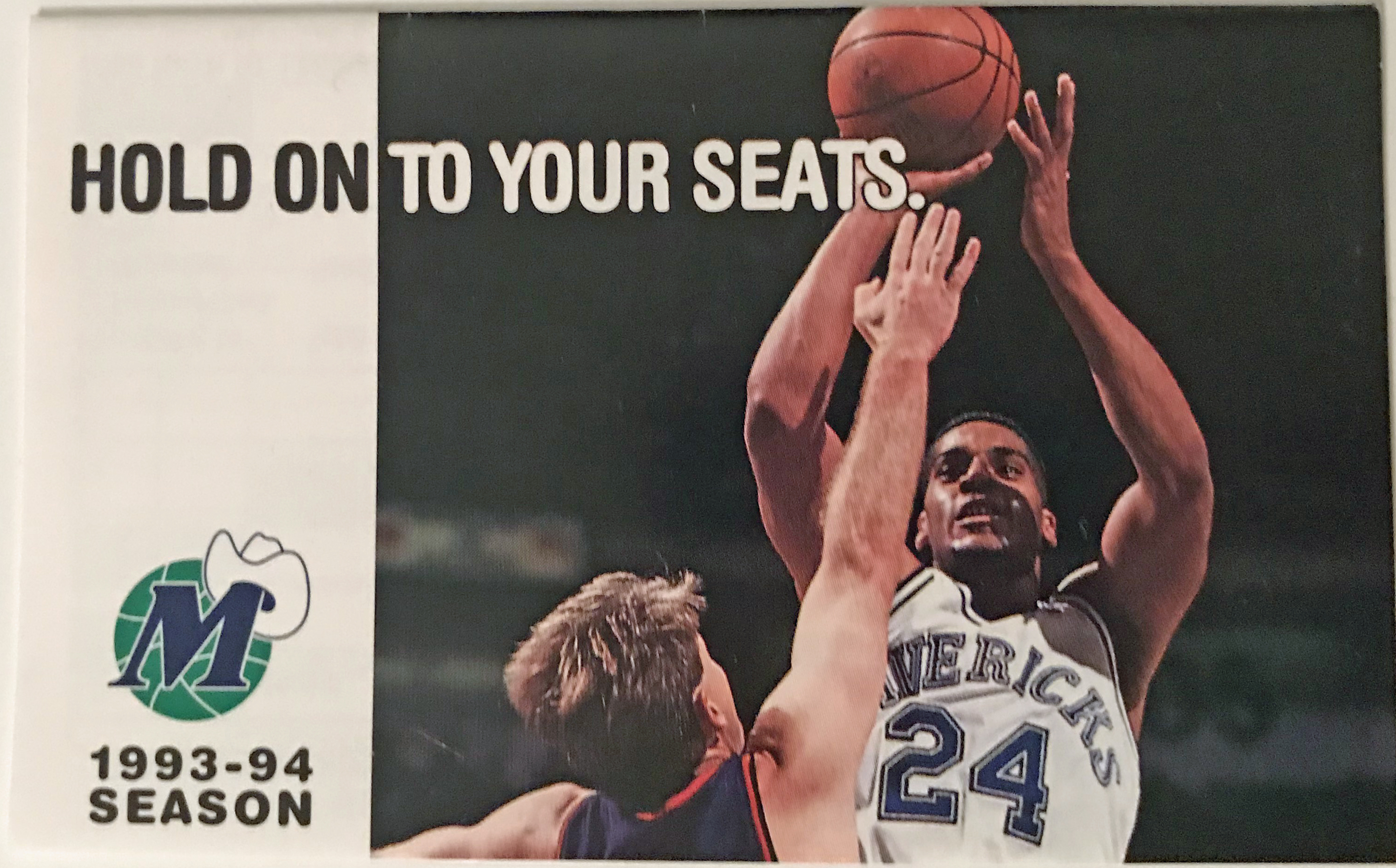
What if you wanted to plan ahead a bit, though? Even just knowing when your team played required effort. You either had to have clipped the schedule out of the newspaper when it came out at the beginning of the season or you had to acquire a physical copy, often in the form of a pocket schedule. You would have acquired one of those by traveling to a local merchant, assuming you had been able to find out which ones sponsored the team, or the team offices. And you had to hope it hadn’t changed since the printing date. Game times, broadcast carrier changes, and rainouts could all invalidate a given date on an analog schedule.

Today, you simply pick up your phone on a whim and use a search engine (or a league or team app) to find the latest schedule in a minute.

And say you wanted to watch a game played in another city that didn’t involve your local team? If it didn’t happen to be the game of the week on TV, what would you do? How would you even know the game was being played? If you had purchased a season preview magazine at the beginning of the season and prevented your spouse from throwing it away, it might have schedules for all the teams. You could write a physical letter to the out-of-town team and include a self-addressed stamped envelope, or call the team long distance after first dialing directory assistance for the number. The newspaper might list games a day or two out. Once you decided you wanted to see the game, you had to drive or fly there, and you’d have had a lot fewer flight options before deregulation.

Isn’t it much simpler to just watch it via an ESPN network or one of those NHL Center Ice or NFL Sunday Ticket packages that permit you to access out-of-market contests (and you get a whole season for a less than most plane trips)?

And what about the ancillary parts of watching a game? If a player intrigued you and you wanted to find out more about him, you might have had access to some limited information in a game program. If you wanted to see the rest of his career statistics, you might have needed to buy packs of bubblegum cards until you can across his entry, or travel to the library or bookstore and hope they had the latest edition of the Baseball Encyclopedia or the like. And in terms of asking your buddy what he thought about the game? Well, you could go to a payphone at halftime and hope he was home, though if the game wasn’t on TV he wouldn’t know what you were talking about until he read the story in the paper the next morning or saw 20 seconds of highlights on the evening news. Now you ping him on an easy-to-use social media or messaging app.

For most women’s sports, and any minor league sports, you would have had to go to even greater lengths to find out the information you wanted or see a game played. Almost no television coverage existed, and all the rigmarole noted above for getting to games was extra challenging for non-mainstream sports.

Today, sources like StubHub let you attend even the sold-out games without the complications of resorting to black-market ticket scalpers, and the electronic means listed above let you find a way to watch them with minimal effort.

We often refer to the past as a simpler era. Maybe that’s true in some respects, but not the sports viewing world. It’s never been easier to watch what you want.


Rush Olson has spent two decades directing creative efforts for sports teams and broadcasters. He currently creates ad campaigns, television programs, and related creative projects for sports entities through Rush Olson Creative & Sports, Mint Farm Films, and FourNine Productions.

RushOlson.com
Linkedin.com/company/rush-olson-creative-&-sports
Facebook.com/RushOlsonCreativeandSports

Thursday, October 5, 2017

A Voice Lives On

This post originally appeared in the Blotch section of the Fort Worth Weekly's website. To consume it there : https://www.fwweekly.com/2017/10/03/sports-rush-a-voice-lives-on/

I only met the man in person once.

The meetup came at the Dallas Stars’ media day in September, 2015. The team had just hired Dave Strader as its play-by-play announcer and he had come over to Frisco’s Dr Pepper Arena to observe the goings-on. I chatted with him and his new broadcast partner, Daryl Reaugh. The whole conversation might have lasted a minute. I remember Dave being nice and then I went on to whatever other production duties had presented themselves.

I re-connected with Dave earlier this year. The Stars announcer was scheduled to join his radio counterparts from the Mavericks, Rangers, and Cowboys to swap stories and raise money for charities. I had taken on some producing duties for this event, called Talk of the Town, and needed to work with him on the show. What made it tricky was that we didn’t know if he would be there.

Since I had last seen Dave Strader, the Hockey Hall of Fame had honored his broadcasting excellence by naming him the 2017 recipient of the Foster Hewitt Memorial Award. Dave had also contracted cholangiocarcinoma, a punishing cancer of the bile duct.

We had shot funny (I hope) promotional videos with Eric Nadel, Brad Sham, and Chuck Cooperstein to promote the event. Dave didn’t get to participate in those because he was undergoing treatment. But he retweeted and promoted and did everything he could to support his fellow broadcasters, the event, and the charity he had chosen to benefit from it, the Dallas Stars Foundation.

We had discussed trying to have him participate live via an electronic connection if we could work out the technical details, but I honestly wasn’t sure what to expect and what kind of strength he would have. Then, shortly before the event, we found out good news: Dave would be well enough to fly in and attend the event.

We needed to add his elements to the program. I had collected play-by-play excerpts for all the other announcers and now I got to ask Dave what he wanted. He asked for a Red Wings call, his last as a team broadcaster for that Original Six team. A connection helped me get that from Detroit. He also sent us a voicemail recording sportscasting icon Marv Albert had left him after the Foster Hewitt announcement.

Then, abruptly, Dave’s treatment schedule changed. He wouldn’t be able to make it to Dallas for Talk of the Town. But he felt he would be strong enough to join via Skype if we could make the technical details work (which, luckily, we could). And that evening, we dialed him up and found out he indeed was very much robust enough to connect and contribute.

I had Dave make his entrance in the middle of the program because I wasn’t sure of his stamina. I wish I had dropped him from the beginning, because he gave a fantastic performance. He told great stories, interacted with his fellows, and gave the audience one of the best memories of any charity event I’ve ever worked. I’ll never forget how moved the table of Dallas Stars employees seemed when he appeared on the video screen. When he signed off, they and the rest of the crowd gave him a well-deserved standing ovation.
Talk of the Town might have been the last time he got to use his voice in a live broadcast-style setup to entertain sports fans. It seemed to truly energize him and I think that makes all of us who took part in it feel pretty good.

I had one other regret from the evening. When we were talking about calls to find, Dave had written this: “I would love to have the call of Jamie Benn’s OT goal from Feb 18…my first game game back after my cancer diagnosis. I would also like the clip of Razor’s comment as the players skated over to salute me at the end of the game.”

In hindsight, I desperately wish I had made the extra effort to include that call, which due to exigent circumstances that week, was more of a challenge that it normally would have been. I remember thinking that I would for sure use it for next year’s event, when he would hopefully make a triumphant in-person appearance.

That won’t happen now. Dave Strader died Sunday.

I only met Dave the one time, and communicated with him via email, phone, and Skype a bit. Yet somehow his passing resonated deeply. It didn’t require much exposure to the man to see his passion for people and a deep-seated fervor for life.

Many Stars fans (and those of the other teams for whom he called games) never had the pleasure of meeting Dave even once, but I bet they could tell the same things I could, thanks to the zeal with which Dave broadcast hockey games (and the other sports he did as well).

Many in the hockey business called Dave Strader “The Voice.” Luckily, his voice will live on in the work he did and the calls you’ll be able to listen to online and in hockey shows for years to come. And in the memories of those who knew him, even just a little bit.


Rush Olson has spent two decades directing creative efforts for sports teams and broadcasters. He currently creates ad campaigns, television programs, and related creative projects for sports entities through Rush Olson Creative & Sports, Mint Farm Films, and FourNine Productions.

RushOlson.com
Linkedin.com/company/rush-olson-creative-&-sports
Facebook.com/RushOlsonCreativeandSports