Should Major League Baseball expand internationally?
The subject came up recently in a broadcast on the Phil Naessens Show radio program. You can listen to how Phil and I discussed the issue here : http://www.philnaessensshow.com/atlanta-hawks/how-to-make-fantasy-hockey-more-popular/
How U.S. sports leagues and teams market themselves abroad has been an interest of mine since I worked for one. How can U.S. sports entities generate more business outside the country? Phil and I discussed how expansion has drawbacks in terms of time zones and domestic broadcast contracts. Single exhibition games have limited reach.
I have always felt that freeing up teams to do more of their own marketing outside the country the way association football teams do might represent a lot of the solution. 30 creative teams thinking of ways to push baseball brands, instead of one MLB International office, could power growth.
I wrote about it more extensively here : http://rusholson.blogspot.com/2014/02/teams-need-to-get-out-more.html
I am always happy to discuss big picture sports business solutions - connect with me on LinkedIn or through my website at rusholson.com.
Rush Olson has spent two decades directing creative efforts for
sports teams and broadcasters. He currently creates ad campaigns,
television programs, and related creative projects for sports entities
through his company, Rush Olson Creative & Sports.
RushOlson.com
Linkedin.com/company/rush-olson-creative-&-sports
Facebook.com/RushOlsonCreativeandSports
Showing posts with label international. Show all posts
Showing posts with label international. Show all posts
Tuesday, March 8, 2016

Sunday, January 3, 2016
Making Your Investment in Sport Work
So
you’re an investor and you love sports. Can you feed your passion by getting
financially involved with a sporting entity and still maintain the fiscal
discipline that made you a good investor in the first place? The answer is yes,
and the key is to have a clear idea of what to look for and what to expect.
If
you love sport, some of your return will be non-monetary. You’re going to enjoy
feeling a part of a team, or moving your favorite sport forward, or seeing your
investment on television, or interacting with elite athletes, or rewarding your
hometown’s loyal fans. Those are worth a lot, but you’d still like to recover
your investment, too.

I’m
a sports business guy, not an investment guy, but I’ve been on the inside of a
lot of teams and media outlets and seen what worked and what didn’t. If you’re
an experienced investor, you know how to assess rate of return and the
intricacies of the finance world. The sports business is different from every
other industry, however, and being a sports fan doesn’t necessarily equate to
mastery of the sport management trade. Here then, are some insider insights
into what to look for.
Let’s
start high profile. If you buy into a major league team, you’re looking to win
and you’ll pay for it. Expect cash calls for the purpose of bettering the team
on the field, especially in non-salary-cap sports like Major League Baseball
and European football (soccer). You may make some money during your ownership
experience, but the monetary return most likely comes when you sell. NASCAR has
historically been an exception, with team sales yielding little value, though
that may change with proposed new ownership rules.
Minor
league sports represent a low-margin business. You’ve got to truly love the
game, but also realistically assess how much that love means to you and how
much you can afford to lose feeding it. At the lower levels in the U.S.,
franchises have historically moved and folded frequently. The right situation
can still be a fun and profitable investment, but you have to approach it
realistically.
Whether
you buy a big or small team, quick cash probably isn’t what you should expect.
You
don’t have to buy into a pro team to get into sports, of course. Marketing
agencies, television/media projects, and a host of ventures aimed at those who
play, attend, and work at sports have the potential to produce value. In fact,
many feel a sports background is ideal preparation for becoming an
entrepreneur. For what should you look at in the wider sports world?
Connections : If the venture
requires an entrée into the world of big-time sports to work, do the organizers
have them? If they just have a good idea but not the ability to reach busy
decision-makers, this might not be the place to sink your money.
The Smell Test : Even if you’re not an
experienced sports businessperson, your sense of sport from the fan’s
perspective still counts for something. Does the idea sound cool? Is it
something you’d like to see happen? Is it something you’d be passionate about?
Because some of your return comes from your enjoyment of the project, passion
for the concept counts for something.
Content : Does the venture have
the ability to tap into the huge content engine that is sport? We’ve all read
about some of the huge TV deals teams and leagues have signed recently. In a
fragmented media world, sports retains the ability to deliver the eyeballs of
desirable demographic groups. Does the venture have a television and/or radio
presence? Can it effectively tap into the digital content space?
Growth Potential : Sports is a saturated
market, but there are still profitable niches to be found. Digital technology
has pushed the envelope in sport as it has in every other industry. As the
world shrinks, international sports initiatives become more viable. Finding
untapped markets or disrupting current ones has never been easier (not that
it’s easy, by any means).
You
may have a passion to grow your favorite sport and see its popularity increase,
be it cricket, rugby (union or league), pickleball, jai alai, sumo, or whatever.
Is there a venture that furthers that goal while also potentially turning a
profit?
Value You Can Add : Can your background
or expertise make the venture more viable? It’s important to realize what you
don’t know, of course. You shouldn’t take over the draft room or coach the
defense just because you bought the team, But if your, say, finance or
technical background can help the endeavor grow, that might make it even more
enjoyable to be a part of (while also reducing risk). The likes of Mark Cuban,
Ted Leonsis, and Bill Veeck brought more than a checkbook to their franchises.
Any
investment carries monetary risk (I think I’m supposed to say that somewhere
here in case you make your investment decisions based on emails retrieved from
your spam folder). That’s true in sports as anywhere else. Luckily, sports also
provides a psychic satisfaction that’s hard to reproduce elsewhere. It’s why
those of us who have made it our careers invest time, money, and passion into
it. At some level or other, we’re all invested - hopefully this article helped
you decide which kind of investment might work for you.
Rush Olson has spent two
decades directing creative efforts for sports teams and broadcasters. He currently
creates ad campaigns and related creative projects for sports entities through
his companies, FourNine Productions and Rush Olson Creative & Sports. If
you’d like to further discuss points raised in this post, email him any time at
rush@rusholson.com.
Wednesday, November 18, 2015
Will the U.S. Embrace Cricket? Sachin Tendulkar and Company Try to Make It So
This post originally appeared on the Blotch page at the Fort Worth Weekly's website. To read it on that site : http://www.fwweekly.com/2015/11/17/will-it-be-cricket/

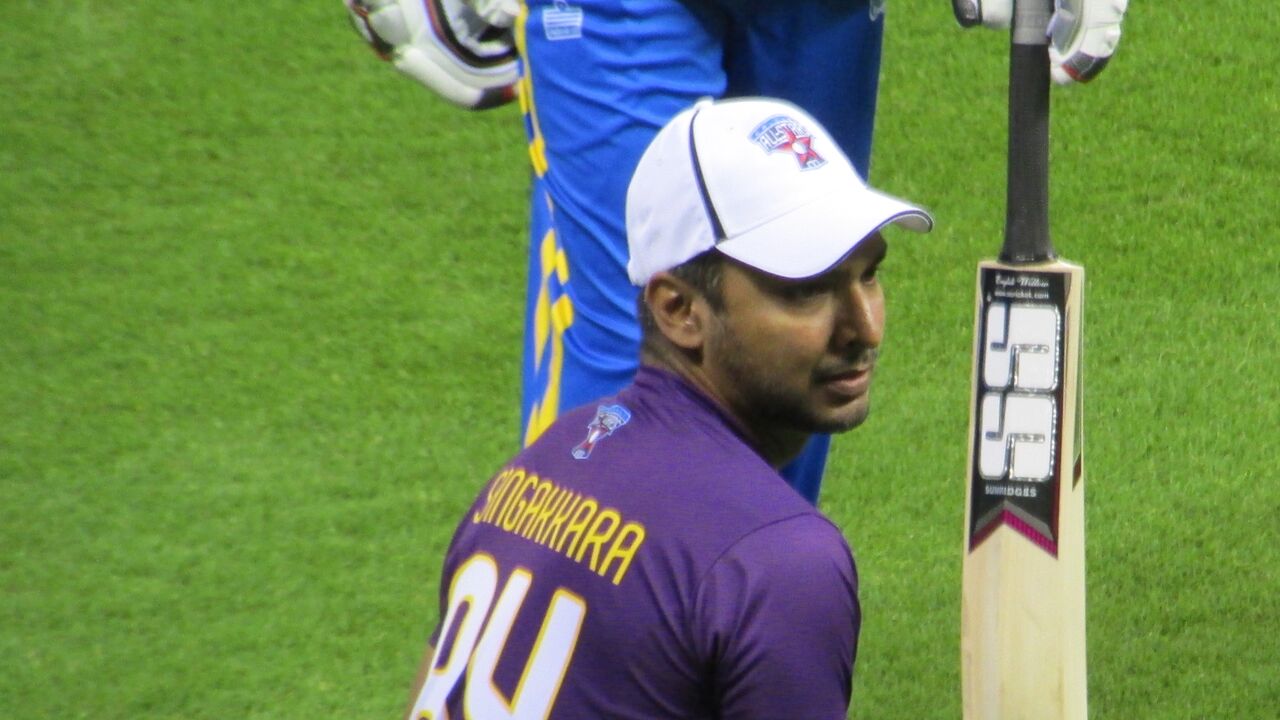
Kumar Sangakkara: “If something is not done right, you don’t say ‘It’s not football’ or ‘It’s not tennis.’ You always say ‘It’s not cricket.’”
 The Sri Lankan batsman knows you’ve probably heard that catchphrase
about his sport. He visited Texas last week as part of a group of
cricketing legends to help you learn why he feels his game does things
right.
The Sri Lankan batsman knows you’ve probably heard that catchphrase
about his sport. He visited Texas last week as part of a group of
cricketing legends to help you learn why he feels his game does things
right.
“It’s given us a lot, and I think everyone here is trying to give back to the game while enjoying themselves and putting up the best spectacle that we can,” he said.
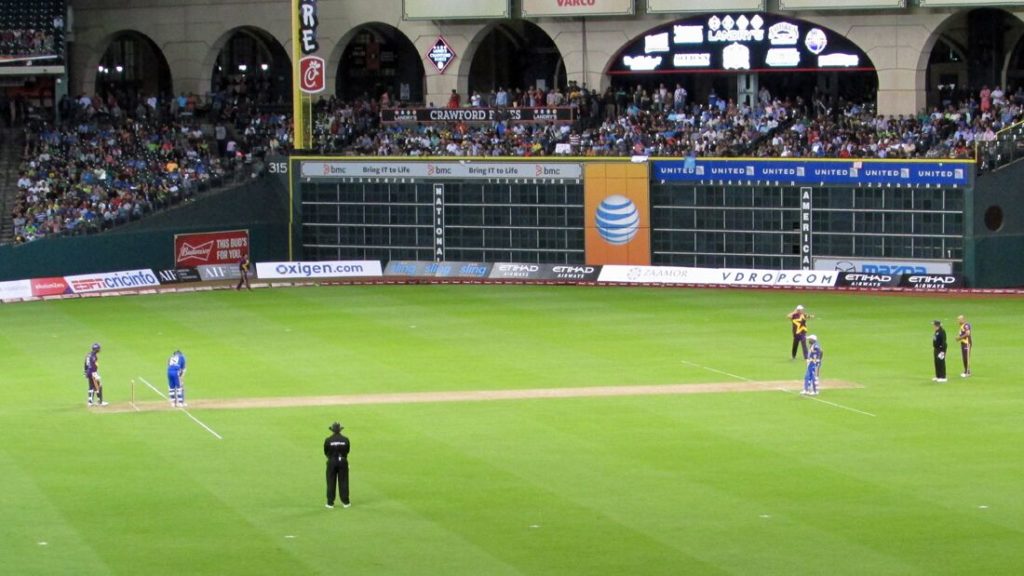
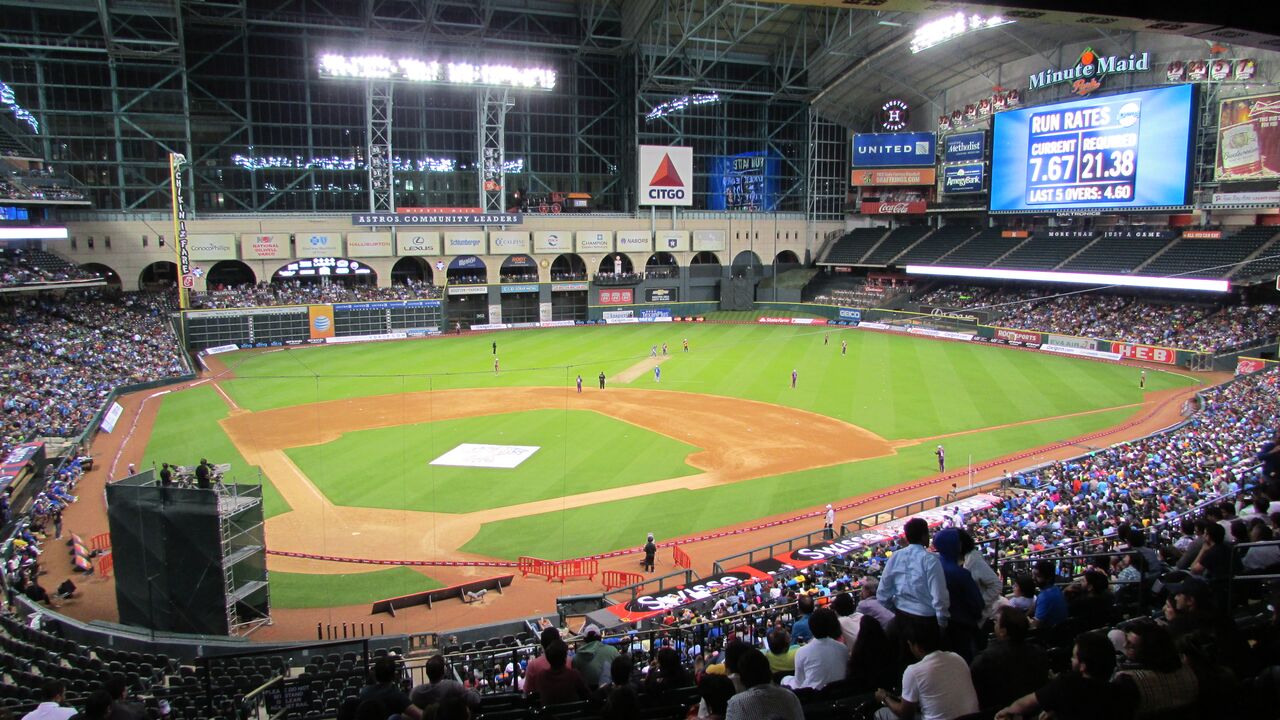
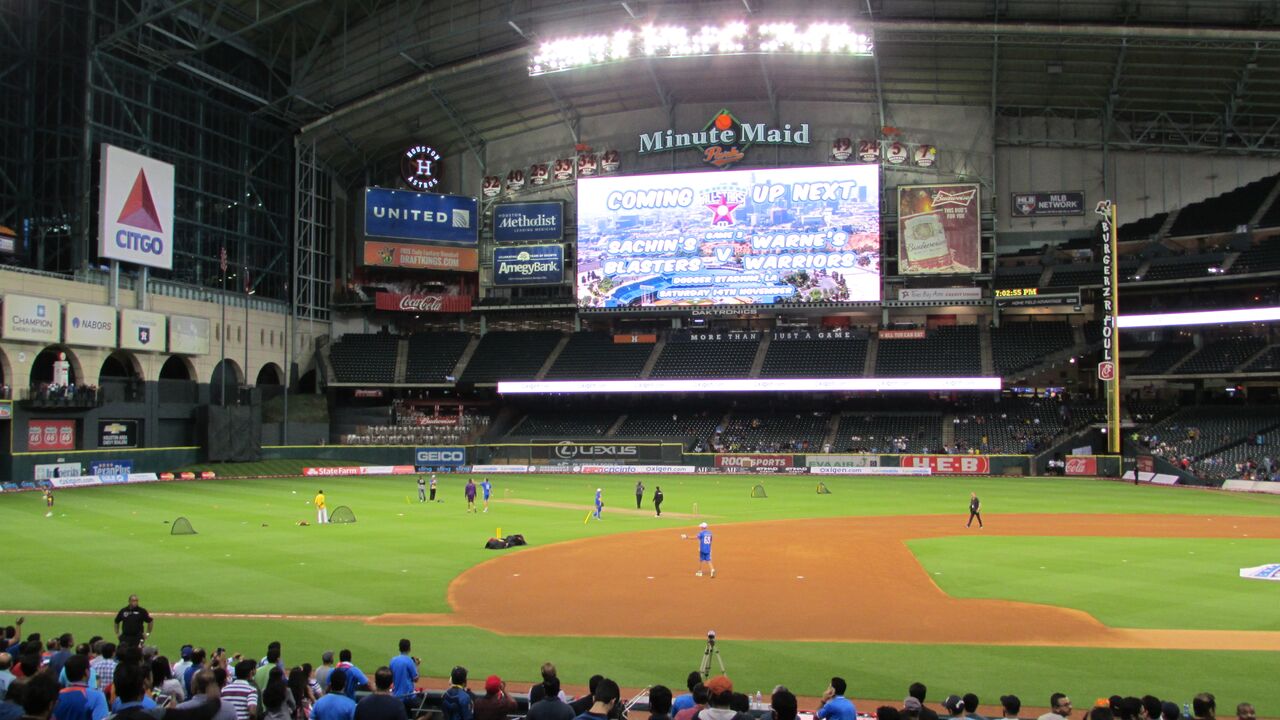
Sangakkara did his part to provide a compelling cricket experience last Wednesday in Houston’s Minute Maid Park, as he produced 70 runs to lead his team to a 262-205 win. The victory came in game 2 of the three-game Cricket All-Stars Series. The matches featured two teams of retired world-class cricketers playing in Major League baseball stadiums. The games did not have television coverage in the U.S., though ESPN3 streamed them online.

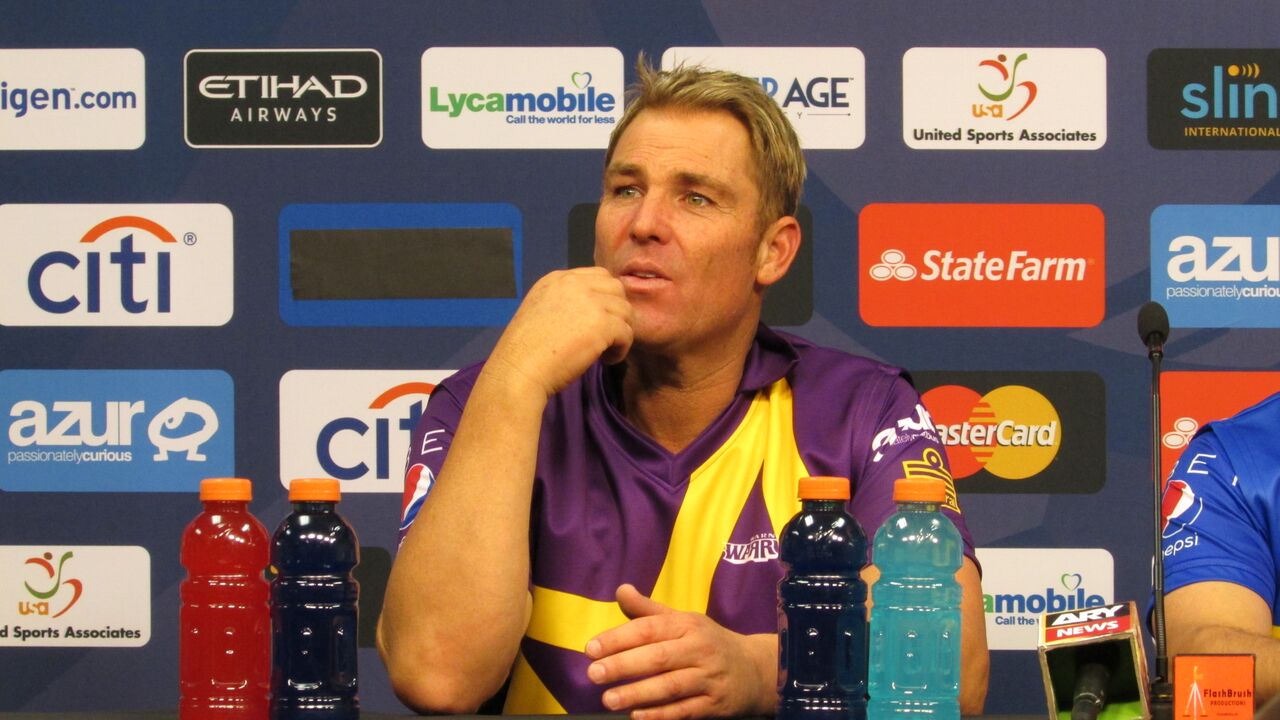
Warne’s Warriors, captained by Australian spin bowler Shane Warne, swept the series against Sachin’s Blasters, helmed by perhaps the most famous cricketer in world history, Sachin Tendulkar.
 If you hadn’t heard of Mr. Tendulkar or any of his fellow All-Stars
until now, don’t feel badly about it. While cricket enjoys a large
following in a number of mostly current or former Commonwealth nations,
the United States is not among the former English colonies where the
game garners a lot of attention. The Cricket All-Stars tour aims to
start elevating cricket’s status in this country.
If you hadn’t heard of Mr. Tendulkar or any of his fellow All-Stars
until now, don’t feel badly about it. While cricket enjoys a large
following in a number of mostly current or former Commonwealth nations,
the United States is not among the former English colonies where the
game garners a lot of attention. The Cricket All-Stars tour aims to
start elevating cricket’s status in this country.

“It’s all about creating interest,” said South African all-rounder Shaun Pollock. “This is a way of using ourselves as a vehicle to expose the USA to cricket.”
Tendulkar and Warne identified the tour as a potential catalyst for driving the game’s worldwide growth.
“We’re here to globalize cricket,” said Warne. “We’d love everyone to play it.”
Raj Ramakrishnan of Australia-based United Sports Associates helped organize the tour. He sees establishing cricket’s foothold in the United States through the tour as an attainable goal.
“The U.S. is a sport-loving country and definitely it will take a big step in moving forward,” he said.
The games drew announced crowds of more than 20,000 in each of three cities: New York, Houston, and Los Angeles. The bulk of the attendees seemed to consist of fans who already knew the game and wanted to see its stars. The cheering in Minute Maid Park, ostensibly led by some University of Houston cheerleaders, was fairly raucous, even in the normally staid press box.
The most well-known of the competitors drew huge roars when he took the field and batted. Signs bearing his likeness proliferated in the stands, including one that read “Houston, God has landed.” While Sachin Tendulkar knew that many had come to see long-admired familiar faces, he felt that even a small percentage of strangers at the game represented a meaningful total.
“Somebody has to start,” he said. “In these spectators, (if) even there are two percent Americans, then two percent is better than nothing.”
Ramakrishnan believes the tour is vital to the success of U.S. cricket.
“There are already a lot of cricket clubs and a lot of kids that do play cricket in the U.S.,” he noted. “We need games like this that help them to watch some of the big legends of this game.”
The All-Stars hope this tour won’t be the last one, either.
“We’d love to come back every year, all of us,” said Warne.
“We want to come here every year and to play in different cities to spread this game that we all love,” Ramakrishnan said.

In each city they visited, the players looked to engage the future of the U.S. game through grassroots clinics.
“We’ve done a lot of coaching for kids” said Warne. “We’ve done a lot of promotion for the game of cricket in New York, here in Houston, (and) all the kids have been happy. We’ve signed lots of autographs. We’ve had expert coaching from all sorts of players – all-rounders, spinners, batsmen, bowlers. I think we’re doing our part at promoting the game of cricket. “
“The whole idea is to motivate as many youngsters as possible to pick up a cricket bat,” said Tendulkar.
“If we see an American holding a cricket bat along with a baseball bat, that’s what we want to see down the track. We want to have everyone enjoy this game,” said Ramakrishnan.
“Maybe one of these kids or some of these guys that we’ve coached in New York or Houston or maybe in L.A., we might see them in one of the World Cups,” said Warne. “That would be fantastic.”
“Hopefully we can sow a few seeds that we can see come to fruition in years to come,” added Pollock.
Cricket has some qualities U.S. sports fans might appreciate, most notably offense. In baseball, an announcer might suggest that an overeager hitter on a team trailing by half a dozen runs tried to “hit a six-run homer.” In cricket, batters do hit six-run homers (aka “boundaries”). While it’s not easy to hit one per se, they happen often enough that chicks who dig the longball will have a lot to cheer. In Houston, six-run shots induced the Astros to set off the home run scoreboard graphics and start the stadium’s train in motion the same way they would have had Chris Carter or Evan Gattis gone yard. The ’Stros finished second in the American League with 230 home runs, but one of these teams might eclipse that total in a single long homestand.

Because the rules mandate using the same ball for long periods of the match, you do have to throw it back on a six, even if your team hit it. The scoreboard needed to occasionally show the American audience a graphic reading: “Can we have our ball back?”
You’ll also see athletic fielding plays and amazing ball control from bowlers. A match doesn’t have to take forever, either. The Twenty20 format played on this tour takes threeish hours to play, a far cry from the days-long test matches many Americans may associate with cricket.
The most important reasons these men feel the world should embrace the sport, however, might be ones that extend past the playing field.
“Cricket is a unique sport because it goes just beyond hitting a ball with a bat. It teaches you a lot of good values that stand you in good stead in life,” said Sangakkara. “Cricket has something great to offer for any young kid playing the sport, be it in the U.S. or be it anywhere else in the world. Us playing here is to ensure that kids are inspired to take up this wonderful sport.”
MMA, poker, soccer, e-sports, rugby union, lacrosse, and other pastimes have started to make inroads into the world’s most important commercial market in recent years. There’s no set formula for taking a sport from small-time to big-time in the U.S.
The All-Stars hope their tour concept will be a catalyst toward Americans considering their game to be, well, cricket.
Tendulkar believes that process has begun.
“It will take time for Americans to pick up a cricket bat, and to understand what cricket is all about, but it has started, for sure. That much I can guarantee.”
Rush Olson has spent two decades directing creative efforts for sports teams and broadcasters. He currently creates ad campaigns and related creative projects for sports entities through his company, Rush Olson Creative & Sports.
RushOlson.com
Linkedin.com/company/rush-olson-creative-&-sports
Facebook.com/RushOlsonCreativeandSports
Kumar Sangakkara: “If something is not done right, you don’t say ‘It’s not football’ or ‘It’s not tennis.’ You always say ‘It’s not cricket.’”
 The Sri Lankan batsman knows you’ve probably heard that catchphrase
about his sport. He visited Texas last week as part of a group of
cricketing legends to help you learn why he feels his game does things
right.
The Sri Lankan batsman knows you’ve probably heard that catchphrase
about his sport. He visited Texas last week as part of a group of
cricketing legends to help you learn why he feels his game does things
right.“It’s given us a lot, and I think everyone here is trying to give back to the game while enjoying themselves and putting up the best spectacle that we can,” he said.
Sangakkara did his part to provide a compelling cricket experience last Wednesday in Houston’s Minute Maid Park, as he produced 70 runs to lead his team to a 262-205 win. The victory came in game 2 of the three-game Cricket All-Stars Series. The matches featured two teams of retired world-class cricketers playing in Major League baseball stadiums. The games did not have television coverage in the U.S., though ESPN3 streamed them online.
Warne’s Warriors, captained by Australian spin bowler Shane Warne, swept the series against Sachin’s Blasters, helmed by perhaps the most famous cricketer in world history, Sachin Tendulkar.
 If you hadn’t heard of Mr. Tendulkar or any of his fellow All-Stars
until now, don’t feel badly about it. While cricket enjoys a large
following in a number of mostly current or former Commonwealth nations,
the United States is not among the former English colonies where the
game garners a lot of attention. The Cricket All-Stars tour aims to
start elevating cricket’s status in this country.
If you hadn’t heard of Mr. Tendulkar or any of his fellow All-Stars
until now, don’t feel badly about it. While cricket enjoys a large
following in a number of mostly current or former Commonwealth nations,
the United States is not among the former English colonies where the
game garners a lot of attention. The Cricket All-Stars tour aims to
start elevating cricket’s status in this country.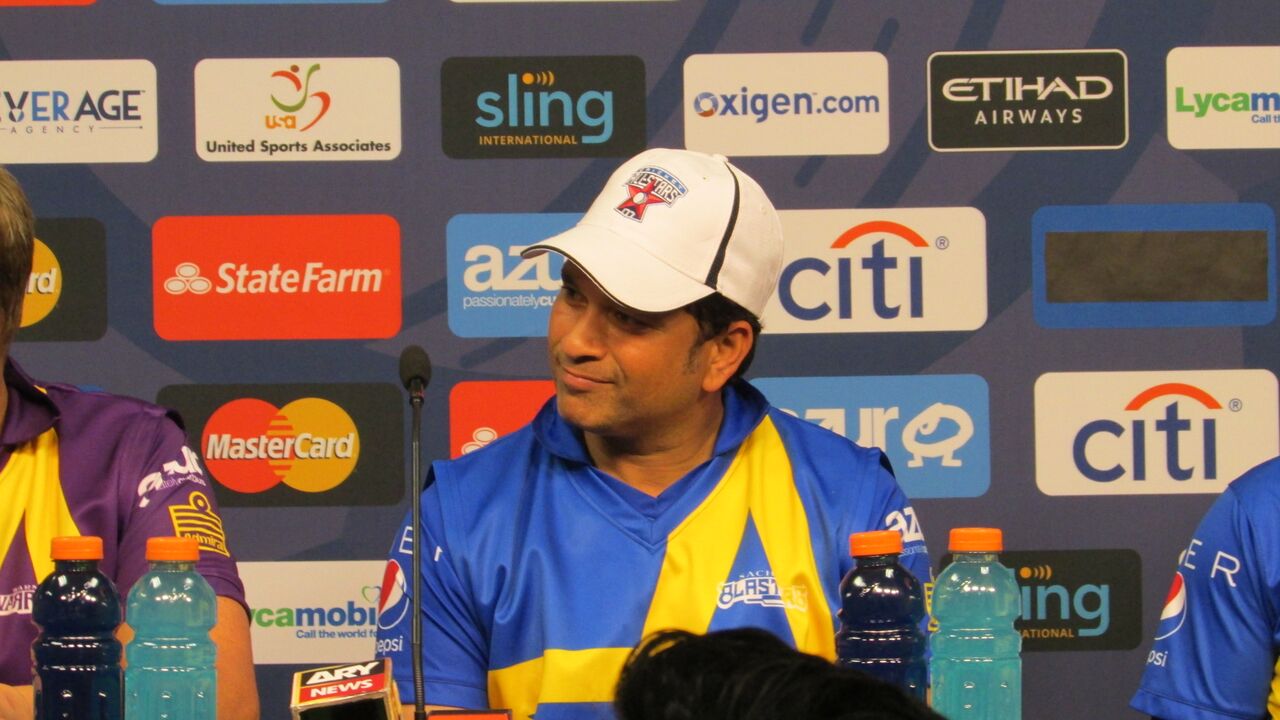
“It’s all about creating interest,” said South African all-rounder Shaun Pollock. “This is a way of using ourselves as a vehicle to expose the USA to cricket.”
Tendulkar and Warne identified the tour as a potential catalyst for driving the game’s worldwide growth.
“We’re here to globalize cricket,” said Warne. “We’d love everyone to play it.”
Raj Ramakrishnan of Australia-based United Sports Associates helped organize the tour. He sees establishing cricket’s foothold in the United States through the tour as an attainable goal.
“The U.S. is a sport-loving country and definitely it will take a big step in moving forward,” he said.
The games drew announced crowds of more than 20,000 in each of three cities: New York, Houston, and Los Angeles. The bulk of the attendees seemed to consist of fans who already knew the game and wanted to see its stars. The cheering in Minute Maid Park, ostensibly led by some University of Houston cheerleaders, was fairly raucous, even in the normally staid press box.
The most well-known of the competitors drew huge roars when he took the field and batted. Signs bearing his likeness proliferated in the stands, including one that read “Houston, God has landed.” While Sachin Tendulkar knew that many had come to see long-admired familiar faces, he felt that even a small percentage of strangers at the game represented a meaningful total.
“Somebody has to start,” he said. “In these spectators, (if) even there are two percent Americans, then two percent is better than nothing.”
Ramakrishnan believes the tour is vital to the success of U.S. cricket.
“There are already a lot of cricket clubs and a lot of kids that do play cricket in the U.S.,” he noted. “We need games like this that help them to watch some of the big legends of this game.”
The All-Stars hope this tour won’t be the last one, either.
“We’d love to come back every year, all of us,” said Warne.
“We want to come here every year and to play in different cities to spread this game that we all love,” Ramakrishnan said.
In each city they visited, the players looked to engage the future of the U.S. game through grassroots clinics.
“We’ve done a lot of coaching for kids” said Warne. “We’ve done a lot of promotion for the game of cricket in New York, here in Houston, (and) all the kids have been happy. We’ve signed lots of autographs. We’ve had expert coaching from all sorts of players – all-rounders, spinners, batsmen, bowlers. I think we’re doing our part at promoting the game of cricket. “
“The whole idea is to motivate as many youngsters as possible to pick up a cricket bat,” said Tendulkar.
“If we see an American holding a cricket bat along with a baseball bat, that’s what we want to see down the track. We want to have everyone enjoy this game,” said Ramakrishnan.
“Maybe one of these kids or some of these guys that we’ve coached in New York or Houston or maybe in L.A., we might see them in one of the World Cups,” said Warne. “That would be fantastic.”
“Hopefully we can sow a few seeds that we can see come to fruition in years to come,” added Pollock.
Cricket has some qualities U.S. sports fans might appreciate, most notably offense. In baseball, an announcer might suggest that an overeager hitter on a team trailing by half a dozen runs tried to “hit a six-run homer.” In cricket, batters do hit six-run homers (aka “boundaries”). While it’s not easy to hit one per se, they happen often enough that chicks who dig the longball will have a lot to cheer. In Houston, six-run shots induced the Astros to set off the home run scoreboard graphics and start the stadium’s train in motion the same way they would have had Chris Carter or Evan Gattis gone yard. The ’Stros finished second in the American League with 230 home runs, but one of these teams might eclipse that total in a single long homestand.
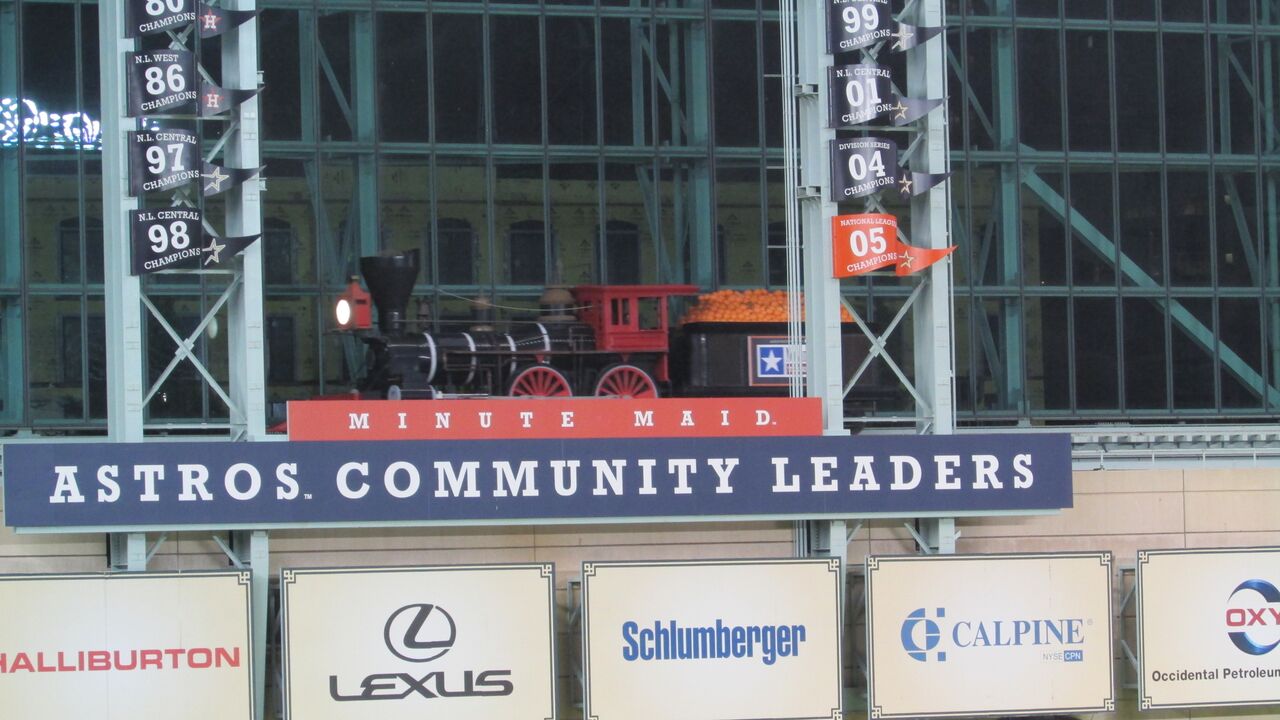
Because the rules mandate using the same ball for long periods of the match, you do have to throw it back on a six, even if your team hit it. The scoreboard needed to occasionally show the American audience a graphic reading: “Can we have our ball back?”
You’ll also see athletic fielding plays and amazing ball control from bowlers. A match doesn’t have to take forever, either. The Twenty20 format played on this tour takes threeish hours to play, a far cry from the days-long test matches many Americans may associate with cricket.
The most important reasons these men feel the world should embrace the sport, however, might be ones that extend past the playing field.
“Cricket is a unique sport because it goes just beyond hitting a ball with a bat. It teaches you a lot of good values that stand you in good stead in life,” said Sangakkara. “Cricket has something great to offer for any young kid playing the sport, be it in the U.S. or be it anywhere else in the world. Us playing here is to ensure that kids are inspired to take up this wonderful sport.”
MMA, poker, soccer, e-sports, rugby union, lacrosse, and other pastimes have started to make inroads into the world’s most important commercial market in recent years. There’s no set formula for taking a sport from small-time to big-time in the U.S.
The All-Stars hope their tour concept will be a catalyst toward Americans considering their game to be, well, cricket.
Tendulkar believes that process has begun.
“It will take time for Americans to pick up a cricket bat, and to understand what cricket is all about, but it has started, for sure. That much I can guarantee.”
Rush Olson has spent two decades directing creative efforts for sports teams and broadcasters. He currently creates ad campaigns and related creative projects for sports entities through his company, Rush Olson Creative & Sports.
RushOlson.com
Linkedin.com/company/rush-olson-creative-&-sports
Facebook.com/RushOlsonCreativeandSports
Tuesday, September 1, 2015
Harlequins : Onside with Rugby in the U.S.
We have a special video blog this week, created in conjunction with our partners at the Fort Worth Weekly and Ludisian Legion Entertainment. It's got interesting sports business insights and sound bites from a cool kid we met.
Rush Olson has spent two decades directing creative efforts for sports teams and broadcasters. He currently creates ad campaigns and related creative projects for sports entities through his company, Rush Olson Creative & Sports.
Rush Olson has spent two decades directing creative efforts for sports teams and broadcasters. He currently creates ad campaigns and related creative projects for sports entities through his company, Rush Olson Creative & Sports.
Tuesday, August 25, 2015
Béisbol, Southern Style
This post originally appeared on the Blotch page at the Fort Worth Weekly. To read it on their site : http://www.fwweekly.com/2015/08/25/beisbol-southern-style/


Rush Olson has spent two decades directing creative efforts for sports teams and broadcasters. He currently creates ad campaigns and related creative projects for sports entities through his company, Rush Olson Creative & Sports.
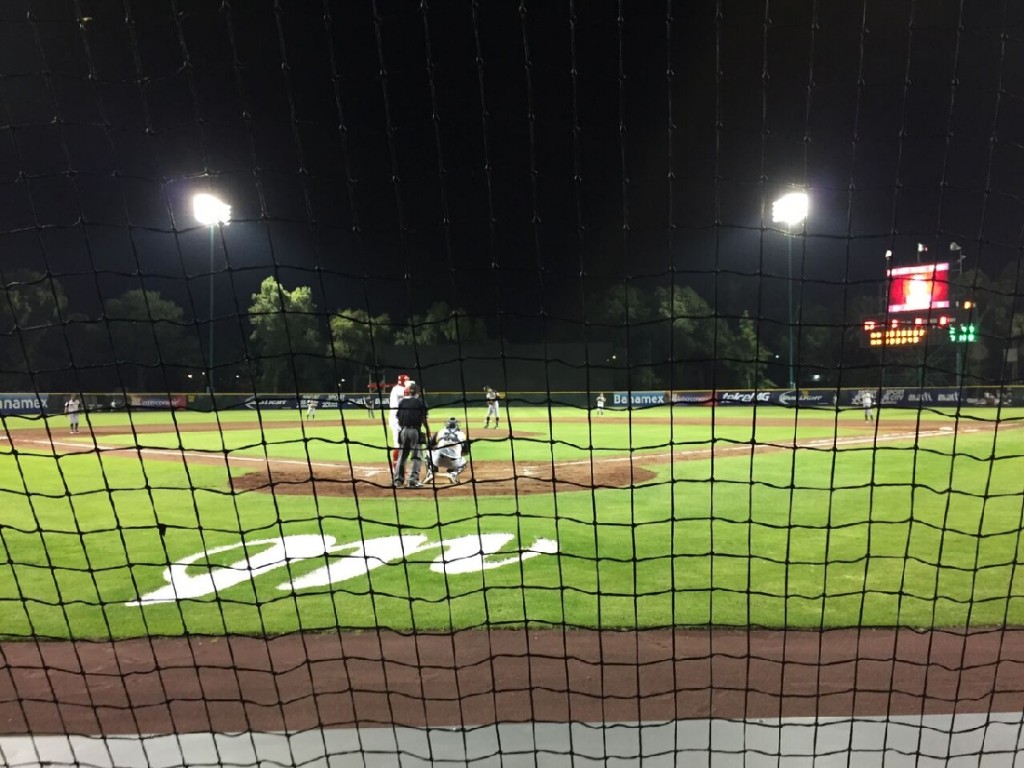
Baseball is the same everywhere, except that in some places the mascot might stand ten yards behind the third baseman, almost in fair territory, and a vendor might bring you donuts and Icees at your seat.
Attending a sporting event in another country means enjoying the aspects of the game you already love, like superb running catches and perfectly thrown 12-to-6 curveballs. It also means getting to enjoy unfamiliar nuances that make the presentation unique.
On a recent visit to México City, I didn’t eat the ballpark donuts because I had already filed myself with burritos and tortas from the concession stands. I did do a double-take when I saw the Diablos’ doglike mascot, Rocco, hang out a step and a dive from the leftfield line as the players kept playing, oblivious to the guy (or woman) in the costume. I thought about how jealous Rangers Captain will be when I tell him he could be cantering mere feet from Adrian Beltre during a game.

The Diablos Rojos del México franchise plays in its nation’s capital and is one of the country’s top teams. Rangers fans may remember the red-clad jugadores from the exhibition games they played in 2012 and 2013 at what is now Globe Life Park in Arlington. I feel sure that experience seemed as different for them as visiting their home park was for me.

The yard where I watched the Diablos take on the Aguascalientes Rieleros isn’t actually the club’s true home. Their regular stadium, the Foro Sol, is unavailable this season. That facility sits in a turn of the Mexico City Formula 1 auto racing track and is undergoing renovations in preparation for a race over Halloween weekend. The game took place in the nearby estadio Fray Nano, a much smaller ballpark situated among a group of fields used for recreational sports. They’ll play there this year and next until a new stadium opens in 2017. Fray Nano measures 408 to centerfield and 327 to the foul poles, so its dimensions satisfy American professional expectations. The team did a superb job of making it feel as polished and inviting as possible, and provided a game experience on par with that of good U.S. Minor league teams. Photos of players plaster the back walls of the main seating bowl. The press box shared space with several suites. The scoreboard had a video screen, and while it didn’t show replays, it did offer well-designed graphics and crowd prompts.
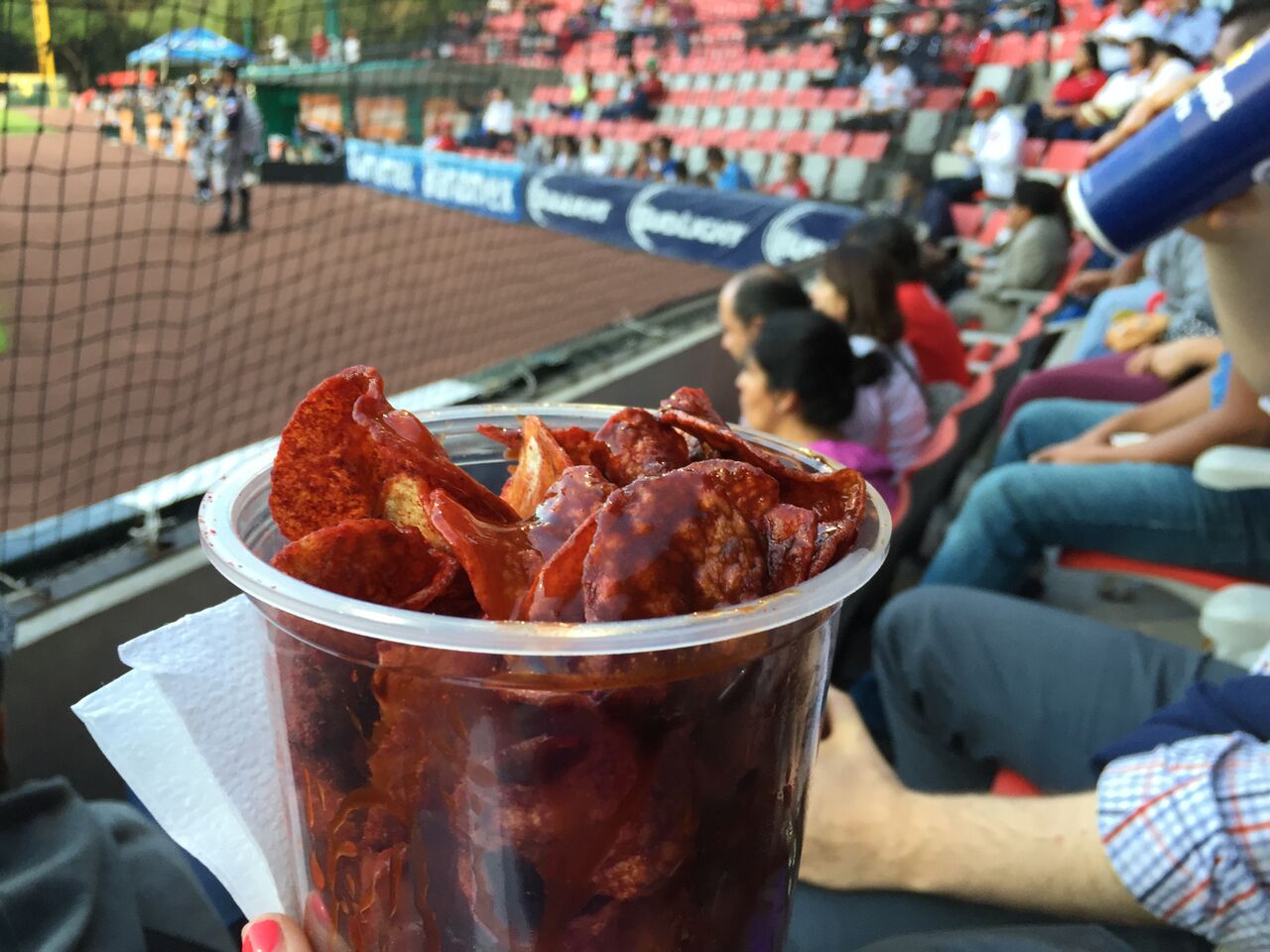
The food selection extended far beyond standard stateside baseball fare. An American fan would be pleased with the number of offerings. Whether his stomach could handle the hot sauces in which natives might douse a cup of potato chips or a taco would likely prove another matter entirely. Other concession stand selections include fruits, vegetables, flautas, and sushi. The Fray Nano happy hour allows you to buy 24 ounces of Corona for half price (a little less than $2.50) until 8pm.
On the field, the quality of play is high. The Mexican summer league is considered near Triple-A quality. Late-inning relievers showed mid-90s fastballs and both the home team and the Rieleros played error-free baseball.
We talked strategy the same way one would at a Rangers game. Should the Diablos’ manager have burned through his bullpen playing matchups in the 7th? Why, after throwing two swinging strikes outside, then a ball a little further outside, would the pitcher then shake off his catcher several times and throw an inside fastball? Aguascalientes’ Ramón Ramírez must have wondered the same thing after what turned out to be his last pitch of the night ended up over the right field wall for a grand slam.
Ancillary on-field details differ from their American equivalents, including:
- Everybody wears the socks high, including batboys.
- Team pants and jerseys carry sponsor logos.
- The batboys were mostly little people who took their jobs seriously and did them well.
- Said batboys don’t stay in the dugout during play. They station themselves near what would be the on-deck circle were one marked off. If the catcher drops his mask chasing a pop-up, the batboy retrieves it for him.
- Foul balls might go all the way out of the stadium. Be alert if you’re headed for the beer stand.
- All the players line up outside the dugout to congratulate the batter after a home run.
- The stadium sits close to the airport and descending planes appear to be within range of a Josh Hamilton or Nelson Cruz longball. Surely that’s an optical illusion, right?
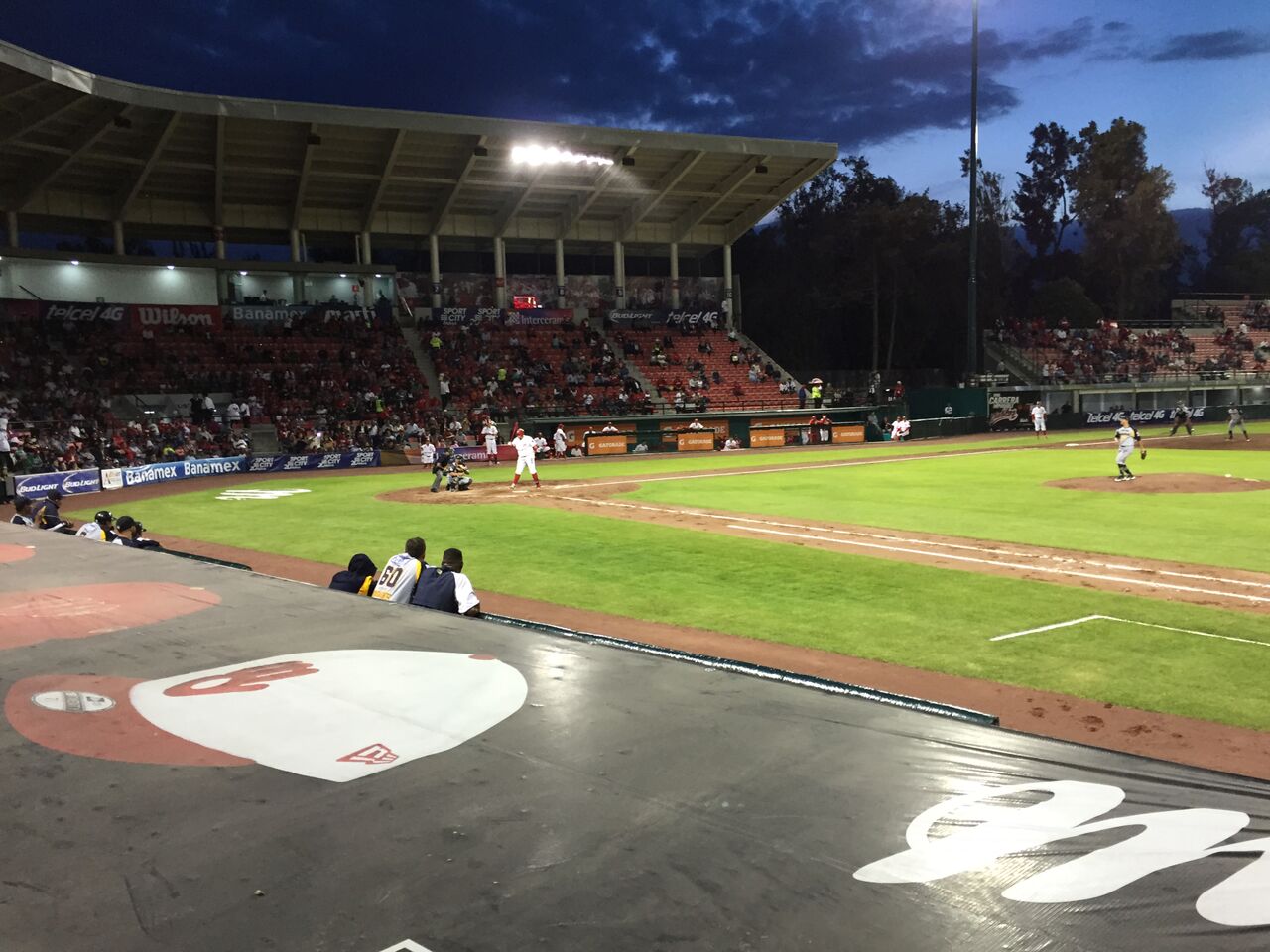
Rangers fans may remember one guy who looks to have airliner power. Japhet Amador played with the Diablos when they visited Globe Life Park. He stands a memorable 6’4”, 310. With an OPS over 1.100 and more than 40 home runs already this season, he generated a buzz among the spectators when he approached the plate. Unfortunately, Aguascalientes mostly pitched around Amador, walking him three times, so we didn’t get to see him launch any balls 747-ward.
Some Americans play in this league. Californian Cyle Hankerd has put up big numbers hitting behind Amador. The Diablos have employed several former Major Leaguers at various times this season, including Boston native Manny Delcarmen, who blew a save in the 8th the night I attended. They also have a Texan, catcher Luis Flores of Del Rio, who got as high as Triple-A in the Cubs and Astros organizations.
The atmosphere, even on a Monday night, was compelling. We saw a few fans with wigs and others rattled matracas when the situation suggested noise. Coordinated chants chimed in even after an opposition jonron: Diablos, Diablos, rah, rah, rah!”
In the later innings, a prompt from scoreboard resulted in a “Vamos Diablos” cheer.
I didn’t quite understand the playing of Billy Joel’s “Uptown Girl” after the third inning and I cringed a bit when the Tomahawk Chop song started up. “Rock and Roll, Part 2” was also a big player. However, I was pleased to hear a number by Austin’s Eric Johnson as we exited the ballpark.
I spotted spectators wearing gear for at least half the Major League teams. A kid in our section had a Mike Piazza Mets shirt and another guy sported the untenable combination of a Yankees jersey and a Red Sox cap. A México shirt with a deer and antlers made me flash back to the 2010 Rangers.
Also noticed among the attendees: a Tom Brady Patriots jersey, an FC Dallas jacket, and a dude in a Cramps shirt. A seemingly random assortment of Padres, Cardinals, and White Sox shirts were on sale alongside Diablos gear in the team shop.

You can’t buy Diablos Rojos tickets terribly far in advance (I’ve seen stateside teams try that strategy as well and never liked it), but the scalpers can get a lot closer to the gates than they can in the U.S.
People all over the world, with different backgrounds and customs enjoy baseball, and I’m sure you will in México as well. I did notice one potentially polarizing difference, however, with this ballpark. Like in Fort Worth bars and 1970s Arlington Stadium, you can smoke there. I looked up and saw a guy puffing away in a suite. Try to keep your American sensibilities to yourself (or else offer the guy a light – a universal gesture of friendship).
Rush Olson has spent two decades directing creative efforts for sports teams and broadcasters. He currently creates ad campaigns and related creative projects for sports entities through his company, Rush Olson Creative & Sports.
Friday, July 10, 2015
The Liverpool Way: Texas Style
The goalkeeper dived to his right. His outstretched hand made just enough contact with the ball to deflect it over the crossbar. As he landed, the red “Liver bird” logo on his left shoulder hit the ground with the rest of his torso. He stood, yelled at his defense, and got set to defend the ensuing corner kick.
While a home game for Liverpool, it did not take place at historic Anfield in Liverpool, England.
It was in North Fort Worth.
Specifically at the Eagle Mountain-Saginaw school district’s Rough Rider Stadium.
And it wasn’t technically the Reds in action – no one was expecting to see Steven Gerrard, the Liverpool legend who recently became a member of the Los Angeles Galaxy. It was the Liverpool Warriors, who don’t compete in the Premier or Europa leagues but in the National Premier Soccer League, a semi-pro league that represents the third tier of U.S. soccer.

The Warriors, however, are still affiliated with the U.K.-based franchise. In 2009, North Texas businessman Peter Brody worked out an agreement with the Merseyside club to not only use the name of Liverpool FC America but also establish in-kind support for an academy.

The Warriors, however, are still affiliated with the U.K.-based franchise. In 2009, North Texas businessman Peter Brody worked out an agreement with the Merseyside club to not only use the name of Liverpool FC America but also establish in-kind support for an academy.
“Our contract allows us to have the United States market,” said Tim Trevino, who oversees business relations and marketing for LFCA, whose office is in The Colony. Their players wear their trademark red shirts on fields from Rockwall to Burleson, and they also just reached an agreement to conduct activities at Rolling Hills Park in Fort Worth.
“One of the parents who has a child that plays in our club works for the Fort Worth Parks Department and he was seeing the growth of Liverpool. He was seeing a lot of things that he liked and actually set up a meeting with their Parks Department,” Brody explained. “They’re going to allow us to train teams out there, to run tournaments, and to help promote the Liverpool Way, the Liverpool brand out of Rolling Hills. We pay them a fee for usage of the field.”
Any clubs or players, Trevino said, “in the United States that [have] interest in being part of Liverpool [have] to come through us.”
Unlike the dozens of other soccer clubs and academies in North Texas, some also with major club affiliations, the LFCA folks believe their superior curriculum differentiates them from the rest. Technical Director Armando Pelaez also feels LFCA is more integrated with its parent club than its North Texas competitors are with theirs
“We are part of Liverpool directly,” he said. “As you can see, we are called ‘Liverpool.’ It’s not ‘Solar’ or ‘Texas,’ and then they have the little logo that says, ‘Manchester City’ or ‘Chelsea.’ We are Liverpool.”
Brody explains further. “A lot of clubs will create kind of what we call a ‘patch on the sleeve’ relationship, where you’ll maybe do a camp or you’ll pay some money to one of the big England Premier League clubs.” He indicated that those sorts of relationships don’t typically go much further, and he feels the Liverpool relationship runs much deeper.
The last time a North Texan got involved with Liverpool soccer ownership, it turned out poorly for everyone involved (except for maybe some lawyers).
In February 2007, Tom Hicks bought half of Liverpool FC in England, splitting the purchase with partner George Gillett. At the time, Hicks owned the Texas Rangers and Dallas Stars and Gillett the Montreal Canadiens. The Americans generated goodwill early on by authorizing sizable spending in the transfer market, roughly equivalent to the free-agency period of the big four American sports. But the good feelings soon dissipated as the debt-burdened ownership fought among themselves, alienated supporters, and failed to break ground on a promised new stadium. Hicks and Gillett unwillingly sold the club to Boston Red Sox owner John Henry in 2010, and the legal fallout lasted until 2013. By then, the Rangers and Stars had gone through bankruptcy and Hicks no longer held his once-significant sports empire.
The LFCA operation’s aspirations differ from the ones Hicks failed to realize. Brody made his mark in the soccer business by setting up Blue Sky Sports Centers in 1999. He now has locations in Keller, Euless, Allen, and The Colony.
Through the Liverpool partnership, he hopes to create a nationwide system of clubs in the United States that all bear the Liverpool brand name.
Dan White, Liverpool FC’s head of soccer schools, said he has reason to expect solid results from this Texas collaboration.
“The most important thing [about LFCA] was the quality of the overall program, ensuring that the very best environment is in place for the players to thrive,” White said via e-mail. “It was also important that they share the same values as LFC and are continually looking to improve the way they operate.”
Brody began the Liverpool affiliation while looking for a superior training program for two of his children who played soccer.
“I started looking around to potentially create something that was very kid-focused and kid-friendly and was also going to be focused on the development, and yet I wanted a strong enough brand that would help us really drive forward in a very crowded market. And so I started reaching out to Premier League clubs, because the brand is probably one of the best in the world. And one of the clubs that was at least willing to hear what I had to say was Liverpool.”
Brody began the relationship by working with supporters groups.
“After two to three years of trying to build the club and build the relationship with Liverpool, they came back and said, ‘We really like what you guys are doing, we like how you are doing it, let’s go ahead and make this an official relationship,’ ” Brody recalled.
The affiliation comes through Liverpool’s International Academy program, which works with local clubs in a dozen countries.
“In our international academies and soccer schools around the world, we provide opportunities for young players to play The Liverpool Way,” White said. “The way we do this is via an authentic training program which offers an all-around education for the young participants, helping to improve both their abilities on the pitch and their life skills off it.”
For Liverpool, the academies provide a way to stretch their global reach. The brand loyalty they build through grassroots marketing can translate into merchandise sales and eyeballs for sponsors. From a soccer perspective, it allows them to develop players who could one day contribute to their team on the pitch.
“These programs are about taking the club to the fans no matter how far they live away from Anfield,” White said. “It’s also about playing our part in the development of the game on a local level through both coach and player education.”
With exclusive rights to run Reds-affiliated clubs in the United States, LFCA already has operations in South Carolina and Florida in addition to five regions in Texas. And further expansion is on the way. Trevino said they’re currently talking to approximately 30 local clubs interested in signing up with Liverpool to “have a competitive edge in their particular market.”
LFC and LFCA vet prospective clubs based on factors like size of staff, facilities, and number of “A” licensed coaches, the top coaching level established by the United States Soccer Federation, which runs all organized soccer in America.
Liverpool-affiliated clubs are given access to proprietary “Boot Room” insights and are expected to teach the game the way the parent club dictates. The “Boot Room” draws its name from a former Anfield space of the same name where boots (soccer shoes to Americans) were stored and coaches planned strategy.
The Liverpool Way dates back to 1892, when the club formed amid a dispute with the existing Everton FC club. (The two teams are still intracity derby rivals.) It adopted its city’s “Liver bird” symbol as its own in 1901, the same year the team won its first league title. The first team had on-and-off success until the 1960s and 1970s, when the great manager Bill Shankly established a system that won multiple cups and league titles. Overall, Liverpool has won more European titles than any other English team and more league championships than all but Manchester United. Though recent years have seen the club garner less silverware, it has avoided relegation to lower leagues (which can happen in European sport) and regularly challenges for berths in prestigious continental competitions. Its past successes could certainly add credibility to its sales pitch to prospective club players.
The large and devoted fan base embraces tradition. “You’ll Never Walk Alone,” from the 1945 Rodgers and Hammerstein musical Carousel, was not only a hit in 1963 for Liverpool’s second most famous musical export, Gerry & The Pacemakers. The song also quickly became the team’s anthem. Fans sing it before every home game and often at other junctures as well. And The Kop, named for a historic Anfield terrace, has become a term used to mean the seating section, the club’s most devoted supporters, or even the club itself. “Team spirit, hard work, determination, and the ability to overcome any obstacles in life” are, according to the team’s promotional materials, the Reds’ core values, values that White wants taught wherever the Liverpool brand appears.
“Our international academy and soccer school programs are about delivering an authentic LFC experience, so what we’re actually striving for on a daily basis is consistency,” he said. “Whether we are working with a young player in Sweden, India, Egypt, Japan, or the U.S.A., the core coaching is always the same.”
Like most U.S. youth athletic clubs, Liverpool FC America runs boys and girls teams across a range of ages. The youth squads bear the names of Liverpool FC legends like Shankly, Keegan, and Dalglish. Liverpool insists on adherence to club tradition, such as social media silence on the anniversary of the infamous Hillsborough disaster, when 96 Liverpool fans lost their lives. To ensure students understand the full picture, the parent club takes a hands-on approach with its affiliates’ coaches.
“We provide ongoing technical support,” White said. “We send LFC coaches to work in situ, and we welcome coaches from the U.S.A. over to Liverpool for an intensive coach education program each year.”
LFCA coaches go to England annually.
“We sit down, and we see all the sessions about what is going on from the youth system to the top team,” Pelaez said.
Two LFCA academy players have already been to England for training. While it’s still a long shot that any LFCA player will end up on the Reds, he still knows that he will now be on the Premier League team’s radar.
“We just had two coaches from the U.K. that were here running camps and programs for us that attended Warriors games and were able to look at some of the boys,” Brody said. “So if they do want to consider possibly trying to pursue soccer at even a higher level than that, it’s a great bridge for them to be able to do that.”
Pelaez has also used connections from his days as a professional player to set up a trip to the continent to showcase his American players.
“Twenty-two players will be traveling to Europe, training over there, getting some friendly games, and being seen by the teams abroad,” he said. “If they’re good enough, probably some of them will get an offer to stay.”
He hopes interest in his players from overseas teams will also eventually translate into opportunities to represent their country in international competitions. The United States Soccer Federation runs national sides that range in age from under 14 to under 23. Pelaez specifically cited the under-18 and under-20 teams as the ones his players might work into if they gain playing time abroad.
An athletic club system, the primary developmental model in Europe, has different tiers of teams. They typically range from the youngest kids’ squads all the way up to a first team made up of professionals playing in one of the country’s top leagues. The Warriors are at the top of LFCA’s pyramid.
“It allows our kids a chance to play at a highly competitive level,” Brody said.
Eventually, the LFCA coaches and administrators want their No. 1 team to consist entirely of players who have come up through the LFCA system. Even now, though, a number of young up-and-comers appear in the regular lineup, some as young as 17. From a developmental perspective, having the Warriors helps LFCA determine how well they have coached and evaluated at the lower levels.
The Warriors team “is the highest level [in the American club’s structure], and it is always interesting to see how the final product works after you develop it,” Peleaz said. “You want to see if the job you did during all these years is the one that will be effective at the highest level, so you will know the truth by getting these players that you’ve been developing into the Warriors.”
The coach hopes the Warriors can offer up-and-coming academy players the chance to play against quality competition, as well as mix in LFCA graduates who have played at the college or pro levels.
The team attracted the likes of Edvaldo Pedro, a central midfielder originally from the African country of Angola who speaks very good English. “I had played in [U.S. Soccer’s] Olympic development program for about five or six years, and I played freshman year at Lipscomb University in Tennessee,” he said.
He got on with Liverpool in America when the team started four years ago when he was only 16 years old, earning a roster spot among some 200 players who tried out in Plano. “The regular playing time helps me compete. I just want to keep developing and eventually play professionally.”
The 2015 Warriors haven’t won a lot in the NPSL. Sitting in last place in the South Central Conference, 21 points behind first place Corinthians FC of San Antonio and 20 behind second-place FC Wichita, the team is still adjusting to the high level of play, Coach Peleaz said. After a loss Saturday to a Vaqueros side reduced to 10 men after their goalkeeper’s red card, Peleaz said he was less interested in scoreboards than developing his charges. Rather than keep his starters in throughout the game, he substituted frequently (the NPSL allows seven substitutions per game).
“I made [all] seven subs because to me, the NPSL is still a development league,” he said.
Coach Pelaez does believe that wins may come more frequently in the future.
“If I was able to keep this group of young gentlemen for two or three years, it’s a fact that this group would become a champion within three years,” he said.
The Warriors ended up in Rough Rider Stadium thanks to a connection from an LFCA coach who also works for the Eagle Mountain-Saginaw school district. Trevino said the Warriors would likely remain at the facility next season, but they won’t play in Fort Worth forever. For one thing, the stadium sits within the Fort Worth Vaqueros’ territory. More importantly, an LFCA facility under construction in Carrollton will include a 1,000-seat stadium to supplement indoor and outdoor training fields.
Brody said he chose Carrollton after the city’s parks director approached him based on the Blue Sky Sports partnerships he had created with Allen, The Colony, and Keller. He decided it made sense to make the project Liverpool-branded and will house the LFCA offices there. The city will also add a retail component to the development.
“It’s a public-private partnership where the city actually leases us the dirt, and then we build the facility and operate it as a part of the Parks Department,” Brody said. “We still do have to pay some taxes on it.”
Training philosophies may help the club differentiate itself among customers who want to pay $2,500-$3,000 plus expenses yearly to advance their children’s soccer prospects. The Liverpool name may bring huge advantages when it comes to the academy side of its business. An international brand, however, faces different challenges in attracting paying spectators to fill a new stadium. A team like the Vaqueros has its home city in its name and a roster made up entirely of Fort Worth players. It offers a local pride appeal not easily available to a franchised product. To create a fan following, Pelaez believes LFCA’s approach on the training side will have to translate into on-field results.
Fans will come, he said, “if we do a good job developing all these kids, and they go to the Warriors, and we start getting the results we are looking for,” he said. “We have to show the market, especially here in the Metroplex, that we have the right way to develop players, and then the way we are going to show that is by the results of how these players are developing according to how many we get to the top universities or the professional level.”
With a stable location and some marketing, it seems logical that the Warriors might attract the portion of LFC’s massive global fan base that lives in this area. (Fort Worth and Dallas supporters clubs do exist.) If people do turn out to cheer on the team next season, they’ll see players wearing the official kit. The side had previously worn red Liverpooly garb manufactured by Warrior (hence the team nickname) but not the apparel actually worn by the first team in England.

“Liverpool did not allow anybody to wear the replica jersey officially,” Trevino said. “With the new five-year contract that we’ve just signed this past fall, they have allowed us to wear the replica jersey now. So it’s the first time in the club’s history that they’ve allowed a club outside of England to actually wear the replica.”
And the Warriors won’t be the only LFCA team dressed in the authentic shirts.
“We are the first group in the world that will wear the replica jerseys in our youth levels,” Pelaez said. “All the kids will be wearing the red replica just like the first team in England. That’s not happening anywhere else in the world.”
LFCA’s and LFC’s relationship continues to evolve. The parent club experienced a major change earlier this year when an iconic player left for the United States. White said the exposure for such a high-profile product of the Liverpool system could potentially benefit the U.S.-based club.
“Steven [Gerrard] is a fantastic role model for the young players on our programs around the world,” White said. “Having progressed through the club’s youth development system to go on and make such a significant contribution for club and country serves as a real inspiration for those just starting out in the game.”
When Gerrard takes the field against FC Dallas on Saturday, Aug. 15, at Toyota Stadium in Frisco, some lucky youngster associated with his old club’s U.S. affiliate will hold the legend’s hand and accompany him onto the field. Can Liverpool FC create a lasting presence in the area and the country? They have linked hands with LFCA to find out.
 |
| Steven Gerrard (photo courtesy LA Galaxy) |
This article originally appeared in the Fort Worth Weekly. Read it at their site here : http://www.fwweekly.com/2015/07/08/the-liverpool-way-texas-style/
Rush Olson has spent two decades directing creative efforts for sports teams and broadcasters. He currently creates ad campaigns and related creative projects for sports entities through his company, Rush Olson Creative & Sports.
RushOlson.com
Linkedin.com/company/rush-olson-creative-&-sports
Facebook.com/RushOlsonCreativeandSports
Subscribe to:
Posts (Atom)