Showing posts with label ticket sales. Show all posts

Wednesday, November 9, 2016

What Does a Left Turn Sound Like?

This post originally appeared at the Fort Worth Weekly's website. To view it there : https://www.fwweekly.com/2016/11/09/racing-on-the-radio/

“Let’s go trackside and get it all started here in Texas.”

Now that Doug Rice had made the call, it should have been time for racers to start their engines. But instead of beginning Sunday’s AAA Texas 500, a crucial race in the NASCAR season, 40 cars sat on pit road under car covers. A brief rain shower had made the track too wet to race, and the Texas humidity made drying it, even with jet dryers, a challenge.

Texas Motor Speedway hosts two races each year, in April and November, in the highest tier of stock car racing, NASCAR’s Sprint Cup Series. Drivers once competed in automobiles you could buy at a dealership, though today’s high-performance racing vehicles only loosely resemble the Fords, Chevys, or Toyotas a fan might drive to the track. From humble roots in the South, NASCAR has become America’s most popular motor sport, with a season running from February’s iconic Daytona 500 to the season championship in Homestead, Fla., the weekend after next. In that final race, the National Association for Stock Car Auto Racing will declare the fastest of four pre-determined drivers the overall winner for 2016. In a playoff system called the “Chase for the Sprint Cup,” it has culled its highest-ranked drivers down to a final eight, and any of those who win one of the three races immediately preceding the Homestead event, including the one at TMS, would automatically qualify as one of those last four drivers with a chance to win the whole thing. And even for drivers not in the Chase, winning a race is huge.

Thus drivers and their support personnel waited anxiously for the track to dry, as did thousands of fans at TMS. In addition, a crew of 18 headset-wearing NASCAR enthusiasts was preparing to embark on its own marathon of sorts.
*****

They were the men and women of the Performance Racing Network, a company for which Rice has worked since 1988. PRN’s president and lead announcer also told me during the stoppage that he has learned to not let the weather bother him, because it’s all part of the gig.

PRN understands racing’s nuances. The company has been in business since 1981. It’s a property of Speedway Motorsports, Inc., the same group that owns Texas Motor Speedway.

The only other major radio network that covers all NASCAR Sprint Cup racing is Motor Racing Network. The Daytona Beach-based International Speedway Corporation owns MRN, as well as racetracks where NASCAR holds 19 of its 36 Sprint Cup races. They cover all the races held at those tracks, plus those at Dover and Pocono. PRN handles lap-by-lap coverage for the dozen races staged at SMI’s tracks and partners with the IndyCar Radio Network for the Brickyard 400. The Indianapolis Motor Speedway, site of the Verizon IndyCar Series racing circuit’s Indianapolis 500, hosts the Brickyard 400. Individual tracks can choose their radio broadcasters, though NASCAR controls all television rights.

Based in North Carolina at Charlotte Motor Speedway, PRN produces a number of NASCAR-themed radio talk shows as well, though Rice noted, “The main crux of what we do is cover live Sprint Cup and live Xfinity [Series] racing.”

Fans can listen to their productions on a number of outlets, including local affiliate radio stations, satellite radio, online, and at the track over a dedicated frequency on the scanners that fans can rent or buy at the race.

*****

Every time I’ve listened to a stock car race on the radio, I’ve come away amazed.

One announcer talks, then another, and then a third and a fourth. Each picks up where the other left off, somehow keeping up with cars traveling close to 200 miles per hour without interrupting a colleague. Then a wreck happens, and suddenly they’re narrating that chaos, and minutes later they’re talking to the driver whose race has ended. It all sounds so smooth to your ears and mine, but I know, behind the scenes, it can’t be.

Having worked in a lot of TV trucks covering sporting events with multiple cameras, I’ve seen how hectic it can get keeping up with a pair of teams playing with two or three announcers describing the action. So I always wanted to know how a crew could possibly manage a broadcast involving 40 teams on a mile-and-a-half playing surface with a half dozen or more commentators –– and all without the benefit of pictures.

The PRN folks, said NASCAR veteran Jeff Burton, who won 21 top-level races before moving into television, “have a passion for what they do, and they put a lot of work into making sure they bring what’s going on on the racetrack to the fan that’s not able to see it.”

PRN’s people spend their lives, and a lot of weekends, away from home, immersed in racing because, as PRN pit reporter Brad Gillie put it, they “live and breathe the sport.”

In some ways, they have a dream gig, one that millions of fans who religiously follow drivers like Burton no doubt envy. That doesn’t mean it’s an easy job. NASCAR’s complicated nature makes up part of the circuit’s appeal.

“Before the race ever starts,” Rice said Friday, “myself and whoever’s co-anchoring, we decide who’s calling the last lap. That way, there’s no scramble.”

After the green flag waves to begin the race, fans listening on their preferred device hear a succession of voices describing the action. Listeners might wonder how each broadcaster knows when to talk. It turns out they rely on some standard progressions as they follow the field of cars. Rice calls the action on the track’s frontstretch before turn announcer Rob Albright takes over.

“When I stop, Rob automatically knows to pick them up, and about turn one he will take them into turn two, halfway down the backstretch, and when he stops talking, Pat Patterson knows. He picks up the baton and takes it back to turn four, and [co-anchor] Mark [Garrow] and I alternate laps. That way, while one of us is talking, the other one can be looking up something or attending to other details. So that’s like a relay race.”

An automobile race never consists of one smooth sequence. Sometimes the focus must change from the cars circling the track to other areas of interest. Rice takes cues from a colleague in the booth.
“The director is the one that’s telling us when to go downstairs, which pit reporter to talk to.”

Wally Leavitt, who served as Sunday’s director, said, “I will keep track of the pit reporters primarily and who has who. If we got green flag or yellow flag pit stops, I will have to make sure that we get the throw down to them.”
“Let’s go down to Brad Gillie.” –– Doug Rice, cueing his pit reporter
“There’s four of us on pit road, and we basically divide up pit road into quarters,” Gillie explained. “We’re down there telling the story behind the curtain. Because in our sport, we’re unique in that we do get to be in the huddle. We do get to hear the strategy as it’s playing out.”

In painting the picture of whether or not those strategies succeed, the broadcasters don’t have actual pictures to help them.

“All we have is our voice,” Rice said. “It’s not like television. There is no ‘Ready [camera] one, take one.’ It goes off feel.”
“Watching up front now, Kevin Harvick starting to close the distance here to the leader.” – Pat Patterson, tracking the No. 4 car’s progress
In a television truck, a director bears the responsibility for choosing what goes on the air next. While scanning multiple camera monitors does require a great deal of skill, the TV director can use his eyes as well as his ears to select his next source. A radio director or on-air presenter can only listen. Every person on the crew must master the art of mentally processing multiple audio streams simultaneously.
“In my ear, I’m listening to the scanner and listening to their in-car communication,” Gillie said of the device he uses to hear what the drivers and pit crews say to one another during a race. “I’m scanning the drivers in my section of pit road that are relevant.”
“Kyle Busch wanted to come in much, much sooner.” – Brad Gillie, reporting what he had learned about a pit stop
“If I know there might be a developing story, I might lock it on a particular driver or something like that,” Gillie said. “If I have the race leader, I might spend more time listening to that channel.”

*****

Gillie also has to listen to his director and to what’s actually going out over the air, in case one of his on-air colleagues suddenly pitches to him.

Rice has to talk while monitoring three audio feeds, including the official race communication channel.

“In the booth,” he said, “I hear the director. I hear ‘program’ –– what’s going on the air –– and I monitor NASCAR. Their channel is in my ear, and I can hear everything the race director is saying. Mainly what I’m listening for are keys to a caution. He’ll say, ‘Debris, turn two’ and put out the yellow [caution] flag. So you kind of condition yourself to not hear all the other chatter, but I hear that, and I hear penalties.”
“He made two pit stops as the lucky dog car. That’s penalized him and cost him a lap.” Doug Rice, explaining a Kurt Busch mishap
Leavitt, who normally works for the IndyCar Radio Network but filled in with PRN at the races in Charlotte and Fort Worth, listens to all those sources plus the engineers.

“The hardest part is to make sure that you are listening to the person you really need to listen to, because everybody’s talking at once, and you need to make sure that you’re listening to the one source that you want to know the information from.”

Making sure all those sounds get to all those ears means an extensive technical operation under supervision of PRN lead engineer Harrill Hamrick, who mixes the show from a truck near the garages. In Fort Worth on Sunday, no technology could remedy one of a sports broadcaster’s most untenable situations.
 
“Weather always adds a huge unknown X factor to this,” Rice said.
“If weather comes in, it’s going to finish this race and for Carl Edwards, it could be Christmas come early.” –– Mark Garrow, after an exemplary pit stop gave Edwards the lead
 *****

During Sunday’s delay, Rice and his colleagues stayed on the air long enough to explain the situation to the audience and to speak to a special booth guest: Chuck Norris.

 
The former Walker, Texas Ranger star had come to the track to announce the names of the eight Chase drivers. He helped PRN fill time by talking about Chuck Norris facts. He likes them and finds them funny.
“Chuck Norris eats bullets for breakfast. Watch out when he burps.” – Norris, on the “Chuck Norris fact” that his 10-year old son suggested

The speedway displayed a variation on the meme on their Big Hoss video board, a mockup of Norris kicking Michael McDowell’s car into a wreck. When a real mishap occurs on the track, the normally jocular announcers treat it as nothing to laugh about.

“After he made the pit stop, one of the tires that came off the car blew right after they brought it over the wall, back into the pit. It blew right in the face of tire specialist Mason Jennings. His ears are ringing. The doctors came in and looked at it. They have taken him to the infield care center.” –– pit reporter Jim Noble describing an accident involving Paul Menard’s crew

“In the event of an accident,” Rice said, “we never, never, never speculate about a driver being injured. That’s why we have reporters that go to the infield care center, and somebody will be there. If there’s a serious injury, somebody’s going to come out and talk. I mean, I don’t care what the circumstances are. I don’t care what our turn announcers or pit reporters can see. You’re not a medical doc. Don’t speculate on it. Let somebody else do that.”

PRN’s veteran broadcasters know auto racing’s protocols. Still, a reporter like Gillie must often approach a driver during testy times, such as after a mechanical issue has forced his or her ride off the track.
“If the car goes to the garage, and it’s a part of the story of the race – because that’s our job is to tell the story of the race – then we’ll go down there, and it might be, ‘Hey, I’ve got a report from the garage. Here’s what happened to the car. They broke this.’ It might be I’ve got a report, and then five minutes later, I’ve got the driver because they’re out of the car, and we interview them.”

As official race broadcasters, PRN personnel have clearance to speak to drivers even as the race continues around them. Tone and approach become crucial to turning access into information.

“You’ve got to get the answer that you’re looking for, but the way you present the question might make all the difference in the world,” Gillie said. “I don’t think you want to go out there and just say, ‘You know, man, it looks like what you did was pretty stupid.’ ”
“Austin, would you call that a racing incident?” –– pit reporter Steve Richards after Austin Dillon’s car got knocked out of the race
Drivers understand broadcasters must cover the tough parts as well as the victories.

“They get it,” Gillie said. “Most all these drivers are wonderful about doing that.”
Burton believes the unique nature of motorsports helps foster collegiality between the contestants and those who cover them regularly.

“I think what makes our sport really, really special is that contact,” Burton said. “Think about the NFL. They’re with different broadcast people every week. The local [team] has their own radio station, but the network changes, as opposed to NASCAR. You’re with the same people pretty much every week. You’re either with PRN or MRN, or you’re with Fox or NBC [on the TV side]. And so you get to know everybody.

“I always viewed the broadcasters,” he continued, “whether it was radio or TV, when you interacted with them, they were coming to talk to you to get information to relay it to the fans, and I always viewed the broadcasters as a conduit to the fans.”
*****

By engaging with reporters, a driver does more than reach out to his followers. He or she also advances the business side of the sport. A driver who talks to the media will likely do so wearing clothing bearing corporate logos. He or she will almost invariably find a way to verbally namedrop one or more companies who pay for association with the race team.
“We had a good AAA Fusion capable of winning the race.” – driver Joey Logano in a post-race interview with Brad Gillie
Sponsors pay for the costs of running a race team. And like most media ventures, advertisers finance the Performance Racing Network.

“Our sales are done internally,” Rice said. “We have a three-person sales staff.”

He sees the audience that his salespeople take to market as pretty well defined.
“Speaking of the fans, Doug, we constantly say thank you to the NASCAR fans because they are die-hard.” – Mark Garrow, offering love to rain-soaked spectators
“People that are going to take time out of their day to listen to a race broadcast, they’re P1s,” Rice said, referring to the radio industry term for the most loyal listeners to a given outlet. “They know what they want, and it’s not our job to go out and spread the gospel of NASCAR. We’re preaching to the converted.”

In Fort Worth, the congregation can find PRN’s work on 95.9-FM The Ranch, whose bosses signed on this year to carry PRN’s Texas race broadcasts and tap into its listener base.
“A couple of Toyotas battling for the lead here at Texas Motor Speedway!” –– Doug Rice, excited about a tight contest
The Ranch also believes racing will appeal to its existing listeners.

“There’s synergy with our audience,” said Gerry Schlegel, president of LKCM Radio Group, which owns The Ranch. “That is a very Texas-centric audience. We kind of have this wide-open attitude, no-limits kind of attitude, which reflects very well with the spirit of Texas Motor Speedway.”
The station also worked a promotional deal with the racetrack that bills itself as “No Limits, Texas.”

TMS has “put together a great relationship with the Ranch, not just for the broadcast that PRN does but for a lot of the other stuff that Texas [Motor Speedway] does as the official radio station,” said Gillie, who graduated from Euless Trinity High School, lives in Fort Worth, and formerly worked for the speedway.

One might interpret NASCAR followers’ transfer of loyalty from sport to sponsor as naïve, an example of less-than-sophisticated thinkers being influenced by advertising. More likely, it represents a true understanding by those fans of how such relationships work. Brands want to cultivate those fans’ loyalty through their sponsorships. By providing them what they want, fans do their part to ensure the viability of their favorite drivers and their favorite sport.

Such is the NASCAR culture. As sports fans, and racing fans in particular, it perhaps reflects a desire to feel a bond with something beyond the grind of everyday jobs and challenges. We all wear the shirts, caps, and underwear of our favorite sports teams. Sports radio broadcasts, perhaps more than any other mass medium, serve much the same function by allowing us to bring our passions into our spaces, at our desks, on our commutes.
“I had to bring my Thanksgiving pants.” –– Doug Rice, during a booth visit by a Miss Sprint Cup spokeswoman, referencing a dinner Sprint had bought them
*****
With the NASCAR season’s final pair of races at non-SMI tracks, PRN’s AAA Texas 500 broadcast represented its final one of 2016. However, they won’t sit idle until February’s Daytona races restart NASCAR’s calendar.

“We have a big meeting at PRN,” Rice said, “basically outlining the calendar for next year. What are we going to do better? What are our new initiatives going to be?”

As much planning as PRN staffers will do in their short offseason, when the time comes to race again, they will once more find themselves dealing with situations at the track that nobody expected. In fact, when it comes to a NASCAR broadcast, the unpredictable parts take top priority.

“One cardinal rule that we have maybe above all else is live action on the track supersedes everything,” Rice said, “whether it’s a pit report or somebody that’s supposed to be interviewed in the booth. If there’s live action going on on the racetrack, especially a battle for the lead, that trumps everything else and until that’s settled, Brad’s pit report, or this person we’ve got to interview, or this story, or this piece of salesmanship can wait.”
“Trouble in turn four!” –– Pat Patterson, interrupting a sponsored segment to report a wreck
To establish proper priorities, and create the workflows to accomplish them, one has to understand the essence of one’s business. It’s a lesson Rice learned at the first running of the Brickyard 400 in 1994 from a pair of seasoned colleagues at the IndyCar Radio Network.

“They’re probably 20, 30 years older than me. And I’d met them the day before, so they knew who I was. So one of them was sitting there having coffee, and he looks at me he goes, ‘So what is it you do again?’

“And I said, ‘Well, I’m with Performance Racing Network. We broadcast NASCAR races.’

“He goes, ‘That’s not what you do.’

“And I’m like. ‘Yeah, it is.’

“He said, ‘No, that’s not what you do at all. You’re in the transportation business,’ and I said, ‘What are you talking about?’

“He goes, ‘It’s your job when you’re broadcasting that race to transport the guy driving down the interstate, or working in his garage, or out on his bass boat, from where they are to where you are.’ He said, ‘If you can get that battle won in their head, and they are mentally at the racetrack with you, that’s what you do. You’re in the transportation business.’

“I went, ‘OK, you’re right.’ And I think about that every race we do.”

*****

At Sunday’s event, they never got to transport the listener to the finish line for the waving of the checkered flag. Though the race did eventually start after a six-hour delay, a second downpour ended the contest several laps short of the planned 500-mile run. NASCAR officials informed Carl Edwards he had won as the cars sat idling on pit road. We’ll never know which announcer would have called the winner across the finish line.

It’s all part of the unpredictability of sport. This sport, and bringing it to those who love it, is what PRN is all about. They have, in fact, found the right business.

“They make magic,” Schlegel said. “These guys are incredible. The description, it’s very high-energy, super-fast pace. They cut from one person to the next. They’re describing exactly what they see in front of them, sparks flying off the fenders. You can hear the engines and the energy is unlike any other kind of broadcast.

“They really pull you in like you’re at the race. It’s remarkable.”

Rush Olson writes the Fort Worth Weekly’s sports blog and produces sports content and related endeavors through his companies Rush Olson Creative & Sports and FourNine Productions. Read more of his interview with Jeff Burton in this week’s Sports Rush blog post, found in the Blotch section at fwweekly.com.

RushOlson.com
Linkedin.com/company/rush-olson-creative-&-sports
Facebook.com/RushOlsonCreativeandSports

Wednesday, November 18, 2015

Will the U.S. Embrace Cricket? Sachin Tendulkar and Company Try to Make It So

This post originally appeared on the Blotch page at the Fort Worth Weekly's website. To read it on that site : http://www.fwweekly.com/2015/11/17/will-it-be-cricket/


R1

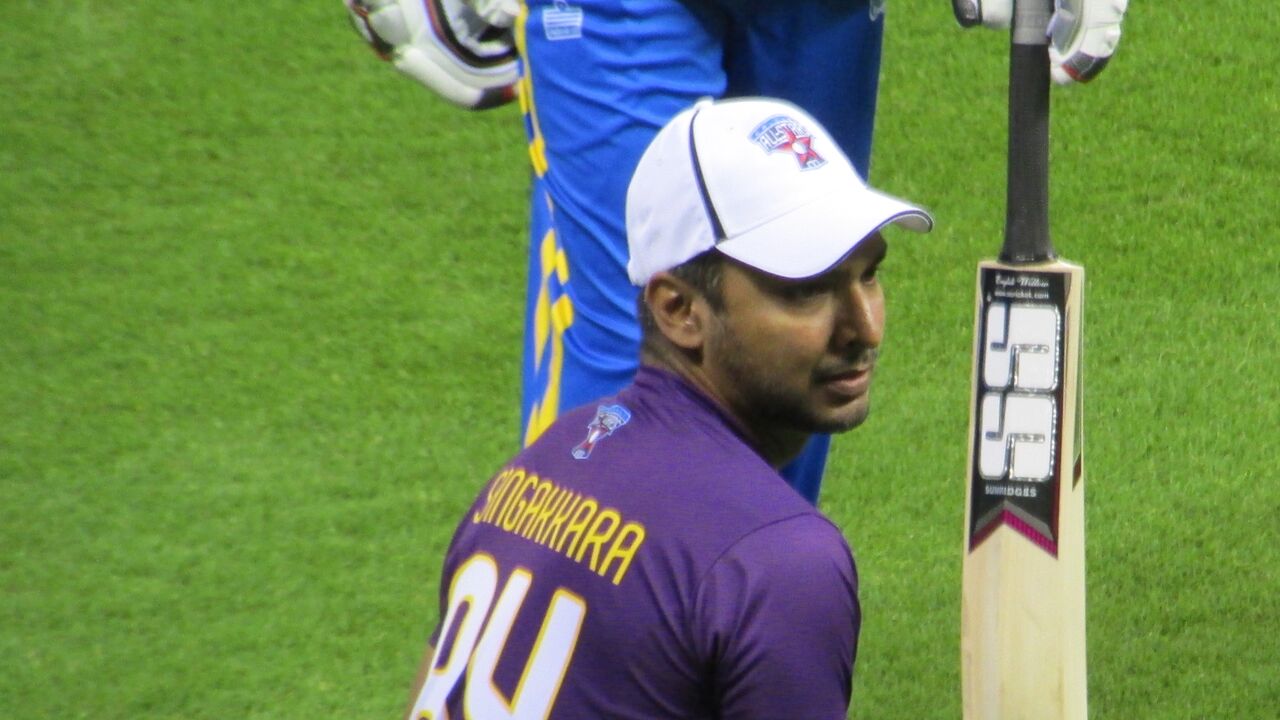
Kumar Sangakkara: “If something is not done right, you don’t say ‘It’s not football’ or ‘It’s not tennis.’ You always say ‘It’s not cricket.’”

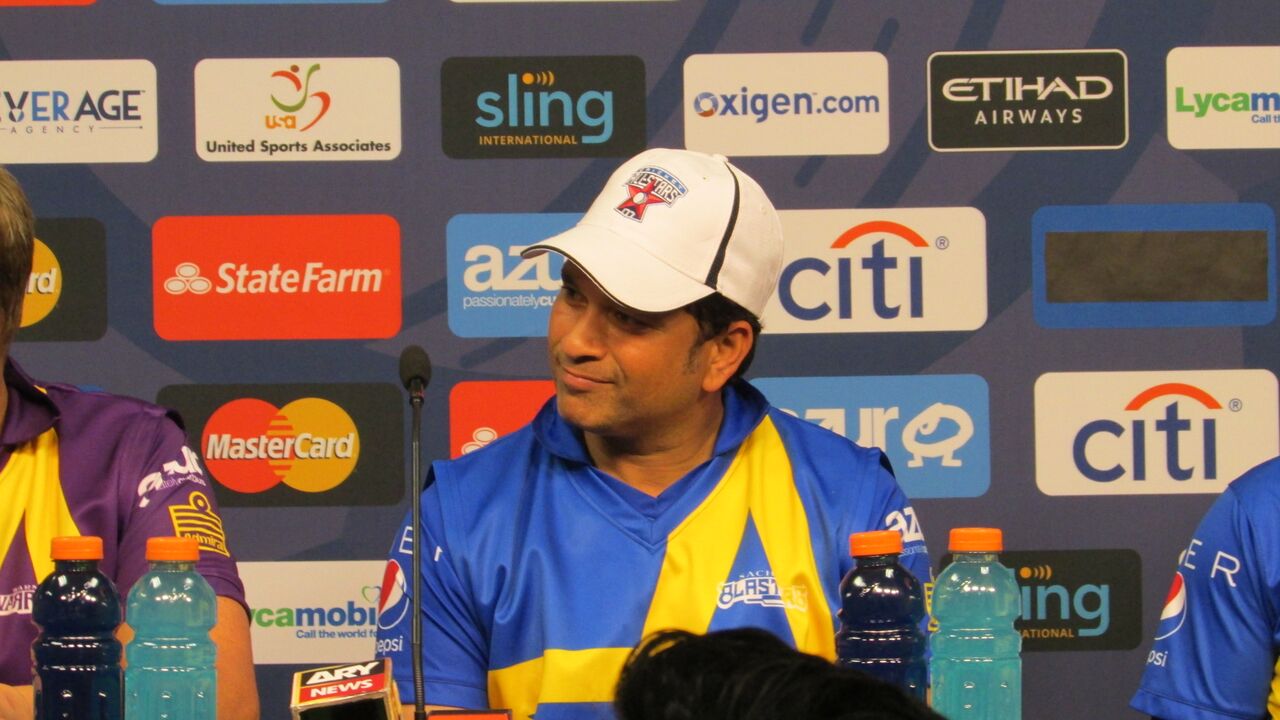
The Sri Lankan batsman knows you’ve probably heard that catchphrase about his sport. He visited Texas last week as part of a group of cricketing legends to help you learn why he feels his game does things right.


“It’s given us a lot, and I think everyone here is trying to give back to the game while enjoying themselves and putting up the best spectacle that we can,” he said.


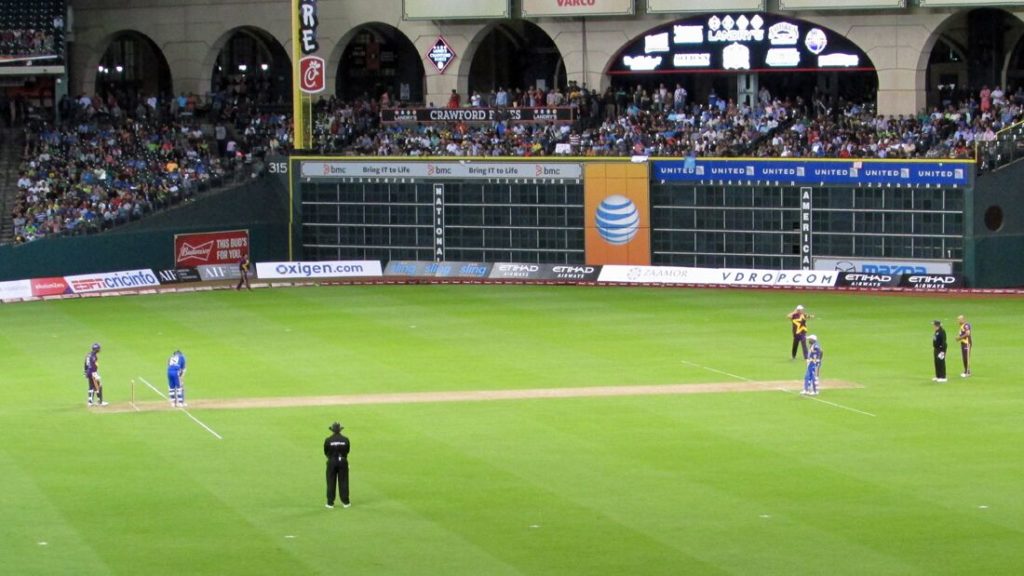
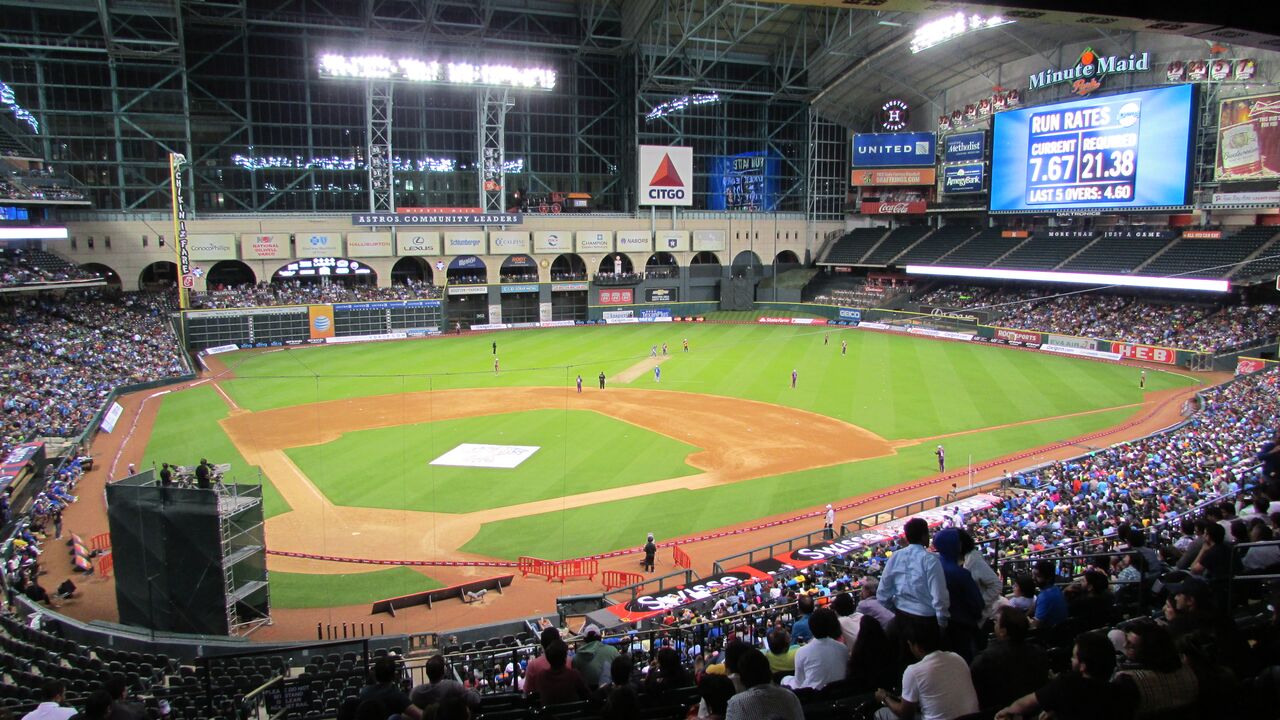
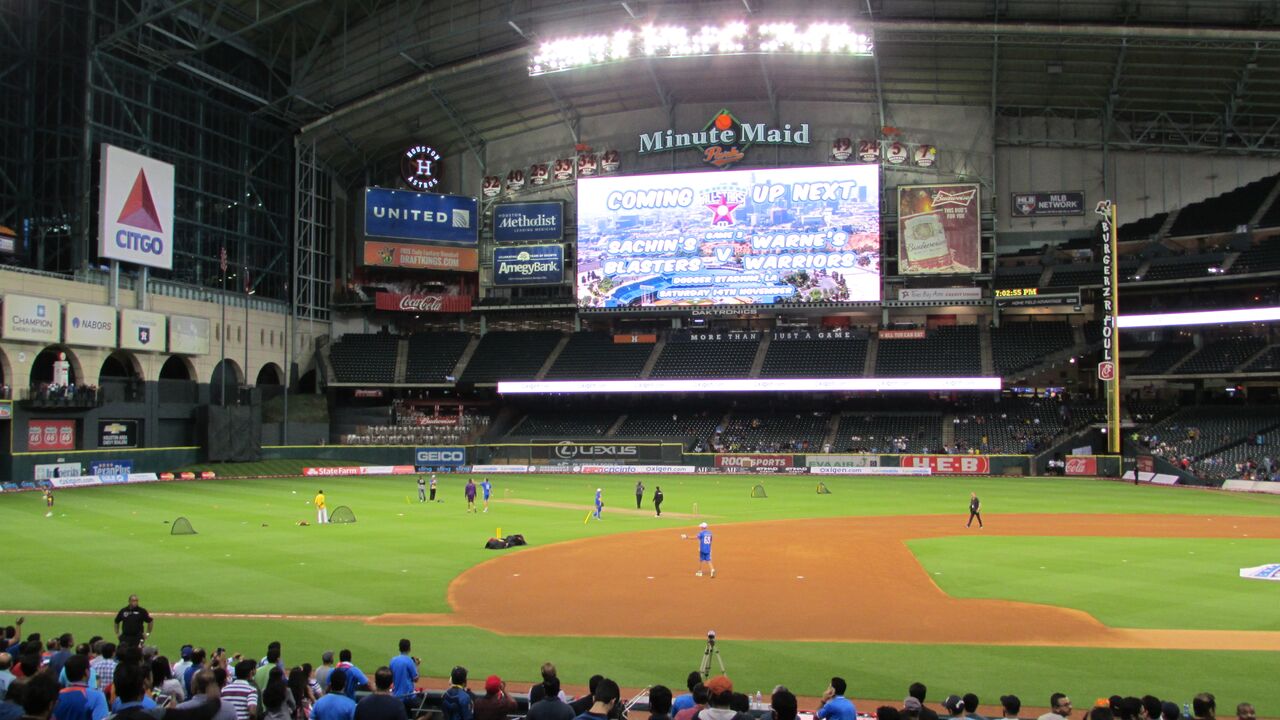
Sangakkara did his part to provide a compelling cricket experience last Wednesday in Houston’s Minute Maid Park, as he produced 70 runs to lead his team to a 262-205 win. The victory came in game 2 of the three-game Cricket All-Stars Series. The matches featured two teams of retired world-class cricketers playing in Major League baseball stadiums. The games did not have television coverage in the U.S., though ESPN3 streamed them online.


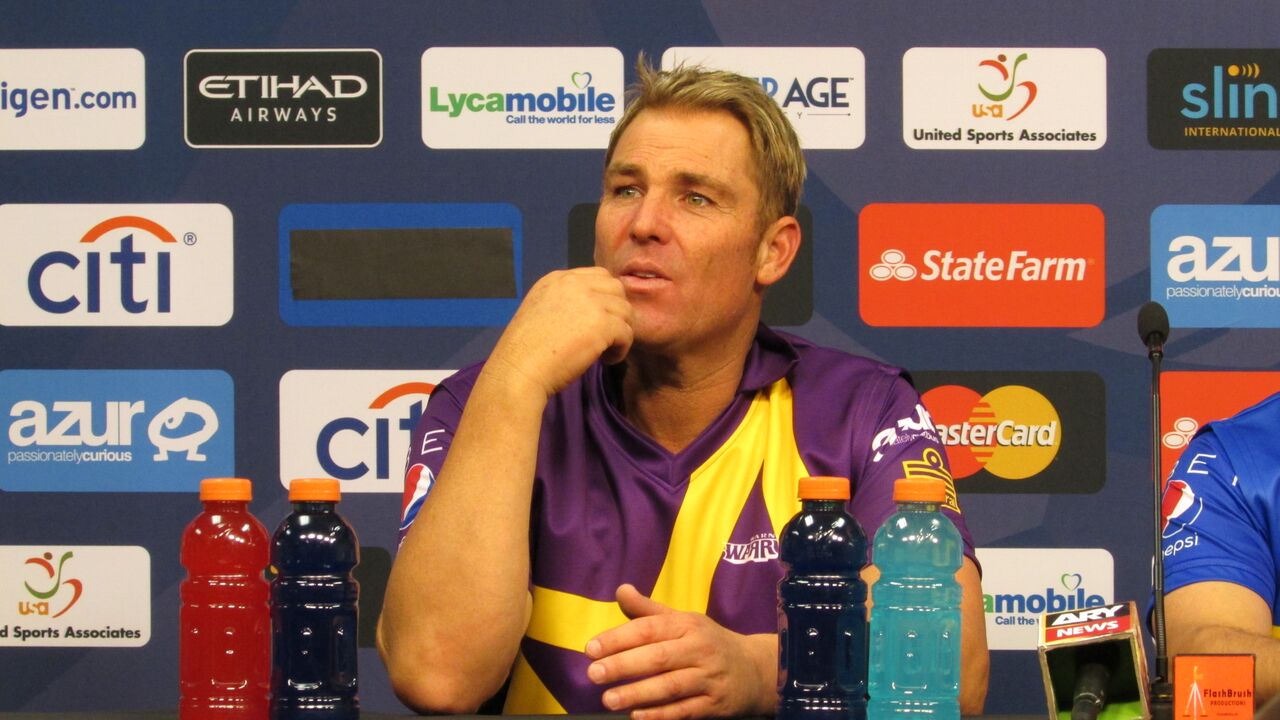
Warne’s Warriors, captained by Australian spin bowler Shane Warne, swept the series against Sachin’s Blasters, helmed by perhaps the most famous cricketer in world history, Sachin Tendulkar.


If you hadn’t heard of Mr. Tendulkar or any of his fellow All-Stars until now, don’t feel badly about it. While cricket enjoys a large following in a number of mostly current or former Commonwealth nations, the United States is not among the former English colonies where the game garners a lot of attention. The Cricket All-Stars tour aims to start elevating cricket’s status in this country.

“It’s all about creating interest,” said South African all-rounder Shaun Pollock. “This is a way of using ourselves as a vehicle to expose the USA to cricket.”

Tendulkar and Warne identified the tour as a potential catalyst for driving the game’s worldwide growth.

“We’re here to globalize cricket,” said Warne. “We’d love everyone to play it.”

Raj Ramakrishnan of Australia-based United Sports Associates helped organize the tour. He sees establishing cricket’s foothold in the United States through the tour as an attainable goal.

“The U.S. is a sport-loving country and definitely it will take a big step in moving forward,” he said.

The games drew announced crowds of more than 20,000 in each of three cities: New York, Houston, and Los Angeles. The bulk of the attendees seemed to consist of fans who already knew the game and wanted to see its stars. The cheering in Minute Maid Park, ostensibly led by some University of Houston cheerleaders, was fairly raucous, even in the normally staid press box.

The most well-known of the competitors drew huge roars when he took the field and batted. Signs bearing his likeness proliferated in the stands, including one that read “Houston, God has landed.” While Sachin Tendulkar knew that many had come to see long-admired familiar faces, he felt that even a small percentage of strangers at the game represented a meaningful total.

“Somebody has to start,” he said. “In these spectators, (if) even there are two percent Americans, then two percent is better than nothing.”

Ramakrishnan believes the tour is vital to the success of U.S. cricket.

“There are already a lot of cricket clubs and a lot of kids that do play cricket in the U.S.,” he noted. “We need games like this that help them to watch some of the big legends of this game.”

The All-Stars hope this tour won’t be the last one, either.

“We’d love to come back every year, all of us,” said Warne.
“We want to come here every year and to play in different cities to spread this game that we all love,” Ramakrishnan said.


In each city they visited, the players looked to engage the future of the U.S. game through grassroots clinics.

“We’ve done a lot of coaching for kids” said Warne. “We’ve done a lot of promotion for the game of cricket in New York, here in Houston, (and) all the kids have been happy. We’ve signed lots of autographs. We’ve had expert coaching from all sorts of players – all-rounders, spinners, batsmen, bowlers. I think we’re doing our part at promoting the game of cricket. “

“The whole idea is to motivate as many youngsters as possible to pick up a cricket bat,” said Tendulkar.

“If we see an American holding a cricket bat along with a baseball bat, that’s what we want to see down the track. We want to have everyone enjoy this game,” said Ramakrishnan.
“Maybe one of these kids or some of these guys that we’ve coached in New York or Houston or maybe in L.A., we might see them in one of the World Cups,” said Warne. “That would be fantastic.”

“Hopefully we can sow a few seeds that we can see come to fruition in years to come,” added Pollock.

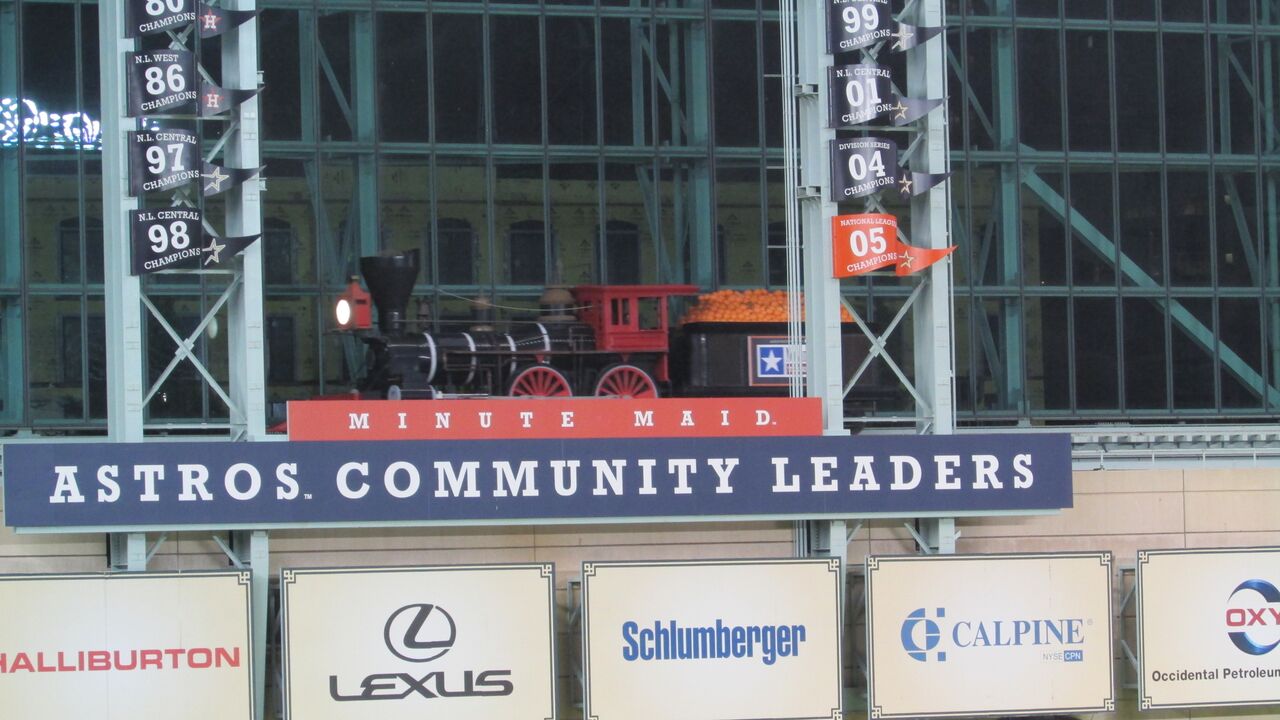
Cricket has some qualities U.S. sports fans might appreciate, most notably offense. In baseball, an announcer might suggest that an overeager hitter on a team trailing by half a dozen runs tried to “hit a six-run homer.” In cricket, batters do hit six-run homers (aka “boundaries”). While it’s not easy to hit one per se, they happen often enough that chicks who dig the longball will have a lot to cheer. In Houston, six-run shots induced the Astros to set off the home run scoreboard graphics and start the stadium’s train in motion the same way they would have had Chris Carter or Evan Gattis gone yard. The ’Stros finished second in the American League with 230 home runs, but one of these teams might eclipse that total in a single long homestand.


Because the rules mandate using the same ball for long periods of the match, you do have to throw it back on a six, even if your team hit it. The scoreboard needed to occasionally show the American audience a graphic reading: “Can we have our ball back?”

You’ll also see athletic fielding plays and amazing ball control from bowlers. A match doesn’t have to take forever, either. The Twenty20 format played on this tour takes threeish hours to play, a far cry from the days-long test matches many Americans may associate with cricket.
The most important reasons these men feel the world should embrace the sport, however, might be ones that extend past the playing field.

“Cricket is a unique sport because it goes just beyond hitting a ball with a bat. It teaches you a lot of good values that stand you in good stead in life,” said Sangakkara. “Cricket has something great to offer for any young kid playing the sport, be it in the U.S. or be it anywhere else in the world. Us playing here is to ensure that kids are inspired to take up this wonderful sport.”

MMA, poker, soccer, e-sports, rugby union, lacrosse, and other pastimes have started to make inroads into the world’s most important commercial market in recent years. There’s no set formula for taking a sport from small-time to big-time in the U.S.

The All-Stars hope their tour concept will be a catalyst toward Americans considering their game to be, well, cricket.

Tendulkar believes that process has begun.

“It will take time for Americans to pick up a cricket bat, and to understand what cricket is all about, but it has started, for sure. That much I can guarantee.”


Rush Olson has spent two decades directing creative efforts for sports teams and broadcasters. He currently creates ad campaigns and related creative projects for sports entities through his company, Rush Olson Creative & Sports.

RushOlson.com

Linkedin.com/company/rush-olson-creative-&-sports

Facebook.com/RushOlsonCreativeandSports
Thursday, October 8, 2015

Understanding Rangers Attendance

This post originally appeared on the Blotch page at the Fort Worth Weekly. To read it on their site : http://www.fwweekly.com/2015/10/06/attendance-just-reflects-the-way-baseball-go/


Rangers

A local team in a pennant race plus a lovely ballpark should equal big attendance numbers, right?
It’s not quite that simple, actually. Recent articles from the Star-Telegram, the Dallas Morning News, D Magazine, and Texas Monthly have noted the Texas Rangers' inability to draw huge crowds this season despite better-than-expected team performance and an exciting chase for the postseason. Suggested remedies have included adding a roof to Globe Life Park in Arlington, moving the team to Dallas, and having a witch doctor and faith healer do a joint séance to exorcise the ghost of Billy Martin.

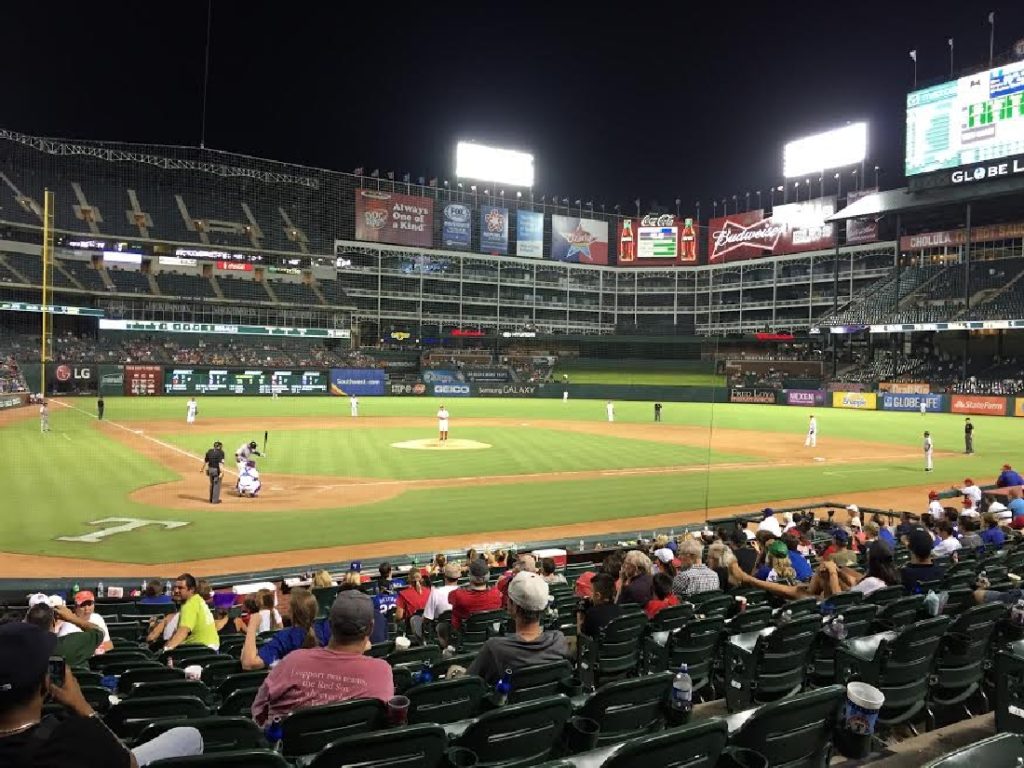
The Rangers averaged 30,763 fans as they played 81 regular season home games en route to winning the American League West Division title in 2015. The figure ranked 16th in baseball and is lower than last season’s mark of 33,565, when the team finished 31 games behind the division-winning Angels.

This wins versus attendance ratio perplexes people, because it seems counter-intuitive. If you win you should draw more fans than when you don’t, the reasoning goes, since fans enjoy the sensation of aligning themselves with a winner and also like seeing top-level talent perform. To a certain extent, that logic works. Indeed, it seems likely the Rangers have drawn more fans this season than they would have had they ended up in last place again. Why, though, have they not drawn more fans than 2014, when injuries doomed them to a finish in the cellar?

A lot of the answer lies in ticket sales cycles. In baseball, the previous season’s results often determine the next year’s numbers. That’s because a huge share of a season’s total tickets gets sold in the offseason when account executives can move a lot at one time. A team’s season and group ticket representatives sell based on the results of the previous year. A good season means season ticket and mini-plan holders enthusiastic to buy, renew, and upgrade. They do so in blocks of 20, 40, 80, and 162 tickets or more at a time. Group ticket buyers, planning months in advance, choose a ballgame for their church or fight club instead of some other entertainment option. They buy in blocks of at least 25 tickets each.

The 2014 sales group had recent postseason appearances from which to sell, and that’s a handy thing to have. Playoff-less 1997’s attendance totals exceeded those of the playoff campaigns from the years before and after it. The year 2000’s figures were better than 1999’s. Occasionally a team can overcome a sub-par campaign with a special offseason, as when Nolan Ryan led a slew of roster moves in 1989, or when the new ballpark opened in 1994. Whatever the reason, success in the October-March sales window will usually be the most important indicator of the next season’s attendance numbers, because the largest blocks of tickets get sold to people who plan ahead before the season.

Of course, individual game sales do go on once the season has begun and winning can influence those totals. It’s hard, though, for single-game sales to overcome a mediocre offseason.

We can flag 1974, 1996, and 2004 as notable outliers. Those seasons all involved surprising young Rangers teams coming off extended periods without success. This year’s team has some good young players, but they don’t match the cachet the Jim Sundbergs, Pudge Rodruguezes, and Michael Youngs from those previous teams had. This will also be the fifth season in the last six the Rangers have played past game 162, so the 2015 crew doesn’t have the buzz of, say, a 2004 team coming off four straight last-place finishes or a 1996 squad making the franchise’s first postseason.


Photo by Brad Newton/Texas Rangers

Besides any issues with the on-field product, a couple of factors conspire against the Rangers ticket sales group as a season goes on: football and school.
When Cowboys training camp begins in late July, it siphons press attention from the Rangers. The team enjoys a brief period of media primacy once the NBA playoffs end, but that advantage disappears when helmets start hitting shoulder pads. The reduced media exposure doesn’t help ticket sales. The onset of high school football hurts, too. The three worst-attended Friday games of 2015 all came in the period after school began.

In late August, weekday attendance also tends to plummet and it has nothing to do with the heat. Families make up a huge part of baseball game attendees and parents simply don’t want to keep kids out late on a school night, for fear their offspring will fail to excel at school and get forced into menial professions like blog-writing. Now, we’re not saying that people should prioritize their children’s education over supporting the ball team, just that the evidence indicates it’s what they do.
Fort Worth schools started class on August 24. After that date, the Rangers had 11 Monday-Thursday home games. During the same period in 2013 and 2014, they had 8. In their record attendance year of 2012, they had 9. If you want to win a pennant, you might want to host a lot of those September games since teams tend to play better at home (though Texas actually won more games on the road this season). If you want to draw fans, you want as few of them as possible. The 2015 Rangers have actually done pretty well on those nights, all things considered. They’ve only had one such game with attendance below 20,000. A September 16 Dollar Hot Dog Night with Dallas Keuchel pitching for the Astros drew 34,483, and they drew over 30K the next night, too. By and large, though, the attendance ceiling is very low on weekday night games once school has started.

In 2011, with the Rangers franchise coming off its first World Series appearance and playing its way to another one, the Boston Red Sox came to town in late August for a Monday-Thursday series. Teams love to see Boston and the Yankees visit on weekdays, because opposition fans boost otherwise lackluster crowds. Those Sox had star power, too, with John Lackey and Josh Beckett starting two games of the series and the likes of David Ortiz, Adrian Gonzalez, and Carl Crawford in the lineup. It didn’t matter, because even those guys couldn’t defeat the first-week-of-school curse. Attendance for the four games averaged just over 30,000, some six thousand fans a game below that season’s average. Some in the team’s front office found the dip difficult to comprehend, and talk of new ad campaigns and ticket specials and starting David Clyde proliferated. Such remedies wouldn’t have worked, though. Baseball veterans know such declines are just part of the game.

The Rangers don’t really have a lot to worry about now, either. Their TV ratings have done well, which indicates there is still a lot of interest in the club. Mom and Dad just watch on TV instead of going to the game, because Junior needs to get to bed on time so he won’t flunk another math test. The team likely will focus on selling postseason tickets, which are special enough to avoid the weeknight blues, and creating a plan to convert this season’s achievements into next year’s season and group ticket buyers.

The Rangers ballpark lease expires in 2024. Some speculate they might leave behind all the facility improvements they’ve made over the past few years in favor of relocation to some yet-to-be-built retractable roof stadium in downtown Dallas. Would such a move improve attendance? Perhaps it would, although if I were them, I’d want to see a Prince Fielder-sized pile of research confirming it before I hoofed it east. But even if the move happened, we can safely guess that sometime around, say, 2029, we’d read another series of articles (or perhaps have them implanted directly into our brains by that time) wondering why the attendance was worse than the previous year’s even though the team was better. The answer will be the same as it was in 2015, or 2000, or 1997, or 1979.


Rush Olson has spent two decades directing creative efforts for sports teams and broadcasters. He currently creates ad campaigns and related creative projects for sports entities through his company, Rush Olson Creative & Sports.


RushOlson.com

Linkedin.com/company/rush-olson-creative-&-sports

Facebook.com/RushOlsonCreativeandSports
Tuesday, August 25, 2015

Béisbol, Southern Style

This post originally appeared on the Blotch page at the Fort Worth Weekly. To read it on their site : http://www.fwweekly.com/2015/08/25/beisbol-southern-style/


BB - Feature
Baseball is the same everywhere, except that in some places the mascot might stand ten yards behind the third baseman, almost in fair territory, and a vendor might bring you donuts and Icees at your seat.
Attending a sporting event in another country means enjoying the aspects of the game you already love, like superb running catches and perfectly thrown 12-to-6 curveballs. It also means getting to enjoy unfamiliar nuances that make the presentation unique.
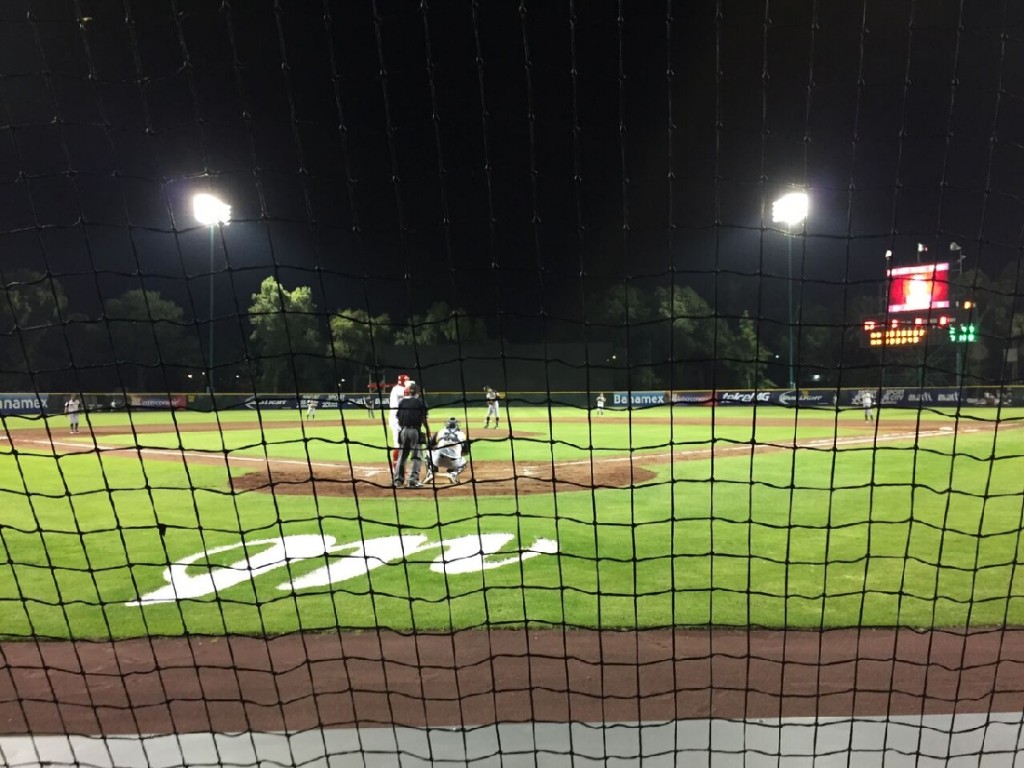
On a recent visit to México City, I didn’t eat the ballpark donuts because I had already filed myself with burritos and tortas from the concession stands. I did do a double-take when I saw the Diablos’ doglike mascot, Rocco, hang out a step and a dive from the leftfield line as the players kept playing, oblivious to the guy (or woman) in the costume. I thought about how jealous Rangers Captain will be when I tell him he could be cantering mere feet from Adrian Beltre during a game.
The Diablos Rojos del México franchise plays in its nation’s capital and is one of the country’s top teams. Rangers fans may remember the red-clad jugadores from the exhibition games they played in 2012 and 2013 at what is now Globe Life Park in Arlington. I feel sure that experience seemed as different for them as visiting their home park was for me.
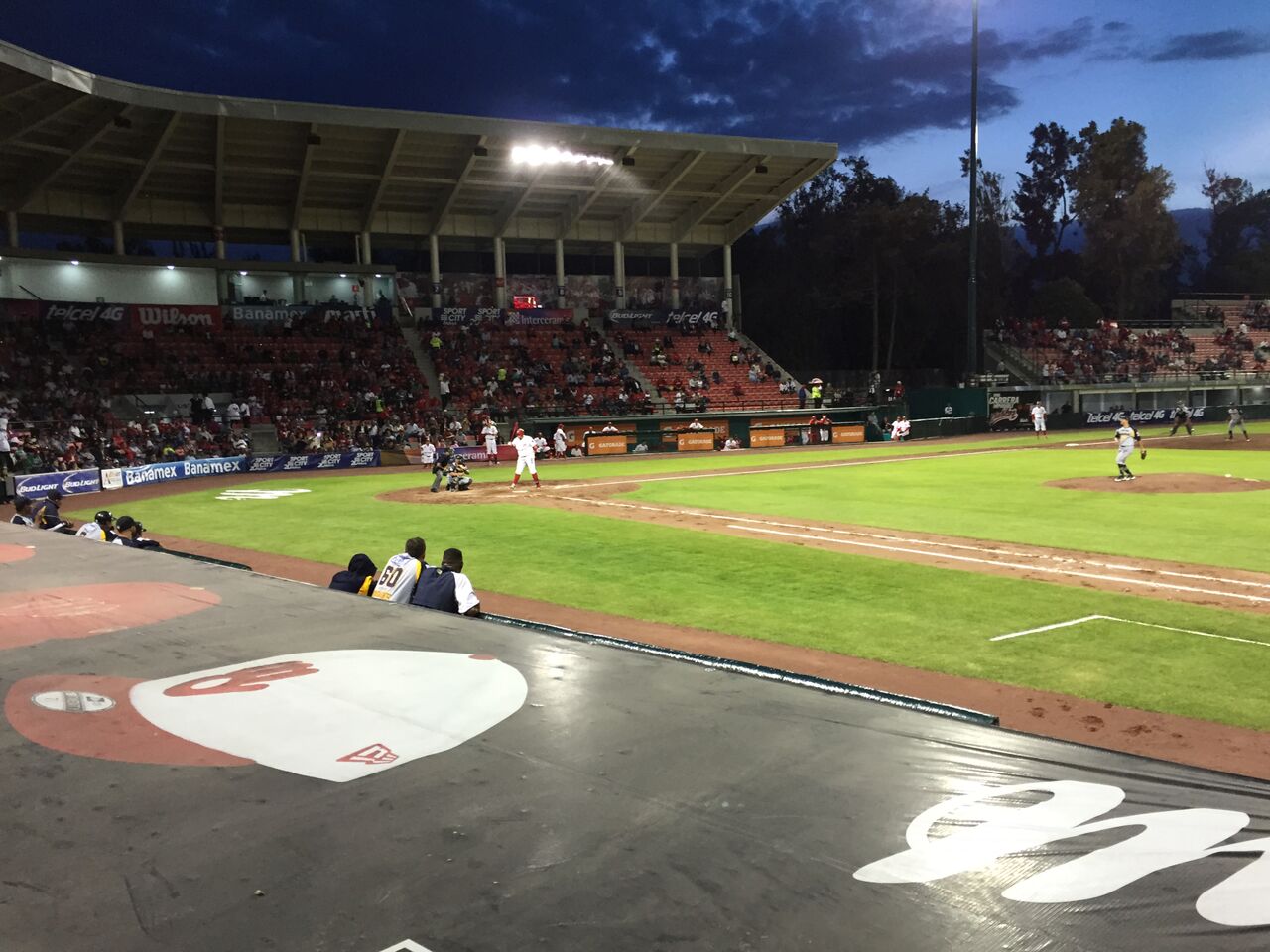
The yard where I watched the Diablos take on the Aguascalientes Rieleros isn’t actually the club’s true home. Their regular stadium, the Foro Sol, is unavailable this season. That facility sits in a turn of the Mexico City Formula 1 auto racing track and is undergoing renovations in preparation for a race over Halloween weekend. The game took place in the nearby estadio Fray Nano, a much smaller ballpark situated among a group of fields used for recreational sports. They’ll play there this year and next until a new stadium opens in 2017. Fray Nano measures 408 to centerfield and 327 to the foul poles, so its dimensions satisfy American professional expectations. The team did a superb job of making it feel as polished and inviting as possible, and provided a game experience on par with that of good U.S. Minor league teams. Photos of players plaster the back walls of the main seating bowl. The press box shared space with several suites. The scoreboard had a video screen, and while it didn’t show replays, it did offer well-designed graphics and crowd prompts.
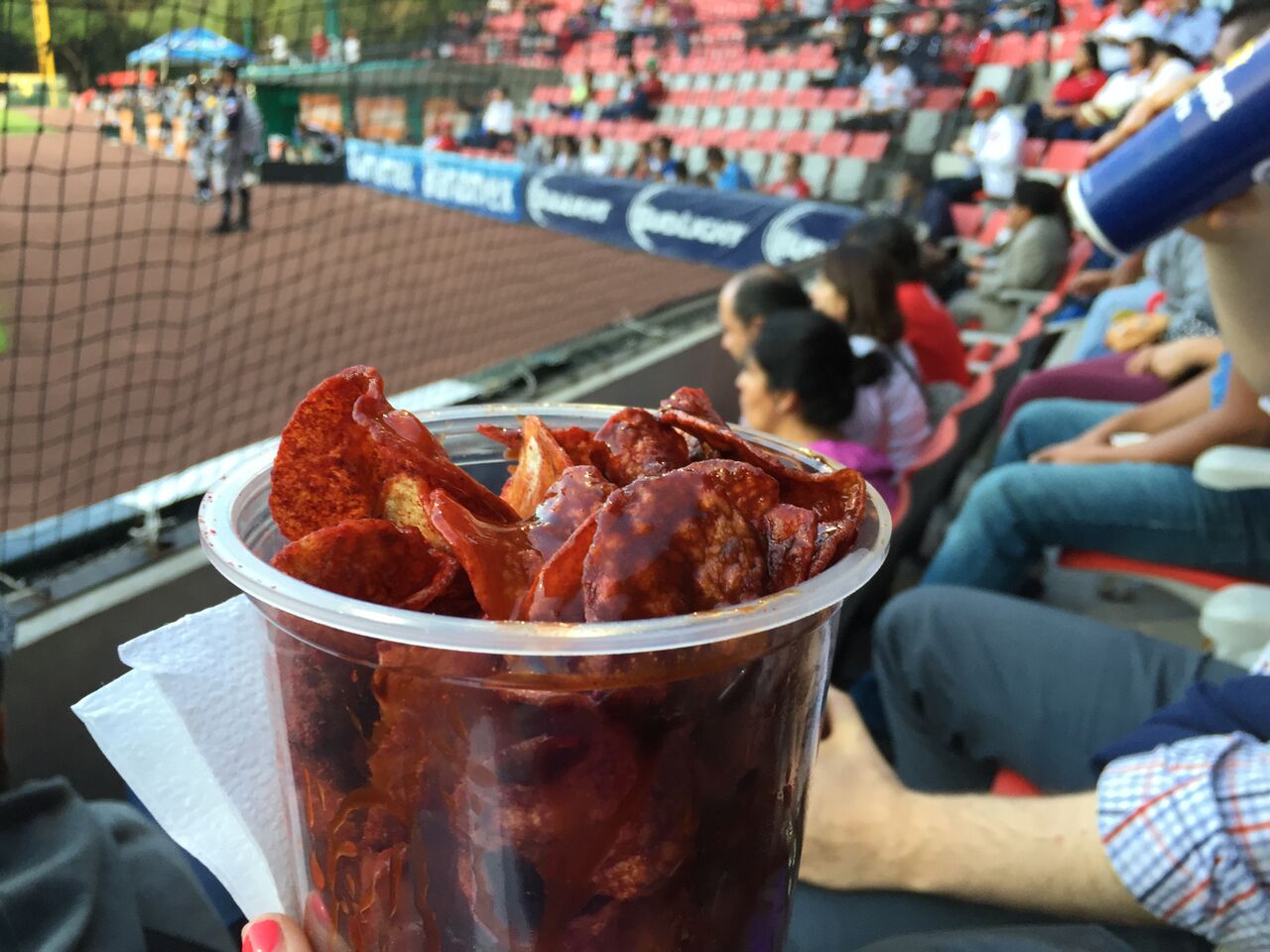
The food selection extended far beyond standard stateside baseball fare. An American fan would be pleased with the number of offerings. Whether his stomach could handle the hot sauces in which natives might douse a cup of potato chips or a taco would likely prove another matter entirely. Other concession stand selections include fruits, vegetables, flautas, and sushi. The Fray Nano happy hour allows you to buy 24 ounces of Corona for half price (a little less than $2.50) until 8pm.
On the field, the quality of play is high. The Mexican summer league is considered near Triple-A quality. Late-inning relievers showed mid-90s fastballs and both the home team and the Rieleros played error-free baseball.
We talked strategy the same way one would at a Rangers game. Should the Diablos’ manager have burned through his bullpen playing matchups in the 7th? Why, after throwing two swinging strikes outside, then a ball a little further outside, would the pitcher then shake off his catcher several times and throw an inside fastball? Aguascalientes’ Ramón Ramírez must have wondered the same thing after what turned out to be his last pitch of the night ended up over the right field wall for a grand slam.
Ancillary on-field details differ from their American equivalents, including:
  • Everybody wears the socks high, including batboys.
  • Team pants and jerseys carry sponsor logos.
  • The batboys were mostly little people who took their jobs seriously and did them well.
  • Said batboys don’t stay in the dugout during play. They station themselves near what would be the on-deck circle were one marked off. If the catcher drops his mask chasing a pop-up, the batboy retrieves it for him.
  • Foul balls might go all the way out of the stadium. Be alert if you’re headed for the beer stand.
  • All the players line up outside the dugout to congratulate the batter after a home run.
  • The stadium sits close to the airport and descending planes appear to be within range of a Josh Hamilton or Nelson Cruz longball. Surely that’s an optical illusion, right?
Rangers fans may remember one guy who looks to have airliner power. Japhet Amador played with the Diablos when they visited Globe Life Park. He stands a memorable 6’4”, 310. With an OPS over 1.100 and more than 40 home runs already this season, he generated a buzz among the spectators when he approached the plate. Unfortunately, Aguascalientes mostly pitched around Amador, walking him three times, so we didn’t get to see him launch any balls 747-ward.
Some Americans play in this league. Californian Cyle Hankerd has put up big numbers hitting behind Amador. The Diablos have employed several former Major Leaguers at various times this season, including Boston native Manny Delcarmen, who blew a save in the 8th the night I attended. They also have a Texan, catcher Luis Flores of Del Rio, who got as high as Triple-A in the Cubs and Astros organizations.
The atmosphere, even on a Monday night, was compelling. We saw a few fans with wigs and others rattled matracas when the situation suggested noise. Coordinated chants chimed in even after an opposition jonron: Diablos, Diablos, rah, rah, rah!”
In the later innings, a prompt from scoreboard  resulted in a “Vamos Diablos” cheer.
I didn’t quite understand the playing of Billy Joel’s “Uptown Girl” after the third inning and I cringed a bit when the Tomahawk Chop song started up. “Rock and Roll, Part 2” was also a big player. However, I was pleased to hear a number by Austin’s Eric Johnson as we exited the ballpark.
I spotted spectators wearing gear for at least half the Major League teams. A kid in our section had a Mike Piazza Mets shirt and another guy sported the untenable combination of a Yankees jersey and a Red Sox cap. A México shirt with a deer and antlers made me flash back to the 2010 Rangers.
Also noticed among the attendees: a Tom Brady Patriots jersey, an FC Dallas jacket, and a dude in a Cramps shirt. A seemingly random assortment of Padres, Cardinals, and White Sox shirts were on sale alongside Diablos gear in the team shop.
You can’t buy Diablos Rojos tickets terribly far in advance (I’ve seen stateside teams try that strategy as well and never liked it), but the scalpers can get a lot closer to the gates than they can in the U.S.
People all over the world, with different backgrounds and customs enjoy baseball, and I’m sure you will in México as well. I did notice one potentially polarizing difference, however, with this ballpark. Like in Fort Worth bars and 1970s Arlington Stadium, you can smoke there. I looked up and saw a guy puffing away in a suite. Try to keep your American sensibilities to yourself (or else offer the guy a light – a universal gesture of friendship).


Rush Olson has spent two decades directing creative efforts for sports teams and broadcasters. He currently creates ad campaigns and related creative projects for sports entities through his company, Rush Olson Creative & Sports.

Tuesday, June 30, 2015

A Wild Time at the Ballpark

This post originally appeared in my Blotch blog at the Fort Worth Weekly. To read it on the Weekly's site, go here : http://www.fwweekly.com/2015/06/30/a-wild-time-at-the-ballpark/


As I sat in the visiting dugout before the Rangers game with Oakland last Thursday, talk turned to the world-class athletic abilities of some talent we’d watched on the field a few minutes earlier.
“In five steps, they’re hitting almost 65 miles an hour,” my companion informed me.
I hadn’t gotten to see the prospect in question actually work out, but that sounded like some serious speed to put at the top of a lineup.
“If they had the cheetah as a leadoff hitter,” he continued, “this team – any team – would very much welcome the speed of an animal like that.”
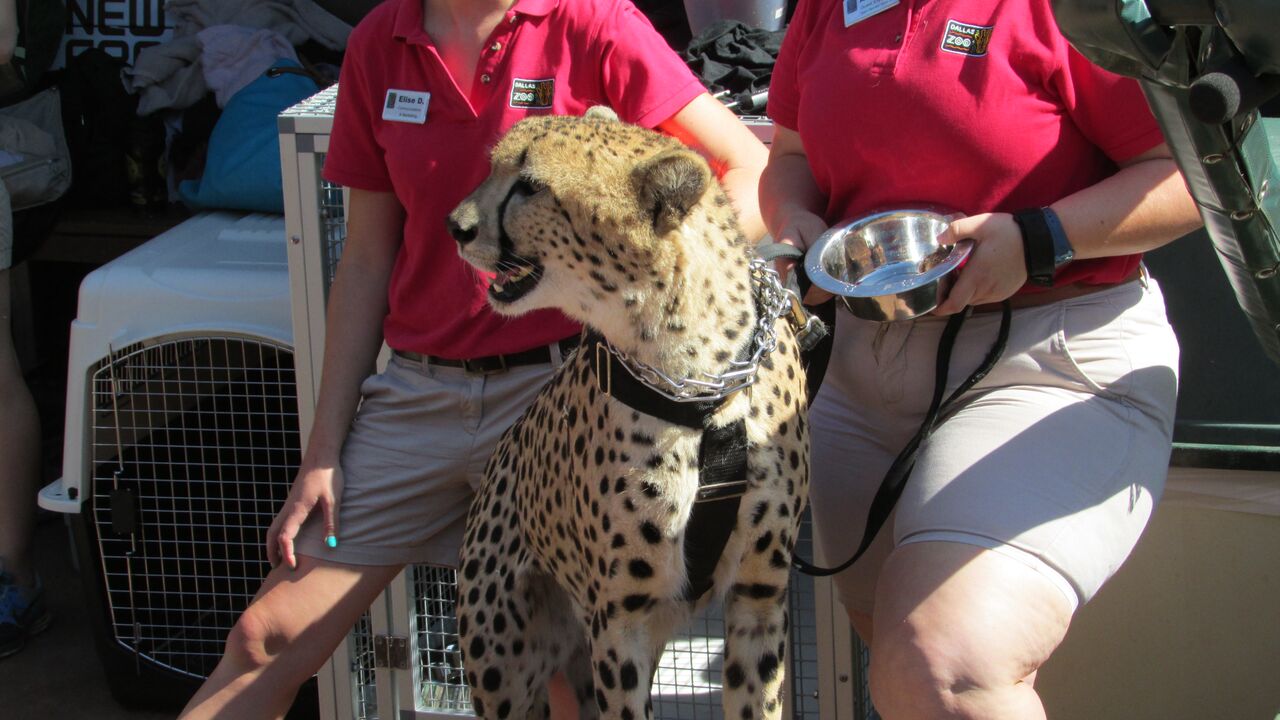
My benchmate wasn’t talking about a ballplayer known by the nickname “The Cheetah.” He was referring to the actual cheetah that had prowled foul territory a little earlier. The scout in question was Sean Greene, Vice President for Guest Experiences at the Dallas Zoo. The zoo’s Animal Adventures Outreach Program ventured to Tarrant County for its annual Wildlife Education Day at Globe Life Park in Arlington.


The zoo and the team designed the pregame program to educate young Rangers fans about animals, and Winspear the cheetah took part. He impressed some children, but didn’t get to run the bases and won’t become the successor to former Rangers Andrés “Big Cat” Galarraga or Frank “Cat” Catalanotto (whom Baseball Reference lists as having led off 198 times for Texas).
Theory: You would not want to have a cheetah hitting behind you in the batting order. If you singled and he hit one into the gap, odds are he would catch up to you on the way around the bases. If the cat then saw you less as a teammate and more as a plodding gazelle separated from your herd, failing to score might become the least of your concerns.
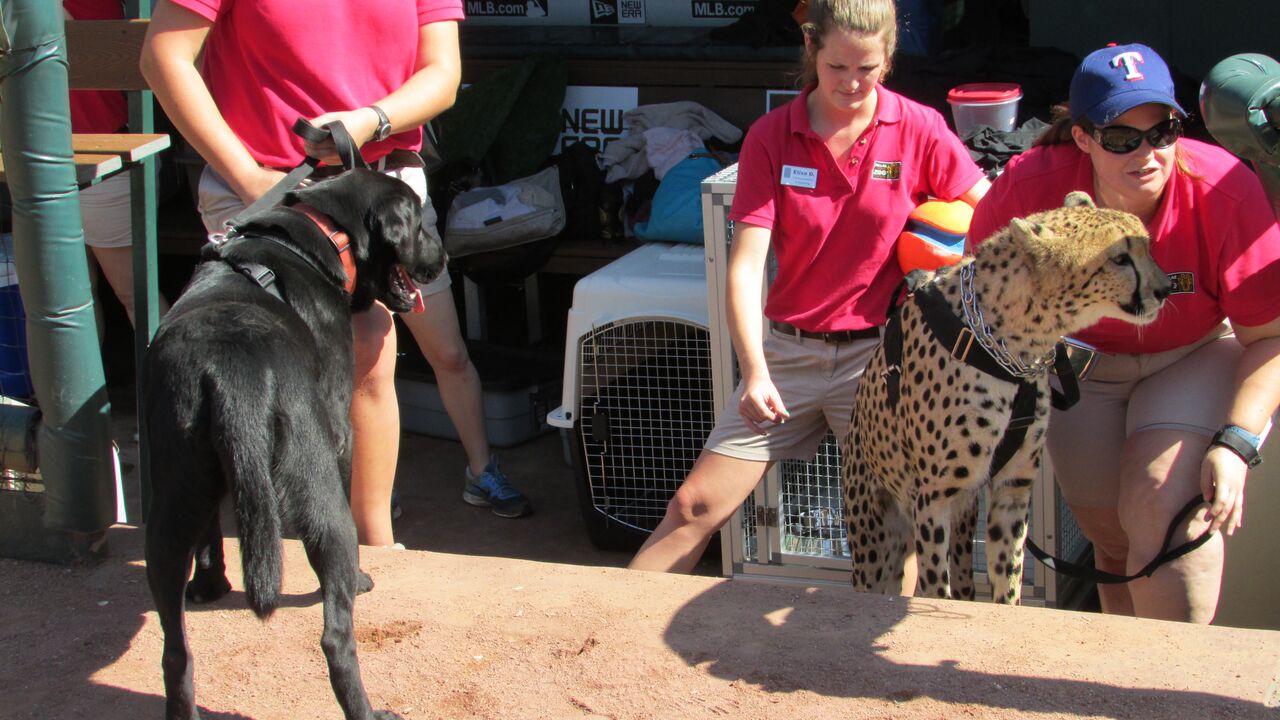
The zoo takes significant precautions to ensure the carnivore presents no danger to others or himself. Winspear’s entourage includes the two humans who handle his multiple safety harnesses and the cat’s best friend.
“That happens to be the black labrador, Amani,” said Greene. “He’s been raised with this cheetah since they were about three weeks of age. The dog is very much a comfort. Cheetahs are very shy in nature and if our cheetah gets a little shy out at a program like this, the dog comes in. The dog’s always wagging his tail because he thinks this great green grass out here is a place to play. The cheetah picks up on those cues from the dog, realizes the dog’s comfortable, and then the cheetah’s comfortable.”
While you may never see a cheetah in the Rangers lineup, a big part of the zoo’s motivation for the program has to do with your ability to ever see one anywhere.
“We brought today a cheetah that’s endangered, less than 10,000 left in the world. They’re seeing an African penguin. There’s less than 50,000 in the world,” Greene explained in the dugout. “These are critically endangered species and if zoos can convey a message to these kids and these parents and teachers today about what impact they’re going to have as they grow older, to protect this environment and the animals that are there, then it’s a really good opportunity for us to share that message.”
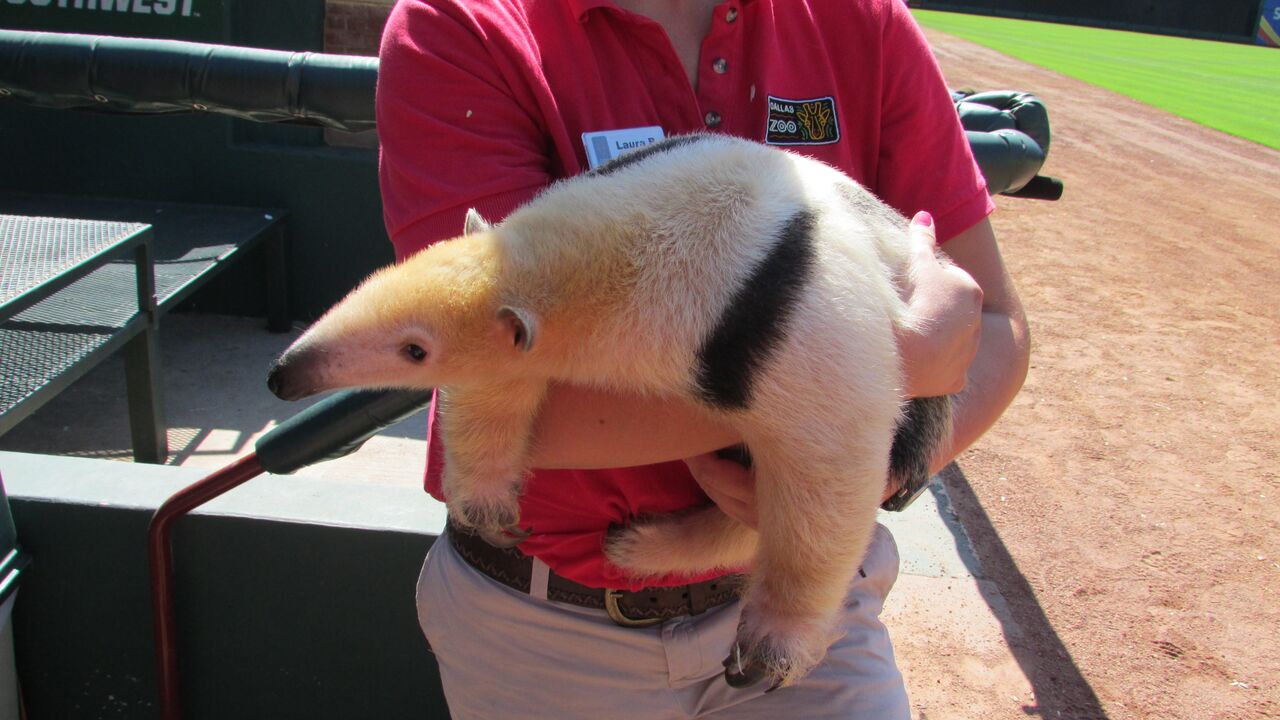
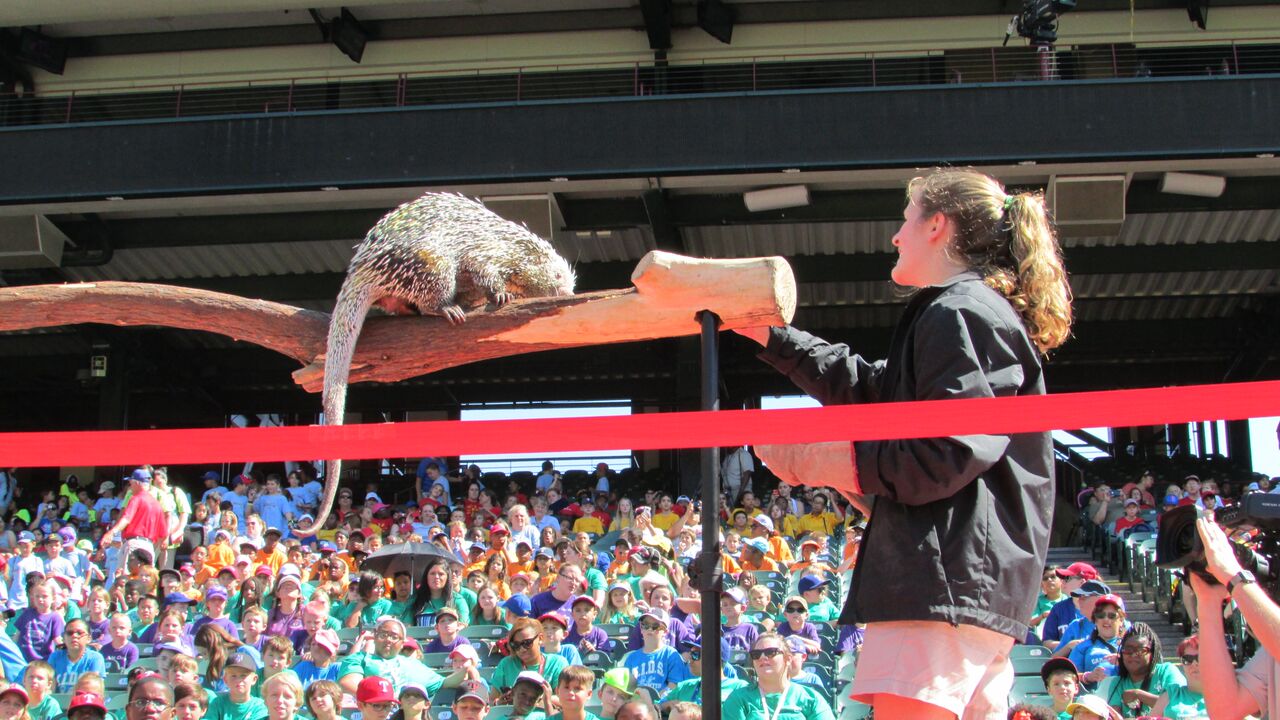
The messengers include people to handle the animals and some who enlighten the crowd about the following lineup of Animal Ambassadors:
· Cheetah
· Labrador Retriever
· African Dwarf Crocodile.
· Tamandua, or Lesser, Anteater
· Red Tail Boa
· Ball Python
· Prehensile Tail Porcupine
· Eurasian Eagle Owl
· Virginia Opossum
· African Black-footed Penguin
The kids got to touch some reptiles and we all learned a lot. For instance, I did not realize that while the porcupine smells terrible, lady porcupines apparently are into that. Human females, I have noticed, evolved different sensibilities.
We also learned that while zoo animals are fascinating, they are still wild. You have to remember that fact, even if you’re an animal yourself. Rangers Captain, the Rangers’ official mascot, claims the penguins used to bite him every year (yes, I talk to horses). The penguins had no comment.
Disclosure: The Rangers annually pay me to work with their in-game entertainment staff to warm up the crowd at Wildlife Education Day. I performed the same task when I worked for the club and always felt the event didn’t get the attention it deserved from the fandom. If they do it next year, and your kid likes animals or baseball or both, think about taking the day off to check out some day baseball and some interesting animals.
[All photos by Rush Olson]


Rush Olson has spent two decades directing creative efforts for sports teams and broadcasters. He currently creates ad campaigns and related creative projects for sports entities through his company, Rush Olson Creative & Sports.

RushOlson.com
Linkedin.com/company/rush-olson-creative-&-sports
Facebook.com/RushOlsonCreativeandSports
Monday, April 13, 2015

What Constitutes a “Successful Season” and Why Does It Matter?


“Wins Above Replacement;” "Pass-Completion Percentage;” “Defensive Win Shares;” The sports world seems to revolve around measurement even more than it did when some of us devoured the numbers on the backs of baseball cards. One key metric you may not find on the back of a card or in the spreadsheets of analysts  : “Successful Season.” How do we define such a thing?

Having a “Successful Season” matters a lot to sports marketers.  It’s necessarily imprecise, because it exists in the minds of supporters. It’s important, though, because their vibe about the previous season’s accomplishments fuels season ticket and sponsorship purchases for the following year’s campaign.

Some seasons make such evaluation simple. If a baseball team wins the World Series, or a football team the Champions League, or another kind of football team the Super Bowl, they have clearly experienced success. Only one team per sport earns those distinctions, however, and lots more need their fans to believe that the just-completed season sets them up for a satisfactory campaign-to-come.

Leagues (and entire sports) further their own success when they maximize the number of member teams fans consider to have had “good years.” It therefore follows that more than the one franchise that wins the year’s biggest trophy needs the ability to claim a satisfactory result.

Does winning more games than you lose constitute success? If you had a poor won-loss record the year before, it might. Improvement sells.

Most U.S. sports have playoffs, and a season that finishes in the end-of-season tournament generally creates a perception of success. The exception can lie with teams who have made the postseason a number of years running without winning big, as happened with the Atlanta Braves.(1)

It helps if you can claim a title, even if it isn’t the ultimate one. In American arena sports, if you win a division or conference title, you get to raise a banner the next year.

In European sports like soccer, you get lots of chances to win silverware.  You might win a continent-wide competition, one of a couple of domestic cups, or the domestic league itself.

In some U.S. sports with player drafts, faring extremely poorly can counterintuitively lead to a positive evaluation. If you “win” the opportunity to draft a Shaquille O’Neal or Mario Lemieux(2), the resulting expectations of immediate improvement can drive ticket sales. They can also fuel allegations of unsavory conduct, as in the cases of Patrick Ewing(3) and Hakeem Olajuwon(4).

In sports with relegation, the poorest teams have no path to positive spin. They drop to a lower league the following year. The overall effect of the system may prove positive, however, since an equal number of teams sell their fans the triumph of promotion and visits from Barcelonas or Chelseas the following season. Some number of teams who narrowly avoided relegation, especially recently promoted ones, can often declare a positive result to their year.

Qualifying for European play in itself often prompts supporters to have happy feelings about a season. Soccer clubs who fare well enough to earn high-profile weeknight games in the Champions League or Europa League have something special to sell to prospective ticket buyers.

The Europa League logo adorns Olympic Stadium ahead of a Lazio/Tottenham clash
College sports have several ways to declare success besides a national or conference title. Numerically speaking, advancing to a Final Four, Frozen Four, Elite 8, or Sweet Sixteen plays well. For many smaller schools, simply making it to a national tournament becomes a transcendent achievement. Bowl games have always seemed a genius way of setting up tons of schools to claim seasonal success. Time will tell if recent national football playoffs have removed the luster from the historically useful designation “bowl team."

Departure of key players can blunt the marketing impact of a strong collegiate season. Graduation rates, no matter how good, don’t seem to move a lot of tickets.

If your team hasn’t met one of the above criteria for in-season success, can you still have a successful offseason? Absent spending big money on free agents or transfers, one has to seek positive stories to tell. Customer-facing employees should know about young players who could break out and what the official company line is about scenarios under which a team could improve. Using social media to seem earnest about improvement and offering stories about individual players doing good things on- and off-field can help a brand’s image after a down year.

One can also take a page from minor league teams, where sales tend to revolve more around fan experience than winning. An emphasis on group tickets and community involvement becomes paramount.

Governing bodies have designed the likes of salary caps, international free agent restrictions, and Financial Fair Play to help engender the competitive balance that maximizes a given team’s chances of plausibly claiming that success awaits in the coming season.

As the saying goes, “everybody loves a winner.” The more leagues can ensure fans perceive that everyone IS a winner, the more success they will have.


Rush Olson has spent two decades directing creative efforts for sports teams and broadcasters. He currently creates ad campaigns and related creative projects for sports entities through his company, Rush Olson Creative & Sports.

RushOlson.com


Footnotes


(1) Demetrius Bell “Braves daily news digest 10/12: Attendance hits 10-year low,” Talking Chop.

(2) Tom McMillan “Lemieux Gives Pens Sign of Hope,” Pittsburgh Post-Gazette. http://penguins.nhl.com/club/news.htm?id=721633 (accessed April 3, 2015)

(3) “Draft Conspiracy Delivers Ewing to Knicks?,” Lost Lettermen. http://www.lostlettermen.com/article/video-1985-nba-lottery-bent-envelope-ewing-knicks (accessed April 3, 2015)

(4) Dannie “Coin Flip to Lottery: Did the Rockets Tank to Get Olajuwon?,” The Recliner GM Sports Blog. https://reclinergm.wordpress.com/2008/01/19/coin-flip-to-lottery-did-the-rockets-tank-to-get-olajuwon/ (accessed April 3, 2015)