So
you’re an investor and you love sports. Can you feed your passion by getting
financially involved with a sporting entity and still maintain the fiscal
discipline that made you a good investor in the first place? The answer is yes,
and the key is to have a clear idea of what to look for and what to expect.
If
you love sport, some of your return will be non-monetary. You’re going to enjoy
feeling a part of a team, or moving your favorite sport forward, or seeing your
investment on television, or interacting with elite athletes, or rewarding your
hometown’s loyal fans. Those are worth a lot, but you’d still like to recover
your investment, too.
I’m
a sports business guy, not an investment guy, but I’ve been on the inside of a
lot of teams and media outlets and seen what worked and what didn’t. If you’re
an experienced investor, you know how to assess rate of return and the
intricacies of the finance world. The sports business is different from every
other industry, however, and being a sports fan doesn’t necessarily equate to
mastery of the sport management trade. Here then, are some insider insights
into what to look for.
Let’s
start high profile. If you buy into a major league team, you’re looking to win
and you’ll pay for it. Expect cash calls for the purpose of bettering the team
on the field, especially in non-salary-cap sports like Major League Baseball
and European football (soccer). You may make some money during your ownership
experience, but the monetary return most likely comes when you sell. NASCAR has
historically been an exception, with team sales yielding little value, though
that may change with proposed new ownership rules.
Minor
league sports represent a low-margin business. You’ve got to truly love the
game, but also realistically assess how much that love means to you and how
much you can afford to lose feeding it. At the lower levels in the U.S.,
franchises have historically moved and folded frequently. The right situation
can still be a fun and profitable investment, but you have to approach it
realistically.
Whether
you buy a big or small team, quick cash probably isn’t what you should expect.
You
don’t have to buy into a pro team to get into sports, of course. Marketing
agencies, television/media projects, and a host of ventures aimed at those who
play, attend, and work at sports have the potential to produce value. In fact,
many feel a sports background is ideal preparation for becoming an
entrepreneur. For what should you look at in the wider sports world?
Connections : If the venture
requires an entrée into the world of big-time sports to work, do the organizers
have them? If they just have a good idea but not the ability to reach busy
decision-makers, this might not be the place to sink your money.
The Smell Test : Even if you’re not an
experienced sports businessperson, your sense of sport from the fan’s
perspective still counts for something. Does the idea sound cool? Is it
something you’d like to see happen? Is it something you’d be passionate about?
Because some of your return comes from your enjoyment of the project, passion
for the concept counts for something.
Content : Does the venture have
the ability to tap into the huge content engine that is sport? We’ve all read
about some of the huge TV deals teams and leagues have signed recently. In a
fragmented media world, sports retains the ability to deliver the eyeballs of
desirable demographic groups. Does the venture have a television and/or radio
presence? Can it effectively tap into the digital content space?
Growth Potential : Sports is a saturated
market, but there are still profitable niches to be found. Digital technology
has pushed the envelope in sport as it has in every other industry. As the
world shrinks, international sports initiatives become more viable. Finding
untapped markets or disrupting current ones has never been easier (not that
it’s easy, by any means).
You
may have a passion to grow your favorite sport and see its popularity increase,
be it cricket, rugby (union or league), pickleball, jai alai, sumo, or whatever.
Is there a venture that furthers that goal while also potentially turning a
profit?
Value You Can Add : Can your background
or expertise make the venture more viable? It’s important to realize what you
don’t know, of course. You shouldn’t take over the draft room or coach the
defense just because you bought the team, But if your, say, finance or
technical background can help the endeavor grow, that might make it even more
enjoyable to be a part of (while also reducing risk). The likes of Mark Cuban,
Ted Leonsis, and Bill Veeck brought more than a checkbook to their franchises.
Any
investment carries monetary risk (I think I’m supposed to say that somewhere
here in case you make your investment decisions based on emails retrieved from
your spam folder). That’s true in sports as anywhere else. Luckily, sports also
provides a psychic satisfaction that’s hard to reproduce elsewhere. It’s why
those of us who have made it our careers invest time, money, and passion into
it. At some level or other, we’re all invested - hopefully this article helped
you decide which kind of investment might work for you.
Rush Olson has spent two
decades directing creative efforts for sports teams and broadcasters. He currently
creates ad campaigns and related creative projects for sports entities through
his companies, FourNine Productions and Rush Olson Creative & Sports. If
you’d like to further discuss points raised in this post, email him any time at
rush@rusholson.com.
The old saying about the Washington Senators, as coined by baseball writer Charles Dryden, always went: “First in war, first in peace, last in the American League.” The Sens did tend to find themselves at the caboose end of their annual whistle stop tour of the A.L. They finished in the second division 41 times between 1901 and their move to Minnesota after the 1960 season. And the powerful people of D.C. could do nothing about it.
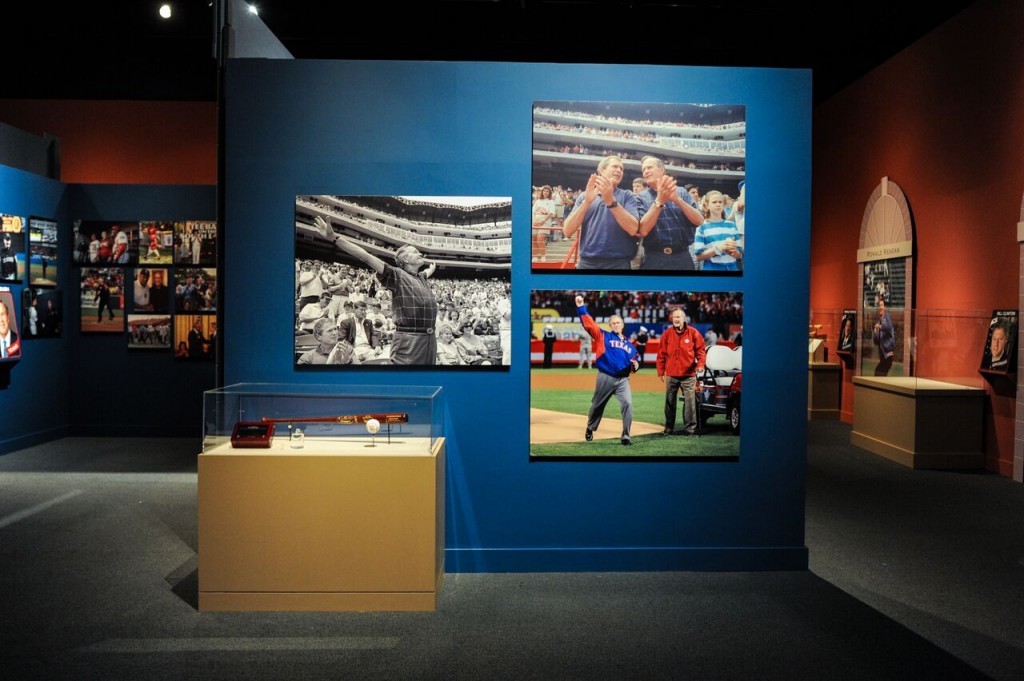
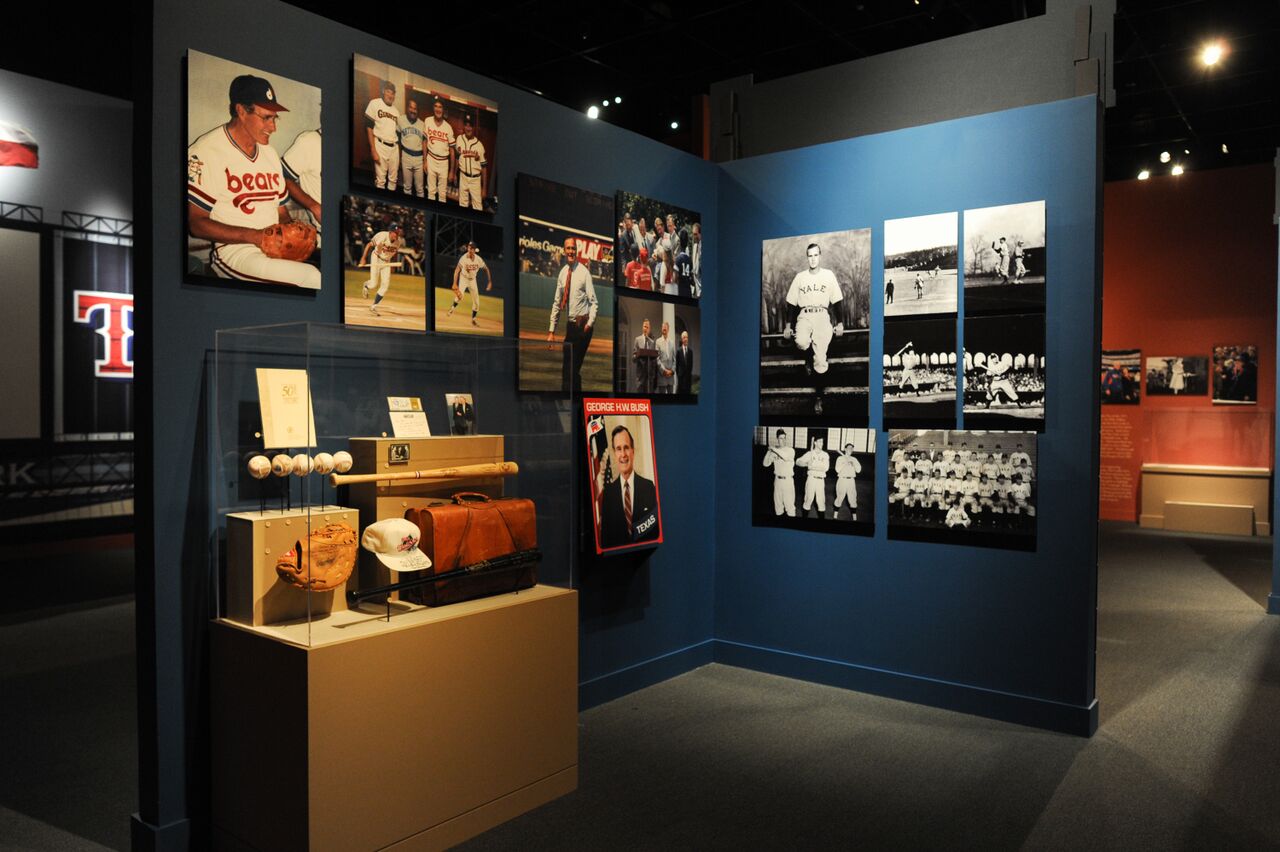
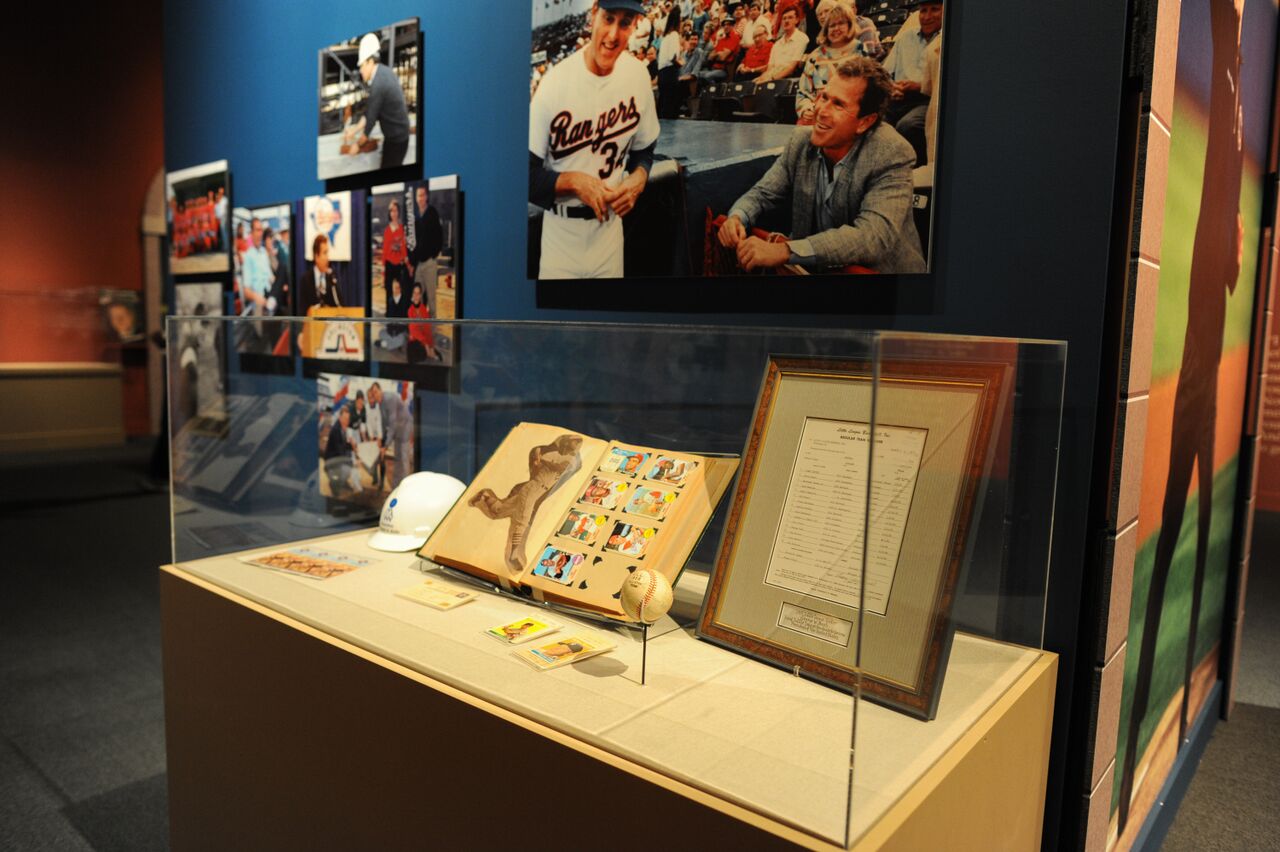
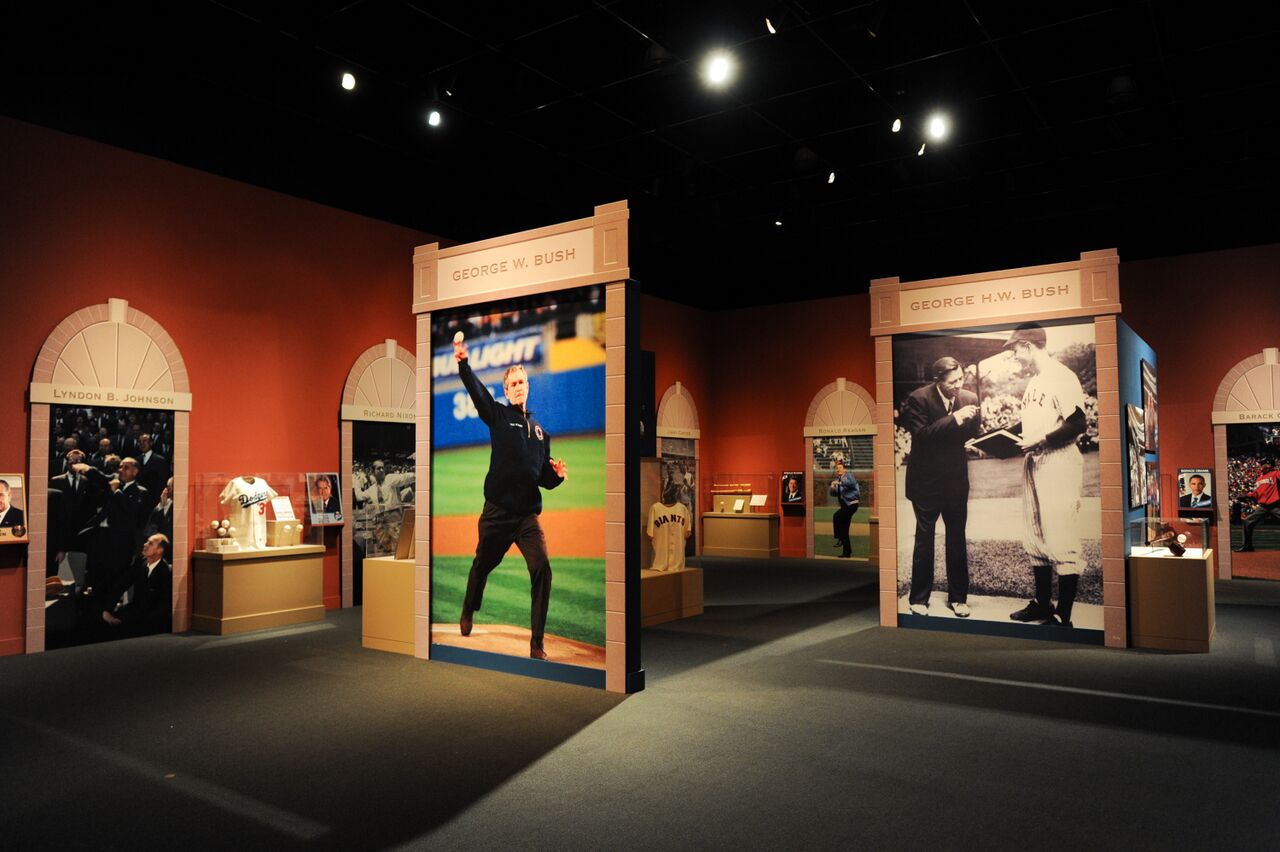
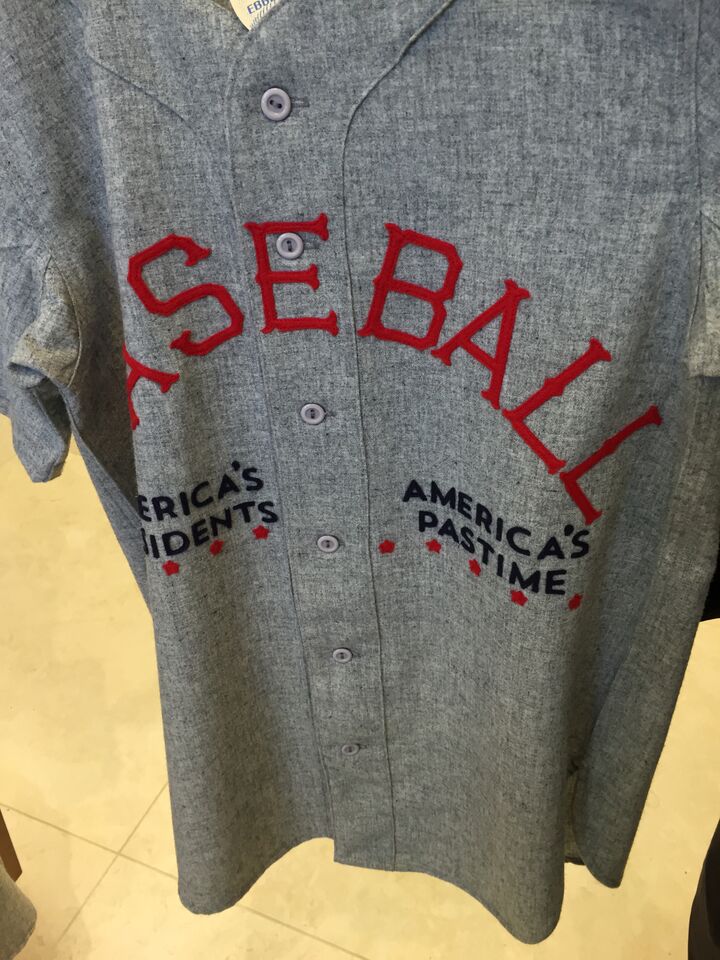
Baseball: America’s Presidents, America’s Pastime, the current special exhibit on display through October 4 at Dallas’ George W. Bush Presidential Library and Museum, covers the sport of baseball and how U.S. presidents interacted with it. So that could beg the question: What if the most powerful man in the world could do something about what happened on the field? Not by signing a minimum-run bill or conducting NSA-style surveillance on the Astros’ front office (that’s apparently already been done, anyway), but by actually contributing on the diamond.
If you had to pick any president to start a baseball team, whom would you choose?
Most presidents since the beginning of the 20th century have thrown at least one pitch a year. William Howard Taft began the practice of tossing ceremonial first pitches. On April 14, 1910, Taft addressed a women’s suffrage convention, then went to American League Park, where the Senators played their home games at the time. He threw out the ceremonial first pitch of the season to Walter Johnson. The Hall-of-Famer Johnson then threw a one-hitter in a 3-0 Sens Opening Day win against the Philadelphia Athletics.
The tradition continued, and, in fact, Barack Obama threw out a first pitch on the 100th anniversary of Taft’s inaugural presidential delivery.
One pitch, however, does not a Sabermetric analysis make. Luckily, the exhibit had some information on which presidents actually played baseball, plus their heights, weights, and records of offices held.
With baseball known as the National Pastime, it follows that a lot of the National Heads of State have played the game. After reviewing the information, I speculated on how a GM might assemble an all-Presidential team. As you listen to their games broadcast by former Cubs play-by-play announcer Ronald Reagan, keep in mind that I’ve assigned them positions based on available knowledge of where they actually played or where their abilities would seem to place them. It’s all subject to change, of course, because when you’re the Commander in Chief, you can really play whatever position you want to.
1B : George H. W. Bush
This is probably the guy with whom you start the team. He played D-1 baseball and captained his Yale squad to the first two College World Series tournaments in 1947 and 1948. A 1990 Topps baseball card of Bush 41 indicates he hit .251 (with a wood bat) in 175 at-bats those two years, some of which came against future Major Leaguers. He socked two home runs and eight doubles.
He played college ball as a freshman at Davidson, so he must have had some ability, although Watterson ranks him as one of the least athletic presidents. Wilson loved baseball, attending many games after he left office. Perhaps he would have been a David Eckstein sort of player, who doesn’t look like a good ballplayer but finds a way to get it done. On the other hand, Baseball Almanac cites this contemporary observation about the 28th president: “’Wilson would be a good player if he weren’t so damned lazy.’ – Comment by the Team Captain of Wilson’s Davidson College.”
SS: Herbert Hoover
Hoover loved baseball and played shortstop at Stanford as a freshman. Ted Williams (known for being the Rangers’ first manager, among other things) considered him America’s greatest president.
3B: Warren Harding
He played first base as a boy, but we’re moving him across the diamond because the team’s top player occupies that position. Baseball Almanac reports that Harding played in a charity game in 1920 and injured his finger.
C: William Howard Taft
According to Mead and Dickson, there are accounts that Taft was a young catcher who would have had a contract with the Cincinnati Red Stockings had he not injured his arm. Taft loved the game, though he missed throwing out the first pitch in 1912 due to an understandable preoccupation with the recent Titanic shipwreck. At more than 300 pounds, the 27th president probably isn’t your leadoff hitter, but might be your Prince Fielder in the middle of the order.
LF: John Kennedy
One of the best presidential athletes, Kennedy grew up a Red Sox fan. He concentrated more on other sports, like swimming, but I think he’d be projectable as at least a good defensive outfielder.
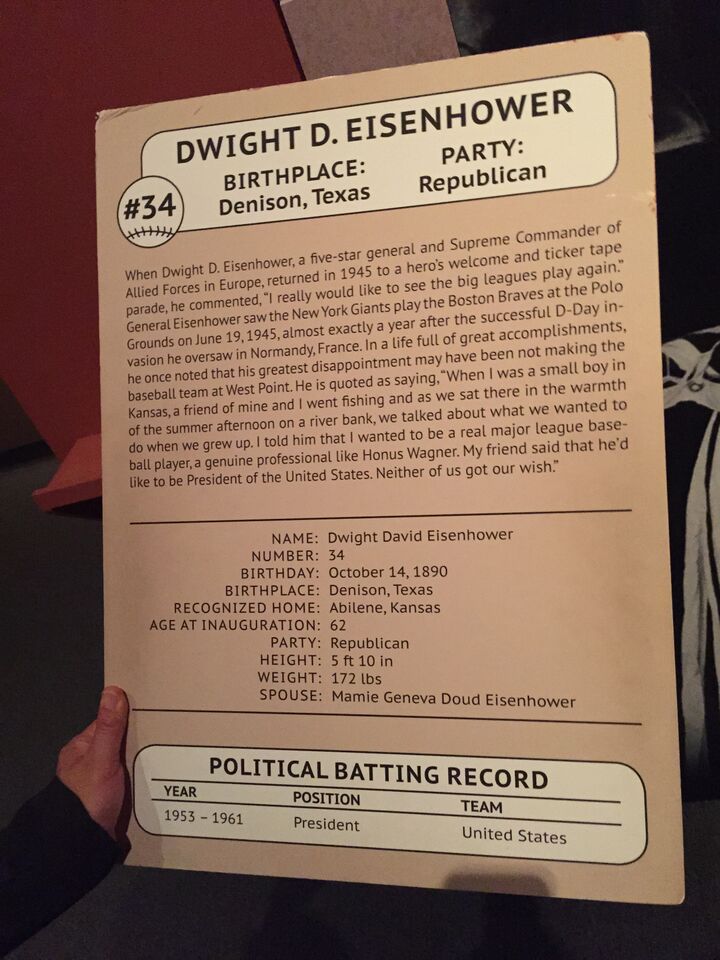
CF: Dwight Eisenhower
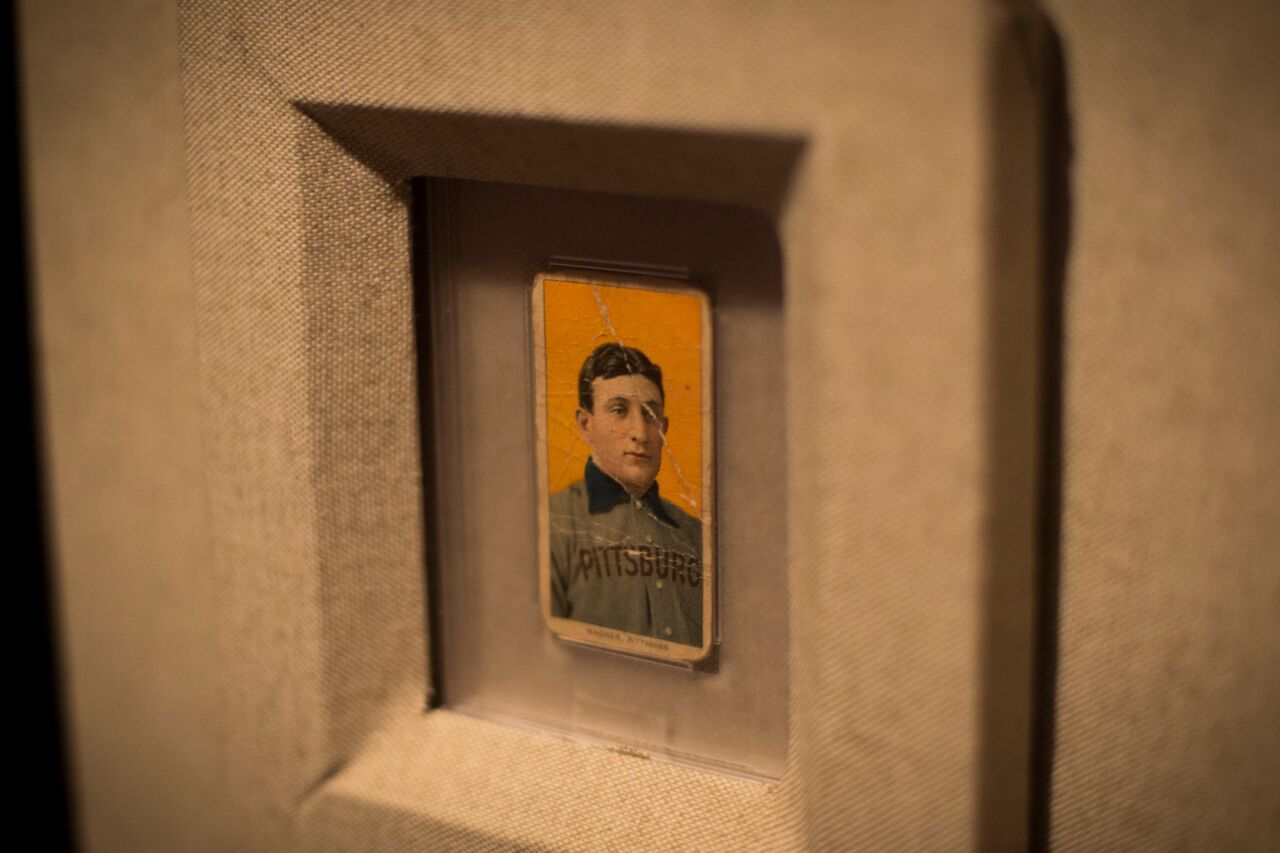
The general loved baseball, but didn’t make the West Point team. He wanted to be a ballplayer like Honus Wagner growing up, which is relevant here because the museum just added to its exhibit the most valuable and famous baseball card around, a T-206 Honus Wagner.
RF: Gerald Ford
Ford was an excellent athlete, having played football at Michigan. He played baseball growing up as well, and Baseball Almanac reports him as having said “I had a life-long ambition to be a professional baseball player, but nobody would sign me.” He played on the Congressional baseball team before occupying the Oval Office.
LOOGYs (left-handed-one-out-guy): Barack Obama and Bill Clinton
This isn’t a joke based on their politics. They both throw left-handed and a team needs situational southpaws. Clinton listened to Cardinals games growing up and later rooted for his wife’s favored Cubs. Obama likes the White Sox. Based on the video I’ve seen, Clinton looks to be the most game-ready. Obama, a fine basketball player, may have to take the Michael Jordan path and spend some time in the White Sox minor league system as he converts to a different sport.
Pat Venditte’s Position : Harry Truman
Truman could throw with either arm. He didn’t play that much as a kid, but loved the game and attended more games while in office than any other president. His wife Bess was apparently considered the best third baseman in Independence, Missouri as a young person, a fact one learns in the First Ladies section of the exhibit.
By the way, are there a kids in third-world countries wearing “Congratulations, President Dewey” shirts?
Closer: Abraham Lincoln
Lincoln apparently played ballgames on the White House lawn with local kids and had a baseball field built behind the White House. We don’t know his true position, but with his height, I am thinking he could throw some heat on a serious downward plane. If he can learn a breaking pitch, he could be a dominating closer.
RHP: Jimmy Carter
Carter pitched growing up and continued playing softball during his presidency. His mom loved the Dodgers and the exhibit shows a letter Carter wrote to Los Angeles owner Peter O’Malley thanking him for treating his mom well. Carter attended Game 7 of 1979 World Series but never threw out a first pitch as president. That’s kind of Arlington’s fault. Texas persuaded the Senators (an expansion franchise that replaced the one that moved to Minnesota) to vacate the nation’s capital in 1972. Presidents had no Washington team to patronize until the Nationals arrived during the Bush 43 administration.
RHP: George W. Bush
The younger Bush played on the Yale freshman team but didn’t progress to the varsity. Still, even playing at that level puts him ahead of most of us. Where the 43rd president would prove especially valuable to your team-building would be in actually building it. He spent time as Managing General Partner of the Texas Rangers.
“One of the pleasant surprises for all of us, not knowing him when he put the group together to buy the team, turned out to be how much of a student of the game that he really was,” said Tom Grieve, who served as Rangers General Manager under Bush. “It was obvious when you talked to him that he knew the history of the game. He could quote lineups from 30-40 years ago. He loved baseball.“
Bush no doubt absorbed a lot of knowledge about building a ballclub through his interactions with the Rangers baseball operations staff
“He was in a lot of meetings. He asked a lot of questions,” explained Grieve. He never imposed his will or his thoughts on anybody else, but he was very aware of everything that went on in the baseball operation. He wanted to know about it.”
For his Assistant to the General Manager positions, Bush might choose Bill Clinton, who got involved in resolving the 1994 baseball strike or Richard Nixon, a huge baseball aficionado who turned down offers to head the MLB Players Association and to become MLB Commissioner. Also, Warren Harding owned part of the Marion, Ohio town team, which developed future Major Leaguers Wilbur Cooper and Jake Daubert.
Bush 43 had one of the most poignant presidential baseball moments when he threw out the first pitch at Yankee Stadium in October, 2001, shortly after the September 11 attacks. It was Game 3 of the Yankees/Diamondbacks World Series. Yankees (and former Rangers) catcher Todd Greene caught the pitch.
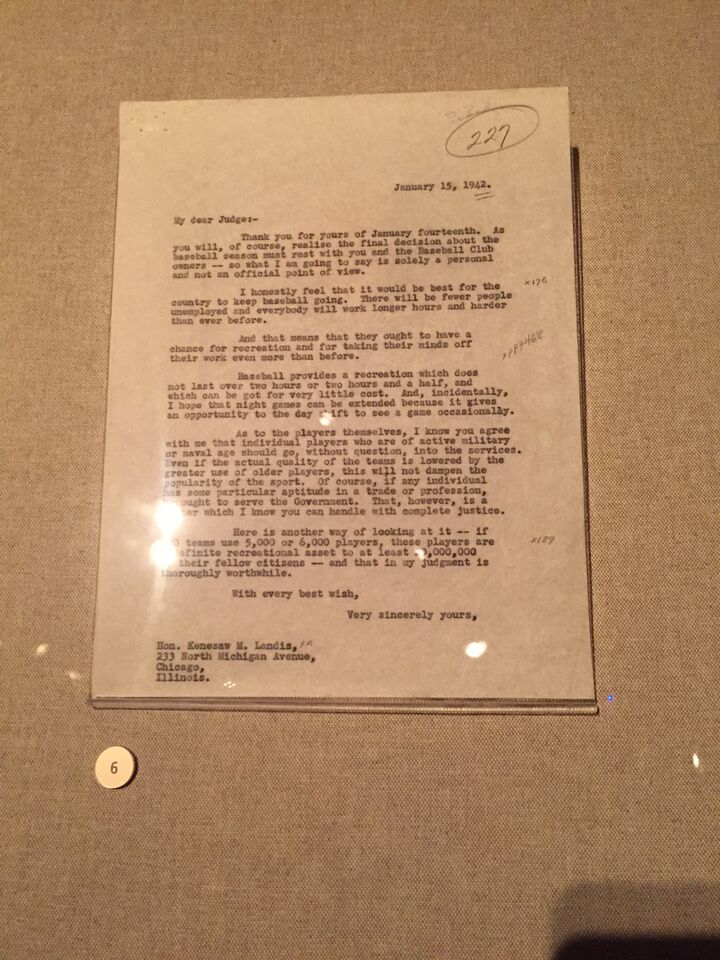
The exhibit talks about all the ways presidents impacted the game beyond just playing it. Perhaps the most historically significant artifact comes courtesy of Franklin D. Roosevelt. In 1942, he wrote the famous “green light letter” to Kennesaw Mountain Landis urging baseball’s commissioner to keep the game going during the war.
Most of the information for this article came, quite naturally, from the backs of baseball cards. In this case, we mean oversized cards in the exhibit you can pull off the wall and flip over to discover facts about baseball and presidents.
Many of the artifacts in the exhibit came from presidential libraries and the National Baseball Hall of Fame in Cooperstown, New York. You’ll learn a lot, with details ranging from how George Washington played catch at Valley Forge, to why the athletically inclined Teddy Roosevelt disliked the sport, to a display of the jersey movie actor Ronald Reagan wore when portraying a ballplayer named after a president. There’s a video about baseball and presidents, narrated by the Bush Center’s Scott Robertson. Its highlight might be footage of Bush 43 at 2001 World Series where you see how the Secret Service did its thing, including an agent dressing up as umpire. And, of course, there’s a souvenir stand. You can pick up exhibit-branded jerseys, pins, and postcards, plus the inevitable baseball autograph (George W. Bush’s, on a $100 copy of his book about his father).
With a big baseball event on national television tonight, we’re reminded of an election none of these professional politicians would have likely won, even if they had continued to pursue power hitting instead of executive power: selection to the MLB All-Star Game.
Which begs the question of whether the public should actually elect All-Star starters or leave it up to a system of electors equal to the number of total congresspersons. We’ll address that in a future blog post.
Disclosure : The Bush Center sometimes pays me to help produce their webcasts. Also, I once had a dog called “Hoover.” He was named after a president, but not of the United States. I named him for the president of Delta House.
Rush Olson has spent two decades directing creative efforts for sports teams and broadcasters. He currently creates ad campaigns and related creative projects for sports entities through his company, Rush Olson Creative & Sports.
“Wins
Above Replacement;” "Pass-Completion Percentage;” “Defensive Win Shares;”
The sports world seems to revolve around measurement even more than it did when
some of us devoured the numbers on the backs of baseball cards. One key metric
you may not find on the back of a card or in the spreadsheets of analysts: “Successful Season.” How do we define such
a thing?
Having a “Successful
Season” matters a lot to sports marketers.It’s necessarily imprecise, because it exists in the minds of
supporters. It’s important, though, because their vibe about the previous season’s
accomplishments fuels season ticket and sponsorship purchases for the following
year’s campaign.
Some seasons make
such evaluation simple. If a baseball team wins the World Series, or a football
team the Champions League, or another kind of football team the Super Bowl,
they have clearly experienced success. Only one team per sport earns those
distinctions, however, and lots more need their fans to believe that the
just-completed season sets them up for a satisfactory campaign-to-come.
Leagues (and entire
sports) further their own success when they maximize the number of member teams
fans consider to have had “good years.” It therefore follows that more than the
one franchise that wins the year’s biggest trophy needs the ability to claim a
satisfactory result.
Does winning more
games than you lose constitute success? If you had a poor won-loss record the
year before, it might. Improvement sells.
Most U.S. sports
have playoffs, and a season that finishes in the end-of-season tournament
generally creates a perception of success. The exception can lie with teams who
have made the postseason a number of years running without winning big, as happened
with the Atlanta Braves.(1)
It helps if you
can claim a title, even if it isn’t the ultimate one. In American arena sports,
if you win a division or conference title, you get to raise a banner the next
year.
In European
sports like soccer, you get lots of chances to win silverware.You might win a continent-wide competition,
one of a couple of domestic cups, or the domestic league itself.
In some U.S.
sports with player drafts, faring extremely poorly can counterintuitively lead
to a positive evaluation. If you “win” the opportunity to draft a Shaquille
O’Neal or Mario Lemieux(2), the resulting expectations of immediate
improvement can drive ticket sales. They can also fuel allegations of unsavory
conduct, as in the cases of Patrick Ewing(3) and Hakeem Olajuwon(4).
In sports with
relegation, the poorest teams have no path to positive spin. They drop to a lower
league the following year. The overall effect of the system may prove positive,
however, since an equal number of teams sell their fans the triumph of
promotion and visits from Barcelonas or Chelseas the following season. Some
number of teams who narrowly avoided relegation, especially recently promoted
ones, can often declare a positive result to their year.
Qualifying for
European play in itself often prompts supporters to have happy feelings about a
season. Soccer clubs who fare well enough to earn high-profile weeknight games
in the Champions League or Europa League have something special to sell to
prospective ticket buyers.
The Europa League logo adorns Olympic Stadium ahead of a Lazio/Tottenham clash
College sports
have several ways to declare success besides a national or conference title.
Numerically speaking, advancing to a Final Four, Frozen Four, Elite 8, or Sweet
Sixteen plays well. For many smaller schools, simply making it to a national
tournament becomes a transcendent achievement. Bowl games have always seemed a
genius way of setting up tons of schools to claim seasonal success. Time will
tell if recent national football playoffs have removed the luster from the
historically useful designation “bowl team."
Departure of key
players can blunt the marketing impact of a strong collegiate season.
Graduation rates, no matter how good, don’t seem to move a lot of tickets.
If your team
hasn’t met one of the above criteria for in-season success, can you still have
a successful offseason? Absent spending big money on free agents or transfers,
one has to seek positive stories to tell. Customer-facing employees should know
about young players who could break out and what the official company line is
about scenarios under which a team could improve. Using social media to seem
earnest about improvement and offering stories about individual players doing
good things on- and off-field can help a brand’s image after a down year.
One can also take
a page from minor league teams, where sales tend to revolve more around fan
experience than winning. An emphasis on group tickets and community involvement
becomes paramount.
Governing bodies
have designed the likes of salary caps, international free agent restrictions,
and Financial Fair Play to help engender the competitive balance that maximizes
a given team’s chances of plausibly claiming that success awaits in the coming
season.
As the saying
goes, “everybody loves a winner.” The more leagues can ensure fans perceive
that everyone IS a winner, the more success they will have.
Rush Olson has spent two decades directing creative
efforts for sports teams and broadcasters. He currently creates ad campaigns
and related creative projects for sports entities through his company, Rush
Olson Creative & Sports.