Thursday, November 12, 2015

Bucket Hats Are the New Black

This post originally appeared on the Blotch page at the Fort Worth Weekly. To read it on their site : http://www.fwweekly.com/2015/11/10/nascars-knickknacks/


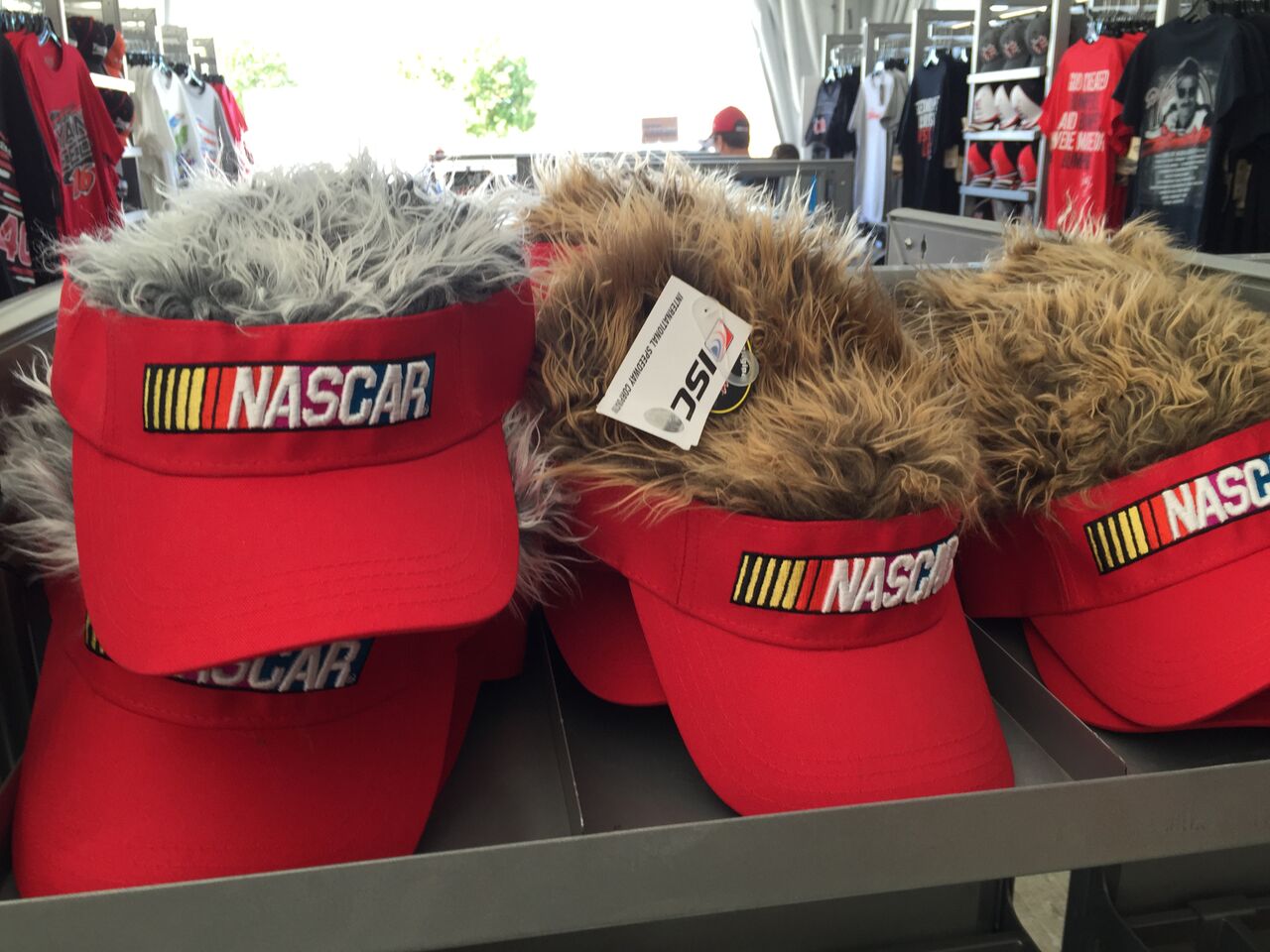
Breaking fashion news: Bucket hats are in this year.
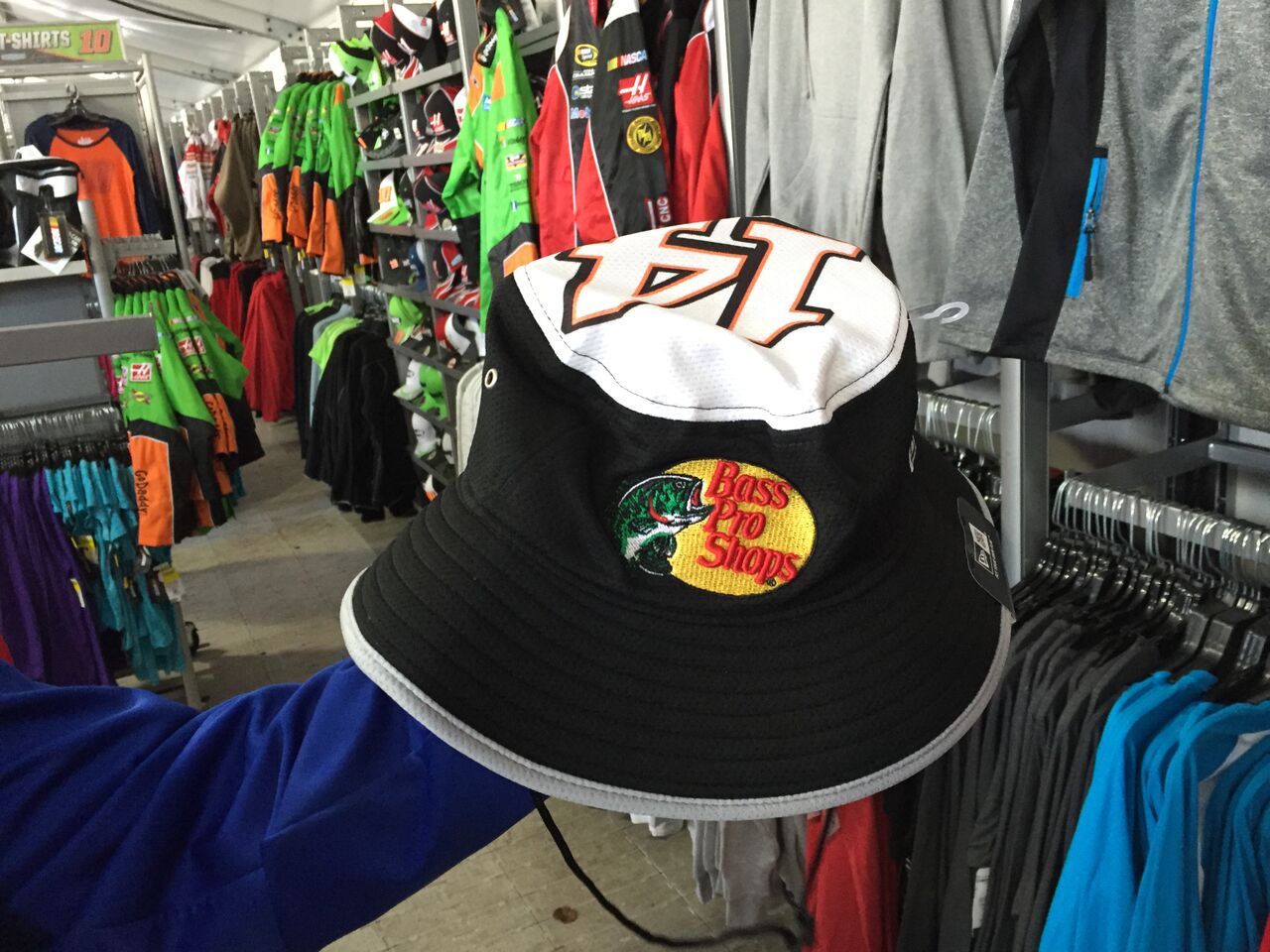
This comes as happy tidings for those of us who have hung to ours waiting for them to re-ascend the style ladder.

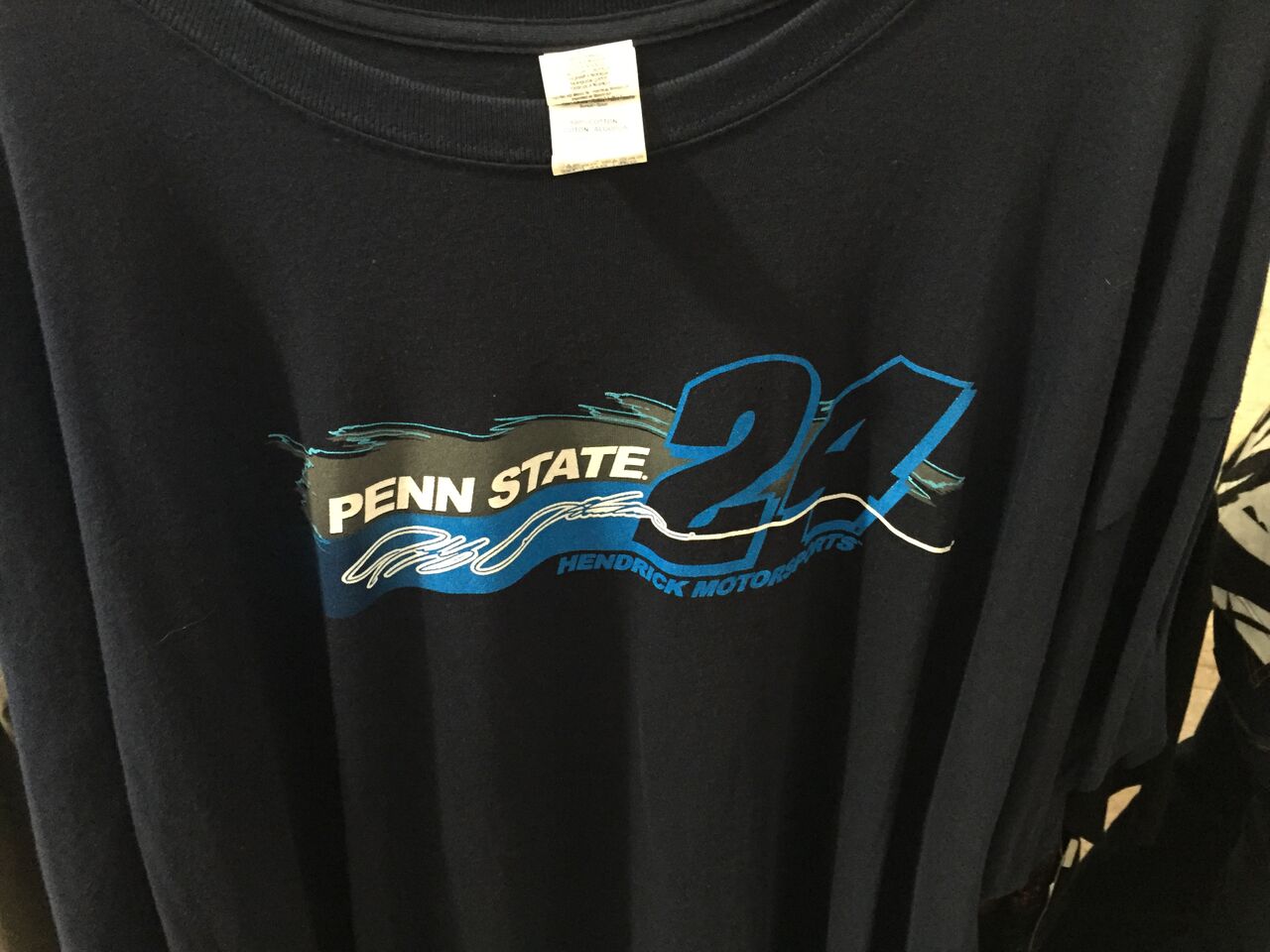
My source for this apparel assessment, Alex Dean, no doubt considers such headwear especially fashionable if it sports a colorful number, like 31, or 20, or 14. Mr. Dean is Executive Vice President – Strategy for Fanatics, the company that runs the new NASCAR Track Superstore. Fanatics hopes to bring a high-quality retail experience to stock car racing fans looking stay on trend with, say, some Danica Patrick flip flops or a Jeff Gordon Penn State tee.


“There used to be a lot of merchandise haulers that had either single drivers or combinations of drivers. That has been phased out to be one giant superstore,” Dean explained. He hopes the new setup, organized mostly by driver, will enable fans to touch and feel more merchandise and have a speedier checkout experience.
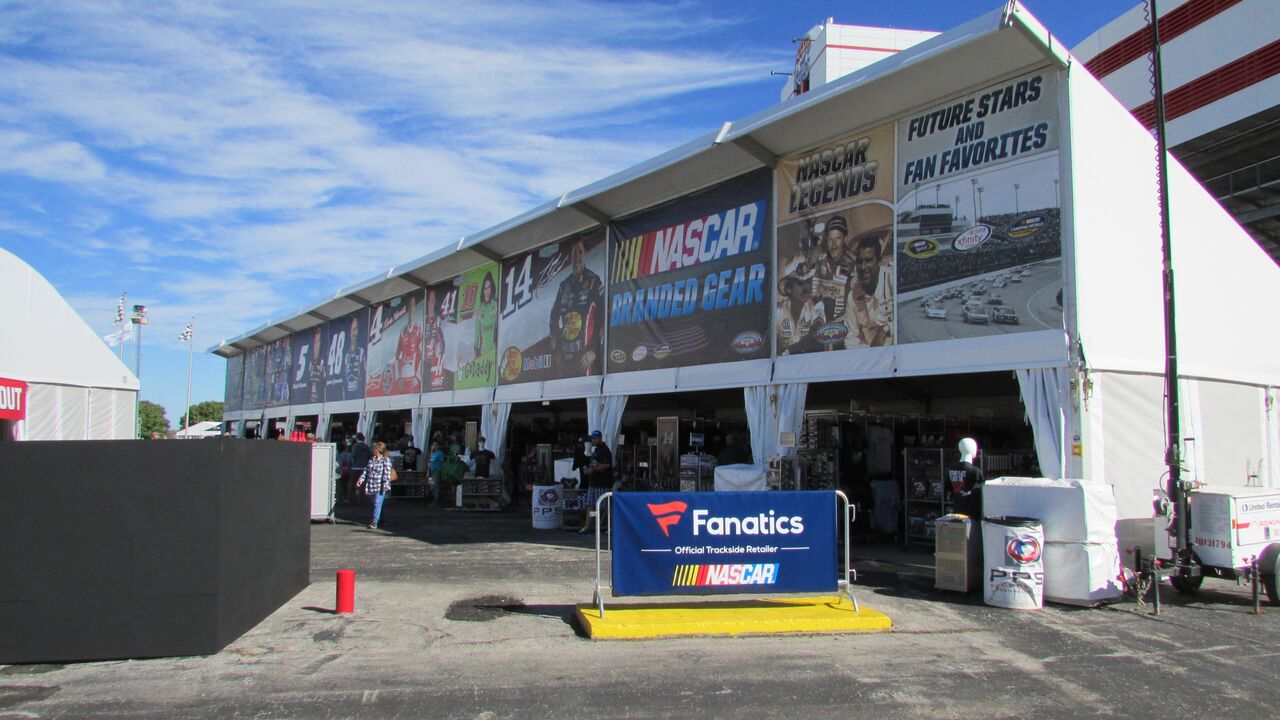


The new concept debuted at the Pocono races in early August and visited Fort Worth’s Texas Motor Speedway last week. A huge store should conceivably offer a sizable selection. As someone whose day job revolves around doing creative work for sports entities, I was curious about what sorts of fun and innovative items might populate the Superstore’s shelves. I found lots.
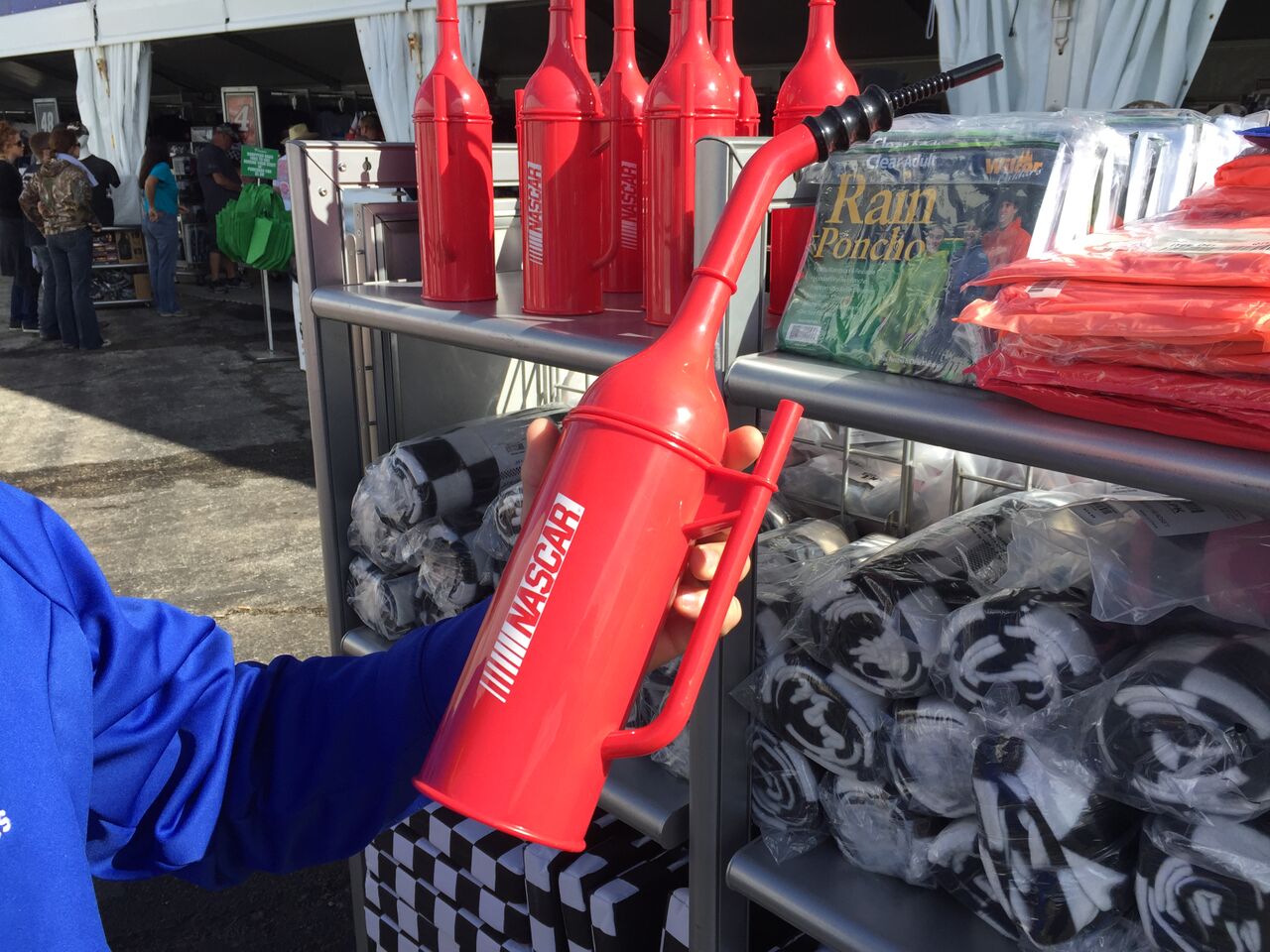


For instance, why rehydrate out of a plain water bottle when you can sip from a Fan Fueler – a replica of the gas cans pit crews use to refuel race cars. The NASCAR-logoed ones have proven popular enough this year that Dean indicated Fanatics will introduce driver-specific vessels next season.
Dean’s crew has had 2016 on their minds over the past two-plus months as they’ve tweaked their brand-new concept.

“We’re testing a lot of things right now,” said Dean. “Some things that work on Friday and Saturday don’t work on Sunday because they don’t scale due to the amount of traffic we have. We’ve done a lot of testing over this year to figure it out.”
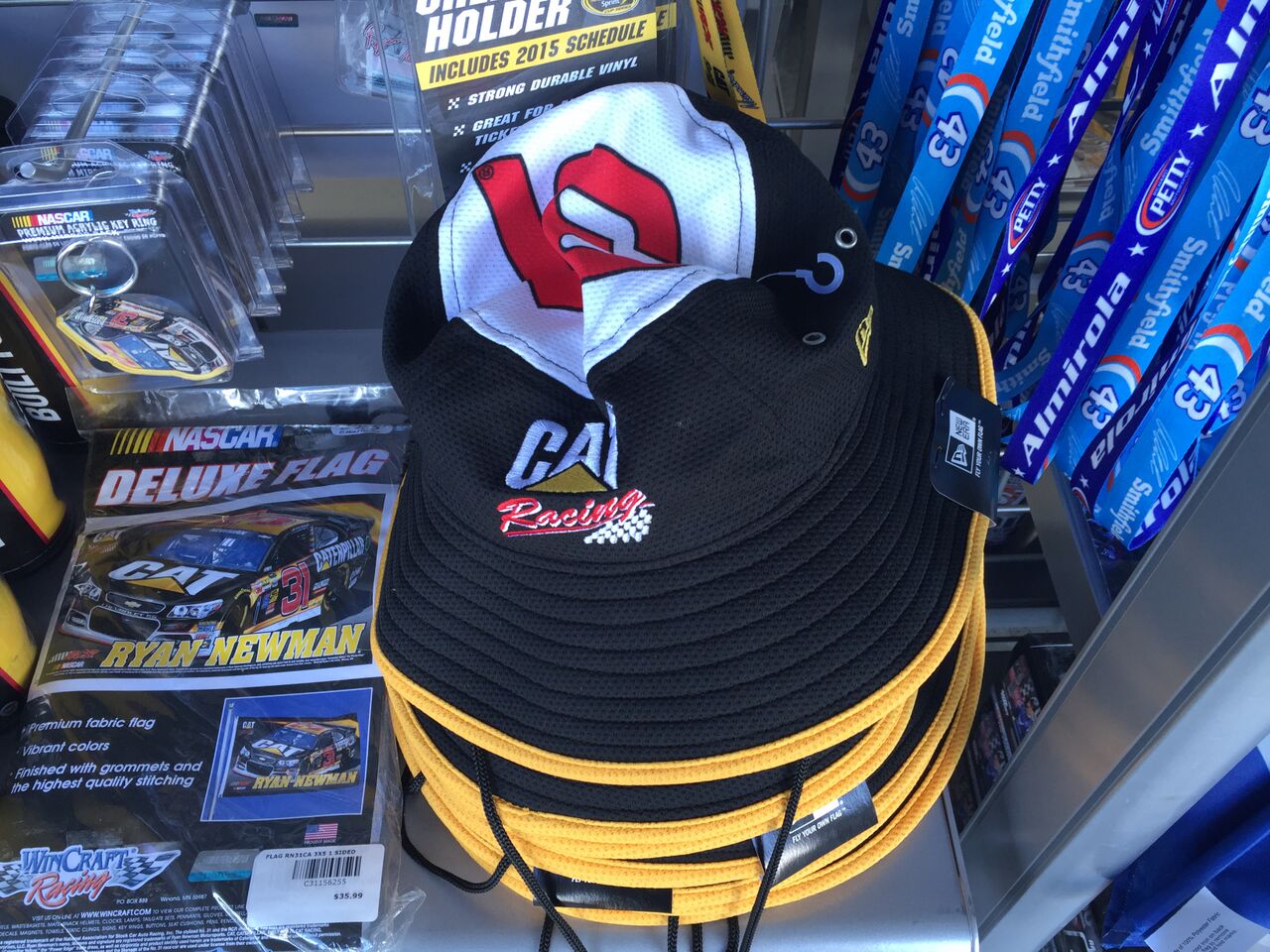


That evaluation, performed with an eye to next season’s improvements, applies to all aspects of the store, including inventory. Hence the introduction of those sexy bucket hats, which Dean called “trend-relevant.” That might not be the same thing as “in-fashion,” but I’m going with it. One focus moving forward will be on women looking for the latest fab NASCAR wear, I assume to accessorize their chic new bucket hats.
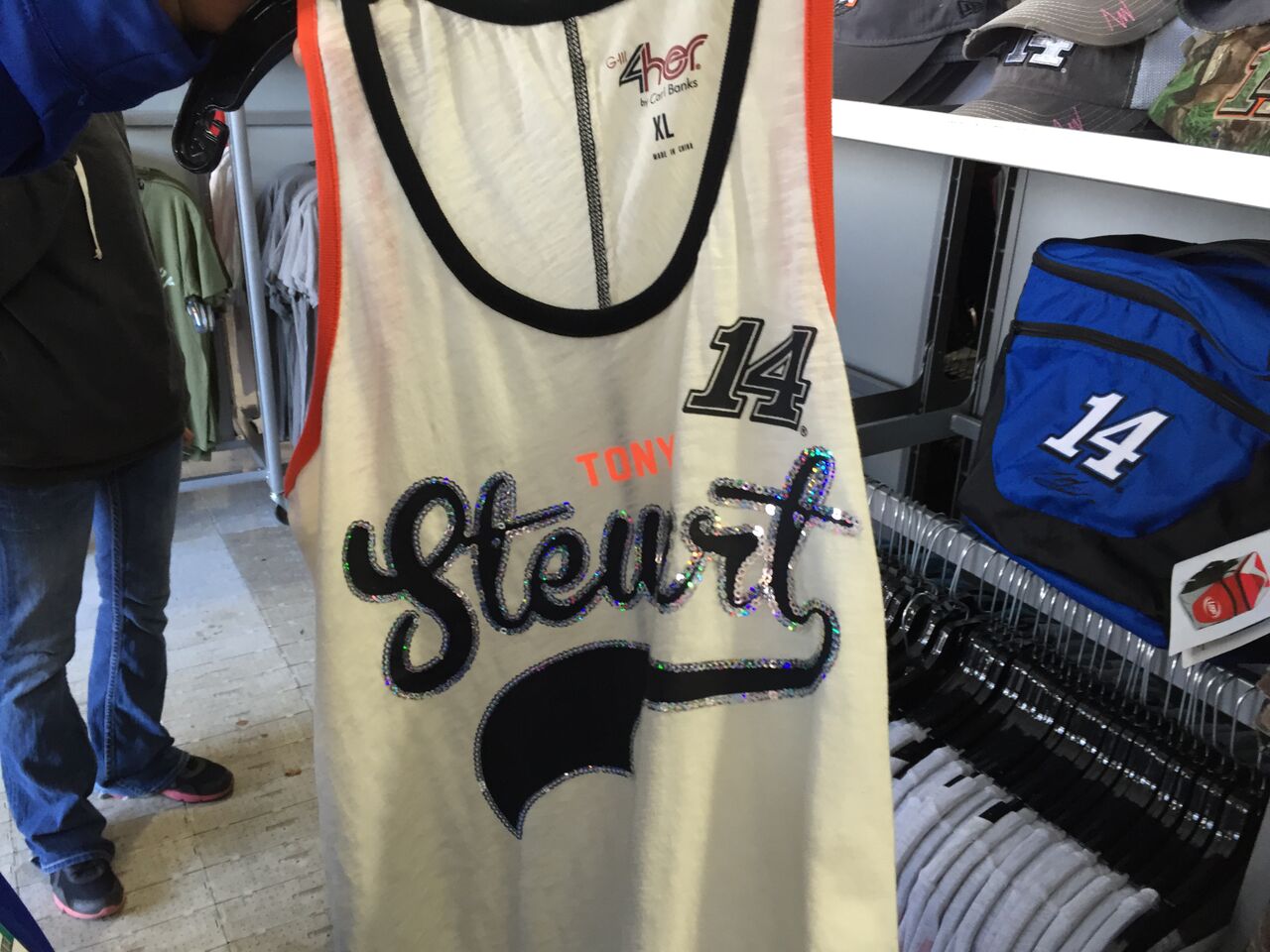
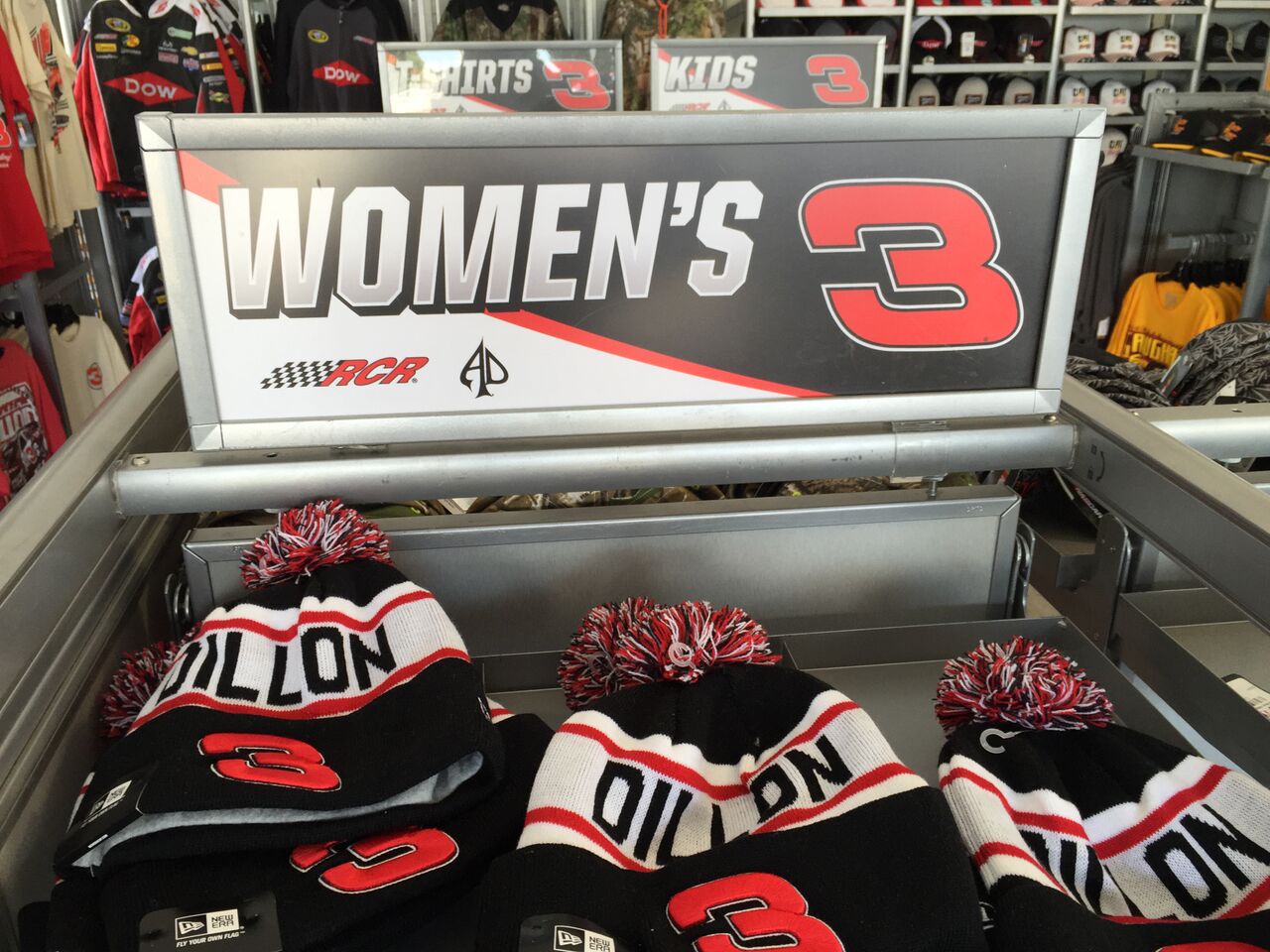


“We brought a lot of really nice women’s fashion pieces into play,” Dean said. “When they could see the quality, see the cut, they started to do really well. Unfortunately, we didn’t buy enough. We definitely sold through a lot of it and we’re making those adjustments for next year.”
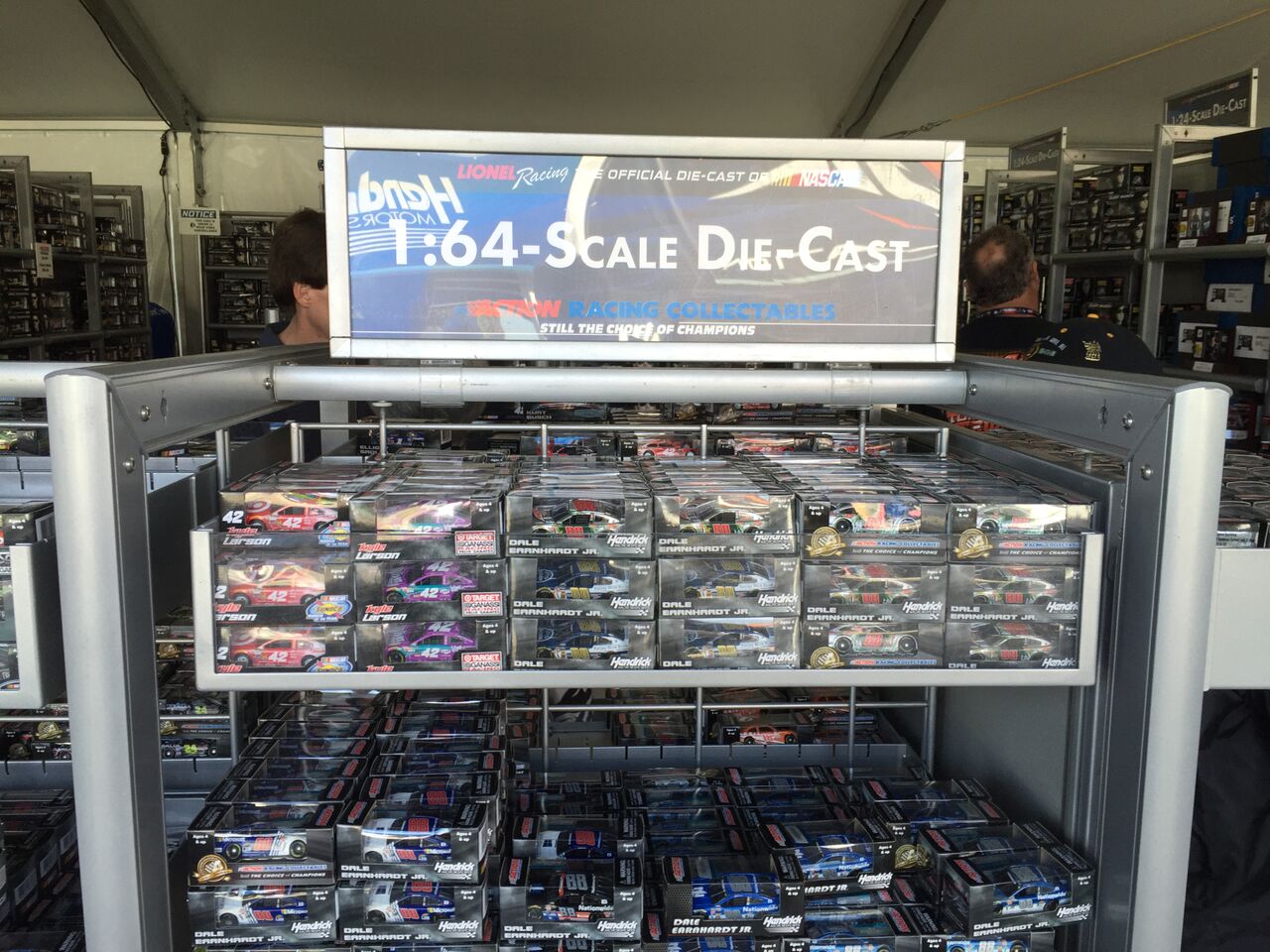


Dean cited die-cast replica cars as another beneficiary of the new system.

“We’ve seen big increases in sales in that business, partly because kids now can go and interact with the car,” he said. “If you think about the old trailer model, they could barely see over the counter. So the shopping market for children is much more engaging and we’re actually carrying a lot of drivers (cars) that weren’t represented on the haulers.”

Less well-known teams who didn’t take haulers to the tracks may benefit from the new setup.

“Given the expense associated with the prior at-track merchandise model, we had virtually no presence on race weekend,” explained Don Smyle, Director of Marketing & Sponsorship for Leavine Family Racing.  “The new business model provides smaller teams the same opportunity to showcase merchandise as the much larger organizations, albeit on a smaller scale.”
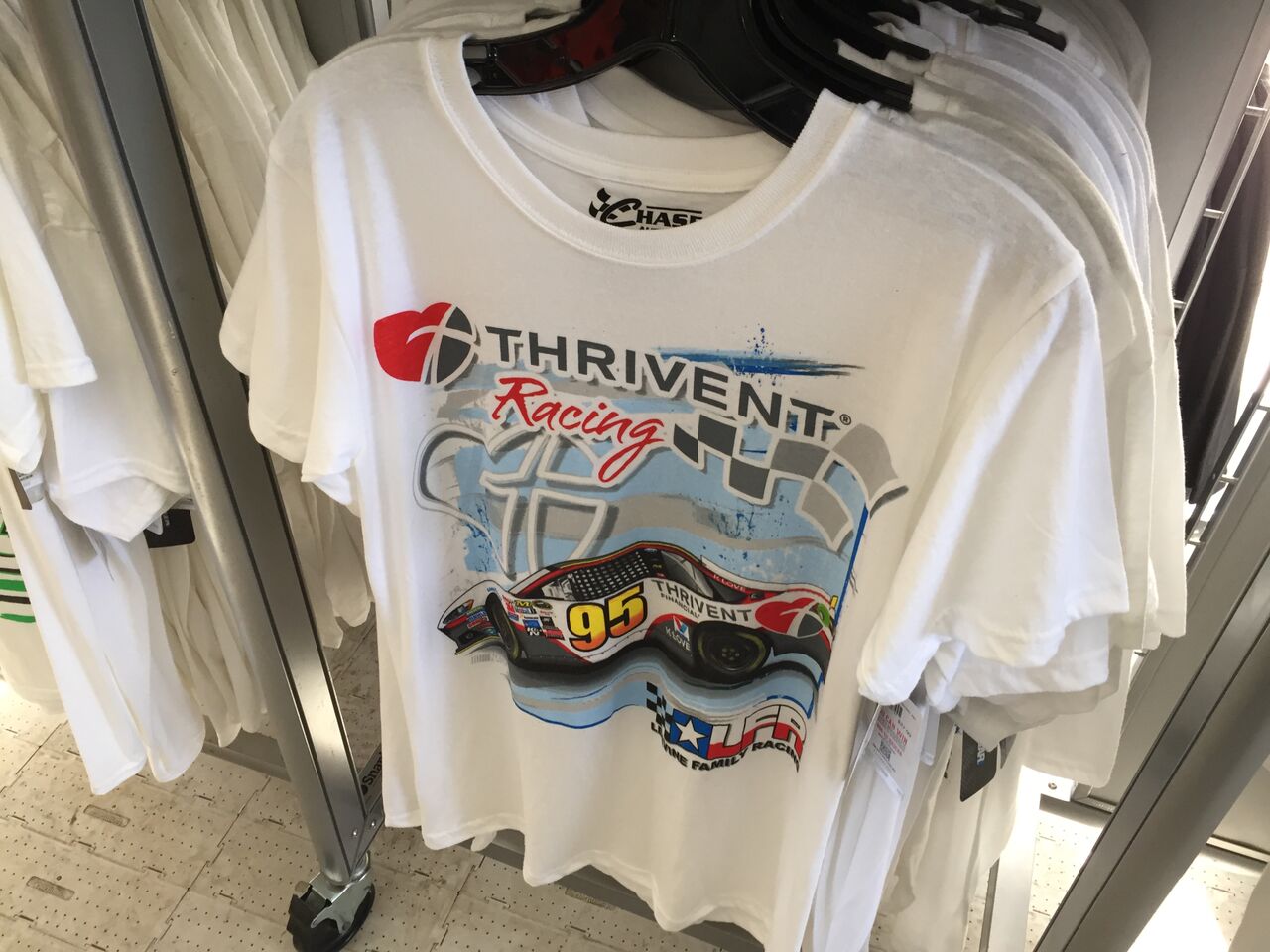


Leavine Family Racing runs the number 95 car in the Sprint Cup Series, driven by Michael McDowell.

“We’ve met with quite a few of the smaller teams and Xfinity (Series) teams and we’re doing a lot of testing with drivers and they’re able to have a representation where they haven’t had it before, which is fantastic,” said Dean. “It’s good for their sponsors, it’s good for the sport, fans of those drivers, and people who wouldn’t know those drivers by name, but now are introduced to them in the retail environment.”
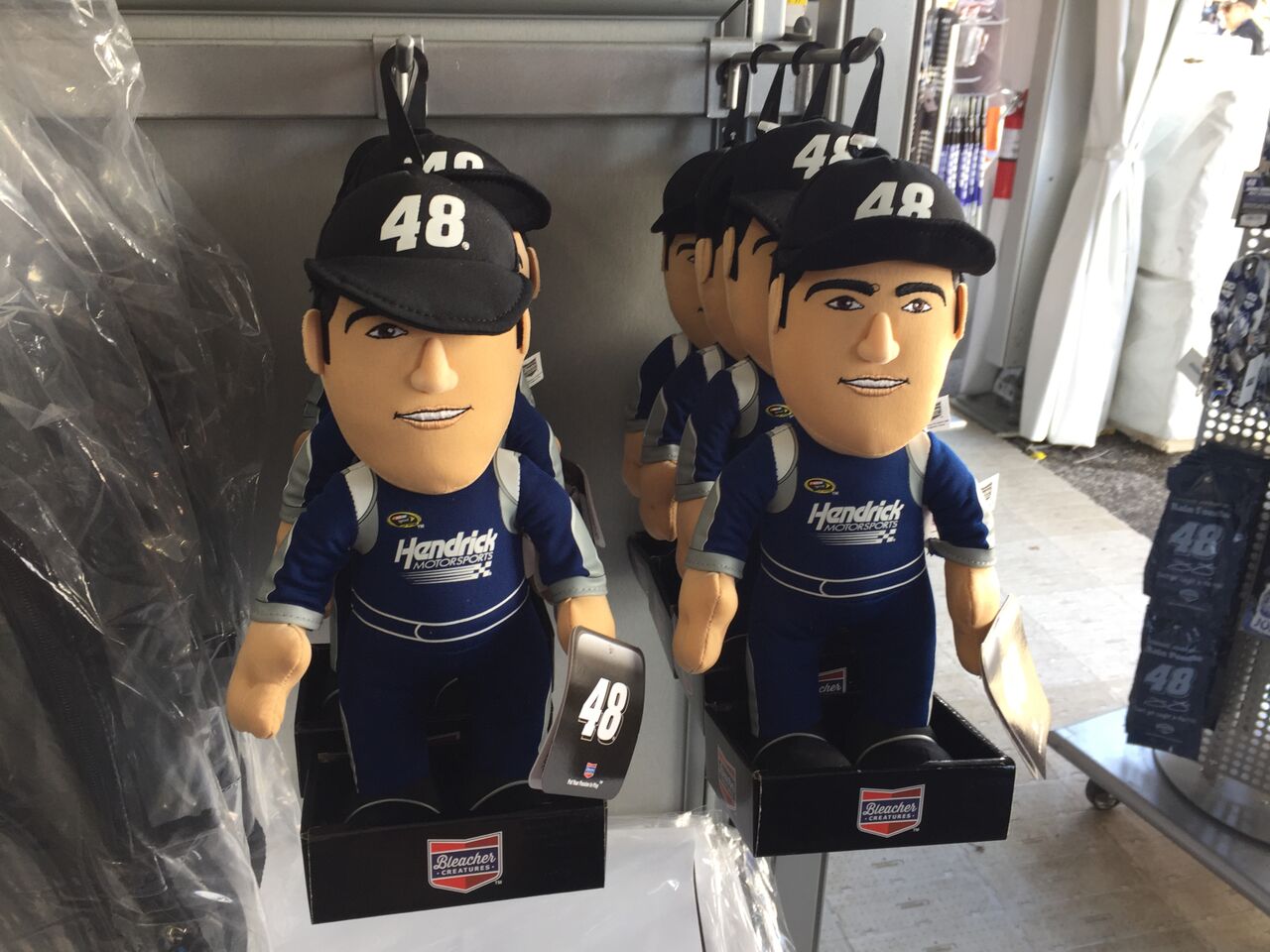
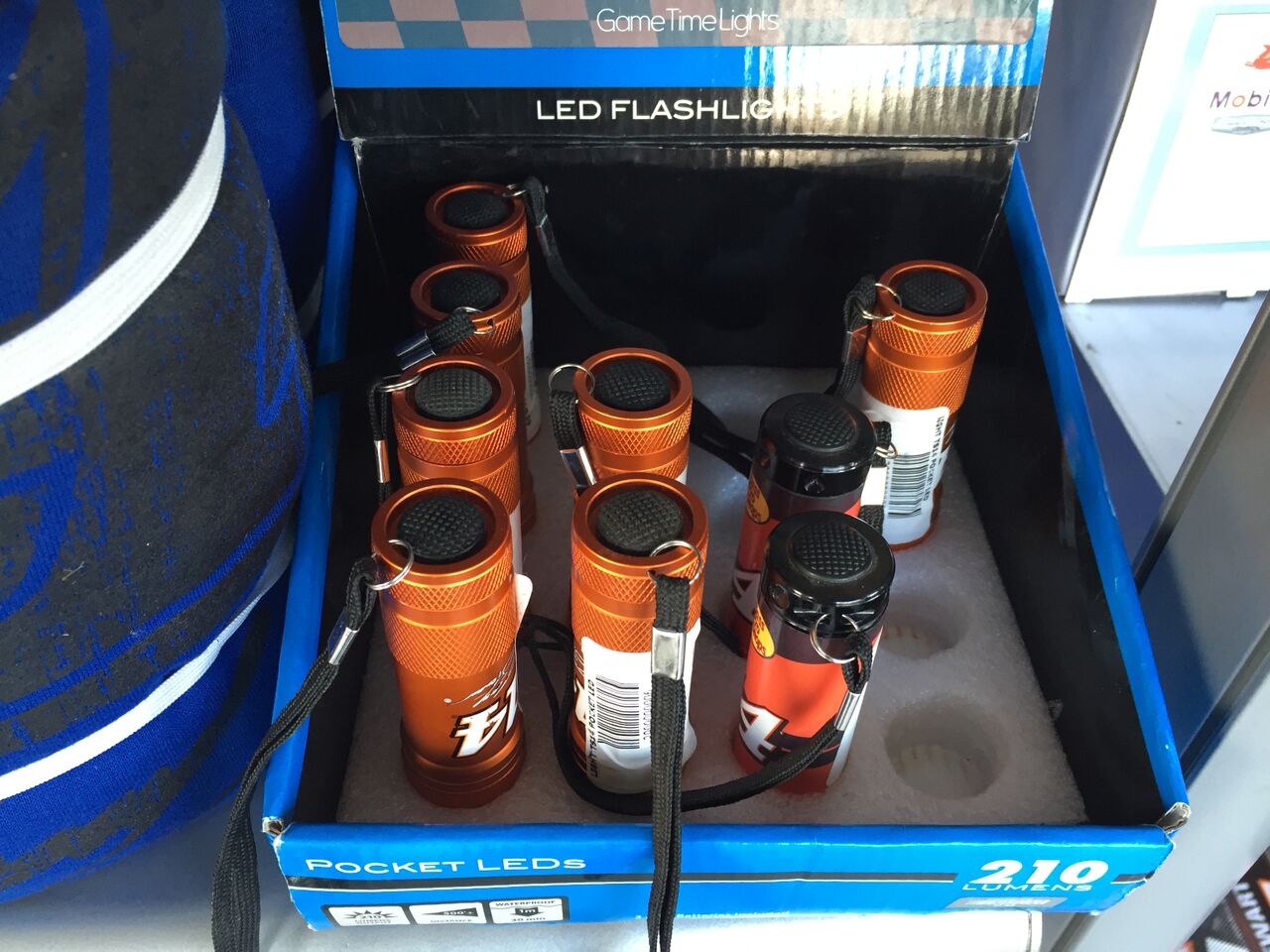


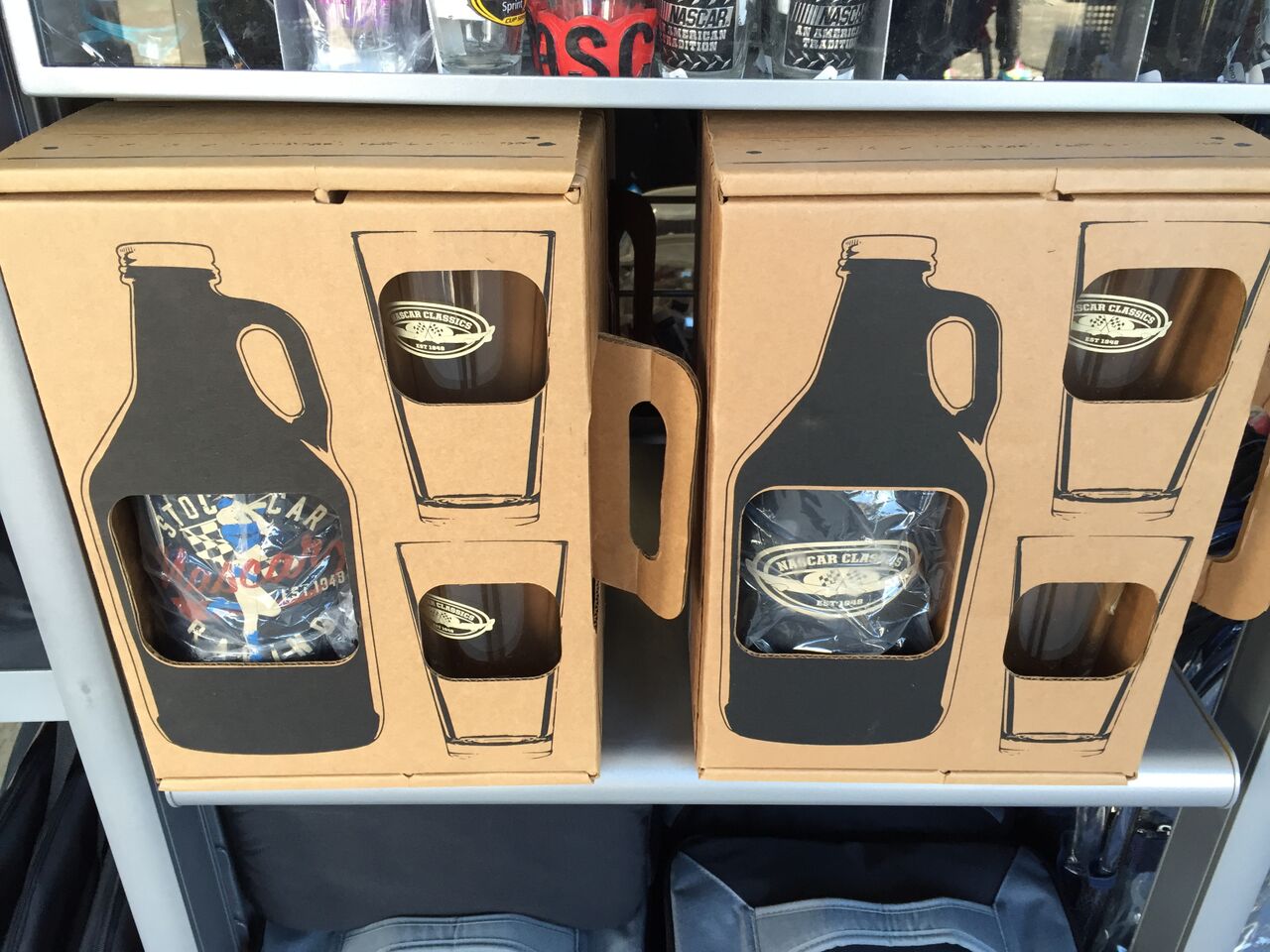
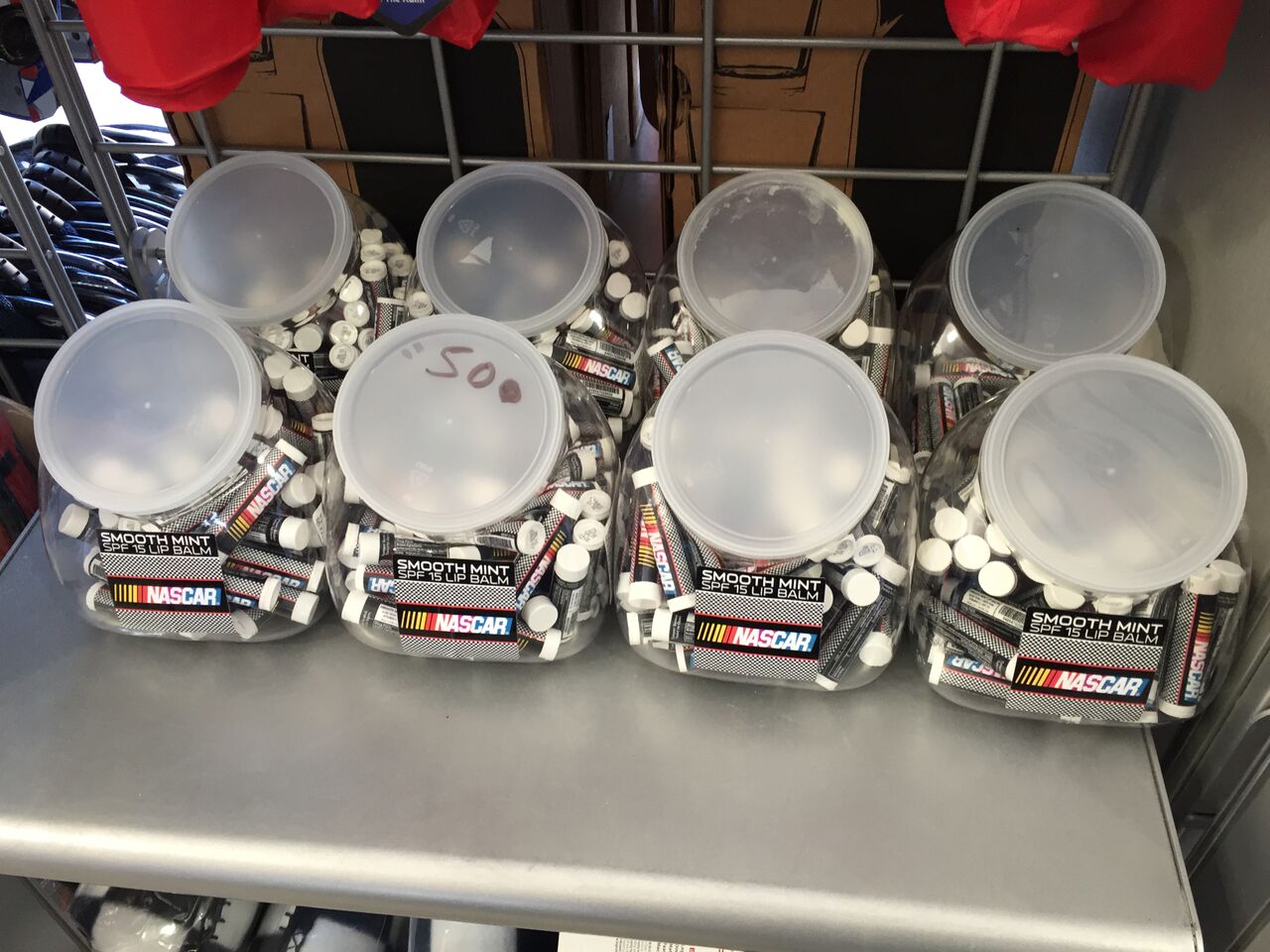
The more those drivers sell, the more of their, say, LED flashlights or plush dolls we’ll see on Superstore shelves. Not every item bears a driver’s mark, however. A growler/beer glass set or SPF15 smooth mint lip balm might bear the NASCAR logo or that of a team’s advertising partner.


“There are some really cool sponsors in the sport,” noted Dean. “The affinity may not even be for the driver, but more for the fan to the sponsor.”
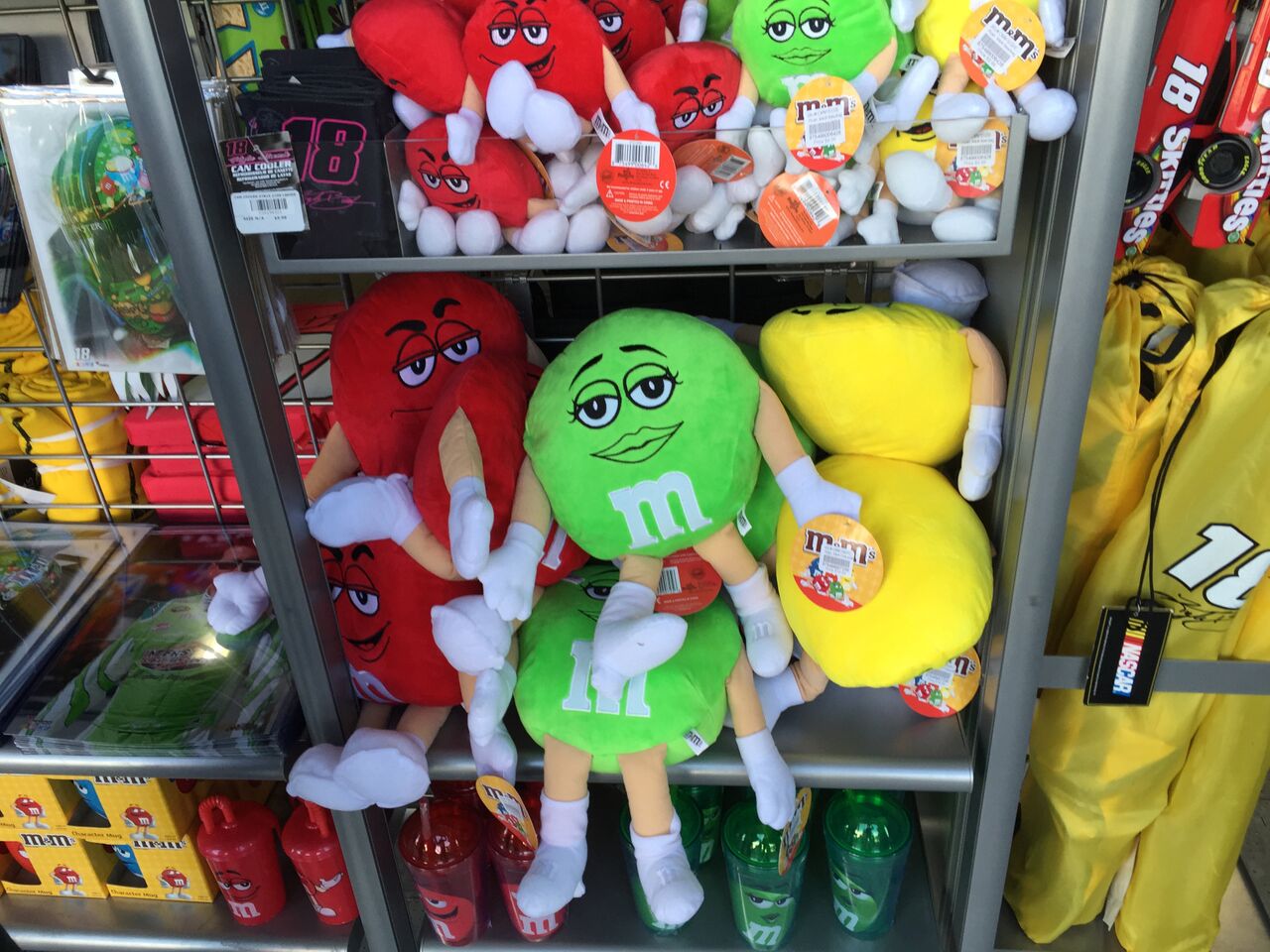
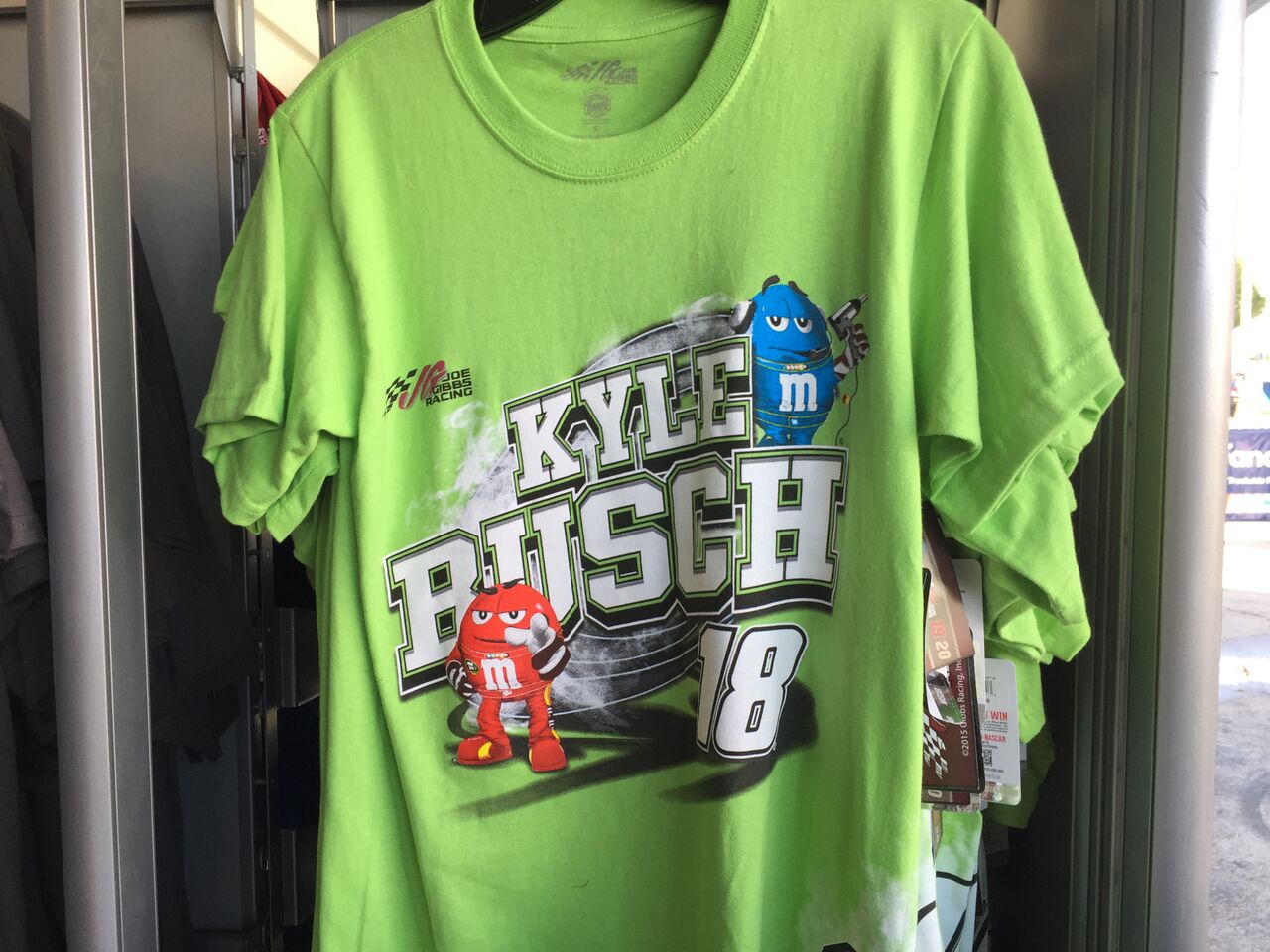


So you can get M&M stuffed toys, for instance, next to the shirts for the driver the candy brand sponsors, Kyle Busch. South of the Trackside Superstore, specialty vendors and car manufacturers maintain hauler emplacements, along with a pair of team Penske drivers whose contracts mandated they run haulers until the end of this season. Dean indicated that Ford, Toyota, and Chevrolet will move some retail product into the Superstore next year, along with the two remaining drivers, Brad Keselowski and Joey Logano.

Logano’s trailer may have gotten some extra attention this past weekend after he got tangled up in a controversial wreck during the previous week’s Martinsville Sprint Cup race.

“Performance on the track, and even, potentially, controversy on the track, drives consumer interest,” noted Dean, citing Jeff Gordon’s Martinsville win as an event likely to stoke sales in Texas.
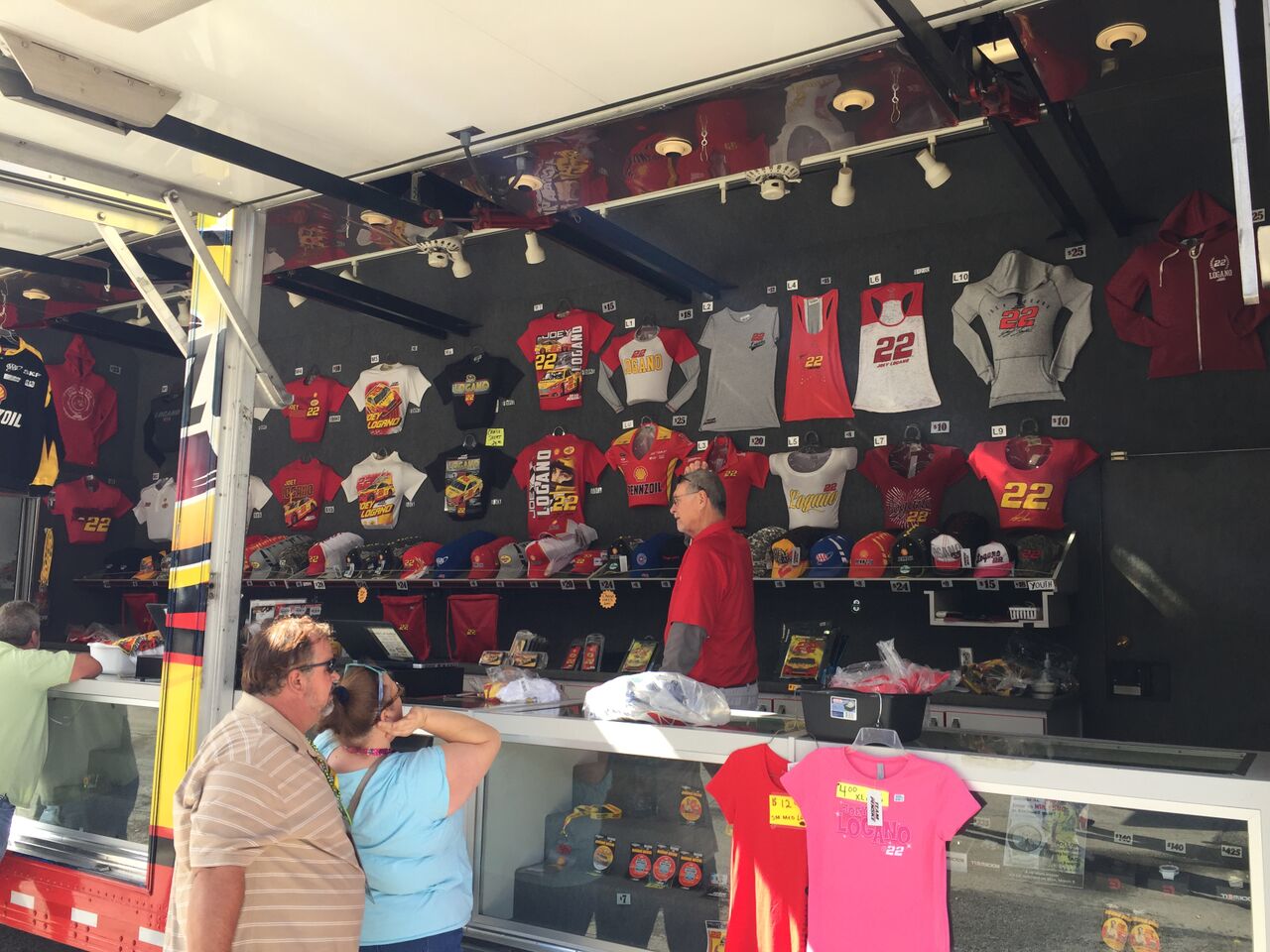
Logano himself professed to have seen an impact on merch sales from his recent success – and altercations.

“There are more No. 22 T-shirts and Joey Logano T-shirts and hats walking around,” the driver said in his press conference Friday. “I have more fans than I’ve had before and I love it and I appreciate every one of them.”

Dean agreed that notoriety could help Logano move shirts and hats.
“It’s definitely going to drive interest and help his long-term brand, which is good for the sport and good for us in 2016.”

Logano isn’t the only competitor who may raise his merchandise profile thanks to the most recent dustup. The “Free Matt” t-shirts his suspended antagonist created are available at Matt Kenneth’s website. Online sales at the official circuit site have a role in Fanatics’ approach to its physical retail space.

For example, what if some floozy punches you with a Carl Edwards foam fist so she can grab the last pair of those steering wheel earrings you had your eye on? Dean has anticipated such a possibility (okay, maybe not that one specifically).

“Fanatics runs and powers NASCAR Superstore on nascar.com. Those two businesses are going through a kind of a merging process right now,” he said. “If they can’t find what they are looking for here, we also have free shipping coupons that we give them so they can get it online and not have to pay any shipping, so it would basically be the same price as it was at the track.”
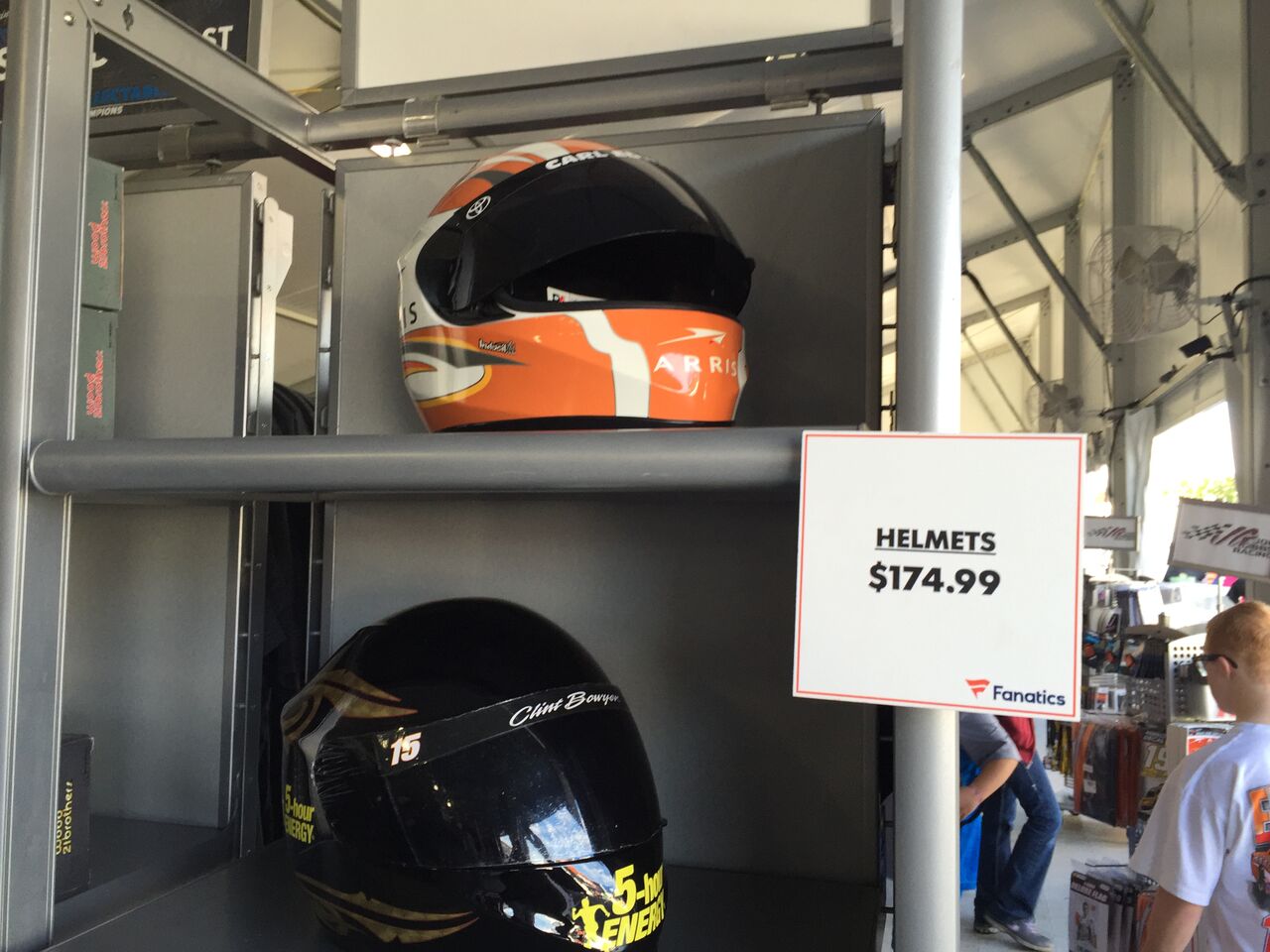


Thus you can get your replica helmet without much hassle – just heed the on-product warning: ”Collectible helmet only. Not intended to be worn.” You should also find ample supplies of traditional NASCAR items, like Total Print T-shirts.
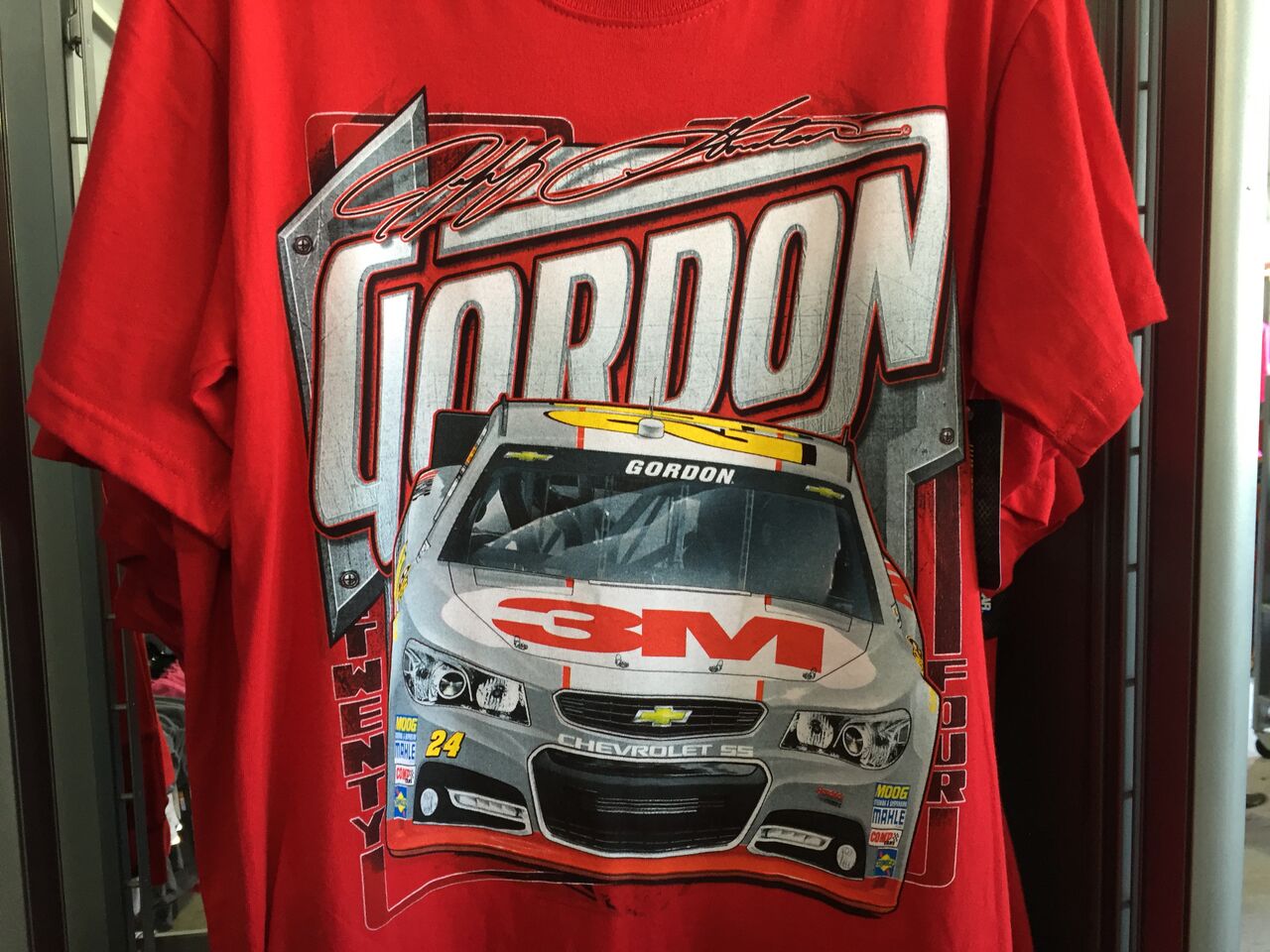


“This is NASCAR loud and proud,” said Dean of the shirts boasting a front filled with art. “This was the number one seller on the trailers and it is still close to number one.”
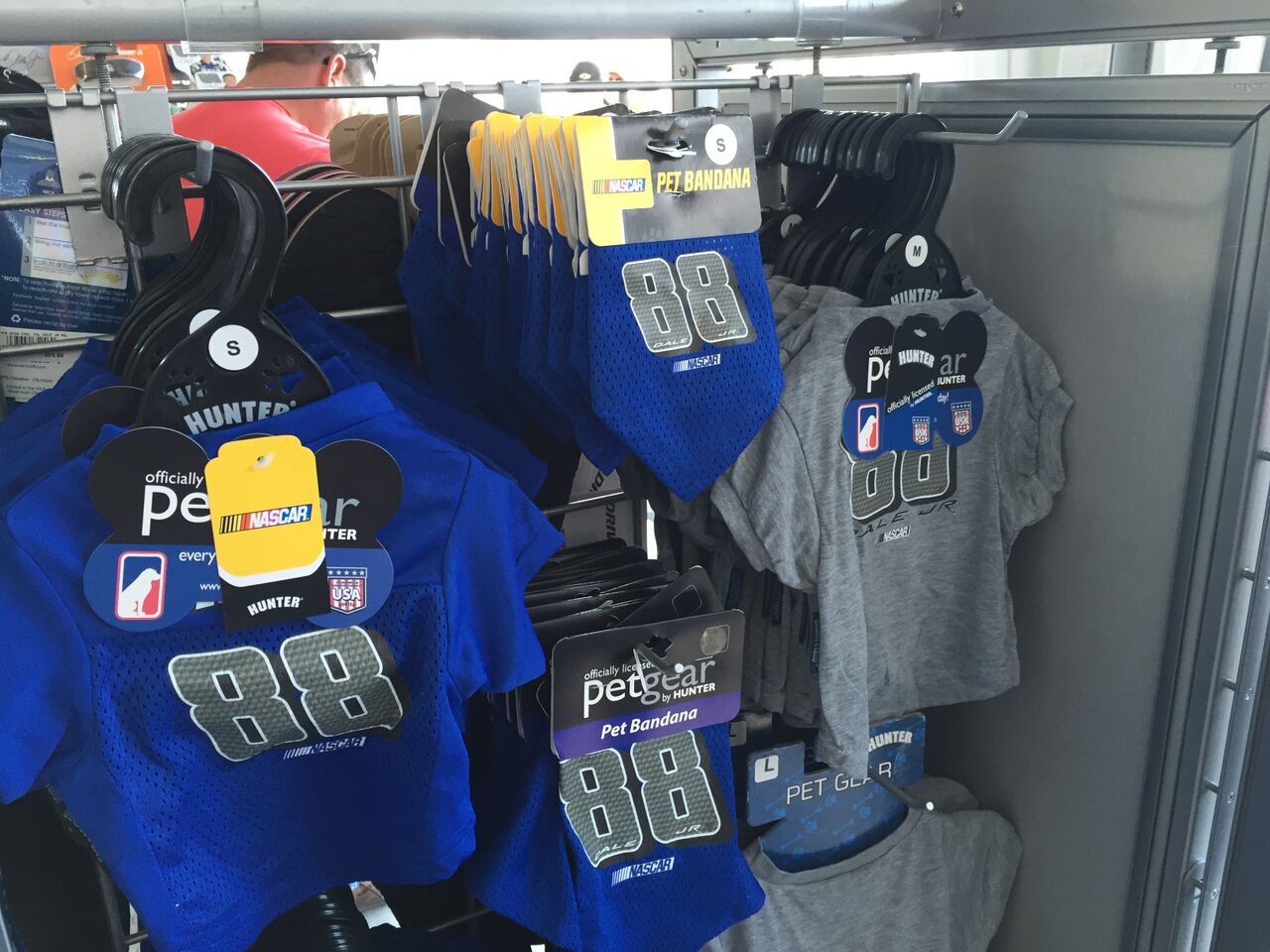
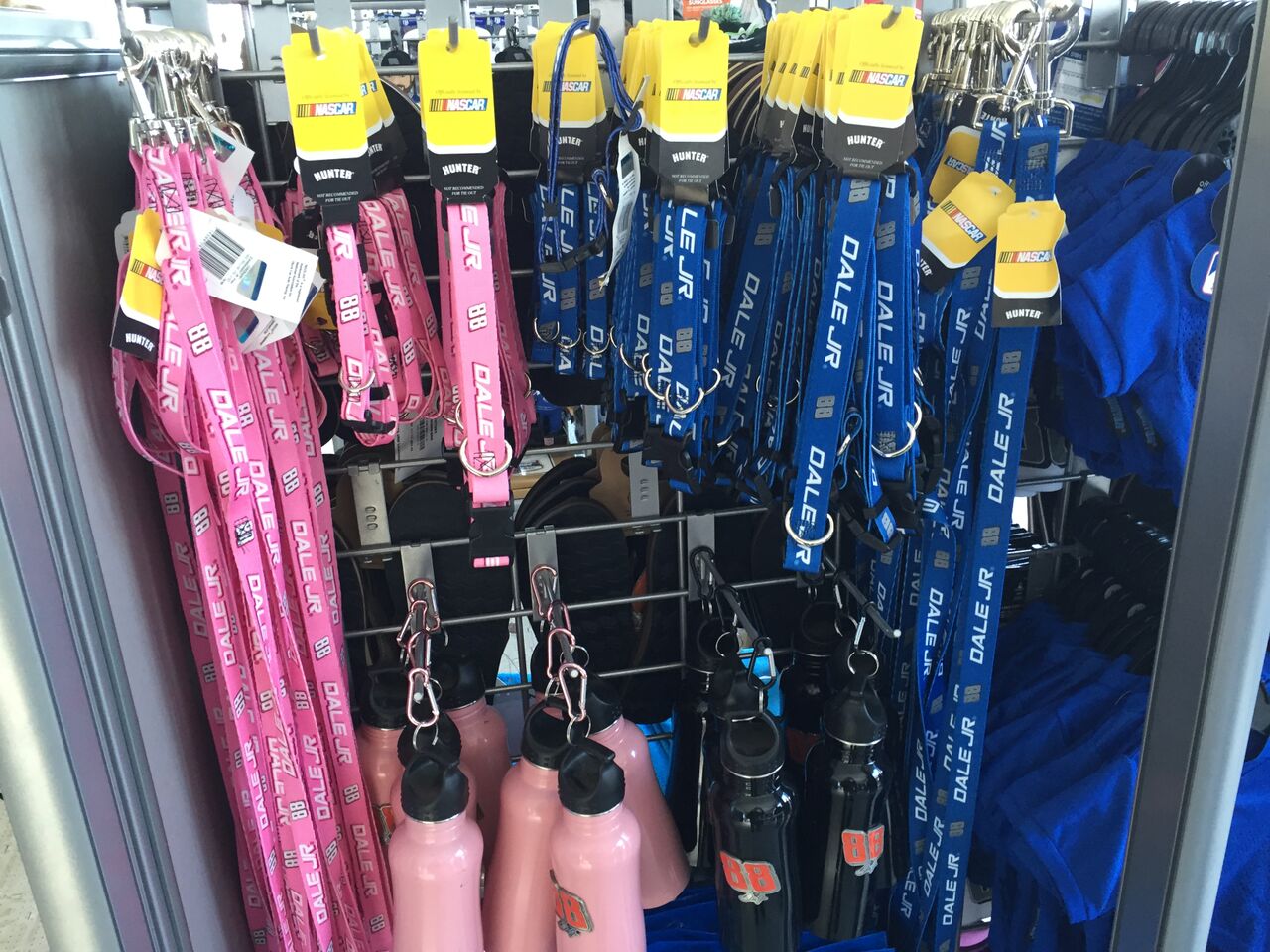


I saw a few patrons browsing the shelves accompanied by their dogs. Your hound can pick out her own leash or water bottle from the shelves stocked with pet apparel. If you bring your hunting dog, that’s so much the better. You can find plenty of camoflauge patterns and other gear designed for the outdoors enthusiast.
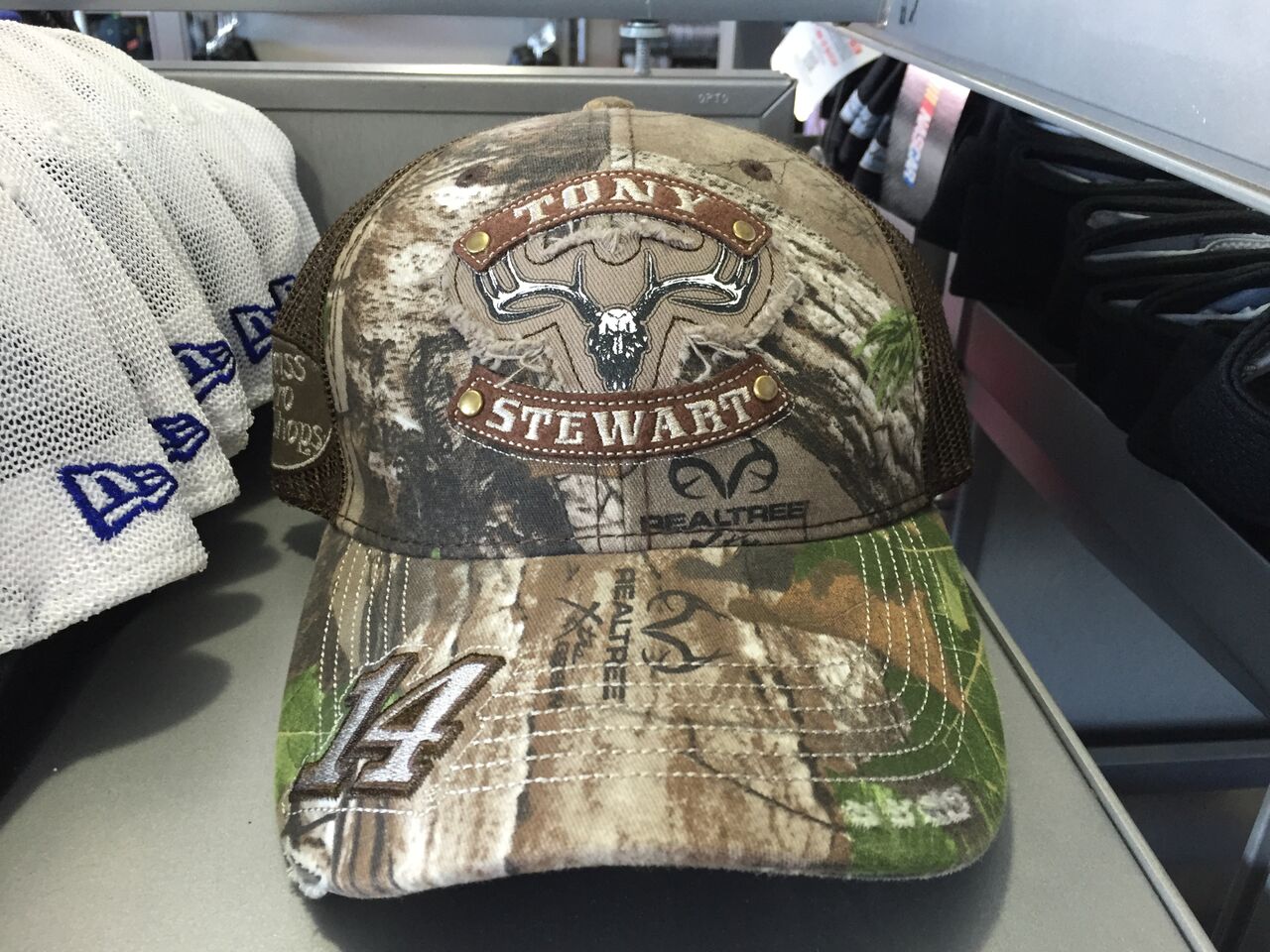
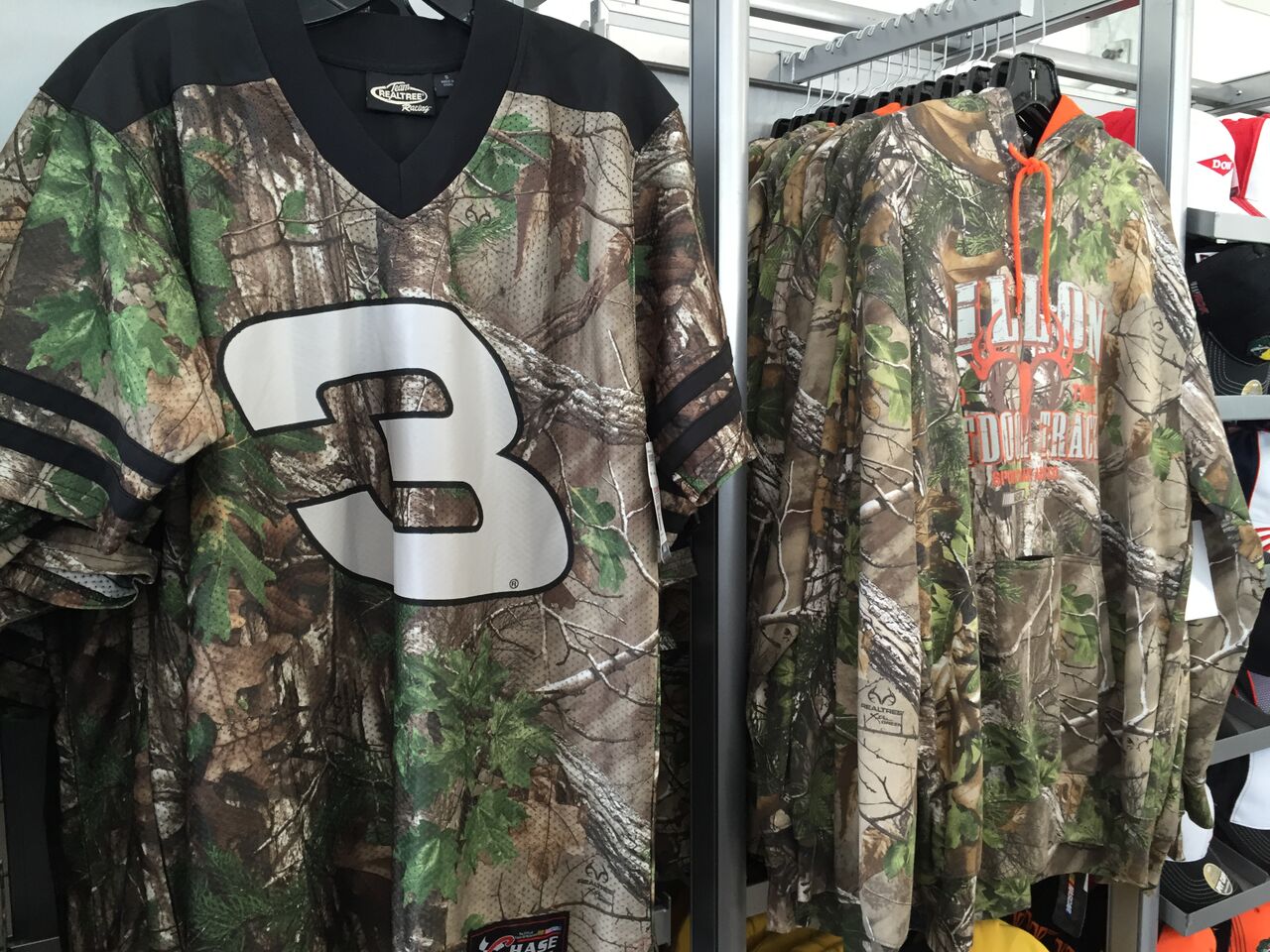


“There’s a big crossover between the NASCAR core consumer segment and hunting,” Dean pointed out.
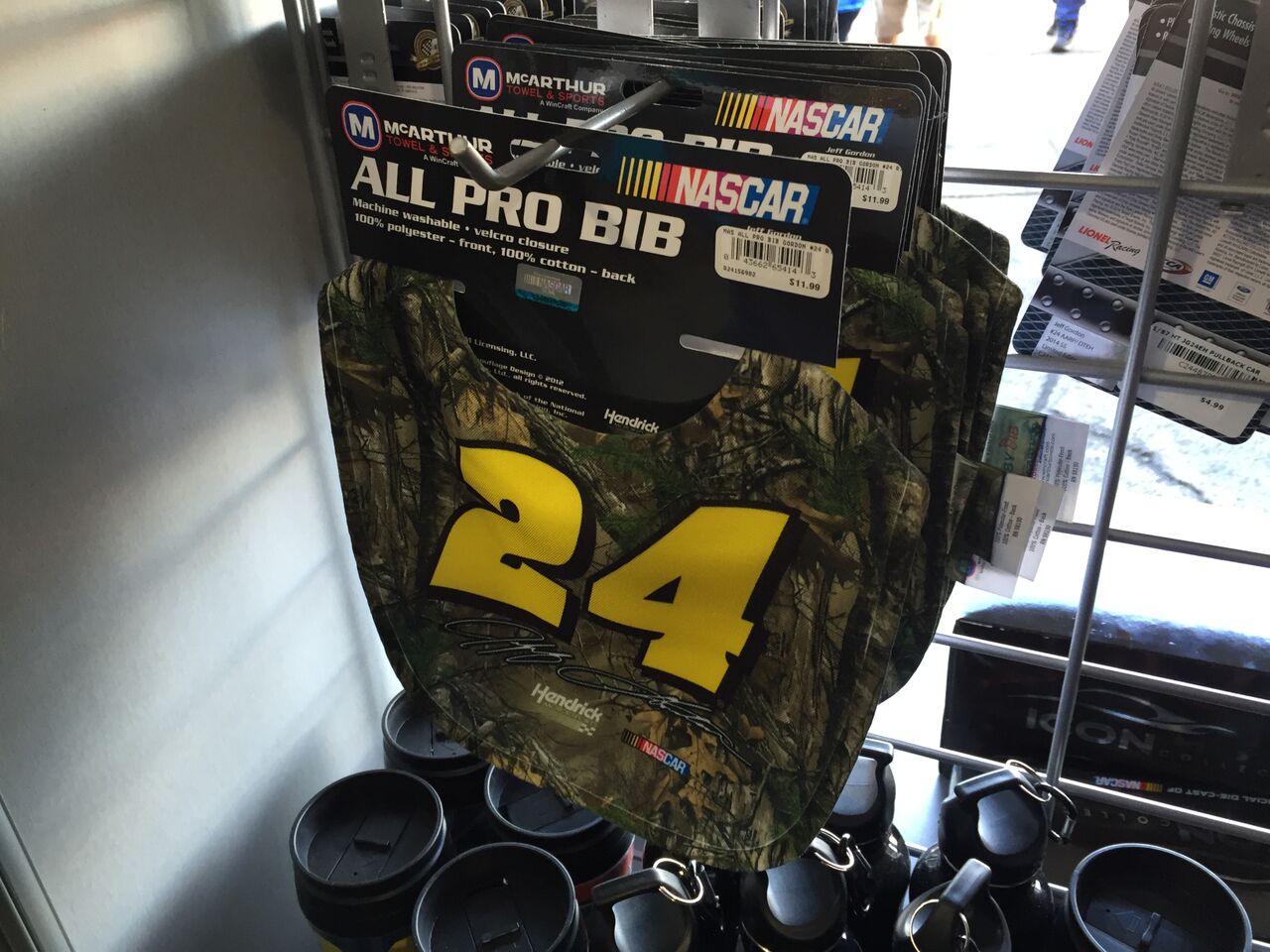


Let’s say you need to feed your baby and you don’t want to drip pea puree in your deer blind. You can get a Jeff Gordon camo bib so the little guy can neatly eat while also evading detection by nearby whitetails.
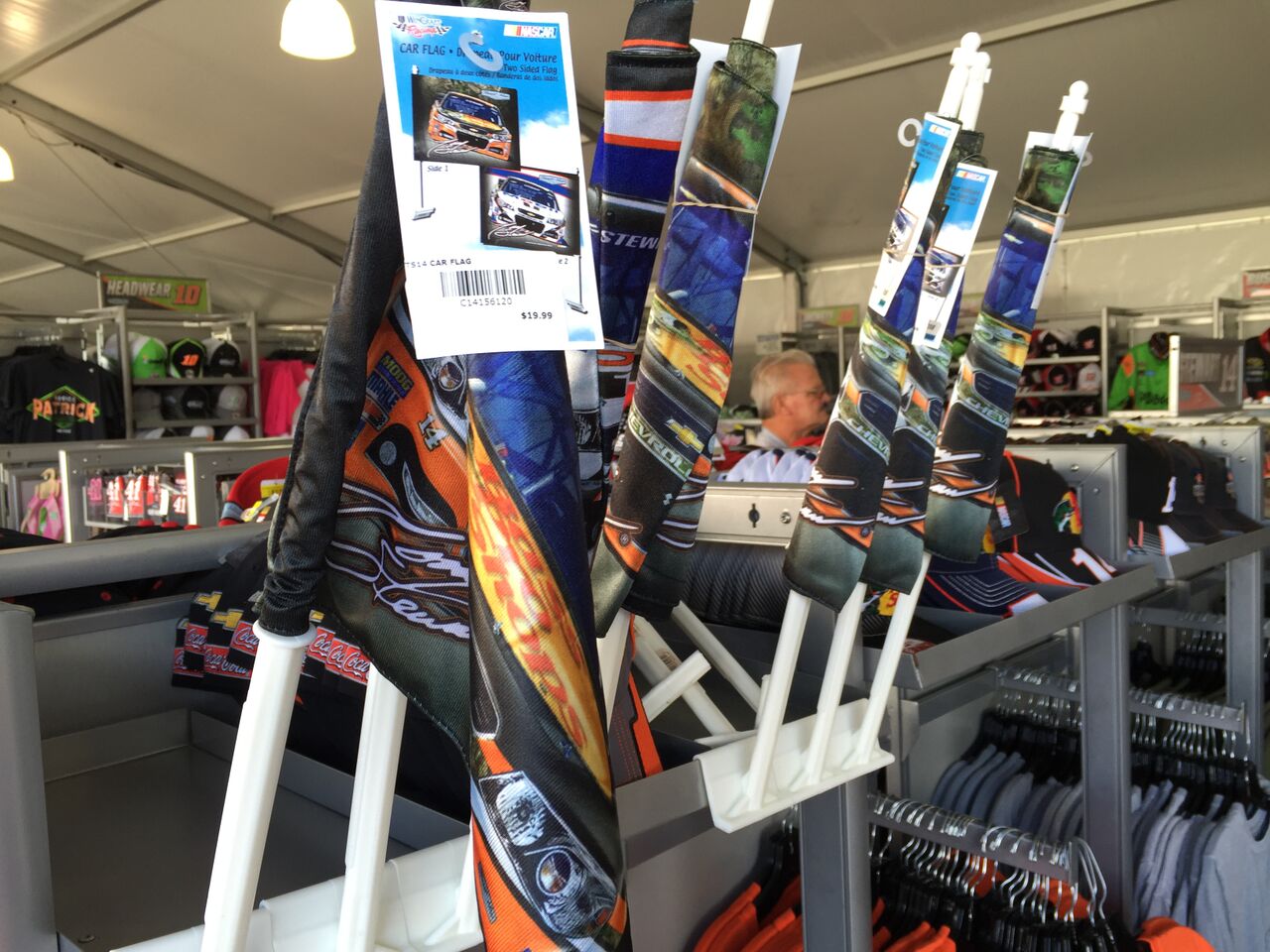
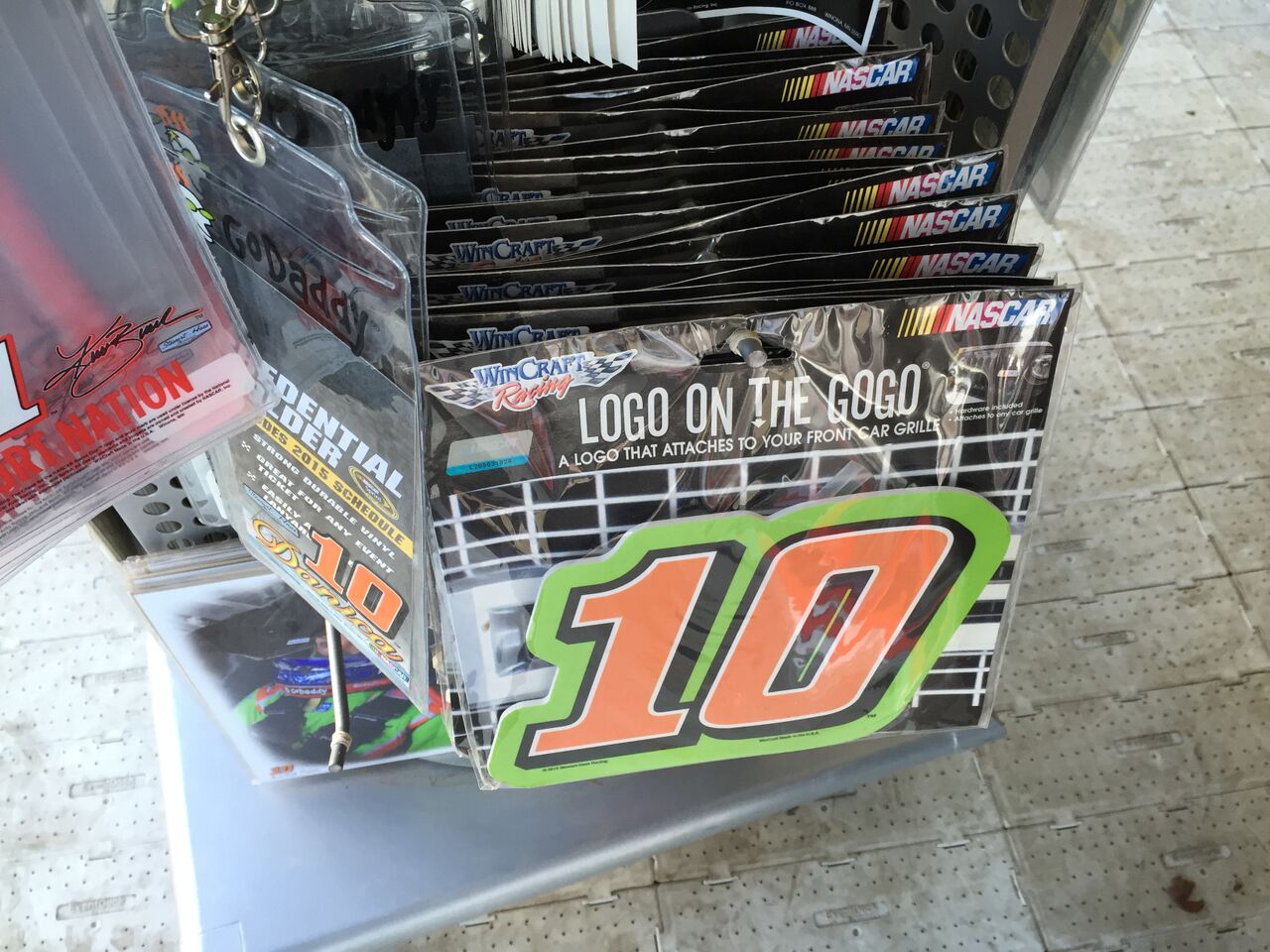
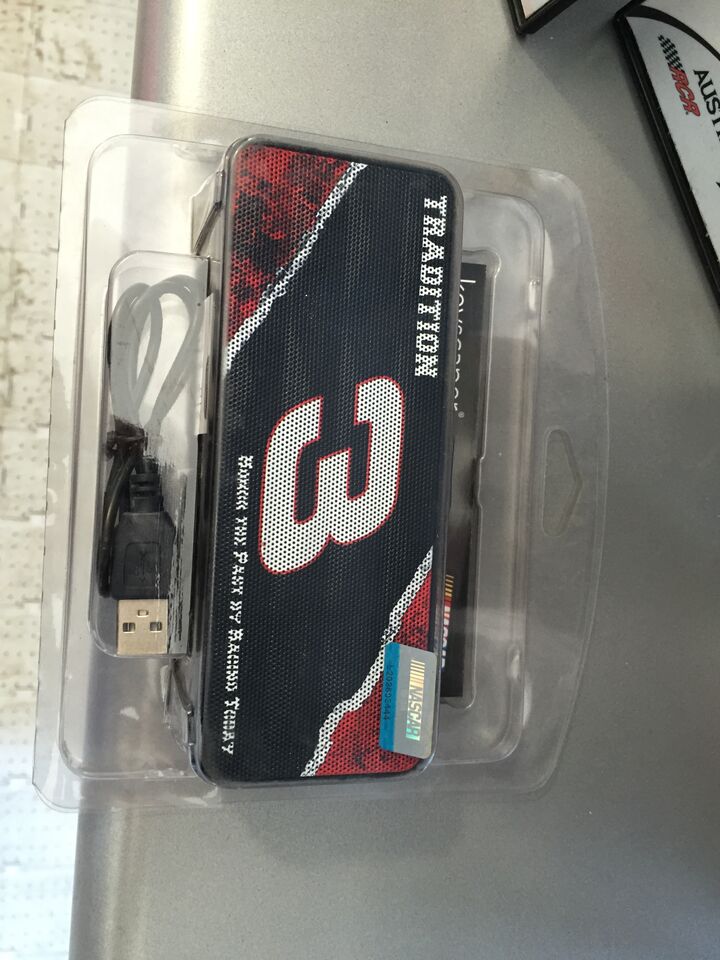


You can pick up a logo decal to attach to your 4×4’s front grille and a car flag for the window. Keeping those on the store racks alongside the flair hair, color-me pennants, party lights, and bluetooth speakers requires a lot of work.
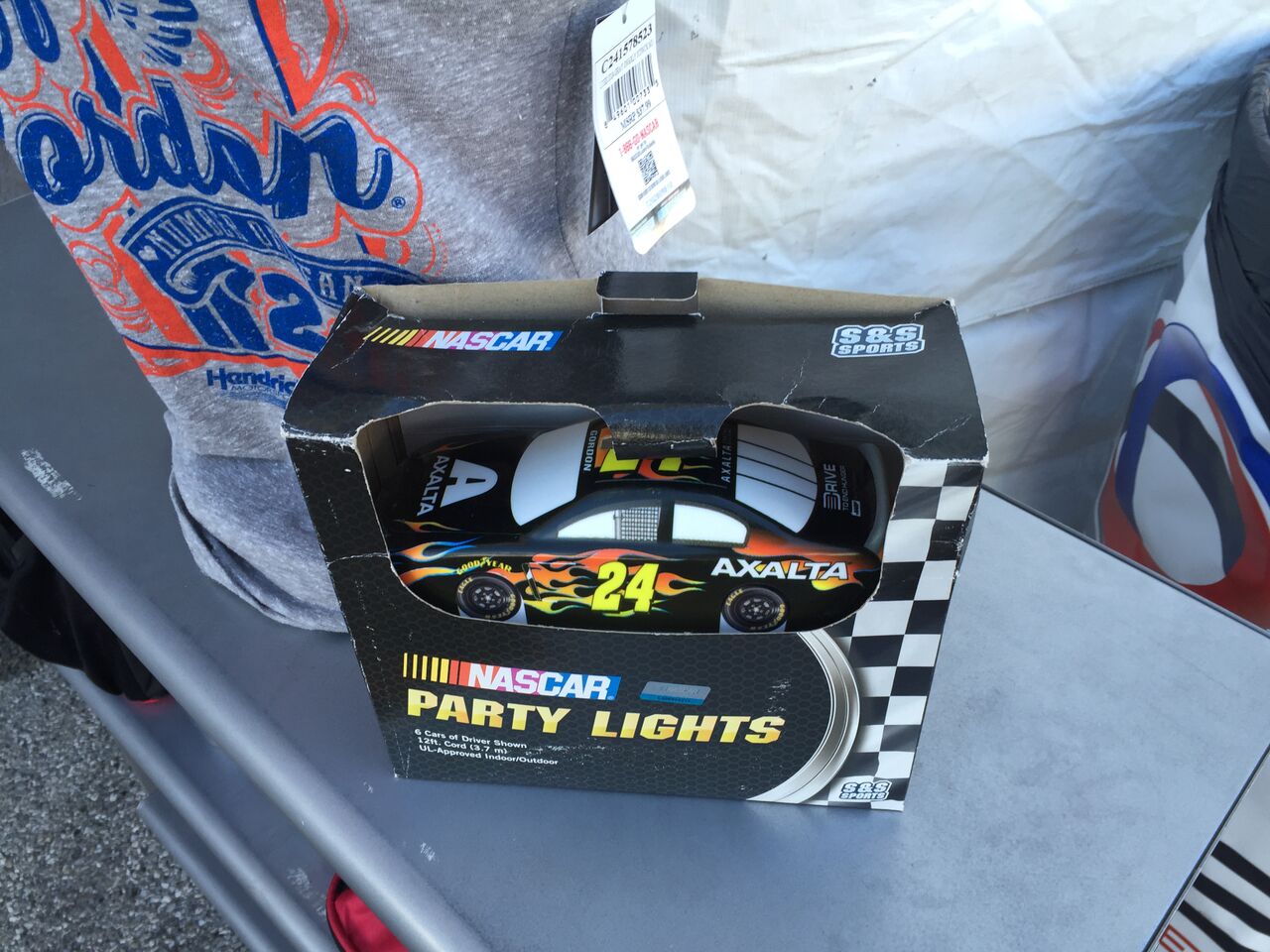
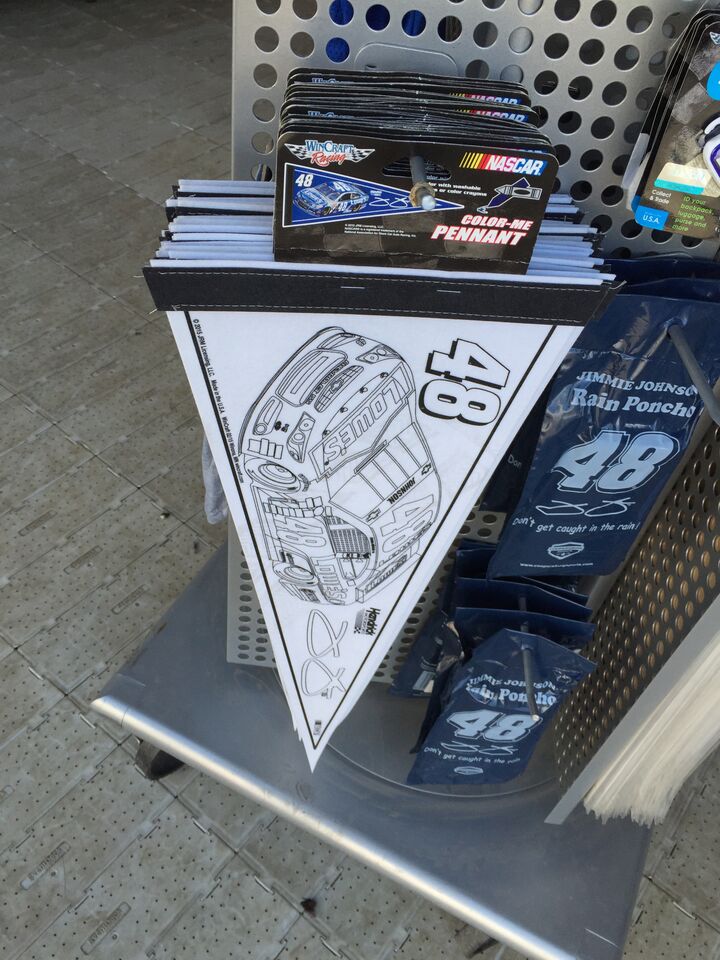


“We have a team that goes to every track, a team that goes to every other track, and a tent company that sets up at every third track,” said Dean, who travels to all the races and hopes to spend 1-2 days a week at his Fort Lauderdale, Florida home. “Start to finish, it’s about a three-week process.”
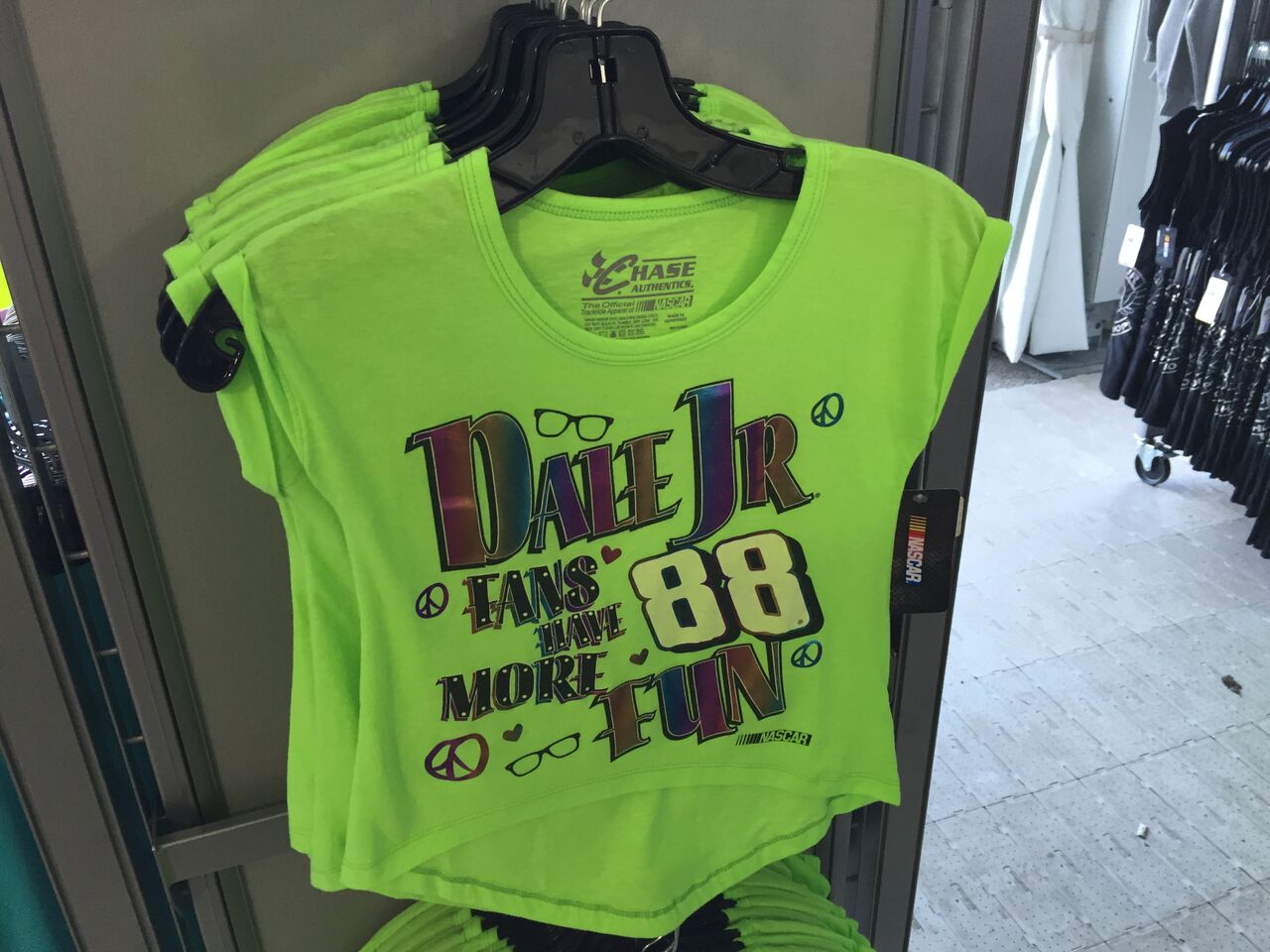


The inventory travels to every track. If they’ve sold too many “Dale Jr. fans have more fun” t-shirts, they just truck in more.

“We have a warehouse facility in Concord, North Carolina, just outside of Charlotte, which basically supports this business,” said Dean. “Replenishment product usually comes in on a Tuesday, sometimes a Wednesday. One to two trucks are filled with product to basically restock for the next race.”
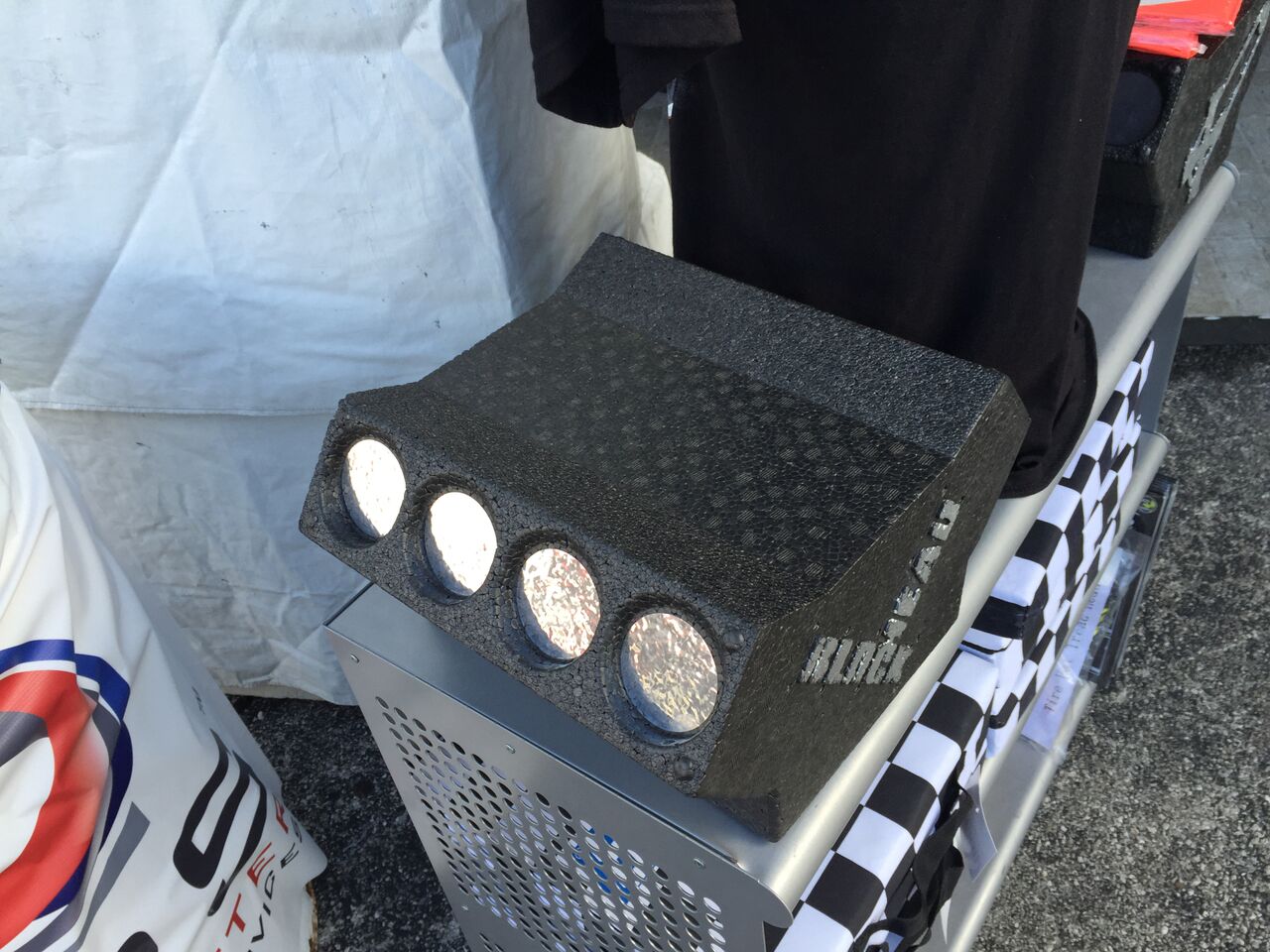


I wonder if the truck drivers wear blockheads on the road? You know, foam hats in the shape of engine blocks? Or maybe they just go for bucket hats.
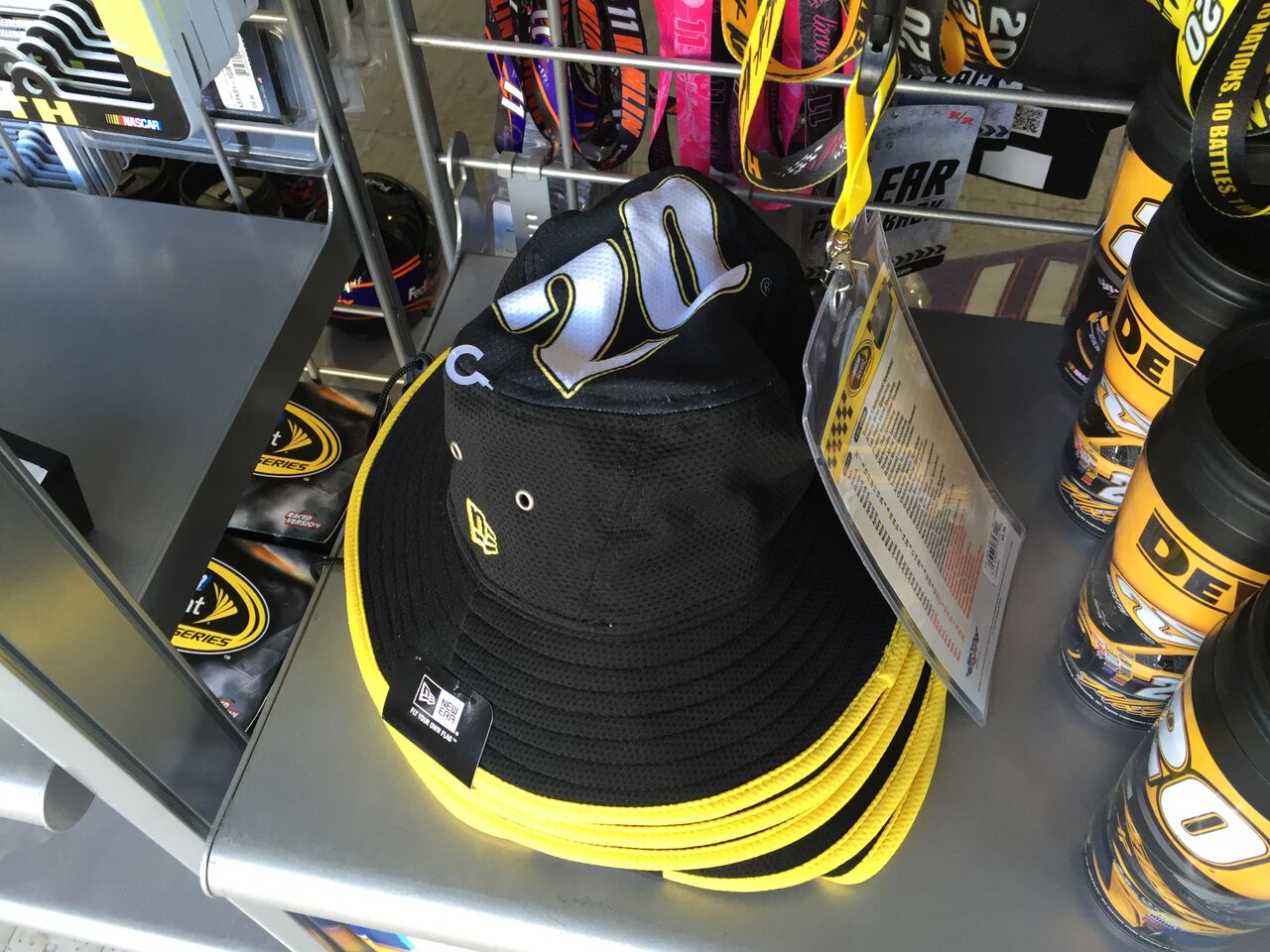


NASCAR and the Trackside Superstore will return to Texas in April, and you’ll be able to pick up your own officially licensed bucket hat, assuming they’re still in fashion (I really hope so).


Rush Olson has spent two decades directing creative efforts for sports teams and broadcasters. He currently creates ad campaigns and related creative projects for sports entities through his company, Rush Olson Creative & Sports.

RushOlson.com

Linkedin.com/company/rush-olson-creative-&-sports

Facebook.com/RushOlsonCreativeandSports

Thursday, November 5, 2015

The Fast Track to Beer at Texas Motor Speedway

This post originally appeared on the Blotch page at the Fort Worth Weekly. To read it on their site : http://www.fwweekly.com/2015/11/04/the-fast-track-to-beer-ar-texas-motor-speedway/

S1

Drinking beer and driving your car don’t mix. Drinking beer and watching others drive, on the other hand, have long paired well together. The latter assertion is especially true when those other people drive in a contained environment and race each other at a really high rate of speed.

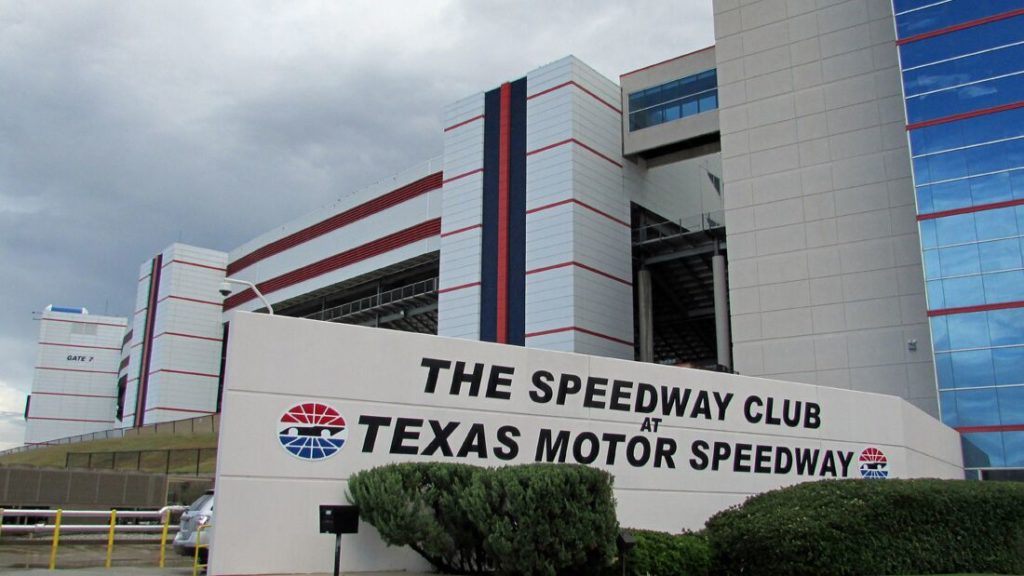
Today, we cover the Texas Motor Speedway as the third installment in our public service series about where to find beer at sporting venues of interest to Fort Worth-Dallas fans. The Fort Worth Weekly staff knows you like beer (we do, too, actually), and don’t want you wandering aimlessly trying to locate it when enmeshed in a sporting spectacle. TMS hosts NASCAR events this week and weekend, so we want you prepared as you head to the track.


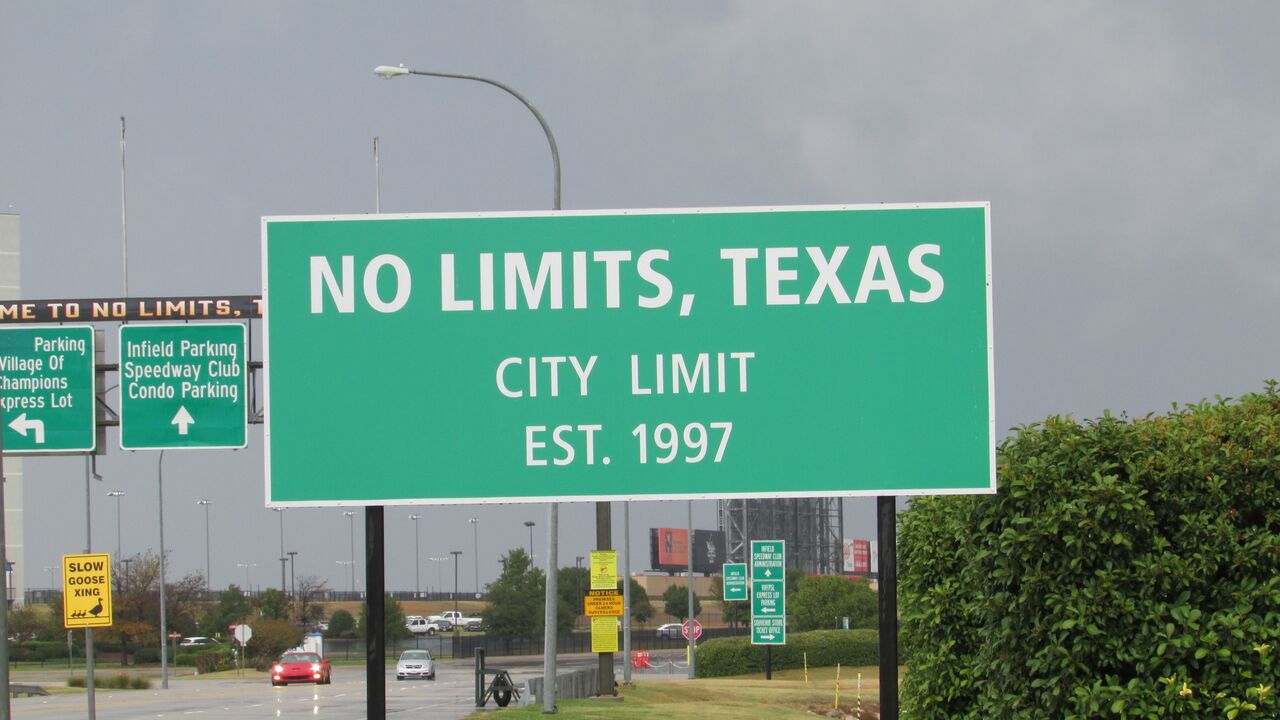
Street signs reflecting the speedway’s marketing campaign declare the area “No Limits, Texas.” Speed limits may not apply on the track, but knowledge of one’s own alcohol intake limits enhances the raceday party experience. Texas Motor Speedway’s size (it swells to become the seventh largest city in Texas during a race weekend) and relatively remote location make it a little different from some other sports venues, so you really need to make sure you plan ahead for getting home safely.

Track Media Relations Manager Louis Mora notes, “We have to move 160,000 fans, workers and campers out at once, making access to the facility difficult.”

Because of the volume of traffic, post-race roads are rerouted to move in the direction of egress. Mora indicated that if you called a cab, the driver likely wouldn’t be able to reach the facility for up to a couple of hours after the race. So your best, and most affordable, option is to designate a driver in advance.

The RV culture thrives in auto racing, so if you plan ahead, you can always drive yours to the track and park it. Sleep it off in your own urban assault vehicle and go find some breakfast tacos Monday. If you’re parked in the infield area, you’ve got a couple of your own beer stands to choose from, plus a Fuzzy’s Taco Shop emplacement.

If you don’t mind dropping a bit of cash on transportation, you can arrive in a limousine. This option has the added advantage of a bar in the back where you could stock more beer. The track also has a helipad north of the speedway if you can manage to borrow or steal a Chinook or Sikorsky.


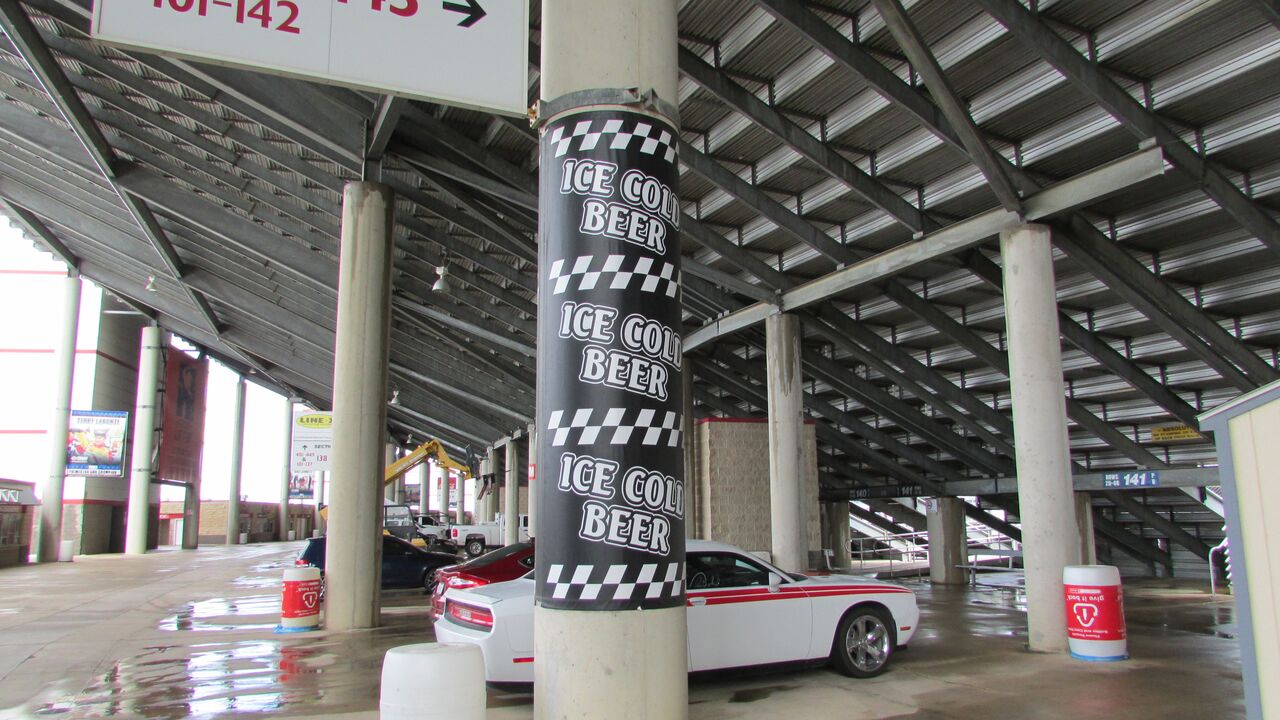
As you depart your chopper and enter one of the gates, you’ll no doubt start to think about where to find something beery to slake your thirst. The track has helpfully wrapped signs around columns reading “Ice Cold Beer.” These unambiguously indicate you have drawn nigh to a vendor who will sell you some suds.

Lincoln Engstrom is Executive Chef of Levy Restaurants’ emplacement at the track. He knows where the beer is. Engstrom said their biggest sellers are the standard domestics, as in most places. The track doesn’t have a beer sponsor, so the selection is pretty balanced. You’ll find Budweiser, Bud Light, Miller Lite, Michelob Ultra, and ZiegenBock cans at 18 different concession stands. You can add the official beer of NASCAR, Coors Light, to the stands by sections 107, 115, 131, 143, 414, 419, and 429.

Note to brewers : the brewskis sponsorship category is indeed available and I can tell you who to talk to. Let’s meet up for a beer (your treat) and I’ll clue you in. You could have a huge freaking sign, some clever scoreboard features, and a leg up on pouring rights before the next dirt track race.

A small number of drivers have beer sponsors from the big breweries, so if you want to choose your consumables based on your support for Kevin Harvick (Budweiser, switching to Busch in 2016) or Brad Keselowski (Miller Lite), you have that option.
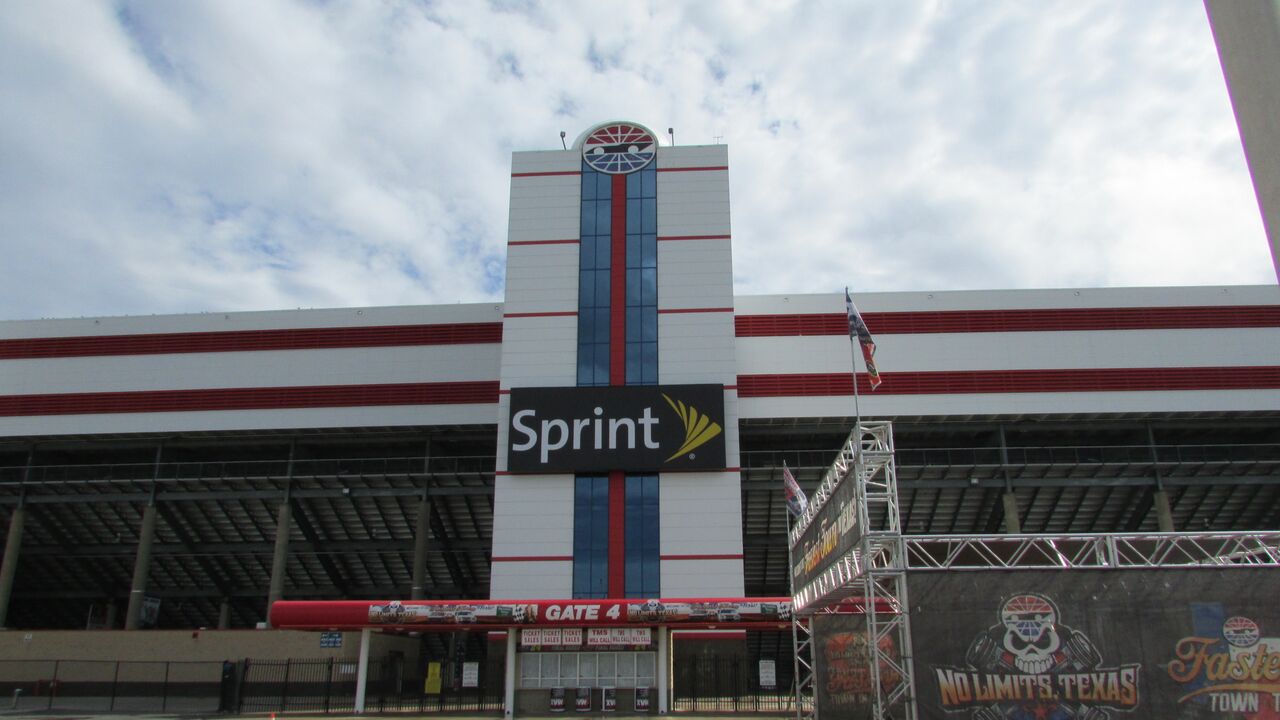
If a drinker wants to expand her selection beyond the norm, she can find Shiner, Corona, and Angry Orchard at portable carts by sections 115 and 414. The true beer oasis, however, appears by Gate 4, near the start/finish line.


“The real beer star is the local beer tap wall,” said Engstrom. “That gives you the full gamut. You’ve got an IPA, you’ve got blonde, we’ve got a couple lagers in there.”
“Levy Restaurants, as a premium food service provider, is kind of trying to stay on top of trends,” he said. “That’s kind of the biggest growing category is these craft brews.”
At the Local Texas Craft Beers tap wall, you’ll find the above-mentioned Budweiser, Bud Light, Michelob Ultra, and ZiegenBock. You’ll also find an assortment of Texas brews in a variety of styles:

• ZiegenBock Dungskier (Houston)
• Audacity Sunset Vienna-Style Lager (Denton)
• Deep Ellum Dallas Blonde (Dallas)
• Franconia Lager (McKinney)
• Grapevine Lakefire Rye IPA (Grapevine)
• Karachi Hopadillo (Houston)
• Nine Band Cactus Cat Kolsch (Allen)

They come in a 22-ounce souvenir cup and cost $12 (regular domestics run $7 or $8). Engstrom’s team selects the beers through tastings and consultation with vendors.

An advertising landmark might help you remember how to find the craft beer stand. Whether you find it awesome or politically incorrect, the nearby Miss Sprint Cup sign is certainly memorable and could speed your successful return to Gate 4’s location.
I always feel it’s important to check what plans a sporting venue might have in place for ensuring they don’t run out of beer.

“We do projections way ahead. In the concessions area in particular, we will overstock, almost by a hundred percent,” explained Engstrom. “We’ll have trucks sitting on property, refrigerated trucks that have beer sitting there so that never happens.”

You can actually take personal responsibility for not running out of beer, as TMS allows you to lug in your own cooler. Few venues allow fans to bring in outside food and beverage of any kind, and almost none allow one to bring alcohol. That means it’s a special privilege – don’t abuse it and ruin it for the rest of us. Do not bring glass of any kind in that cooler. It needs to measure no more than 14″ x 14″ x 14″ and you can’t bring your own alcohol to the suite level, Victory Lane Club or in the Village of Champions.

Here’s a fact beer drinkers will appreciate: the speedway boasts capacity for 200,000 spectators. That means, as Engstrom points out, “We have bathrooms for 200,000 people,” even if not that many fans show up for, say, a truck race. As long as you don’t all head for the same loo, you should find manageable lines.

Whatever kind of beer you end up recycling, TMS policy allows freedom of movement within most areas of the speedway, and fans with any sort of ticket can access any of the craft or big-name brewery beer options. Just don’t try to drive after drinking a lot of it – at TMS, it makes sense to leave the driving to the professionals.


Rush Olson has spent two decades directing creative efforts for sports teams and broadcasters. He currently creates ad campaigns and related creative projects for sports entities through his company, Rush Olson Creative & Sports.

RushOlson.com

Linkedin.com/company/rush-olson-creative-&-sports

Facebook.com/RushOlsonCreativeandSports
Thursday, October 29, 2015

It Takes An Ironox

This post originally appeared on the Blotch page at the Fort Worth Weekly. To read it on their site : http://www.fwweekly.com/2015/10/27/it-takes-an-ironox/

Pruett main 
Can one consider a person who describes himself as “just your middle of the pack in every sport” an “elite athlete?” 
 
How about if he’s 49 years old and stocky enough to earn a nickname like “Ironox?”
How about if he completes a feat that even the pro athletes in his sport don’t try, one that most of us can’t even fathom attempting?

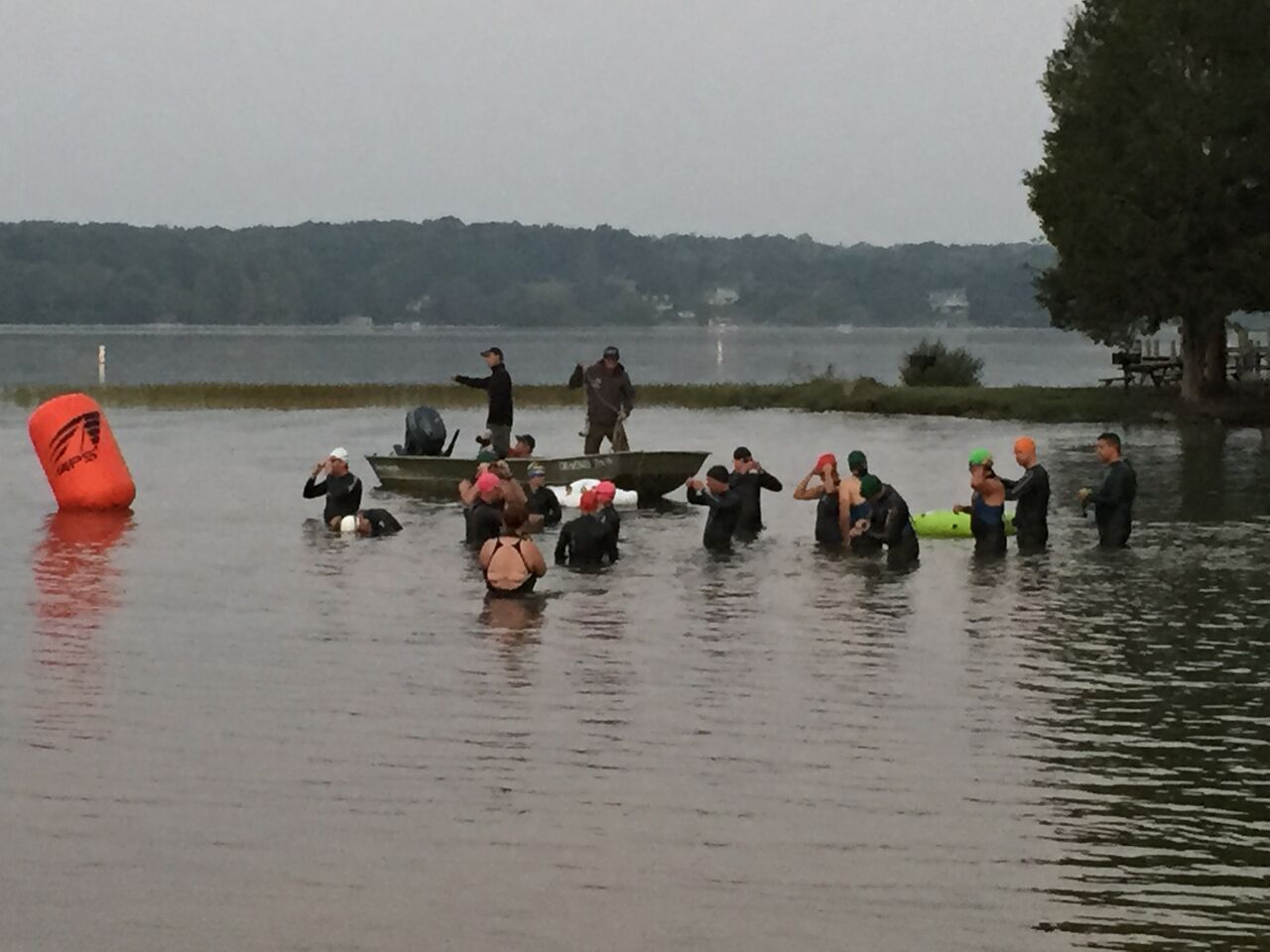
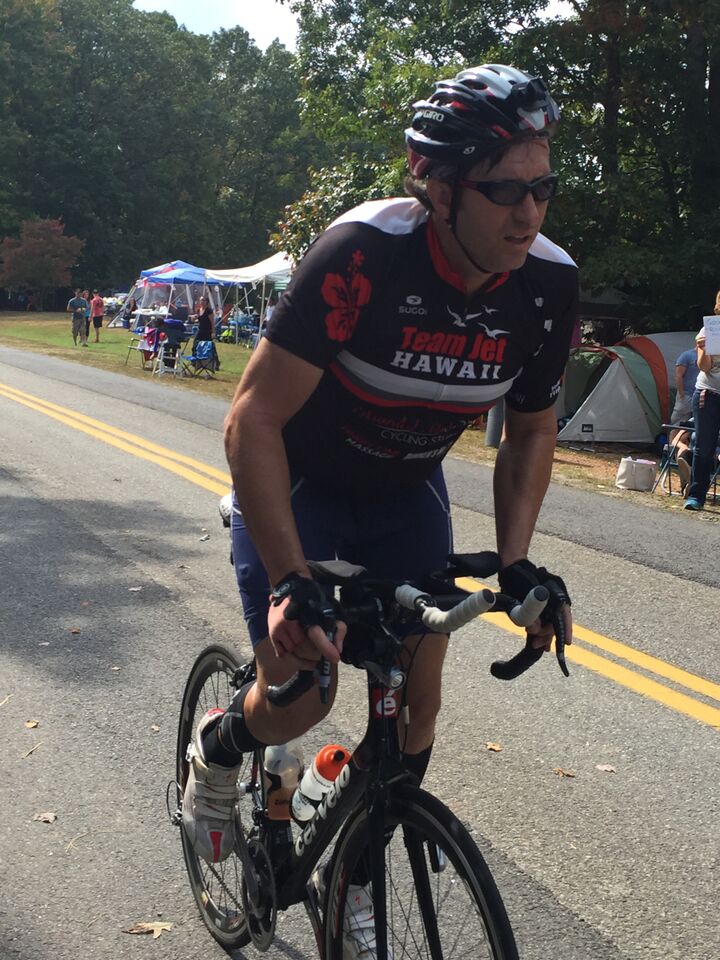
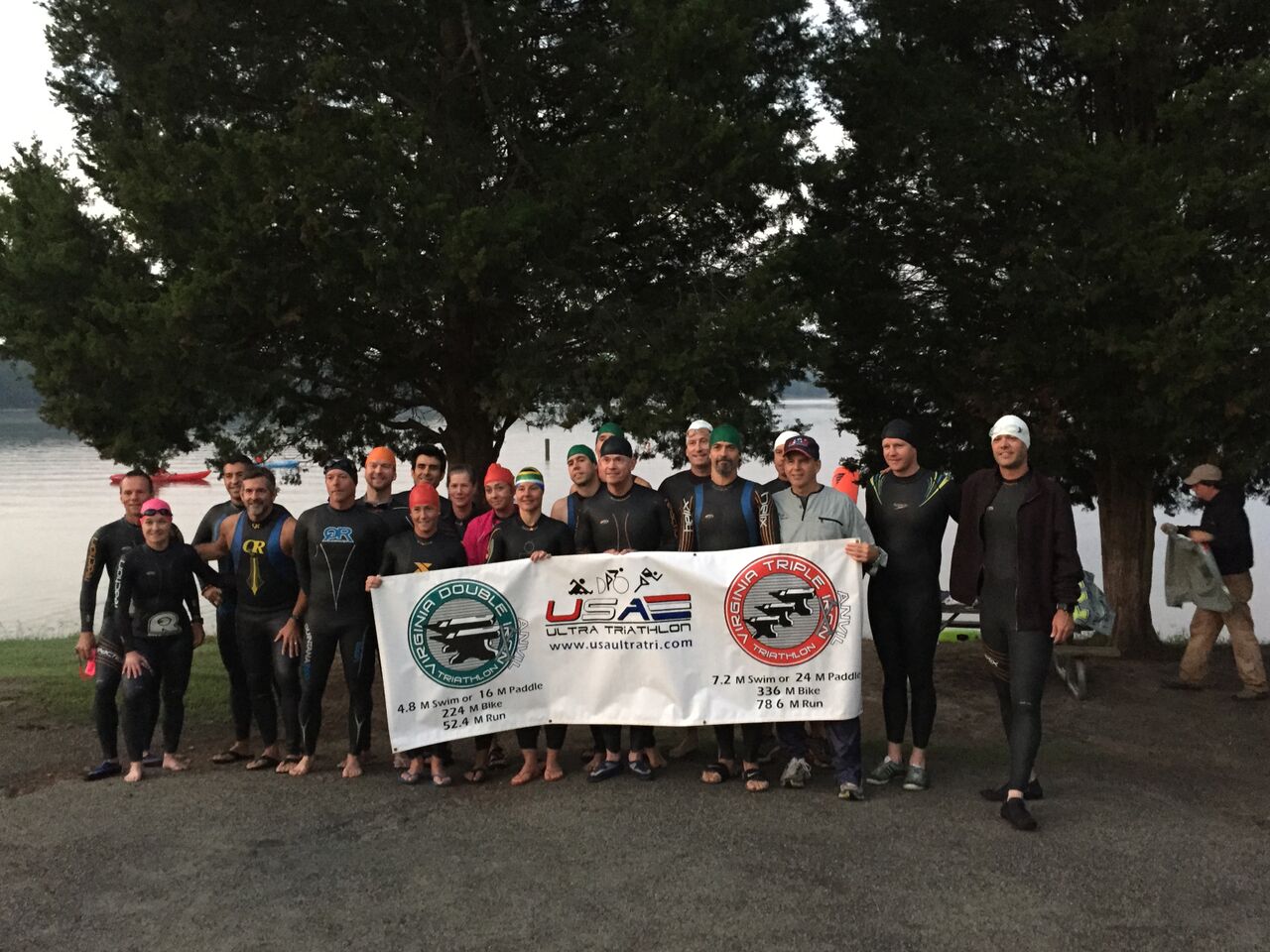
“I always cycled, but I was never a star athlete,” declared Burleson’s William Pruett. Earlier this month, though, he accomplished an athletic task only a handful of people in the world will even attempt. Pruett finished a triple iron distance triathlon.


Pruett first swam 7.2 miles in a chilly lake, then rode his bicycle for 336 miles (roughly the distance from Burleson to Odessa, Texas).


“You can’t ride too fast because you know you’re going to have to run three marathons,” he says matter-of-factly.

The finishing run covers 78.6 miles. For his or her time to officially count, a competitor has to complete all three events in 60 hours or less. Pruett finished in 59:51:52.

Ironox’s successful result came in his second attempt at the triple. In 2014, at the same course in Lake Anna State Park near Spotsylvania, Virginia, he sustained a severe ankle sprain at mile six of the run. He pressed on for 25 more miles before succumbing to the injury.

Ultra triathletes expect to encounter pain during the event, especially as the hours mount and take their toll on even well-conditioned bodies.

“On the bike you have saddle sores, achy knees, and achy feet from riding so long,” noted Pruett. “Some people have upper extremities issues because you’ve been gripping the handlebars for such a long period of time.”

In 2015, Pruett’s main injury troubles again came during the running portion. They threatened to derail his effort, 40+ hours in.

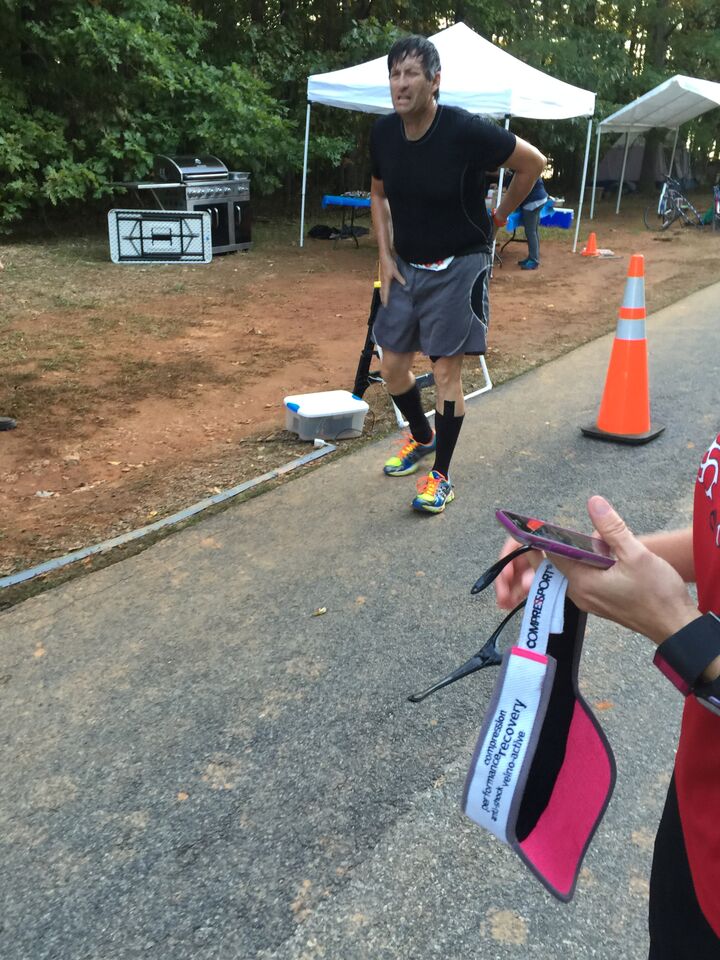
“My feet started to blister after the first marathon. I think I was around mile 30 or so when they started getting bad.”

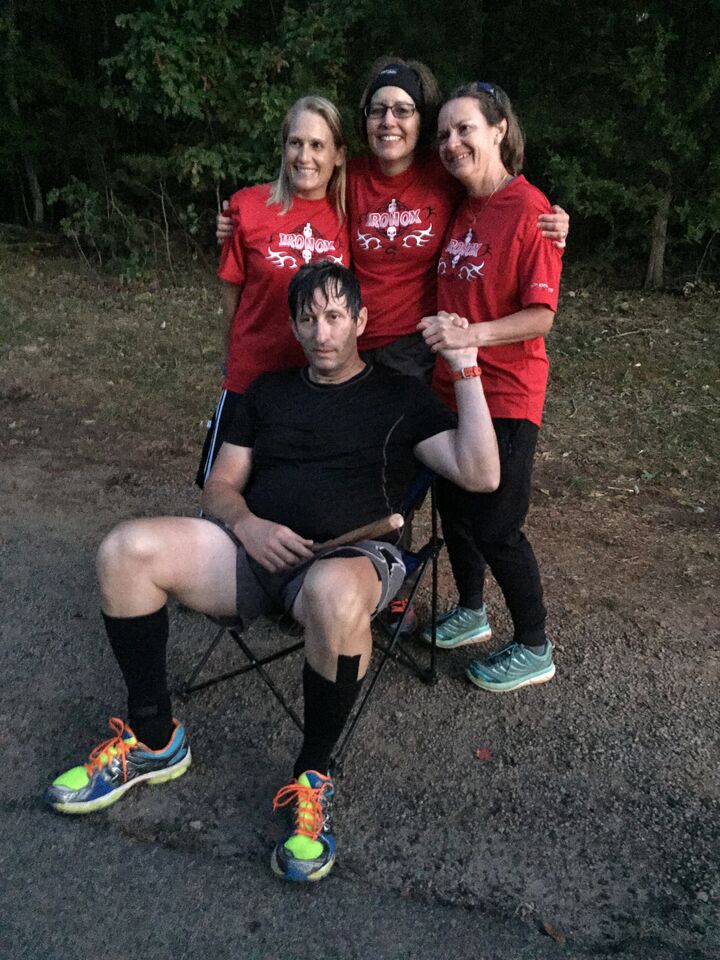
There wasn’t much the race doctor could do for him, so Pruett’s crew wrapped his painful soles in tape, moleskin, and everything else they had to try to keep him on his feet (next time, he vows to bring even more blister-prevention supplies). Long distance racers need a crew to help them make it through their two-and-a-half day ordeal. Pruett’s seasoned support staff included his wife, Donna, a veteran of Pruett’s regular endurance race forays, and experienced triathletes Nancy Henley and Sara Parker Underwood. They made sure Pruett ingested enough performance gels and protein-rich foods to supply the caloric intake the team had predetermined he needed to maintain his energy levels. They also monitored the roughly three total hours of sleep he would get during the race and kept him hydrated.


With only ten miles to go, the crew had to help William find more assistance.

“My back locked up on the run because my lower back was so fatigued,” explained Pruett.


A massage therapist loosened it a little bit, but Pruett didn’t have time for extensive treatment.

“While she was working on my back, the clock was still ticking. I had to cross the timing mat by 6:40 Saturday evening. So we had to really push it.”

Push it he did, as best he could from a hunched position.

“It was still pretty much locked, so I had to bend over at a thirty degree angle to walk/run. The last six miles became very crucial that I couldn’t stop for anything.

Once started, the race clock doesn’t stop for rain, bathroom breaks, or a note from one’s doctor. Pruett trudged, as he put it, to the finish just in time. He actually thought he was under more time pressure than he was.

“My crew didn’t tell that I had banked an extra nine minutes that I’d didn’t realize I had,” he explained.

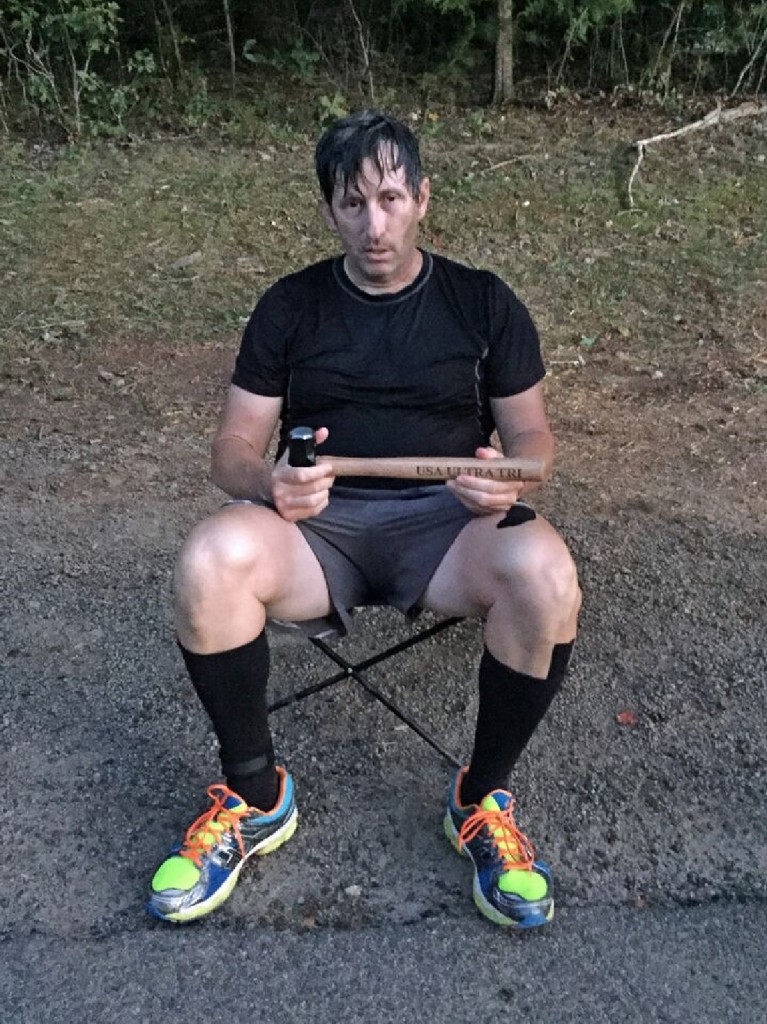
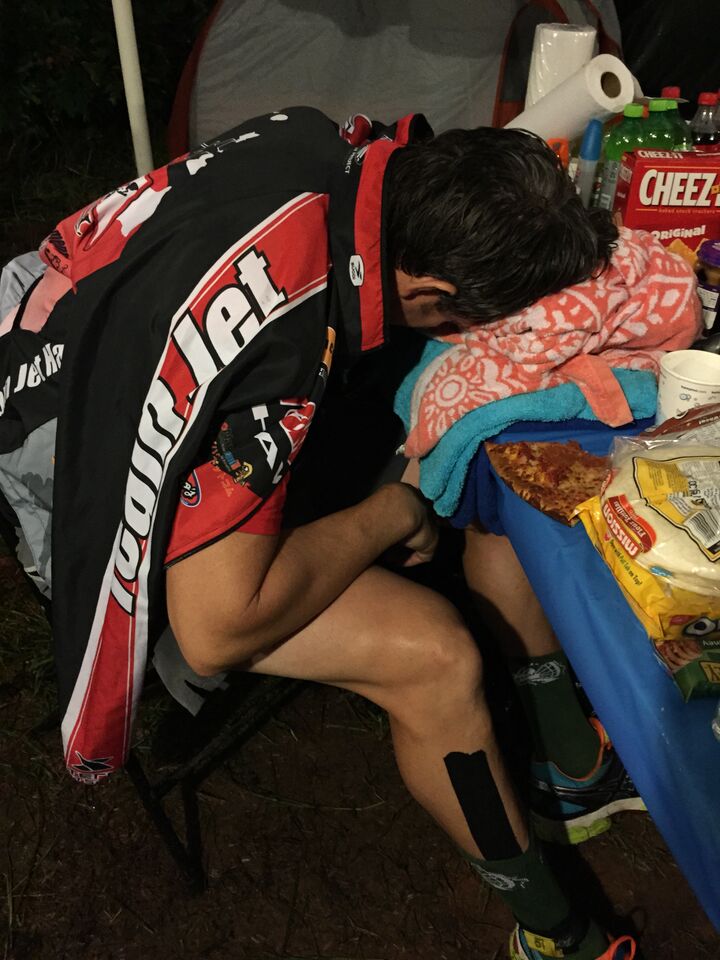
After he got done, the Ironox got to use a hammer to pound three times on the anvil that symbolizes the competition known as the Triple ANVIL. He then spent most of the rest of the evening eating and sleeping.

Once he returned to Texas, his recovery continued.

“Besides consuming tons of calories, I did cryo therapy, massage, and elevating the feet. Catching up on the sleep was the most difficult.”

“It didn’t dawn on me until two days later that I finished. You’re just trying to recover for two days and then it dawns on you that I just accomplished a goal through this fifty nine hours of exercise.”


Pruett’s doctors think he’s nuts.

“They don’t discourage it because they know you’re going to do it anyway,” Pruett said.

Some readers may agree with the physicians. So why does Pruett, who has completed multiple iron distance (2.4-mile swim, 112-mile bicycle ride and 26.2-mile run) triathlons and a double ANVIL, put his body through the rigors his sport demands? For William Pruett, it is, believe it or not, fun.

“The fun part is the journey, the training,” he said. “You have this set goal and it is a mark that is a little beyond your limitation. A goal within your limitation, what fun is that?"

Accomplishing the goal in an environment in which he competes against other contestants and a clock makes the goal even sexier for him.

“My motivation is that you have this certified course with chip timing and you’re monitored with swim, bike, and run. You’re testing yourself against a true measure. Instead of just going out on your own and saying I did this one day, you’re actually measured by these outside forces and referees. If you’re not under 60 hours, you’re not an official finisher. That’s the motivation.”

When Pruett isn’t training, racing, or working at Fort Worth Cycling & Fitness or helping manage a local medical practice, he trains other aspiring racers through his company, CorioVelo. He hopes his experiences completing a triple contribute to making him an elite coach.

“By experiencing this event as an athlete, now I can relate to other athletes when they do iron distance or ultra because I know the same exact feelings they’re going through,” he said.

To deal with the inevitable feelings of anguish, Pruett considers mental training vital.

“Once the mental goes, the physical goes. If you can keep on top of the mental, it helps your physical,” he explained. “For dealing with the pain, I had to do a lot of mental training. I read a lot of positive motivation books. Learning to control the mind in the downtime by changing your thought pattern. Instead of negative thoughts, changing thought patterns to positive thoughts during the event – reading, praying, just any mental activity.”

The physical part is more than swimming, riding, and running a lot, too.


“I trained for sleep deprivation by practicing ten to twelve-minute naps,” he said about one of the crucial aspects of surviving ultra distance races. “Research shows that anything over fifteen minutes, you start to get into REM (rapid eye movement sleep). You don’t want an athlete to get into REM during an event because it becomes harder to wake up.”

Pruett has coached a pair of double iron distance finishers, and numerous other committed amateur athletes. His customers tend to be folks a lot like him.


“Anybody can do triathlon,” he said. “You don’t have to be the skinny jackrabbit.”

If Pruett counts himself closer to the tortoise than the hare, his steady approach seems to be working. He’s already on track for another single iron distance race in November and might try the Quintuple ANVIL next year.

“If you never get out and test yourself, you never know your limit,” he said.

When it comes to testing limits, William Pruett is truly elite.


Disclosure : Pruett’s company, CorioVelo, paid me to produce a promotional video earlier this year. He also gave me a hat and a hoodie, both of which I have worn in public and thought they looked pretty stylin’.


Rush Olson has spent two decades directing creative efforts for sports teams and broadcasters. He currently creates ad campaigns and related creative projects for sports entities through his company, Rush Olson Creative & Sports.


RushOlson.com

Linkedin.com/company/rush-olson-creative-&-sports

Facebook.com/RushOlsonCreativeandSports
Thursday, October 15, 2015

Scrummaging with the Big Boys


This post originally appeared on the Blotch page at the Fort Worth Weekly. To read it on their site : http://www.fwweekly.com/2015/10/13/the-bristol-rugby-club-scrummaging-with-the-big-boys/


B Rugby Main


What would the Allen Americans of the ECHL do if the Winter Olympics staged its hockey tournament in Texas in the middle of the team’s season?

The Americans would have to assess how to sell tickets to their games while contests in the same sport, played at its top level, occurred nearby simultaneously. Would the best strategy be to ignore the Olympics, bash them, or perhaps find a way to take advantage of them?

In the United Kingdom, a number of rugby union teams find themselves faced with a similar decision. As the Rugby World Cup rages around them, teams like Bristol Rugby Club must find a way to market their own products, too.

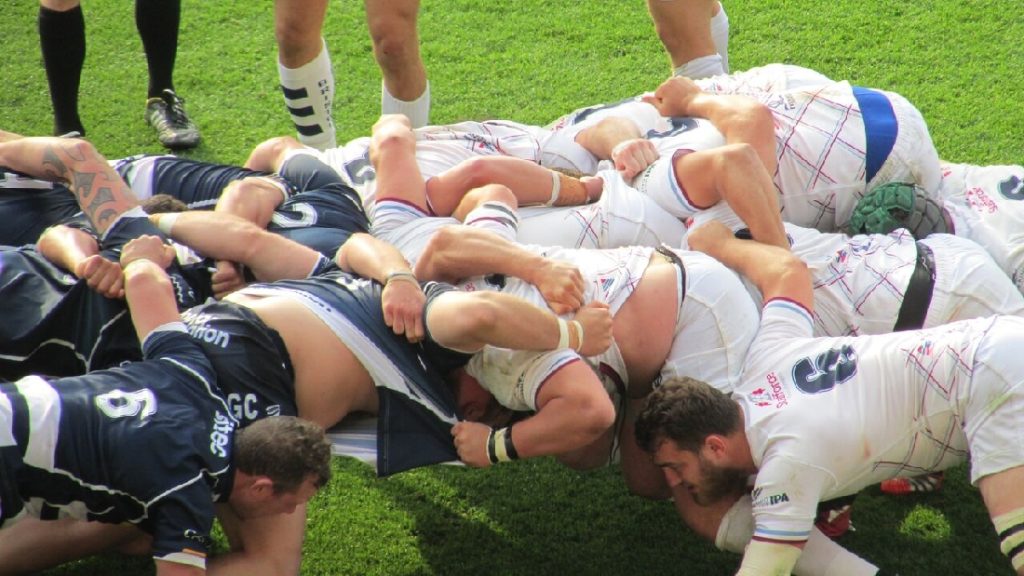
England’s top rugby union league (not to be confused with the similar but different sport called “rugby league”) is the Aviva Premiership. It suspended games until the RWC enters its knockout rounds this week, kind of like how the NHL and the Dallas Stars don’t play games during the Olympic hockey tournament. Bristol, alas, finished a point short of promotion to the first division last season, so they compete in the second-best league in England, the Greene King IPA Championship. They play a regular schedule, which has so far included three home games.

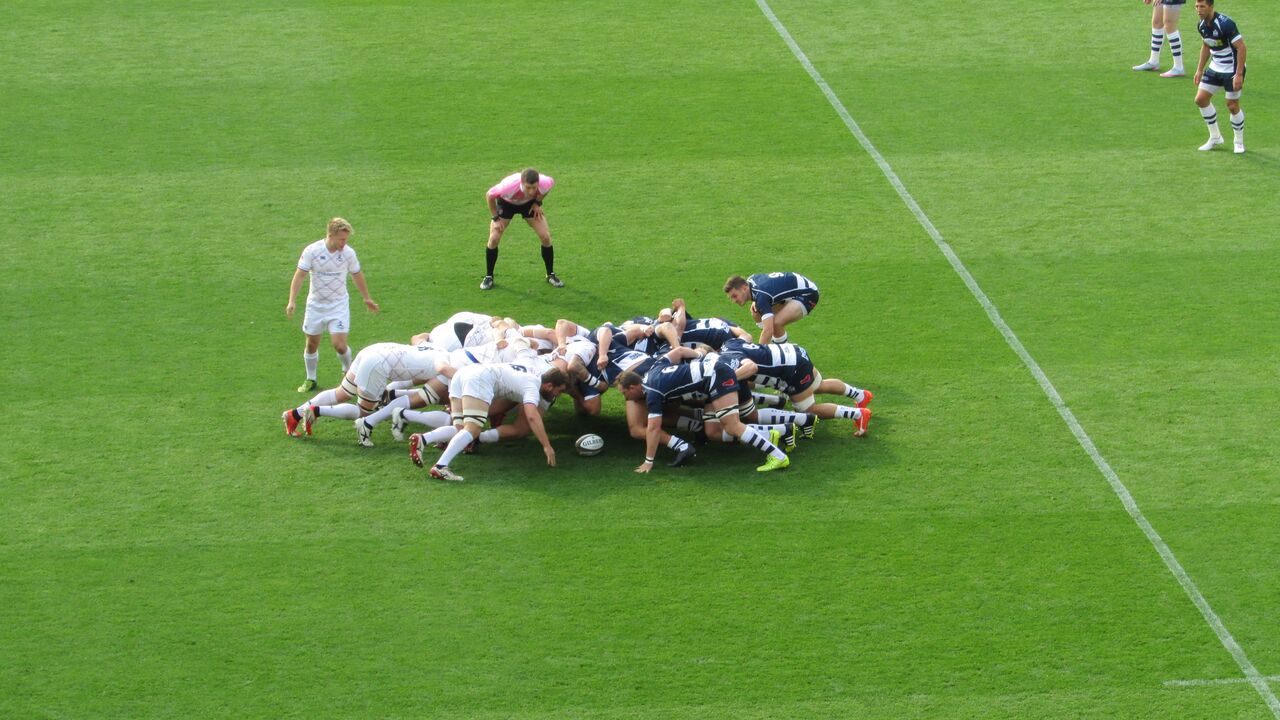
I joined 4,560 fans in attending the season’s third game, which came against Rotherham. The season-low crowd may well have had something to do with rugby burnout after England’s national team had its RWC title hopes crushed by Australia the evening before.

Bristol has additional issues brought on by the Rugby World Cup. For one, the franchise had the team from Georgia (the country, not the state whose official reptile is the gopher tortoise) training in its city, potentially drawing rugby attention away from the local side. For another, Bristol actually loses players to national sides, an obstacle an ECHL team would be highly unlikely to face. Matthew Morgan got the call from Wales, Jack Lam and Anthony Perenise played for Samoa, and Tommaso Benvenuti wore a blue Italy shirt.

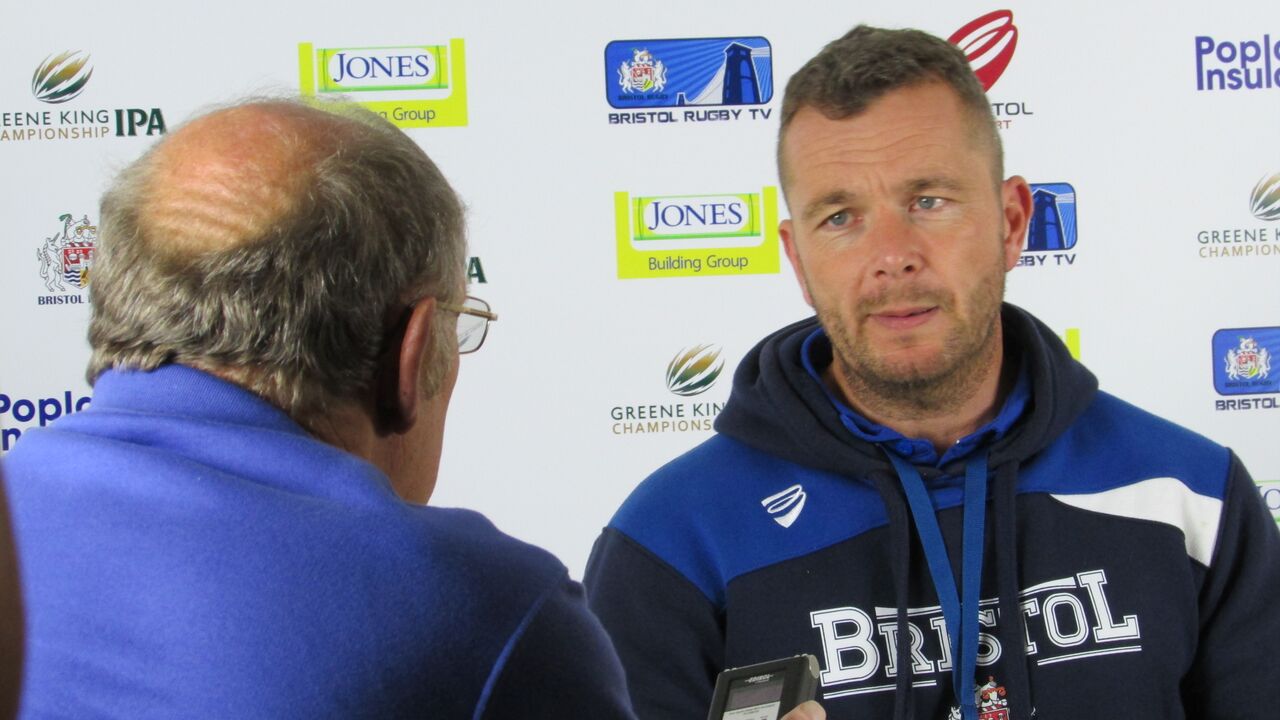
First Team Coach Sean Holley doesn’t view their departure as a negative, however.

“We have four players involved and that puts Bristol on the map. They’ll come back having participated in that environment,” he said.


In addition to the experience the quartet of internationals will gain, an added benefit will come from the playing time the club’s younger players will get in their absence.

“That’s only going to hold us in good stead when the internationals come back,” said flanker Olly Robinson, who scored two tries (similar to American football’s touchdowns) in the win over Rotherham.

Winning games, certainly, never hurts attendance no matter what else is going on. Holley may have found another RWC benefit, as well, one that may have contributed to his squad’s four-game winning streak.

“I’ve been showing examples of good practice (as seen in the RWC) to the players,” he said.
Off the field, Bristol Rugby has chosen to embrace the biggest international event in its sport and turn interest in it to the club’s advantage as much as possible.


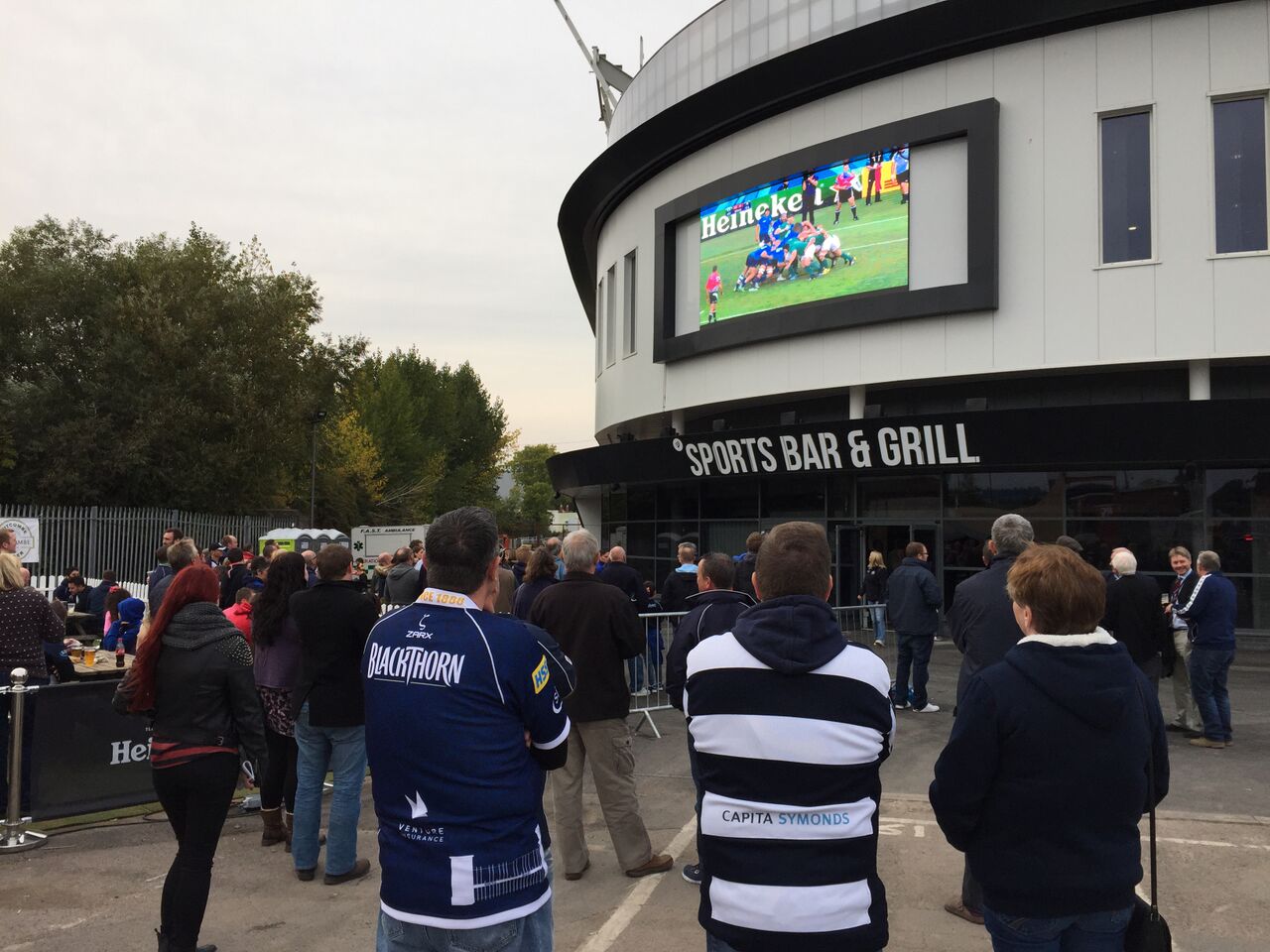
Program (aka “programme”) articles celebrate Bristol ties to the tournament. The franchise sponsors watching parties for the RWC games and encourages fans to stay after home games to watch the end of the international games as well. Fans can cluster around TVs inside the stadium, too.
To counter pressure from a nationally prominent competitor, it will often behoove a local business to emphasize grassroots initiatives. At halftime of the Rotherham game, participants in that morning’s Ashton Park schools under-13 rugby tournament paraded around the field.


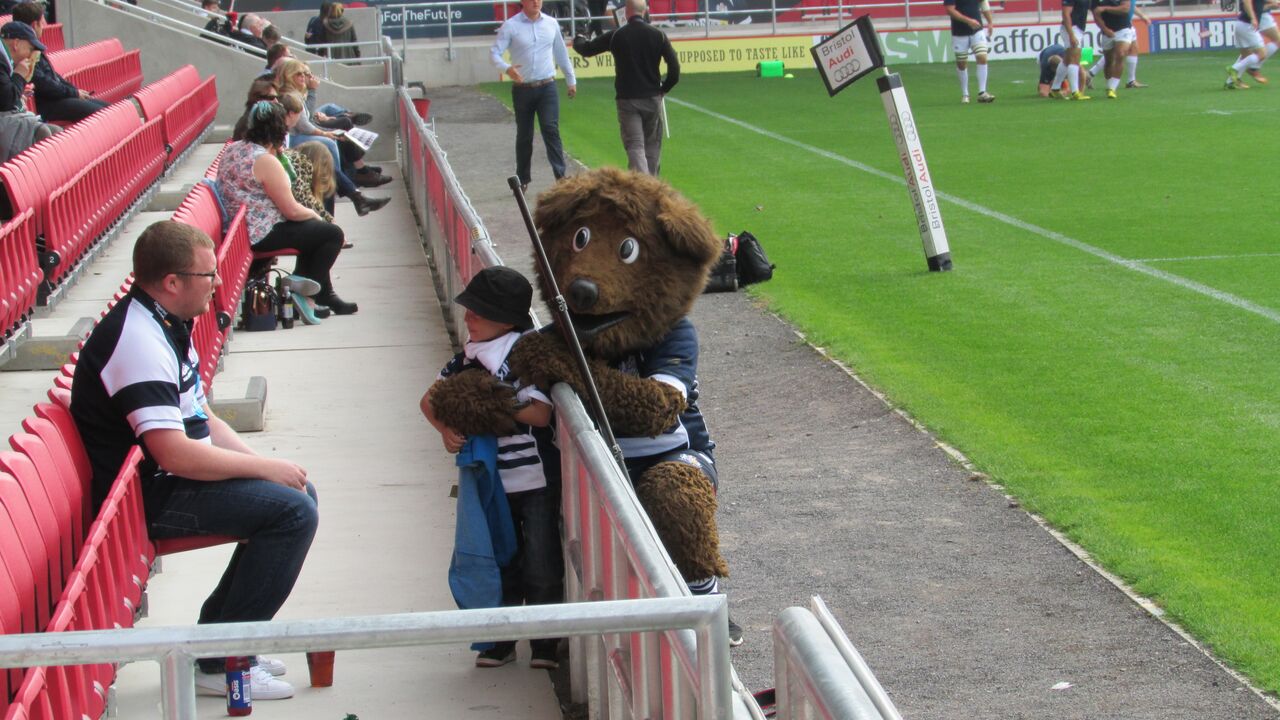
Bris has a mascot, too, to enhance the game experience of young fans, many of whom may have no idea the RWC is even going on. National mascots are never as lovable as local ones like Brizzley Bear.


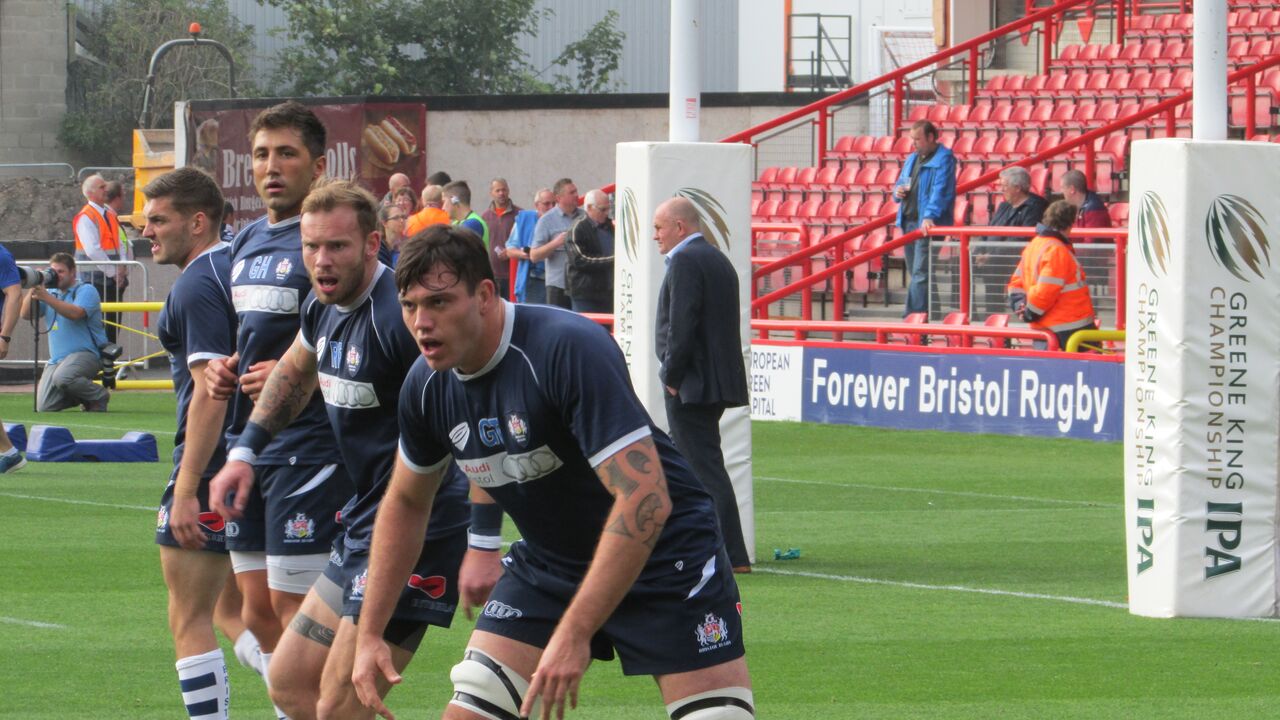
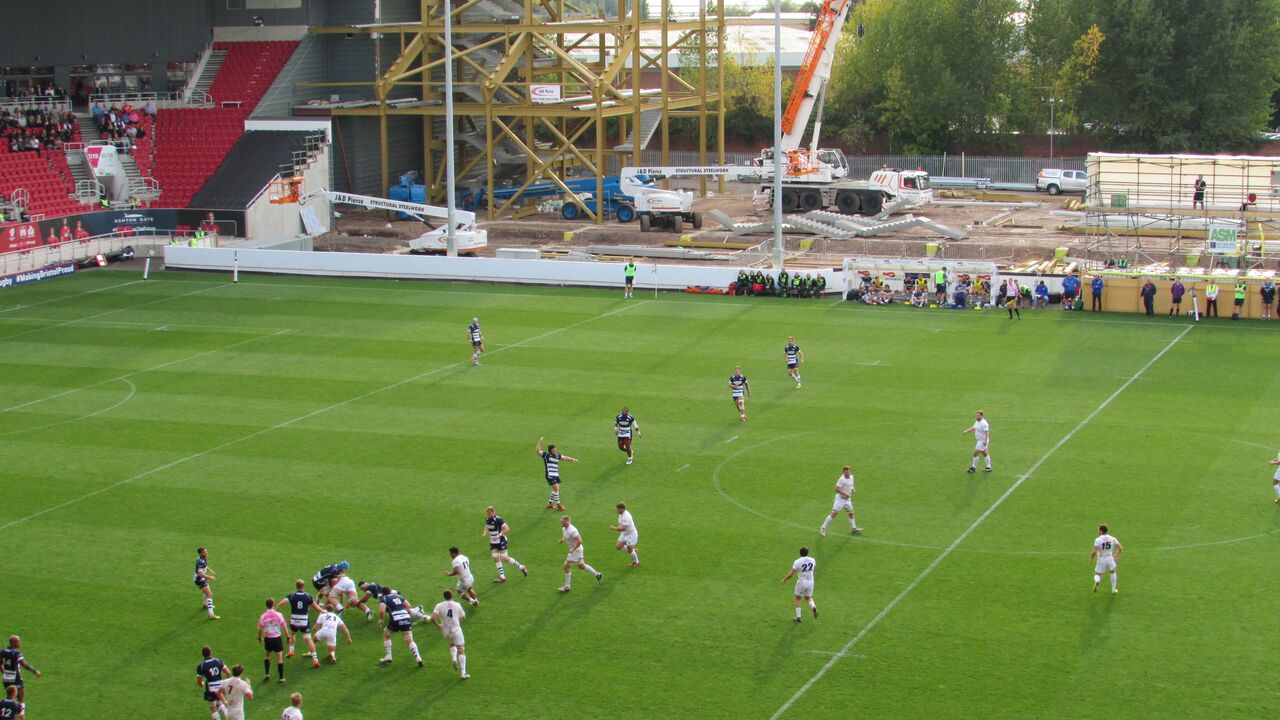
Bristol’s Ashton Gate stadium is currently in the midst of a construction phase, with the beginnings of a new west-side stand starting to take shape behind the teams’ bench areas. More than once, a kick went into touch (out of bounds in mainstream U.S. sports parlance) and into the construction site. The Bristol staff member who retrieved it did not wear a hard hat, but luckily the excavators and haulers sat idle during the match.

The project may have helped the team avoid suffering from any sponsors wanting to reserve their rugby money for RWC initiatives. Bristol Sports, which runs several teams in the area, has clearly worked hard to persuade construction contractors to get involved as club sponsors. One could count at least five companies related to the construction industry with signage in the stadium, and more had program ads and other presence.


The facility the rugby team shares with soccer’s Bristol FC will eventually have the capacity to hold some 26,000 fans. Bristol Rugby hopes to win its league’s playoff this season and ascend to the Premiership, which will greatly help with filling the new stands and suites. The team might still have to play games during the 2019 Rugby World Cup, though, as it will be held in Japan. The next year, that country will also host an Olympic Games. The Olympics seem unlikely to come to North Texas any time soon, but if they do, local teams might be well advised to confer with the folks at Bristol Rugby.


Rush Olson has spent two decades directing creative efforts for sports teams and broadcasters. He currently creates ad campaigns and related creative projects for sports entities through his company, Rush Olson Creative & Sports.

Thursday, October 8, 2015

Understanding Rangers Attendance

This post originally appeared on the Blotch page at the Fort Worth Weekly. To read it on their site : http://www.fwweekly.com/2015/10/06/attendance-just-reflects-the-way-baseball-go/


Rangers

A local team in a pennant race plus a lovely ballpark should equal big attendance numbers, right?
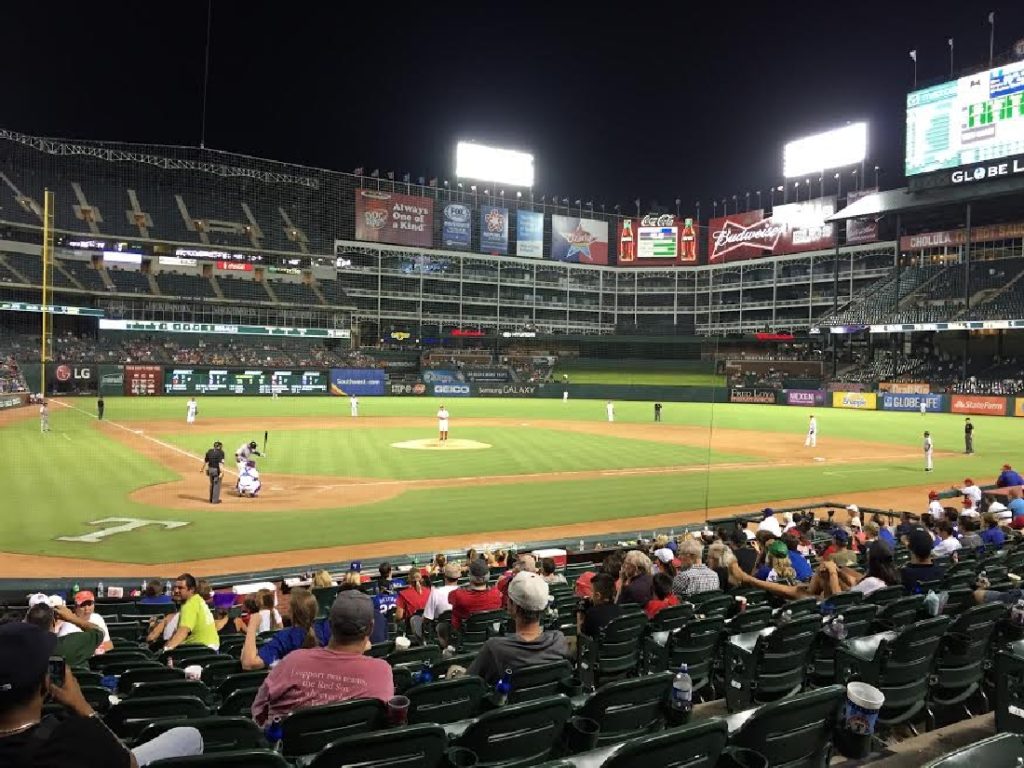
It’s not quite that simple, actually. Recent articles from the Star-Telegram, the Dallas Morning News, D Magazine, and Texas Monthly have noted the Texas Rangers' inability to draw huge crowds this season despite better-than-expected team performance and an exciting chase for the postseason. Suggested remedies have included adding a roof to Globe Life Park in Arlington, moving the team to Dallas, and having a witch doctor and faith healer do a joint séance to exorcise the ghost of Billy Martin.

The Rangers averaged 30,763 fans as they played 81 regular season home games en route to winning the American League West Division title in 2015. The figure ranked 16th in baseball and is lower than last season’s mark of 33,565, when the team finished 31 games behind the division-winning Angels.

This wins versus attendance ratio perplexes people, because it seems counter-intuitive. If you win you should draw more fans than when you don’t, the reasoning goes, since fans enjoy the sensation of aligning themselves with a winner and also like seeing top-level talent perform. To a certain extent, that logic works. Indeed, it seems likely the Rangers have drawn more fans this season than they would have had they ended up in last place again. Why, though, have they not drawn more fans than 2014, when injuries doomed them to a finish in the cellar?

A lot of the answer lies in ticket sales cycles. In baseball, the previous season’s results often determine the next year’s numbers. That’s because a huge share of a season’s total tickets gets sold in the offseason when account executives can move a lot at one time. A team’s season and group ticket representatives sell based on the results of the previous year. A good season means season ticket and mini-plan holders enthusiastic to buy, renew, and upgrade. They do so in blocks of 20, 40, 80, and 162 tickets or more at a time. Group ticket buyers, planning months in advance, choose a ballgame for their church or fight club instead of some other entertainment option. They buy in blocks of at least 25 tickets each.

The 2014 sales group had recent postseason appearances from which to sell, and that’s a handy thing to have. Playoff-less 1997’s attendance totals exceeded those of the playoff campaigns from the years before and after it. The year 2000’s figures were better than 1999’s. Occasionally a team can overcome a sub-par campaign with a special offseason, as when Nolan Ryan led a slew of roster moves in 1989, or when the new ballpark opened in 1994. Whatever the reason, success in the October-March sales window will usually be the most important indicator of the next season’s attendance numbers, because the largest blocks of tickets get sold to people who plan ahead before the season.

Of course, individual game sales do go on once the season has begun and winning can influence those totals. It’s hard, though, for single-game sales to overcome a mediocre offseason.

We can flag 1974, 1996, and 2004 as notable outliers. Those seasons all involved surprising young Rangers teams coming off extended periods without success. This year’s team has some good young players, but they don’t match the cachet the Jim Sundbergs, Pudge Rodruguezes, and Michael Youngs from those previous teams had. This will also be the fifth season in the last six the Rangers have played past game 162, so the 2015 crew doesn’t have the buzz of, say, a 2004 team coming off four straight last-place finishes or a 1996 squad making the franchise’s first postseason.


Photo by Brad Newton/Texas Rangers

Besides any issues with the on-field product, a couple of factors conspire against the Rangers ticket sales group as a season goes on: football and school.
When Cowboys training camp begins in late July, it siphons press attention from the Rangers. The team enjoys a brief period of media primacy once the NBA playoffs end, but that advantage disappears when helmets start hitting shoulder pads. The reduced media exposure doesn’t help ticket sales. The onset of high school football hurts, too. The three worst-attended Friday games of 2015 all came in the period after school began.

In late August, weekday attendance also tends to plummet and it has nothing to do with the heat. Families make up a huge part of baseball game attendees and parents simply don’t want to keep kids out late on a school night, for fear their offspring will fail to excel at school and get forced into menial professions like blog-writing. Now, we’re not saying that people should prioritize their children’s education over supporting the ball team, just that the evidence indicates it’s what they do.
Fort Worth schools started class on August 24. After that date, the Rangers had 11 Monday-Thursday home games. During the same period in 2013 and 2014, they had 8. In their record attendance year of 2012, they had 9. If you want to win a pennant, you might want to host a lot of those September games since teams tend to play better at home (though Texas actually won more games on the road this season). If you want to draw fans, you want as few of them as possible. The 2015 Rangers have actually done pretty well on those nights, all things considered. They’ve only had one such game with attendance below 20,000. A September 16 Dollar Hot Dog Night with Dallas Keuchel pitching for the Astros drew 34,483, and they drew over 30K the next night, too. By and large, though, the attendance ceiling is very low on weekday night games once school has started.

In 2011, with the Rangers franchise coming off its first World Series appearance and playing its way to another one, the Boston Red Sox came to town in late August for a Monday-Thursday series. Teams love to see Boston and the Yankees visit on weekdays, because opposition fans boost otherwise lackluster crowds. Those Sox had star power, too, with John Lackey and Josh Beckett starting two games of the series and the likes of David Ortiz, Adrian Gonzalez, and Carl Crawford in the lineup. It didn’t matter, because even those guys couldn’t defeat the first-week-of-school curse. Attendance for the four games averaged just over 30,000, some six thousand fans a game below that season’s average. Some in the team’s front office found the dip difficult to comprehend, and talk of new ad campaigns and ticket specials and starting David Clyde proliferated. Such remedies wouldn’t have worked, though. Baseball veterans know such declines are just part of the game.

The Rangers don’t really have a lot to worry about now, either. Their TV ratings have done well, which indicates there is still a lot of interest in the club. Mom and Dad just watch on TV instead of going to the game, because Junior needs to get to bed on time so he won’t flunk another math test. The team likely will focus on selling postseason tickets, which are special enough to avoid the weeknight blues, and creating a plan to convert this season’s achievements into next year’s season and group ticket buyers.

The Rangers ballpark lease expires in 2024. Some speculate they might leave behind all the facility improvements they’ve made over the past few years in favor of relocation to some yet-to-be-built retractable roof stadium in downtown Dallas. Would such a move improve attendance? Perhaps it would, although if I were them, I’d want to see a Prince Fielder-sized pile of research confirming it before I hoofed it east. But even if the move happened, we can safely guess that sometime around, say, 2029, we’d read another series of articles (or perhaps have them implanted directly into our brains by that time) wondering why the attendance was worse than the previous year’s even though the team was better. The answer will be the same as it was in 2015, or 2000, or 1997, or 1979.


Rush Olson has spent two decades directing creative efforts for sports teams and broadcasters. He currently creates ad campaigns and related creative projects for sports entities through his company, Rush Olson Creative & Sports.


RushOlson.com

Linkedin.com/company/rush-olson-creative-&-sports

Facebook.com/RushOlsonCreativeandSports