Showing posts with label ultra triathlon. Show all posts

Friday, October 7, 2016

A Running Start on Triathlon Training

This post originally appeared on the Fort Worth Convention and Visitors Bureau blog. To read on that site : https://www.fortworth.com/blog/post/get-a-running-start-on-healthy-training-for-tri-fort-worth/


Don't leap off your couch right away to start training for Tri Fort Worth. Finish reading this blog post first. The column will help you, plus you've got a little time. The big race isn't until Sunday, May 21, 2017. However, you do probably need to get started pretty soon, according to William Pruett, owner of CorioVelo multi-sport coaching and consulting company.
  • “Athletes attempting iron distance should give themselves an 18-24 week training window before the event,” said the Burleson-based coach via email, noting that the total time required also depends on the competitor’s background and current fitness level.
To complete Tri Fort Worth’s full iron distance event, you’ll need to swim 2.4 miles, cycle 112 miles, then run a marathon (26.2 miles). If you’re going to test yourself with such a race, it’s important to remember you need to go all in.
  • “Taking on the challenge of a long-distance triathlon is a commitment,” emailed Katy Durkee of race owner Trident Sports. “From a training perspective, it’s important for athletes to understand that planning is key. As the training progresses and workouts get longer, it’s not as easy to ‘squeeze in a workout’ here and there. Ramping up training will require some long training days on the weekends. Since most people work during the day and during the week, it might require some early mornings to squeeze in the extra workouts,” added Pruett.
He notes that you need to have your family’s support to get this effort done. Durkee suggests also receiving encouragement from fellow athletes.
  • “It is much easier to get your workouts accomplished when you have a group to train with, or to at least hold you accountable,” she said. “I have at least two to three people who serve as my “accountability partners” during training. When my motivation gets low, I make sure we communicate every day about our accomplishments.”
You don’t necessarily have to tackle the full distance the first time out.
  • “The ideal situation before someone attempts an iron distance triathlon would be to enter a half-iron distance race and complete it,” said Pruett.  “Upon completing the half, then they have a little perspective of the time commitment involved and the training effect upon their body.”
Tri Fort Worth, sanctioned by USA Triathlon, will offer a half distance race as well in May.

So now you’re motivated and set to “tri” this (ha!). What will you need besides moxie? Well, you’ll want to get properly equipped.
  • “There’s no shortage of gear and gadgets available to triathletes,” points out Durkee.
Stage 2 requires the most obvious large investment. We talked to Steven Howard, a coach from Pedal Hard, at Mellow Johnny’s Bike Shop in Fort Worth. He suggested a competitor have a couple of choices: “A road bike with clip-on aero bars or a triathlon-specific bike.”

Both Howard and Pruett noted the most important factor about choosing the bike on which you will compete: making sure it fits.
  • “Being in a position for that long is going to wear you out,” said Howard. “If your muscles are strained, you're going to be blown up.”
  • “Have a local bike shop inspect your bike,” Pruett suggested. “All of the local bike shops have dealt with iron distance triathletes and can offer sound professional advice.”
Luckily, Cowtown has a number of good bike shops to get you rolling, including Mellow Johnny’s, Fort Worth Cycling & Fitness, Colonel’s Bicycles, Performance Bicycle, Bicycle Center of Fort Worth, Bicycles, Inc. and Bonzai Cycle Werx.

  • “Running shoes are important,” said Pruett. "I recommend athletes have two good pairs for training so they can alternate.” He also suggests getting a wet suit that fits you properly.
Durkee added, “The one thing I couldn’t live without is my triathlon watch with a heart rate monitor. While it wasn’t cheap by any means, if used correctly it can provide you (and your coach) with an enormous amount of information about your training. I use it to monitor my speed, cadence, heart rate, recovery, swim stroke efficiency, calories burned, and I’m sure I’m just scratching the surface of its capabilities.”    

Once you get into it, we’re sure you’ll want the latest training toys. In our next post about Tri Fort Worth, we’ll discuss how to best utilize a coach who can help you figure out how best to expend your time and money.

Speaking of finances, Pruett advised: “Make an Iron budget before beginning. Set the amounts for travel, pre-race halfs, registration fees, and any equipment updates and coaching fees.  Because the Tri Fort Worth is local, this should help Fort Worth and Dallas and surrounding area athletes with a few of these expenses.”

It’s not just money you’re budgeting. It’s time and relationships. You have to make trade-offs. As Pruett delicately put it,
  • “The athlete must be mindful that some social commitments might need to be put on hold for a good 18-24 weeks of training.”
We interpret that to mean you might need to skip some happy hours. According to Durkee, however, you’ll be glad you did.
  • “When people say that Disney is the ‘Happiest Place on Earth,’ they’ve never been to one of these finish lines! I would strongly suggest that everyone, not just athletes participating in the events, come out and spectate an event. The finish line experience at a long distance triathlon is electric, inspiring, and brings tears to my eyes every time, even if I’m not doing the race!”


Rush Olson has spent two decades directing creative efforts for sports teams and broadcasters. He currently creates ad campaigns, television programs, and related creative projects for sports entities through his company, Rush Olson Creative & Sports.


RushOlson.com

Linkedin.com/company/rush-olson-creative-&-sports

Facebook.com/RushOlsonCreativeandSports

Thursday, October 29, 2015

It Takes An Ironox

This post originally appeared on the Blotch page at the Fort Worth Weekly. To read it on their site : http://www.fwweekly.com/2015/10/27/it-takes-an-ironox/

Pruett main 
Can one consider a person who describes himself as “just your middle of the pack in every sport” an “elite athlete?” 
 
How about if he’s 49 years old and stocky enough to earn a nickname like “Ironox?”
How about if he completes a feat that even the pro athletes in his sport don’t try, one that most of us can’t even fathom attempting?

“I always cycled, but I was never a star athlete,” declared Burleson’s William Pruett. Earlier this month, though, he accomplished an athletic task only a handful of people in the world will even attempt. Pruett finished a triple iron distance triathlon.


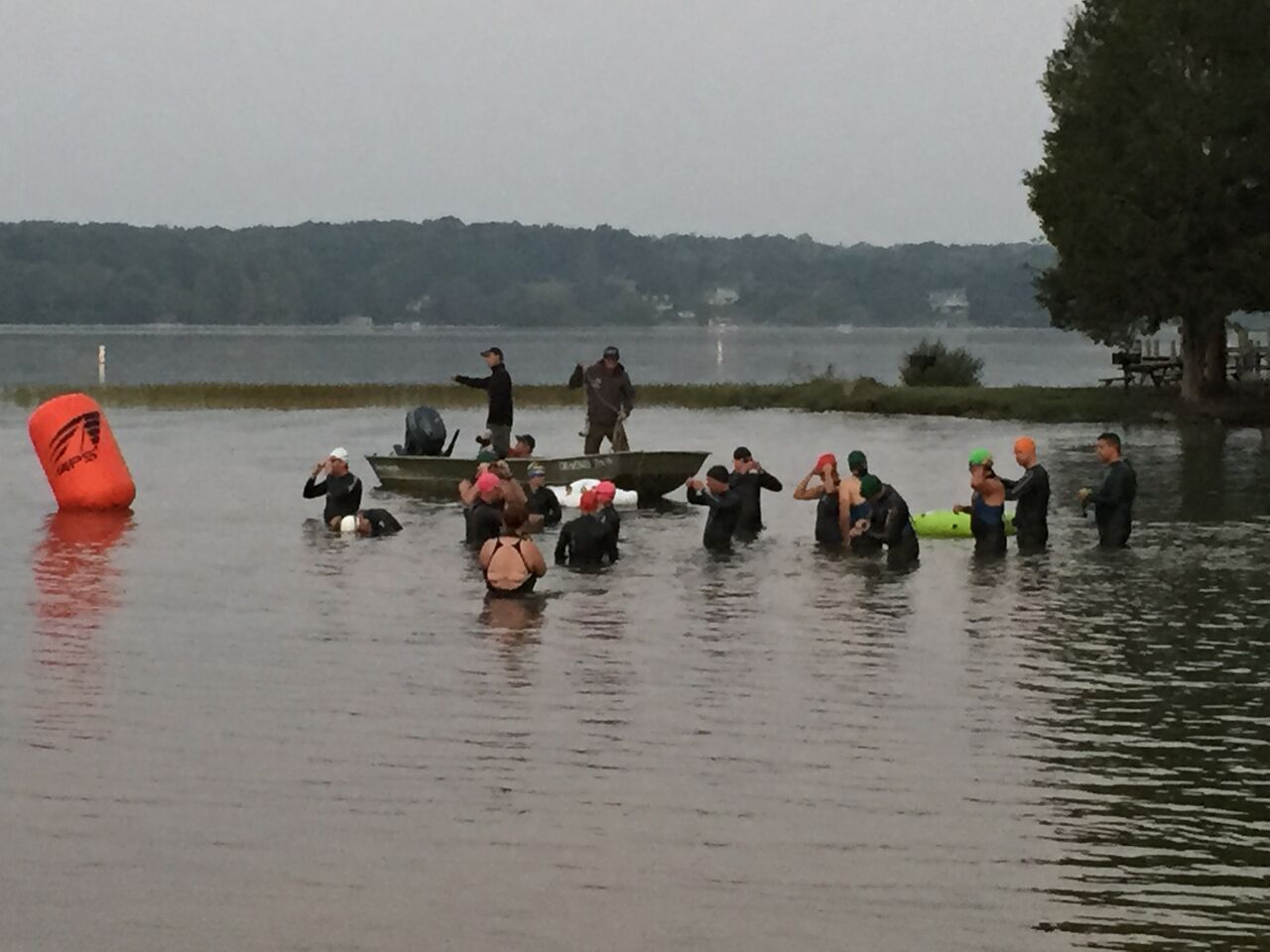
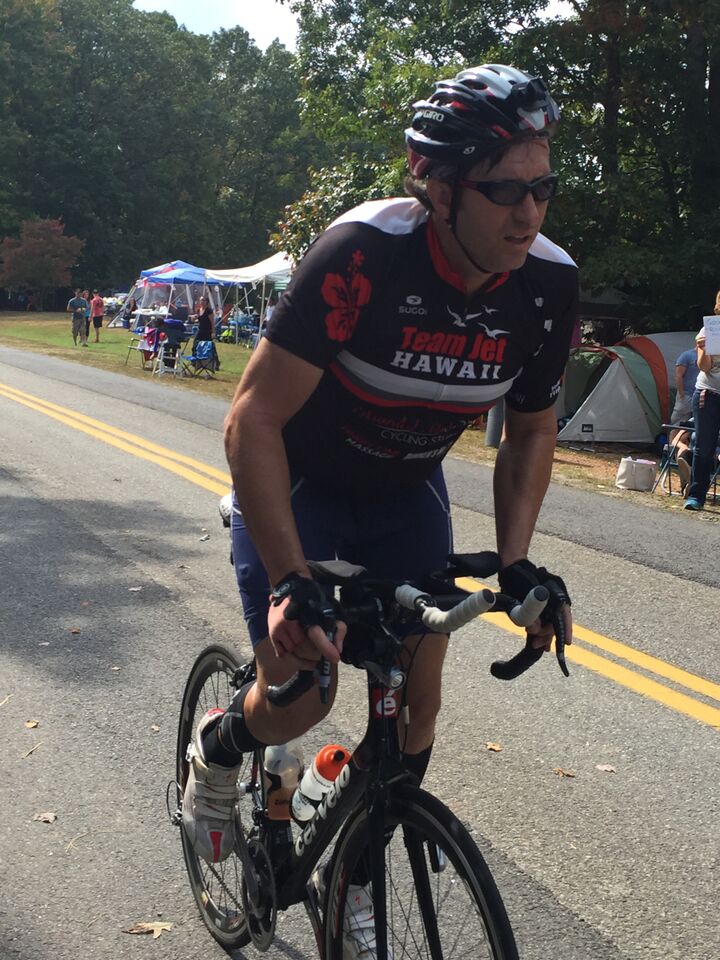
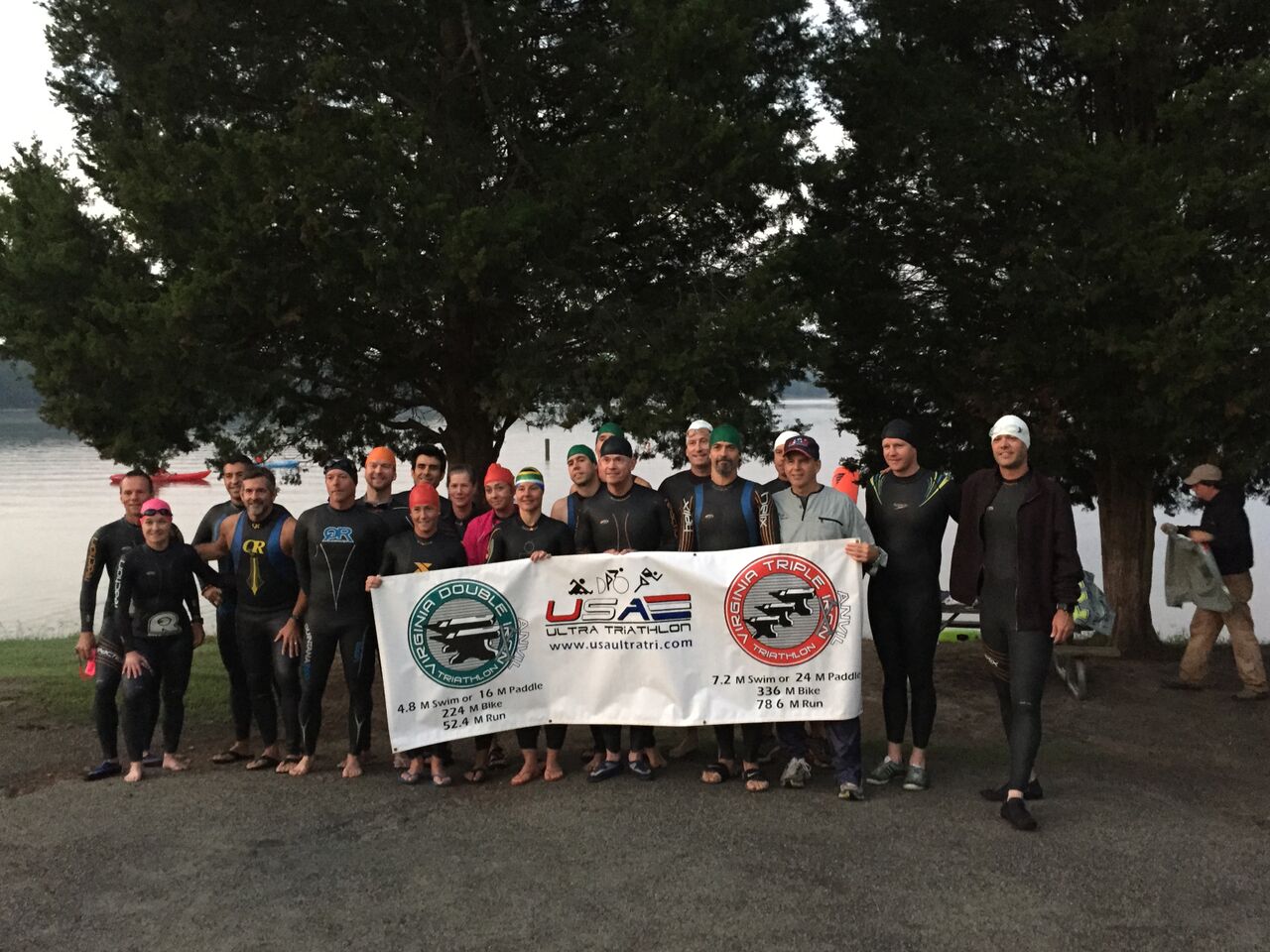
Pruett first swam 7.2 miles in a chilly lake, then rode his bicycle for 336 miles (roughly the distance from Burleson to Odessa, Texas).


“You can’t ride too fast because you know you’re going to have to run three marathons,” he says matter-of-factly.

The finishing run covers 78.6 miles. For his or her time to officially count, a competitor has to complete all three events in 60 hours or less. Pruett finished in 59:51:52.

Ironox’s successful result came in his second attempt at the triple. In 2014, at the same course in Lake Anna State Park near Spotsylvania, Virginia, he sustained a severe ankle sprain at mile six of the run. He pressed on for 25 more miles before succumbing to the injury.

Ultra triathletes expect to encounter pain during the event, especially as the hours mount and take their toll on even well-conditioned bodies.

“On the bike you have saddle sores, achy knees, and achy feet from riding so long,” noted Pruett. “Some people have upper extremities issues because you’ve been gripping the handlebars for such a long period of time.”

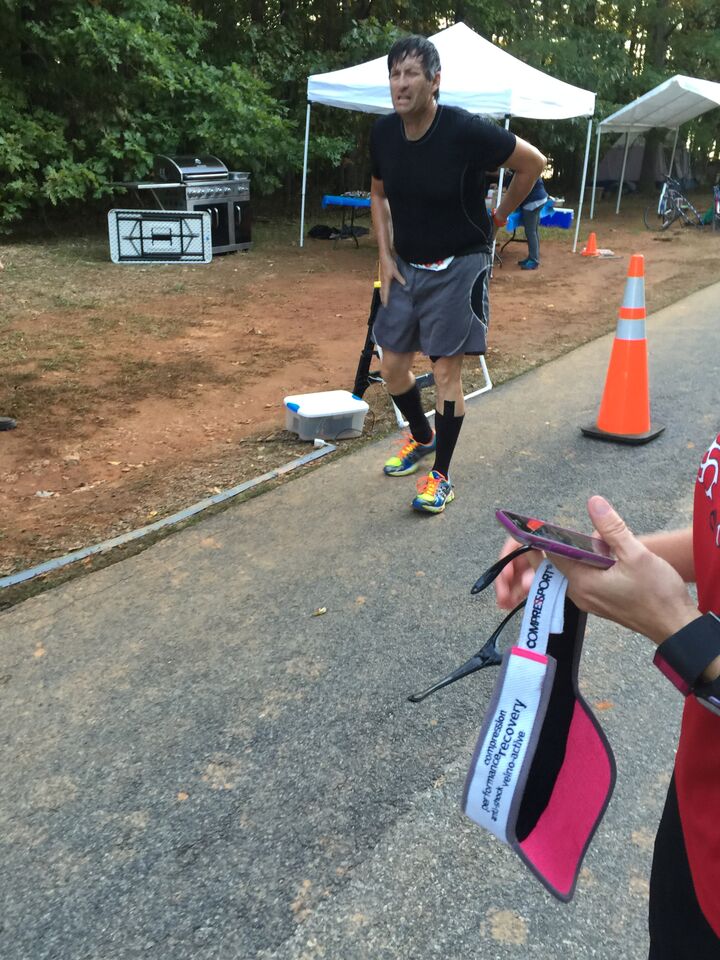
In 2015, Pruett’s main injury troubles again came during the running portion. They threatened to derail his effort, 40+ hours in.

“My feet started to blister after the first marathon. I think I was around mile 30 or so when they started getting bad.”

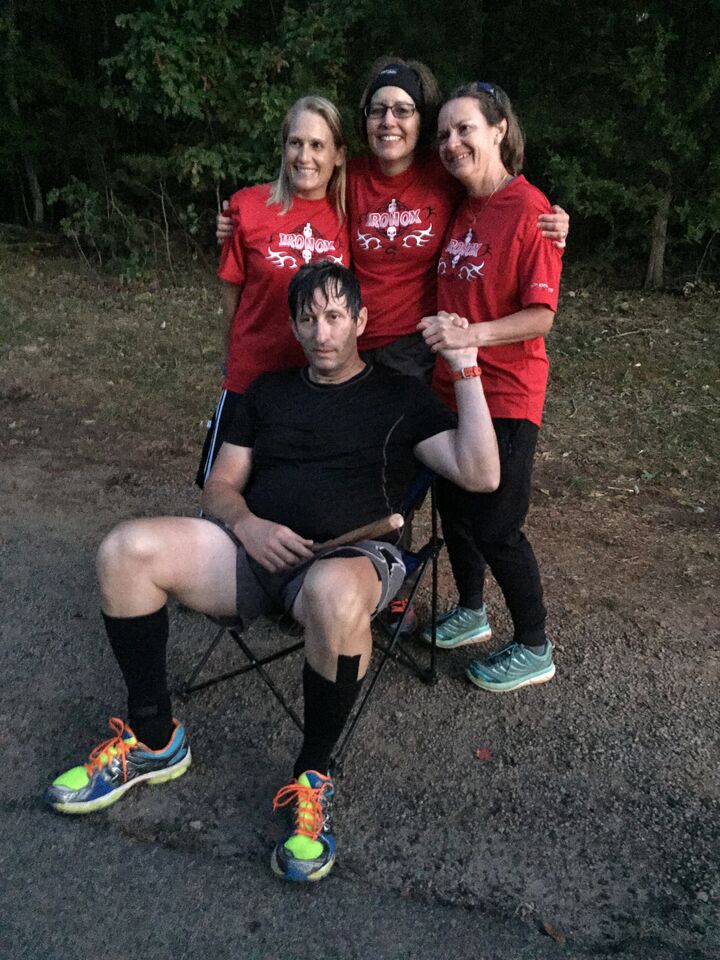
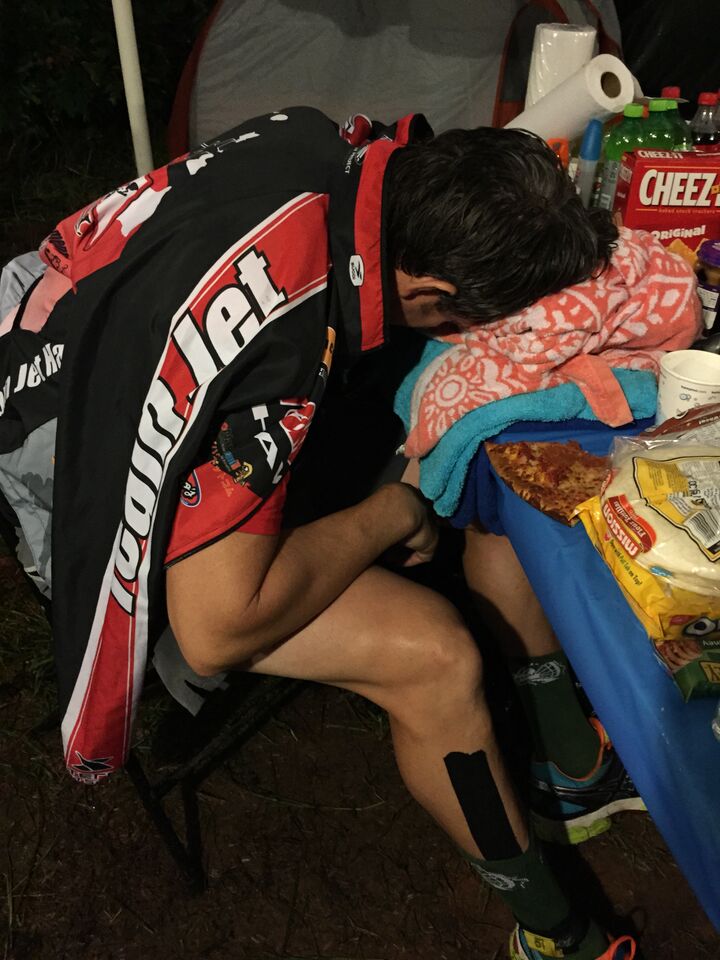
There wasn’t much the race doctor could do for him, so Pruett’s crew wrapped his painful soles in tape, moleskin, and everything else they had to try to keep him on his feet (next time, he vows to bring even more blister-prevention supplies). Long distance racers need a crew to help them make it through their two-and-a-half day ordeal. Pruett’s seasoned support staff included his wife, Donna, a veteran of Pruett’s regular endurance race forays, and experienced triathletes Nancy Henley and Sara Parker Underwood. They made sure Pruett ingested enough performance gels and protein-rich foods to supply the caloric intake the team had predetermined he needed to maintain his energy levels. They also monitored the roughly three total hours of sleep he would get during the race and kept him hydrated.


With only ten miles to go, the crew had to help William find more assistance.

“My back locked up on the run because my lower back was so fatigued,” explained Pruett.


A massage therapist loosened it a little bit, but Pruett didn’t have time for extensive treatment.

“While she was working on my back, the clock was still ticking. I had to cross the timing mat by 6:40 Saturday evening. So we had to really push it.”

Push it he did, as best he could from a hunched position.

“It was still pretty much locked, so I had to bend over at a thirty degree angle to walk/run. The last six miles became very crucial that I couldn’t stop for anything.

Once started, the race clock doesn’t stop for rain, bathroom breaks, or a note from one’s doctor. Pruett trudged, as he put it, to the finish just in time. He actually thought he was under more time pressure than he was.

“My crew didn’t tell that I had banked an extra nine minutes that I’d didn’t realize I had,” he explained.

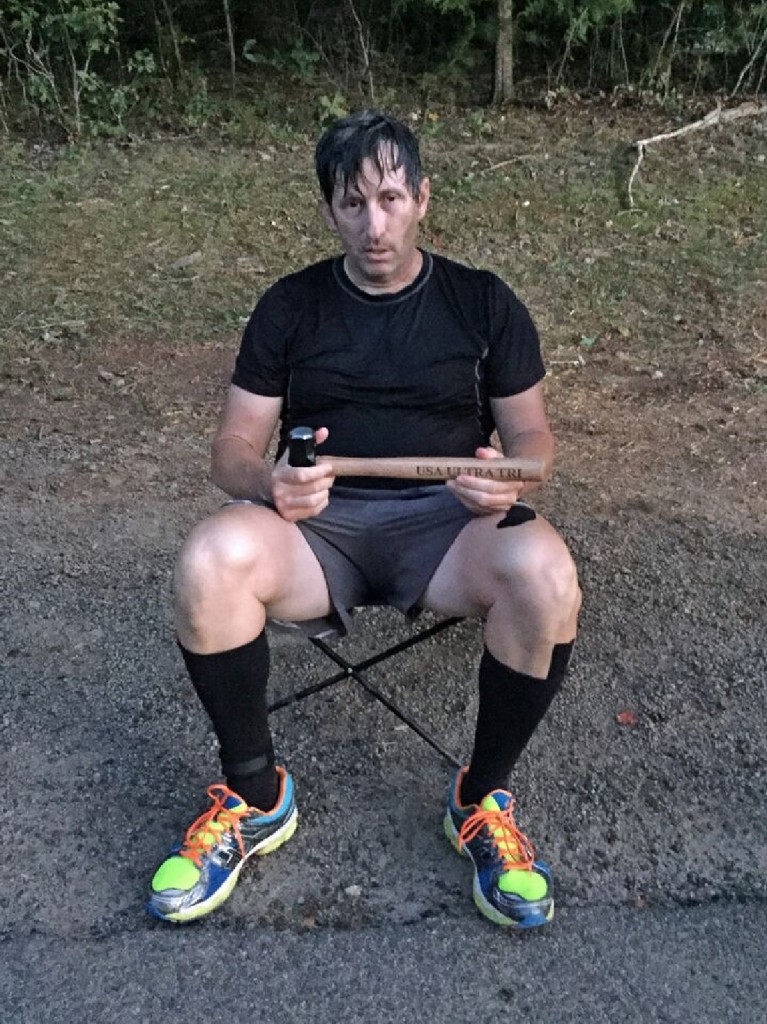
After he got done, the Ironox got to use a hammer to pound three times on the anvil that symbolizes the competition known as the Triple ANVIL. He then spent most of the rest of the evening eating and sleeping.

Once he returned to Texas, his recovery continued.

“Besides consuming tons of calories, I did cryo therapy, massage, and elevating the feet. Catching up on the sleep was the most difficult.”

“It didn’t dawn on me until two days later that I finished. You’re just trying to recover for two days and then it dawns on you that I just accomplished a goal through this fifty nine hours of exercise.”


Pruett’s doctors think he’s nuts.

“They don’t discourage it because they know you’re going to do it anyway,” Pruett said.

Some readers may agree with the physicians. So why does Pruett, who has completed multiple iron distance (2.4-mile swim, 112-mile bicycle ride and 26.2-mile run) triathlons and a double ANVIL, put his body through the rigors his sport demands? For William Pruett, it is, believe it or not, fun.

“The fun part is the journey, the training,” he said. “You have this set goal and it is a mark that is a little beyond your limitation. A goal within your limitation, what fun is that?"

Accomplishing the goal in an environment in which he competes against other contestants and a clock makes the goal even sexier for him.

“My motivation is that you have this certified course with chip timing and you’re monitored with swim, bike, and run. You’re testing yourself against a true measure. Instead of just going out on your own and saying I did this one day, you’re actually measured by these outside forces and referees. If you’re not under 60 hours, you’re not an official finisher. That’s the motivation.”

When Pruett isn’t training, racing, or working at Fort Worth Cycling & Fitness or helping manage a local medical practice, he trains other aspiring racers through his company, CorioVelo. He hopes his experiences completing a triple contribute to making him an elite coach.

“By experiencing this event as an athlete, now I can relate to other athletes when they do iron distance or ultra because I know the same exact feelings they’re going through,” he said.

To deal with the inevitable feelings of anguish, Pruett considers mental training vital.

“Once the mental goes, the physical goes. If you can keep on top of the mental, it helps your physical,” he explained. “For dealing with the pain, I had to do a lot of mental training. I read a lot of positive motivation books. Learning to control the mind in the downtime by changing your thought pattern. Instead of negative thoughts, changing thought patterns to positive thoughts during the event – reading, praying, just any mental activity.”

The physical part is more than swimming, riding, and running a lot, too.


“I trained for sleep deprivation by practicing ten to twelve-minute naps,” he said about one of the crucial aspects of surviving ultra distance races. “Research shows that anything over fifteen minutes, you start to get into REM (rapid eye movement sleep). You don’t want an athlete to get into REM during an event because it becomes harder to wake up.”

Pruett has coached a pair of double iron distance finishers, and numerous other committed amateur athletes. His customers tend to be folks a lot like him.


“Anybody can do triathlon,” he said. “You don’t have to be the skinny jackrabbit.”

If Pruett counts himself closer to the tortoise than the hare, his steady approach seems to be working. He’s already on track for another single iron distance race in November and might try the Quintuple ANVIL next year.

“If you never get out and test yourself, you never know your limit,” he said.

When it comes to testing limits, William Pruett is truly elite.


Disclosure : Pruett’s company, CorioVelo, paid me to produce a promotional video earlier this year. He also gave me a hat and a hoodie, both of which I have worn in public and thought they looked pretty stylin’.


Rush Olson has spent two decades directing creative efforts for sports teams and broadcasters. He currently creates ad campaigns and related creative projects for sports entities through his company, Rush Olson Creative & Sports.


RushOlson.com

Linkedin.com/company/rush-olson-creative-&-sports

Facebook.com/RushOlsonCreativeandSports