Showing posts with label bicycle. Show all posts

Monday, March 13, 2017

Creative Suffering In TX


In Burleson, Texas, elite cyclists and triathletes can now train in a festival atmosphere.


Of course, it’s endurance training, so it’s a festival of hard work, perspiration, and, yes, suffering. In fact, they call it the Sufferfest.


The athletes assemble in the studio room at C3 Cryo Club. Most bring their own bicycles, which they attach to trainers, though there are also spin bikes available for those who need them. Then high-energy music kicks in, a video with a title like “The Wretched” or “Sufferfest Fight Club” begins to play, and they begin to pedal.


"Sufferfest videos make you faster," says class supervisor William Pruett. 

Pruett runs CorioVelo, a multi-sport coaching and consulting company. He had personally used training videos from a concern calling themselves The Sufferfest, who produces videos for cyclists to watch whilst training. The pieces brandish a cheeky attitude about torturing oneself for one’s fitness, while also incorporating actual footage from some of cycling’s biggest races, like the Tour de France.


“It gives you the feeling like you're riding in a pack, like in a group ride, so it's a little bit different than just being in a room by yourself,” said recent participant Leslie Haas.


“I had always wanted to do (a) Sufferfest (class), because Sufferfest is designed so well for cyclists,” said Pruett.


“William Pruett knows how to get the most out of his athletes to help them achieve their goals,” said David McQuillen, Chief Suffering Officer at The Sufferfest, via email. “So we’re thrilled that CorioVelo has become a Sufferlandrian Embassy and is using our videos to help guide those athletes to victory.”


Pruett is beginning with classes four days a week. Weekday sessions will last a half hour. He’ll offer longer Sunday rides designed to appeal to athletes in training for upcoming races, though one of the setup’s appeals is its ability to cater to multiple types of athletes at the same time.


“You have different levels of experience,” said Haas, “But they get the same workout because it's (based) on perceived exertion.”


On a trail, an inexperienced rider would get left behind no matter how hard he or she pushed. In the studio, each person can perform – and suffer – equally. The shared experience creates an element of camaraderie and motivation that might be missed when riding at home by oneself.


“Leslie gave me a high-five in the middle,” said rider Eva Diana Iguaran.


“You're all in it together,” noted Haas. “When everyone else is in the room doing it, it’s like, ‘all right, we can all do this.’”


"You shouldn't be talking. You should be climbing," joked Pruett at one point in their class.


The videos’ editing and graphic elements are based on workouts designed by coach Neal Henderson of APEX Coaching and the BMC Racing Team’s sports science staff. Each film features changes in cadence and effort level designed to mimic the ups and downs one would encounter in a race. Having pictures helps.


“Looking at the screen is like riding on the road,” said Pruett. “You keep your head up."


As the moderator, Pruett watches a rundown sheet that lists upcoming climbs and sprints and keeps his charges aware of how long certain elements will last. He also keeps an eye on the exercisers’ gear settings and other technical elements to help them get the most from their ride. He says being able to use one’s own machine without having to brave weather or traffic is an advantage in training.


“You can bring your bike specifically fit for you, and you can do these harder workouts to increase your fitness, but on your bike. So that's the beauty of this.”


The cyclists will also be watching beautiful scenery from around the world, and indeed, the Sufferfest is an international company. Though based in Singapore, they have created their own ersatz nation, dubbed Sufferlandria. Cycling studios who license their videos for classes are known as “Embassies,” and only they are allowed to exhibit the works publicly


Pruett’s is the only such outpost in North Texas, having achieved the embassy designation. It gives him the privilege of bestowing naturalization on those intrepid trailblazers whom The Sufferfest has just directed to move their “legs like a (suffering) hummingbird” or been told it’s “time to separate the Sufferlandrians from the weak.” At the end of the session, Pruett distributes high-fives and congratulations.


“You’re all official Sufferlandrians!” he said.


One can purchase passes for Sufferfest classes at https://squareup.com/store/coriovelo-enterprises-llc. For more information on CorioVelo, visit http://www.coriovelo.com/.


Rush Olson has spent two decades directing creative efforts for sports teams and broadcasters. He currently creates ad campaigns, television programs, and related creative projects for sports entities through Rush Olson Creative & Sports and FourNine Productions.

RushOlson.com
Linkedin.com/company/rush-olson-creative-&-sports
Facebook.com/RushOlsonCreativeandSports

Thursday, October 29, 2015

It Takes An Ironox

This post originally appeared on the Blotch page at the Fort Worth Weekly. To read it on their site : http://www.fwweekly.com/2015/10/27/it-takes-an-ironox/

Pruett main 
Can one consider a person who describes himself as “just your middle of the pack in every sport” an “elite athlete?” 
 
How about if he’s 49 years old and stocky enough to earn a nickname like “Ironox?”
How about if he completes a feat that even the pro athletes in his sport don’t try, one that most of us can’t even fathom attempting?

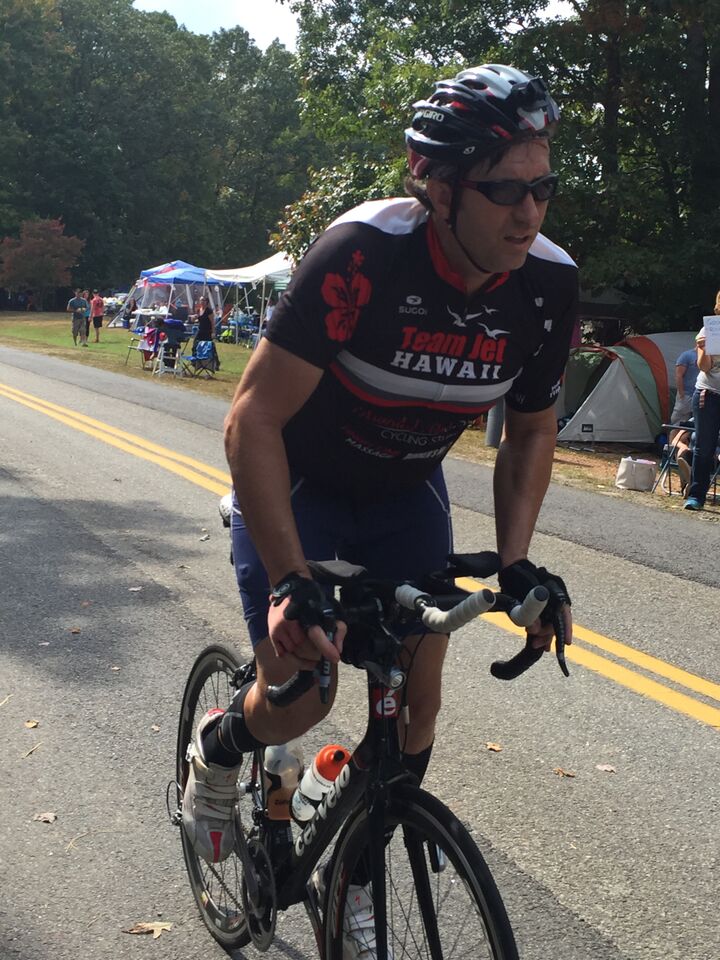
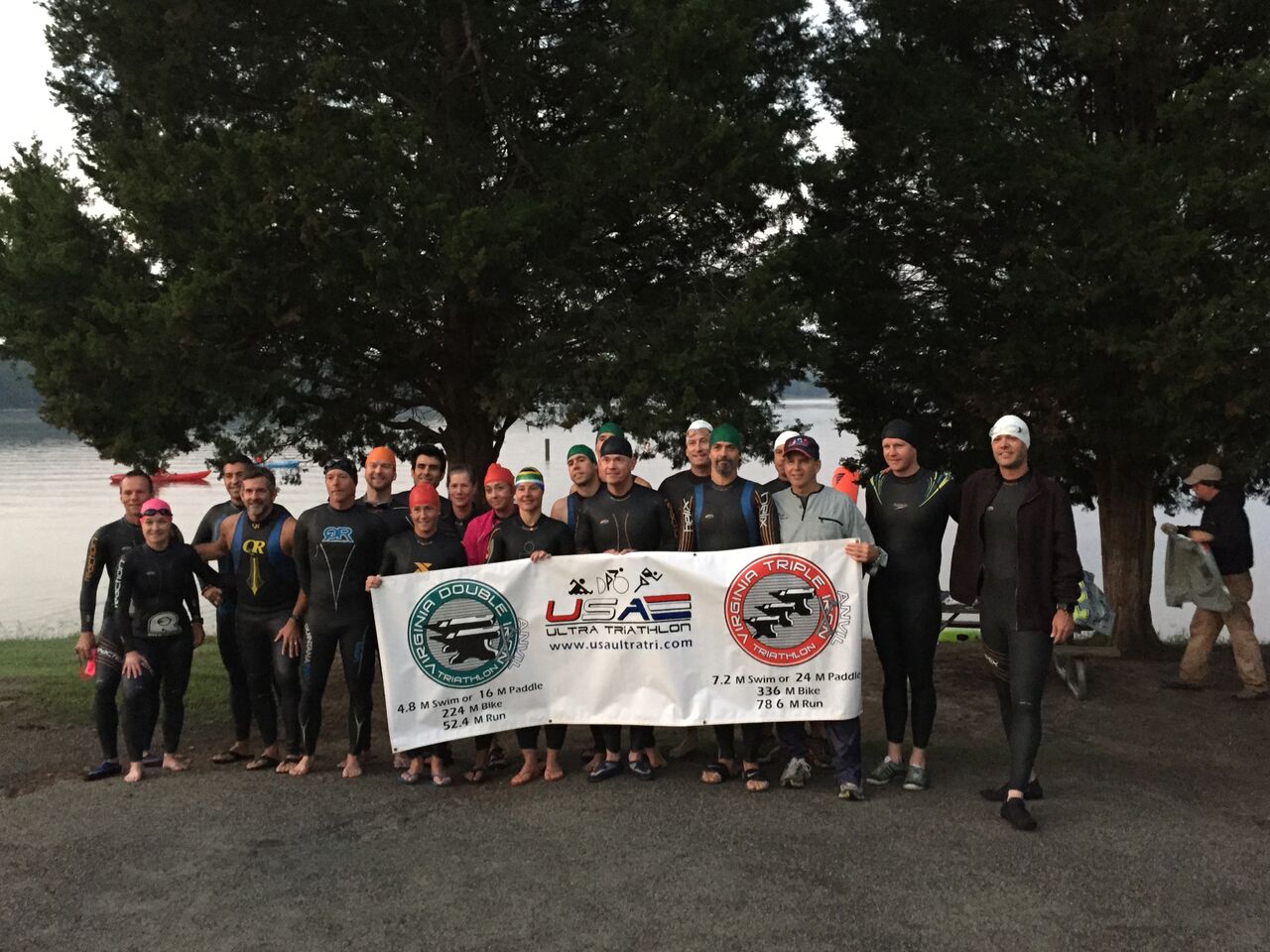
“I always cycled, but I was never a star athlete,” declared Burleson’s William Pruett. Earlier this month, though, he accomplished an athletic task only a handful of people in the world will even attempt. Pruett finished a triple iron distance triathlon.


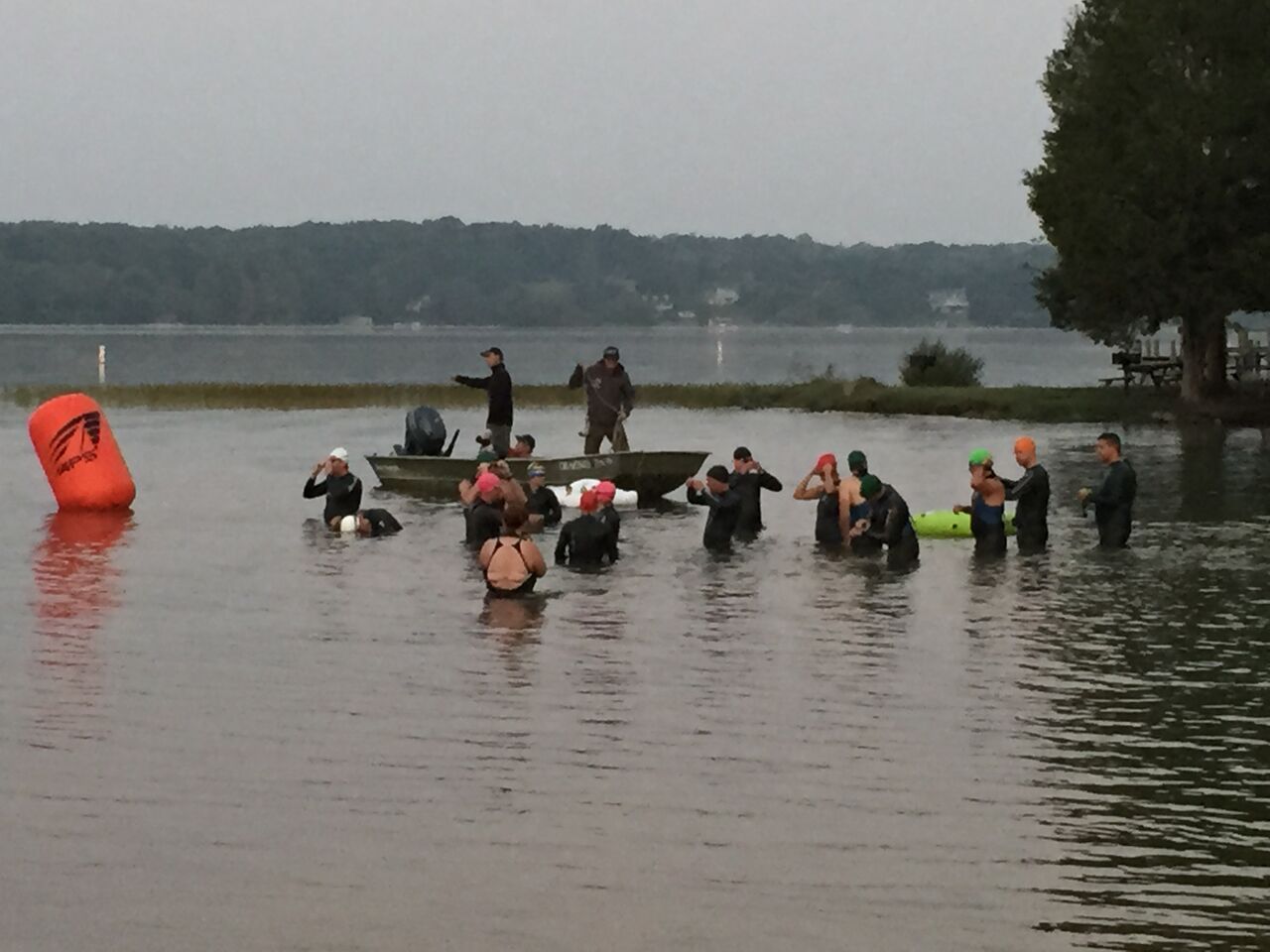
Pruett first swam 7.2 miles in a chilly lake, then rode his bicycle for 336 miles (roughly the distance from Burleson to Odessa, Texas).


“You can’t ride too fast because you know you’re going to have to run three marathons,” he says matter-of-factly.

The finishing run covers 78.6 miles. For his or her time to officially count, a competitor has to complete all three events in 60 hours or less. Pruett finished in 59:51:52.

Ironox’s successful result came in his second attempt at the triple. In 2014, at the same course in Lake Anna State Park near Spotsylvania, Virginia, he sustained a severe ankle sprain at mile six of the run. He pressed on for 25 more miles before succumbing to the injury.

Ultra triathletes expect to encounter pain during the event, especially as the hours mount and take their toll on even well-conditioned bodies.

“On the bike you have saddle sores, achy knees, and achy feet from riding so long,” noted Pruett. “Some people have upper extremities issues because you’ve been gripping the handlebars for such a long period of time.”

In 2015, Pruett’s main injury troubles again came during the running portion. They threatened to derail his effort, 40+ hours in.

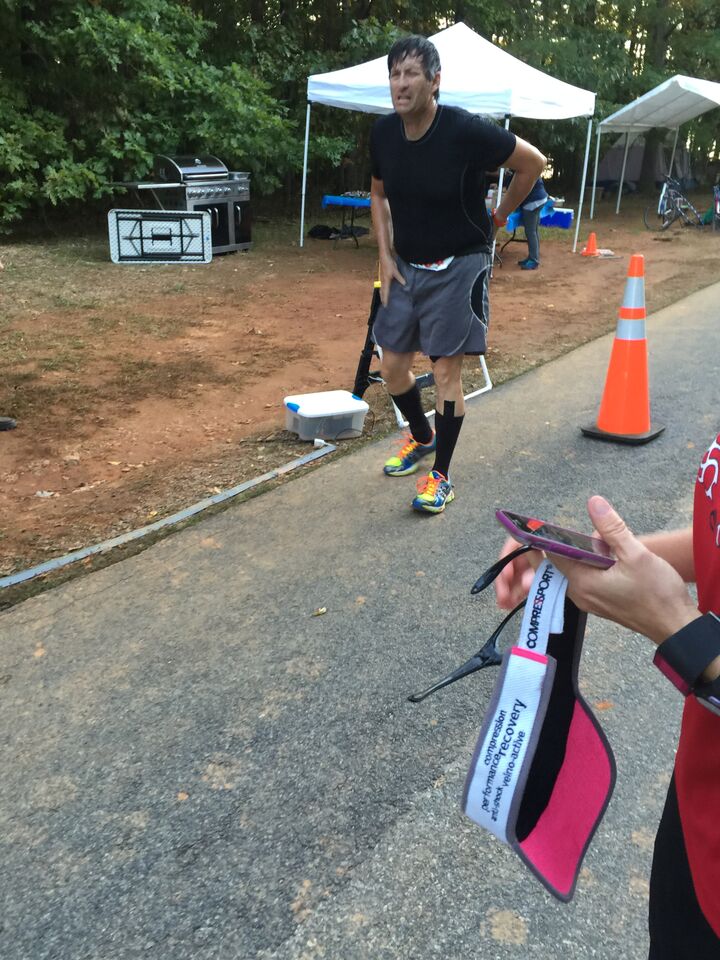
“My feet started to blister after the first marathon. I think I was around mile 30 or so when they started getting bad.”

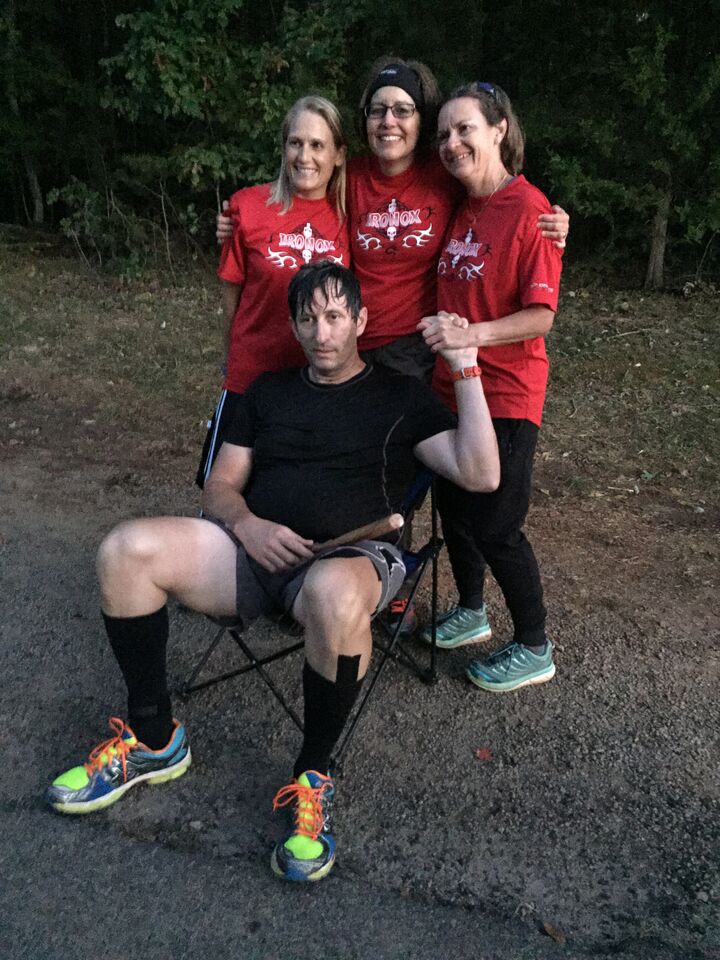
There wasn’t much the race doctor could do for him, so Pruett’s crew wrapped his painful soles in tape, moleskin, and everything else they had to try to keep him on his feet (next time, he vows to bring even more blister-prevention supplies). Long distance racers need a crew to help them make it through their two-and-a-half day ordeal. Pruett’s seasoned support staff included his wife, Donna, a veteran of Pruett’s regular endurance race forays, and experienced triathletes Nancy Henley and Sara Parker Underwood. They made sure Pruett ingested enough performance gels and protein-rich foods to supply the caloric intake the team had predetermined he needed to maintain his energy levels. They also monitored the roughly three total hours of sleep he would get during the race and kept him hydrated.


With only ten miles to go, the crew had to help William find more assistance.

“My back locked up on the run because my lower back was so fatigued,” explained Pruett.


A massage therapist loosened it a little bit, but Pruett didn’t have time for extensive treatment.

“While she was working on my back, the clock was still ticking. I had to cross the timing mat by 6:40 Saturday evening. So we had to really push it.”

Push it he did, as best he could from a hunched position.

“It was still pretty much locked, so I had to bend over at a thirty degree angle to walk/run. The last six miles became very crucial that I couldn’t stop for anything.

Once started, the race clock doesn’t stop for rain, bathroom breaks, or a note from one’s doctor. Pruett trudged, as he put it, to the finish just in time. He actually thought he was under more time pressure than he was.

“My crew didn’t tell that I had banked an extra nine minutes that I’d didn’t realize I had,” he explained.

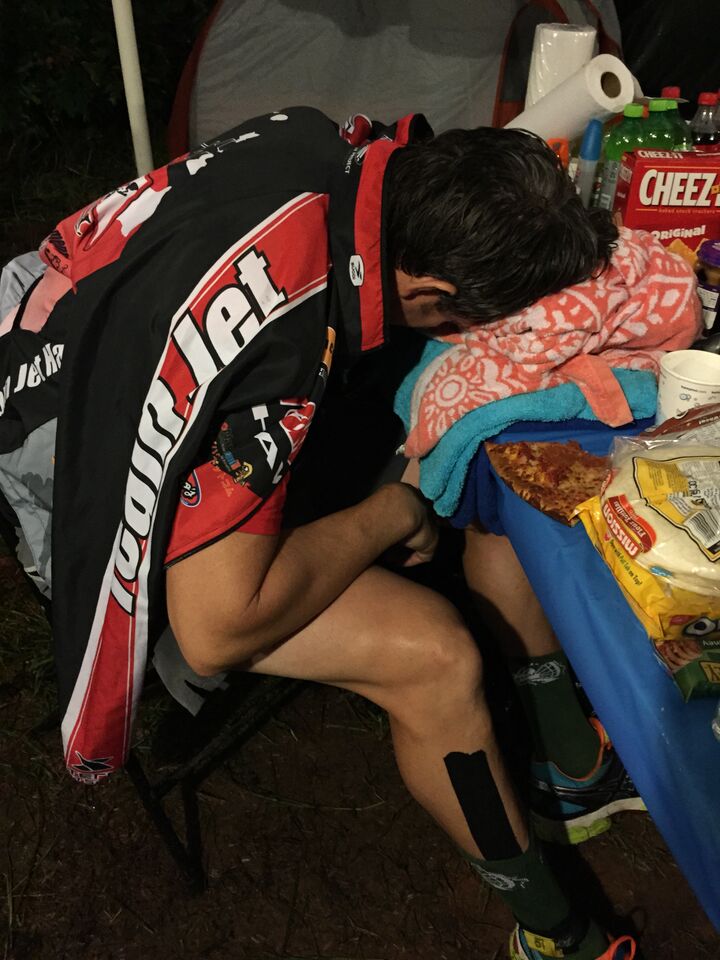
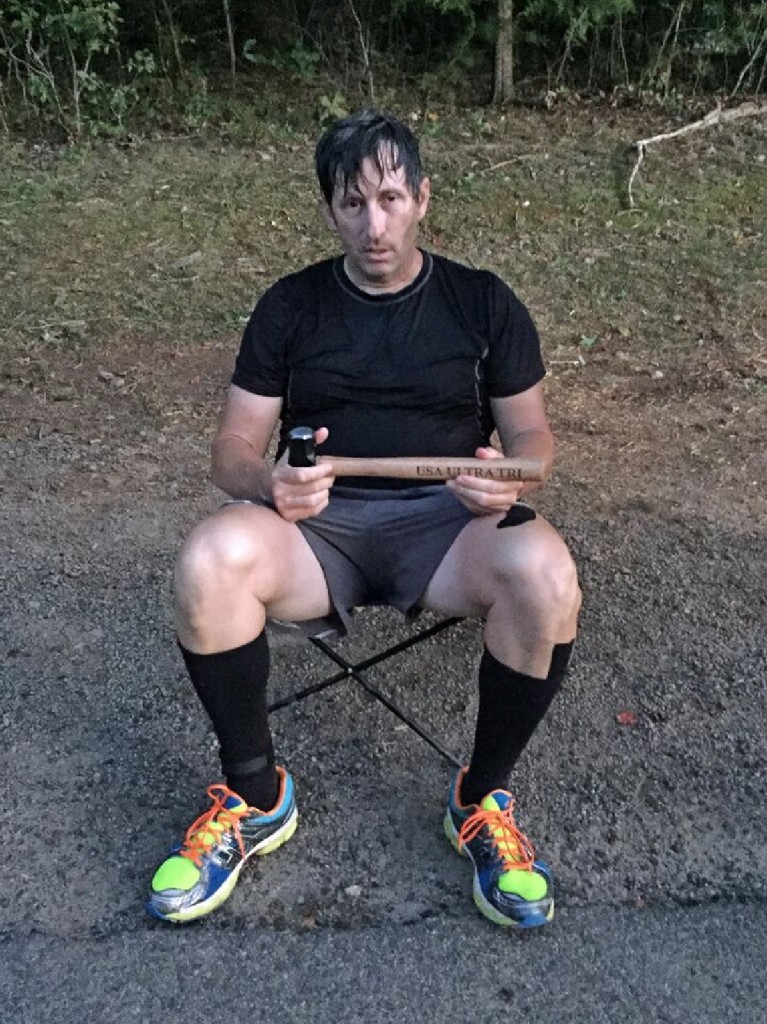
After he got done, the Ironox got to use a hammer to pound three times on the anvil that symbolizes the competition known as the Triple ANVIL. He then spent most of the rest of the evening eating and sleeping.

Once he returned to Texas, his recovery continued.

“Besides consuming tons of calories, I did cryo therapy, massage, and elevating the feet. Catching up on the sleep was the most difficult.”

“It didn’t dawn on me until two days later that I finished. You’re just trying to recover for two days and then it dawns on you that I just accomplished a goal through this fifty nine hours of exercise.”


Pruett’s doctors think he’s nuts.

“They don’t discourage it because they know you’re going to do it anyway,” Pruett said.

Some readers may agree with the physicians. So why does Pruett, who has completed multiple iron distance (2.4-mile swim, 112-mile bicycle ride and 26.2-mile run) triathlons and a double ANVIL, put his body through the rigors his sport demands? For William Pruett, it is, believe it or not, fun.

“The fun part is the journey, the training,” he said. “You have this set goal and it is a mark that is a little beyond your limitation. A goal within your limitation, what fun is that?"

Accomplishing the goal in an environment in which he competes against other contestants and a clock makes the goal even sexier for him.

“My motivation is that you have this certified course with chip timing and you’re monitored with swim, bike, and run. You’re testing yourself against a true measure. Instead of just going out on your own and saying I did this one day, you’re actually measured by these outside forces and referees. If you’re not under 60 hours, you’re not an official finisher. That’s the motivation.”

When Pruett isn’t training, racing, or working at Fort Worth Cycling & Fitness or helping manage a local medical practice, he trains other aspiring racers through his company, CorioVelo. He hopes his experiences completing a triple contribute to making him an elite coach.

“By experiencing this event as an athlete, now I can relate to other athletes when they do iron distance or ultra because I know the same exact feelings they’re going through,” he said.

To deal with the inevitable feelings of anguish, Pruett considers mental training vital.

“Once the mental goes, the physical goes. If you can keep on top of the mental, it helps your physical,” he explained. “For dealing with the pain, I had to do a lot of mental training. I read a lot of positive motivation books. Learning to control the mind in the downtime by changing your thought pattern. Instead of negative thoughts, changing thought patterns to positive thoughts during the event – reading, praying, just any mental activity.”

The physical part is more than swimming, riding, and running a lot, too.


“I trained for sleep deprivation by practicing ten to twelve-minute naps,” he said about one of the crucial aspects of surviving ultra distance races. “Research shows that anything over fifteen minutes, you start to get into REM (rapid eye movement sleep). You don’t want an athlete to get into REM during an event because it becomes harder to wake up.”

Pruett has coached a pair of double iron distance finishers, and numerous other committed amateur athletes. His customers tend to be folks a lot like him.


“Anybody can do triathlon,” he said. “You don’t have to be the skinny jackrabbit.”

If Pruett counts himself closer to the tortoise than the hare, his steady approach seems to be working. He’s already on track for another single iron distance race in November and might try the Quintuple ANVIL next year.

“If you never get out and test yourself, you never know your limit,” he said.

When it comes to testing limits, William Pruett is truly elite.


Disclosure : Pruett’s company, CorioVelo, paid me to produce a promotional video earlier this year. He also gave me a hat and a hoodie, both of which I have worn in public and thought they looked pretty stylin’.


Rush Olson has spent two decades directing creative efforts for sports teams and broadcasters. He currently creates ad campaigns and related creative projects for sports entities through his company, Rush Olson Creative & Sports.


RushOlson.com

Linkedin.com/company/rush-olson-creative-&-sports

Facebook.com/RushOlsonCreativeandSports
Tuesday, July 21, 2015

A Tour of Le Tour

This post originally appeared on the Blotch page at the Fort Worth Weekly. To read it on their site : http://www.fwweekly.com/2015/07/21/sports-a-tour-of-le-tour/.

Quick, how many bicycle races can you name?
My guess is that the average American could come up with somewhere between one and zero.
If you did name one, you may have spent a few mornings watching it unfold on NBC Sports over the past couple of weeks. And as you observed the only cycling you’ll watch this year, you may have wondered a little about what’s going on with those guys in the tight pants trying to win the Tour de France.
To enhance your viewing experience, I thought I’d consult a local with knowledge of the sport to come up with a few choice nuggets of information designed to help you understand what’s going on.  I trekked (by which I mean “drove”) out to Fort Worth Cycling and Fitness on Cherry Lane to talk to Josh Crain, who was fixing a bike when I got there, so I figured that meant he knew a good bit about such machines. The store has been there since 1988 (with heritage dating back to the days when former Fort Worth mayor Bob Bolen ran a bike shop) and I counted that as a good sign, too.
Bikes
We started with the bicycles. They aren’t the single-gear Huffy whose tires you’ve been meaning to air up for years.
“It’s a bike that’s designed to be ridden fast, ridden hard,” Crain explained. “You’re going to get a very aerodynamic frame, wheels, and handlebars, as well as any kind of advantage you can get.”
The competition bikes are incredibly light, with more gears (many with electronic shifting) than recreational models to offer bigger ratios for adjusting to incredibly steep climbs followed by long descents.
Tires
Keep an eye on where the rubber hits the road. Teams change tires depending on the conditions they’ll encounter.
“If you’re riding somewhere really fast, really dry, and smooth, you’re going to go with a tire that has as little rolling resistance as possible,” Crain explained. “That’s usually something really skinny, aired up very hard, so 120 to 150 pounds (per square inch) possibly.”
“There are some stages where they have to go through some cobblestones, where the harder tires are going to be rough and actually slicker and slower. So they go with as wide a tire as they can get, while still being fast, and run those at a lot lower pressure to make it more comfortable and also to be able to roll, or form, over the cobbles.
“When you get to the rain and snow, same way. You go with wider tires with a little bit lower pressure so you can get more contact (with the road).”
The wheels matter, too, and have a lot to do with the bike’s overall aerodynamics.
“On flatter stages, a lot of people are going to have deeper rims,” Crain said. “If it’s more mountain stages, you’re going to get shallower rims, because while the deeper rims are more aerodynamic, they are a little heavier. The shallower rims are a little bit lighter and when you’re trying to get up a mountain, you want as little weight as you’re allowed and you don’t really need as much of the aerodynamic advantage going uphill.”
Teams
You’ll notice groups of riders wearing the same jersey. This was not a situation where they showed up to the party and were horrified to discover someone else had found the same dress on sale at Kohl’s. While individuals win races, they do so as part of a team.
“Each member of a team has a specific job. Not everyone is out there to win,” Crain explained. “Usually they know coming into the race who they’re going to push as their top rider. Sometimes, if there are a lot of good guys, they’ll find out who does better in the first few days and then start to focus on keeping him at the front of the pack.
“A lot of the guys on the team, their job is to spend almost all day out in the wind.”
These “domestiques” block the wind, chase down rivals, slow down the peloton (the main group of riders) when their main man breaks away – basically do whatever it takes to keep the team’s anointed rider in the best position possible.
Attire
Speaking of jerseys, it’s France, so fashion matters. That includes shoes. As with much fancy footwear, the participants’ shoes aren’t designed with walking comfort in mind.
“All of these guys are clipped in. Their shoes are attached to their pedals,” Crain pointed out. “It’s not fun to walk around (in them).
You may notice different styles of headwear, as riders seek a balance between comfort and speed.
“You’ll see some of the guys who stay in a group and they don’t really get in the wind, usually the top riders who are protected. They’re going to use just the standard really ventilated helmets just to stay cool,” Crain said. “The guys who are going to be out in front are going to be wearing something that’s more aerodynamic, (with) not as many vents, although some new helmets have a vent now that actually opens and closes.
“On time trial stages (where riders don’t ride at the same time as their competitors), you’re going to see the very aerodynamic helmet with the point in the back,” he said. “Having the point makes it to where there is no gap between their heads and their backs. It’s completely streamlined.”
You’ll also notice some riders wearing shirts that don’t precisely match those of their teammates. These signify some accomplishment the rider has attained. Crain ran them down for us:
Yellow Jersey: “That’s the general classification, the overall winner. That’s the guy whose (cumulative) time each day is the lowest at the end of the race.”
Polka Dot Jersey: “That is a climber’s jersey and that’s done based on a points system (awarded for) the first guy to the top of each mountain. Some days there are several mountains that they have to climb, some days there aren’t any.”
Green Jersey: “The sprinter’s jersey. That’s done on a point system,” with checkpoints at midway sprint lines after stretches of flat ground, in time trials, and at the ends of stages.
White Jersey: “It’s done just the same as the yellow jersey, or the general classification, except it’s for young riders, so anybody under 26.”
Castles
I didn’t actually ask Josh Crain about castles, and they don’t have anything to do with who wins the race. I just think one of the awesome things about the tour broadcasts is the amazing flyovers of the French countryside, including its ancient fortresses. I therefore included a photo of Château de Vincennes so you know what a castle looks like and can knowledgeably exclaim “That, my friends, is a castle.”
Hopefully the above information will help you impress your friends who named fewer cycling races than you did. Perhaps you can show off your knowledge while watching the 2015 Tour’s final stages this week. And maybe you’ll get inspired to finally air up the tires on that old Huffy in the garage. Crain told me that they do everything from basic repairs on department store bikes to custom bike builds, which kind of eliminates your excuses. See you on the trails.

Rush Olson has spent two decades directing creative efforts for sports teams and broadcasters. He currently creates ad campaigns and related creative projects for sports entities through his company, Rush Olson Creative & Sports.

RushOlson.com
Linkedin.com/company/rush-olson-creative-&-sports
Facebook.com/RushOlsonCreativeandSports