Showing posts with label ESPN. Show all posts

Thursday, June 22, 2023

Tuesday: A Big Day in Women's Sports


Women’s sports had a lot going on Tuesday.


The activity on the playing surfaces was actually a bit limited. The WNBA played three games. FIBA held a couple of Eurobasket group stage contests. The WTA’s grass court season continued with early round matches. The National Women's Soccer League and Athletes Unlimited had offdays.

The action occurred in my inbox and LinkedIn feed.

Alyssa Meyers reported in Morning Brew's Marketing Brew Newsletter how Disney Advertising had announced a new initiative called Level Up. It invites advertisers to make a blanket buy across women’s sports content on ESPN platforms. Disney Advertising President Rita Ferro’s department is looking for a minimum spend of $5 million for an advertiser to participate (though they will offer some flexibility in the total dollars and allocations). In order for that size of expenditure guarantee to make sense for the client, it strikes me that they’ll need to see some value beyond just getting a bunch of 30-second spots in game telecasts. At least two additional components might need to be present.

One is that advertisers might want Level Up to act as a “Women’s Sports Upfront,” in which brands commit a certain amount of dollars all at once because they can get favorable rates and placements. One thing I heard a lot about at SXSW this year was how companies wanting to support women’s sports through their ad buys need more inventory with which to do so. When you’re chasing limited inventory, locking in sufficient quantities of it at decent rates makes sense.

The second has to do with one of the reasons one would support women’s sports specifically in the first place: because you want the audience to perceive you as SUPPORTING WOMEN’S SPORTS. A brand that participates in this program wants more than just the same quantity of eyeballs they can get with a content-agnostic media buy. Fans who care deeply about women’s sports tend to spend to support the brands who seem to share that affinity. Some of that will be apparent by virtue of seeing one’s advertising running in, say, a live game broadcast. But a brand may also seek to capture earned media value from their commitment. Participation in custom content and events were also named as options for Level Up participants. Those assets could be useful beyond just their audience traffic if they help with a brand’s positioning.

I read another article on Tuesday, too. This one, from SportsPro Media’s Josh Sim, contained some stats about the United Kingdom gathered by their Women's Sport Trust, although I’d like to think they potentially reflect preferences in other countries, too. They found that 62% of women’s sports fans consume their sports content live. But they also found that “58 per cent of committed women’s sports fans want more non-live women’s sport content available” and “47 per cent find it difficult to find non-live women’s sports content.”

In the U.S., ESPN’s networks, through their various documentaries, pre- and postgame shows, and robust websites have probably done their part to reduce the number of women’s sports fans who find it difficult to find the non-live content they want. But will they need even more? In some ways, the success of Level Up will depend on having sufficient inventory, both live and otherwise, to fulfill promises to the buyers who join in.

Natasha Howard blocks a shot

I attended one of the above-mentioned WNBA games Tuesday evening. The Dallas Wings defeated the Atlanta Dream and the home crowd enjoyed it. I’m sure those who watched the TV broadcast on the local regional sports network, Bally Sports Southwest, did as well.

I joined my friend and collaborator Nancy Lieberman at the game. In addition to doing a lot of work with her eponymous charity, I’m also working on a documentary about the Hall of Famer’s life and career. We’ll eventually place it with an ESPN or their competition. We’re positioning it to maximize multi-platform inventory across her rich story. Custom content, events, earned media, and more will be in play in the creative process right from the get-go. Another article that came out Tuesday, this one written by Fuse CEO Louise Johnson for the Sports Business Journal's website, suggested “it’s time for women’s sport to stand on its own and benefit from bespoke activations tailored specifically for women’s sports fans -- creatives take note.”

Some of us are taking note, and, therefore, today’s developments encouraged us. Somebody’s going to need more inventory.


Rush Olson has spent two-plus decades directing creative efforts for sports teams, broadcasters, and related entities. He currently conceives and executes content projects through his companies, Rush Olson Creative & SportsFourNine Productions and Mint Farm Films. Through MFF, he’s at work on biographical documentaries about Nancy Lieberman, Sidney Moncrief, Pudge Rodríguez, Ed Belfour, and Bob Lilly as well as a show about the The College Gridiron Showcase.

Subscribe to @MintFarmFilms on YouTube to see excerpts from upcoming documentaries.

Thursday, January 4, 2018

Why the Bowl System Has Staying Power

This post originally appeared in the Blotch section of the Fort Worth Weekly's website. To consume it there : https://www.fwweekly.com/2018/01/03/sports-rush-college-bowl-system-is-for-geniuses/

The system that produced the Belk Bowl, the TaxSlayer Bowl, and the Cheribundi Tart Cherry Boca Raton Bowl is genius. It always has been.

College football’s postseason system dates to roughly 1902, when Michigan crushed Stanford in the first “Tournament East–West football game” in Pasadena, California (it was yet not known as the “Rose Bowl Game presented by Northwestern Mutual”). It grew from that single contest to a collection more than forty games that annually add hundreds of millions of dollars to the coffers of participating schools.

Short-term revenue isn’t what makes this system brilliant, though. Where it has truly proven itself is in the long term. The sport has gone from being four years away from Theodore Roosevelt supposedly considering banning it to arguably the most popular sport in the country (duly noting the power of the NFL). It attracts tens of thousands of people into stadia every week during the fall and reliably delivers TV ratings when few properties do anymore.
Here’s how I think the bowl system helped make college football successful: However many bowl games are staged, that many teams end their season with a postseason win. No playoff or tournament system can provide that veneer of a successful season.
Only one team wins the NCAA Basketball Tournament. A few schools get to say they’re “Final Four” or “Elite Eight” teams, but not 40-plus squads like in football. Even the ones who lose got a trip somewhere and still get to call themselves “bowl teams.” Players are happy, and so are fans and staff.
The more people who can end a season happy, the more it builds long-term success. Season tickets get renewed and the programs’ brands get a boost. Because the bar is relatively low (win 6 games, basically), even non-traditional programs can get lucky every few years and provide the alums some sustainably good memories (example: “Remember that year we made it to the R+L Carriers New Orleans Bowl? Me neither – must have been really fun!”).

I’ve always thought European professional leagues had some advantages on their U.S. counterparts in this area. If you’re an English soccer team, for instance, your team can leave you feeling good at the end of the season in several ways:
  • Win the league regular season
  • Win the Champions League
  • Win the Europa League
  • Win the FA Cup
  • Win the League Cup
  • Qualify for next season’s Champions League or Europe League
  • Win promotion from a lower league to a higher league
Because they stage knockout tournaments concurrent with their own regular seasons, it creates more chances for success for more clubs. Those teams enjoy some remarkably resilient supporter loyalty – loyalty that reminds me, frankly, of that of college football fans. Only one team gets to be happy if the mentality is “Super Bowl or Bust.”

Multiple competitions don’t work with the sport of American football because of its physical nature. But bowl games? They work and have for decades. Two things could threaten this success.
The College Football Playoff: For the moment, this has been a huge financial positive for the college football landscape. Short-term, everybody, including smaller schools, gets more TV money. The concern comes if, in the long term, the focus shifts so much to this group of four big schools that it results in less overall enthusiasm for the sport at its lower levels. That affects the audience for the entire slate of bowl games, including . . .

Television: A major part of the reason so many bowl games exist is that ESPN can operate them and use them as programming for its networks. Will they retain their value as the TV marketplace grows more fragmented? There’s a chance they will, because live sports seems to have some immunity to the viewership declines of other forms of programming, but trying to predict the future in this industry is at best a daunting challenge. ESPN has been rapidly redefining its business model, so you can be sure they’ll evaluate bowl games, too.

Whenever the powers that be do chart the future of postseason college football, one would think they’d do well to clue in to everything the likes of the IBM OS/2 Fiesta Bowl, uDrove Humanitarian Bowl, and Bacardi Bowl have done for them.

Rush Olson has spent more than two decades directing creative efforts for sports teams and broadcasters. He currently creates ad campaigns, television programs, and related creative projects for sports entities through Rush Olson Creative & Sports, Mint Farm Films, and FourNine Productions.

RushOlson.com
Linkedin.com/company/rush-olson-creative-&-sports
Facebook.com/RushOlsonCreativeandSports

Saturday, December 16, 2017

Watching Sports Has Never Been Simpler

This post originally appeared in the Blotch section of the Fort Worth Weekly's website. To consume it there : https://www.fwweekly.com/2017/12/14/sports-rush-a-simpler-time-for-sports/

So, how do you watch sports? This used to be a simple question, right? You either went to the game or you turned on the television (after checking the newspaper or the TV Guide to see if one of a handful of  television stations had scheduled it).

Has the sports viewing landscape has grown more complicated in the last 30-40 years? Instead of a few broadcast stations, you now have a multiplicity of outlets, and, consequently, a lot more games. And no longer do you just adjust the rabbit ears on the household’s only TV. You have a wide choice of devices on which to consume broadcasts.
You’ve still got the legacy broadcast networks, and they do still show some sports. They each own cable channels dedicated solely to sporting content, like ESPN and the Fox regional sports networks (RSNs). They’ve got joint ventures with other entities, like the SEC Network, the Longhorn Network, and the Big Ten Network. Other companies compete with them, too, as the likes of beIN Sports, the Tennis Channel, and AT&T-owned RSNs try to carve out market share.

And telecasts don’t actually require a television channel. The likes of Amazon, Facebook, YouTube, MLB Advanced Media, and others allow one to stream video feeds of athletic contests. The networks themselves, in fact, operate “over-the-top” services to enable streaming of events whose rights they control, like FOX Sports GO or WatchESPN.
So do all these choices make it more complicated to watch sports? I don’t think so, especially when you consider the entire process of game-watching.

If you just want to watch sport the way the casual fan did in the 1970s, you still can. Check the TV listings in the newspaper sports section that morning, watch a game or two on network affiliates on Saturdays and Sundays, and occasionally go to one of your local team’s matches.
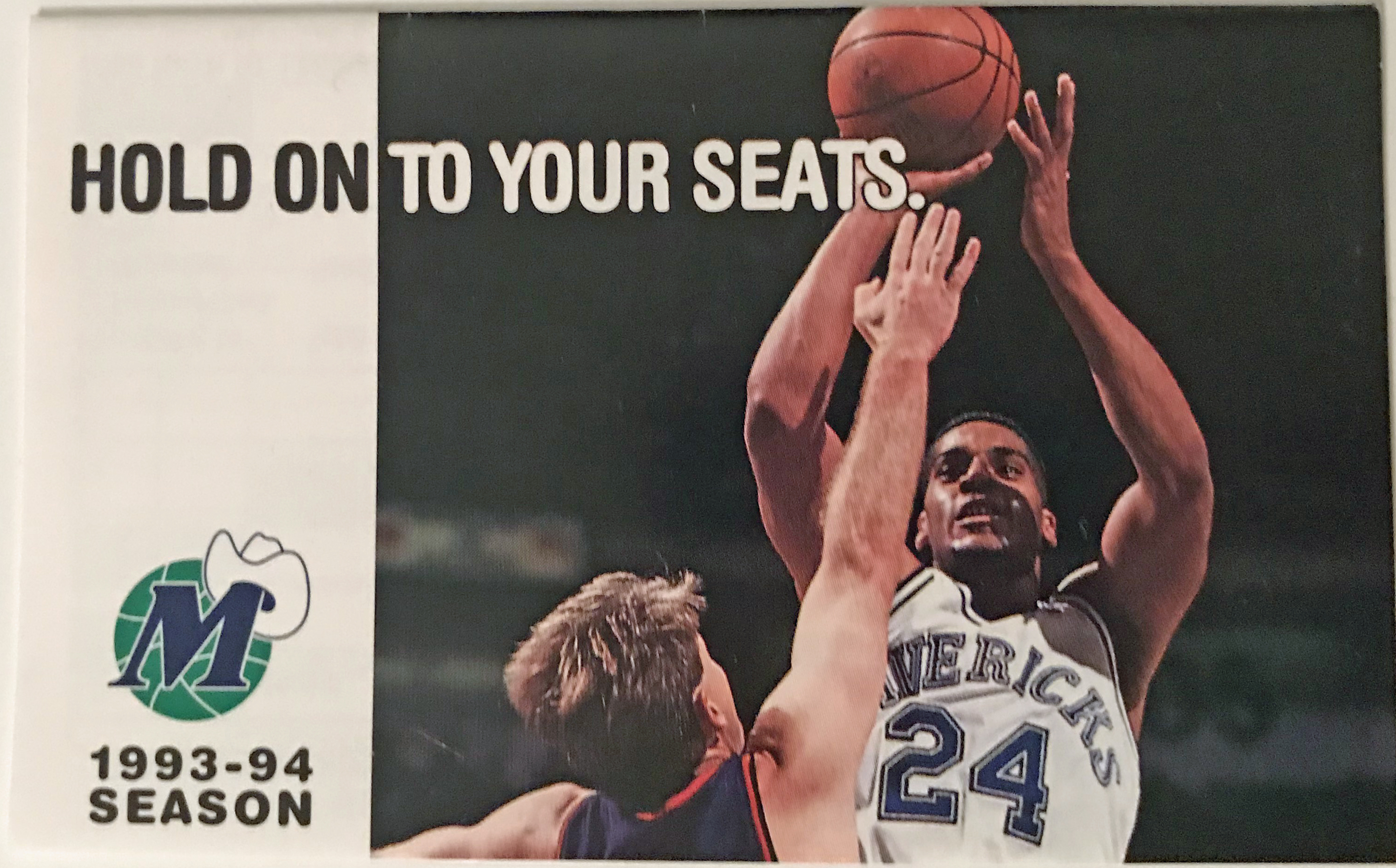
What if you wanted to plan ahead a bit, though? Even just knowing when your team played required effort. You either had to have clipped the schedule out of the newspaper when it came out at the beginning of the season or you had to acquire a physical copy, often in the form of a pocket schedule. You would have acquired one of those by traveling to a local merchant, assuming you had been able to find out which ones sponsored the team, or the team offices. And you had to hope it hadn’t changed since the printing date. Game times, broadcast carrier changes, and rainouts could all invalidate a given date on an analog schedule.

Today, you simply pick up your phone on a whim and use a search engine (or a league or team app) to find the latest schedule in a minute.

And say you wanted to watch a game played in another city that didn’t involve your local team? If it didn’t happen to be the game of the week on TV, what would you do? How would you even know the game was being played? If you had purchased a season preview magazine at the beginning of the season and prevented your spouse from throwing it away, it might have schedules for all the teams. You could write a physical letter to the out-of-town team and include a self-addressed stamped envelope, or call the team long distance after first dialing directory assistance for the number. The newspaper might list games a day or two out. Once you decided you wanted to see the game, you had to drive or fly there, and you’d have had a lot fewer flight options before deregulation.

Isn’t it much simpler to just watch it via an ESPN network or one of those NHL Center Ice or NFL Sunday Ticket packages that permit you to access out-of-market contests (and you get a whole season for a less than most plane trips)?

And what about the ancillary parts of watching a game? If a player intrigued you and you wanted to find out more about him, you might have had access to some limited information in a game program. If you wanted to see the rest of his career statistics, you might have needed to buy packs of bubblegum cards until you can across his entry, or travel to the library or bookstore and hope they had the latest edition of the Baseball Encyclopedia or the like. And in terms of asking your buddy what he thought about the game? Well, you could go to a payphone at halftime and hope he was home, though if the game wasn’t on TV he wouldn’t know what you were talking about until he read the story in the paper the next morning or saw 20 seconds of highlights on the evening news. Now you ping him on an easy-to-use social media or messaging app.

For most women’s sports, and any minor league sports, you would have had to go to even greater lengths to find out the information you wanted or see a game played. Almost no television coverage existed, and all the rigmarole noted above for getting to games was extra challenging for non-mainstream sports.

Today, sources like StubHub let you attend even the sold-out games without the complications of resorting to black-market ticket scalpers, and the electronic means listed above let you find a way to watch them with minimal effort.

We often refer to the past as a simpler era. Maybe that’s true in some respects, but not the sports viewing world. It’s never been easier to watch what you want.


Rush Olson has spent two decades directing creative efforts for sports teams and broadcasters. He currently creates ad campaigns, television programs, and related creative projects for sports entities through Rush Olson Creative & Sports, Mint Farm Films, and FourNine Productions.

RushOlson.com
Linkedin.com/company/rush-olson-creative-&-sports
Facebook.com/RushOlsonCreativeandSports

Friday, March 31, 2017

The Worldwide Leader Comes To North Texas

This post originally appeared at the Fort Worth Weekly's website. To view it there : https://www.fwweekly.com/2017/03/31/the-worldwide-leader-comes-to-north-texas/

ESPN has long billed itself as the “worldwide leader” in the sports world, and this weekend they are covering one of the biggest events in women’s sports. The NCAA is holding the Women’s Final Four in Dallas this year, and the network will carry complete coverage. Friday’s semis will run on ESPN2 and Sunday evening’s championship game airs on ESPN.


I talked to a couple of women who perform vital functions in the coverage effort. Holly Rowe roams the sidelines, conducting in-game interviews and ferreting out developing storylines. Pat Lowry does her work behind the cameras as a coordinating producer. Check out these video interviews to find out about which storylines they see as compelling and how they go about performing their duties. Topics like comfortable shoes and pet care also managed to work themselves into the mix.


Rush Olson has spent two decades directing creative efforts for sports teams and broadcasters. He currently creates ad campaigns, television programs, and related creative projects for sports entities through Rush Olson Creative & Sports and FourNine Productions.


RushOlson.com
Linkedin.com/company/rush-olson-creative-&-sports
Facebook.com/RushOlsonCreativeandSports