This post originally appeared in the Blotch section of the Fort Worth Weekly's website. To consume it there : https://www.fwweekly.com/2017/06/21/where-the-west-never-ends/
Two Fort Worth neighbors have their roots in the same place: The Old West.
I’m
talking about the Amon Carter Museum and the rodeo that resides across
the street from it. The museum began with its namesake’s collection of
works depicting the American frontier by Frederic Remington and Charles
M. Russell. These artists attempted to show the robust lifestyle of
those who made their homes in that legendary expanse.
Though the
Carter has expanded its collection of American art well beyond the
cowboy genre, western heritage still forms an important part of its
identity. The facility dedicates an entire section to the works of
Remington and Russell.
As I wrote
in the Stuff section of the Weekly this week, the museum also owns a
number of works with a sports theme. One intriguing example comes via a
letter Russell wrote to a man he calls “Friend Guy.” The artist would
often illustrate his correspondence and visitors can view several of the
originals preserved in drawers. On January 28, 1916, he wrote to Guy
Weadick about “bronk riders” and “bull dogers (aka steer wrestlers)” He
notes that Weadick’s audience members “have all seen wild west shows but
yours is no show it’s a contest where horses and riders are strangers.”
The event Weadick founded would eventually become one of the world’s
premier rodeos: The Calgary Stampede. Russell had knowledge of its first
incarnations in Calgary and Winnipeg.
The
following year, Fort Worth would make one of its major contributions to
the sport by staging the first indoor rodeo. The Fort Worth Stock Show
Rodeo pioneered other innovations as well, including side-release
bucking chutes, and lays claim to having hosted the first modern bull
riding event in 1920.
Competitions in which cowboys tested their
riding and roping skills had sprung up in the latter part of the 19th
century, around the time when Russell and Remington were creating the
images of the West for which they became known. Some of the creations
portrayed cowboys working at the tasks that eventually would be
incorporated into the sport of rodeo.
The most prominent such work is a sculpture by Remington called The Broncho Buster.
The Carter owns three versions of it, with the largest placed
prominently in a first-floor gallery. It shows a cowboy in the act of
conditioning a recalcitrant mount to accept the idea of having a rider
on its back.
That endeavor translates pretty straightforwardly
into the bronc riding competitions one might see in the Will Rogers
Memorial Center arena. Other events, like bull riding, were created
especially for the rodeo arena. Each year, the Stock Show supplements
its regular PRCA shows with a Best of the West Ranch Rodeo featuring
events designed to reflect the daily duties of a working ranchhand. The
Stock Show, and indeed Cowtown in general, is never shy about
celebrating western heritage.
When we visit the rodeo or the art
museum, we do so in part to observe and enjoy talent – the artist’s
beautiful brushstrokes or the surpassing athletic abilities of human and
animal competitors. We also expand our knowledge of the culture that
permeates each. In Fort Worth, we are fortunate to have more than one
way to appreciate, and learn about, the vigor, toughness, and character
of those who call themselves cowboys and cowgirls. And the two venues
are right across the street from each other.
Rush Olson has spent two decades directing creative efforts for
sports teams and broadcasters. He currently creates ad campaigns,
television programs, and related creative projects for sports entities
through Rush Olson Creative & Sports and FourNine Productions.
RushOlson.com
Linkedin.com/company/rush-olson-creative-&-sports
Facebook.com/RushOlsonCreativeandSports
Showing posts with label Amon Carter Museum. Show all posts
Saturday, June 24, 2017
Wednesday, June 21, 2017
Art and Sports at the Amon Carter Museum
This post originally appeared in the Stuff section of the Fort Worth Weekly's website. To consume it there : https://www.fwweekly.com/2017/06/21/the-art-%e2%80%a8of-sport/
For a world-class art institution, the Amon Carter Museum of American Art sure has a sporting side. A surprising number of works depict subjects sprinting, punching, exercising, competing, and otherwise engaging in sporting pursuits. What many regard as the institution’s best known work revolves around an aquatic sport. In Thomas Eakins’ “Swimming,” a half-dozen unclad males gather at a country lake. The painting created controversy for the artist while he was serving as a professor at the Pennsylvania Academy of the Fine Arts.
“You can see [Eakins] with his dog and clearly identify that these are his students,” explained Amon Carter associate curator Maggie Adler. “That was a huge no-no.”
Eakins, she continued, “believed that you should teach art to people using live nude models. That was not allowed if you had men and women in the classroom.”
Eakins would later resign his post after his removal of a loincloth from a classroom model generated more Victorian-era handwringing.
Adler possesses unique qualifications when it comes to examining the representation of sport in art. In addition to her masters in art history from Williams College and experience at multiple museums, the Scarsdale, NY, native excelled as a competitive archer. She shot well enough to try out for the 1996 U.S. Olympic team. She finds a certain similarity between the two pursuits. “I feel the same way entering a competition as I do before I go to give a lecture or talk,” she said, “because you get yourself psyched up. It takes a certain amount of adrenaline.”
Most of the Carter’s sports-related objects tend more toward Adler’s style of sport than stick-and-ball games. Archery figures prominently in a painting that recalls the museum’s own heritage as an institution focused on the American West.
Around 1855, George Catlin painted a
crowd of Apaches watching fellow tribesmen riding fast-moving horses
while attempting to shoot arrows at targets on the ground, a piece
entitled “Archery of the Apaches.” “That would be really complicated to do,” the expert archer said.
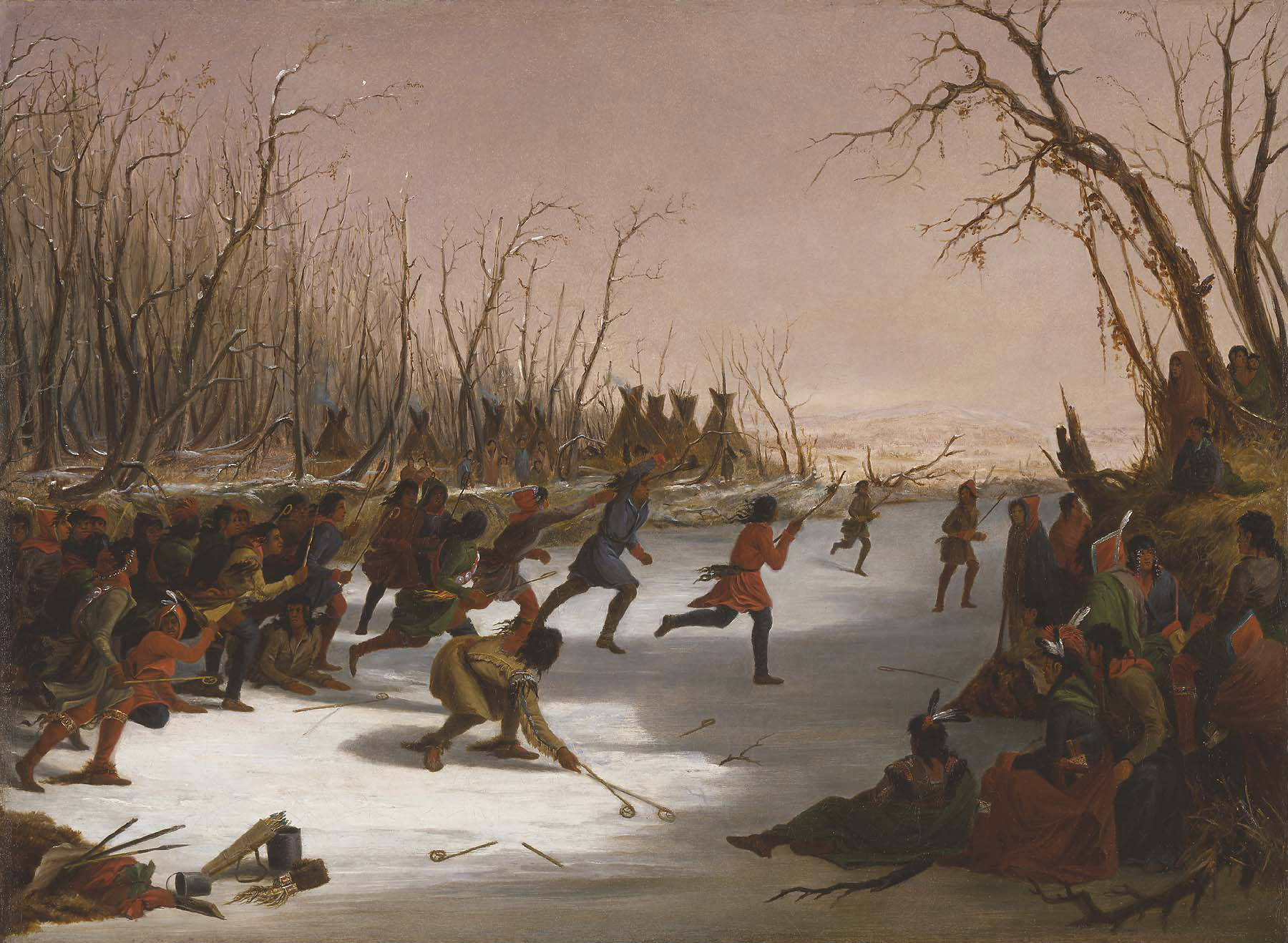
Near the Catlin painting on the museum’s second floor, there’s another example of Native Americans engaged in sport. In Seth Eastman’s 1848 work “Ballplay of the Dakota on the St. Peter’s River in Winter,” Sioux athletes play a version of lacrosse. The contest occurs on a frozen river, and the stakes are high. “We think there was gambling involved, so this is maybe why this buffalo hide and arrows … are in the front,” Adler said. “That’s the wager.”
Adler said Eastman’s wife also
recorded that this full-contact version of lacrosse often resulted in
broken limbs and even deaths.
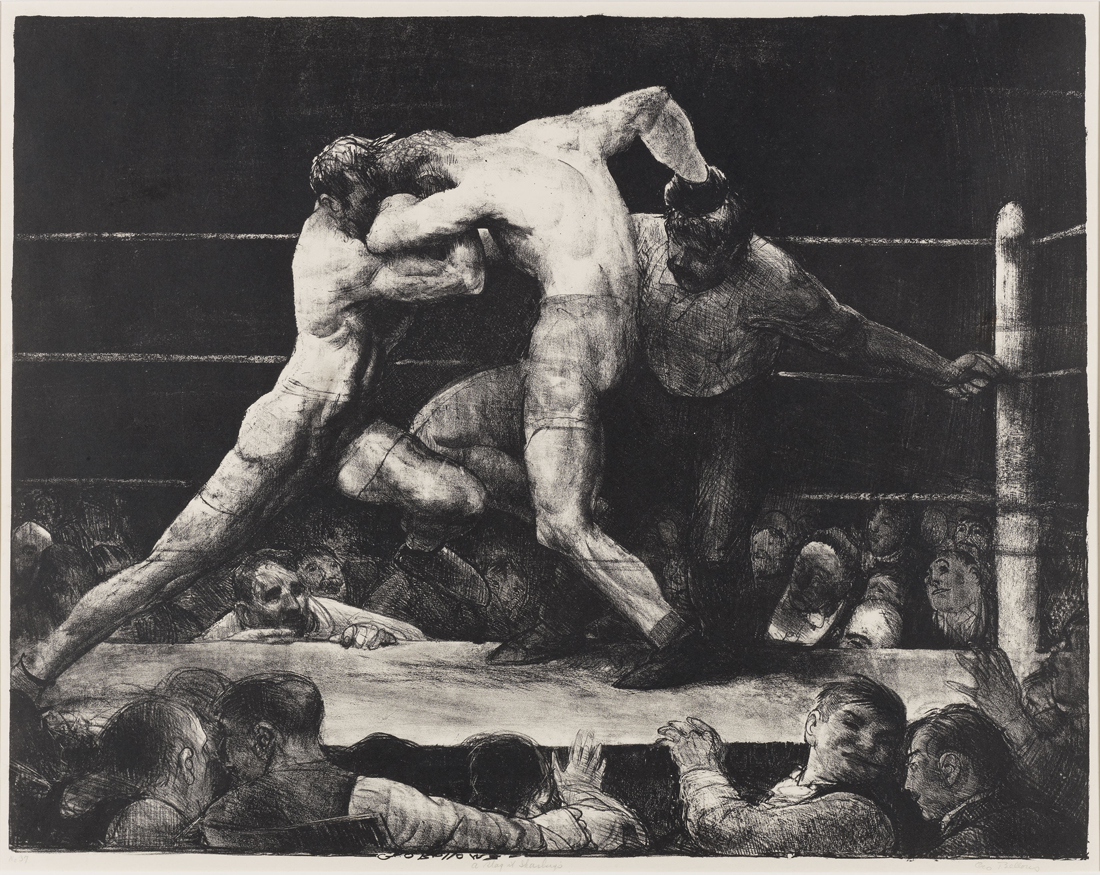
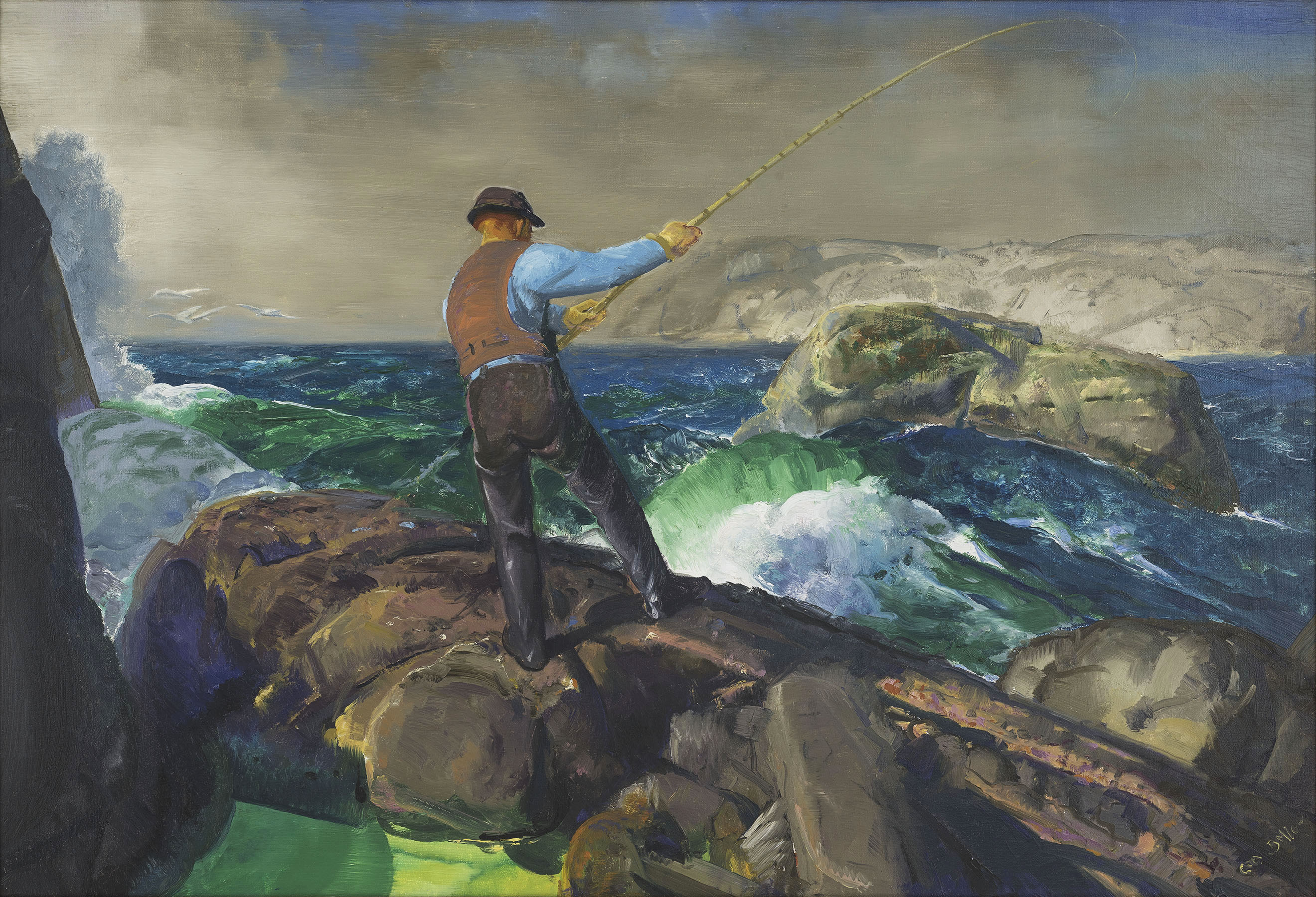
Another athletic pursuit known for its physicality represents perhaps the museum’s most complete archive of any single sport: prints by George Bellows. The museum owns 230 of the former semipro baseball player’s lithographs, including many gritty boxing scenes. A seminal work from 1917, “A Stag at Sharkey’s,” shows two fighters locked in desperate struggle. The museum has the combat scene displayed next to another of Bellows’ creations, the newly acquired 1917 oil painting “The Fisherman.”
Outdoor
sports like fishing and hunting represent much of the museum’s sporting
archive, though several of the works have gone on a road trip. Adler
and collaborators from other museums incorporated a number of the works
into a traveling exhibition. Wild Spaces, Open Seasons: Hunting and Fishing in American Art is on view currently at the Shelburne Museum in Vermont and will be in Fort Worth in October.
Each Bellows boxing lithograph can remain on display only for a few months at a time to avoid light-inflicted damage. Like most museums, the Amon Carter owns more pieces than it can display at any one time, so more of its sporting art may make its way into the walls in the future.
For more on the Amon Carter and the roots of the sport of rodeo, check out this week’s Sports Rush post in the Blotch section at fwweekly.com.
Rush Olson has spent two decades directing creative efforts for sports teams and broadcasters. He currently creates ad campaigns, television programs, and related creative projects for sports entities through Rush Olson Creative & Sports and FourNine Productions.
RushOlson.com
Linkedin.com/company/rush-olson-creative-&-sports
Facebook.com/RushOlsonCreativeandSports
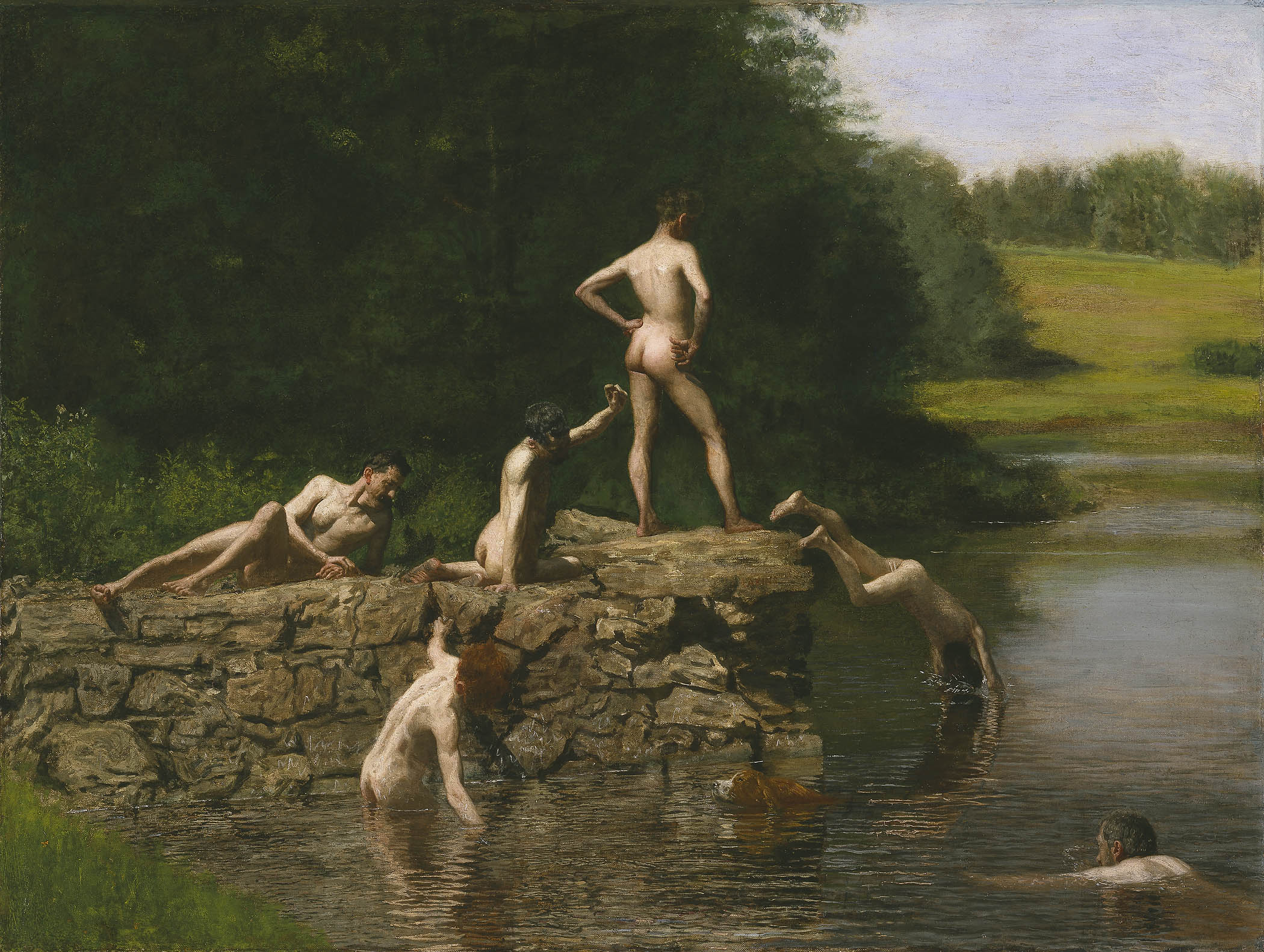
For a world-class art institution, the Amon Carter Museum of American Art sure has a sporting side. A surprising number of works depict subjects sprinting, punching, exercising, competing, and otherwise engaging in sporting pursuits. What many regard as the institution’s best known work revolves around an aquatic sport. In Thomas Eakins’ “Swimming,” a half-dozen unclad males gather at a country lake. The painting created controversy for the artist while he was serving as a professor at the Pennsylvania Academy of the Fine Arts.
“You can see [Eakins] with his dog and clearly identify that these are his students,” explained Amon Carter associate curator Maggie Adler. “That was a huge no-no.”
Eakins, she continued, “believed that you should teach art to people using live nude models. That was not allowed if you had men and women in the classroom.”
Eakins would later resign his post after his removal of a loincloth from a classroom model generated more Victorian-era handwringing.
Adler possesses unique qualifications when it comes to examining the representation of sport in art. In addition to her masters in art history from Williams College and experience at multiple museums, the Scarsdale, NY, native excelled as a competitive archer. She shot well enough to try out for the 1996 U.S. Olympic team. She finds a certain similarity between the two pursuits. “I feel the same way entering a competition as I do before I go to give a lecture or talk,” she said, “because you get yourself psyched up. It takes a certain amount of adrenaline.”
Most of the Carter’s sports-related objects tend more toward Adler’s style of sport than stick-and-ball games. Archery figures prominently in a painting that recalls the museum’s own heritage as an institution focused on the American West.
Near the Catlin painting on the museum’s second floor, there’s another example of Native Americans engaged in sport. In Seth Eastman’s 1848 work “Ballplay of the Dakota on the St. Peter’s River in Winter,” Sioux athletes play a version of lacrosse. The contest occurs on a frozen river, and the stakes are high. “We think there was gambling involved, so this is maybe why this buffalo hide and arrows … are in the front,” Adler said. “That’s the wager.”
Another athletic pursuit known for its physicality represents perhaps the museum’s most complete archive of any single sport: prints by George Bellows. The museum owns 230 of the former semipro baseball player’s lithographs, including many gritty boxing scenes. A seminal work from 1917, “A Stag at Sharkey’s,” shows two fighters locked in desperate struggle. The museum has the combat scene displayed next to another of Bellows’ creations, the newly acquired 1917 oil painting “The Fisherman.”
Each Bellows boxing lithograph can remain on display only for a few months at a time to avoid light-inflicted damage. Like most museums, the Amon Carter owns more pieces than it can display at any one time, so more of its sporting art may make its way into the walls in the future.
For more on the Amon Carter and the roots of the sport of rodeo, check out this week’s Sports Rush post in the Blotch section at fwweekly.com.
Rush Olson has spent two decades directing creative efforts for sports teams and broadcasters. He currently creates ad campaigns, television programs, and related creative projects for sports entities through Rush Olson Creative & Sports and FourNine Productions.
RushOlson.com
Linkedin.com/company/rush-olson-creative-&-sports
Facebook.com/RushOlsonCreativeandSports
Subscribe to:
Posts (Atom)
![Charles M. Russell (1864-1926); Friend Guy [Guy Weadick], January 28, 1916; 1916; Ink, watercolor, and graphite on paper; Amon Carter Museum, Fort Worth, Texas; 1961.308.1](https://www.fwweekly.com/wp-content/uploads/2017/06/RussellLetter-1961-308-1_pr-191x300.jpg)


![George Catlin; "Archery of the Apachees [sic]"; ca. 1855; Oil on paper mounted on paperboard; Amon Carter Museum, Fort Worth, Texas, Gift of Paul Mellon; 1986.40](https://www.fwweekly.com/wp-content/uploads/2017/06/Apache-1986-40_pr-300x229.jpg)