Before the night began, media members did interviews. The program
officially started with the national anthem, as many sporting events do.
The lights illuminated a pair of basketball goals, and Hall of Famers
paraded past them as the crowd applauded.
photo by Thomas Garza
Those
assembled had not come to see a game, however. Monday night’s happening
was a charity gala. Six years ago, a steakhouse could accommodate it.
These days, they hold it at a concert venue and it is attended by nearly
800 well-coifed people. The attendees included, by my count, nine
members of various Halls of Fame (assuming you include Pudge Rodriguez,
who was elected to Cooperstown this year and will be formally inducted
this summer – any Rangers fan would concede that). One of those Hall of
Famers directs her name, effort, passion, connections, and just about
everything else you could think of toward making the affair a success. I
was fortunate enough to try to help her make her Nancy Lieberman
Charities Dream Ball a memorable one. This article offers a few
highlights that you as a fan of sports or philanthropy or Deion Sanders
in a jaunty hat may enjoy.
The Red Carpet
photo by Thomas Garza
Pretty
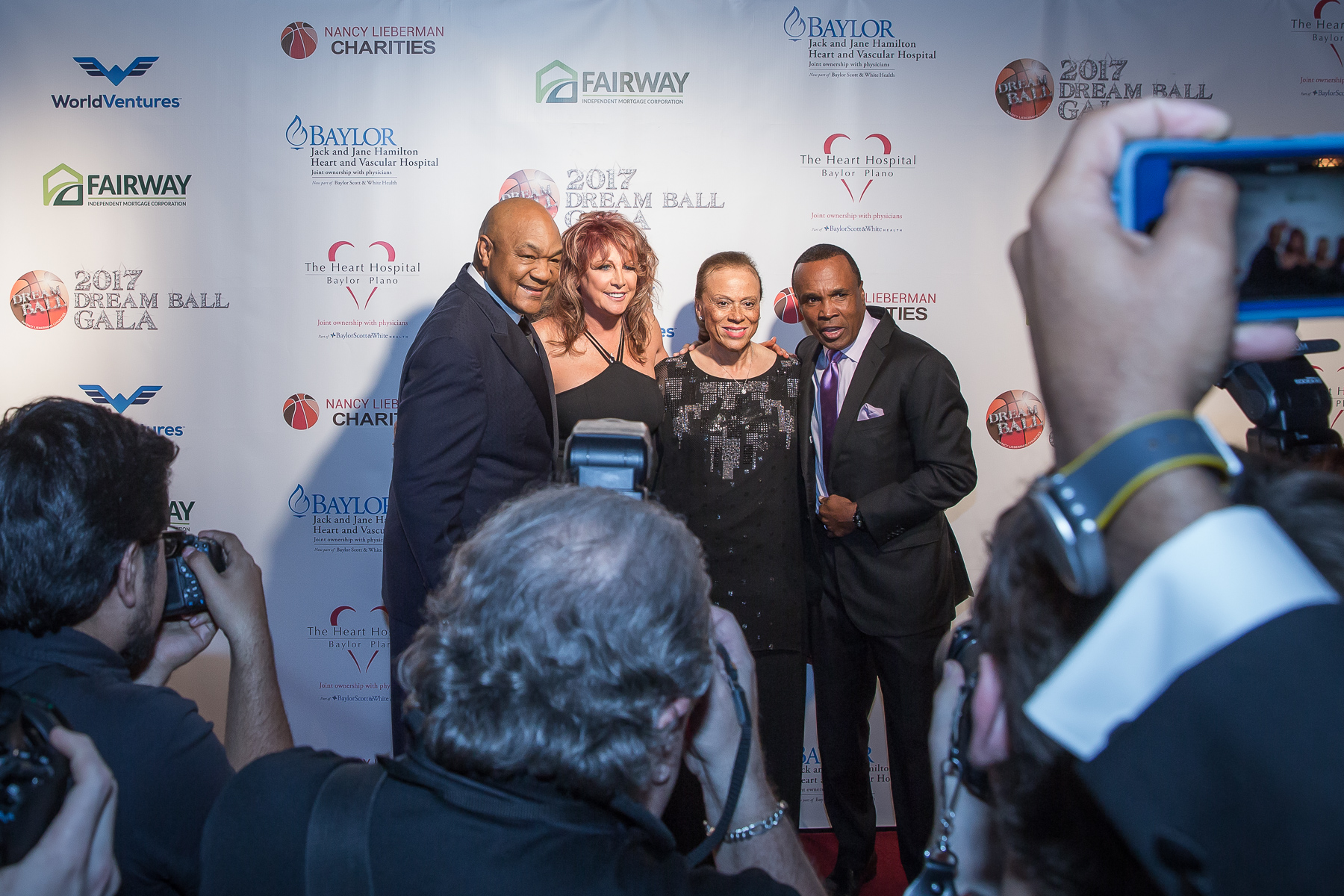
much everybody who comes in gets to greet Ms. Lieberman. Ben and Skin
broadcast their radio show live and local TV stations cover it as well.
Some inside scoop – we let a number of student photographers infiltrate
the working press to make it feel even more big-time for the regular
guests.
The Emcee
photo by Thomas Garza
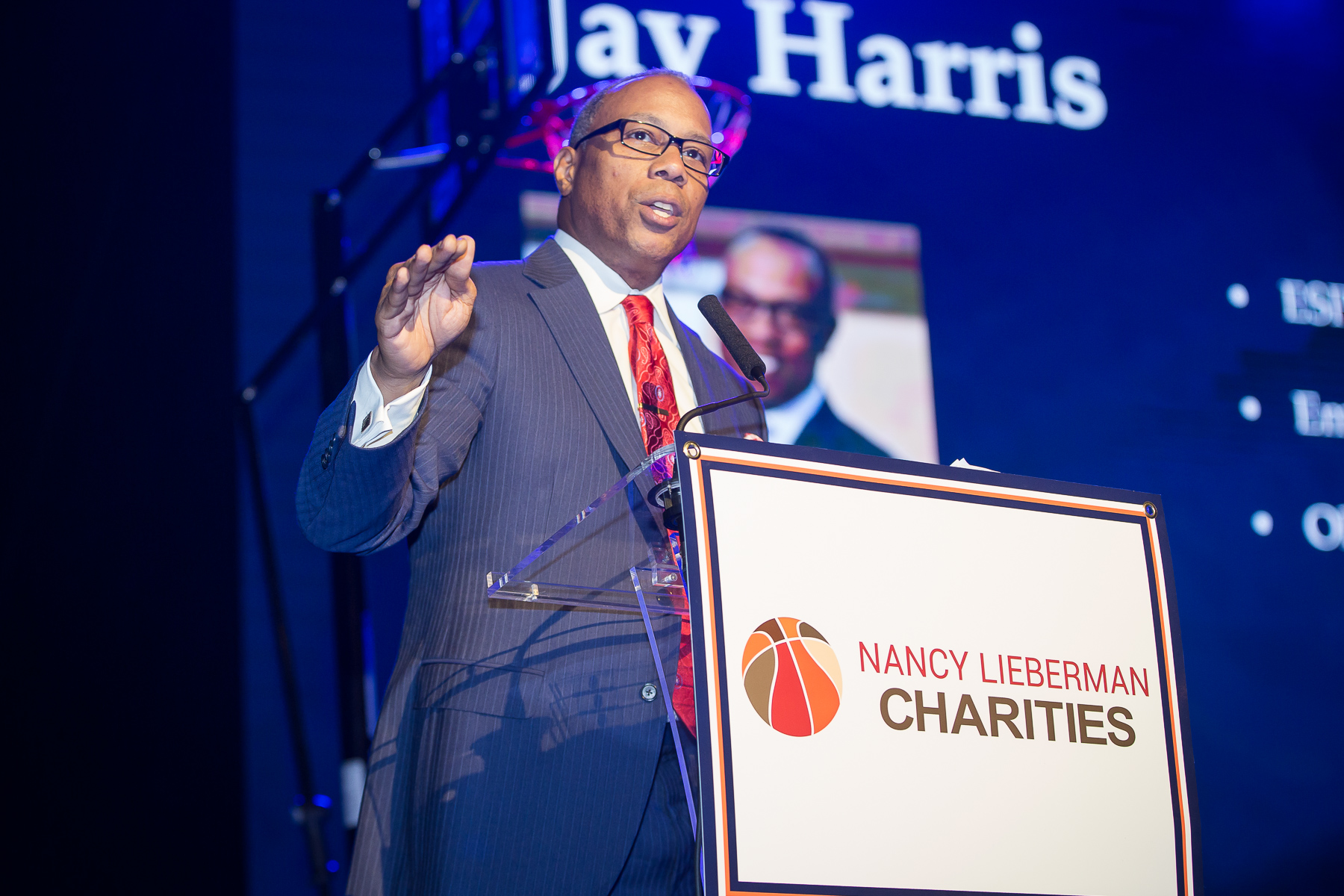
Jay
Harris from ESPN used to work with Nancy at the network. He has
attended a number of these events, but had never drawn emcee duties
before. He was fantastic to work with behind the scenes and just as good
on stage. He improvised with aplomb whether things went right or wrong
and when he read the script, he made it his own. His most impressive
performance might have come during the live auction. Harris interacted
with auctioneer Tim Willett as if they had hosted SportCenter together
for years. The banter back and forth was flawless, and hopefully helped
make the charity a few more dollars.
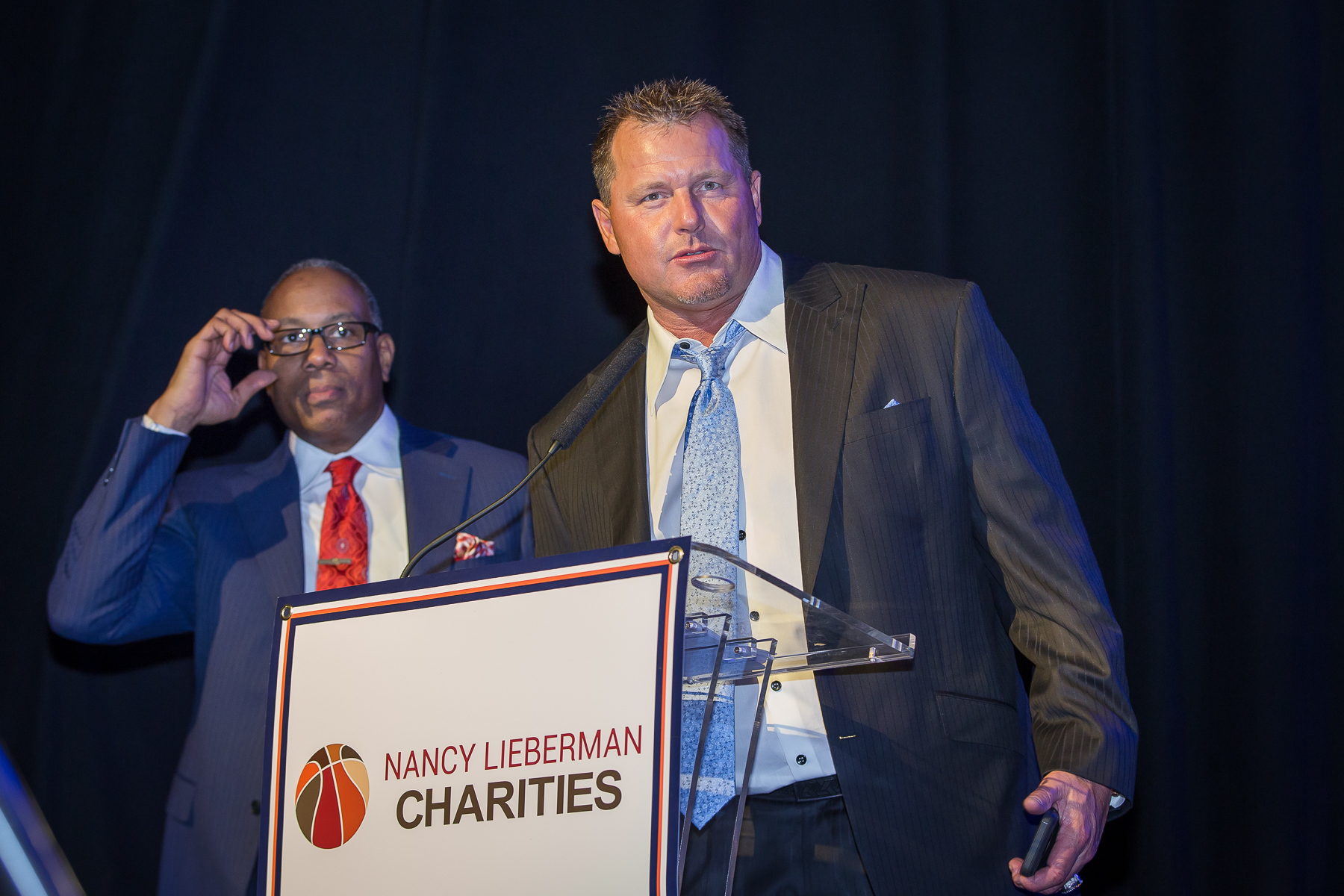
Michael Irvin and Roger Clemens
photo by Thomas Garza
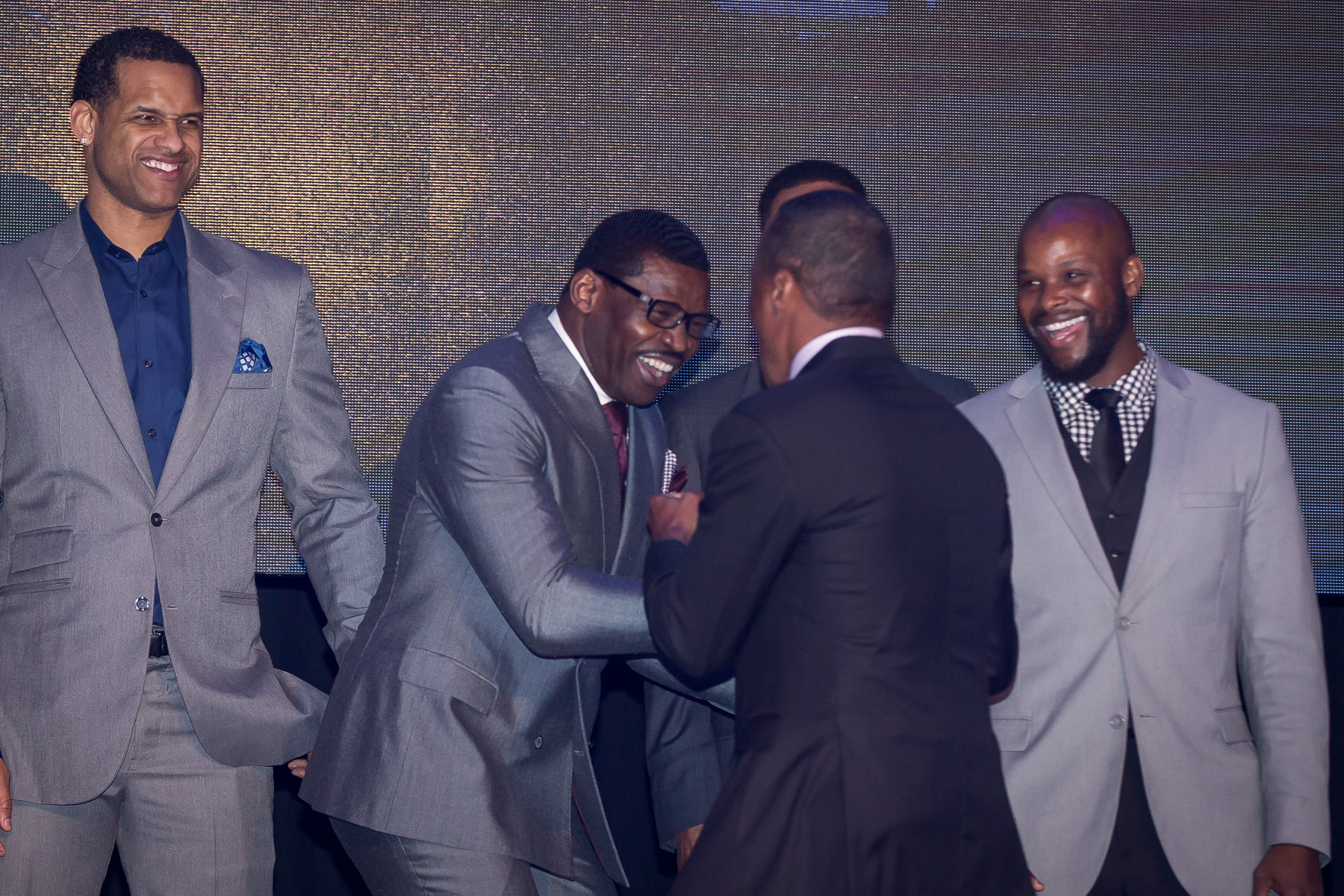
Neither
the Hall of Famer nor the seven-time Cy Young winner were scheduled to
speak at the event. Both did to spur the crowd to contribute funds to
the cause. Irvin took over the podium during the Heads and Tails game
(where people buy a chance to win airline tickets) to announce he was
buying some chances and to encourage others to do the same and also have
a good time while doing it.
photo by Thomas Garza
Clemens
had already contributed a day of batting practice at his house to the
silent auction. He addressed the crowd to announce he would also add a
suite at an Astros game and a jersey autographed by a favorite Rangers
or Astros player.
Stomp Wars Nancy
Lieberman Charities partnered with Rock-T from the Rickey Smiley morning
show to create a mentoring program, and Rock-T also was able to bring
some adept step dancers to the program. Their performance was tight, but
they had already impressed me before the show even started. As I went
over the show with our DJ Poizon Ivy (who also does the Mavericks and
Wings and is a tremendous collaborator and spinner of tunes), two boys
who would be performing came up to us unchaperoned. They went over cues
and music like they were industry veterans. There is hope for the youth.
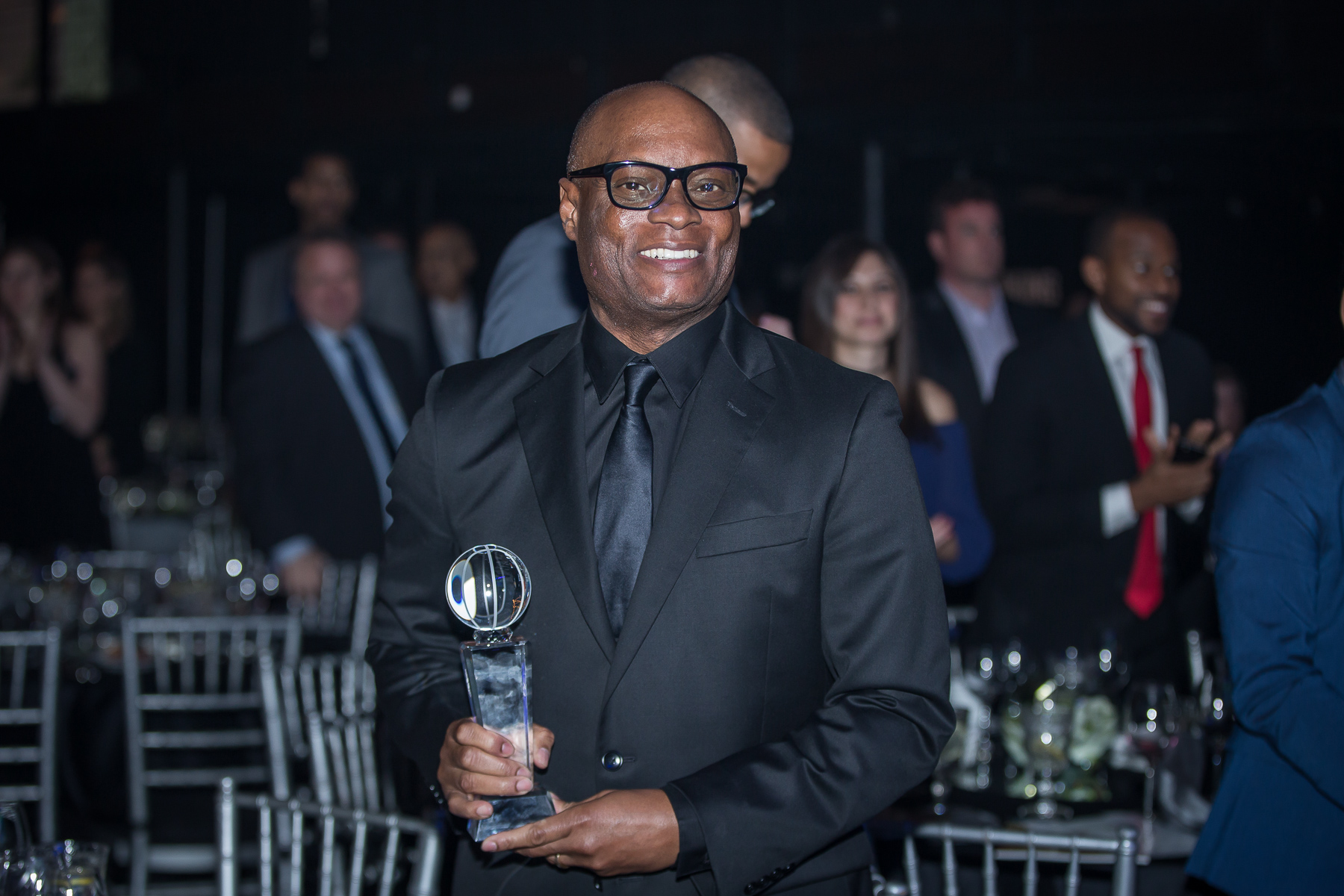
David O. Brown
photo by Thomas Garza
The night’s first award went to the former Dallas police chief. We had pre-produced a video
in which his colleagues praised him for his emphasis on enabling
officers to engage with the community (and one of those initiatives
involved building basketball courts with Nancy Lieberman Charities).
Dallas Mayor Mike Rawlings introduced him and quickly quieted the room
when he soberly reminded everyone of the tragic events of last summer
and how Brown had handled them. When Chief Brown took the podium, he
delivered powerful messages about coming together. Keep an eye on that
guy.
Muhammad Ali The late champion’s
presence permeated the night. Nancy Lieberman considers him one of her
greatest influences and friends, and the gala’s second award went to his
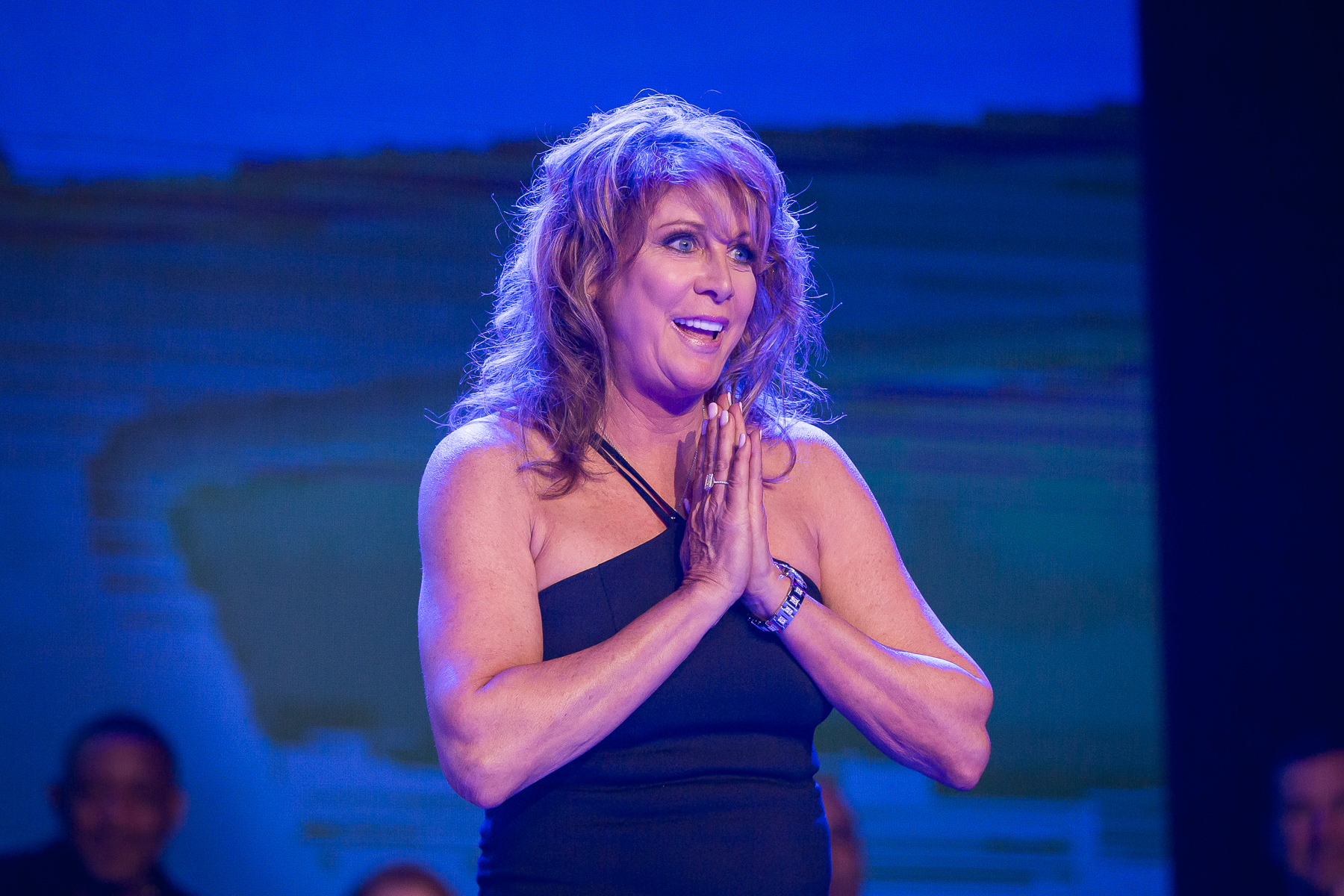
wife Lonnie. One of the evening’s most poignant moments came when the
evening’s namesake stepped forward to put a hand on Lonnie’s shoulder
and weep with her as they shared the emotion of remembering a friend and
husband.
photo by Thomas Garza
The
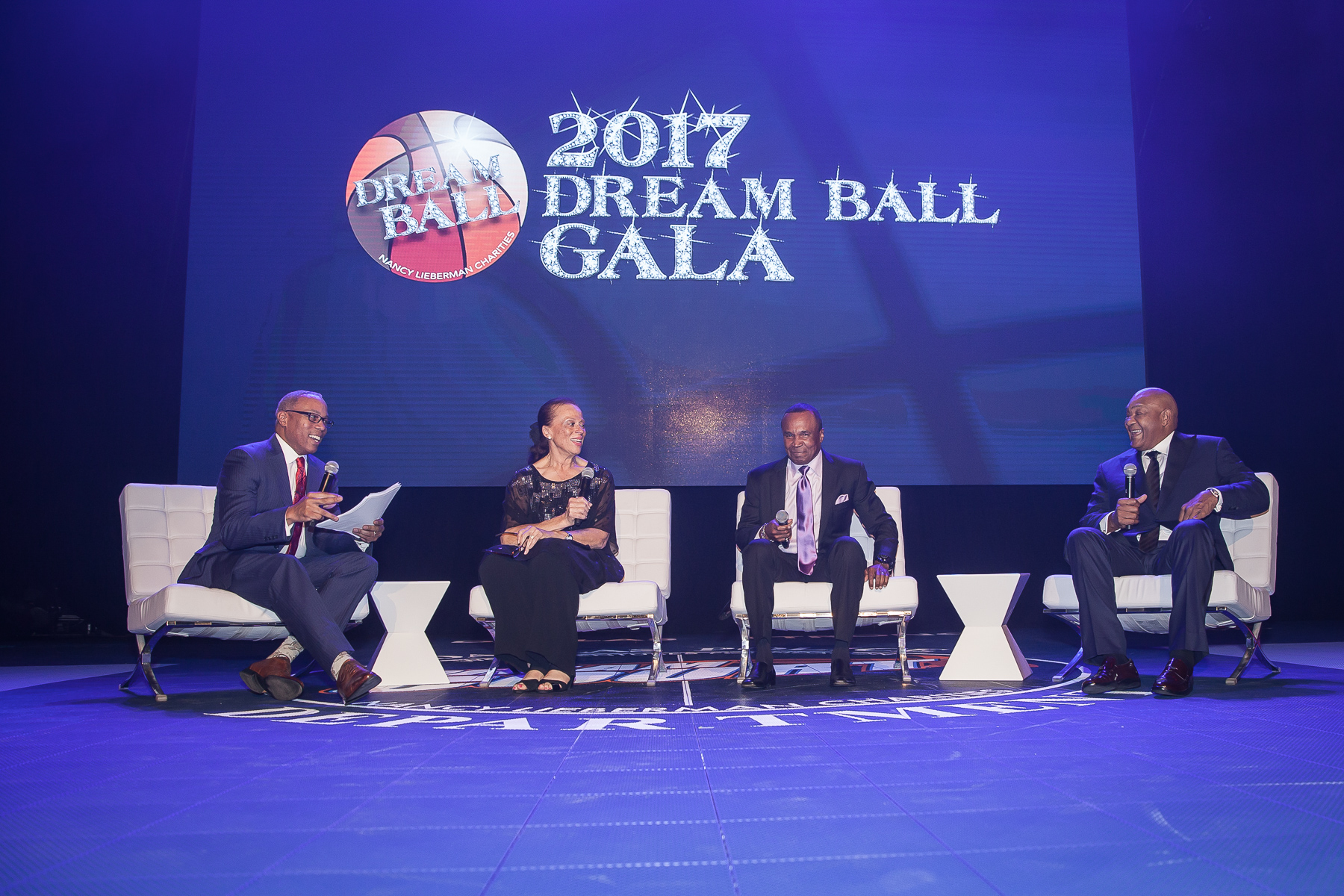
night culminated with a roundtable discussion featuring SportsCenter
anchor Harris moderating Lonnie Ali, Sugar Ray Leonard, and George
Foreman in a discussion of the G.O.A.T.’s legacy. Harris navigated it
smoothly, with favorite moments coming via amusing stories from the two
former boxers that led Lonnie Ali to smile at the memory of the man she
loved. We streamed this portion of the program live and it has been archived
at Nancy Lieberman Charities’ Facebook page. The former Cassius Clay
meant a lot to each panelist in his or her own way, and the idea that we
would be able to get them all together at one time to discuss his
impact seemed incredibly compelling. It may never happen again.
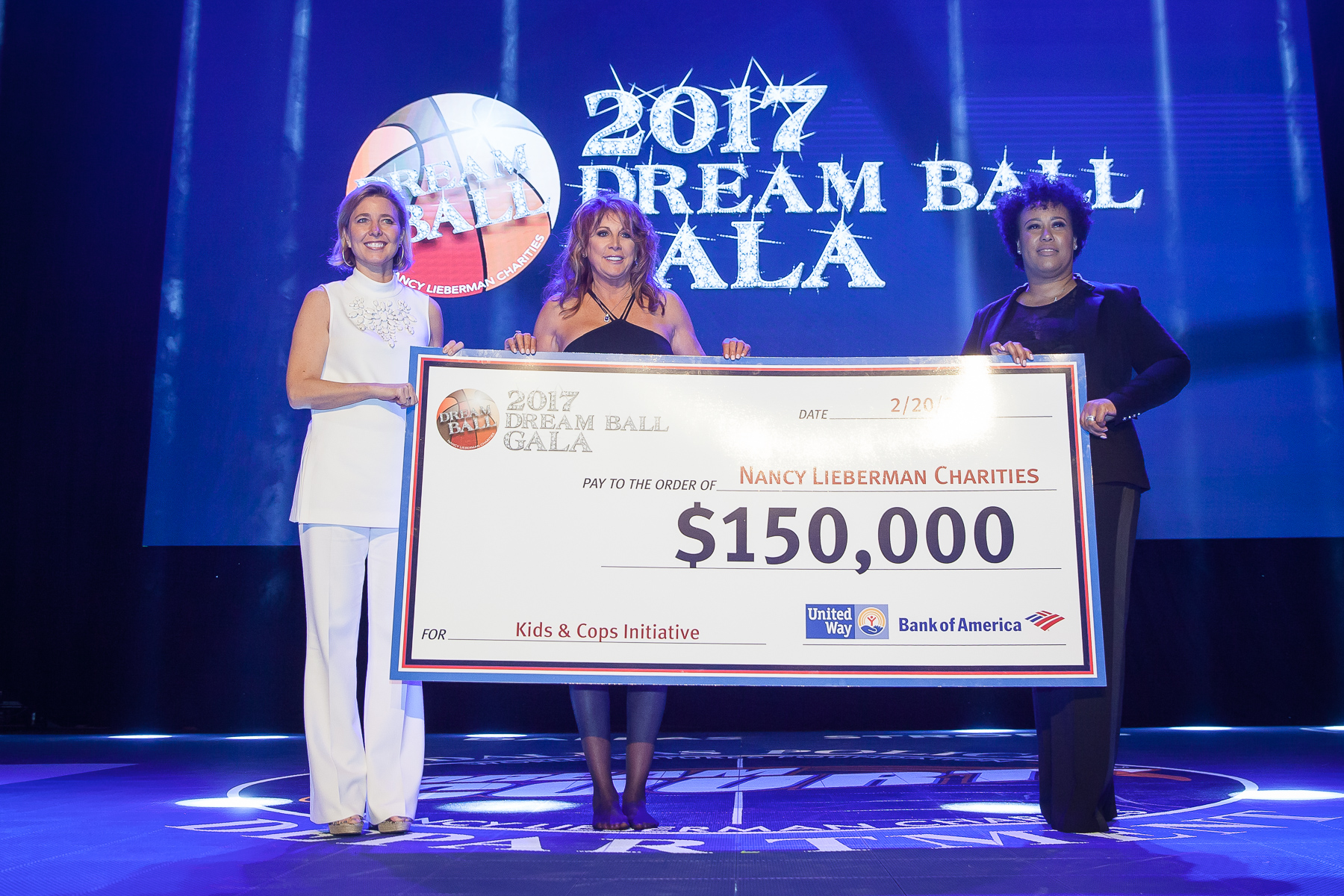
The Bottom Line Between
table sales, donations, auction items, sponsors, and other revenue
streams, the event grossed a million dollars, the vast majority of which
will fund programs designed to improve kids’ lives.
photo by Thomas Garza
Disclosure : Nancy Lieberman Charities has sometimes paid me to produce elements of their events
Fort Worth teems with good people. I was born and raised in Cowtown and can’t imagine a more warm-hearted bunch of folks.
Persons of quality character – like the ones in Funkytown –
can often resist the temptation to compromise their morals for the sake
of worldly gain. It’s best if they don’t have to, though. A little over
20 years ago, circumstances kept a group of locals from having to make
some choices that certain neighbors of ours haven’t handled well.
You’ve perhaps followedrecent
developments in Baylor football. Over the last year, an apparent
pattern of widespread misconduct in the supervision of the football
program has led to personnel changes and lawsuits. The most recent
allegations, if true, illuminate a culture in which conscience seemed to
have had no place in the discussion. They also indicate that such attitudes
were held by top school administrators, coaches, boosters, and even
local law enforcement personnel. The ethically indifferent approach
seems to have facilitated sexual assaults and other offensive crimes.
Make
no mistake, we’re talking about serious charges. This is not buying a
bus ticket for a player to go see his family for the holidays. This
isn’t even letting him drive a free Lexus. This is actual criminal
activity.
Some people’s jobs depended on football success. The
boosters may have done it for the chance to feel reflected glory from a
school they used to attend. They all allegedly decided those rewards
outweighed any potential long-term repercussions or personal sense of
shame.
The Waco university has experienced scandal before. In 2003,
a former Baylor basketball player killed a teammate. A corrupt coach
tried to use the murder to help him cover up NCAA violations. In 2012, both the men’s and women’s basketball programs received sanctions from the governing body.
The Baylor Bears compete in the Big 12 conference, one of
the country’s top five Division 1 athletic conferences. Since its
formation, the league’s schools have won national titles in 17 different
sports (including two by Baylor in women’s hoops). Competing for such
stakes intensifies the pressure to win. It also boosts the potential
reward for boosters’ egos and staffers’ career paths.
So how does all of this concern TCU and nice Fort Worth people? Well, Baylor got into
the Big 12 in large part because TCU did not. That happened back in
1996 and at the time caused a great deal of local upset. TCU trudged off
to the Western Athletic Conference, then Conference USA and the
Mountain West before recently winding up in the conference that had shut
them out before.
Over those years, TCU kept a lower profile than its
neighbor 90 minutes to the south. That had to be frustrating for Frog
fans, but not competing against the UTs, A&Ms, and Techs in
high-stakes matchups also kept it out of emotionally-charged rivalries
with those huge taxpayer-financed institutions. Horned Frogs didn’t have
to hear from Longhorns or Aggies about getting trounced year after year
in the marquee sports like Bears supporters did.
I think that was a good thing for TCU. If they had been
the lone private school to get into the Big 12, they would have had to
endure the heightened expectations of trying to compete as the smallest
member of the conference against subsidized rivals – as Baylor did. Less
pressure means less incentive to find a way to work around the rules,
be they ones of athletic associations or common decency. The Frogs have
gradually built up some remarkable football achievements in the
Franchione/Patterson era with a sparse record of disciplinaryhiccups.
As noted earlier, Fort Worth is full of good people. The
Horned Frogs might well have avoided a moral crisis no matter what
conference they occupied the last 20-odd years. We do, however, have to
keep in mind what happened to bring about the demise of the league they
had joined in 1923.
The Southwest Conference collapsed in part because of the prestige its members lost due to widespread NCAA violations.
TCU had its own 1980s transgressions, thanks to boosters paying
student-athletes behind coach Jim Wacker’s back. But it’s another
Christian school that might provide the best cautionary note. Southern
Methodist’s delinquent culture didn’t result in criminal charges, but
they did implicate the governor of Texas (Bill Clements) and the
sanctions they received forced the cancellation of two full football
seasons – the death penalty.Incidentally,
the Mustangs’ men’s basketball coach for much of that era was found to
have committed multiple violations at the school in his sport in the
1980s. Dave Bliss repeated that modus operandi when he coached Baylor in
the early 2000s, culminating with his appalling approach to a homicide.
TCU doesn’t have to repeat past errors, whether their own
or someone else’s. Hopefully for the Frogs, those years away from
competing with their bigger in-state rivals have helped the university
establish a healthy atmosphere for its athletic programs. Now that they
are once again facing top-level foes in the Big 12, they will need it.
Super Bowl LI will be played as close to Fort Worth as any for the
foreseeable future (sites have been scheduled through 2021). Houston
hosts the 51st championship game on Feb. 5, 5:30PM CST, and while Fort
Worth has never hosted the game, the city has made an impact on it.
On the field, players from Cowtown high schools and TCU
have contributed. Outside the lines, Fort Worthians have performed
anthems, acted in commercials, and helped get the big game on TV.
Here are 51 Fort Worth ties to the Super Bowl
I. TCU-ex Larry Brown earned the Super Bowl XXX Most
Valuable Player honors for his cornerback play in the Cowboys' win over
the Steelers. II. Former Fort Worth resident Jessica Simpson sang at halftime of Super Bowl XXXVIII. III. Byron Chamberlain of Eastern Hills High School caught three passes as the Denver Broncos won Super Bowl XXXIII. IV. Former TCU star Kenneth Davis was on four Buffalo Bills Super Bowl teams. V. Fort Worth-born author Dan Jenkins wrote the
novel "Semi-Tough" about a fictitious Super Bowl matchup between the
Giants and Jets. VI. Polytechnic's Greg Hawthorne earned a ring with
the Pittsburgh Steelers for Super Bowl XIV and also had a rushing
attempt with the New England Patriots in SBXX. In 2015, he returned to visit his alma mater as part of the NFL’s Super Bowl High School Honor Roll program. VII. Every year, the Davey O'Brien Foundation awards
the Davey O'Brien Award to the player they judge to be nation’s best
college quarterback. They hold the ceremony at the Fort Worth Club.
Four players who won the award named after the former TCU star have
also won Super Bowls: Troy Aikman, Peyton Manning, Jim McMahon and Steve
Young. VIII. Former TCU safety Colin Jones played for the Carolina Panthers in Super Bowl L (50). IX. Jeris White was born in Fort Worth when his
father was stationed here. He played the final game of his NFL career
for the Washington Redkins in Super Bowl XVIII. X. Fort Worth attorney Judy Mallett, Miss Texas 1973
and a graduate of both TCU and Texas Wesleyan Law School, played fiddle
in the halftime show of Super Bowl VIII. XI. Fort Worth Country Day alum Alan Cross appeared in a 2006 Super Bowl spot
for Sprint (debuting a new feature for downloading songs to a phone -
how cool is that?). Cross remembers asking the producers if he could
keep his wardrobe, which is not uncommon, but they refused - apparently
they had sprayed all the clothing with fire retardant because the cast
had to run around a burning couch in the spot. XII. Speaking of CDS graduates, Patrick Jeffers won Super Bowl XXXII as a member of the Denver Broncos.
XIII. Marshall Newhouse was the only ex-Horned Frog
on either team's roster as he won a ring with Green Bay in Super Bowl
XLV, the first played in Tarrant County. Newhouse was on injured reserve
and didn't actually get to play in the game, but his cousin, Robert
Newhouse, played in three Super Bowls for the Cowboys. XIV. Trimble Tech's Henry Ford played defensive tackle for the Tennessee Titans in Super Bowl XXXIV. XV. Fort Worth native Kirk Franklin co-hosted the NFL-sanctioned Super Bowl Gospel Celebration in New Orleans in 2013. XVI. Former TCU Athletic Director Danny Morrison
served as president of the Carolina Panthers during their Super Bowl
appearance last year. XVII. Fort Worth lawyer Bryan Wilson, aka The Texas Law Hawk, parlayed his internet video success into an appearance in a Super Bowl commercial for Taco Bell. XVIII. Tommy Joe Crutcher played at TCU and at linebacker for the Green Bay Packers in the first two Super Bowls. XIX. Crutcher was joined
on those first two Packers Super Bowl teams by DB Doug Hart. Hart was
born in Handley, which was later annexed by Fort Worth, and attended
Handley High School. XX.United Community Centers of Ft. Worth participated in the Verizon Community Mondays promotion leading up to Super Bowl XLV in Arlington. XXI. Eastern Hills grad Uwe von Schamann kicked two
extra points and a 20-yard field goal in a losing effort for the Miami
Dolphins in Super Bowl XVII. He added three more field goals and a PAT
as Miami lost SBXIX to the 49ers. XXII. TCU offensive lineman Norm Evans became an original Miami Dolphin in 1966 and played in three Super Bowls with the team in the 1970s. XXIII. Pat Summerall announced 16 Super Bowls. He also once hosted the show “Sports Stars of Tomorrow,” produced by GameDay Productions, a production company based in Fort Worth. XXIV. Ex-TCU defensive back Lyle Blackwood played in
two '80s Super Bowls as part of the Miami Dolphins' noted "Killer B's"
defense (so named because they had several players whose last names
began with the letter "B"). XXV. Charley Pride recorded his live album “In
Person” in Fort Worth’s iconic Panther Hall in 1968. Pride sang the
national anthem at Super Bowl VIII in Houston. XXVI. Fort Worth native Suzanne Mitchell had to
leave her job as Tex Schramm's assistant to direct the Dallas Cowboys
Cheerleaders full-time after a Gwenda Swearingen wink to the camera during Super Bowl X helped turn the squad into an international spectacle.
XXVII. Former TCU player Greg Townsend, a four-time All-Pro, won a Super Bowl ring with the Los Angeles Raiders in Super Bowl XVIII. XXVIII. F-16 jets manufactured in Fort Worth by Lockheed Martin have performed several Super Bowl pregame flyovers. XXIX. During the leadup to Super Bowl XLV, ESPN originated much of its television and radio studio programming from Sundance Square. XXX. Fort Worth businessman (and former TCU quarterback) Kent Nix was on the Packers' practice squad for Super Bowl I. XXXI. Trimble Tech alum Raymond Clayborn’s recovered
fumble was one of the few highlights for the New England Patriots as
they got trounced by the Chicago Bears in Super Bowl XX. XXXII. According to the Los Angeles Times,
Fort Worth entrepreneurs advertised to sell souped-up TV antennas to
Angelenos trying to dodge the TV blackout of the first Super Bowl. The
cost? Two dollars with a refund if it didn't work. XXXIII. Fort Worth native and television producer Lance Barrow has worked multiple big games for CBS, including acting as coordinating producer and lead game producer for Super Bowl L (50). XXXIV. Occasionally, Fort Worth resident Aden Bubeck
plays bass for Miranda Lambert, who sang "America the Beautiful" with
Blake Shelton at Super Bowl XLVI. XXXV. The late Mickey McCarty, a former TCU Horned
Frog, played three games for the Chiefs during their Super Bowl-winning
season of 1969-70. XXXVI. Fort Worth-area native Kelly Clarkson sang "The Star-Spangled Banner" at Super Bowl XLVI. XXXVII. TCU alum Guy Morriss, later a successful
college coach, played in Super Bowls with two different teams: the
Eagles in Super Bowl XV and the Patriots in Super Bowl XX. XXXVIII. On November 21, 1980, for the only time that year, a TV program drew more U.S. viewers than that January’s Super Bowl XIV's 76 million. The reason? Fort Worth native Larry Hagman. Some 83 million people tuned in to find out who shot his J.R. Ewing character on the show Dallas. XXXIX. In 2008-09, Jared Retkofsky of TCU
went from hauling furniture for Fort Worth's Bonilla Moving to serving
as Pittsburgh's long snapper when they won Super Bowl Super Bowl XLIII. XL. Bob Schieffer was born in Fort Worth and
graduated from TCU. He has hosted the CBS political interview program
"Face The Nation" from the site of the Super Bowl on multiple occasions
as part of the network's coverage of the event. XLI. The Coors Light Super Bowl Party for Super Bowl XLV happened at Billy Bob's Texas in Fort Worth with Blake Shelton performing.
XLII. Former TCU All-American Bob Lilly helped the
Cowboys to their first two Super Bowl appearances. They lost in Super V,
but won the next year in Super Bowl VI. XLIII. In 2005, the Rolling Stones
played the Super Bowl XL halftime show. They have also played in Fort
Worth on more than one occasion and released a DVD/CD recorded at Will Rogers Coliseum entitled “Some Girls: Live in Texas '78.” XLIV. Tony Franklin of Arlington Heights scored four points on a field goal and an extra point for the Eagles in Super Bowl XV. XLV. Former TCU Cheer Captain Madelyn Wilson was part of the Patriots' cheerleading squad for Super Bowl XLIX in Glendale, Arizona. XLVI. Sherrill Headrick, of North Side High School
and TCU, played linebacker in the first Super Bowl (it wasn't even
called the Super Bowl then) for the Kansas City Chiefs. XLVII. Between them, Fort Worth-based TV stations KXAS and KTVT have aired 24 Super Bowl game broadcasts. XLVIII. Norm Bulaich played his college football
career for TCU and ran for 28 yards on 18 carries as his Baltimore Colts
beat the Dallas Cowboys in Super Bowl V. XLIX.Fort Worth Zoo
animals, including meerkats, a coati, a saltwater crocodile, and a
black bear, have gone 5-4 on Super Bowl predictions since 2009. The Zoo
decorates something edible with team colors and the creatures choose
(and consume) one. Las Vegas oddsmakers in that time have gone 2-5-1
with their own straight-up game picks. 50. TCU grad Marcus Cannon has overcome cancer
to play in two Super Bowls with the New England Patriots. He will be
the only former Horned Frog on the field this weekend as he makes his
third appearance in the big game. LI. The Dallas Cowboys
have won five Super Bowls, and have played home games, over their
history, in the Fort Worth suburbs of Dallas, Irving and Arlington.
Numerical assignments do not reflect order of importance or correspond to any particular game.
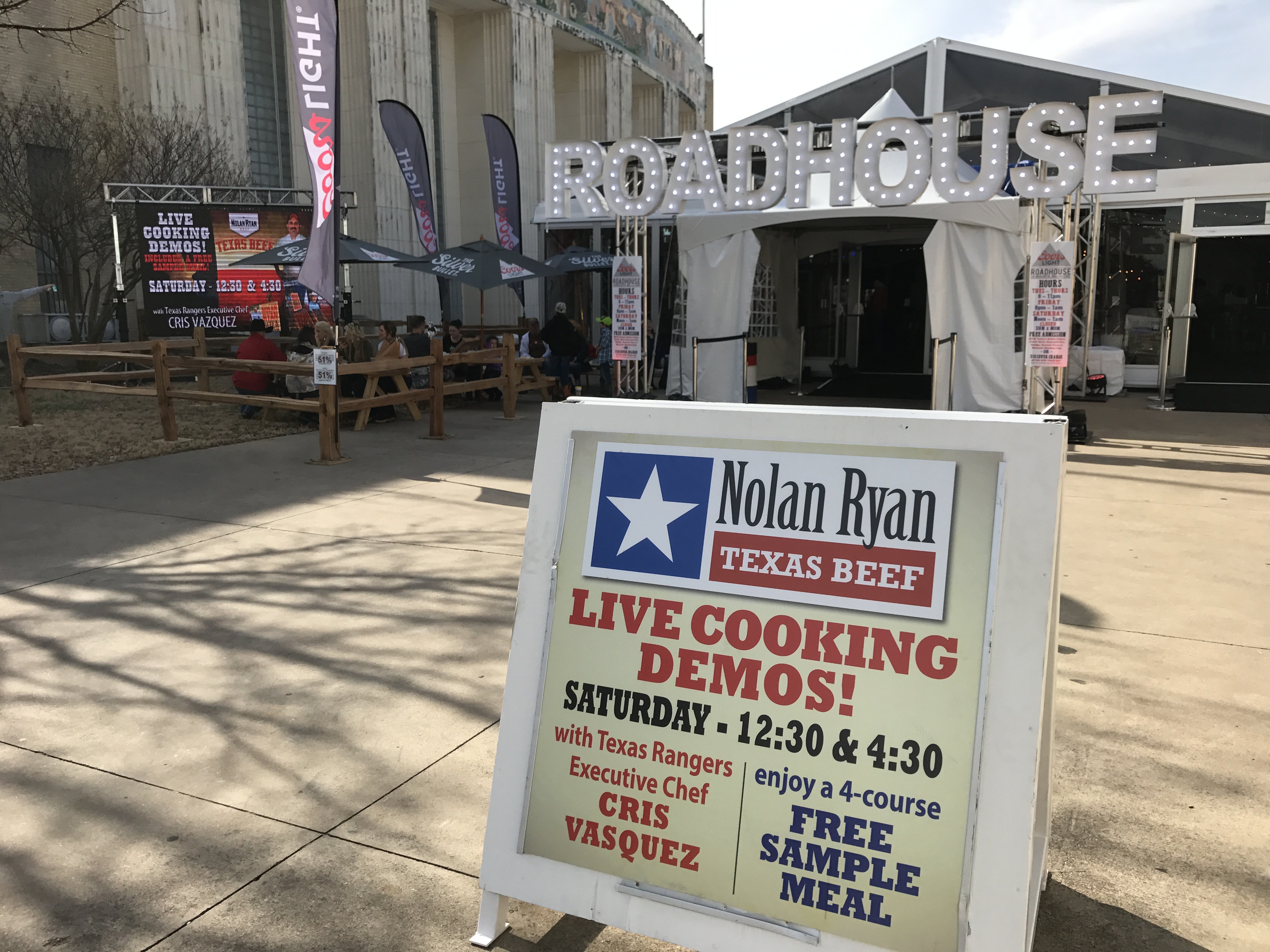
What do beef and a roadhouse have to do with sports? Well,
when the roadhouse is located a few steps away from a PRCA rodeo, the
meat is named after a baseball Hall of Famer, and the vittles are being
prepared by a big league team’s head cook, I figured there was an angle
there.
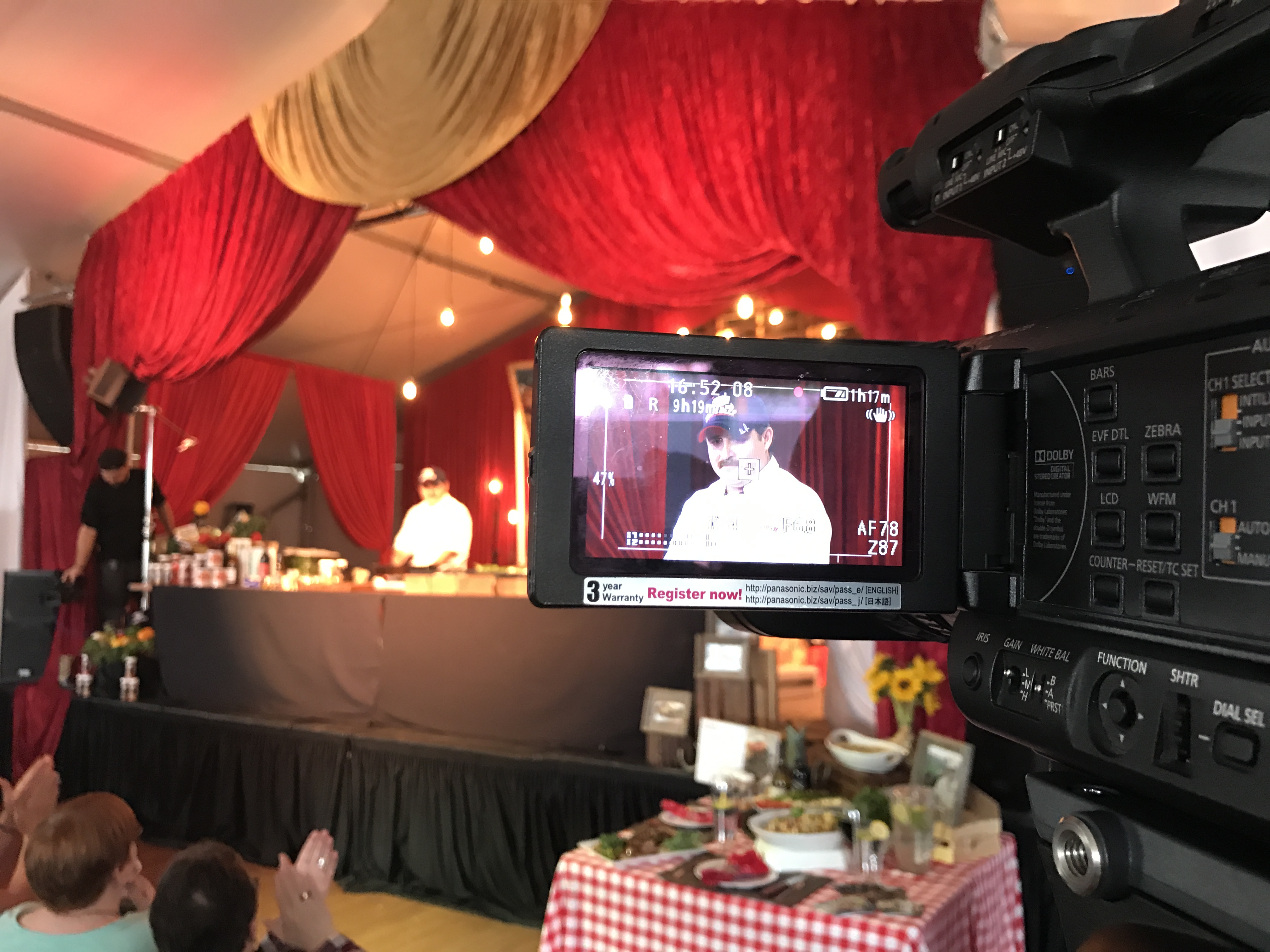
For
the last few years, Texas Rangers Executive Chef Cris Vazquez has spent
a couple of Saturdays in the Fort Worth Stock Show’s Coors Light
Roadhouse showing audiences new ways to prepare Nolan Ryan Beef. They
brought my colleagues and me in to coordinate video within the room and
so I was able to secure a chat with Chef Cris (as his colleagues refer
to him) before the second show. Watch the video to learn about what he
does in the demonstration, a little scoop on cooking at the ballpark,
and how I got to know him.
In the video, I reference a couple of Rangers/Nolan Ryan commercials
Vazquez helped me produce back in the day. Here are the links if you
want to check them out (someday I’ll write a column about why they might
be the favorite spots I ever produced) :
Vazquez and Nolan Ryan Beef will conduct two more demonstrations this
Saturday afternoon at 12:30 and again at 4:30. The company has a
cookbook out and if you buy one, Vazquez will autograph it. Perhaps the
best part is that they hand out free samples as the seminar is going on,
so you’ll taste the yumminess for yourself. I took undue advantage of
my backstage privileges and had seconds – please don’t tell Nolan.
Rush Olson has spent two decades directing creative efforts for
sports teams and broadcasters. He currently creates ad campaigns,
television programs, and related creative projects for sports entities
through Rush Olson Creative & Sports and FourNine Productions.
If you were a young Jewish boy newly arrived in the United States in
the early 20th century, you might have looked and talked differently
from your schoolmates. You wore a small circular cap on the back of your
head. How would you have tried to fit in? For many such boys, adjustment to America involved wearing baseball caps as well as yarmulkes.
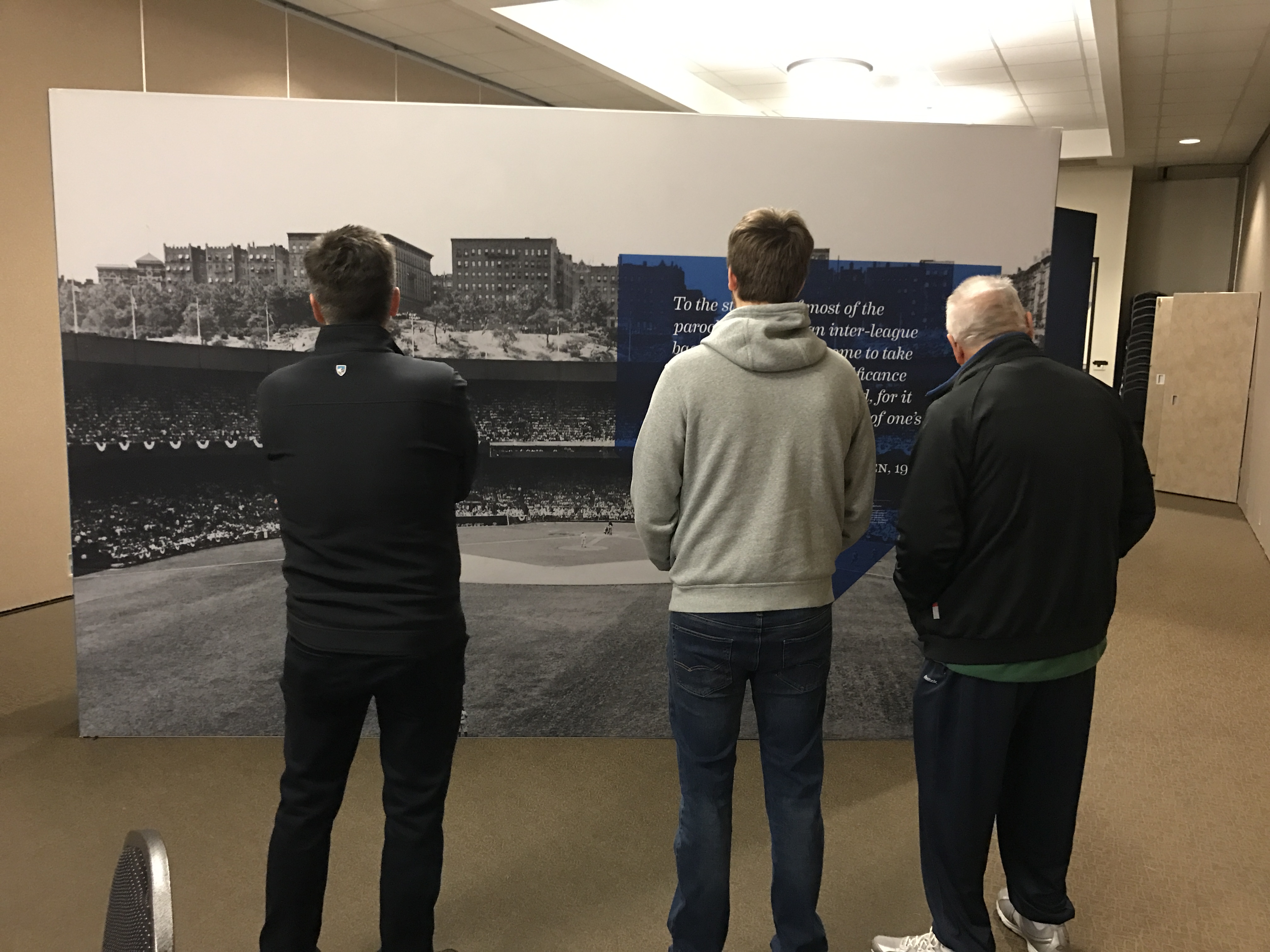
That’s the message of Chasing Dreams: Baseball and Becoming American, a multimedia exhibit on display through March 5 at Congregation Ahavath Sholom. “What
the immigrants of the early 1900s determined was if you really wanted
to be American, you needed to learn about baseball,” explained Rich
Hollander, who spearheaded bringing the exhibit to the Fort Worth
synagogue from the Philadelphia Museum of American Jewish History.
The most prominent portion of the display consists of a series of
two-sided panels featuring large photos and text related to the ways
Jews and other minorities became a part of baseball. Text from the first
panel declares that baseball “represents a shared American identity.”
Videos about baseball’s cultural richness reinforce the message. They
feature comments from prominent Jewish and minority participants in the
game, including the Rangers’ Jewish general manager, Jon Daniels.
Hollander had seen a TV news story about the exhibition and contacted
the Philadelphia museum about arranging a showing in Texas. As
president of Tarrant County B’nai B’rith, he presented the concept to
local chapter of the national Jewish service organization. They decided
to provide the money and manpower necessary to bring Chasing Dreams to Cowtown.
An iPad display allows visitors to look up every Jewish player who
played in the majors. On Friday, Rick Weintraub of Arlington had come to
see the exhibit with his friend and his grandson. He asked Hollander to
retrieve the information on his distant cousin Phil Weintraub, who
played in the 1930s and 1940s.
Rick was born in 1937 and grew up in New York City as a Brooklyn
Dodgers fan. He confirmed that the exhibit got it right about the
importance of baseball to Jewish boys his age.
“When you were a kid growing up in Brooklyn, baseball was your second religion,” he said. The man Hollander considers his baseball hero once placed the
religion they share ahead of the game they both love. Sandy Koufax
declined to pitch Game 1 of the 1965 World Series when it fell on the
same day as Jewish holy day Yom Kippur. He has a prominent place in the
exhibit and in Hollander’s memory: “He said to me, ‘If you’re Jewish,
you can be a baseball player.’ I wasn’t good enough to be a
[professional] baseball player, but you could be a baseball player.”
Hollander took pleasure in noting that Israel had qualified to play
in the 2017 World Baseball Classic, the country’s first appearance in
the main round of the quadrennial competition. The tournament website
indicates some 3,000 Israelis of all ages participate in the sport. It
seems that in addition helping immigrants adjust to life in the U.S.,
baseball makes a pretty good export, too.
On Blotch at Fwweekly.com, you can read my take on why it made sense to write about the exhibit during a week that includes Martin Luther King, Jr. Day and Inauguration Day.
You can find Chasing Dreams: Baseball and Becoming American at 4050 South Hulen Street Tuesdays – Thursdays from 10 am to 5 pm, Fridays from 10 am to 2 pm, and Sundays from noon to 6 pm. Tickets are $5 each and children under 12 are admitted free. On Sunday, February 12, former Rangers President Tom Schieffer will speak at a bagels and lox brunch that includes a tour of the exhibit. For information about the event, call 817 909 4354.
Any baseball franchise would want to employ a powerful first
baseman with a career OPS (On-base Plus Slugging) over 1.000 who could
also play the outfield.
Clubs would also welcome a hard-nosed second baseman who had won a Rookie-of-the-Year Award, an MVP, and a batting title.
Teams would be thrilled to add a smooth center fielder worth nearly 80 career WAR (Wins Above Replacement).
They’d
be even more interested if you told them each player was a
Hall-of-Famer and had served his country as a soldier in time of actual
war.
I learned things about each of the above players at a new exhibit called Chasing Dreams: Baseball and Becoming American.
The Congregation Ahavath Sholom on South Hulen hosts it through March
5. You can get more scoop on its contents and how it came to be in Fort
Worth by reading my article in the Fort Worth Weekly print edition due
on stands this coming Wednesday.
It
seemed especially appropriate to write about the exhibit as we
celebrate Martin Luther King, Jr. Day. King chased dreams, and, indeed
we remember one of his most famous speeches as the “I Have A Dream Speech.” He delivered it August 28, 1963 in Washington, D.C., and it contains one of my favorite passages ever:
“I have a dream that my four little children will one day live in a
nation where they will not be judged by the color of their skin, but by
the content of their character.”
King’s address also spoke of the injustices done to African-Americans
of the time and of difficulties they faced in a country whose laws
denied them a level playing field. The exhibit talks of the
discriminatory obstacles Jewish ballplayers faced, and includes mentions
of the struggles and triumphs of black, Hispanic, and even female
ballplayers.
We learn, for instance, that while early Jewish ballplayers could at
least play in the big leagues (unlike African-Americans), many felt
compelled to change their names to something that made their ethnicity
less apparent. We also learn that baseball played a role in helping to
overcome prejudices, both within the game and without.
“Baseball really became the place for cultural change in America,
with Jackie Robinson as the place where America really began its
integration,” posited event organizer Rick Hollander.
Robinson
was the second baseman I described in this column’s opening paragraph.
His status as MLB’s first African-American player in the modern era has
deservedly cemented his status as a legend, and Robinson’s performance
on the baseball diamond would have earned any player Hall of Fame
consideration.
Rick Weintraub, a lifelong baseball fan who attended the exhibit the
day I was there told us he had once gotten to meet Jackie Robinson. The
nearly 80-year old white Jewish man said, “It now just almost brings
tears to my eyes because he was such a great man, much less a baseball
player.” As one of the first Jewish ballplayers to keep his traditional
surname, the first baseman/outfielder described above also faced
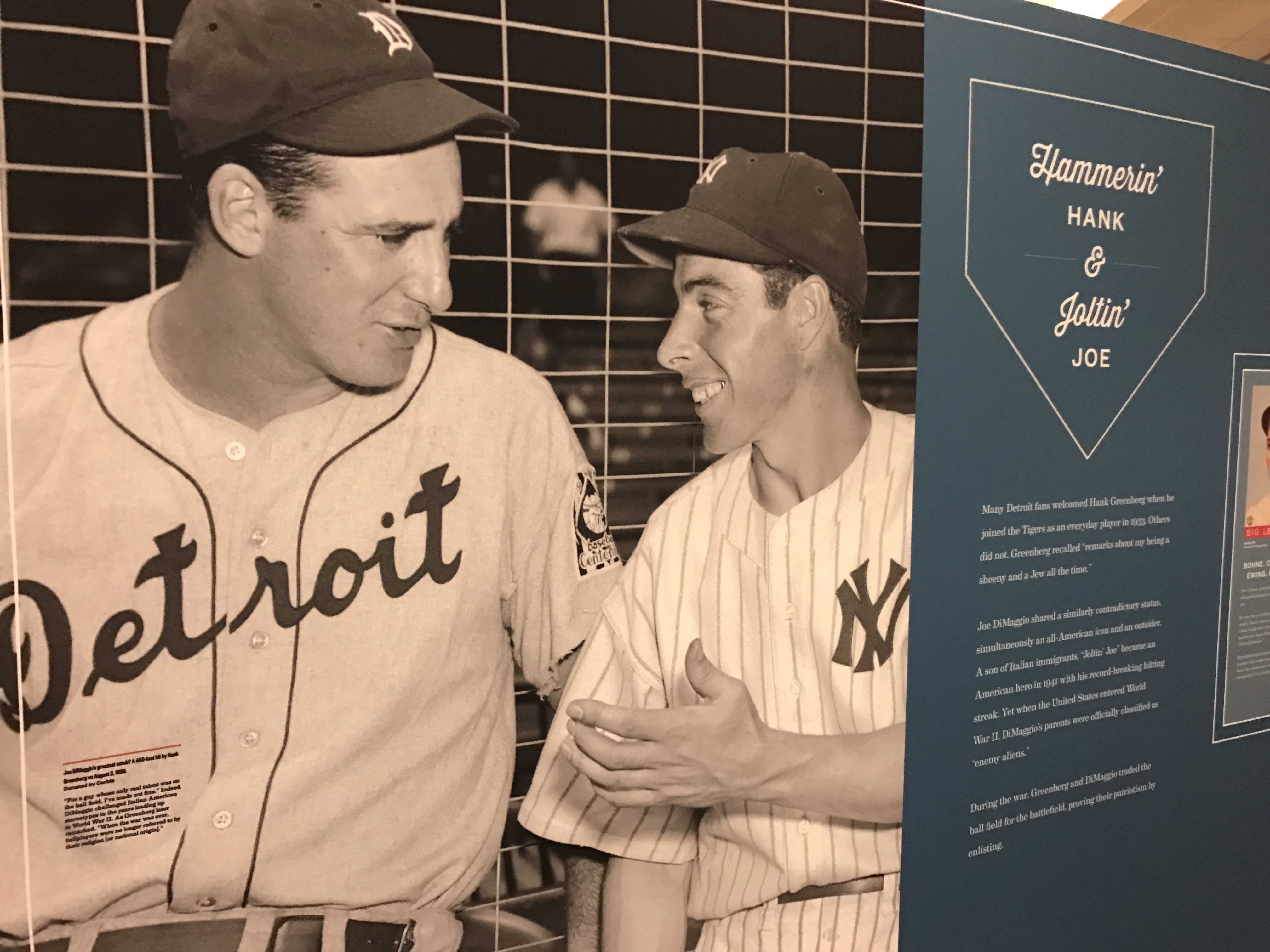
racially-tinged abuse. Detroit Tigers fans, however, liked Hank Greenberg’s two MVP seasons and pair of World Series wins.
Both Greenberg and Robinson used their play on the field and their
strength off it to power through much of the flimsy excuse for a mindset
that is racism. They left baseball observers with little choice other
than to judge them by the contents of their characters. I would submit
that such developments have value in the wider world. Once one realizes
that a member of a maligned group defies negative stereotypes, it makes
it more difficult to project suppositions of inferiority onto other
individuals. Open competition, and sports especially, rewards such rational
choices. Fans of that era discovered they would rather brag about their
teams winning than obsess over whether the players looked like them or
attended their church.
Speaking of winning, there’s another important day on the national
calendar this week. Another prominent citizen will have a chance to
address the public from the capital. Friday is Inauguration Day, and the
incoming POTUS has talked a lot about winning things.
One thing the exhibits explains is how first-generation Americans used baseball to successfully bridge cultural gaps.
“Regardless of what all the politicians say in the world today, we
are an immigrant society,” said Hollander. “They came here as young as
eight, nine years old. They went back and fought in World War II for
their new country and the patriotism was real. They understood the
opportunities that America had to offer and baseball was one of those
opportunities.”
All
three of the men mentioned at the top of the page also served in the
armed forces during WWII. One of the exhibition’s panels features a
photo of Greenberg with the center fielder I cited. Joe DiMaggio might
have been the most revered ballplayer in the world in 1941 and would
join the Army from 1943-45. But when war broke out, the authorities
wouldn’t allow his Sicilian father to earn a living fishing in San Francisco’s coastal waters because of where Giuseppe DiMaggio was born.
The Franklin D. Roosevelt administration judged a lot of Italians, Japanese,
and others of Axis descent by something other than the content of each
person’s character. The year after the U.S. government freed the last of
the interned Japanese Americans, Jackie Robinson broke baseball’s color
barrier. As Hollander pointed out to me, the Major Leagues now feature
players from all over, including Central and South America, the
Caribbean, Korea, Australia, and, yes, Japan.
Society has made progress, too, since the 1940s. A more open world
has resulted in all manner of free exchange of goods, services, music,
and food. Indeed, as I walked into the synagogue to view the Chasing
Dreams exhibit, a flier on the door caught my eye. This Jewish religious
institution was advertising a musical Shabbat featuring the sounds of
Latin America.
We’d like it if everyone kept an open mind about such cross-cultural
experiences. When you adopt such an attitude, you can look at someone
new or different as an individual and judge him or her accordingly.
If one views a person negatively because she shares a country of
origin or a religion with billions of peaceful people and a tiny
percentage of Bin Ladens, Torequmadas, Castros, or Maos; if one thinks
just because a man rises to head a corporation or hedge fund, he
therefore has no soul; if one believes that just because someone proved
him or herself popular in an election, it automatically makes the
official worthy or respect – or derision; In all these cases, one is not
rendering judgement based on the content of that person’s character.
Baseball learned long ago how thinking that way prevents you from
winning. The teams that employed Robinson, Greenberg, and DiMaggio won a
LOT. One hopes that those taking power remember the lessons baseball –
and Dr. King’s speech – have taught.
“It’s an amazing event. Every year it gets bigger, it gets better and I really expect nothing less from Nancy Lieberman.”
Former NBA player Stephen Howard, speaking about the Nancy Lieberman Charities Dream Ball.
Expectations create challenges. When people anticipate you’ll deliver
something, you kind of have to do it. Basketball Hall-of-Famer Nancy
Lieberman made a career out of going beyond the norm, from making an
Olympic team as a high schooler to playing in men’s leagues to coaching
in the NBA. When she started a charity, she wanted to make it bigger and
better, too.
“I think all along she was trying to take it to where it is today, in
2017, and that’s where she’s having a huge red-carpet affair and
big-time people coming and donating and just giving back,” said Theresa
Pusateri, who assisted Lieberman in the formative years of what was then
called the Nancy Lieberman Foundation (now Nancy Lieberman Charities).
Helping
the Dream Ball grow has certainly required Lieberman’s legendary energy
and connections. Notables the caliber of Emmitt Smith and Martina
Navratilova attended the 2012’s inaugural Dream Ball, entitled “A Night
of Magic with Lady Magic,” and many more have followed. Maintaining
their participation, and that of sponsors and ticket buyers, has
required making sure they enjoy themselves enough to want to return the
next year. Here then, are a few of the memorable moments from past Dream
Ball galas that might have caused folks to jump up from their chairs
and take notice. 2012 : “Please help send Nancy to the Olympics.”
That’s what Nancy Lieberman said her neighbors wrote on the can they
passed around Far Rockaway, New York to raise money to send her to the
Olympic trials when Lieberman’s single mom couldn’t afford to send her.
The evening’s host told how that episode inspired her to charitable
pursuits and helped propel her to basketball success. photo by Carmine LiDestri 2013 : As in 2012, one can always expect to hear
some Lieberman’s compelling stories at her events. But in 2013, the
Dream Ball created its own amazing story. As the evening’s host, John
Rhadigan of Fox Sports Southwest put it, “Larry Fitzgerald went and he
did the most generous thing I’ve ever seen at one of these (charity
events).”
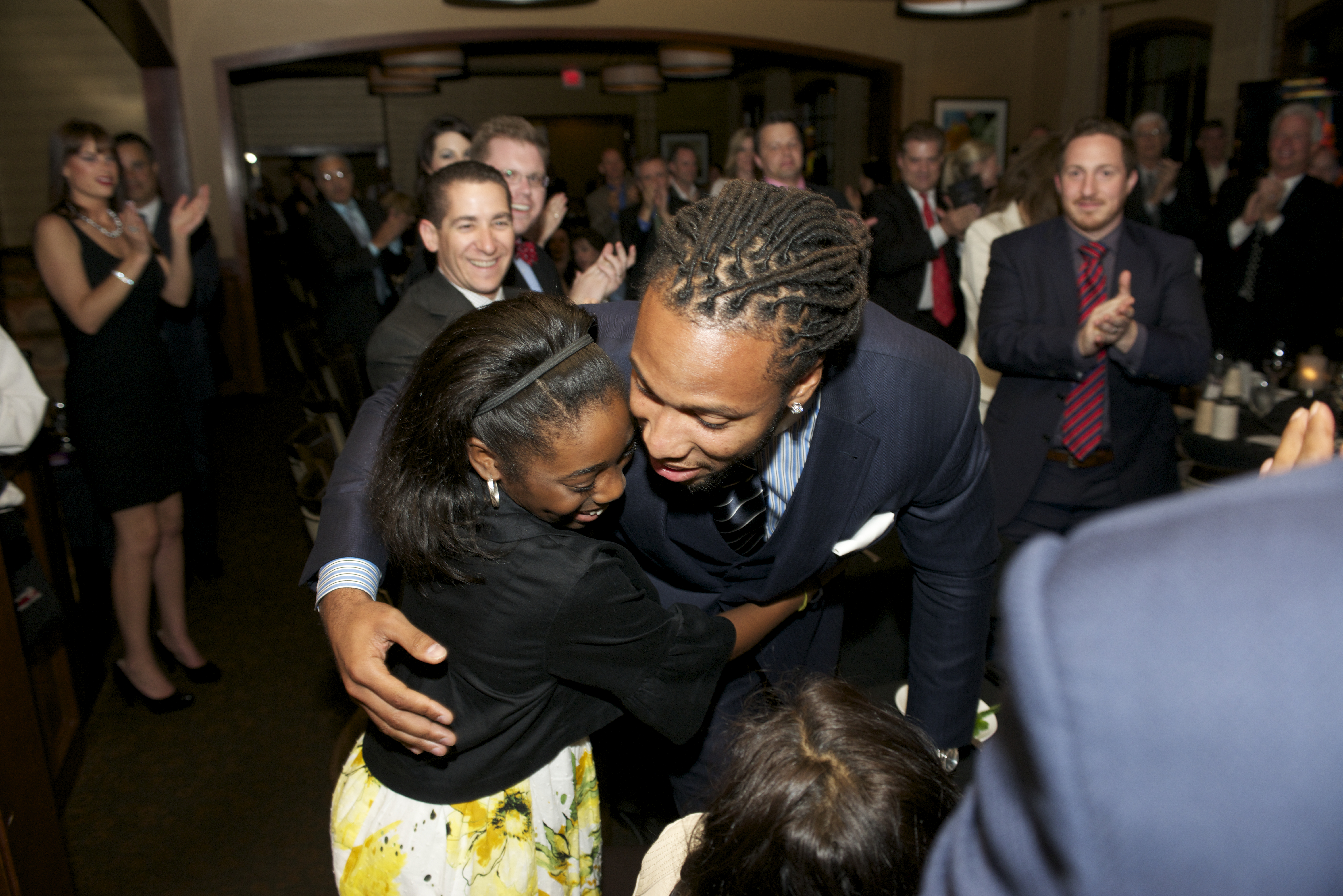
That evening at Ruth’s Chris Steak House the theme was “Together We
Can.” Starpower donated a big-screen TV as a raffle item, and the winner
turned out to be not one of the well-heeled guests or celebs, but a
girl named Katelyn Gordon whose family had benefitted from the
foundation’s outreach efforts.
“The little girl is so sweet. She tells me to tell Nancy ‘please
auction this off. We’re going to give this back so that we can auction
it off.’ So we’re like, ‘no, no, no, you keep it,’” noted Rhadigan. photo by Carmine LiDestri
The young lady insisted the TV become an auction item to benefit the
charity’s programs. The auctioneer started soliciting the bids, which
trickled in as auctions will do, getting over $1000 fairly quickly. Then
the Arizona Cardinals wide receiver made an exceptional offer.
Fitzgerald would pay $5,000 for the TV if, and only if, the little
girl’s family would keep it. That’s exactly what happened.
Rhadigan said, “It gives me chills when I retell the story. It was an unbelievable moment.” 2014 : Fitzgerald featured prominently the next
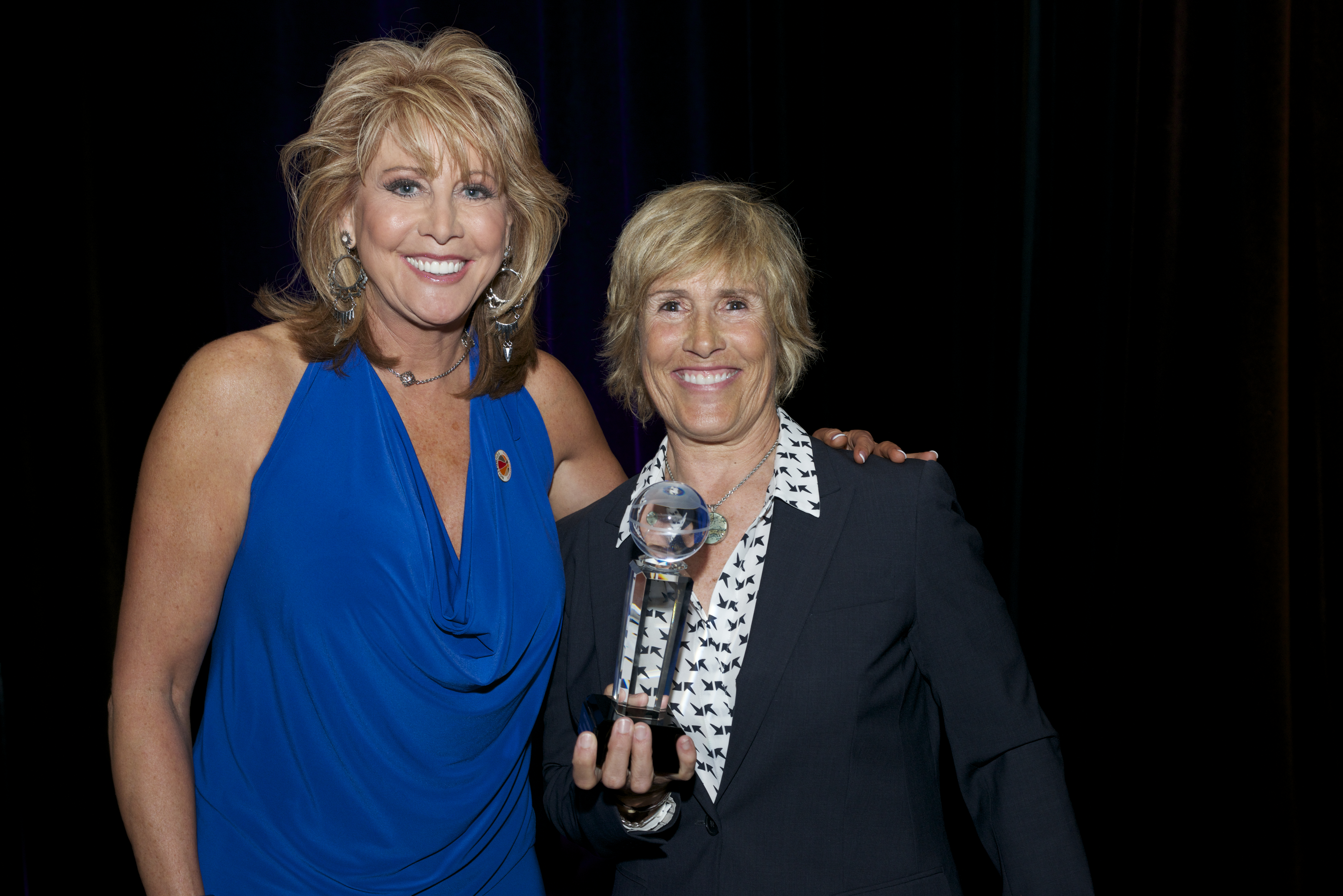
year, too, as he, Smith, and Deion Sanders participated in a roundtable
discussion with host Gina Miller. Perhaps the most inspiring messages,
however, came from honoree Diana Nyad, who joked that “I’ve been on
Dancing with the Stars. It doesn’t get any bigger than that,” before
delivering some profound wisdom that spoke to why the event bears the
name it does. photo by Carmine LiDestri
“What makes us feel alive is our dreams,” said the athlete who, at
the age of 64, had just completed a 53-hour Cuba-to-Key-West swim on her
fifth try. “All of us – every human being on this planet – suffers
heartache, knows disappointment, and worse. And if you see where you’re
going, you imagine it, you envision it. You bring good people around you
to get there. You run up against obstacles. You get thrown back by
jellyfish, whatever it is. And if you find a way around, if you do not
give up on that vision, eventually you walk up on that shore.” 2015 : The charity honored Dallas Cowboys
quarterback Tony Romo and he proved himself worthy in more ways than
one. Early on in the evening, as the auctioneer sought bidders for
backpacks that would help send kids to basketball camp, Romo and his
wife bought all the remaining stock. When it came time for him to accept
his award, Tony Romo didn’t mail in a perfunctory thank-you speech. photo by Carmine LiDestri
The media latched onto a small portion of the talk wherein he
predicted his team would go to the Super Bowl, apparently considering it
somehow newsworthy that a star player might think his division-winning
team from the year before would advance slightly further in 2015.
Hopefully, however, those who watched Romo’s speech because of the
prediction also paid attention to the rest of the talk, as he provided
powerful insight into why programs like those of Nancy Lieberman
Charities benefit children. He talked of the “10,000 hours” necessary to
acquire expertise in a skill, and how an entity that builds basketball
courts where there are none, or sends kids to camps they would otherwise
not attend, can help a child achieve great things.
“To give these kids that avenue and that chance to start that process earlier?” he said. “That’s a gamechanger.” 2016 : As always, sports played a major role in the
Dream Ball program. Cowboys Executive Vice President and Chief Brand
Officer Charlotte Jones Anderson was introduced by her father, Jerry, as
she received her award. Mavericks coach Rick Carlisle brought up his
boss, team General Manager Donnie Nelson. But music, in some ways,
grabbed the spotlight on this night. From Jerry Jones dancing a bit to
the opening music to dance numbers from the Cowboys Cheerleaders and the
Mavs ManiAACs, the evening featured a lively soundtrack.
Two moments stole the show, however. The first one came before the
auction. Many charities will play a video describing their work before
asking attendees to spend money supporting it. This video featured a
custom musical track, as local artist Big Joe Walker had recorded a
version of one of Lieberman’s favorite songs “With A Little Help From My
Friends” especially for the event. As soon as Walker’s powerful voice
hit the opening lyrics, the room fell completely silent, a reaction
rarely, if ever, seen at an event of this type. It remained that way
throughout his sparse yet arresting rendition. photo by Carmine LiDestri
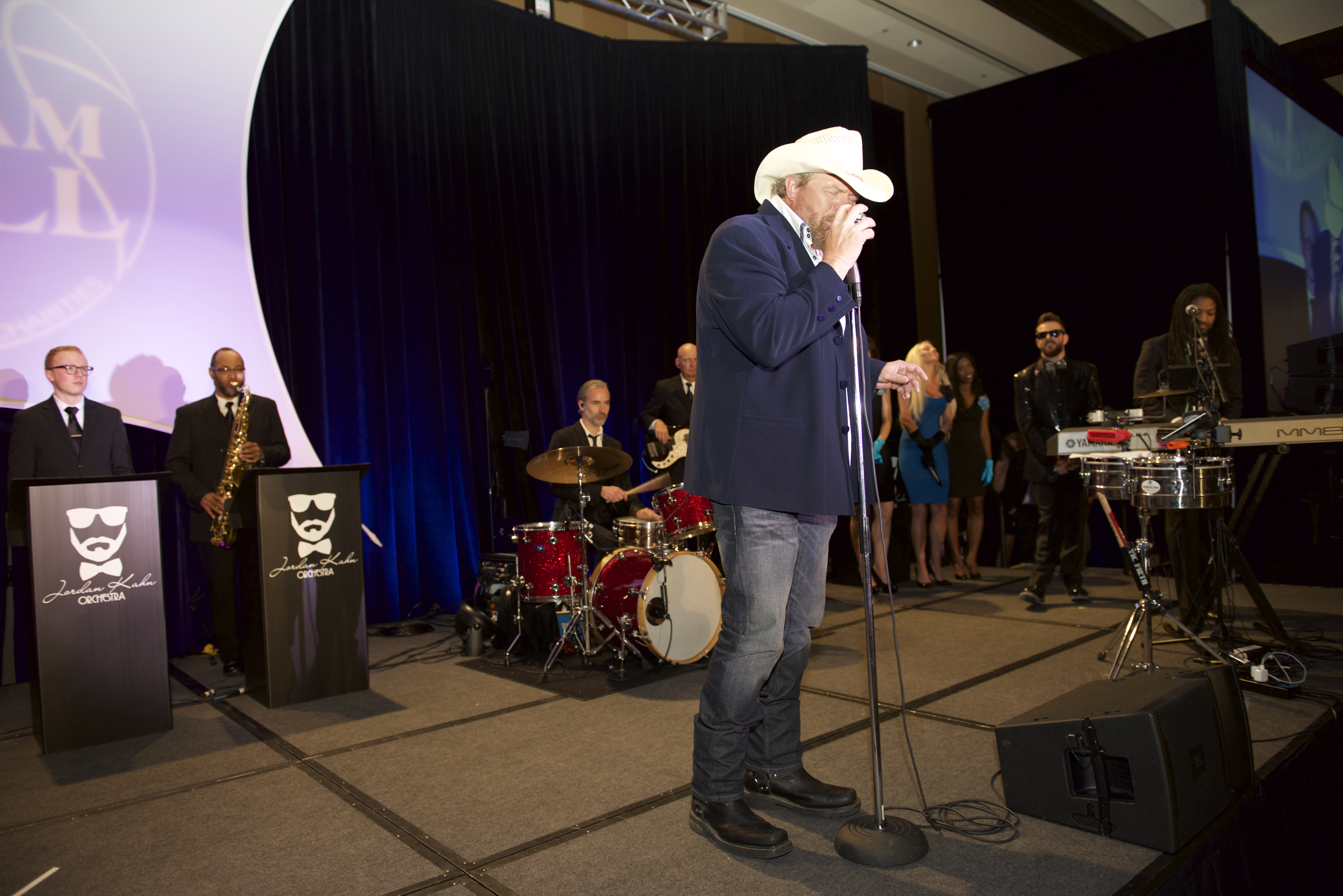
The evening’s final honoree provided a moment that all who attended
will not forget. Toby Keith accepted his award, and then strolled to the
microphone for an impromptu performance with the Jordan Kahn Orchestra.
They filled the intimate setting with a cover of the Bill Withers song
“Ain’t No Sunshine,” followed by one of the tunes that got Keith into
the Songwriters Hall of Fame, “Should’ve Been a Cowboy.” Keith, gracious
throughout, name checked the house band and gave the saxophone player a
solo.
Nancy Lieberman has earned the trust of a lot of famous friends over
the years, so the expectation will indeed be for future Dream Balls to
continue to provide memorable happenings. To ensure the event’s
continued success, she might have even grown her own star power, as son
T.J. Cline has turned into a legitimate professional prospect hooping at
the University of Richmond. In fact, T.J. has actually exceeded
expectations on that front – apparently that quality runs in the family.
This year’s Nancy Lieberman Charities Dream Ball happens February 20
at the Factory Ballroom in Deep Ellum. Tickets are available at
nancyliebermancharities.org.
Rush Olson has spent two decades directing creative efforts for sports teams and broadcasters. He currently creates ad campaigns, television programs, and related creative projects for sports entities through Rush Olson Creative & Sports and FourNine Productions.