Showing posts with label KTVT. Show all posts

Friday, July 7, 2023

Is The Superstation Era Back?


One of my duties in my first paying TV job involved processing contest entries for the Goody's Home Run Jackpot. I worked for the KTVT television station at the time and Goody’s Headache Powder sponsored our Texas Rangers game broadcasts. If a Ranger homered during the designated inning of a game we were televising, a lucky entrant received the accumulated jackpot of cash. If Texas went homerless, the pot rolled over to the next telecast with more money added to it. 


With sluggers like Juan González, Rubén Sierra, Julio Franco, and others on the team, the contest made for drama compelling enough to fill many mail buckets with postcards (analog entries only - KTVT’s first website was a few years away). These entries came from all over the country, too. In those days, a few local stations had placed their signals on satellites. Some cable companies across the country, as well as people with backyard dishes, would pick up the signal. Thus did baseball fans from all over watch the games - and entered to win. We didn’t enjoy the universal distribution of WGN (Cubs) or WTBS (Braves), but we were still a superstation.


That word sounds cool - “superstation.” One envisions titans of the industry wielding a giant antenna of power spewing forth content and ads across the land. The reality wasn’t quite as cool.


I asked a sales executive once about how useful it must have been to have all the extra viewers that Fort Worth-Dallas’s other stations didn’t have. He explained that it actually didn’t really help them. The people to whom they sold advertisements needed to buy the DFW market. The media buyers he serviced weren’t interested in those (more difficult to quantify) out-of-town eyeballs. They’d be judged on how well they reached Rangers fans (and other viewers) in North Texas.


Goody’s discontinued that contest a couple of years into my tenure at the station. I thought they were crazy at the time because of the tubs of postcards in my office on which a whole lot of people had written “Goody’s.” That was not enough information on which to judge their decision, of course. Maybe the price we tried to charge them to renew no longer passed even a mail-tub-intensive cost-benefit test. Or maybe they myopically undervalued the quality and quantity of the audience we were delivering. Who knows.


In any case, the superstation era soon ended. Major League Baseball better defined home team territories, wanted to protect national rightsholders, and, eventually, started thinking about streaming out-of-market games for a price. In addition, suppliers of syndicated programming wanted to get paid for the residents of the extra markets who might watch the shows we ran between the sports and the news. 


Ah yes - news.


KTVT started a regular 9pm newscast in 1990. As an independent station, they had not previously been a player in covering news. But local news can be a substantial profit center for a TV station and we wanted to tap into those revenue streams. Another beautiful thing about news for a station is that it controls the rights to the programming, so it doesn’t matter who watches it or where. As technology has created more “wheres,” it’s also given rise to a new version of the superstation era - one with more revenue possibilities. Consider these developments:


• When I started in the industry, your options to watch moving pictures were pretty much TV, at a movie theater, or your home VHS player. We still have those (if you can get your VCR to work, that is) but have added myriad streaming options and devices.


• Video has stolen market share from print in a number of ways. On the local side, as reported by Pew Research, newspaper ad revenue fell more than 60% from 2008 to 2018. With a robust video base from which to work, ad revenue has held relatively strong in local stations (when you include their emerging digital inventory) over the last two decades, according to Pew.


• With quality syndicated programming less lucrative and more difficult to come by, and opportunity presenting itself thanks to newspapers’ decline, stations have expanded their news products. The National Association of Broadcasters studied Nielsen data to conclude: “More than 107,000 hours of local television news content aired in November 2021 across the country, an increase of over 40% from November 2011 and more than 16% from November 2016.”


Did you ever watch WGN’s news program on their superstation? I might have if it came on after a Cubs game. If you were a Chi-town expatriate, you might have been plenty interested. Perhaps there were former Texans who liked it when they could see our Nine O’Clock News after the ballgame via satellite. It turns out that present-day TV station owners think there’s an appetite for such programming. If you’ve got a streaming device (and you all do), it turns out you can watch a large portion of the above-referenced glut of local news, should you find yourself with 107,000 hours of free time this month. Watch newscasts on the stations’ websites, catch clips on social media, or watch aggregated content from local markets on streaming platforms like Roku. A good example of the latter is the CBS News Texas channel on Pluto TV. It includes newscasts from KTVT (which became a CBS affiliate in 1995 - we added a lot more news programming that year and they have even more now).


One reason it makes a lot more sense for a station group to have locally-originated programming available outside its markets has to do with how buyers can now purchase advertising programmatically. We used to sell ads in a particular program that Nielsen guessed had a lot of the types of people the advertiser wanted. Now that targeting is a lot more precise and you can buy the eyeballs of people who, for instance, your research has shown will be willing to use a powder product to treat their next headaches. Buyers can be less beholden to local markets, although they can certainly specify geographic filtering. But a more expansive ad world means more opportunity for sales to a broader base of potential clients.


As regional sports networks decline, local stations have started becoming a player for sports rights again, too. They’ll likely be limited in how they can utilize those telecasts beyond their home markets, but it’ll be interesting to see how some of these deals shake out in terms of streaming rights. The superstation just might be making a comeback. Entry-level TV workers might still have a lot of (digital) contest entries to process.


Rush Olson has spent two-plus decades directing creative efforts for sports teams, broadcasters, and related entities. He currently conceives and executes content projects through his companies, Rush Olson Creative & SportsFourNine Productions and Mint Farm Films. Through MFF, he’s at work on biographical documentaries about Nancy Lieberman, Sidney Moncrief, Pudge Rodríguez, Ed Belfour, and Bob Lilly as well as a show about the The College Gridiron Showcase.

Subscribe to @MintFarmFilms on YouTube to see excerpts from upcoming documentaries.


Saturday, December 16, 2017

Watching Sports Has Never Been Simpler

This post originally appeared in the Blotch section of the Fort Worth Weekly's website. To consume it there : https://www.fwweekly.com/2017/12/14/sports-rush-a-simpler-time-for-sports/

So, how do you watch sports? This used to be a simple question, right? You either went to the game or you turned on the television (after checking the newspaper or the TV Guide to see if one of a handful of  television stations had scheduled it).

Has the sports viewing landscape has grown more complicated in the last 30-40 years? Instead of a few broadcast stations, you now have a multiplicity of outlets, and, consequently, a lot more games. And no longer do you just adjust the rabbit ears on the household’s only TV. You have a wide choice of devices on which to consume broadcasts.
You’ve still got the legacy broadcast networks, and they do still show some sports. They each own cable channels dedicated solely to sporting content, like ESPN and the Fox regional sports networks (RSNs). They’ve got joint ventures with other entities, like the SEC Network, the Longhorn Network, and the Big Ten Network. Other companies compete with them, too, as the likes of beIN Sports, the Tennis Channel, and AT&T-owned RSNs try to carve out market share.

And telecasts don’t actually require a television channel. The likes of Amazon, Facebook, YouTube, MLB Advanced Media, and others allow one to stream video feeds of athletic contests. The networks themselves, in fact, operate “over-the-top” services to enable streaming of events whose rights they control, like FOX Sports GO or WatchESPN.
So do all these choices make it more complicated to watch sports? I don’t think so, especially when you consider the entire process of game-watching.

If you just want to watch sport the way the casual fan did in the 1970s, you still can. Check the TV listings in the newspaper sports section that morning, watch a game or two on network affiliates on Saturdays and Sundays, and occasionally go to one of your local team’s matches.
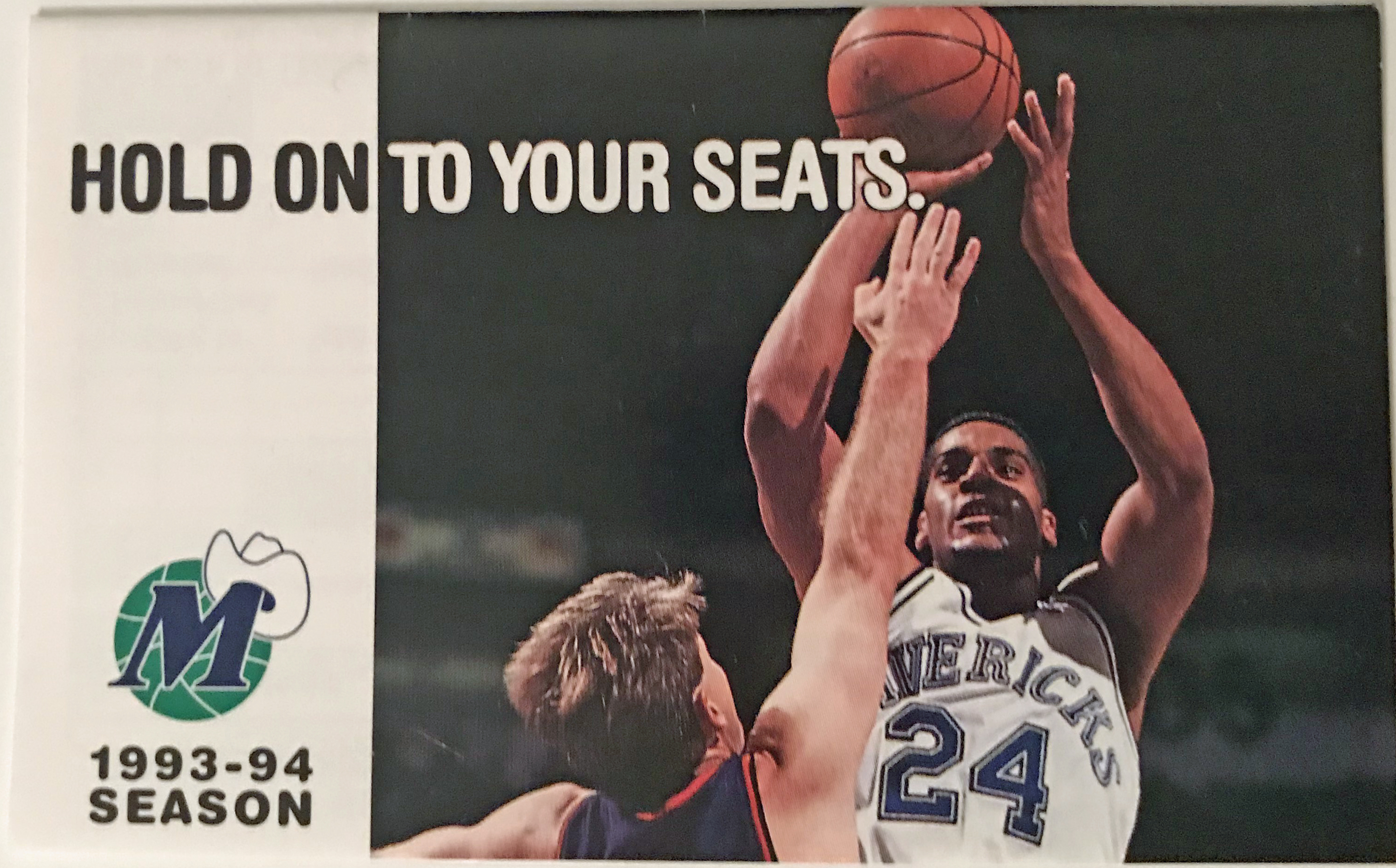
What if you wanted to plan ahead a bit, though? Even just knowing when your team played required effort. You either had to have clipped the schedule out of the newspaper when it came out at the beginning of the season or you had to acquire a physical copy, often in the form of a pocket schedule. You would have acquired one of those by traveling to a local merchant, assuming you had been able to find out which ones sponsored the team, or the team offices. And you had to hope it hadn’t changed since the printing date. Game times, broadcast carrier changes, and rainouts could all invalidate a given date on an analog schedule.

Today, you simply pick up your phone on a whim and use a search engine (or a league or team app) to find the latest schedule in a minute.

And say you wanted to watch a game played in another city that didn’t involve your local team? If it didn’t happen to be the game of the week on TV, what would you do? How would you even know the game was being played? If you had purchased a season preview magazine at the beginning of the season and prevented your spouse from throwing it away, it might have schedules for all the teams. You could write a physical letter to the out-of-town team and include a self-addressed stamped envelope, or call the team long distance after first dialing directory assistance for the number. The newspaper might list games a day or two out. Once you decided you wanted to see the game, you had to drive or fly there, and you’d have had a lot fewer flight options before deregulation.

Isn’t it much simpler to just watch it via an ESPN network or one of those NHL Center Ice or NFL Sunday Ticket packages that permit you to access out-of-market contests (and you get a whole season for a less than most plane trips)?

And what about the ancillary parts of watching a game? If a player intrigued you and you wanted to find out more about him, you might have had access to some limited information in a game program. If you wanted to see the rest of his career statistics, you might have needed to buy packs of bubblegum cards until you can across his entry, or travel to the library or bookstore and hope they had the latest edition of the Baseball Encyclopedia or the like. And in terms of asking your buddy what he thought about the game? Well, you could go to a payphone at halftime and hope he was home, though if the game wasn’t on TV he wouldn’t know what you were talking about until he read the story in the paper the next morning or saw 20 seconds of highlights on the evening news. Now you ping him on an easy-to-use social media or messaging app.

For most women’s sports, and any minor league sports, you would have had to go to even greater lengths to find out the information you wanted or see a game played. Almost no television coverage existed, and all the rigmarole noted above for getting to games was extra challenging for non-mainstream sports.

Today, sources like StubHub let you attend even the sold-out games without the complications of resorting to black-market ticket scalpers, and the electronic means listed above let you find a way to watch them with minimal effort.

We often refer to the past as a simpler era. Maybe that’s true in some respects, but not the sports viewing world. It’s never been easier to watch what you want.


Rush Olson has spent two decades directing creative efforts for sports teams and broadcasters. He currently creates ad campaigns, television programs, and related creative projects for sports entities through Rush Olson Creative & Sports, Mint Farm Films, and FourNine Productions.

RushOlson.com
Linkedin.com/company/rush-olson-creative-&-sports
Facebook.com/RushOlsonCreativeandSports

Saturday, May 20, 2017

Forecast Calls for Snack Cakes

This post originally appeared at the Fort Worth Weekly's website. To view it there : https://www.fwweekly.com/2017/05/19/sports-rush-the-forecast-calls-for-snack-cakes/

Thursday before the Rangers game, I put a snack cake on Rodney Gadsden’s head.
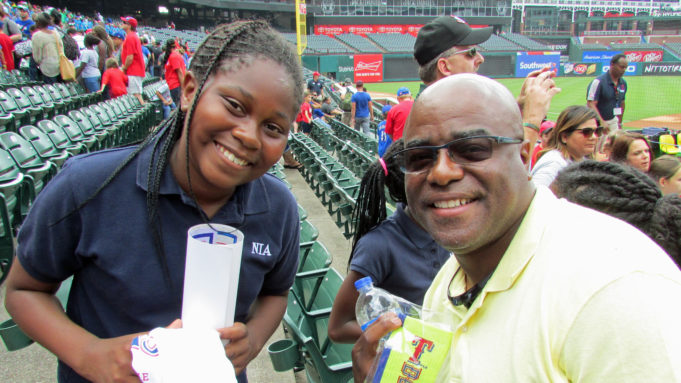
OK, I didn’t actually place it there. That job fell to a girl named Tochi Zama Emeruen. Both fans had come to the game expecting to watch the Rangers go for a sweep of the Phillies and also learn about how weather works. Instead, they found themselves on the visiting dugout, engaged in hijinks.

“It was unexpected,” said Gadsden, who had come to game as a chaperone for his daughter Sierra’s school field trip.

Every year, the Rangers team with the meteorology staff at CBS-11 for a pregame event designed to teach schoolchildren about how weather phenomena work. Getting thousands of youngsters and adults seated before the show starts is by its nature somewhat of a drawn-out process, so I have traditionally assisted team mascot Rangers Captain in performing games and skits to warm up the spectators as they file in. Rangers Six Shooters help us select likely candidates to join us atop the dugout.


We usually have a lot of raised hands from which to choose. A couple of Six Shooters pulled Rodney and Tochi from their seats among the Newman International Academy traveling party. They had no idea what they were in for.

They would compete against two other pairs in the morning’s first game – snack cake stacking. Each adult had to kneel down and each kid had to unwrap a set of chocolate snack cakes and place it on the kneeler’s forehead. The first to successfully balance four total treats would win.

Tochi, who, like Sierra Gadsden, attends NIA, allowed that she was nervous. She doesn’t like to get up on stage and had never done this before, although, let’s face it, pretty much nobody has ever done this sort of thing before. It turns out she’s a natural snack-cake-piler, though, as she finished first. Rodney did his part by making an effort to “just stay still and let her do what she needed to do.”

A young lady named Caroline followed Tochi’s effort by managing to stack three apples in a few seconds (something Rangers Captain and I really didn’t think could be done). The final game involved kids pulling all the facial tissues out of a box with one hand and then it was time for the weathermen and women to do their thing.

“It was pretty interesting just to be a part of their fun and excitement,” said Gadsden afterwards. When you go to a ballgame, there’s always more to it than just watching the on-field action. You could end up on the kisscam, or try some new food concoction, or find yourself on the dugout with the mascot and thousands of people watching you as you attempt to pile sugary confections as skillfully as possible.

Rangers Captain and I agreed that these contests worked as well as any we had done, so expect to see more like them if you attend the Dallas Zoo’s Wildlife Education Day at the ballgame on June 22, or if you return to Weather Day next season.

One attends such events to do stuff one can’t do at home. For Tochi, that was the best part of her snack-game experience.

“We get to play with food, because our parents don’t allow us to play with food.”


Rush Olson has spent two decades directing creative efforts for sports teams and broadcasters. He currently creates ad campaigns, television programs, and related creative projects for sports entities through Rush Olson Creative & Sports and FourNine Productions.

RushOlson.com
Linkedin.com/company/rush-olson-creative-&-sports
Facebook.com/RushOlsonCreativeandSports