Showing posts with label Globe Life Park in Arlington. Show all posts

Wednesday, January 10, 2018

Museum of Dreams


This post originally appeared in the Blotch section of the Fort Worth Weekly's website. To consume it there : https://www.fwweekly.com/2018/01/10/sports-rush-museum-of-dreams/

I had a dream the other night and it inspired me to write this column. 

I actually have this dream every so often in various forms, and it involves the idea that the Rangers have scheduled a game back at old Arlington Stadium and I am going. Usually in this dream, I am just a fan at the game, navigating narrow concourses and acres of bleacher seats. Sometimes I am working, trying to remember where the press box entrance is. 

I have no idea why I have this dream (crowd-sourced psychoanalysis welcomed), but I do know I had a lot of fond memories of going there as a kid and watching Major League Baseball.

Of course, the team won’t be scheduling a throwback event at the old stadium because they tore it down when they built a new facility. The Rangers are about to construct their third ballpark, but this time the (tentative) plan involves repurposing the former home rather than demolishing it. 

If they’re going to trade on nostalgia, they should go all in and bring back one of Globe Life Park in Arlington’s former features. They should have a baseball museum.

The current facility would be a great place to house such a thing. How do we know? It already did.

When the place opened in 1994, the Legends of the Game Baseball Museum occupied a storefront facing Randol Mill on the ballpark’s south side. The downstairs portion housed exhibits on the game’s great players, its equipment, its uniforms, broadcasting and more. The displays included artifacts on loan from the National Baseball Hall of Fame and Museum in Cooperstown, New York - not a small thing for a museum to possess.

The second floor told the story of the Texas Rangers and baseball in North Texas. On the third floor, one found interactive areas geared toward young people.

If you loved baseball, you couldn’t help but find the museum absorbing. Objects owned by Babe Ruth and Ty Cobb stood on view alongside videos of Nolan Ryan no-hitters and Mantle/Maris/McGwire/Sosa/Bonds home run chases. If one re-opened such a museum, it would become a must-see for hard-core baseball fans.

But the longtime fans aren’t why the museum should come back. The biggest reason is the need to create the next generation of such people. Those of us who fell for the game at a young age developed a curiosity about it and began to take the deeper dives into its rich heritage. For me, books on the game and stories from my father got me fascinated with the game’s colorful past. That depth of engagement ensured I would want to continue to interact with the game into the present day, and attend games in any ballpark available. 

Before the museum closed after the 2009 season, every school group that toured the ballpark visited it. Schools could justifiably consider it an educational experience and thousands of children had a chance to realize how much there is to the national pastime.

The Rangers need baseball fans. This is a football state, and sports like basketball, ice hockey, soccer, and many others compete for allegiance. No sport has a history as storied as baseball’s. The Rangers should use it to their advantage.

Of course, you’d want to update the presentation, and have a plan for continuing to do so. When you’re competing for loyalty with e-sports and cellphones, the technological setup has to resonate. One issue the previous incarnation had was lack of commitment to keeping the exhibits fresh. As a Rangers employee, it took me years to find the money just to update a few videos so kids wouldn’t think Roger Maris still held the home run record or Oddibe McDowell was the only Ranger to hit for the cycle.

Would a new museum work from a business standpoint? According to museum personnel I talked to before the front office repurposed the space, it was still profitable to the end. The way it made a lot of its money was through events (including my sister’s wedding reception), but the Rangers thought they could make more profit by taking out exhibits and creating a more open floor pattern. The current Rangers Hall of Fame is the result.

Between the new ballpark and whatever is left at the old one, though, the team will have plenty of event space to rent. They could easily retain plenty of short-term profits from parties and corporate functions while also investing in cultivating the long-term fan base. And you could still host the right kinds of happenings at the museum, like the Batty at the Ballpark Halloween event pictured in this post’s featured photo. Note the baseball displays behind my niece‘s cool balloon/flower headdress.


If you want kids to have big league dreams (sometimes literally), you have to help them envision such things. A shrine to baseball would put them in the right frame of mind.


Rush Olson has spent more than two decades directing creative efforts for sports teams and broadcasters. He currently creates ad campaigns, television programs, and related creative projects for sports entities through Rush Olson Creative & Sports, Mint Farm Films, and FourNine Productions.

RushOlson.com
Linkedin.com/company/rush-olson-creative-&-sports
Facebook.com/RushOlsonCreativeandSports

Thursday, August 31, 2017

Baseball Decisions Are Complicated

This post originally appeared in the Blotch section of the Fort Worth Weekly's website. To consume it there : https://www.fwweekly.com/2017/08/31/sports-rush-a-baseball-firestorm/

2017’s original baseball schedule had the Rangers and Astros playing this Tuesday-Thursday in Houston. Hurricane Harvey forced the Astros to move those games. Reports indicate Houston proposed playing this week’s games at Globe Lift Park in Arlington and the Rangers would then come to Houston for three late September games currently scheduled for Arlington.

The Rangers offered to play all six games in Arlington, with Houston being designated the home team this week and receiving all the revenue from the contests, which they could then pocket or donate. The Astros declined that option, which was their option as the home team, worried, apparently, about affecting the competitive balance of the games. The Rangers expressed concerns about compromising their ticket buyers who held seats for the late September games and would have little notice to change their own schedules. They also were likely concerned about the 12-game road trip with which they would have been left in September during a potentially crucial competitive period.

The Rangers have come under a great deal of criticism for their stance, with many apparently believing the most compassionate response would have been to swap the series.
Here are some factors that could have been considered in making the decision about the games and in evaluating that decision afterward.

The Business Side
If you want to maximize the total number of fans who will see the six total games remaining between the teams, as Major League Baseball might, you play all the games in Arlington, because rescheduled games always draw poorly, as do neutral-site games.

If you want to inconvenience only one fan base instead of two, you leave the September games in Arlington. The Houston fans already, though no fault of their own, have no way to go to a ballgame in their town during the early part of this week. From my experience in teams’ front offices, I can tell you that the argument that most fans holding tickets to the September games won’t use them for rescheduled weeknight games a few days notice is a legitimate one. Hurricane Harvey forced Astros fans to miss games for which they held tickets, Should it force Rangers fans to do the same?
Even if one rescheduled September’s games for Houston, there is substantial question as to how many fans would be able to make the games even by that point, given the large number of people whose lives were substantially disrupted. Monday-Wednesday games during the school year are a tough draw anyway.

If you want to maximize the amount of money raised for the relief efforts, you play the three games this week in Arlington. You’ll draw home fans and those who had to relocate from South Texas. You won’t draw much at all in Florida. Whether you donate gate receipts or simply collect donations, you’ll get more for the victims playing in Arlington. So if that’s your priority, you play the games there no matter what happens in September.

The Baseball Side
Playing this week’s games in Arlington would place the Houston players closer to their families than any out-of-state option. If one considers this a crucial factor, given how recently the disaster happened, one plays those games in North Texas no matter what deal one has to make.
It is a virtual certainty the Astros will make the 2017 postseason. The Rangers still face challenges to do so. Strictly from a competitive standpoint, that would seem to indicate that the Arlington team should be the one to get the on-field advantage here if one is to be had. Many have said the Rangers will be out of the race by the end of September, but you simply cannot make that assumption with so many games left to play.

Related to the business-side items above, what advantage does playing at home confer? Getting to bat last is one, but that can be easily changed for a given series. Being more familiar with the angles of the home park is another, and while that’s not irrelevant, Houston is at least as familiar with Globe Life Park as any other facility other than their own because they share a division with the Rangers and therefore play multiple series there each season. The other advantage conferred is playing in front of a home crowd. A rescheduled series would result in small home attendance numbers for the Rangers this week, so they wouldn’t get much of the home crowd advantage. Houston would be likely to have tiny draws as well for a late-added September series, but they’d have a month to prepare. If the Rangers drew 10,000 (probably a generous estimate) to this week’s games and the Astros draw 15,000 each in September, the latter have effectively used the disaster to give themselves a competitive advantage if one believes fan support aids winning.

You could play a series this week in Minute Maid Park without fans. The field was apparently playable, so if you’re all about competitive balance and you won’t draw good crowds no matter where you play, make special arrangements to do it there. It’s not a good solution, and would probably be harder than it sounds, but it solves the issue of park dimensions and at least makes the crowd a neutral factor. The Astros will, in fact, play the Mets there this weekend.

You could also play this week’s games at a minor league or college ballpark in Texas or Oklahoma. The Frisco Roughriders and Round Rock Express had schedule conflicts, but swapping minor league series is less of a big deal than swapping big league ones, so those parks could be freed up. If you’re not going to draw well anyway, the smaller capacities wouldn’t matter.

If maintaining competitive balance is all-important here, and business considerations are to be put out the window, and if we decide that a 12-game road trip late in the season is unduly hurtful to the Rangers’ chance, then get a third team involved. Have the out-of-the-running A’s flip their September 22-24 home series with the Rangers for the one currently scheduled in Arlington for September 28-30. Then you move the Rangers’ series with the Astros to Houston and still give Texas a balance of home and road games. That’s incredibly disruptive from a business standpoint, but if all you’re concerned about is the on-field stuff, that solves that issue.

Summary
Both teams no doubt balanced competitive considerations with fan-related and community-related ones. The situation is a lot more nuanced than knee-jerk criticism would indicate.


Rush Olson has spent two decades directing creative efforts for sports teams and broadcasters. He currently creates ad campaigns, television programs, and related creative projects for sports entities through Rush Olson Creative & Sports, Mint Farm Films, and FourNine Productions.

RushOlson.com
Linkedin.com/company/rush-olson-creative-&-sports
Facebook.com/RushOlsonCreativeandSports

Saturday, August 26, 2017

A Night of Sports in Arlington

This post originally appeared in the Blotch section of the Fort Worth Weekly's website. To consume it there : https://www.fwweekly.com/2017/08/24/sports-rush-sports-night-in-arlington/

If you mapped the traffic flow in North Arlington on your phone Saturday night, you no doubt saw a steady stream of red. The incoming vehicles weren’t all headed the same place, but almost all of them had one thing on their minds: sports.

Arlington did something no other city in North Texas can do, and it might be the first time it’s ever happened. It played host to three professional sporting events at one time.

None of the teams in question are actually named “Arlington,” but they all stage their home games there. Major League Baseball’s Texas Rangers took on the Chicago White Sox at Globe Life Park in Arlington while the NFL’s Dallas Cowboys played the Indianapolis Colts at AT&T Stadium as the WNBA’s Dallas Wings hosted the Atlanta Dream at College Park Center.

North Texas hosts a plethora of professional teams. Our 13-county area is home to more than 200 cities and towns. Frisco is the only other one of them with three pro franchises (NBA G-League’s Texas Legends, Major League Soccer’s FC Dallas, and the Texas League’s Frisco RoughRiders baseball team). The northerners (relatively speaking) could conceivably host all three in a day if the Legends made a playoff run deep enough to overlap the start of the RoughRiders’ season, but they have yet to do so.

Based on official attendance numbers, 127,254 people watched live sports in A-town Saturday. Many thousands more tuned in on their preferred screens as all three games were televised. A lot of folks paid attention to Arlington at some level.

Arlington’s civic leaders have bet big on sports. An evening like Saturday magnifies the good (visitors patronizing local eateries and opportunities for nearby residents to conveniently attend high-level athletic contests) and the bad (brutal traffic congestion and locals declining to brave it to patronize Lincoln Square retailers). The economic impact studies produced to support such a project are notoriously unreliable and much of an individual’s assessment is subjective anyway. In my case, I like sports, so I enjoyed getting to go to one of the games while keeping up with the others’ progress online. Some people might prefer their city host a trio of quilting bees or renaissance festivals.

As you’re determining what you think about Saturday’s big sports night, does it matter that all three teams won? Sure, the Cowboys were in preseason, but a win’s a win. And the Rangers and Wings really needed their victories as they attempt to secure postseason spots. Does being able to host three Ws in a night make Arlington a city of winners? Should Arlingtonians talk trash to two-team Dallas or teamless Little Elm?

This could happen again September 10 if the Wings make the playoffs and the schedule falls right. That day the Cowboys and Rangers face the Giants and Yankees, respectively, both outfits having been named for a city that has hosted 3+ games in a day many times (although the Giants now play in New Jersey). The Wings could even conceivably host the New York Liberty if results and seedings so dictated. So if you think you’ll be in the mood for some live sports that day, come to North Arlington (I’d show up early, by the way). If you believe you’d like to browse used books, cruise Collins Street in your hot rod, or stroll through Bob Cluck Linear Park, maybe pick another day.

Rush Olson has spent two decades directing creative efforts for sports teams and broadcasters. He currently creates ad campaigns, television programs, and related creative projects for sports entities through Rush Olson Creative & Sports, Mint Farm Films, and FourNine Productions.

RushOlson.com
Linkedin.com/company/rush-olson-creative-&-sports
Facebook.com/RushOlsonCreativeandSports

Saturday, November 5, 2016

Does an Election Affect Important Stuff?

This post originally appeared at the Fort Worth Weekly's website. To view it there : http://www.fwweekly.com/2016/11/02/sports-rush-no-sports-nation-without-representation/


This time of year, pundits remind us we need to vote because (choose one) :
1.      It’s your civic duty
2.      If you don’t, so-and-so candidate will ruin what’s left of the country
3.      You get a free sticker
4.      There’s not much else to do in Chicago when you’re dead
5.      It affects the important stuff : sports

The correct answer is point number five because, you’ll likely admit, you’ve paid more attention to your fantasy football roster than your state rep’s position on eminent domain. Let’s assume for a moment that your vote has some mathematical chance of affecting an election and that there really is such a thing as the “will of the people” to which government officials pay attention and that the act of voting doesn’t make you a tool of the man while obliterating your punk rock credibility. The government officials you sorta kinda elect, along with their appointed assistants, really do affect your sports.

Arlington’s ballot has become the most prominent example in recent weeks, with elected officials asking voters to approve spending large chunks of money on building a new baseball stadium in the city. Part of the argument for transferring funds from citizens and visitors to construction companies and team officials has revolved around the Vote Yes group’s fear that the neighboring government of Dallas would somehow find room under the state sales tax cap to entice the Texas Rangers to move east into a subsidized facility there.


From Texas cities creating football monoliths to Brazil and other countries constructing World Cup and Olympic venues, taxpayer-funded stadiums have been a highly-visible norm since ancient times. And those buildings have to conform to regulations set by other multi-lettered authorities, like OSHA and the ADA. Government involvement in your favorite sports goes way beyond bricks and steel, however.

As team owners have benefited from subsidization of their companies’ physical plants, players have gotten help from national labor law. They’ve been able to organize in union structures that have allowed them to collectively bargain with their employers. They’ve used these powers to negotiate a greater share of the revenues derived from those stadia and other sources. This has also resulted in labor disputes occasionally leaving those tax-funded facilities empty for extended periods.

In the early part of the last century, the courts gave the sport of baseball an exemption from anti-trust laws, though they later negotiated part of it away for purposes of labor relations. Whether one believes anti-trust laws to be a bulwark of freedom or worse than useless in world of technological innovation, the fact that a single industry received a blanket exemption from them is noteworthy.
One thing we know for sure about monopolies and oligopolies is that they are much easier to maintain with government sanction. So it was for much of the world’s experience with television. The U.S. long had four networks, with national law restricting new entrants. Other countries often got by with a single entity designated by the authorities. Such structures resulted in less programming choices of all kinds, with sports no exception. Even once cable TV started its rise, locally-awarded monopolies restricted its growth. Now, we have more channels and more sports.

The courts have seen plenty of action in recent years around NCAA restrictions on student-athletes, some of which have involved labor issues similar to those of pro sports. Many of the teams in this case, however, are actually owned by governments, with most of the prominent entities in the space being big state universities. The pre-eminence of public schools and parks and recreation departments mean governments run and influence much of the planet’s youth sports landscape, too.

The new media proliferation (If you get ESPN, you can also probably get TMZ) has put a spotlight on how law enforcement interacts with sporting entities. Colin Kaepernick’s controversial protests had their roots in how the authorities treated certain groups of people. His league has had no shortage of controversy about its handling of situations involving players and legal cases. Security concerns have necessitated involvement of the cops, too, as when bombers targeted a Paris stadium.

That incident came at a match between the national teams of Germany and France. Governments get involved with their national federations at various levels. We see more direct subsidies in other countries than we do in the U.S., but we do still have the Ted Stevens Olympic and Amateur Sports Act of 1998, which confers special privileges on national governing bodies of Olympic sports.

Those NGBs get a lot of attention for how they handle testing for performance-enhancing substances. While leagues and teams theoretically make their own policies for what they permit athletes to ingest, much of sport takes its cue from the government-influenced World Anti-Doping Agency, and national laws criminalizing certain substances have long influenced sporting drug policies (just ask Rafael Palmeiro or Mark McGwire).

Governments get involved in other sports vices, too. The tobacco settlement and related legislation effectively took out top NASCAR sponsors. Piecemeal gambling laws make it tough to wager on games. And taxes factor in here – event pricing isn’t the only reason beers cost a lot at stadiums.

So, wow, that’s a bunch of stuff. We’ve been told there’s a lot riding on this election and this column confirms it. Important issues like drug suspensions and labor stoppages can truly affect your quality of life via the performance (or lack of such) of your fantasy football team. Do you know where your candidate stands on these vital topics?


Rush Olson has spent two decades directing creative efforts for sports teams and broadcasters. He currently creates ad campaigns, television programs, and related creative projects for sports entities through Rush Olson Creative & Sports and FourNine Productions.


RushOlson.com
Linkedin.com/company/rush-olson-creative-&-sports
Facebook.com/RushOlsonCreativeandSports

Wednesday, October 5, 2016

Do These Globe Life Park Features Ring a Bell?

This post originally appeared at the Fort Worth Weekly's website. To view it there :  http://www.fwweekly.com/2016/10/05/sports-rush-do-these-globe-life-park-features-ring-a-bell/


In a about a month, a plurality of voting-age Arlingtonians will likely decide whether or not to set an end date for Globe Life Park in Arlington’s tenure as a baseball venue. Many believe it should still have decades of life ahead of it as a viable baseball facility. Others think its days numbered because it lacks air conditioning or a 75202 zip code. 


Some opponents of the new stadium subsidy oppose it in part because the Rangers have done a good job of servicing the facility Arlington taxpayers built for them in 1994. In fact, the franchise has done more than maintain it. They have consistently made changes and tried new features aimed at keeping the facility productive as it has aged. So the ballpark a successful Vote Yes campaign phases out wouldn’t necessarily be a static 90s relic. Some memorable additions/deletions include, in no apparent order :

Name
Since beginning in Washington, D.C. in 1961, the franchise has played in four ballyards. Those stadia have had a total of nine names. They went from Griffith Stadium and D.C. Stadium/Robert F. Kennedy Stadium to Turnpike/Arlington Stadium. Then their current home started as The Ballpark in Arlington and has morphed into Ameriquest Field in Arlington, Rangers Ballpark in Arlington, and Globe Life Park in Arlington. In all cases, the bases have remained 90 feet apart and the pitcher’s mound has stayed 60 feet, 6 inches from home plate.


The Bell
My enduring memory of the team’s first naming rights deal is a promotion I did while I was with the team called The Ameriquest Mortgage Company Spotlight on Youth Baseball and Softball. Everyone else thinks of the bell. The big faux metal construction in left field rang electronically for various Rangers on-field accomplishments. The team had removed seats to add the contraption. Luckily they hadn’t gotten rid of them and the maintenance department could reinstall them once the naming rights deal ended in 2007.


The South Side
When the place opened, it had a sports art gallery, a museum, a ticket office, and some retail shops along its south-facing facade. It still has a ticket office and spots to buy stuff. When the team expected to close Randol Mill as part of the ill-fated Glorypark development, it moved the primary ticket office near the home plate gate. It has since kinda moved back.
The Museum’s demise crushed me. Part of it was personal because I had put a lot of work into trying to update its video exhibits with no budget. Part of the angst came because, as a baseball fan, it was hard to conceive of a scenario where a team possessed artifacts owned by the likes of Babe Ruth and loaned by the Baseball Hall of Fame and couldn’t figure out a way to take advantage of them. They just sent them all back to Cooperstown. The current Rangers Hall of Fame in that space offers a lot more room for hospitality events, but it lacks priceless artifacts and an effective means to educate schoolchildren about the history of the national pastime. Plus they used to host a fun Halloween event called Batty at The Ballpark like the one in the photo that my now-teenaged niece will be so excited I used.

Vandergriff Plaza
The area beyond center field has seen lots of changes. Toby Mendez-sculpted statues of Nolan Ryan and Tom Vandergriff were added in 1997. The Coca-Cola Sports Park offered kids a chance to hit wiffle balls and enjoy other basebally activities. The Budweiser Bowtie concession area now occupies that space and the kids area has moved into the old gift shop and some of the former KRLD studio space next to the center field gate. The Captain Morgan Club takes up the rest of the old studio and the Hyundai Club has replaced the former brick batter’s eye.

Fox Set in Left Field
Fox Sports Southwest used to host its pre- and postgame shows from a set in the left field vomitorium. They moved into the Captain Morgan Club in 2012.

Statuary
In 2012, the Rangers honored fan Shannon Stone, who fell to his death at a game, with a statue in front of the Home Plate Gate. Bruce Greene of Clifton sculpted the piece.

The All-You-Can-Eat-Seats
They originally had these in left field, but when the Friday’s Front Row restaurant and its Rawlings-named successor proved unviable, that space became the hub for non-dieting baseball fans seated in the Upper Home Run Porch.

The Helipad
Tom Hicks installed it when he bought the team and it was removed not too long after his bankruptcy-fueled divestiture. Admit it, you never used it, did you? Me either.

Video Boards
 The team has gradually updated the quality (and size) of its video offerings. A 2003 update made the original board a little nicer and 2011’s massive HD upgrade took it up another level. This past season, left field ad signage went away to make room for another big TV. An electronic board also replaced the old manual out-of-town scoreboard in 2009.

Foul Poles
The Rangers had brought the old foul poles from Arlington Stadium when they moved, but swapped them out this season for new ones.

The Suit Sign
When the ballpark opened, it copied Brooklyn’s legendary Ebbets Field by displaying a Hit It Here and Win a Free Suit sign in an unhittable location in right field. Ad signage eventually replaced it and the west corner of the main video board currently occupies that space.

The Home Clubhouse
The average fan might not see it, except on a tour, but the Rangers did a big renovation to their players’ dressing area during the Buck Showalter era.

The Siemens Lot
This used to be a parking lot, then Arlington offered Siemens incentives to put in a facility, and then offered further incentives to Triumph Aerostructures to move in once Siemens left.

Jet Stream
There used to be a wind that supposedly blew home runs out to right field, abetted by the 2000 addition of what is now the Capital One Club behind home plate. Recent modifications seem to have reduced its effect.

Foul Territory
There used to be more of it. Expanded seats adjacent to the dugouts moved fans into the spots formerly occupied by infielders camping under a popup.

Concourse Space
When the park opened, it boasted wide-open concourses. New concession stands and promotional kiosks have reduced the walk space but added more ways to acquire beer.

The Boomstick
The hot dog named after Nelson Cruz wasn’t actually a permanent ballpark feature, it just seemed as big as one. I mention it to point out the team’s frequent changes to its concession configuration. Remember when they had a Starbucks on the first base side? Team employees flocked there during day games. The loss of the club-level Dublin Up pub that served Guinness on tap was a blow to me.


 Oil Derrick
In 2011, the Rangers installed an old-school derrick to try to tap into some fossil fuel deposits underneath the ballpark soil. Team President Nolan Ryan also had them plant a pecan tree in the upper deck and brought in a herd of longhorns to graze the outfield grass. At least, that’s what happened according to series of commercials I created.

Globe Life Park’s David Schwarz-designed stylings look more or less the same as they did when the facility opened. The exterior reliefs, the brick, and the arches give it much the same feel as it had on April 11, 1994. Will it retain that feel if it transitions into a shopping center? It’s handled transitions before.


Rush Olson has spent two decades directing creative efforts for sports teams and broadcasters. He currently creates ad campaigns, television programs, and related creative projects for sports entities through Rush Olson Creative & Sports and FourNine Productions.

RushOlson.com
Linkedin.com/company/rush-olson-creative-&-sports
Facebook.com/RushOlsonCreativeandSports

Thursday, August 25, 2016

The Mascot Whisperer

This post originally appeared at the Fort Worth Weekly's website. To view it there : http://www.fwweekly.com/2016/08/24/sports-rush-the-mascot-whisperer/


It’s not easy to be an anthropomorphic wasp. Ditto a supersized pirate or a latter-day centurion.


To start with, do you even know where your eyes are? How about your ears? Or your tail?


Most humans don’t have tails, of course, but when you’re a sports team mascot, you’d better be aware of yours. That was just one of the lessons learned at the first-ever Rangers Captain Mascot Clinic. The event imparted tons of other information you might never have thought of unless you’d regularly donned a fake furry cranium and dashed around a sporting venue.


The Rangers held the event in their Hall of Fame’s theater this past Saturday. The team’s mascot coordinator, Tanner Leggett, created it to give high school and middle school mascots a chance to learn from a pro how to properly execute vital mascot tasks, like, um, being totally goofy.

  Leggett brought me in as an instructor because of my background putting mascots in videos and working with Rangers Captain in live settings, but I learned more than I contributed. I may never have to suit up as a horse, lizard, or undefined mammalian, but if I do, I’ll be prepared. Some highlights:

It really is important to know where your character’s body parts are. Leggett had the eight students put on their heads and called out various actions like covering the eyes, washing the face, or brushing the teeth. Later, he had them walk through a maze he had built so to help them build awareness of their external appendages, like tails or oversized feet. When you have tiny children sneaking up on you, it’s imperative you know what’s flapping where.


Need to keep your cap on while performing? Earth magnets and metal plates hold Captain’s headgear in place. He always uses at least two magnets so the cap doesn’t spin.
Did you ever notice that Rangers Captain wears wrist bands? They help keep his gloves in place.

There’s even a proper technique for using your oversized mouth to bite a child’s head, and a chin strap is apparently indispensable.


One area on which the group spent a lot of time involved suit maintenance. An aspiring mascot should learn basic sewing skills to prevent a small rip from becoming an embarrassing one. One of the most crucial aspects of mascotting involves keeping one’s attire clean and tidy. Without exception, costumes get steamy, especially in Texas. Perspiration can make an outfit smell less than pleasant, so Rangers Captain washes his after every game. We learned one can use shaving cream to help cleanse mascot heads and to never put fur in the dryer.

We also discovered from the attendees that cheerleaders apparently have a reputation for stealing safety pins (a mascot must-have). Cut that out, cheer squad!


Along with costume upkeep, attendees learned about keeping their own bodies fit, too. Leggett and colleague Genifer Oliver delivered insight about stretching, eating, and, of course, drinking sufficient amounts of water.


Leggett put plenty of work into performance, too. Non-verbal improvisational comedy exercises helped the students hone their comedic communication skills. A big part of the curriculum involved understanding the character itself. Personages should have reasons for reacting certain ways, and that can involve advance planning. Leggett encouraged the students to create backstories for their alter egos, ones that could survive their own scholastic careers. He also directed them to remain mindful of the permanent facial expression etched into each costume’s head when acting.


No mascot works in a vacuum (not even a space alien). We discussed the job of a mascot handler or co-host. Every costumed performer has a horror story involving an overaggressive, under-supervised child and a proper assistant can keep the character brat-free.

The day concluded with a skit competition. Sparty the Spartan (aka Sydney Aalbers) won and will get a chance to perform at a Rangers game with Rangers Captain later this season.
The mascots skewed male, though the performers themselves were an equal number of boys and girls. The attendees came from around the area and Champ the Charger cantered all the way from Midland. Each one left with a goodie bag, an extensive how-to manual, and insight I’m frankly not sure he or she could have gotten anywhere else in North Texas – knowledge about important stuff, like, you know, spraying silly string for Stan Lee’s benefit or tweaking Mike Trout.


Disclosure : The Rangers paid me to teach the event’s attendees about marketing and related aspects of the mascot business.


Rush Olson has spent two decades directing creative efforts for sports teams and broadcasters. He currently creates ad campaigns, television programs, and related creative projects for sports entities through Rush Olson Creative & Sports and FourNine Productions.


RushOlson.com

Linkedin.com/company/rush-olson-creative-&-sports

Facebook.com/RushOlsonCreativeandSports

Tuesday, June 14, 2016

Fighting the Finals

This post originally appeared at the Fort Worth Weekly's website. To view it there : http://www.fwweekly.com/2016/06/14/sports-rush-a-playoff-crowd-sort-of/


R1
 If the Cowboys played the Cleveland Browns in the Super Bowl at the same time a last-place Rangers team took on a first-place Oakland A’s squad, how big a crowd would the baseball game draw?

Yes, I realize it’s a preposterous scenario: the Browns in the Super Bowl.

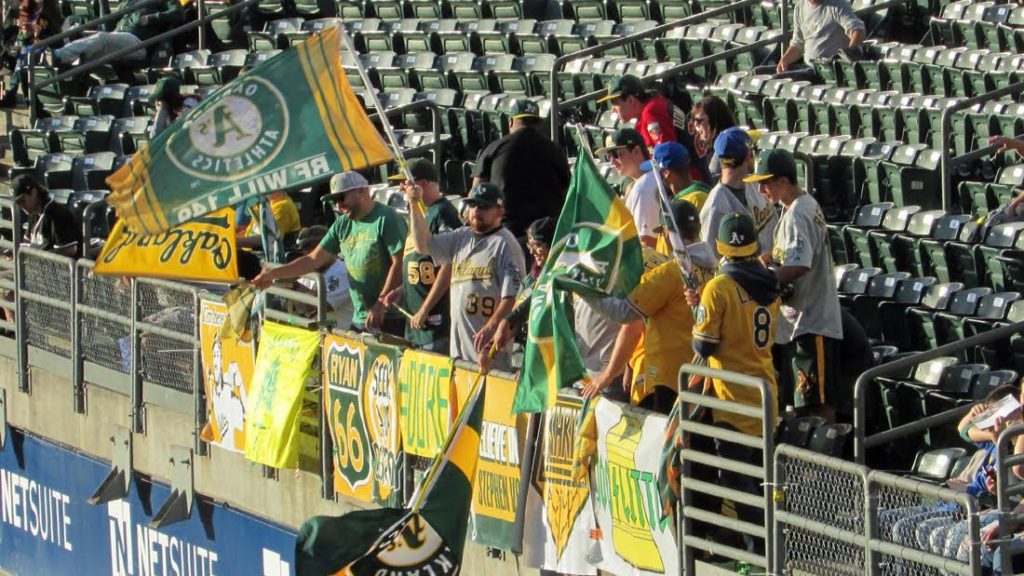
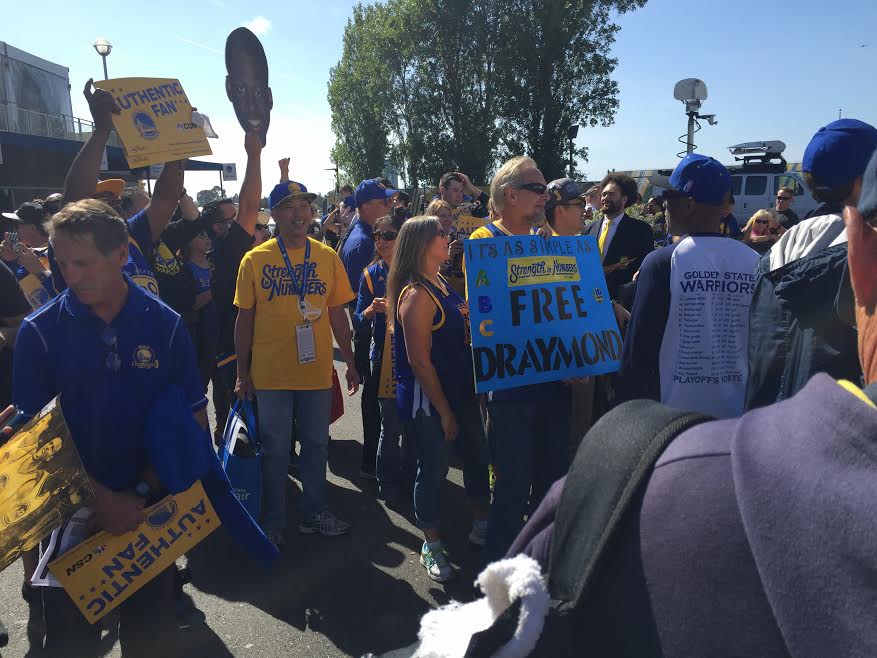
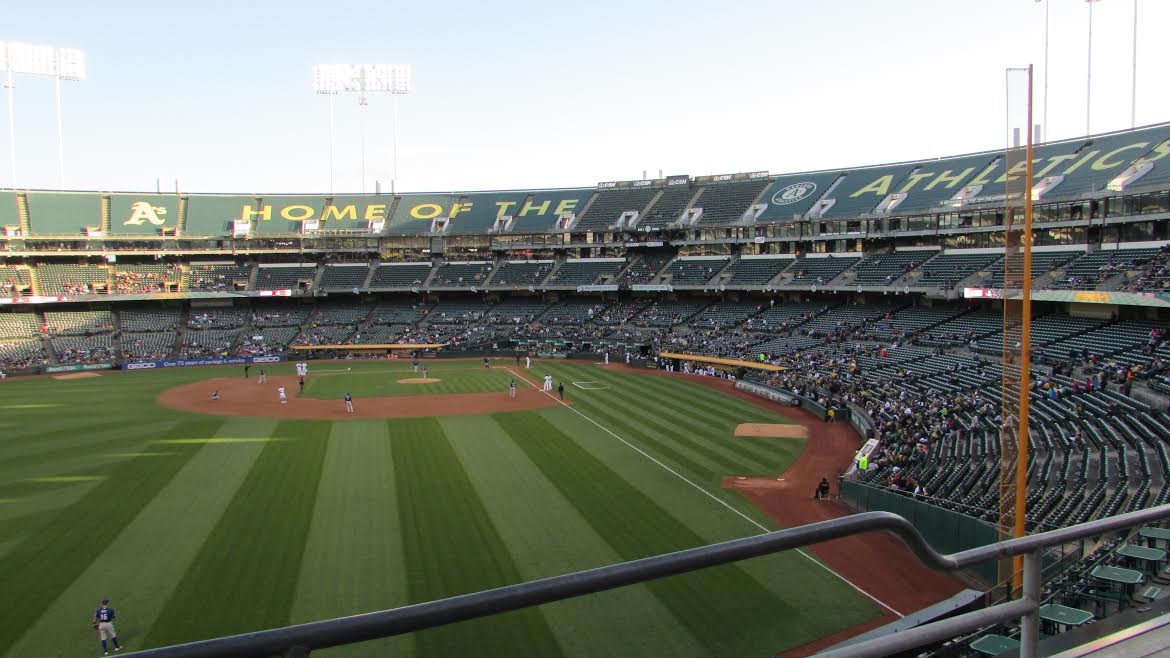
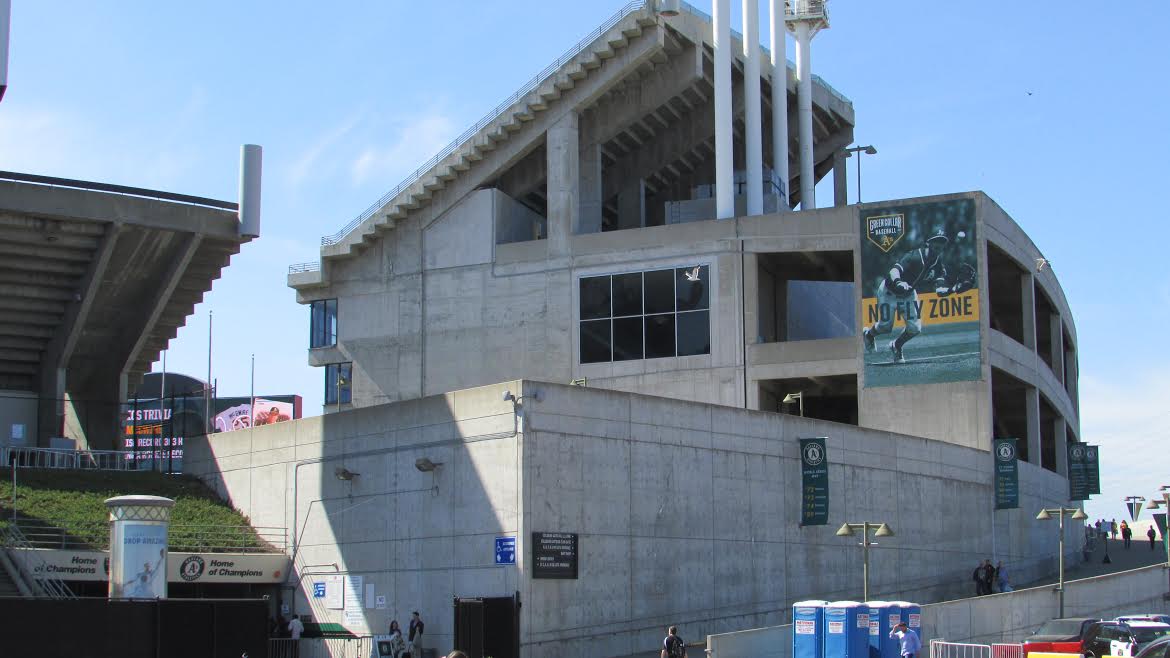
This proposition occurred to me while walking past the “Free Draymond” shirts into the Oakland Alameda Coliseum yesterday to watch the Rangers play the Athletics. That same evening, the Oracle Arena next door hosted Game 5 of the NBA Finals, with the hometown Warriors having an opportunity to clinch their second consecutive championship against visitors from Cleveland. The games started one hour apart, with the Dubs tipping off first.


The two Oakland venues sit even closer to each other than Globe Life Park in Arlington and AT&T Stadium. They share parking lots and, until last season, long periods without championships (a distinction that unfortunately still applies to their Arlington counterparts). The Finals game sold out, as would a Super Bowl. But how did the A’s do attendance-wise?

I admit that I conceived this column with a bit of the stereotypical NASCAR approach: I wanted to see a wreck. See, the Green and Gold don’t draw well even without a North American championship match occurring next door. The perennially average in the bottom third of MLB, and the just over 18.5K they’ve averaged this season ranks in the bottom three. I imagined a crowd made up of the players’ families, the media, and Draymond Green.

They had pleasant weather for last night’s game, but that was about all it had going for it. Scheduled Rangers starter Yu Darvish might have drawn some walkup interest from local fans who followed him in Japan, but the Rangers put the righty on the disabled list just before the game with right shoulder discomfort. Darvish’s replacement César Ramos might have had some family drive up from his native SoCal to see his start, but apparently not quite enough Ramoses made the trip to fill the coliseum. It was probably for the best – he gave up six earned runs in 3 2/3 innings as Texas lost big.


I kind of thought we had at least a chance to have more Rangers fans than A’s supporters, but the Oakland faithful proved me wrong, although a lot of them did wear Warriors garb. During batting practice, we heard a few gratuitous cheers break out from fans following the hoops on their smartphones. That subsided once the baseball game began, though, replaced in at least one instance by a loud, out-of-nowhere “Texas sucks!” exclamation.

So the crowd may not have been big, but those who did attend had some personality, confirming what has always appeared to be the case on TV. For instance, I didn’t wear anything to indicate I had come from Texas, but a young man who appeared to be an A’s gameday employee nonetheless felt compelled to tell me he thought America had gotten past discrimination because two special ed students, both named Bush, had managed to get elected president. I feel like I’m reasonably creative, but I couldn’t have made that incident up.

I also spotted a guy with a Dave Stewart jersey and a Rollie Fingers/Salvador Dalí mustache. Heck, as far as I know, it might have been Rollie Fingers.

The games happened on a Monday, which is a tough baseball draw even in the best of situations. The Rangers would fight the calendar, too, if the NFL played our mythical summer Super Bowl as a Monday Night Football game. The ballclub has never played at home the same Monday the Cowboys played at AT&T Stadium. The last time the MNF and MLB overlapped in North Texas, the then-2nd place Rangers drew 13,356 on September 15, 2008, their second-smallest crowd of that season, as the Cowboys sold out Irving’s Texas Stadium.


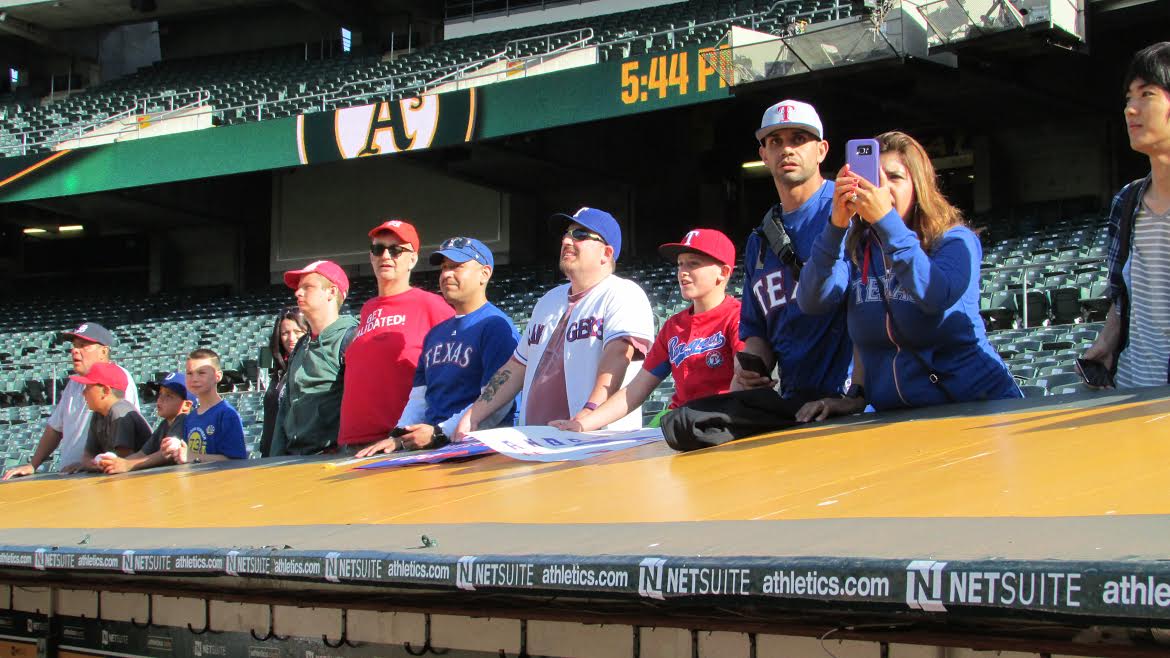
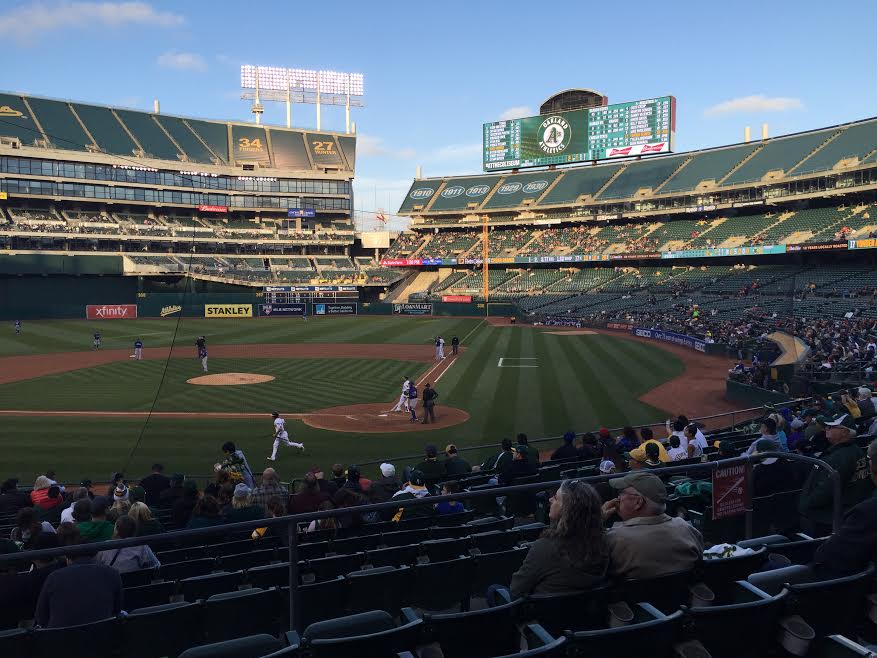
Yesterday, the A’s announced an attendance of 13,453. You can look at the photos and judge whether the stadium (capacity 35,067 in its normal baseball configuration without the upper deck) looks more than a third full. They’ve reported 11 crowds smaller than Monday’s this season. I wonder what those looked like.


In fairness to the fans who stayed home or went next door, the team does play all the games in this particular stadium. It opened in 1966 and is the last remaining facility that still hosts both Major League Baseball and NFL football (at least until the Raiders move again). Tarps cover the upper decks to make the concrete monolith a sliver more intimate. I’ve kind of disliked the place since one of its denizens goaded one of my favorite players, Frank Francisco, into an ill-advised chair toss during a 2004 pennant race, but I actually didn’t hate it now that I’ve been here (not that there aren’t plenty of better stadia out there).

The fans who did come to Monday’s game had to pay $40 a carload to park, the inflated rate for an NBA Finals game. The A’s will make it up to any fans who return tonight by letting them park gratis, thanks to a Chevy Free Parking promotion.

The Warriors lost Monday, so if they don’t finish the series in Cleveland, the A’s will have to contend with Game 7 this Sunday when they host the Angels. Luckily for the baseballers, their contest that day starts seven hours earlier than the basketball game.

The Rangers have never drawn fewer than 26,131 against a same-day AT&T Stadium Cowboys game, that coming last September 13. That’s probably not an apples-to-apples comparison to how much a Cowboys playoff game might impact a baseball crowd, especially since the Rangers have mostly been a good team since the big spaceship opened. If they were lousy, all bets would be off.

Luckily, thanks to the way the schedules fall, they’ll never have to worry about it . . . although . . . given the Cowboys’ power to generate ratings, the networks might well be happy to look at moving the big game to June if it somehow made the Pokes more likely to play in it. If that happens, anything’s possible – even that the ‘Boys opponent might be the Browns.


Rush Olson has spent two decades directing creative efforts for sports teams and broadcasters. He currently creates ad campaigns, television programs, and related creative projects for sports entities through Rush Olson Creative & Sports and FourNine Productions.


RushOlson.com

Linkedin.com/company/rush-olson-creative-&-sports

Facebook.com/RushOlsonCreativeandSports


Wednesday, June 8, 2016

Jeff Banister and Cat Osterman on Coaching Positively

This post originally appeared at the Fort Worth Weekly's website. To view it there : http://www.fwweekly.com/2016/06/07/sports-rush-jeff-banister-and-cat-osterman-discuss-coaching/


R1
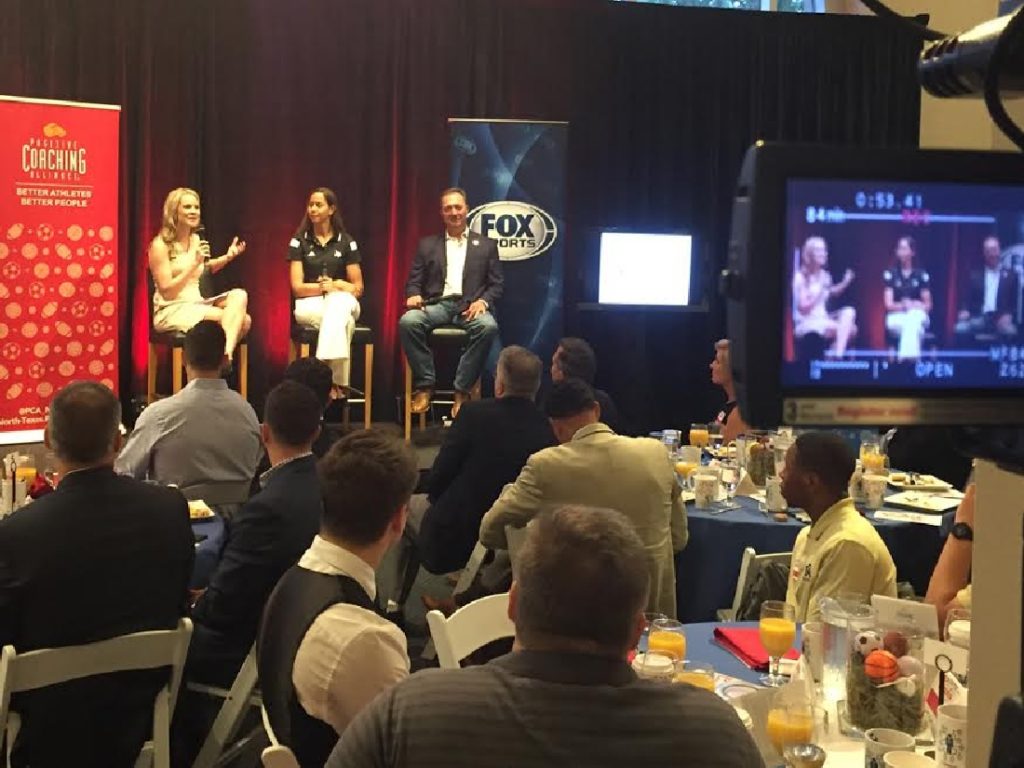
“Athletes want to know do you care about me And can you help me get to the next level? And that’s it. You care by developing a relationship.”
- Rangers manager Jeff Banister


Banister’s statement came as part of a program put on by a group called the Positive Coaching Alliance. Banister and softball icon Cat Osterman discussed the role coaches and other mentors play in making sports a positive experience for the players. This video explains what their talk was all about and passes along some of the insights they provided.


Banister won the American League Manager of the Year Award last season in his first year with the Rangers. Osterman won two Olympic medals along the way to becoming one of the best pitchers in softball history. She is now an assistant coach at Texas State University in San Marcos. 


Rush Olson has spent two decades directing creative efforts for sports teams and broadcasters. He currently creates ad campaigns, television programs, and related creative projects for sports entities through Rush Olson Creative & Sports and FourNine Productions.


RushOlson.com

Linkedin.com/company/rush-olson-creative-&-sports

Facebook.com/RushOlsonCreativeandSports